
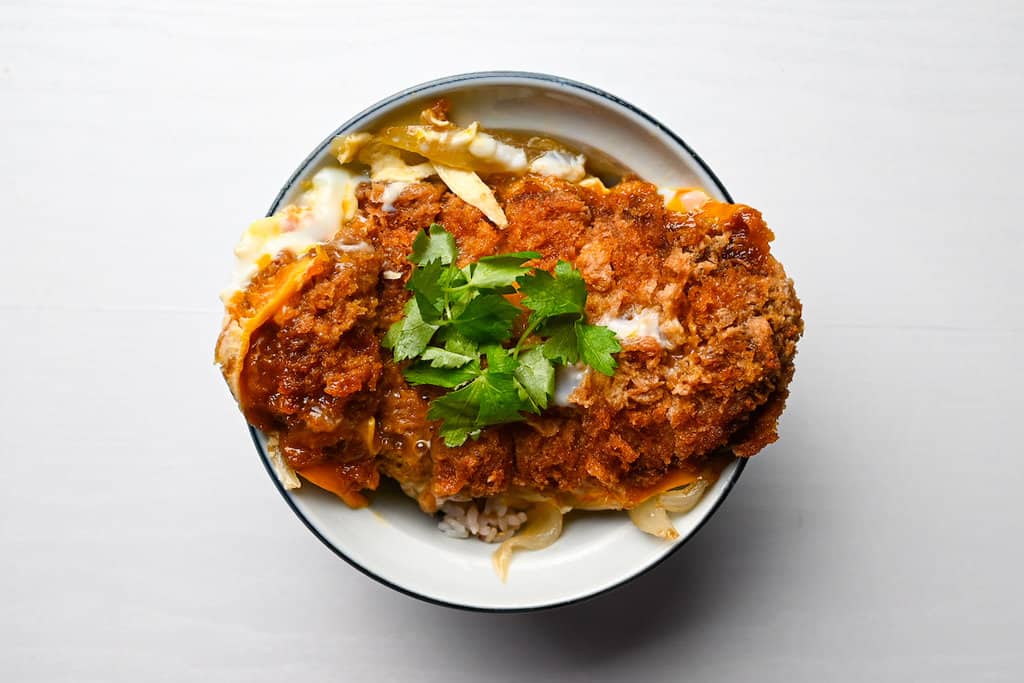
Katsudon (Japanese Pork Cutlet Bowl)
Ingredients
For the Katsu
- 2 boneless pork chops
- salt and pepper
- 4 tbsp all-purpose flour
- 1 egg
- 1 tsp cooking oil
- 1 tbsp whole milk
- 50 g panko breadcrumbs
- cooking oil for frying
Katsudon
- 5 g dried kelp (kombu)
- 150 ml water
- 100 g onion
- 50 ml mirin
- 1 tbsp light brown sugar
- 1 tsp Chinese-style chicken bouillon powder I use youki garasupu
- 2 tbsp Japanese soy sauce (koikuchi shoyu)
- 3 eggs room temperature
- 2 portions cooked Japanese short-grain rice
- Japanese wild parsley (mitsuba) or chopped green onions
Instructions
Make kombu dashi
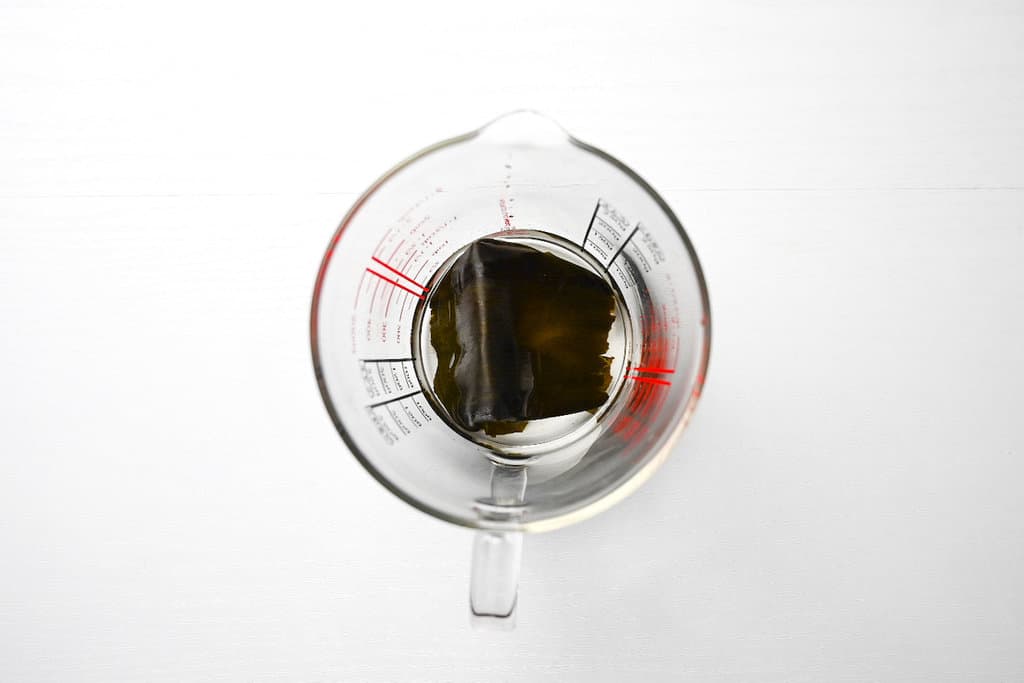
- Place 5 g dried kelp (kombu) in 150 ml water and soak for 30 mins to 1 hour or until the kombu has rehydrated. You can do this the night before and store in the fridge for meal prep.
Katsu
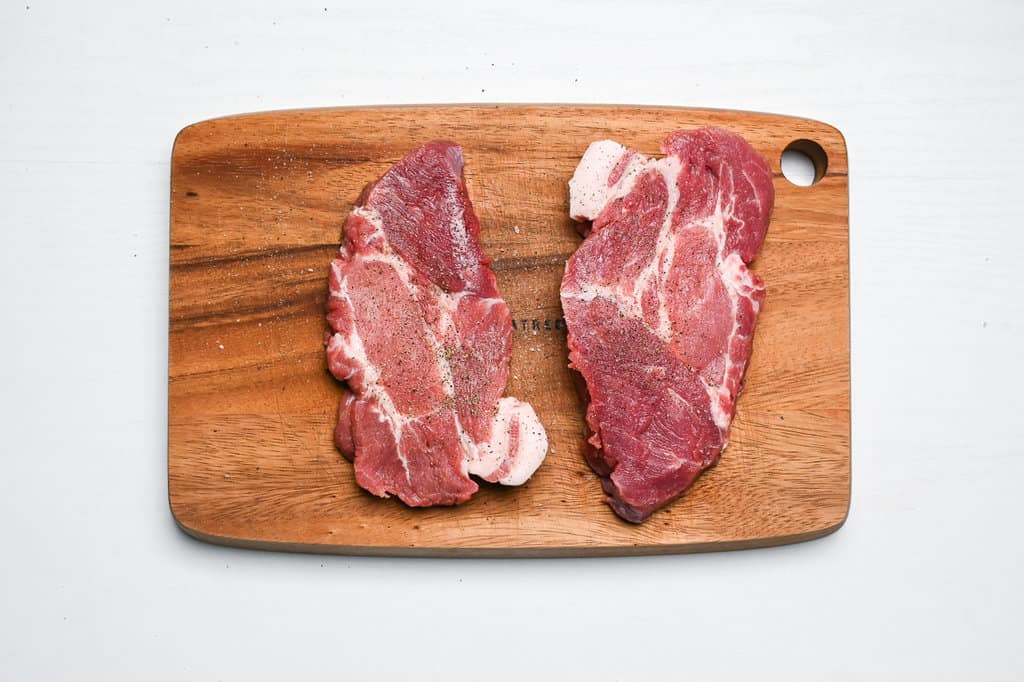
- Preheat cooking oil to 170 °C (338 °F). While you wait, prepare the pork. Make incisions in the fatty parts of 2 boneless pork chops to prevent curling and sprinkle both sides with a few pinches of salt and pepper.
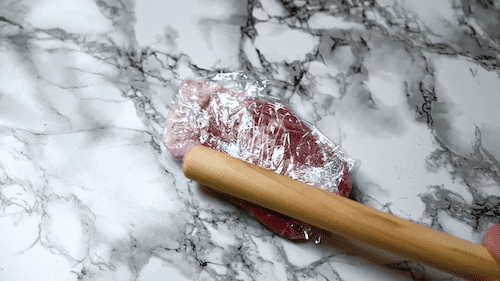
- Pound the pork chops until about 2cm (¾ inch) thick all over.
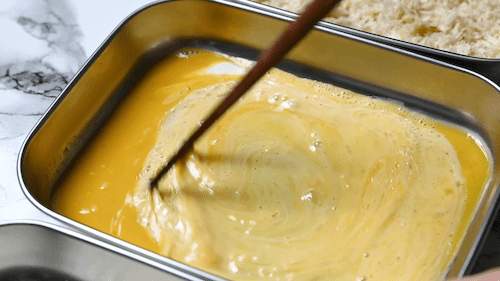
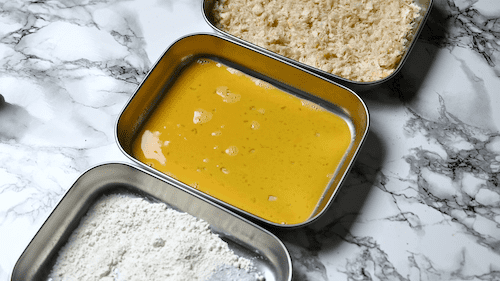
- Crack 1 egg into a wide shallow container and add 1 tsp cooking oil and 1 tbsp whole milk. Whisk until combined.
- Prepare two more containers, one with 4 tbsp all-purpose flour and one with 50 g panko breadcrumbs.
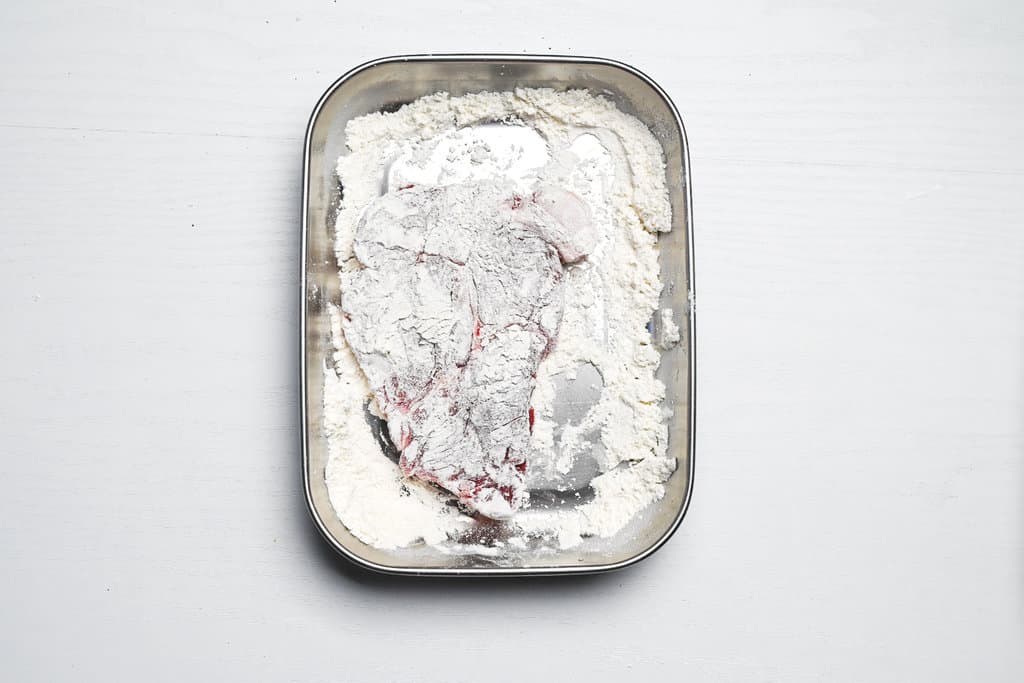
- Coat the pork with flour on both sides, and brush off any excess.
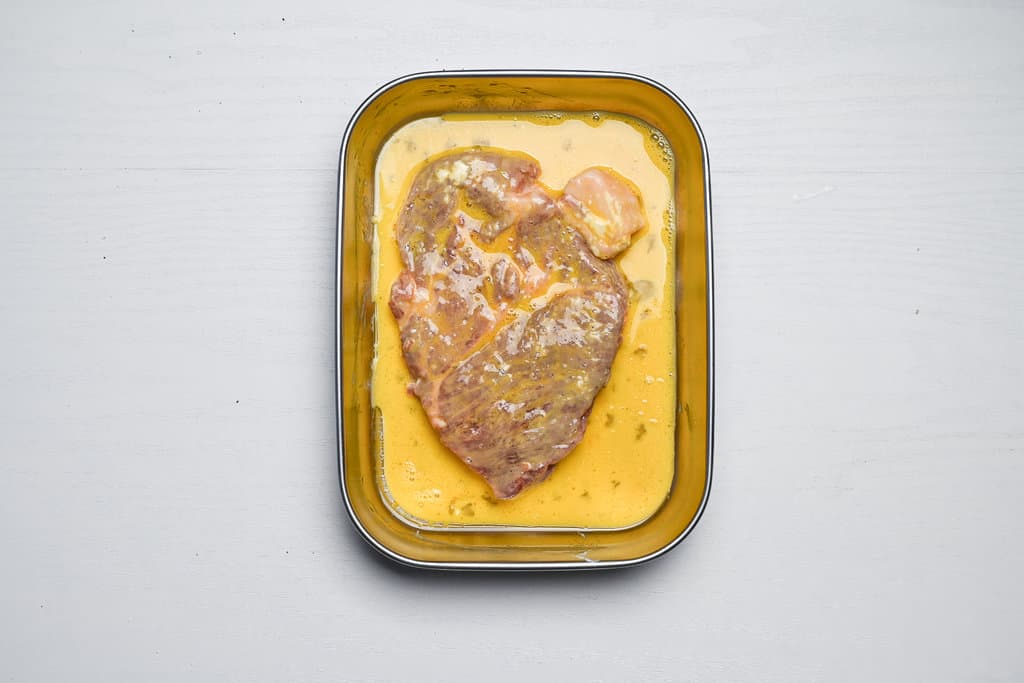
- Next, dip them into the egg mixture, then lift and let the excess drip off.
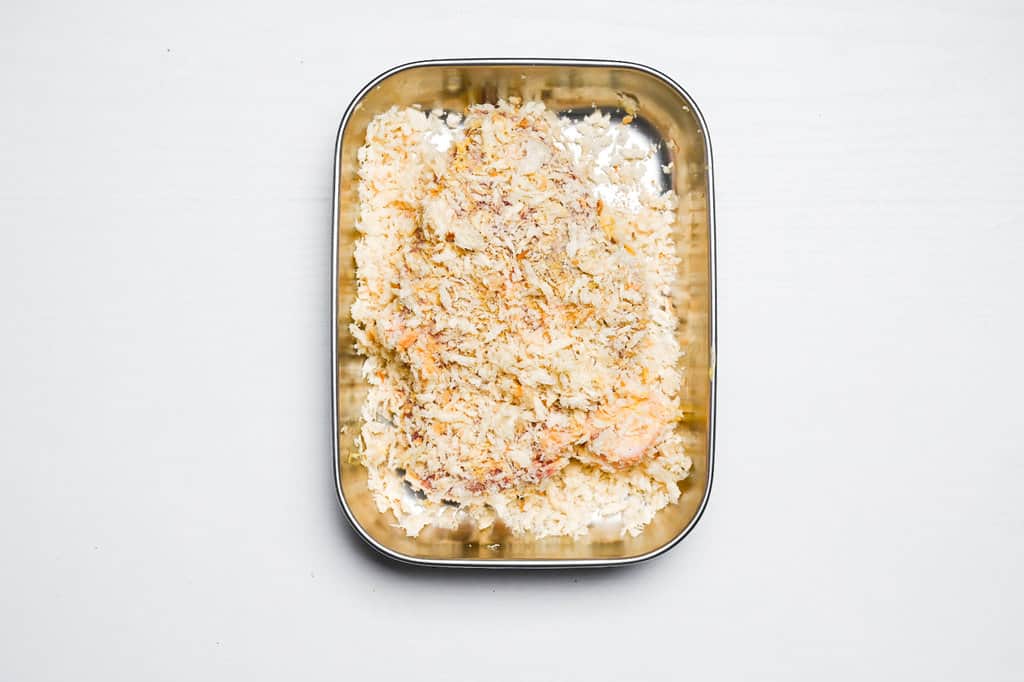
- Finally, coat with a generous layer of panko and press the surface lightly to secure them.
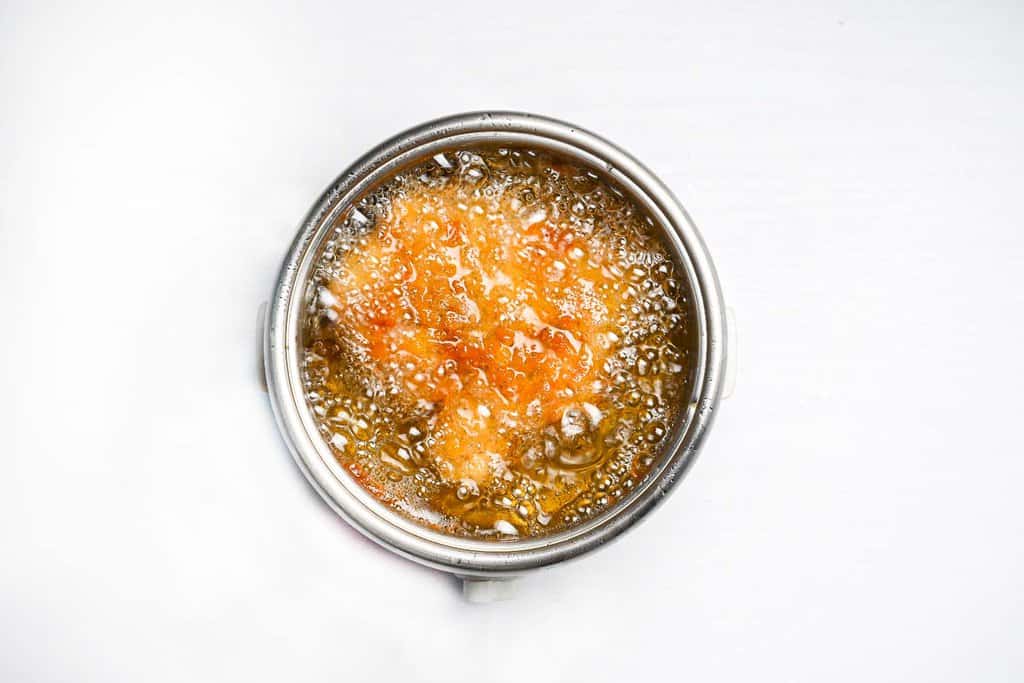
- Test the oil temperature with a crumb of panko, if it sizzles and floats then the oil is ready. Carefully place the coated pork into the oil and fry undisturbed for about 4 minutes on each side (8 minutes total) or until golden brown. When the oil stops making a crackling sound, that usually means they're cooked through.
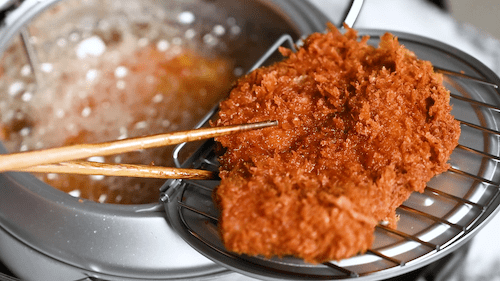
- Transfer the katsu on a wire rack to drain the excess oil.
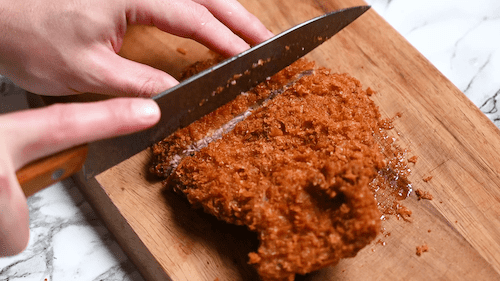
- Cut into 2cm slices and set aside for later.
Donburi
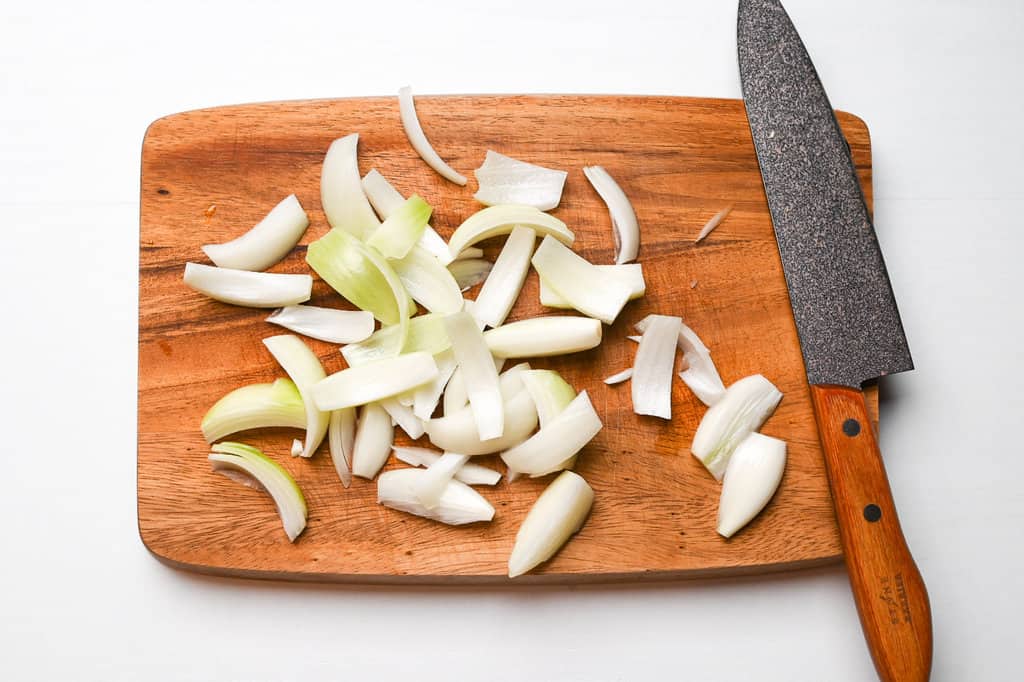
- Cut 100 g onion into wedges.
- Pour the kombu dashi into a saucepan and heat on medium low until small bubbles start to appear. Remove the kombu, and add 50 ml mirin, 1 tbsp light brown sugar, 1 tsp Chinese-style chicken bouillon powder.
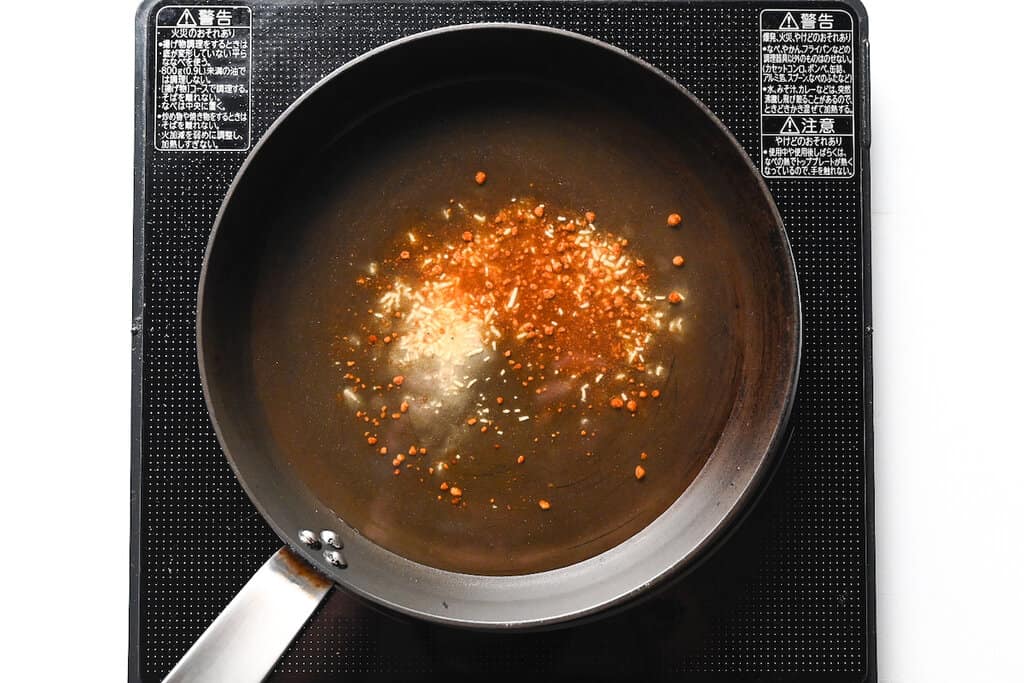
- Mix until the sugar and bouillon have dissolved, then add the onion and increase the heat to medium. Simmer until the onion is softened to your liking.
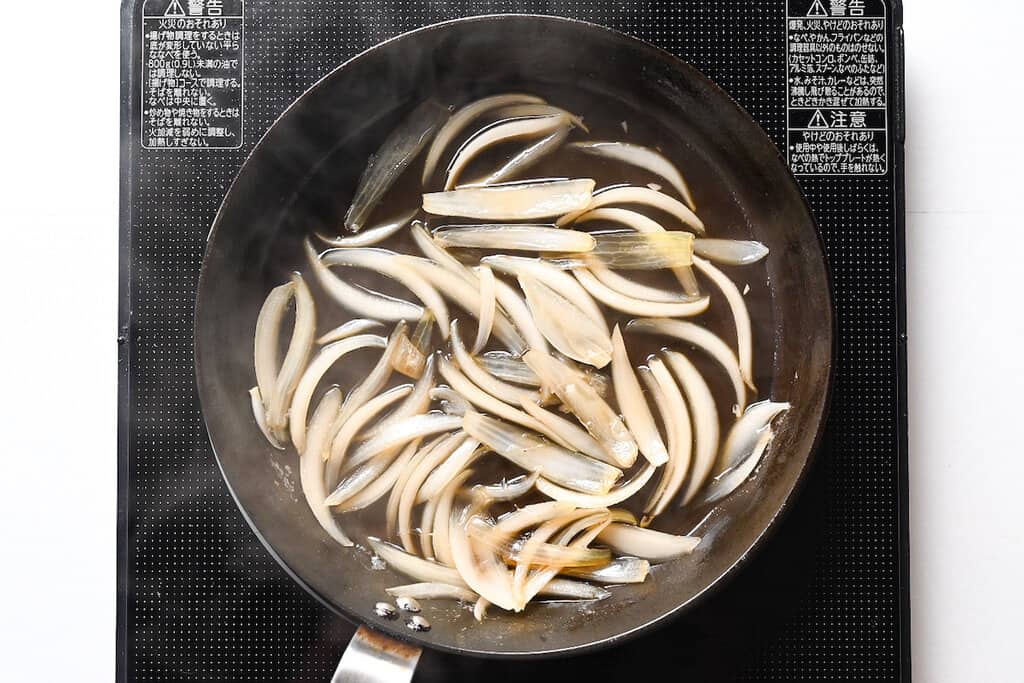
- Add 2 tbsp Japanese soy sauce (koikuchi shoyu) and stir to evenly distribute, then lay the sliced katsu over the top.
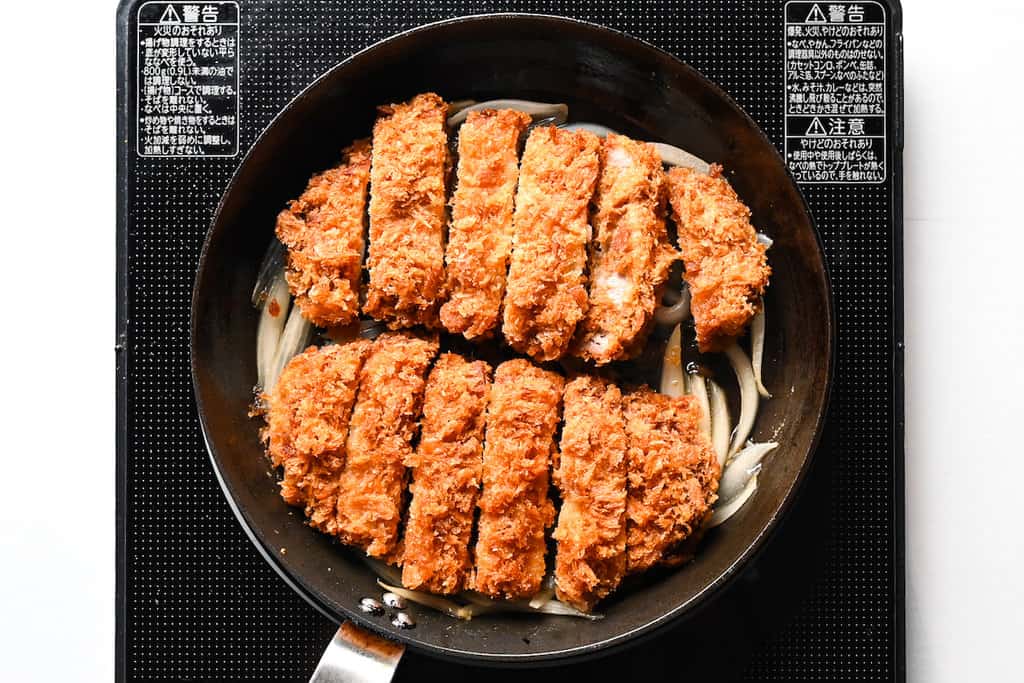
- Separate the whites and yolks of 3 eggs into two bowls.
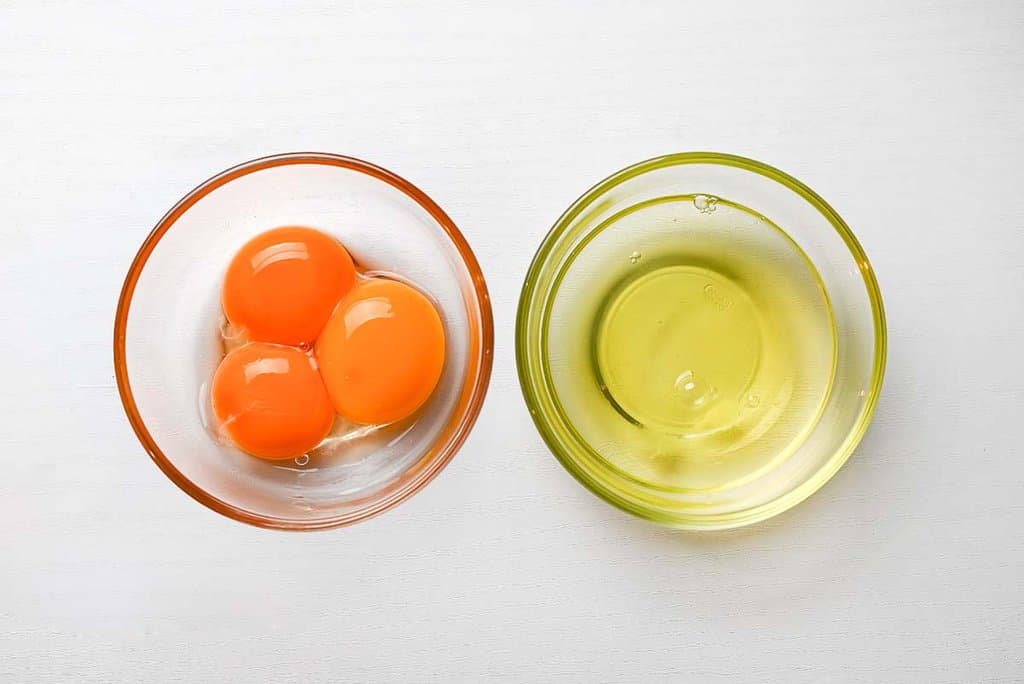
- Whisk the whites and pour them around the pan, avoiding the top of the katsu.
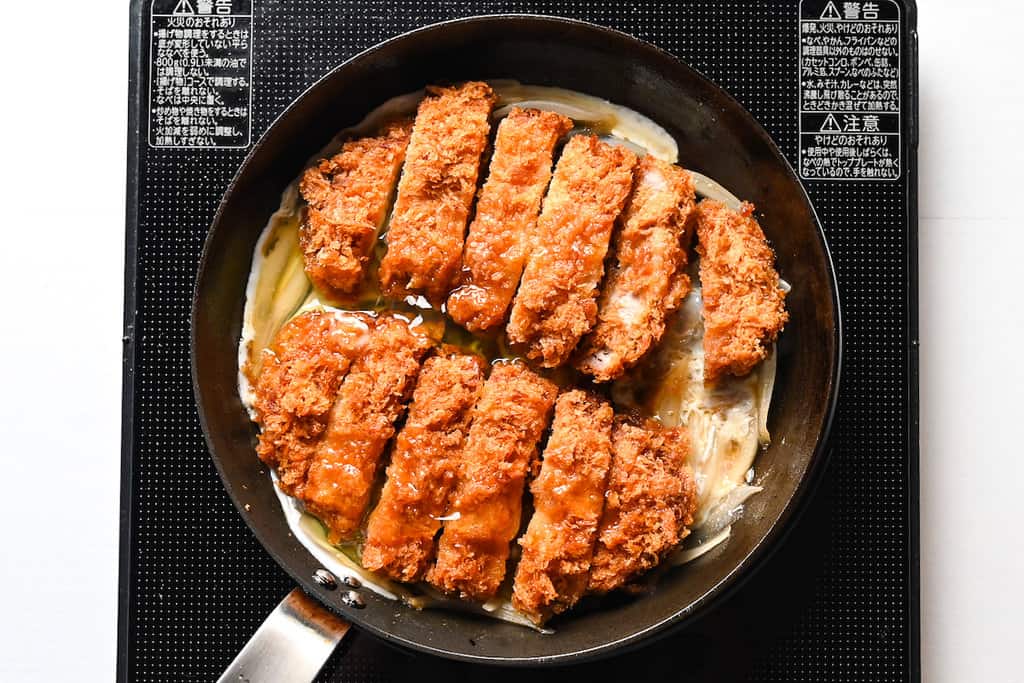
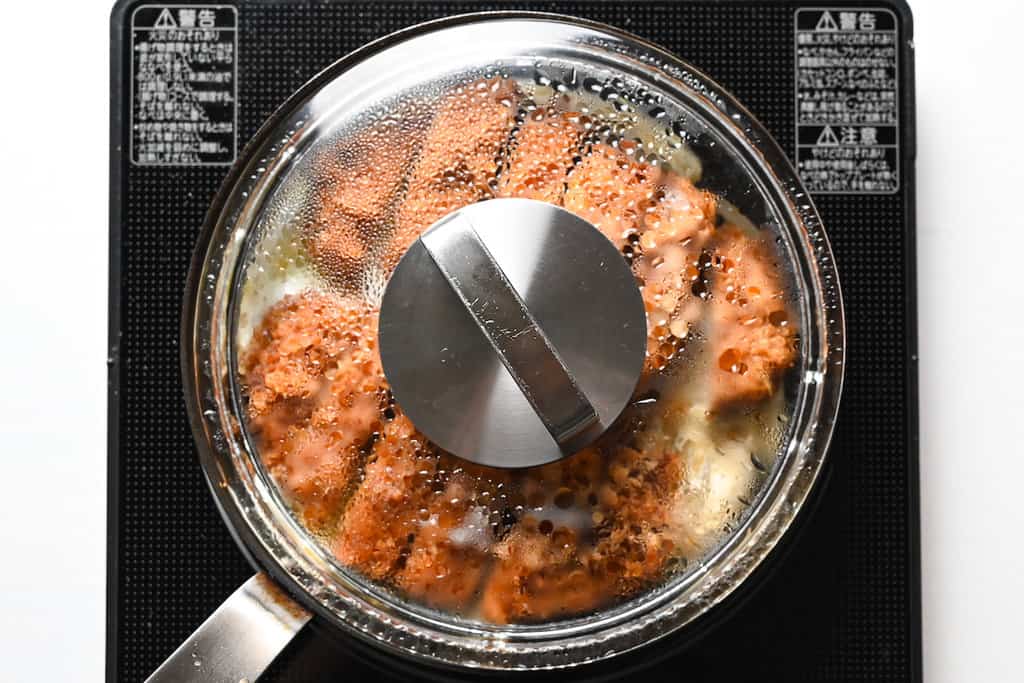
- Cover with a lid and steam fry the eggs for about 1 minute or until half cooked.
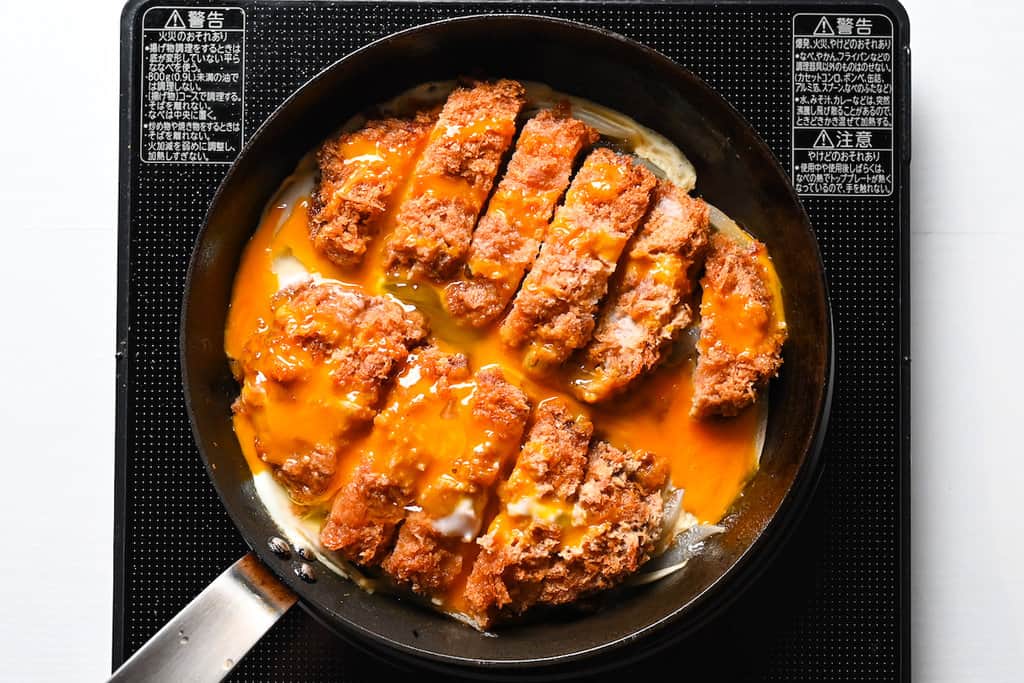
- Lightly whisk the egg yolks and then pour them around the pan, again avoiding the top of the katsu.
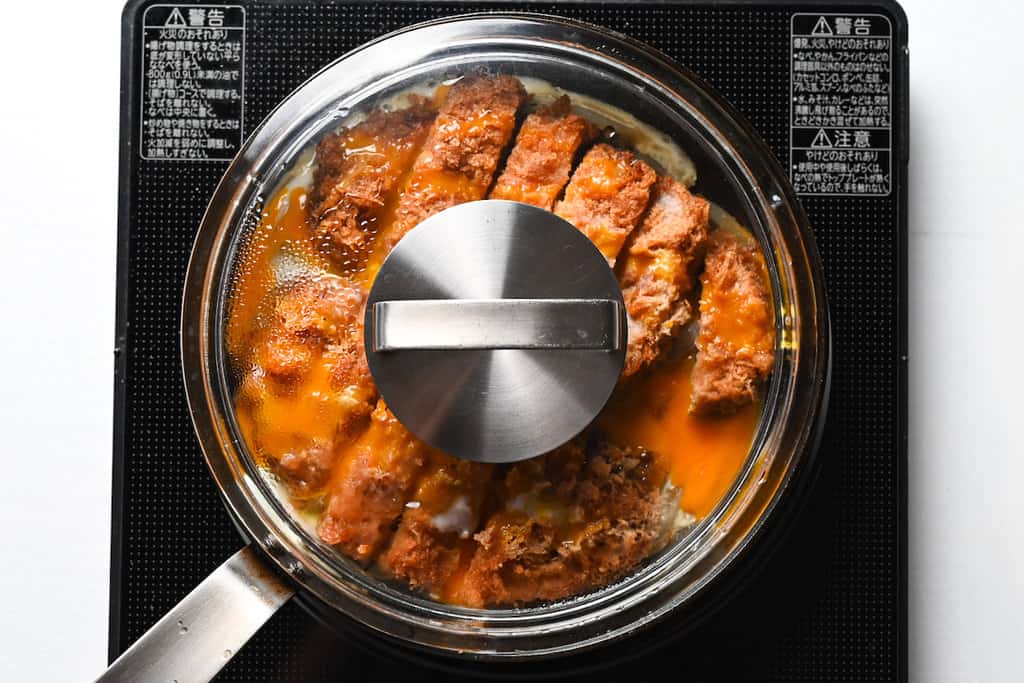
- Cover with a lid once more and turn off the heat. Finish cooking the egg in the residual heat until it reaches your preferred firmness.
- Divide 2 portions cooked Japanese short-grain rice between serving bowls and top with the katsu and egg mixture. Drizzle a tbsp of leftover sauce in the pan over each bowl and garnish with Japanese wild parsley (mitsuba). Enjoy!
Notes
Chicken bouillon powder varies by brand. My brand is 1 tsp per 200 ml, so check the label and if yours is more concentrated (e.g., 1 tsp per 300 ml or 1 cup), use touch less to avoid oversalting.
If you decide to substitute the kombu dashi for instant dashi, reduce the water to 100ml.
You can use chicken katsu or beef katsu instead of pork for the katsu.
The egg should be a little runny in this dish but if you prefer it well cooked you can cook for a bit longer.
Full Recipe QR Code↑↑