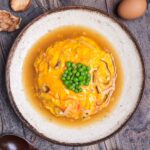
Tenshinhan (Japanese Crab Meat Omelette on Rice)
Ingredients
Prep
- 2 dried shiitake mushroom whole
- 250 ml water for soaking the shiitake
- 300 g cooked Japanese short-grain rice cooked a touch firm
Glaze
- 200 ml shiitake dashi from earlier from the prep, strained
- 1 tsp Chinese-style chicken bouillon powder
- 2 tsp Japanese soy sauce (koikuchi shoyu)
- ½ tbsp light brown sugar or regular sugar
- 2 tsp cold water for the slurry
- 2 tsp potato starch (katakuriko) for the slurry
- ½ tbsp unseasoned rice vinegar (komezu)
- 1 tsp grated ginger root or paste
- 1 tbsp unsalted butter
Tenshinhan (egg)
- 4 eggs
- ⅛ tsp salt for the egg mixture
- 1 tbsp Japanese mayonnaise
- 1 pinch ground white pepper
- ½ tbsp sake or Shaoxing wine
- 3 tbsp Japanese leek (naganegi) white part, roughly chopped
- 50 g imitation crab stick type
- 2 tbsp cooking oil
- 1 tsp toasted sesame oil
- 1 tbsp green peas optional
Instructions
- Soak 2 dried shiitake mushroom in 250 ml water, 45 to 60 minutes for whole caps or 20 to 30 for pre-sliced. No boiling water. Use this time to cook your rice, you will need 300 g cooked Japanese short-grain rice.
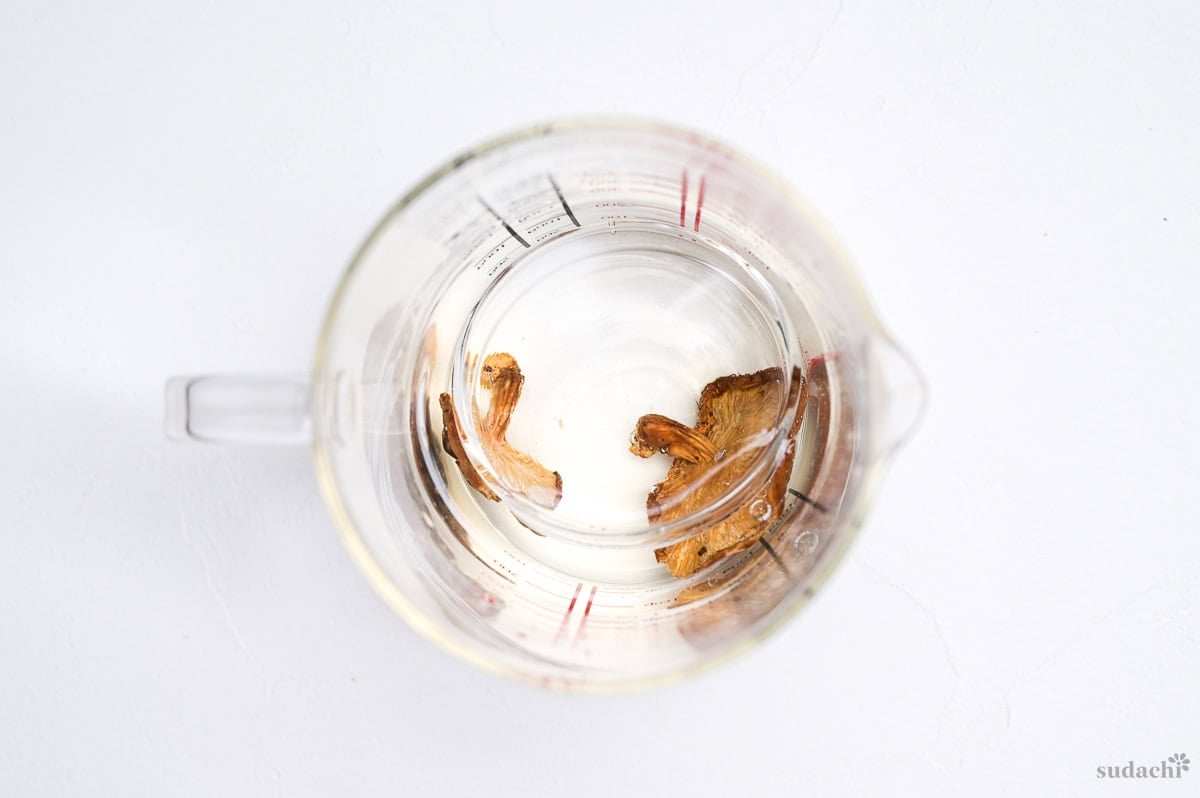
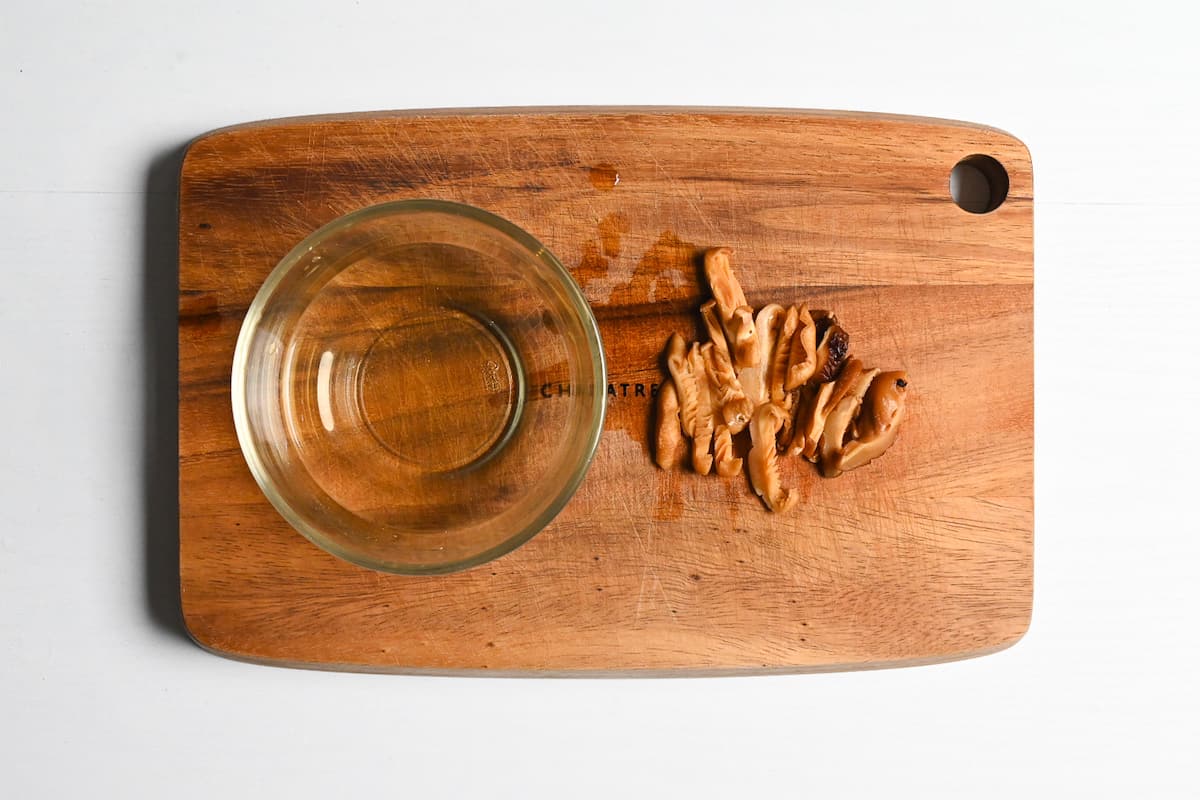
- Lift the shiitake out, trim the stems, slice the rest thin, and pat dry. Strain the soaking liquid, you should have 200 ml shiitake dashi from earlier. If not, top up with a little water until you have the right amount.
- Shred 50 g imitation crab, finely chop 3 tbsp Japanese leek (naganegi), and mix 2 tsp cold water with 2 tsp potato starch (katakuriko) together in a small bowl to make a slurry.
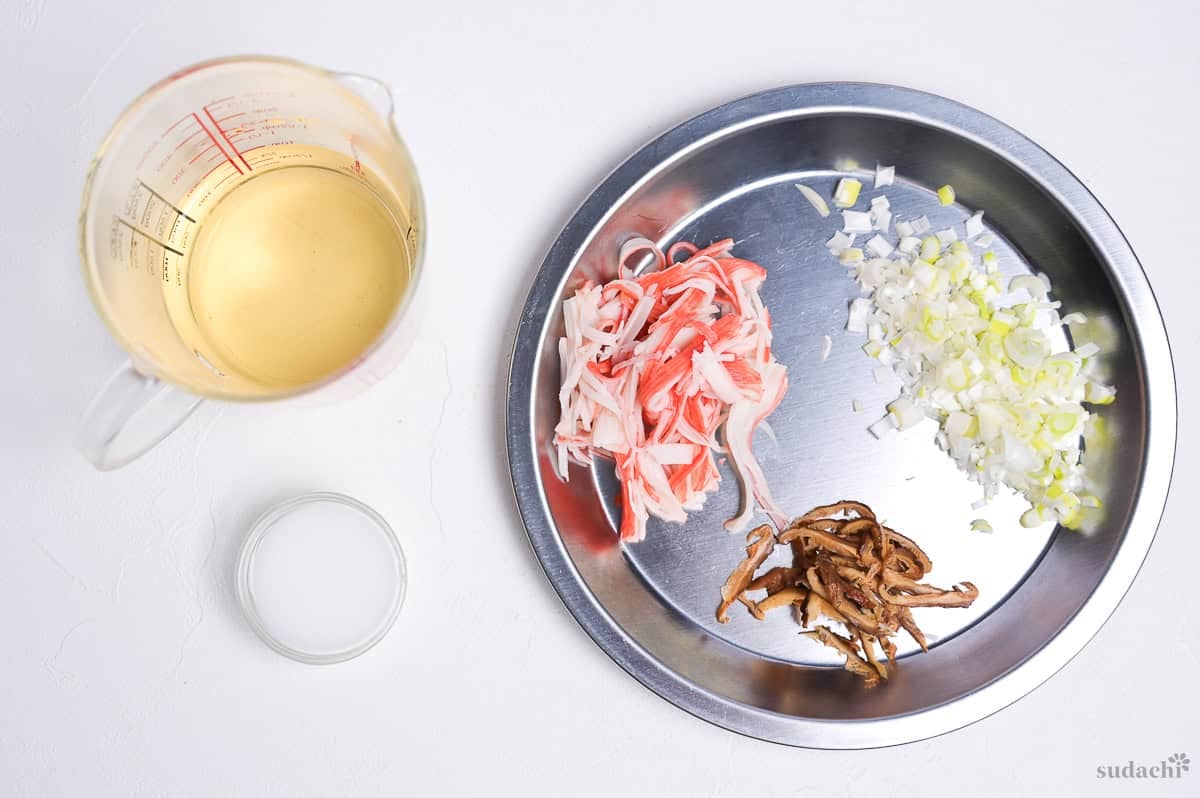
- In a pot, boil the 200 ml shiitake dashi from earlier with 1 tsp Chinese-style chicken bouillon powder, 2 tsp Japanese soy sauce (koikuchi shoyu), and ½ tbsp light brown sugar over medium heat. Simmer for 1 minute and taste, adjusting with a drop of soy sauce or pinch of salt.
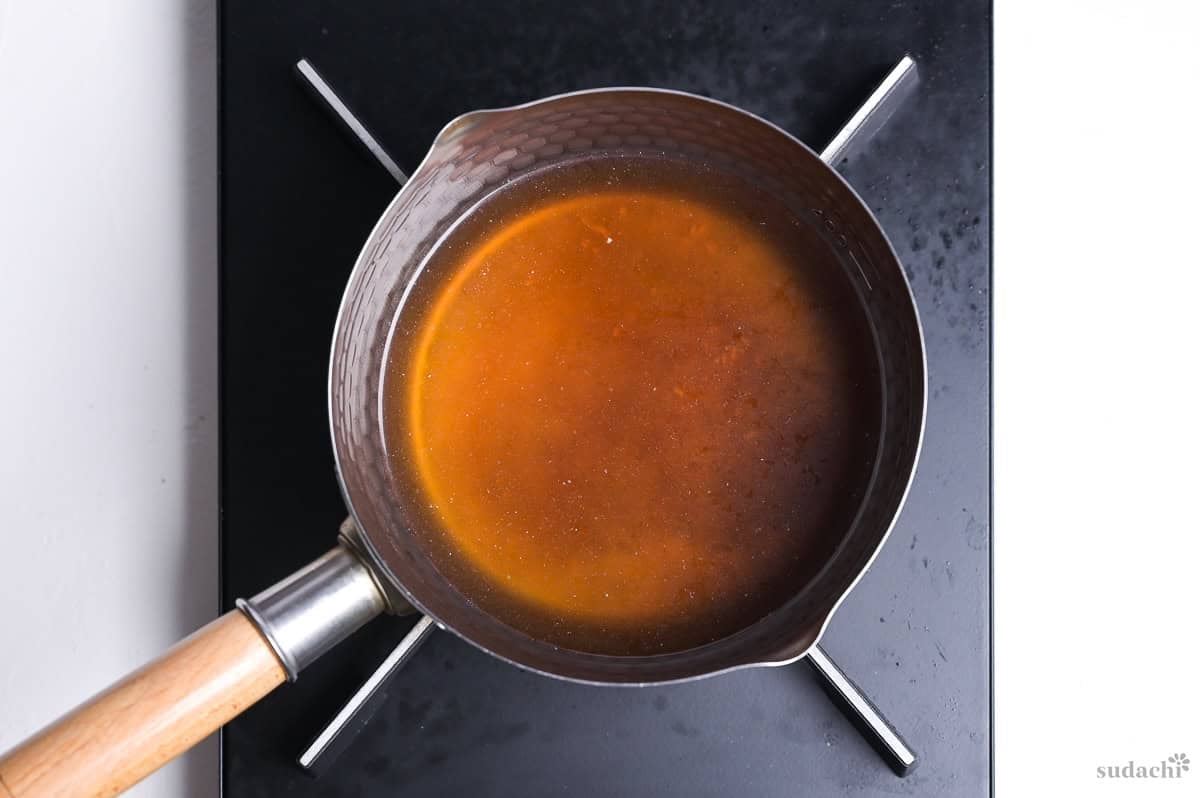
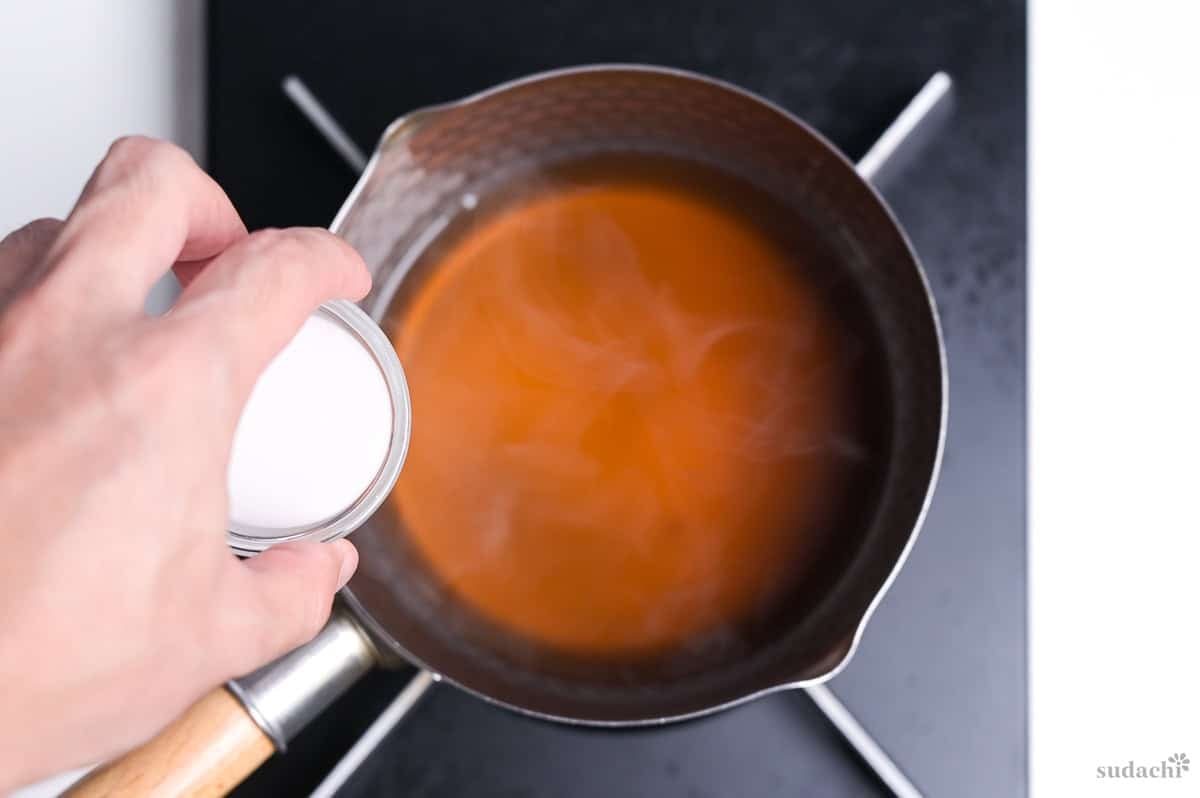
- Off the heat, stir the slurry again and pour it in slowly while stirring. Return the heat to medium-low and gently bubble 1 minute. Do not stop when it first thickens. Once it clears to translucent and glossy, the starch has gelled so you can take it off the heat for now.
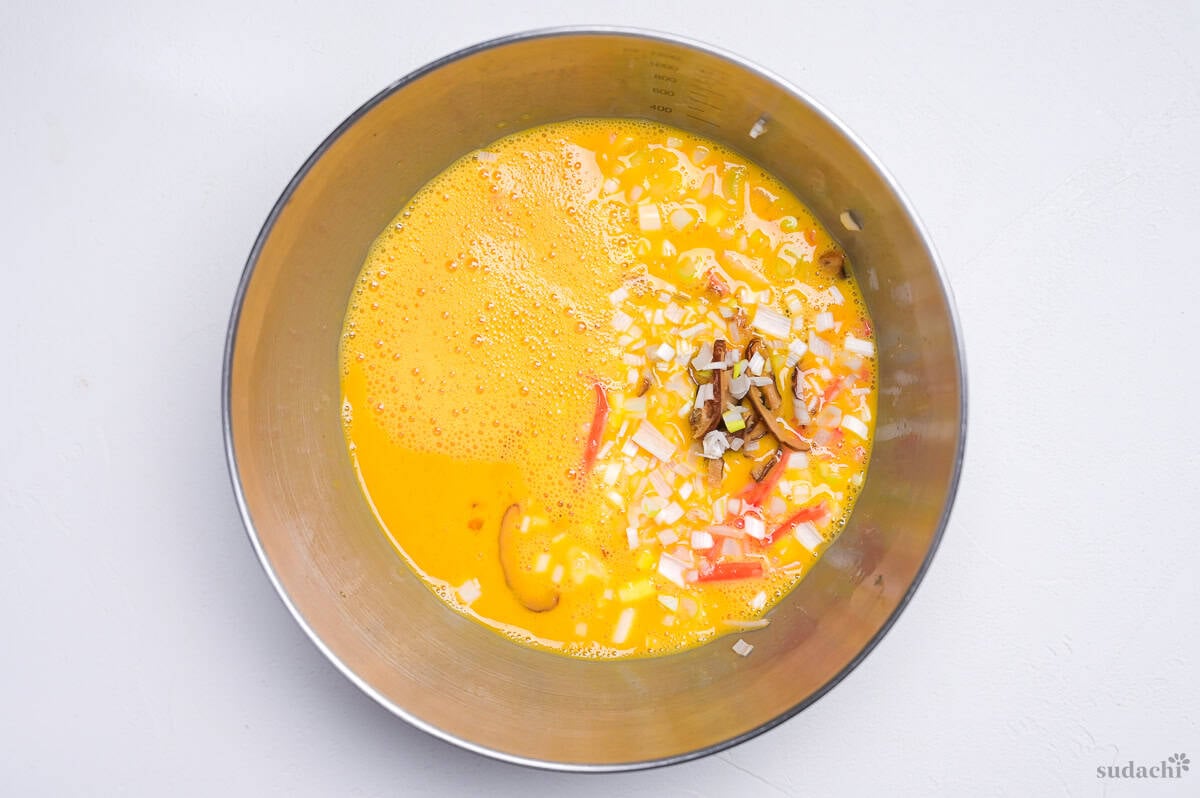
- Beat 4 eggs with ⅛ tsp salt, 1 tbsp Japanese mayonnaise, 1 pinch ground white pepper, and ½ tbsp sake, then fold in the leek, sliced shiitake, and crab.
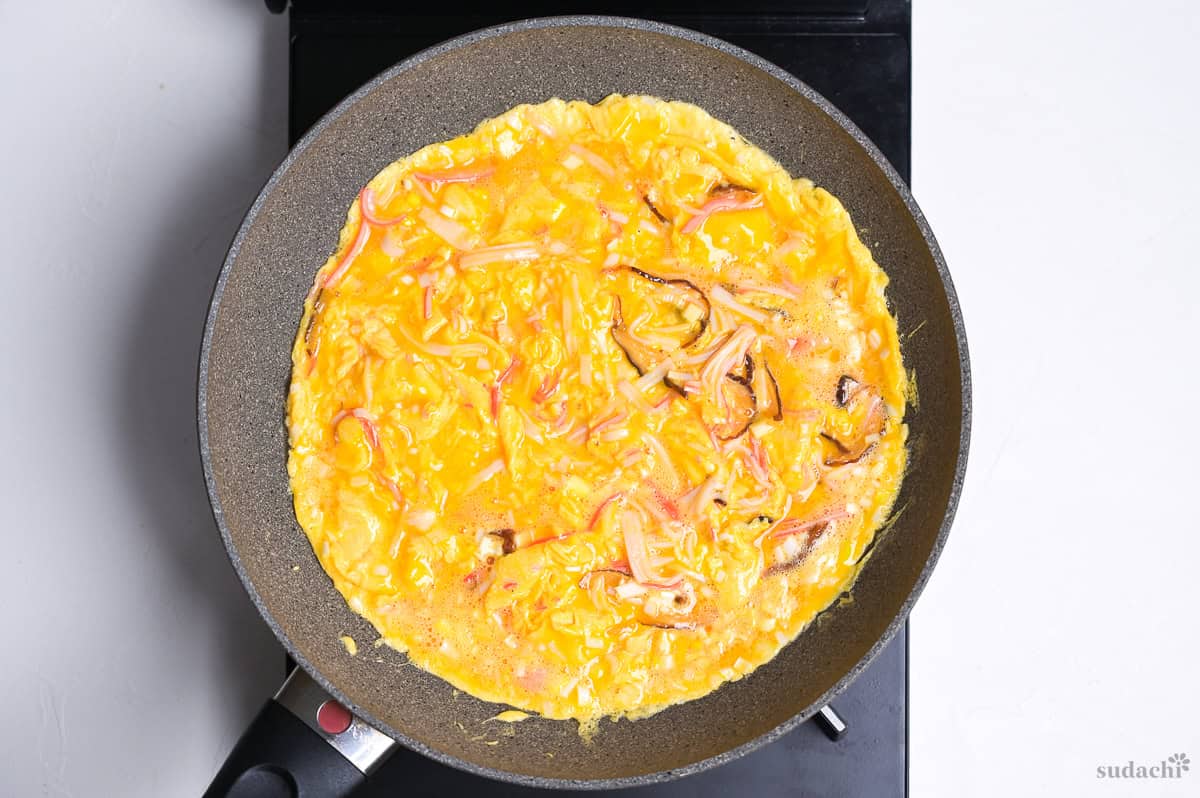
- Heat a nonstick pan on high with 2 tbsp cooking oil. When it shimmers, pour in the eggs and fold to the center 3 or 4 times with a spatula.
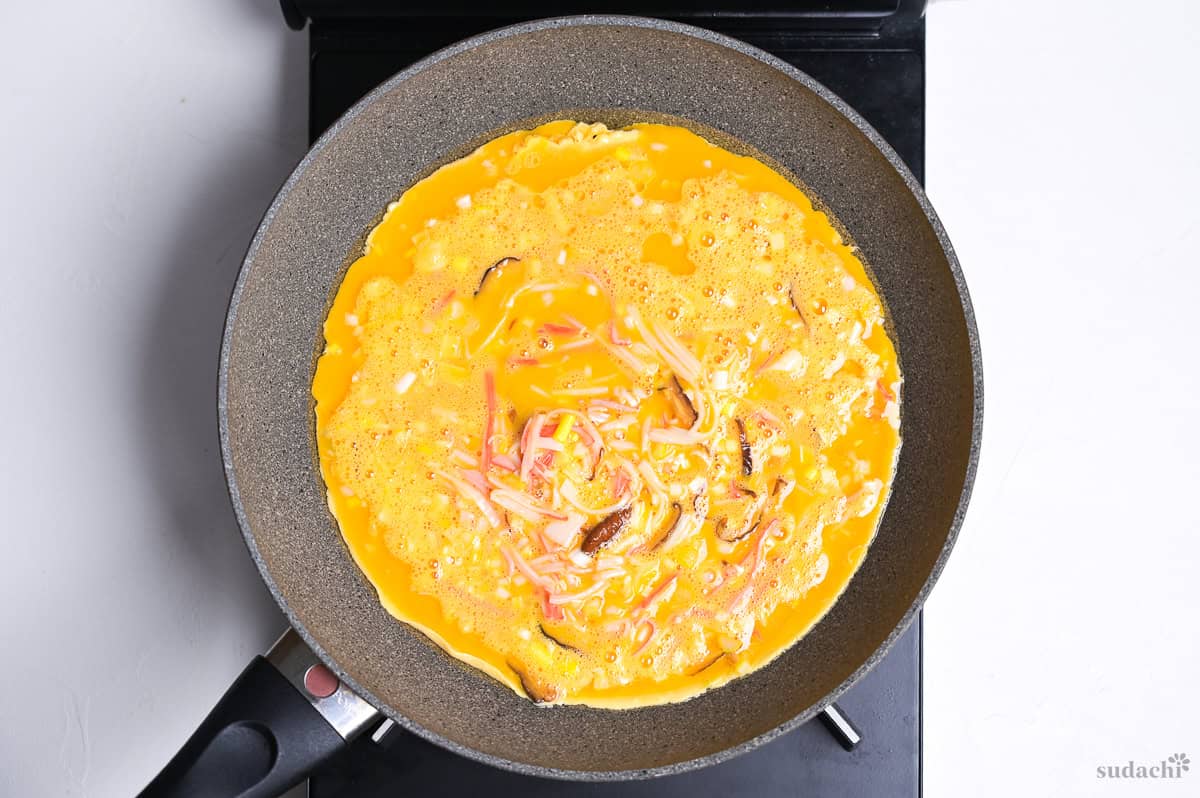
- Drop to low for about 45 seconds, or until the edges set and only the center trembles. Turn off the heat, cover, and rest for 30 to 60 seconds. Reheat the sauce if needed. Off the heat, stir in ½ tbsp unseasoned rice vinegar (komezu), 1 tsp grated ginger root and 1 tbsp unsalted butter.
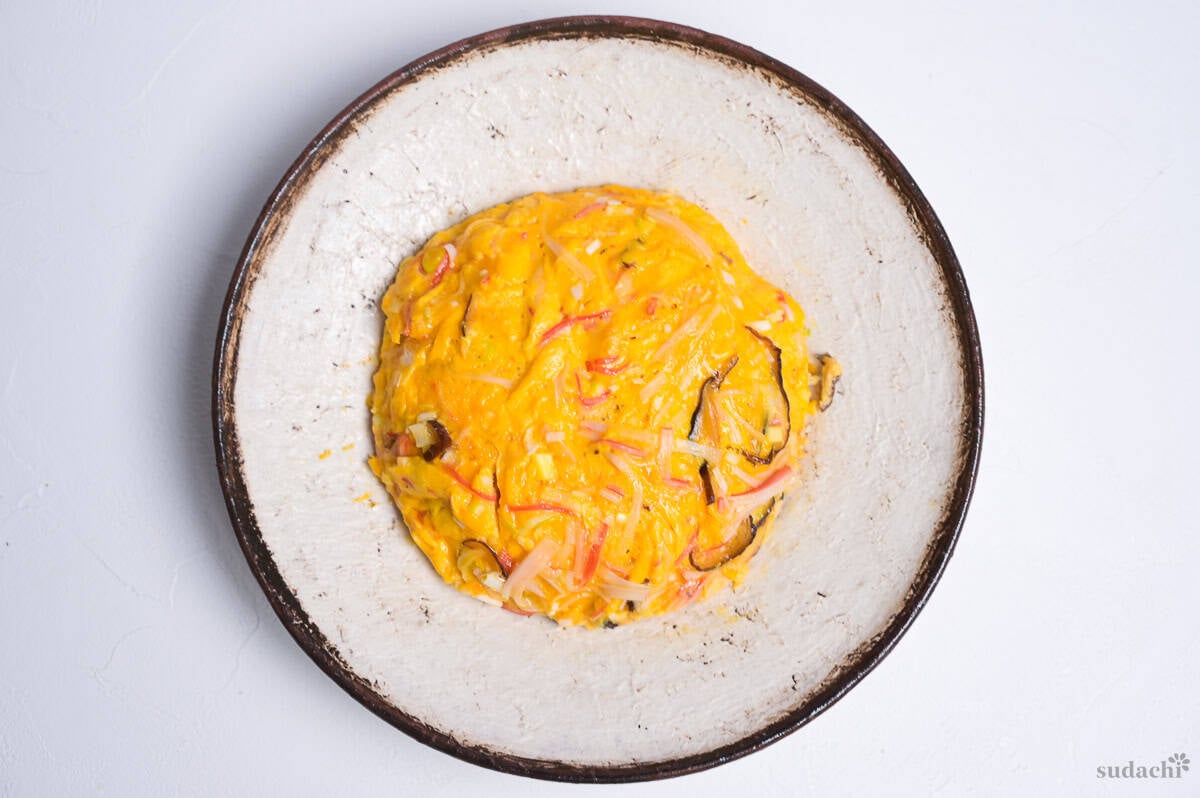
- Press the rice into a bowl and mound onto the plate. Slide the egg over it, whole or split across 2 plates.
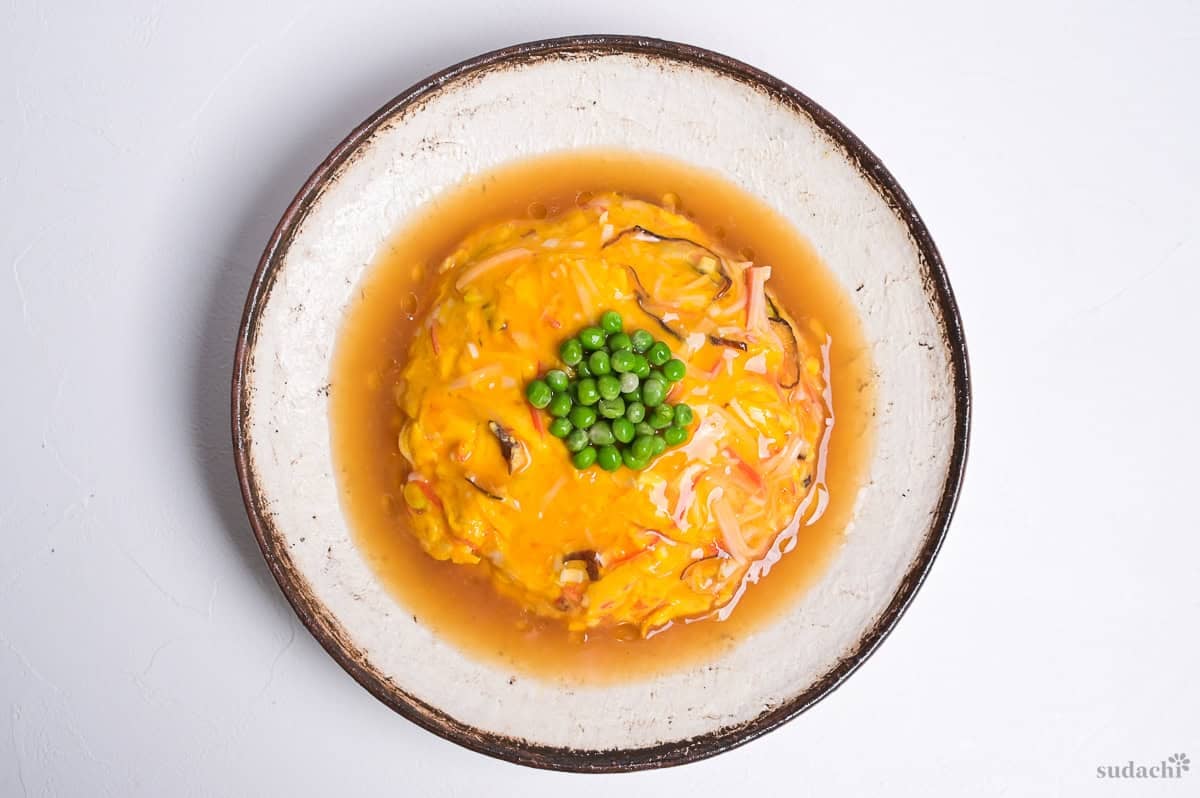
- Pour the sauce over the egg, drizzle with 1 tsp toasted sesame oil over the top, and scatter 1 tbsp green peas. Enjoy!
Notes
Stir the butter in last, off the heat: Heat burns off aroma and acidity. Once the starch has gelled, add the rice vinegar, then ginger, then unsalted butter. The milk fat wraps the aromas so they lift gently and gives the most gloss.
Add the potato starch slurry off the heat: Pour it into boiling glaze and each grain gels into a skin, sealing water from the powder inside, the cause of lumps. Kill the heat, stir the settled powder up, pour the slurry in slowly, then reheat.
Hold the thickness a full minute: Stop the second it thickens and water seeps out as it cools, slackening the glaze. Hold it at a gentle bubble until translucent and glossy. Push far past that and the swollen starch breaks down and thins.
Full Recipe QR Code↑↑