
Hitsumabushi (Nagoya Style Grilled Eel/Unagi)
Ingredients
Unagi Sauce
- 3 tbsp turbinado sugar light brown with coarse texture
- 1 tsp dark brown sugar muscovado or similar
- 5 tbsp sake
- 5 tbsp mirin
- 5 tbsp Japanese soy sauce (koikuchi shoyu)
Unagi
- 300 g filleted freshwater eels or conger eels/cat fish
- 2 tbsp sake
- 300 g cooked Japanese short-grain rice cook it a touch firm so it holds up under the dashi pour
- 1 pinch Japanese sansho pepper optional but recommended
Extra condiments / toppings for hitsumabushi
- 2 tsp unagi sauce to mix with rice (1tsp per bowl)
- 300 ml dashi stock for ochazuke
- 2 g green tea bag for ochazuke
- 2 tsp Japanese soy sauce (koikuchi shoyu) for ochazuke
- 1 tbsp finely chopped green onions
- 1 tbsp kizami nori (shredded nori)
- 1 tsp wasabi paste
- 1 tsp toasted white sesame seeds
Instructions
Unagi Sauce
- Add 3 tbsp turbinado sugar and 1 tsp dark brown sugar to a cold sauce pan. Place the pan on the stove and heat on medium-low.
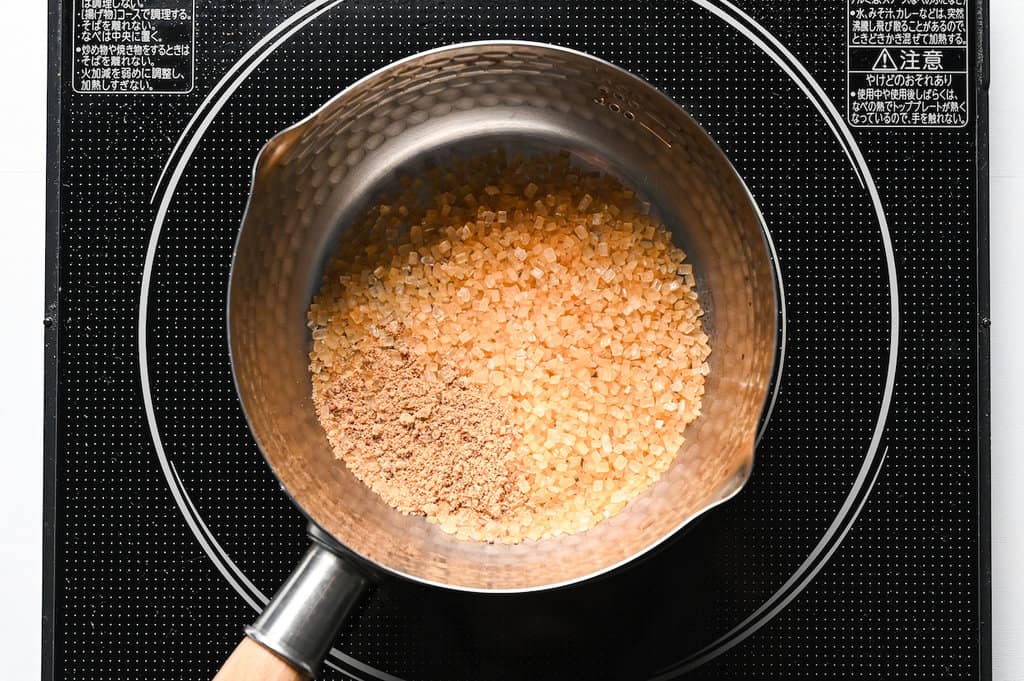
- Once the sugar starts to melt, add 5 tbsp sake and 5 tbsp mirin. Bring to boil and let it bubble for 1-2 minutes while stirring occasionally.
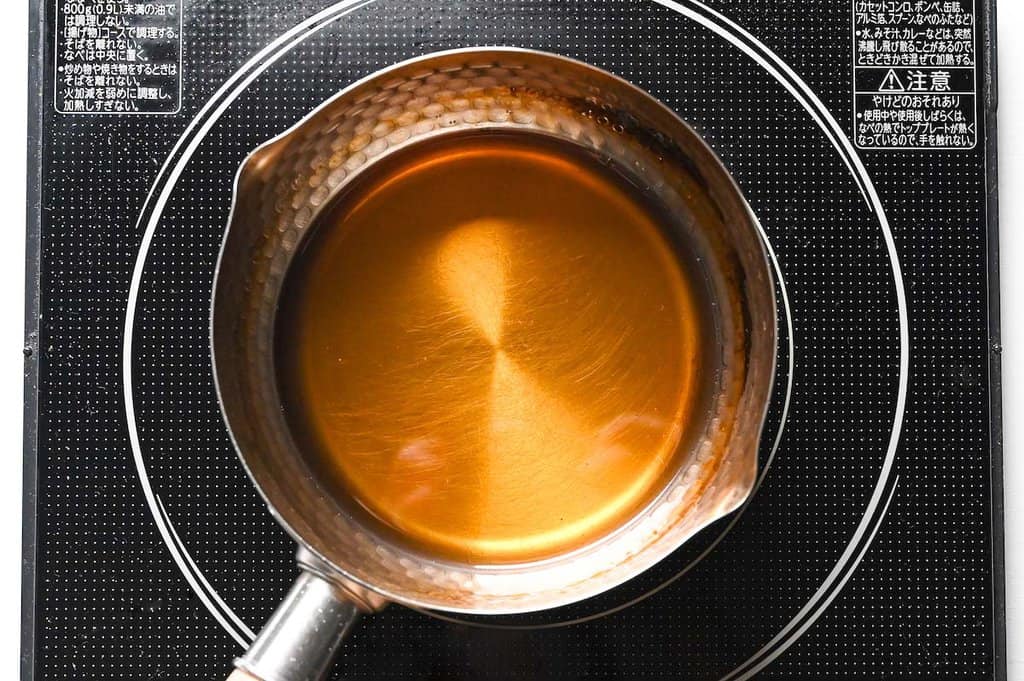
- Pour in 5 tbsp Japanese soy sauce (koikuchi shoyu) and lower the heat to a simmer.
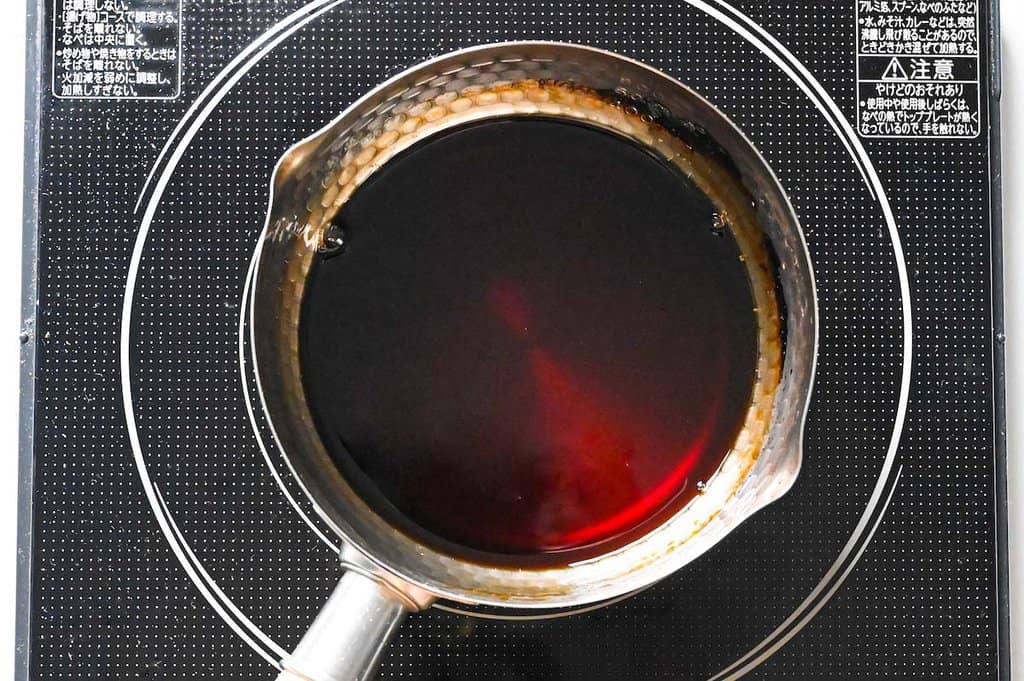
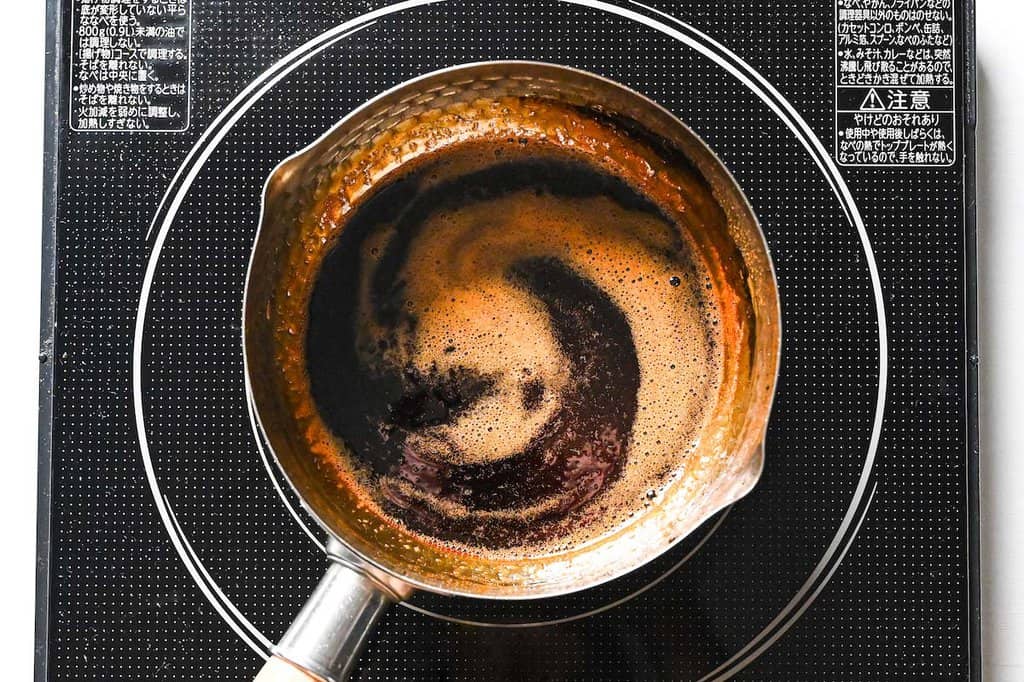
- Simmer until thickened slightly (about 10 minutes). Stir occasionally to prevent the sugar from burning and scoop out any foam that forms on top.Once thickened, take the pan off of the heat and leave to cool while you prepare the eel.
Unagi don
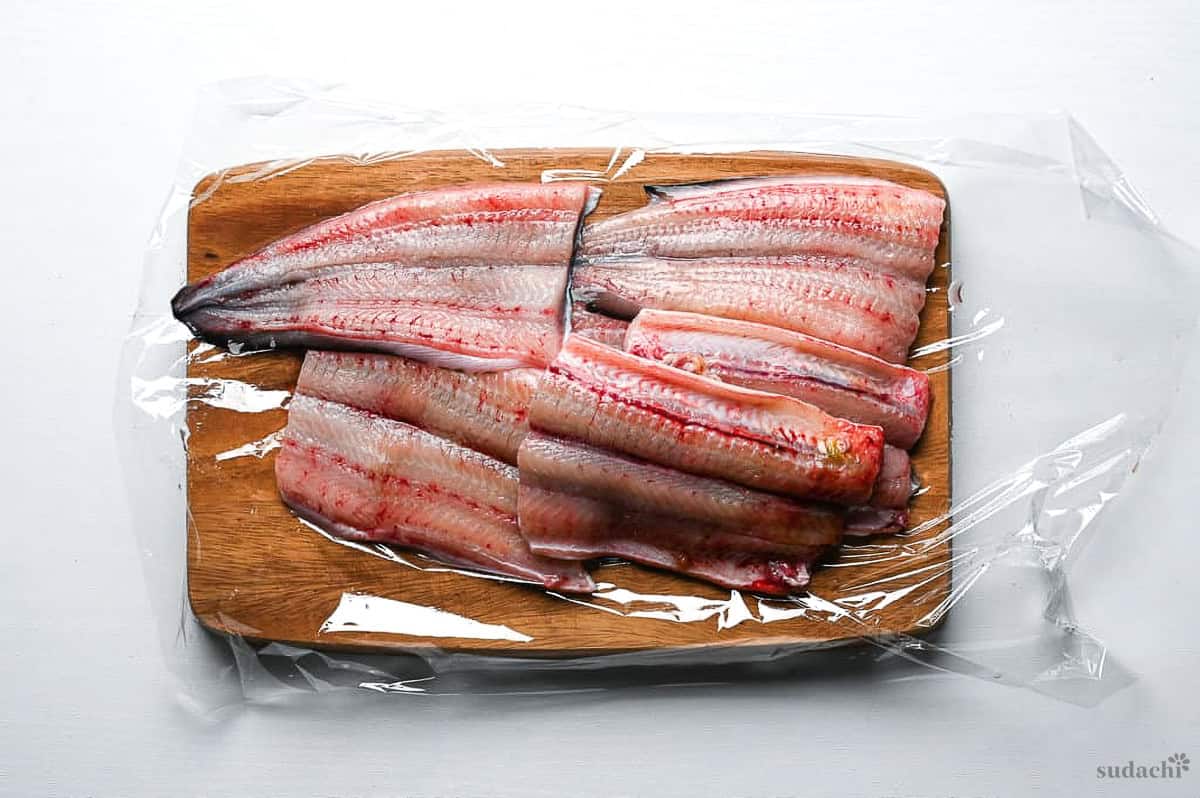
- Wash 300 g filleted freshwater eels with cold running water. Cover a chopping board with plastic wrap and place the eel on top. Cut each eel into 2-3 pieces by pressing a sharp knife into the area you want to cut and pushing the eel back and forth over the plastic wrap.
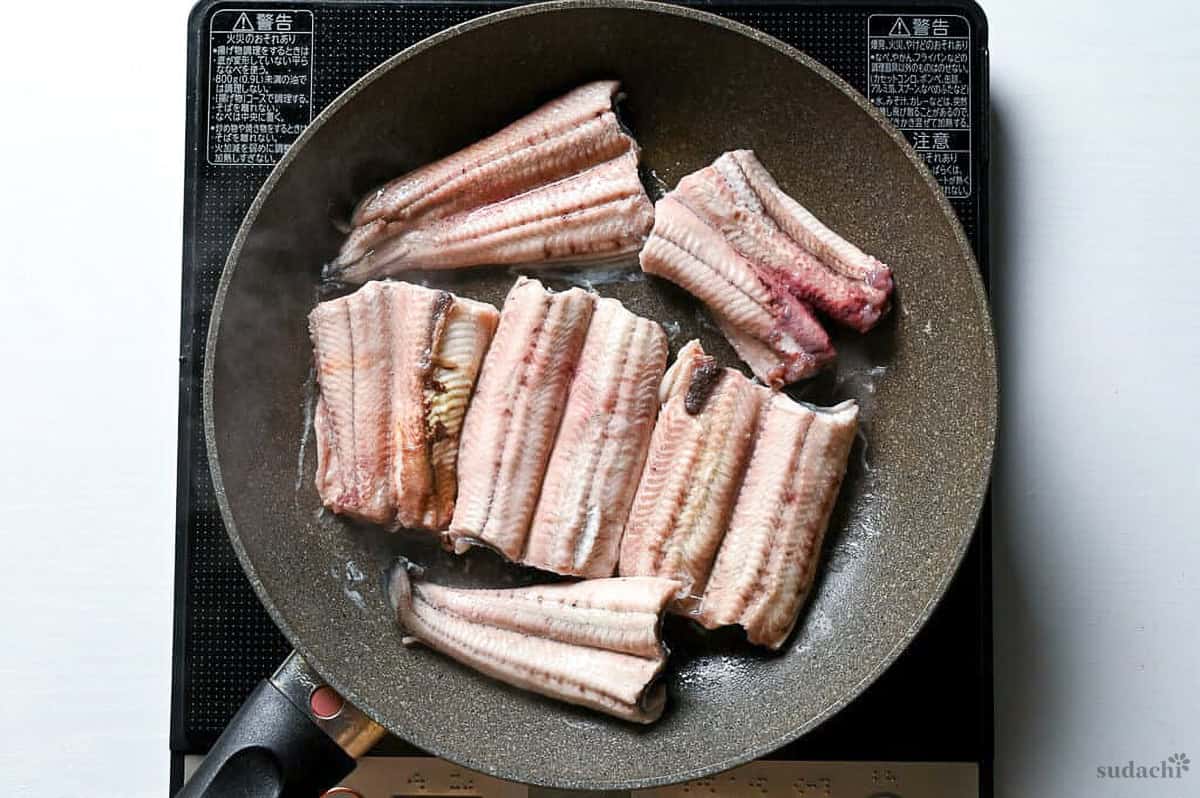
- Place the eel in a frying pan with the skin side facing down and pour in 2 tbsp sake.
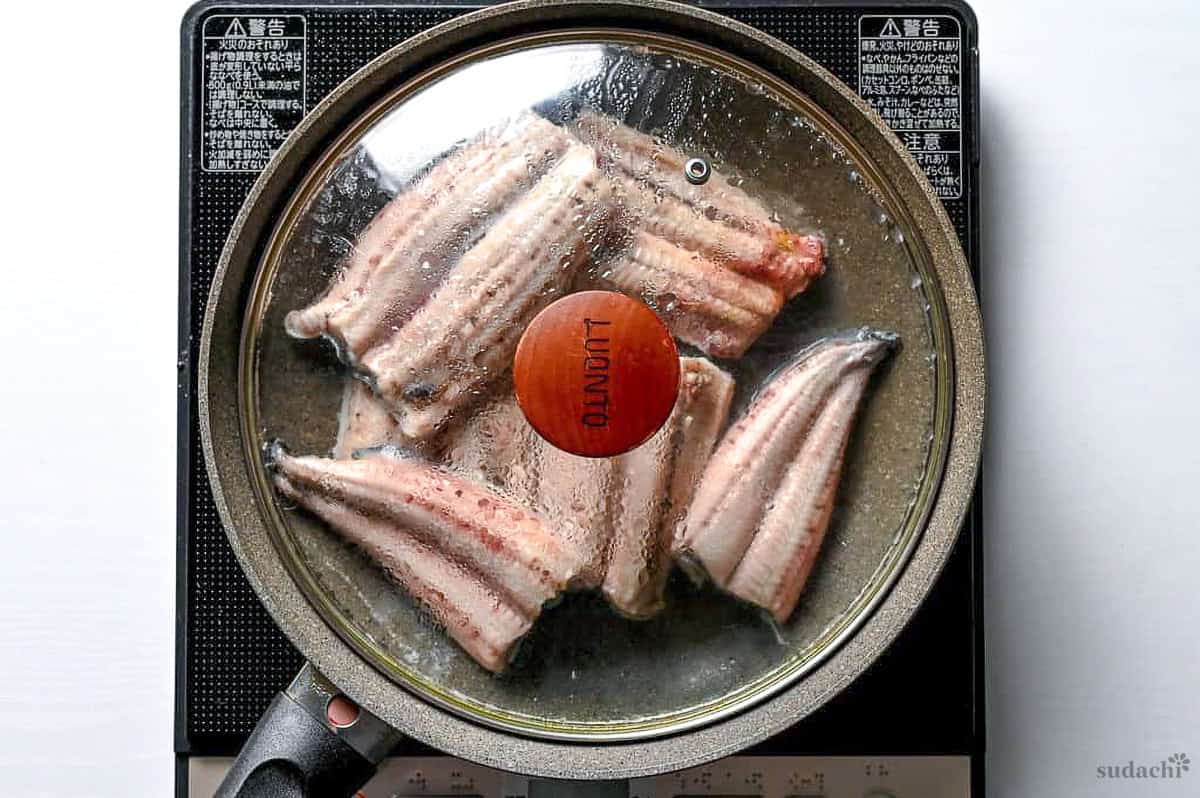
- Set the heat to medium-low and cover with a lid. Steam gently in the sake for 3 minutes, then remove the pan from the heat. Start preheating your grill or broiler on medium-high for 5 minutes.
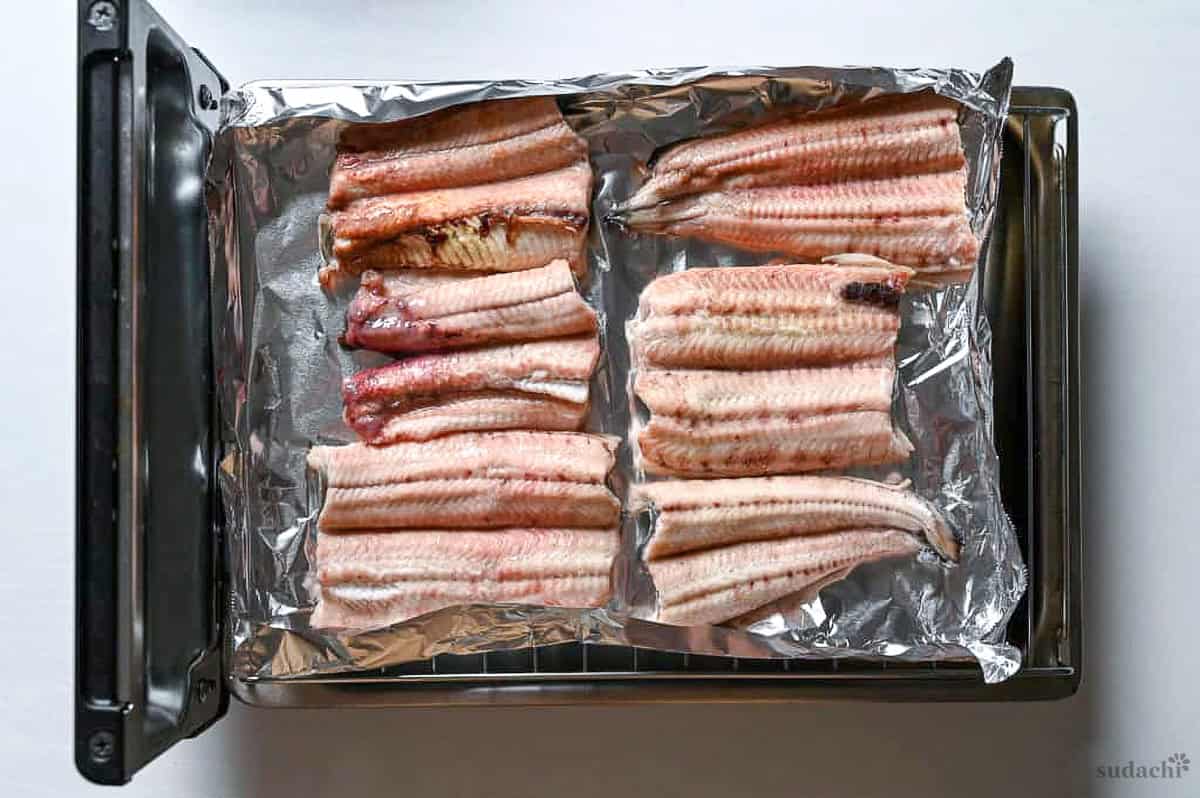
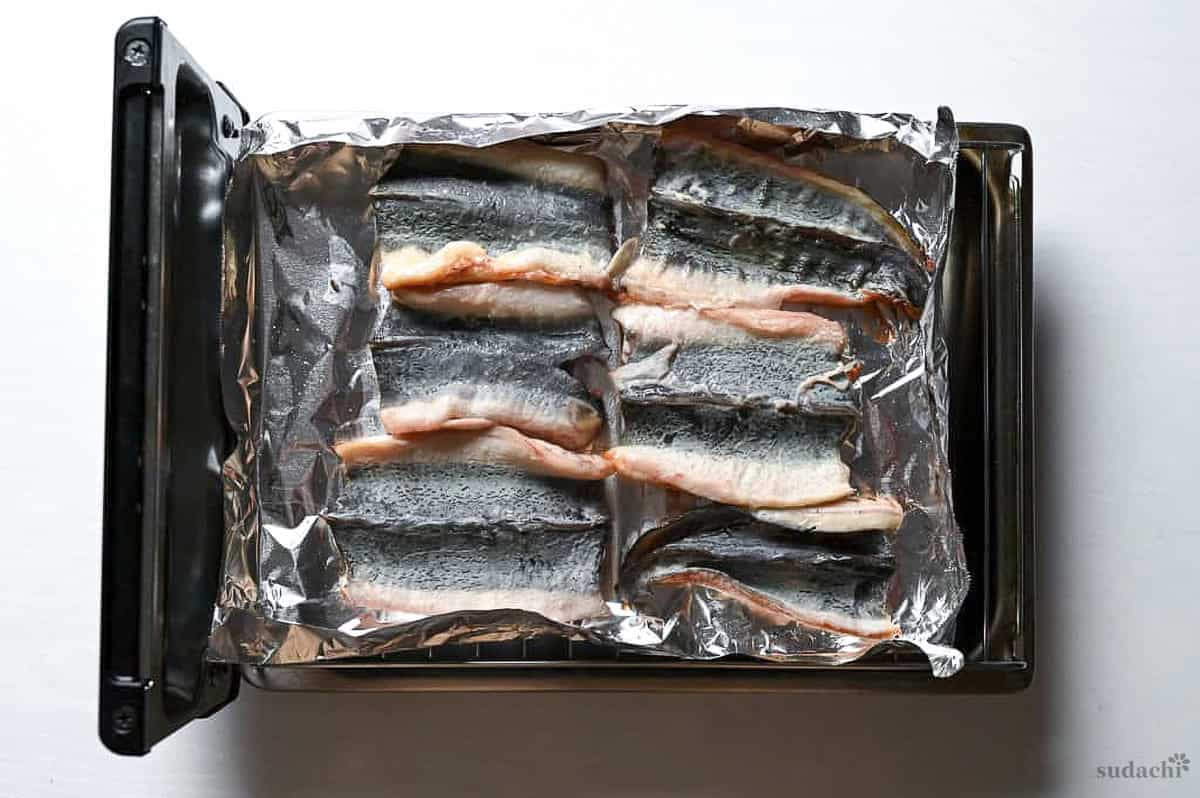
- Line a baking tray with foil and place the eel fillets on top in a single layer with the skin side down. Slide under the grill and cook for 6 minutes.
- Carefully flip the eel over and grill the skin side for 5 minutes or until lightly charred.
- Brush an even layer of sauce over the skin and place back under the grill for 30 seconds.
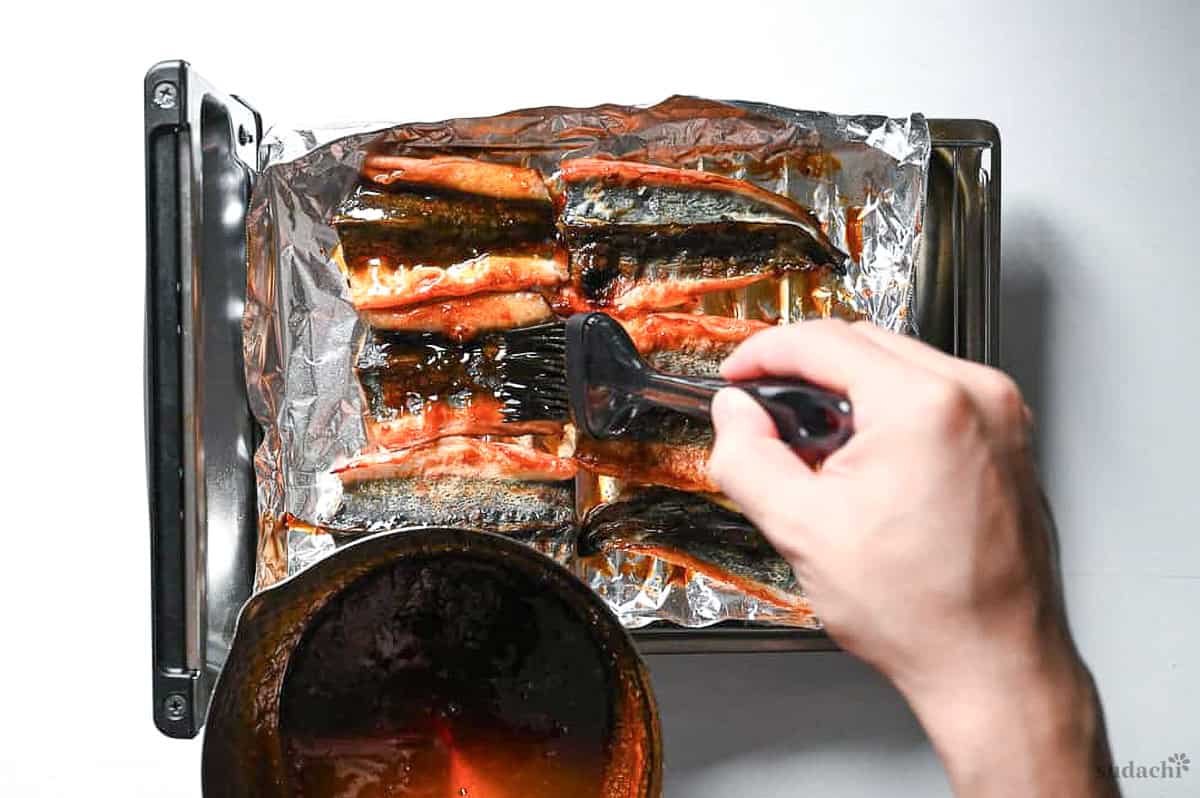
- Pull the tray out, flip the eel over and apply the sauce to the meat side. Return to the grill for 30 seconds, then pull, flip and repeat. Brush with sauce and grill for 30 seconds each time 6 times in total (3 times on each side).
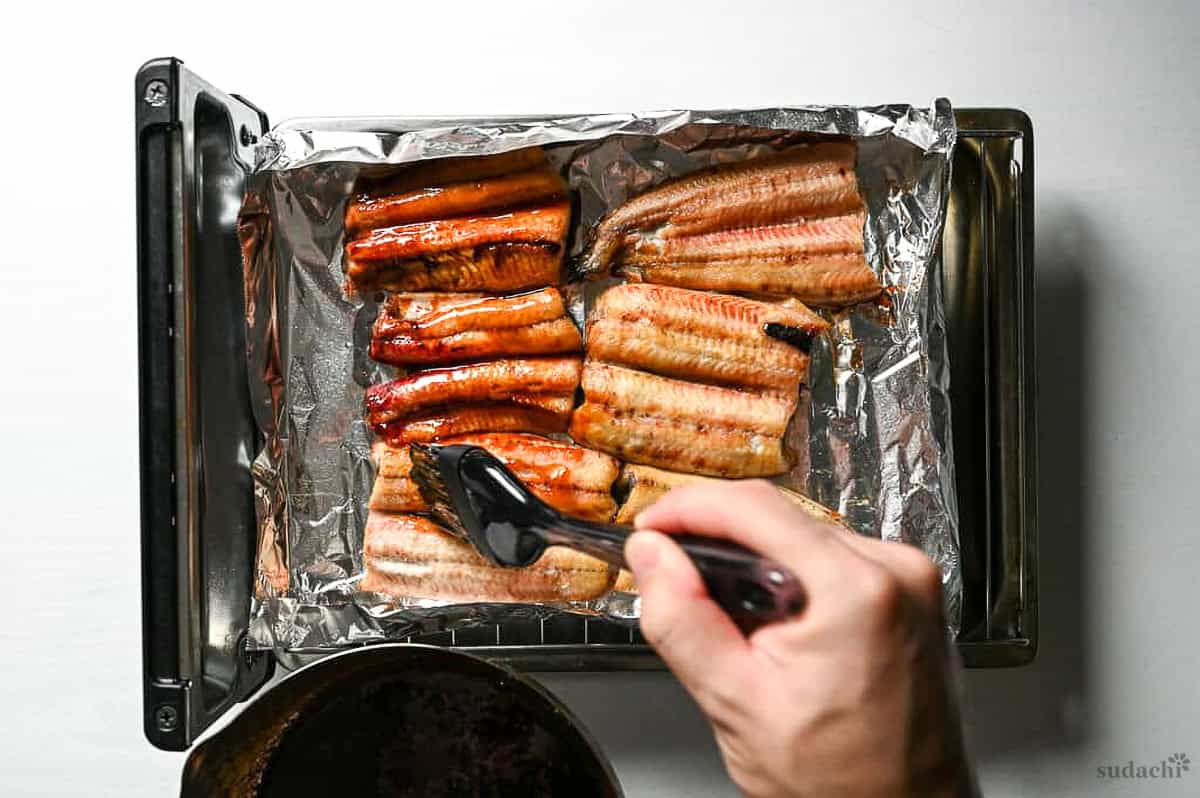
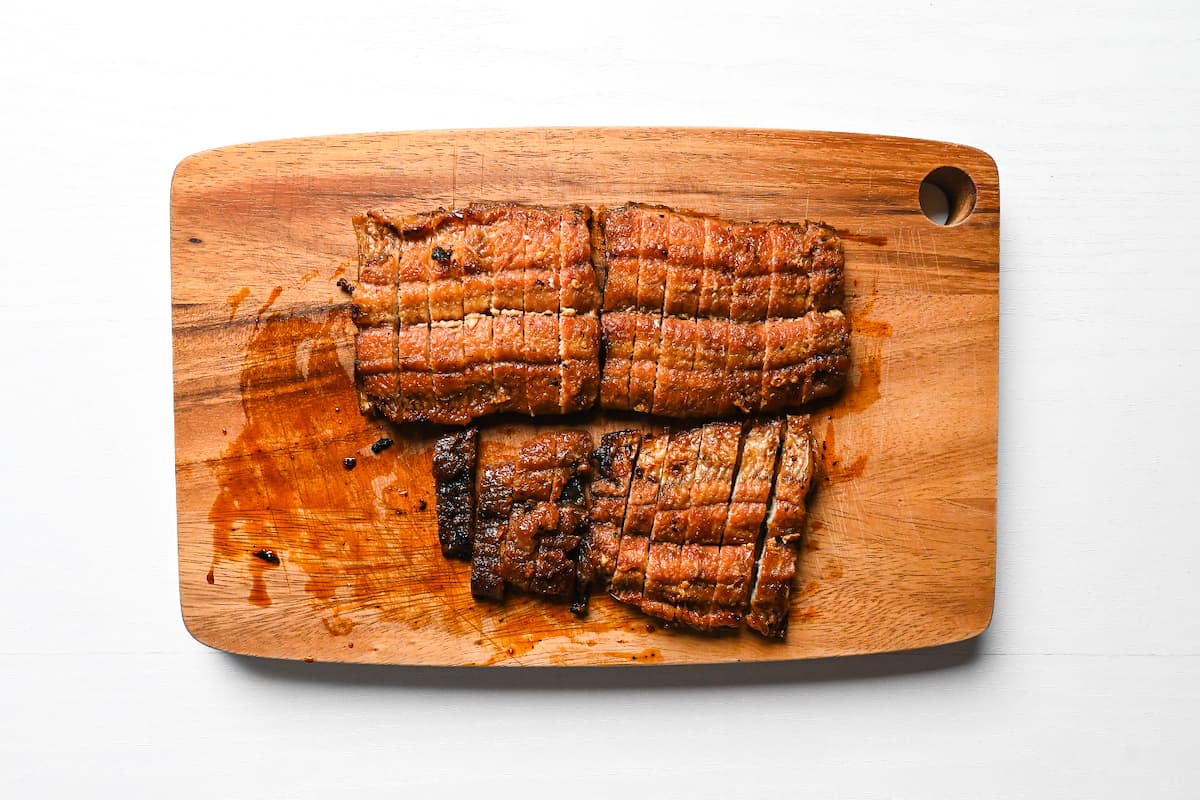
- Transfer to a heatproof cutting board and cut the eel fillets into finger-width strips.
- Pour about 1 tsp of leftover unagi sauce over each portion of rice and mix until evenly distributed.
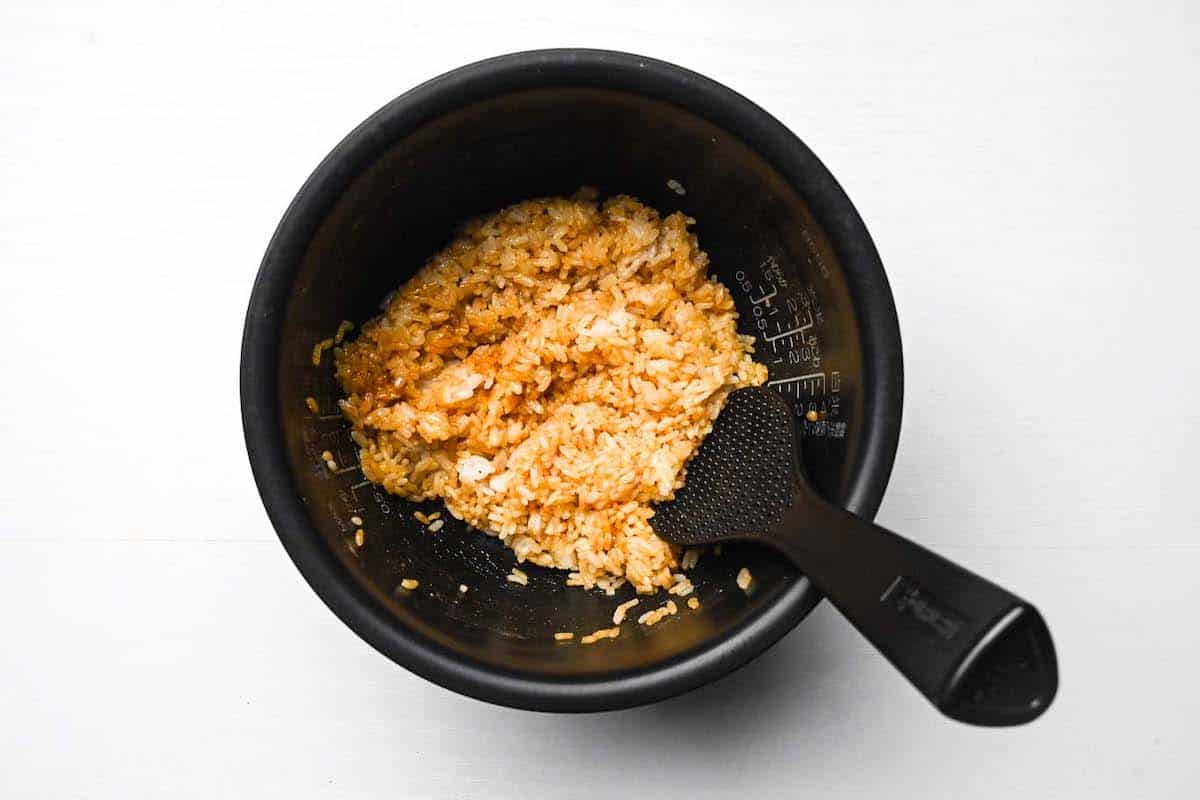
- Divide the rice into wooden bowls and top with the grilled eel strips. Brush liberally with more unagi sauce.
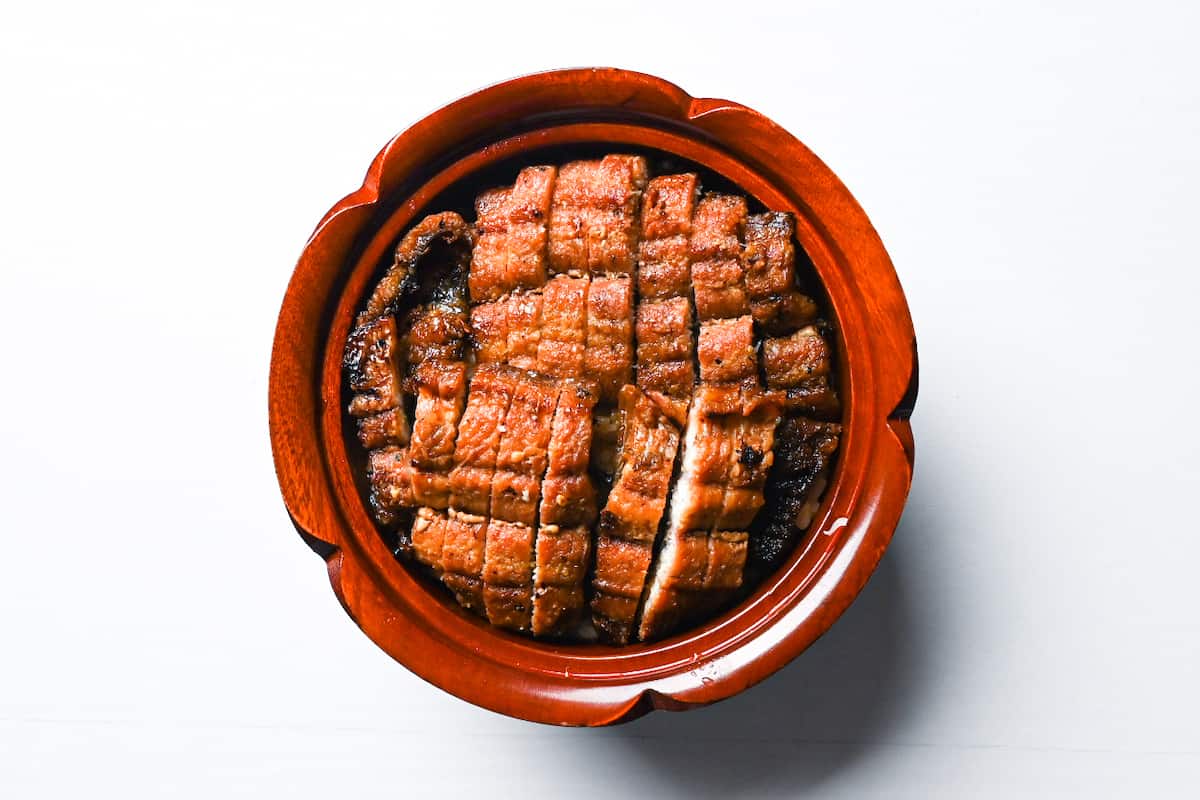
How to enjoy hitsumabushi (3 ways)
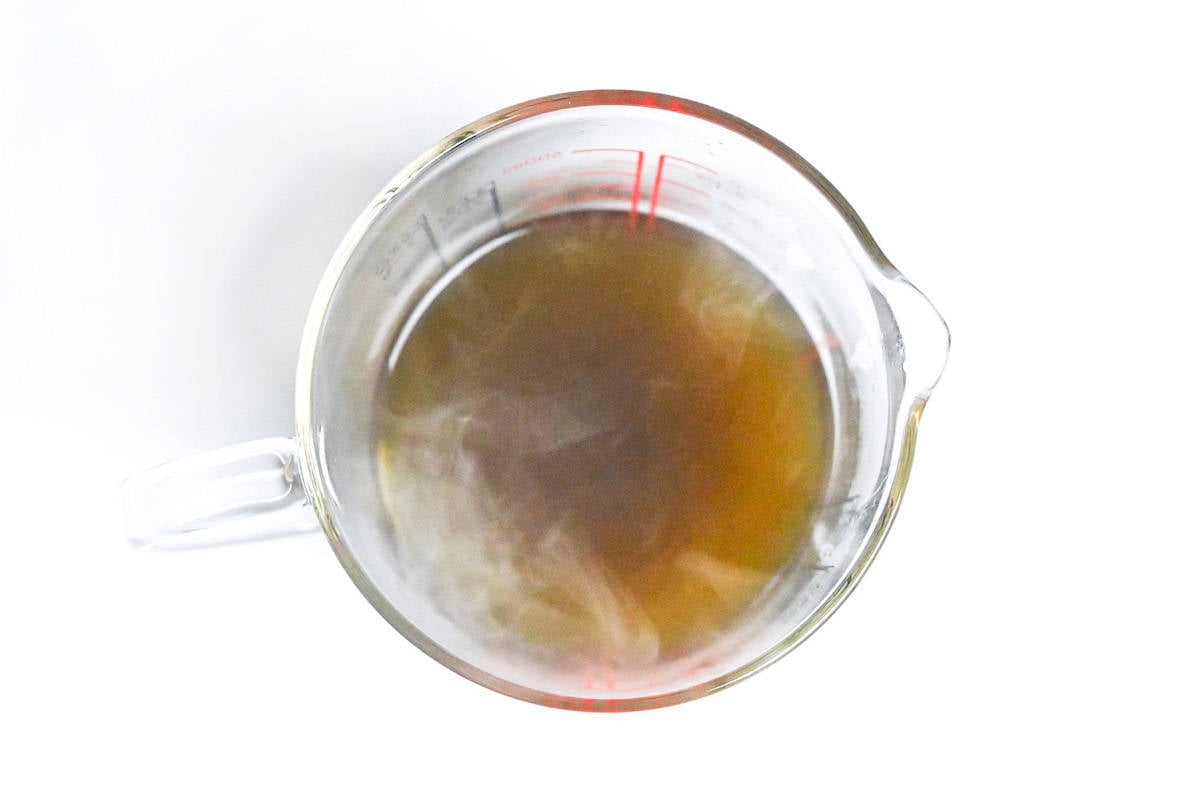
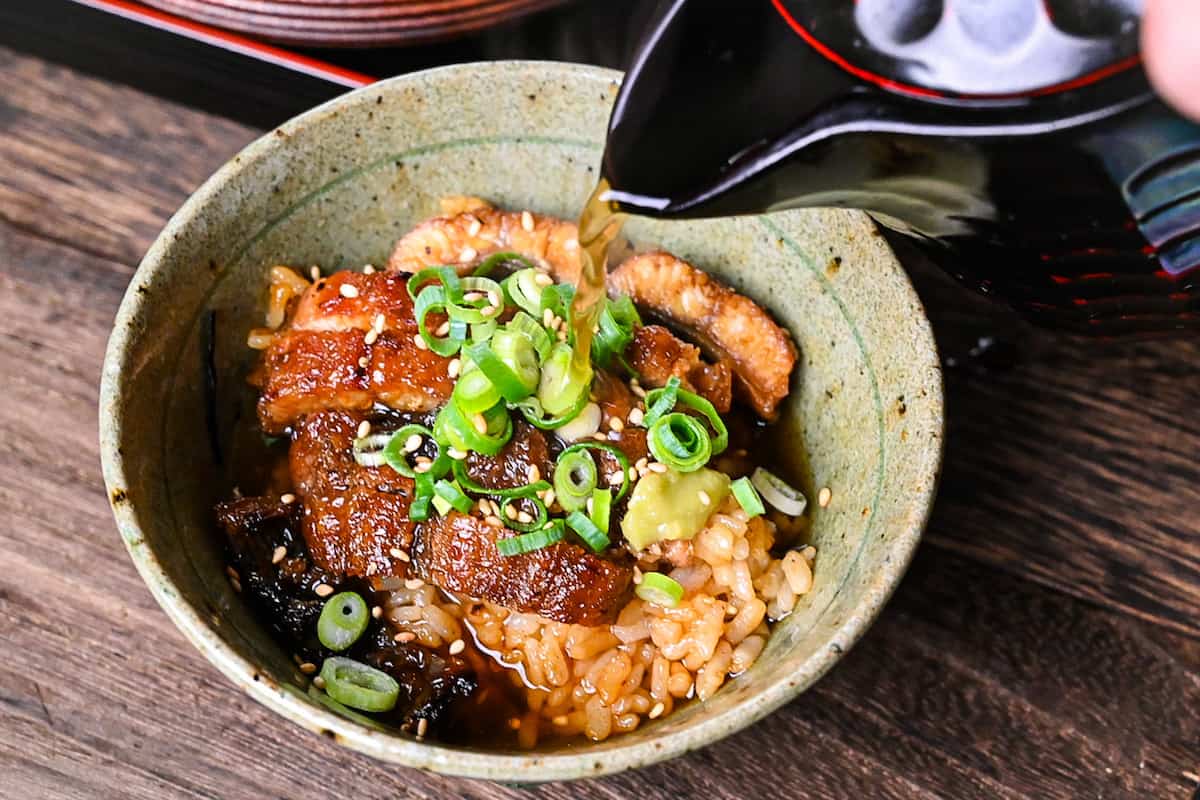
- Heat 300 ml dashi stock to about 80 °C (176 °F) and add a 2 g green tea bag and 2 tsp Japanese soy sauce (koikuchi shoyu). Brew for 2-4 minutes then remove the teabag. Serve in a teapot or heatproof jug on the table.
- Ask each diner to divide their bowl into quarters using a rice paddle or spoon.
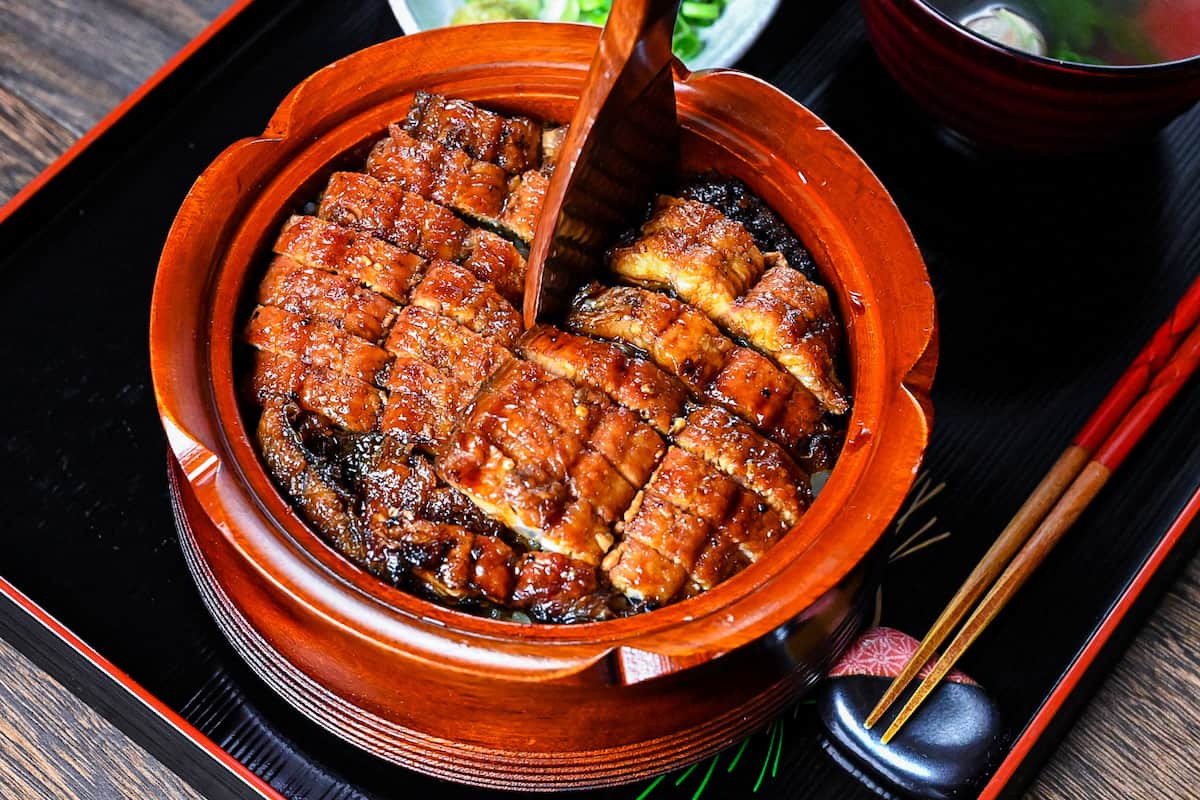
- Traditional: Remove the first quarter and place it in an individual rice bowl. Eat as it is or sprinkle with 1 pinch Japanese sansho pepper to taste.
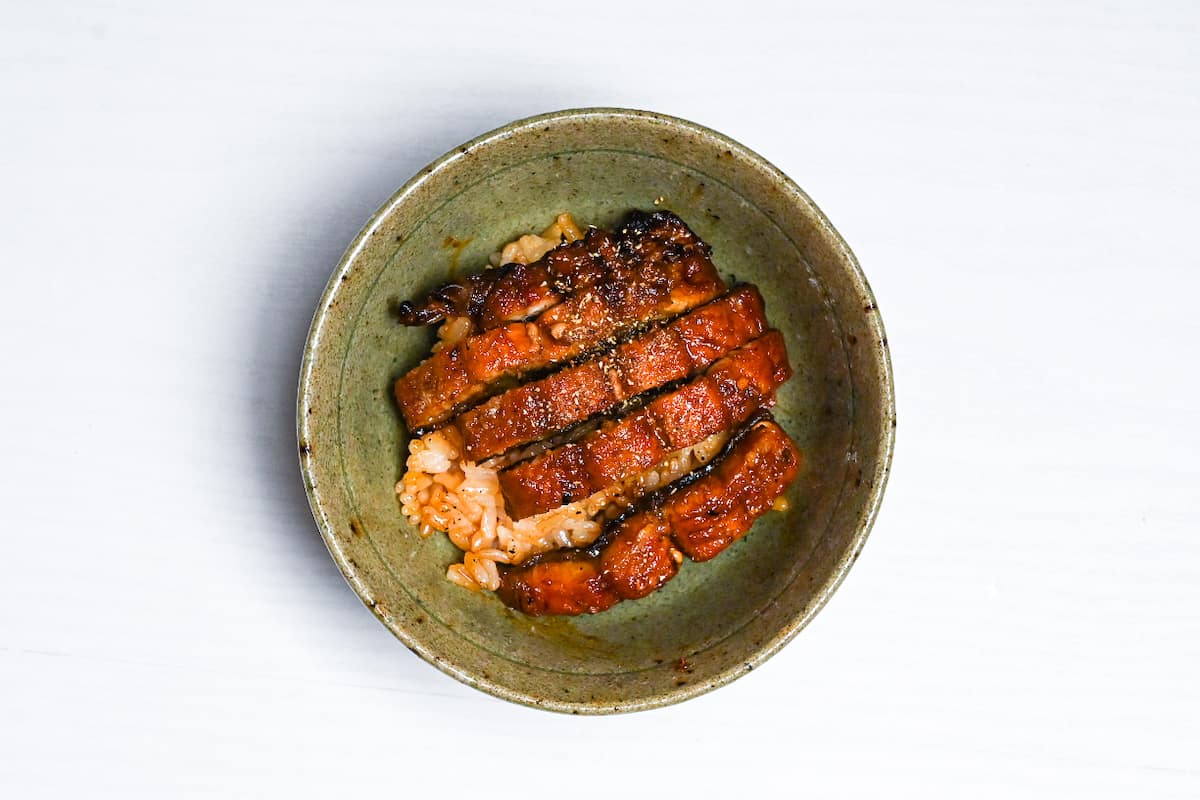
- Personal: Once you've finished the traditional serving, spoon the second quarter into the same bowl and add toppings you like such as 1 tbsp finely chopped green onions, 1 tbsp kizami nori (shredded nori) or 1 tsp wasabi paste.
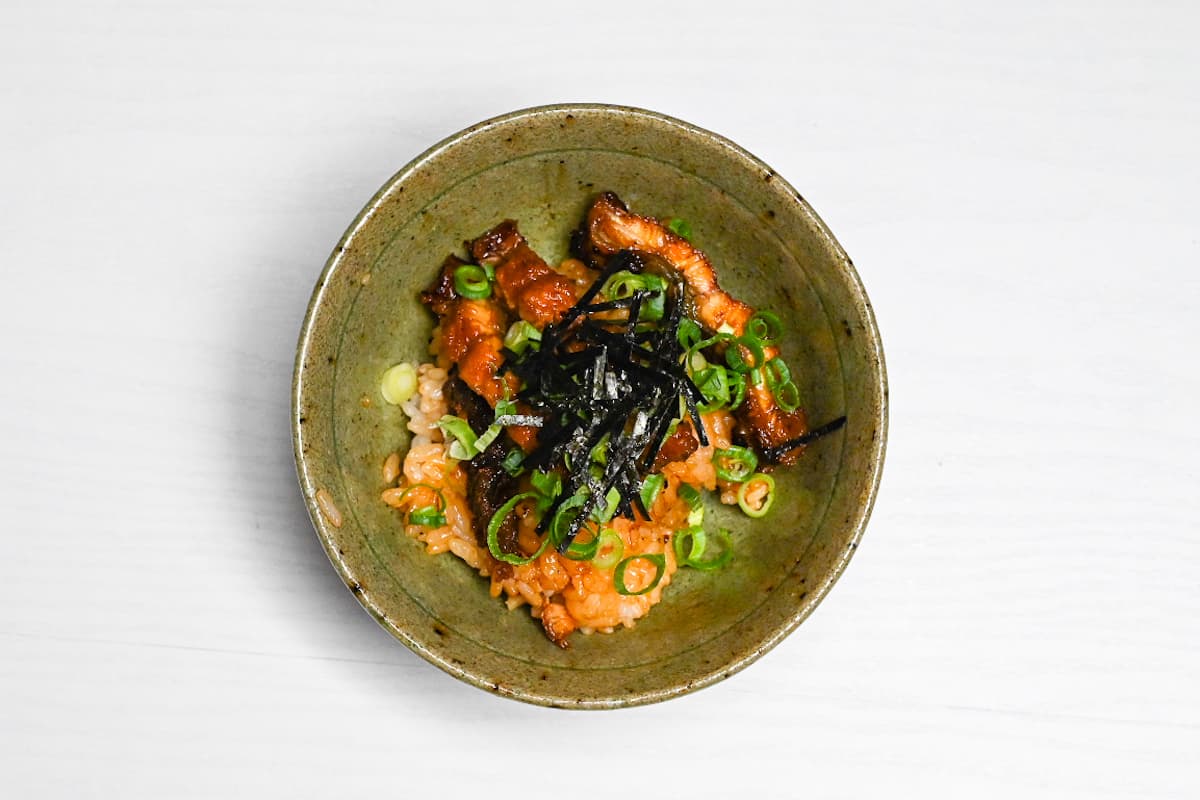
- Dashi chazuke: Place the third-quarter into your rice bowl and pour the prepared dashi tea over the top. This is also good with wasabi and additional toppings such as 1 tsp toasted white sesame seeds.
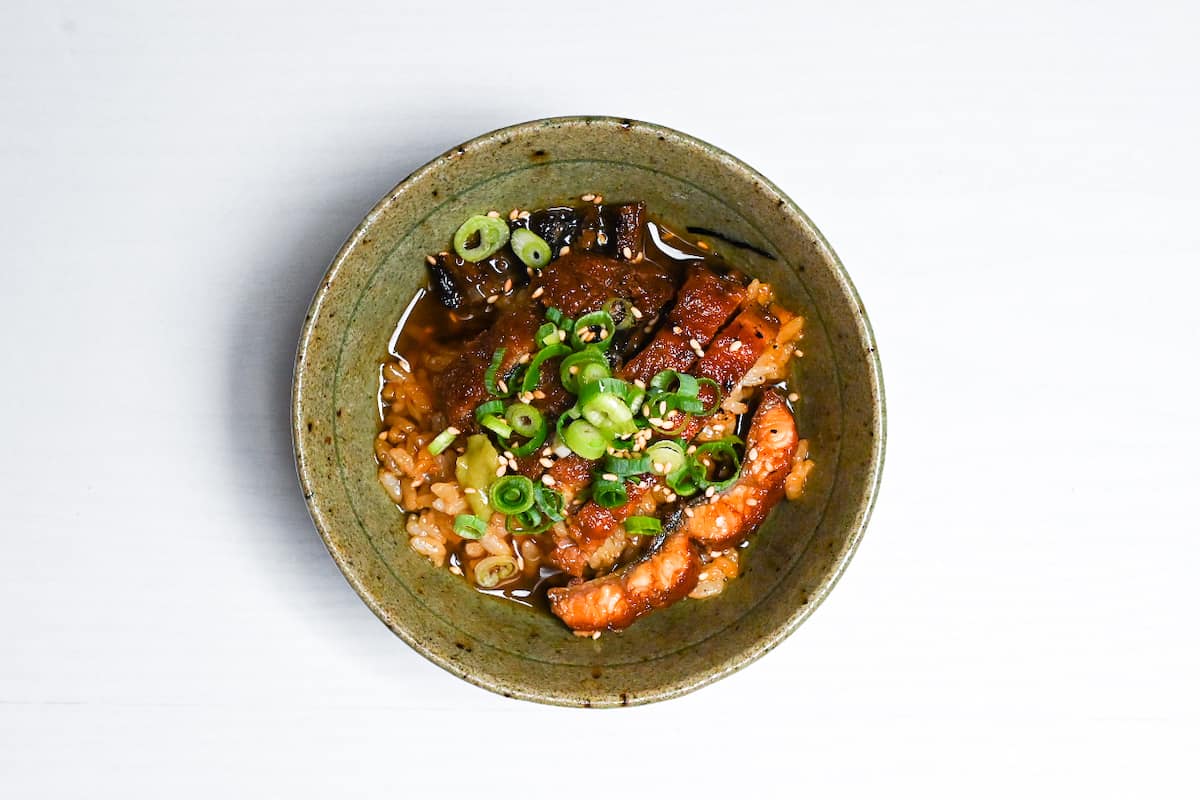
- Enjoy the final quarter in the way you liked best!
Notes
Tender and crisp, not one or the other: The whole bowl turns on this. Stop the eel before it fully chars and hold a heat that is firm but not fierce. Push too hard and the skin goes rubbery and the inside dries out.
Do not skip the short steam: Three minutes under a lid with sake is where the flesh loosens and the raw fishy edge drops away. Take raw eel straight to the grill and you fight a firmer, plainer fillet the whole way.
Watch the tare, not the clock: Sugar scorches fast and quietly, so a tare pushed too far turns bitter and one pulled too soon stays watery. Stop it the moment it coats a spoon.
Build the glaze in thin coats: One heavy layer slumps and burns before it sets. Brush a little, grill, repeat. The repetition is the technique that lays down the glossy layered glaze without scorching.
Cook the rice a touch firm: The third bowl gets a pour of hot dashi, and soft rice collapses into porridge under it. A slightly drier cook gives the grains something to hold so they drink the broth instead.
Full Recipe QR Code↑↑