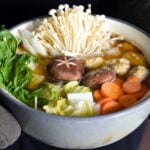
Chanko Nabe (Sumo Stew)
Ingredients
Homemade Chicken Meatballs
- 200 g ground chicken or ground turkey/pork
- ½ tsp Japanese soy sauce (koikuchi shoyu)
- ½ tbsp yellow miso paste (awase)
- ½ tsp grated ginger root or ginger paste
- 1 clove grated garlic or ½ tsp garlic paste per clove
- 1 egg
- 2 tbsp cornstarch or potato starch
Broth
- 1000 ml dashi stock homemade or quality dashi packets
- 1 ½ tbsp Chinese-style chicken bouillon powder
- 1 tbsp Japanese soy sauce (koikuchi shoyu)
- 1 tbsp mirin
- 1 tsp grated ginger root or ginger paste
- 2 cloves grated garlic or ½ tsp garlic paste per clove
- 2 tbsp ground sesame seeds
- 2 tbsp yellow miso paste (awase)
Other Ingredients
- 1 carrot peeled and cut into thick rounds
- 1 Japanese leek (naganegi) white part, cut into thick diagonal slices
- 1 bunch enoki mushrooms stems removed
- 2 fresh shiitake mushrooms stems removed
- ⅛ Napa cabbage roughly cut
- 150 g firm tofu cubed
- 1 bunch potherb mustard (mizuna) stems removed
Instructions
Homemade Chicken Meatballs
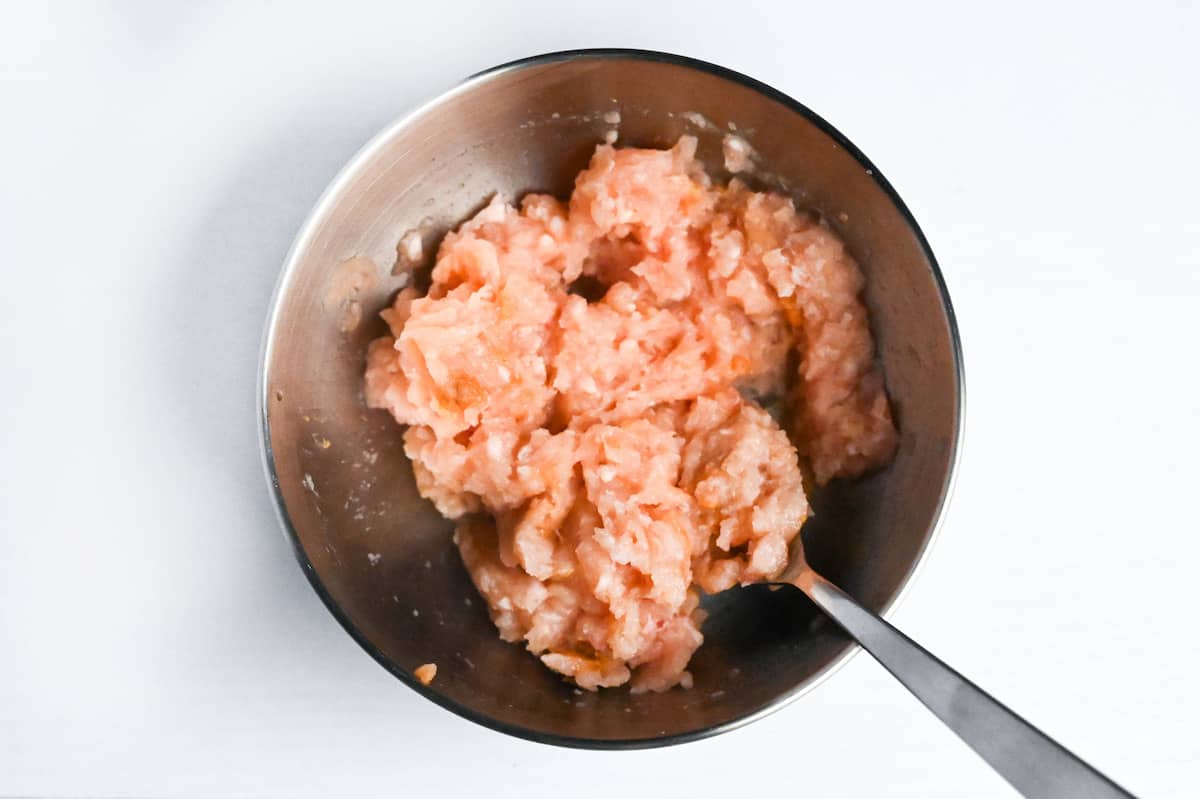
- First prepare the meatballs. Mix 200 g ground chicken with ½ tbsp yellow miso paste (awase), 1/2 tsp Japanese soy sauce (koikuchi shoyu), ½ tsp grated ginger root and 1 clove grated garlic in a bowl until the ingredients are well distributed and there are no lumps of miso.
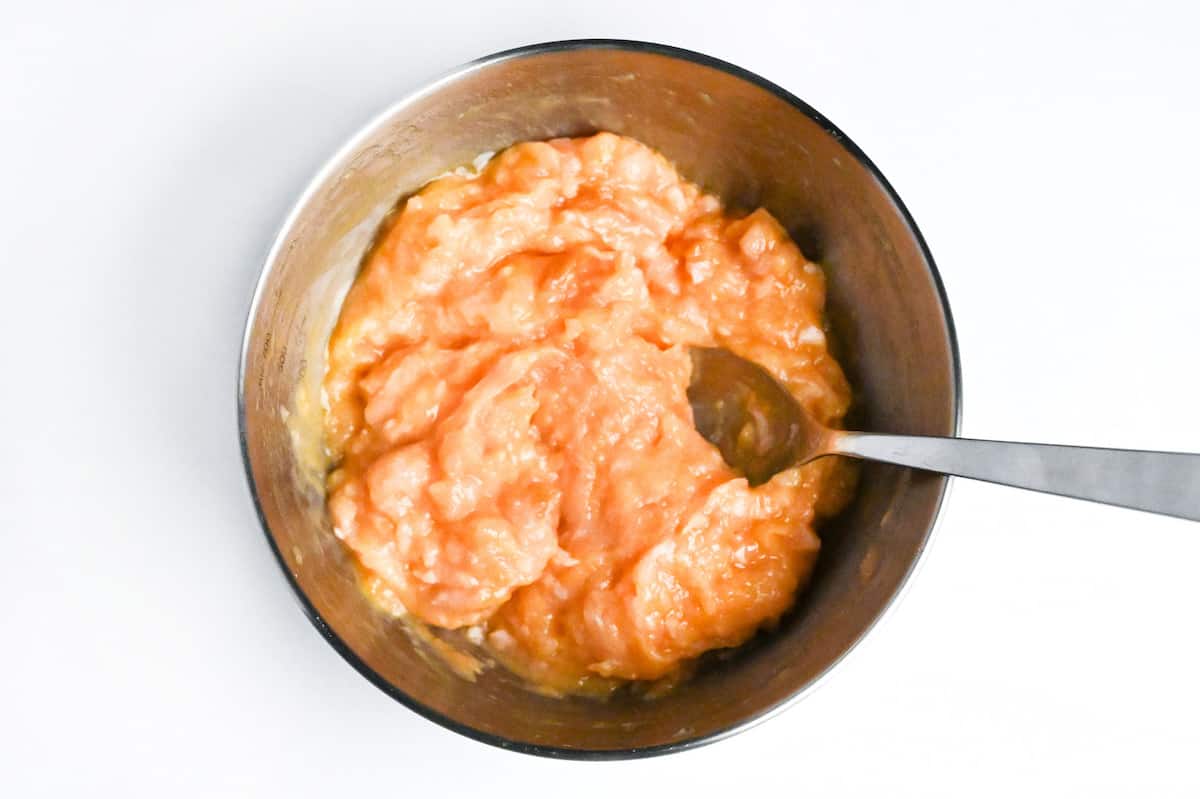
- Crack 1 egg into a separate bowl and whisk until combined, then pour it into the chicken mixture and add 2 tbsp cornstarch. Mix until well combined, then cover and refrigerate until it's time to cook.
Broth
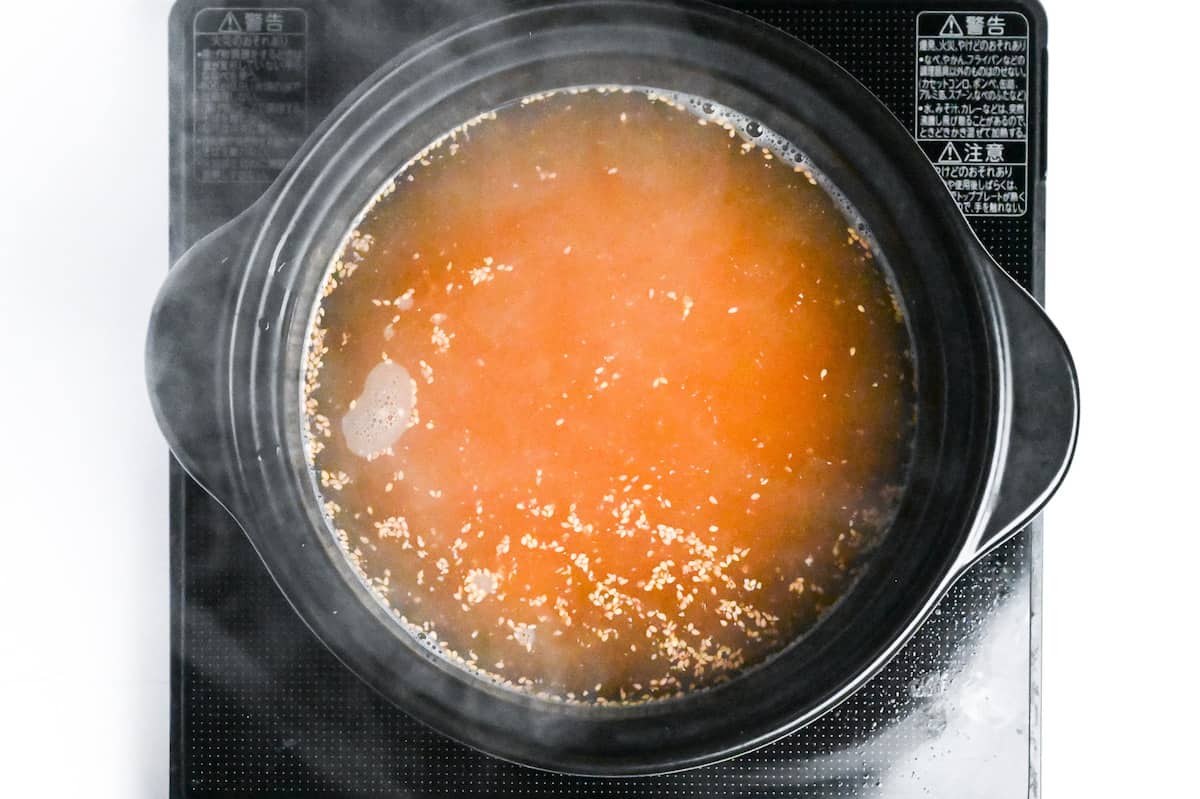
- Pour 1000 ml dashi stock into a large pot and add 1 ½ tbsp Chinese-style chicken bouillon powder, 1 tbsp Japanese soy sauce (koikuchi shoyu), 1 tbsp mirin, 1 tsp grated ginger root, 2 cloves grated garlic, and 2 tbsp ground sesame seeds. Mix well and bring to a gentle boil over a medium heat.
- Once gently boiling, grab the meatball mixture from the fridge. It's too sticky to shape by hand, so use two spoons to scoop and scrape the mixture directly into the bubbling broth.
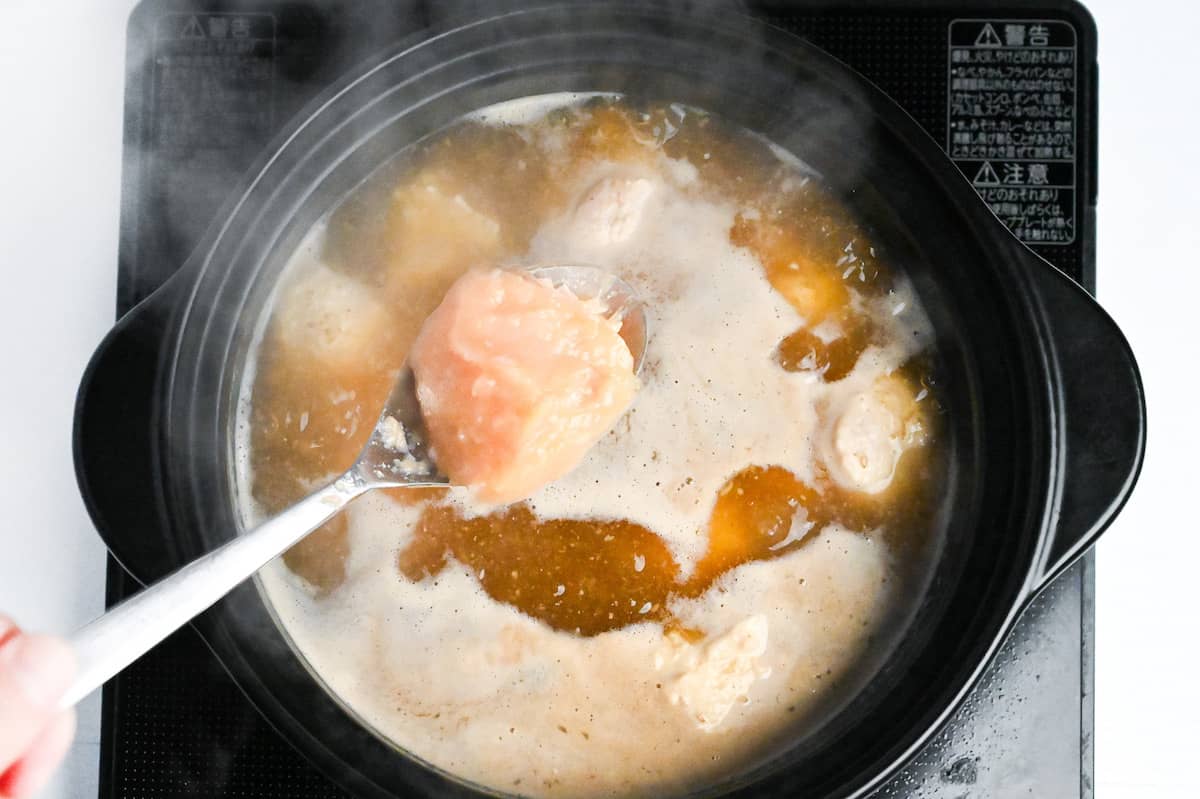
- Once the mixture is used up, cover the pot with a lid and simmer for 3 minutes.
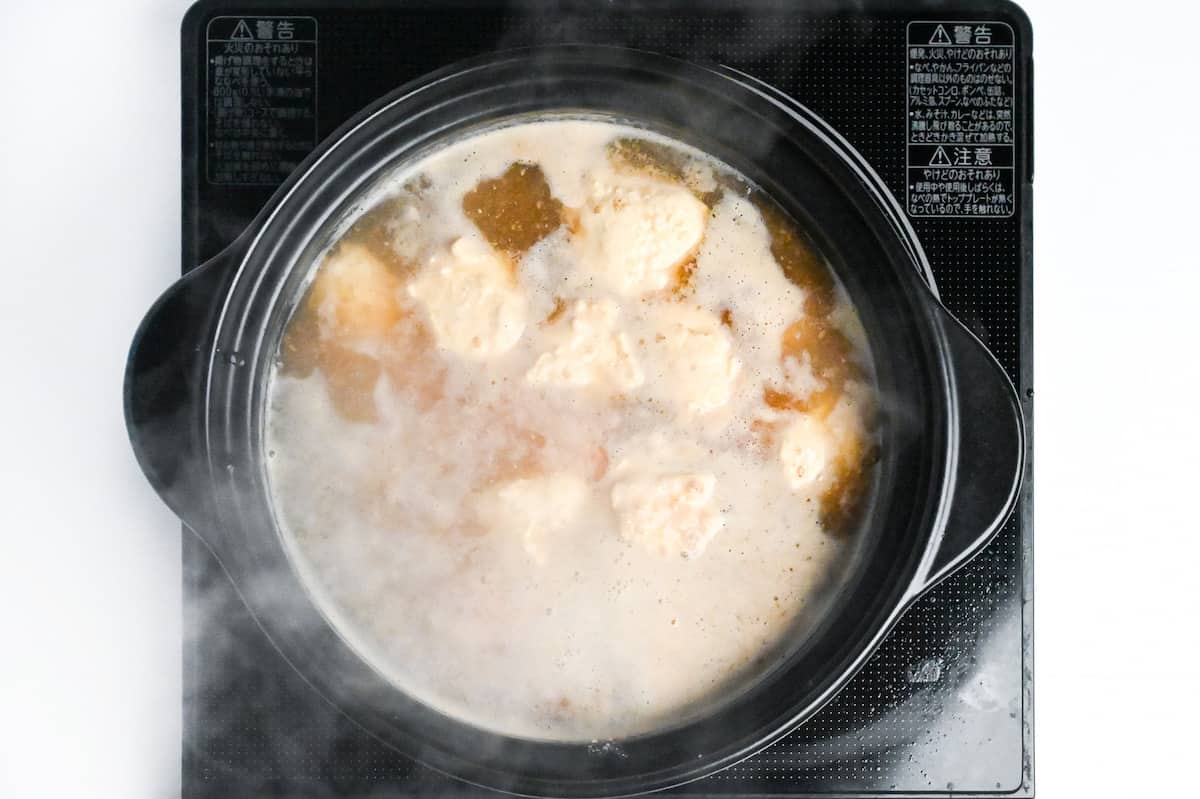
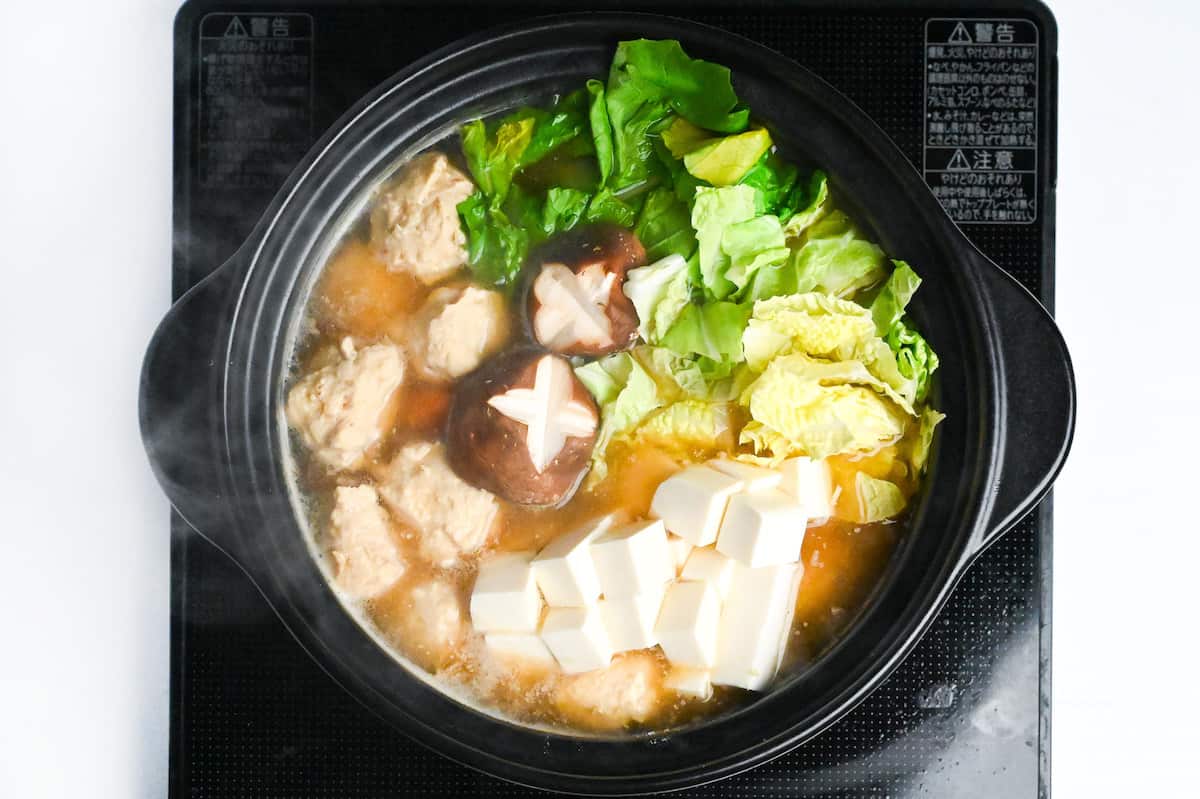
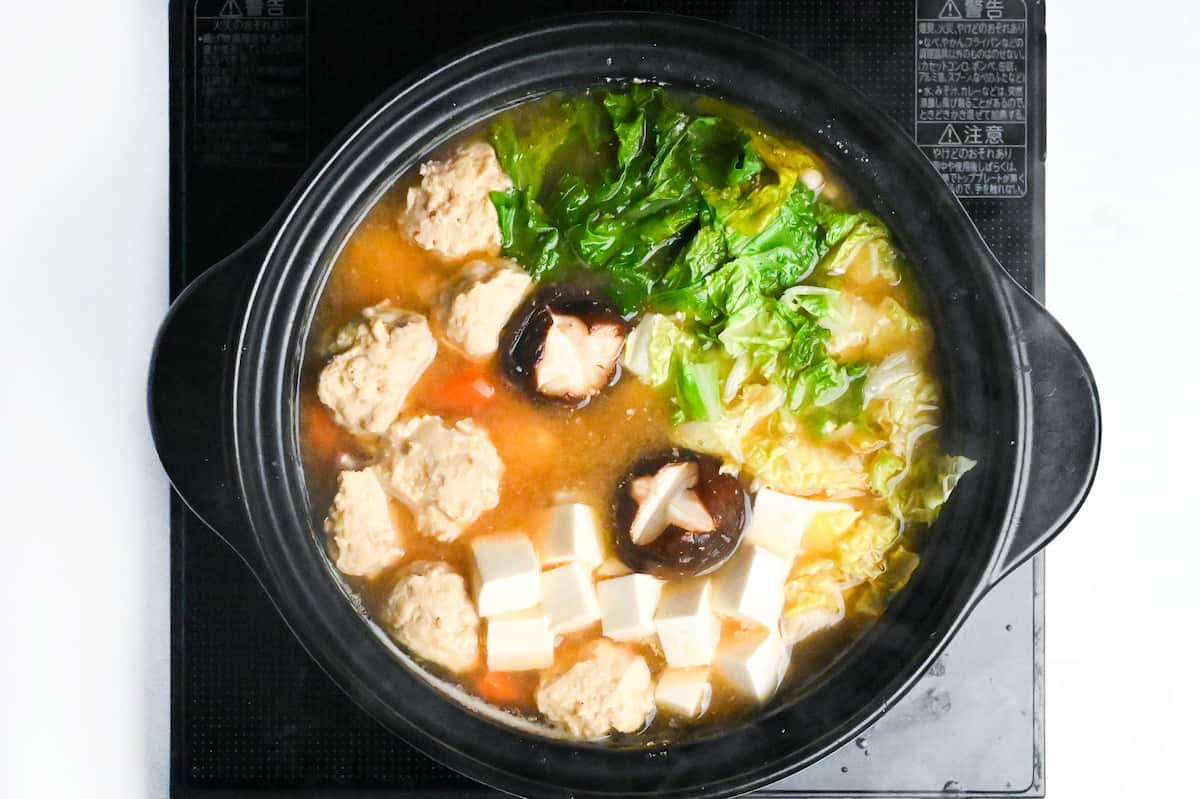
- Add 1 carrot and any root vegetables, and boil for a few minutes before adding 1 Japanese leek (naganegi), 1 bunch enoki mushrooms, 2 fresh shiitake mushrooms, ⅛ Napa cabbage, 1 bunch potherb mustard (mizuna) and 150 g firm tofu. Cover with a lid and simmer until the vegetables are cooked to your liking, about 5-10 minutes.
- Turn off the heat and mix in 2 tbsp yellow miso paste (awase) by scooping it onto a miso strainer and dipping it in the broth. Use chopsticks or a small whisk to break up the miso paste and gradually incorporate it into the rest of the broth.
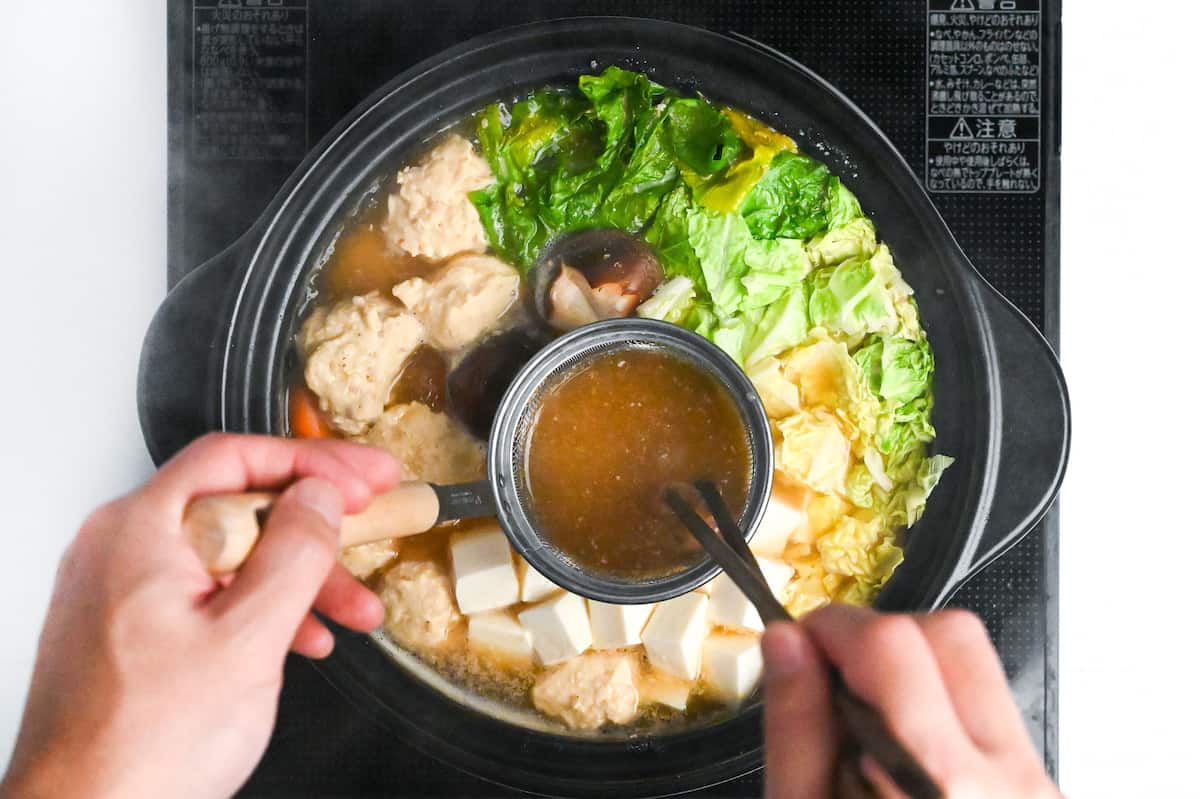
- Tip: If you don't have a miso strainer, pour a small amount of broth into a bowl and whisk into a thin paste before pouring it into the pot.
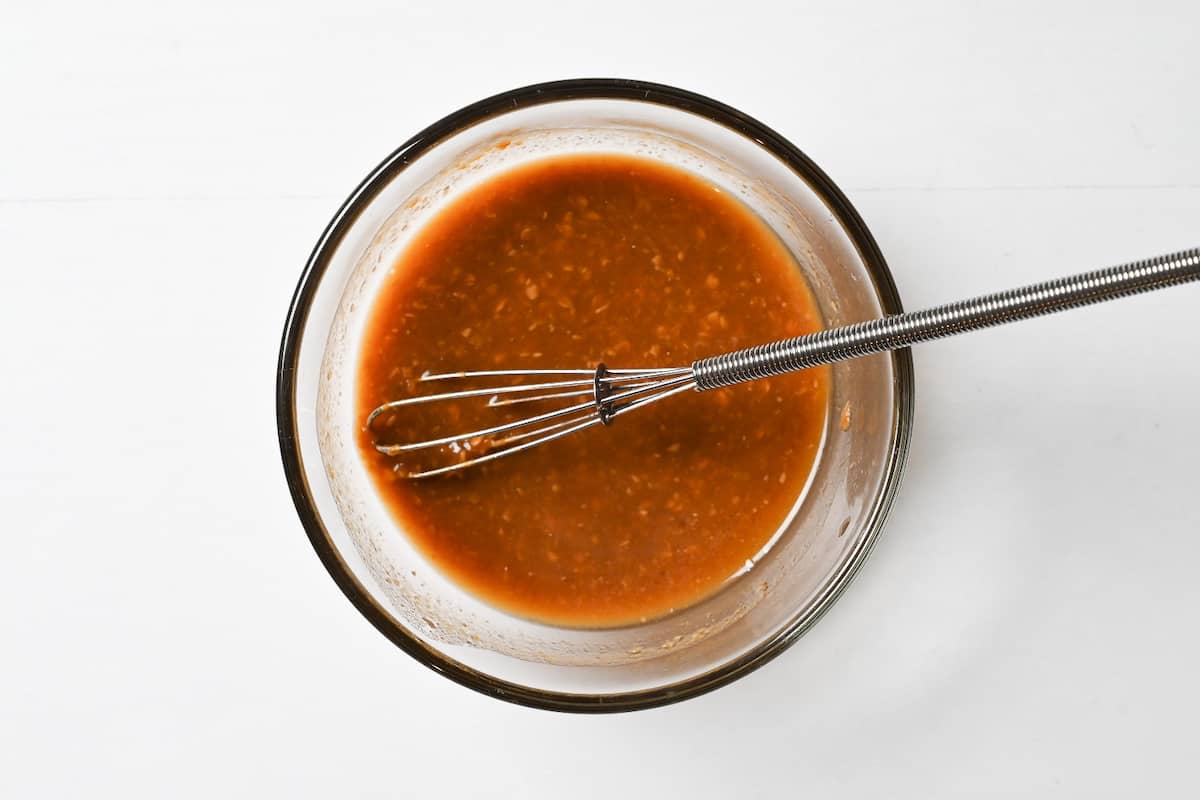
- Mix well and serve. You can enjoy this dish with rice or savor the leftover soup with udon noodles. Enjoy!
Notes
Chicken bouillon powder varies by brand. My brand is 1 tsp per 200 ml, so check the label and if yours is more concentrated (e.g., 1 tsp per 300 ml or 1 cup), use touch less to avoid oversalting.
If serving communal hot pot style, place the pot on a portable tabletop burner and keep it at low heat throughout the meal.
Use the final simmer as a flavor checkpoint: dilute with a splash of water if the reduction feels too salty, or add a teaspoon of soy sauce or mirin to brighten a flat base.
If you don't have a miso strainer, whisk the paste in a small bowl with a few tablespoons of warm broth until smooth before stirring it back into the pot to prevent salty clumps.
Nutritional estimates assume you will consume only half the broth, as nabe liquid is traditionally used for seasoning and cooking rather than being finished like a standalone soup.
Storage: Fridge up to 2 days in an airtight container. Freezer: broth only, up to 2 months. Reheating: warm gently over medium-low heat to a full simmer.
Serving Ideas: Tsukemono (Japanese pickles), Japanese cucumber salad, Gomaae spinach salad
Full Recipe QR Code↑↑