Authentic Nikujaga (Japanese Meat and Potato Stew)
Ingredients
- 300 g potato waxy type such as May Queen or Yukon Gold, cut into 3 cm chunks
- 150 g carrot roll-cut, pieces no thicker than 2 cm
- 150 g onion cut into 1.5-2 cm wedges
- 200 g thinly sliced pork belly (or thinly sliced beef), cut into 5 cm pieces
- 1 tsp cooking oil neutral
- 450 ml dashi stock homemade or teabag-style dashi packets
- 1 tbsp light brown sugar or white sugar
- 3 tbsp mirin
- 3 tbsp sake or dry sherry
- 100 g konjac noodles (shirataki) optional
- 2 tbsp Japanese soy sauce (koikuchi shoyu)
- 8-10 snow peas strings removed, for garnish
- 1 tbsp Japanese soy sauce (koikuchi shoyu) for final seasoning
Instructions
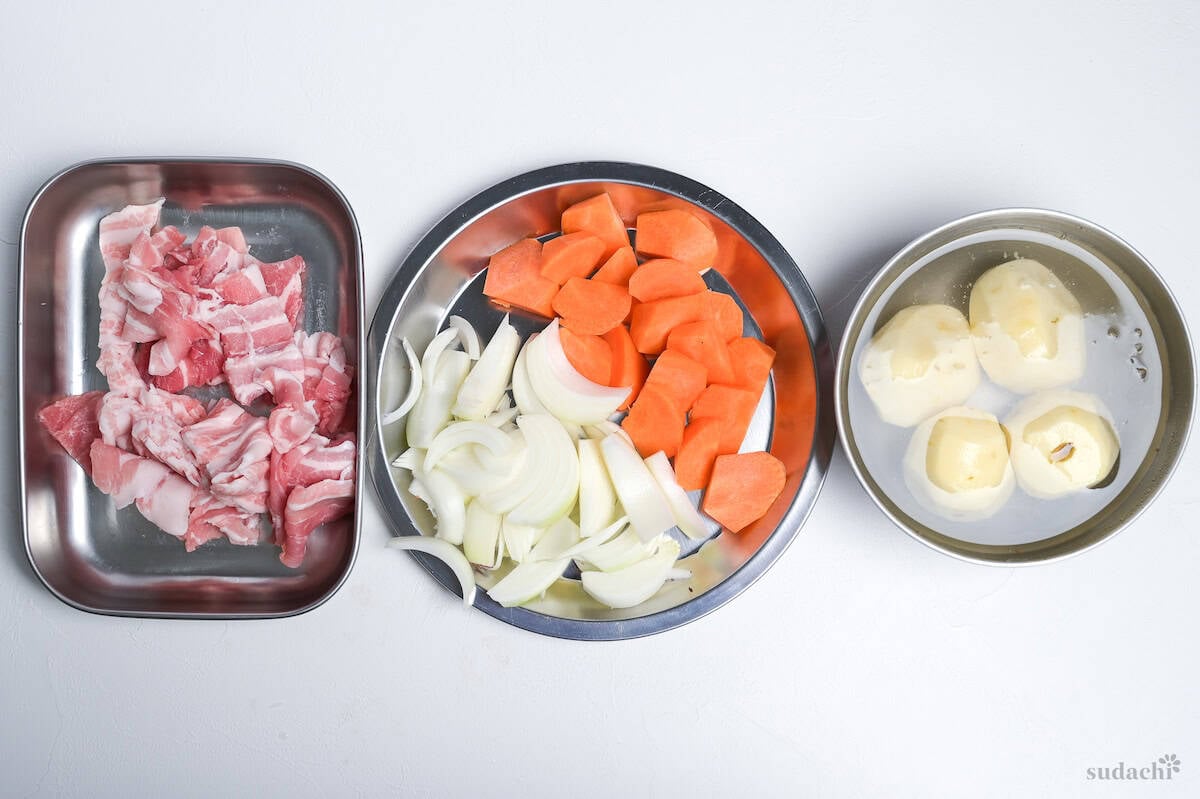
- Peel 300 g potato and place them in a bowl of cold water. Roughly cut 150 g carrot into 2cm (¾") pieces and 150 g onion into 1.5-2cm wedges. Cut 200 g thinly sliced pork belly into 5cm (2") pieces.
- Heat a large pot over medium and add 1 tsp cooking oil. Add the pork belly pieces in a single layer, fry undisturbed for 1 minute, then flip and repeat on the other side. Transfer to a plate for later.

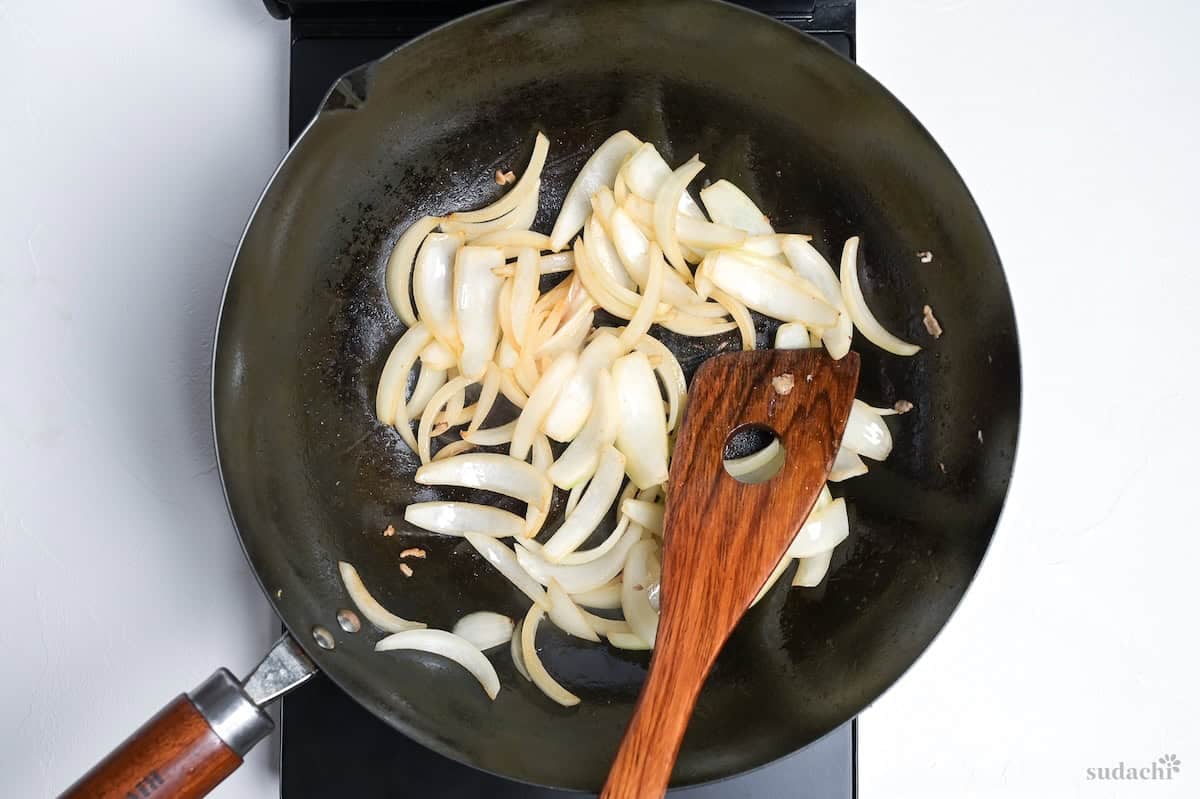
- In the same pot, add the onion wedges and fry until they start to turn slightly translucent and golden around the edges, about 2-3 minutes.
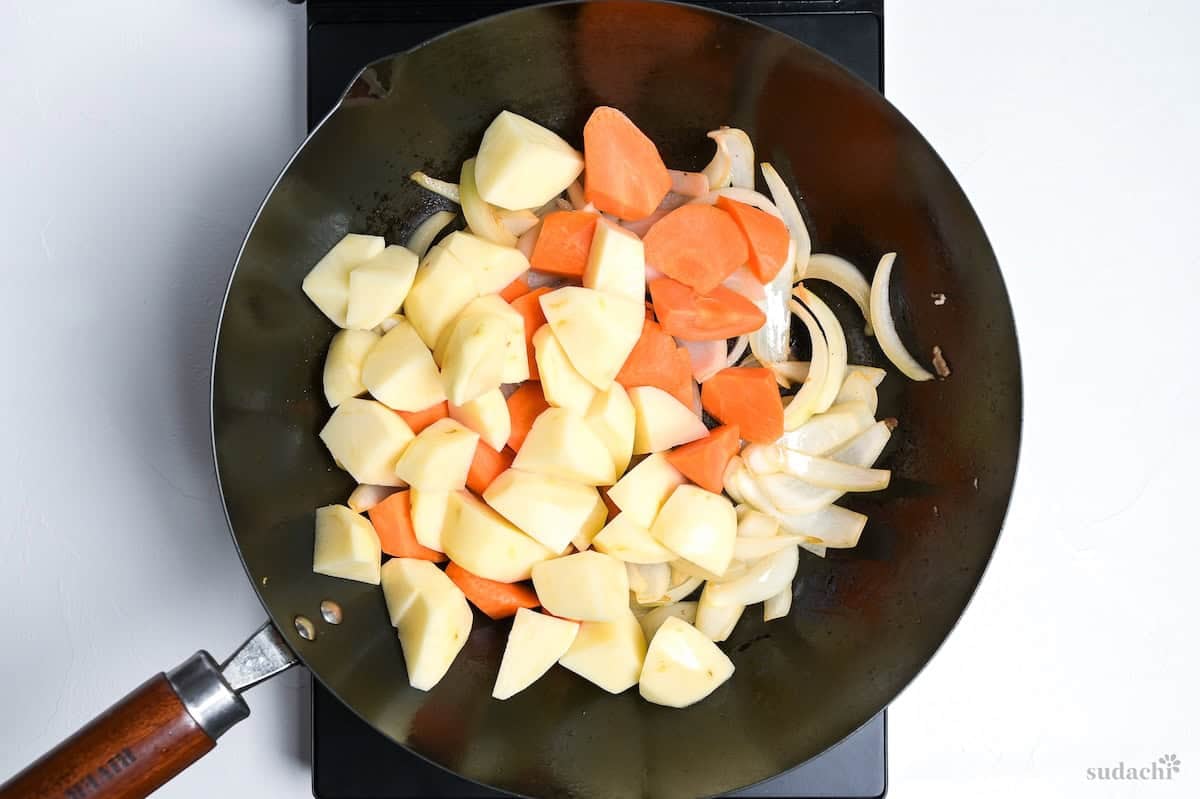
- Drain the potatoes and cut them into thirds or quarters. Add them to the pot along with the carrots, and gently shake the pot just enough to give everything a thin film of pork fat.
- Pour 450 ml dashi stock into the pot and bring to an almost boil (about 90 °C (194 °F)). Add 1 tbsp light brown sugar and 3 tbsp sake, then cover with a drop lid and simmer for 15 minutes, or until the potatoes and carrots are fork tender.
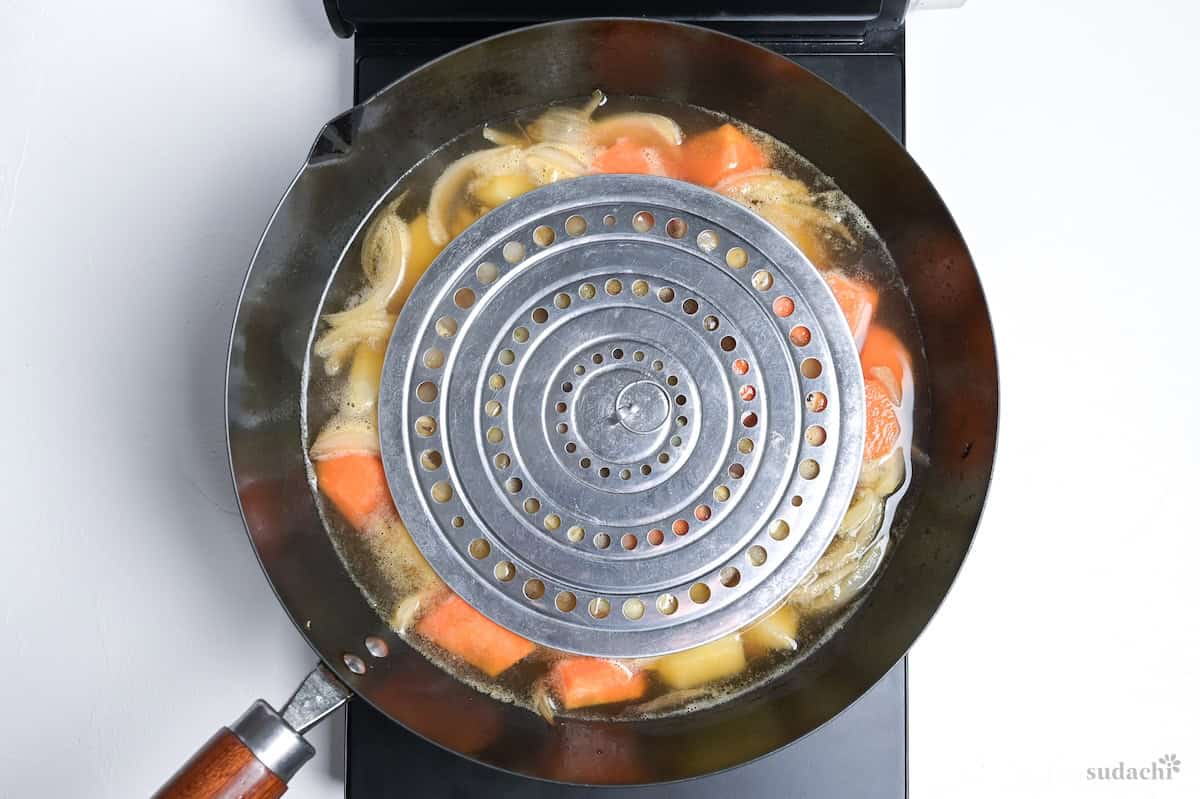
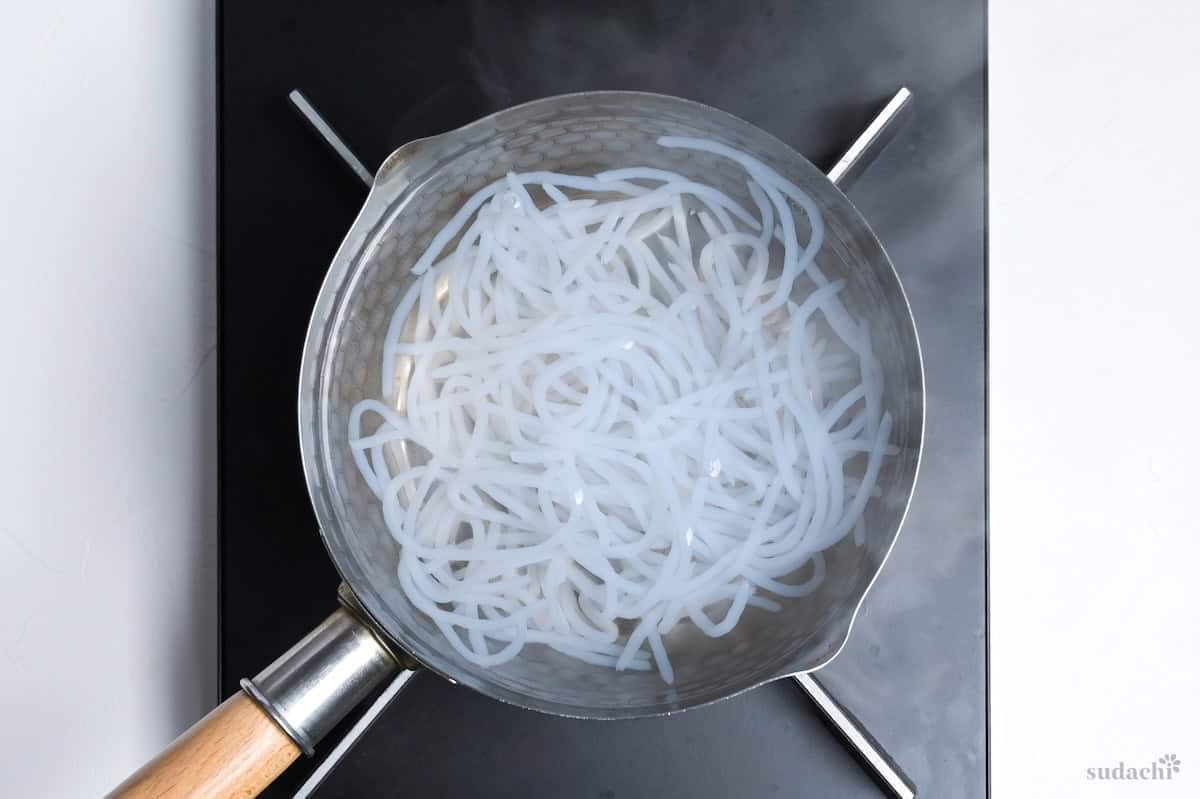
- While you wait, bring a small separate pot of water to a vigorous boil and blanch 100 g konjac noodles (shirataki) for 2-3 minutes, then drain and rinse.
- Once the carrots and potatoes are softened, remove the drop lid and add 3 tbsp mirin, 2 tbsp Japanese soy sauce (koikuchi shoyu), the blanched shirataki noodles and the seared meat from earlier.
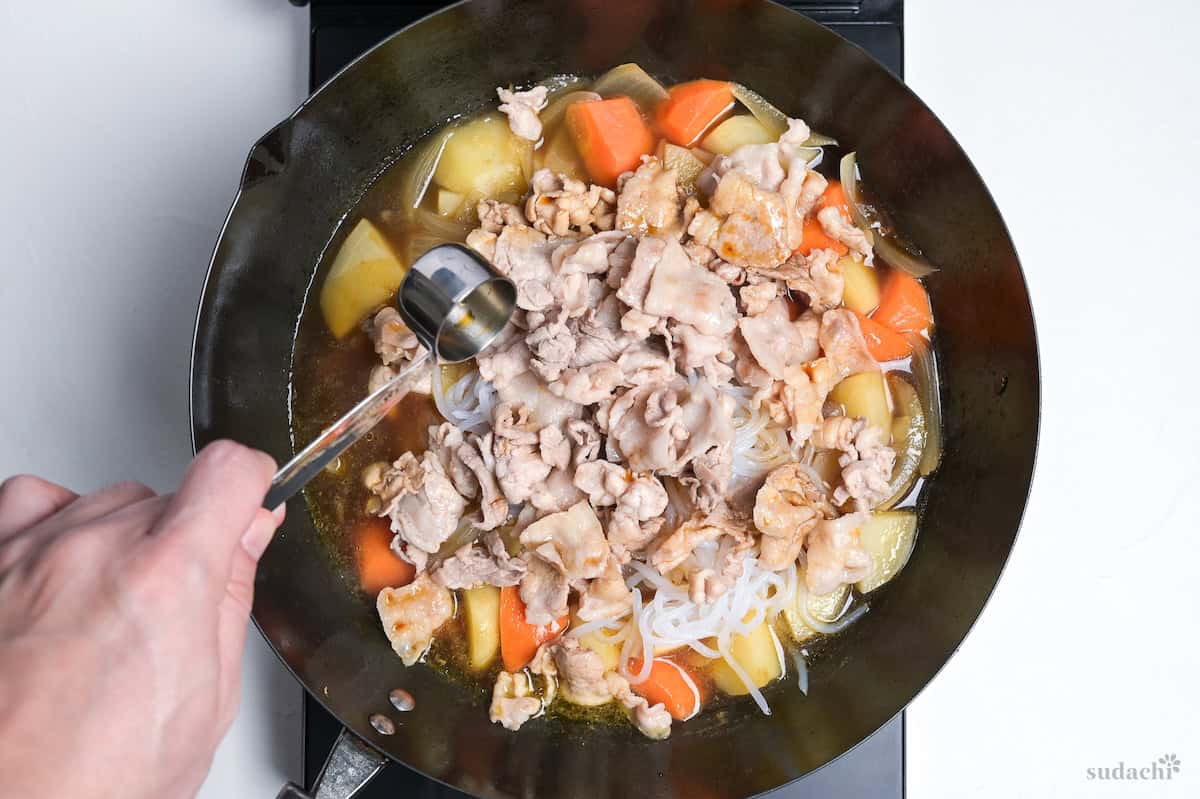
- Tilt the pot back and forth a few times to distribute the condiments, then cover with a drop lid once more and simmer for 2-3 minutes.
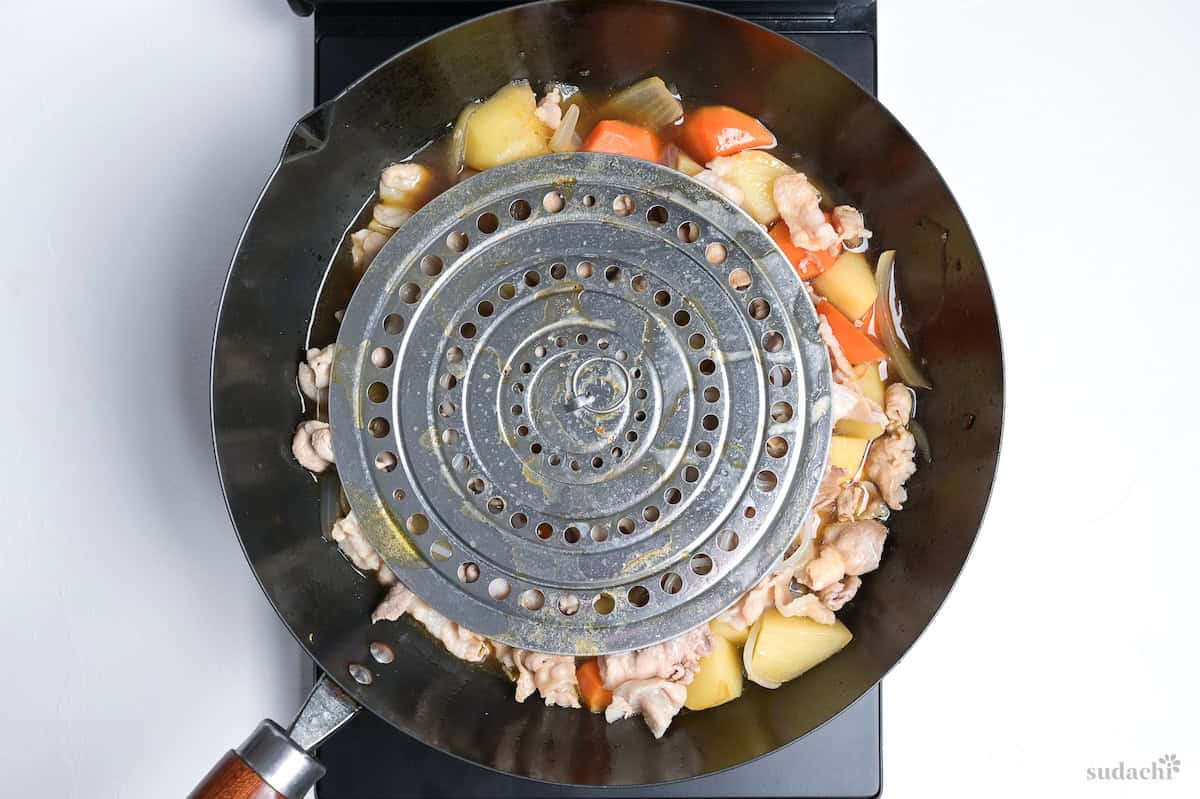
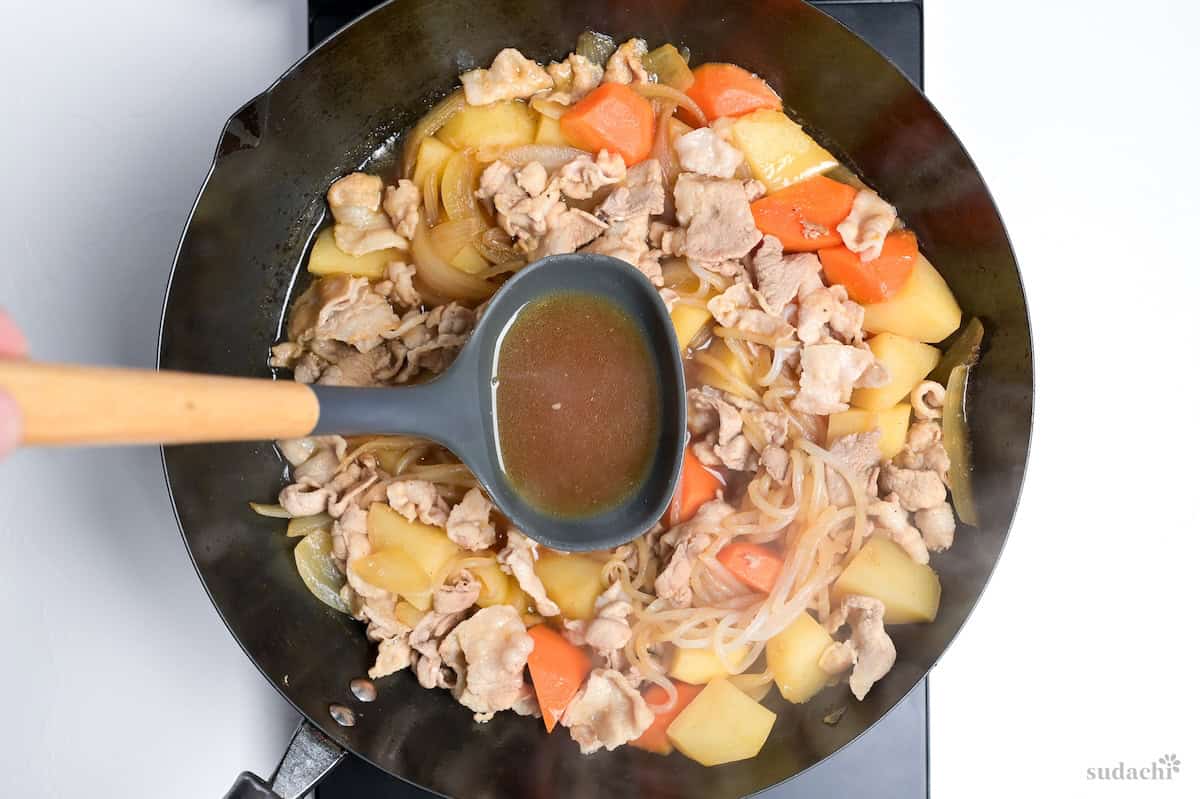
- Turn off the heat. If time permits, cool to room temperature and then reheat. Add 1 tbsp Japanese soy sauce (koikuchi shoyu). If reheating, avoid mixing and instead, baste the cooking liquid over the top of the simmering ingredients. Taste test, add a touch more soy sauce or sugar to taste.
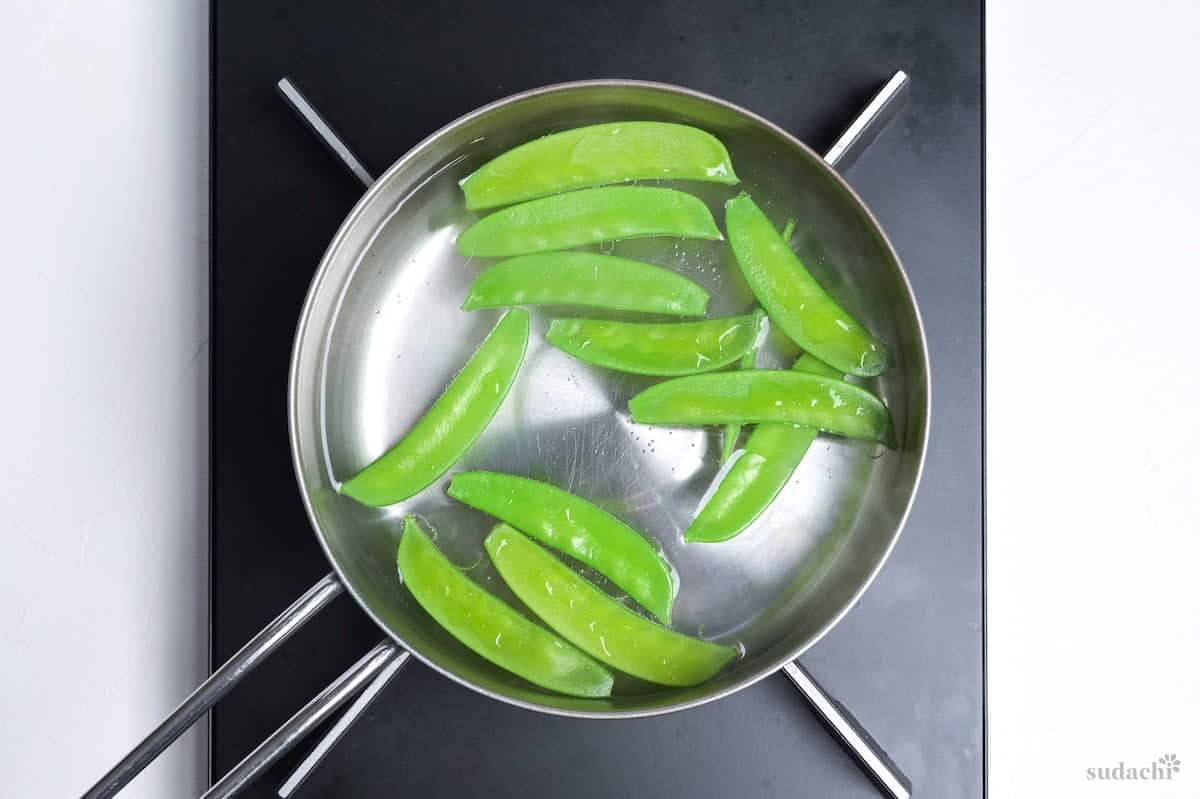
- Boil a small pot of water and blanch 8-10 snow peas for 1 minute.
- Ladle the nikujaga into serving bowls and scatter the blanched snow peas over the top. Enjoy!

Notes
At a steady simmer, 2 cm pieces need about 11 minutes, 3 cm pieces (this recipe) about 17 minutes, and 4 cm pieces closer to 24 minutes. If your cuts ran a little large, extend the first simmer. Don't raise the heat.
Resting off the heat is the easiest upgrade. Seasoning keeps diffusing into the potatoes while starch firms up for a better bite. Rest up to 2 hours at room temperature, or refrigerate and reheat next day for even deeper flavor.
Pork belly is the most forgiving meat choice! Its rendered fat keeps the broth silky and the slices tender even if your timing isn't perfect. Beef works too, but dries out faster.
Mentori (rounding potato edges) is traditional but optional in my recipe. It helps potatoes hold shape and keeps the broth clear, but skipping it gives you starchy bits that melt into the broth for a nice rustic body.
The simmering liquid isn't meant to be fully consumed. The nutritional facts below are calculated assuming roughly 50% of the braising liquid is consumed.
Full Recipe QR Code↑↑