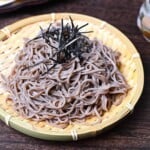
Zaru Soba with Homemade Dipping Sauce
Ingredients
- 200 ml dashi stock Use kombu and shiitake dashi to make it plant-based
- 5 tsp Japanese soy sauce (koikuchi shoyu)
- 4 tsp mirin
- ½ tbsp sugar
- 1 dried shiitake mushroom
- 120 g dry soba noodles approx 60g/2oz per portion
- ice cubes for cooling
- kizami nori (shredded nori) optional topping
Additions
- 1 tsp wasabi paste
- 1 tsp grated ginger root
- 2 tbsp tempura flakes (tenkasu)
- 2 tbsp finely chopped green onions
Instructions
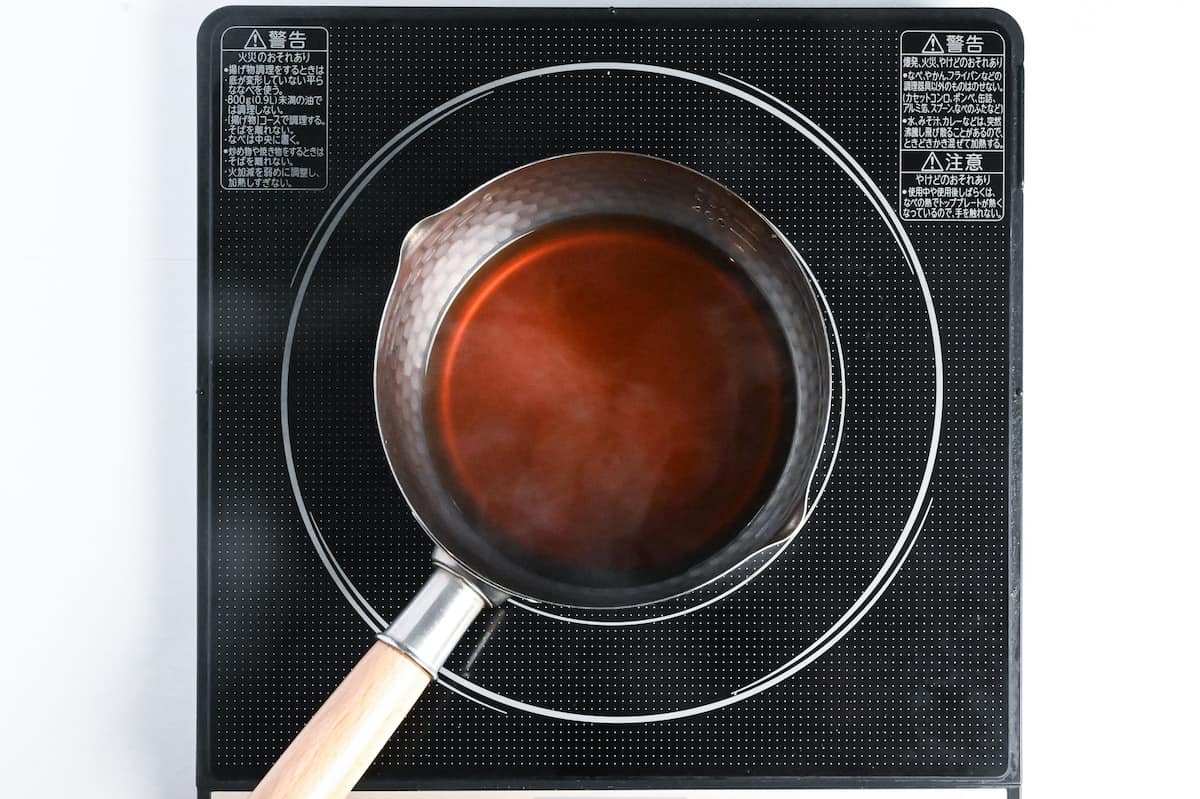
- In a small pan, add 200 ml dashi stock, 5 tsp Japanese soy sauce (koikuchi shoyu) and 4 tsp mirin. Boil for 1 minute, add ½ tbsp sugar to the pan and mix until fully dissolved.
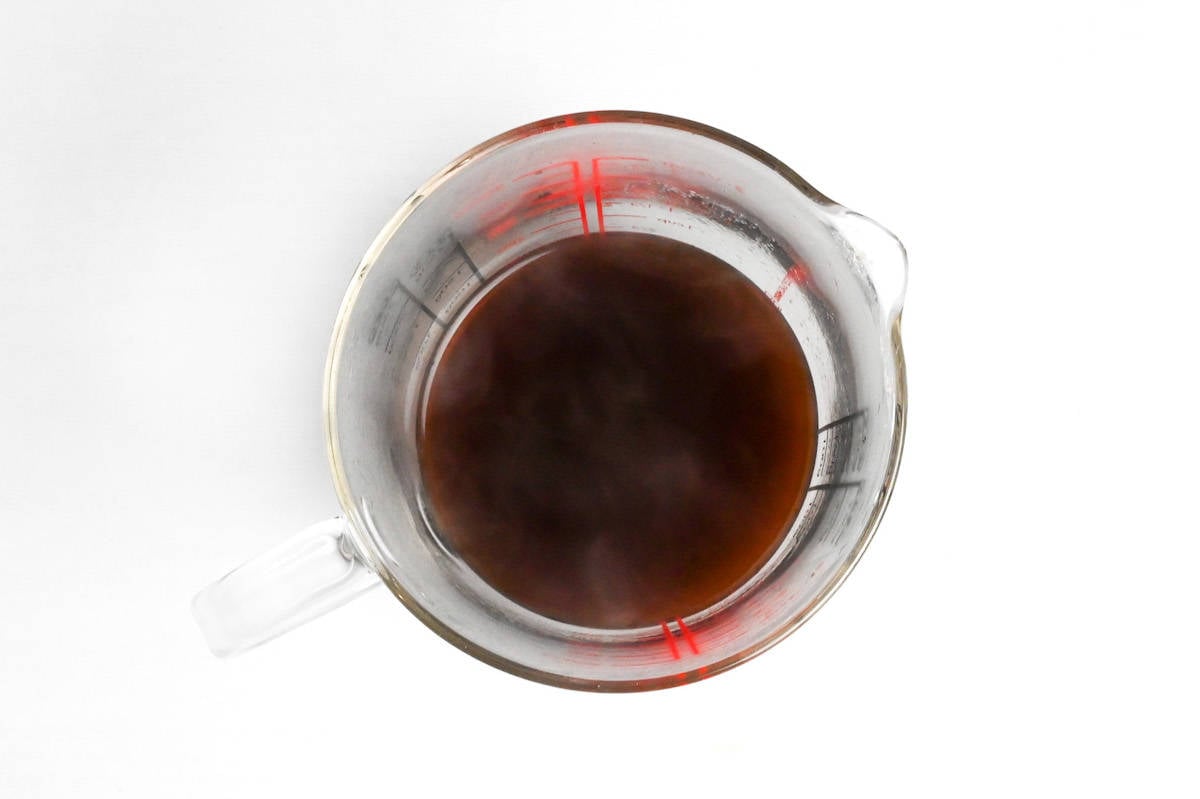
- Pour the contents of the pan into a heatproof jug and add 1 dried shiitake mushroom while it's still hot. Leave to cool to room temperature, then chill in the fridge for 20-30 minutes.
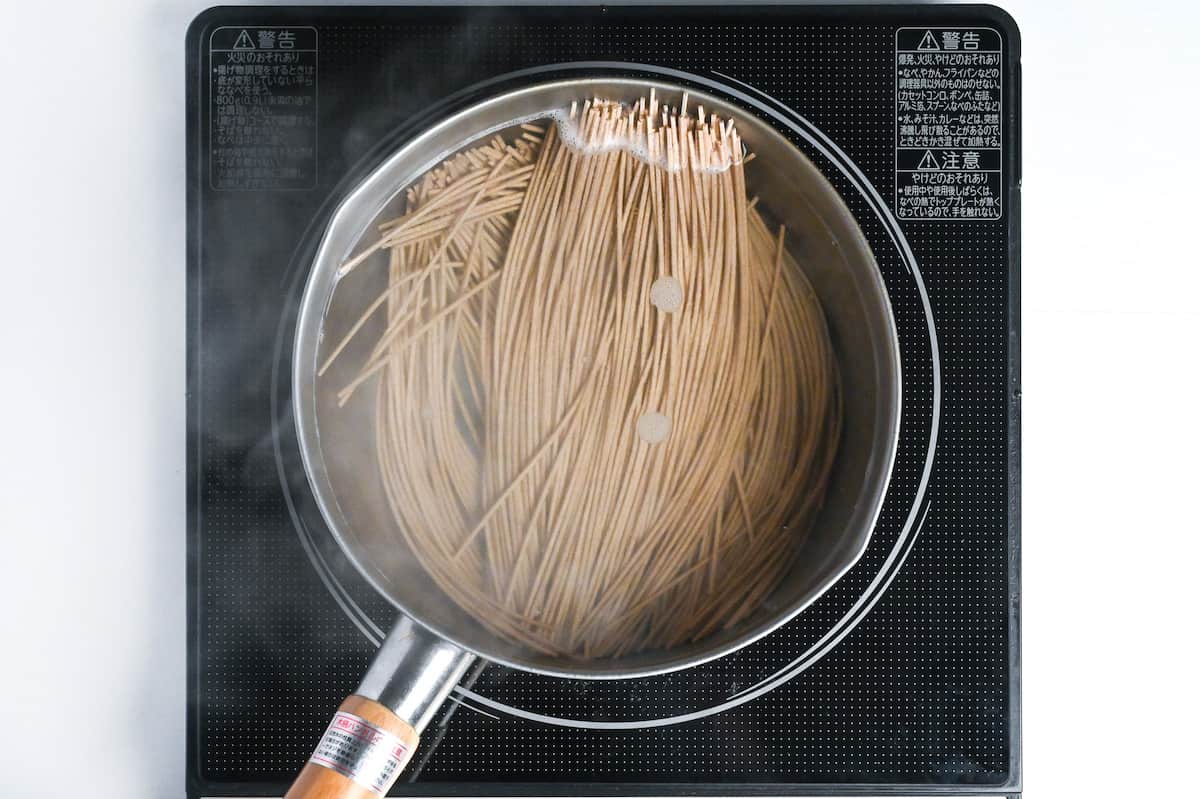
- Once your dipping sauce is fully chilled, cook 120 g dry soba noodles according to the package instructions (usually 5-6 minutes).
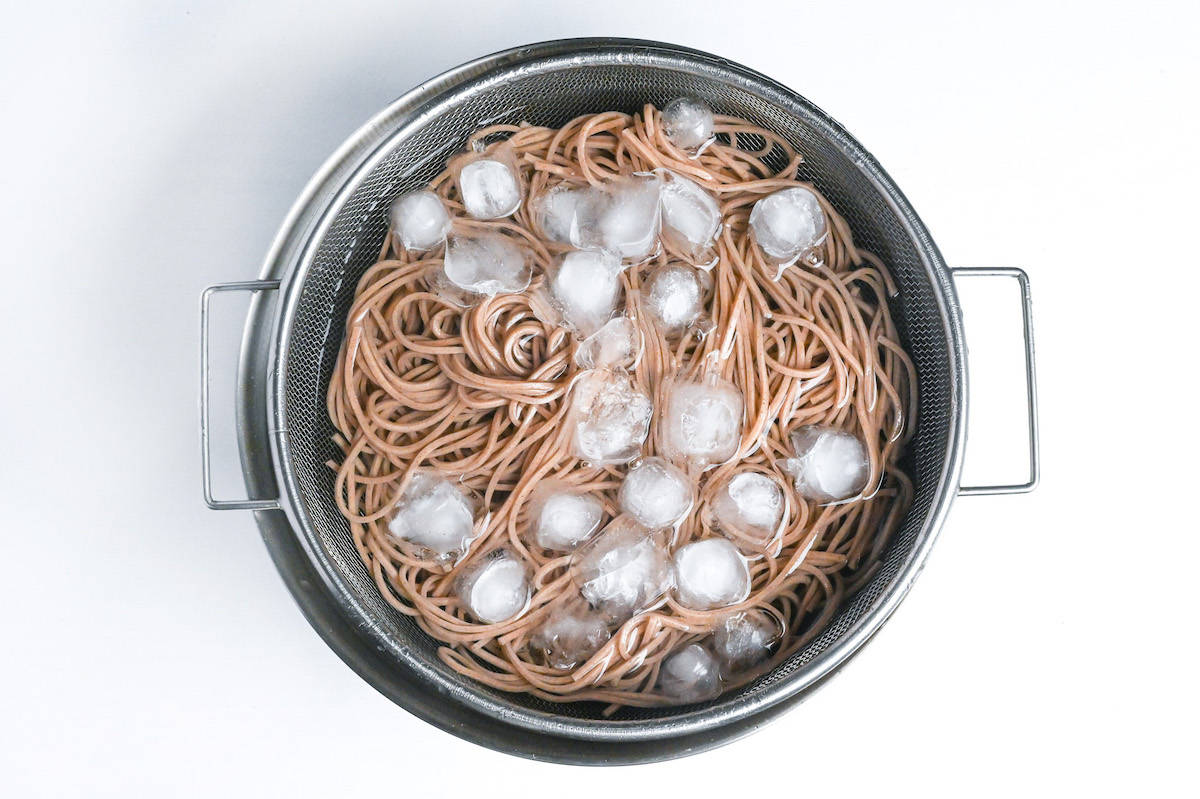
- When your timer sounds, pour the soba noodles through a strainer to drain, then rinse them under cold water. Place the strainer in a large bowl of cold water and add a few ice cubes.
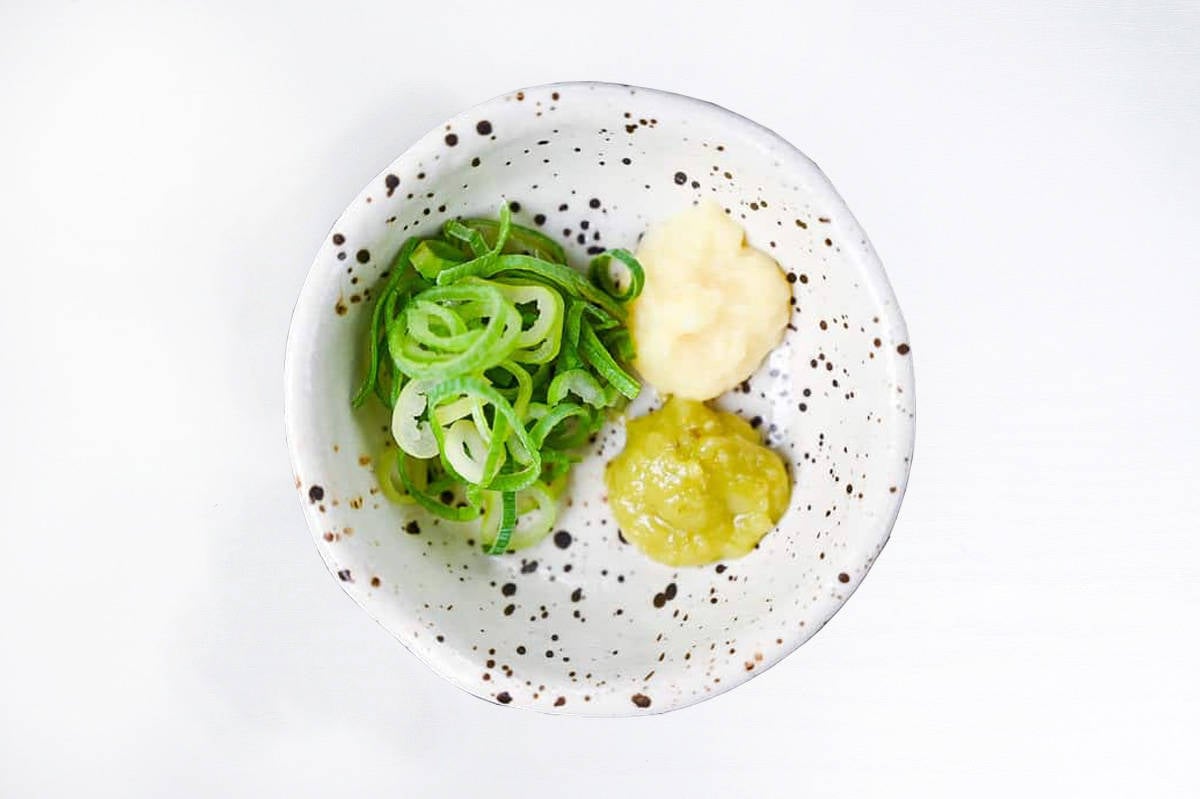
- Prepare a small individual plate of sauce additions for each person. I usually add ½ tsp wasabi, ½ tsp grated ginger, 1 tbsp tempura flakes, and 1 tbsp chopped green onion for each plate.
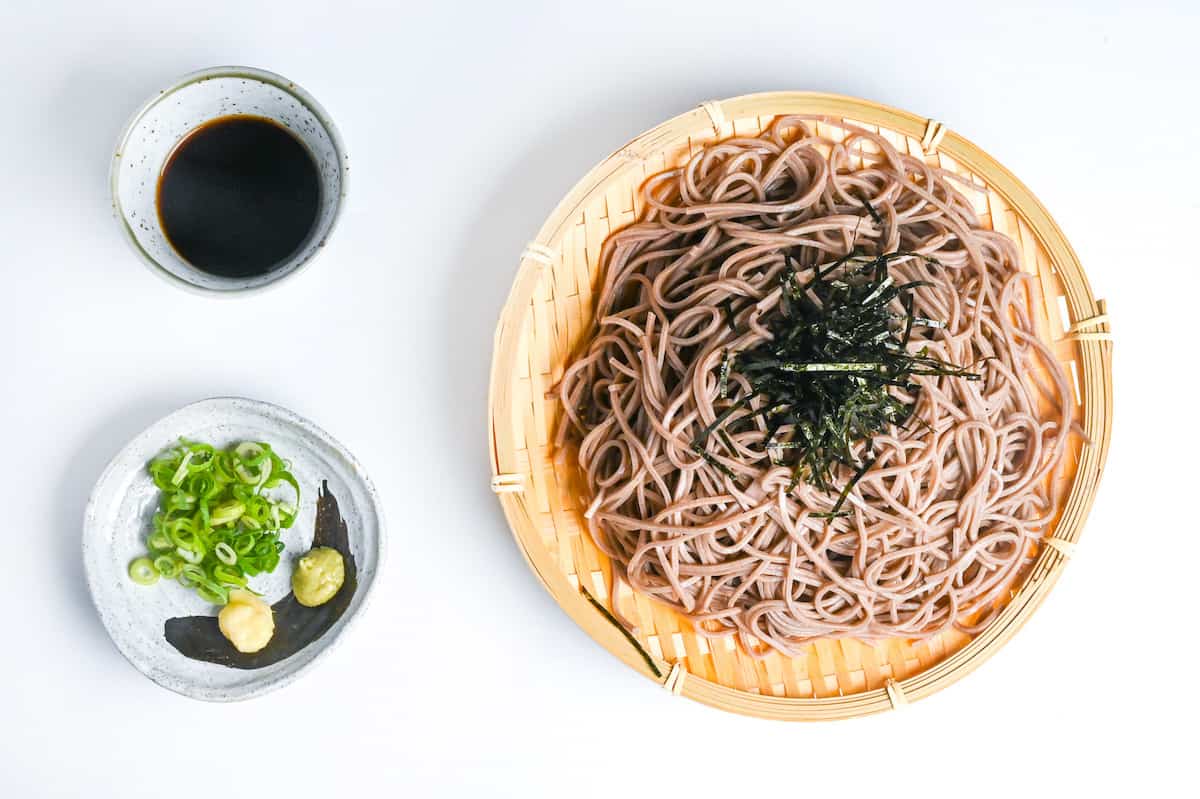
- Place the soba noodles on the "zaru" and sprinkle kizami nori (shredded nori) over the top. Serve each portion with individual cups of dipping sauce and the plate of additional ingredients to mix in.
Notes
Taste the tsuyu after it has chilled: A sauce that tastes right in the hot pan comes out of the fridge milder, and once it lands thin there is no reliable way back. Take your reading at the temperature it will be poured at.
Let the sauce cool on its own clock: Ice dropped into the jug pulls the heat down fast, slows the flavor extraction of the shiitake and waters the sauce down with it. Give it the counter until it is cool to the touch, then the fridge, don't rush it.
Drain the noodles hard before they reach the tray: Water clinging to the strands rides straight into the cup and thins the sauce you spent the whole recipe getting right. Shake the strainer, let the dripping stop, then plate them.
Rinsing and icing are 2 different jobs: Rinsing washes off the loose starch that glues strands into a lump. The ice tightens the outside of the noodle so it snaps instead of sagging. Skip the rinse and the strands glue together, skip the ice and they sag.
Boil only what goes on the table: Cooked soba is best eaten right away. A night in the fridge leaves it swollen and dull, and rinsing it does not revive it. Always cook the noodles fresh and serve immediately.
Full Recipe QR Code↑↑