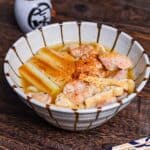
Tori Nanban Udon (Japanese Chicken and Leek Udon Soup)
Ingredients
Chicken and Leek
- 100 g Japanese leek (naganegi) thick, long white part, scallions will not stand in, or 80g regular leek
- 2 sheets fried tofu pouch (aburaage)
- 1 tsp cooking oil neutral flavored
- 250 g boneless chicken thigh skin-on if possible, yellow fat clumps trimmed, cut into bite-size pieces
Soup
- 400 ml dashi stock dashi packets work
- 1 tbsp Japanese light soy sauce (usukuchi shoyu) or the same amount of standard Japanese soy sauce
- 1 tbsp mirin
- 1 tbsp sake
- 1 tsp Chinese-style chicken bouillon powder
- ⅛ tsp salt
Slurry
- 1 tbsp water cold
- 1 tsp potato starch (katakuriko) or cornstarch at 1.2 times the amount
To Serve
- 2 portions cooked udon noodles
- Japanese chili powder (shichimi togarashi)
Instructions
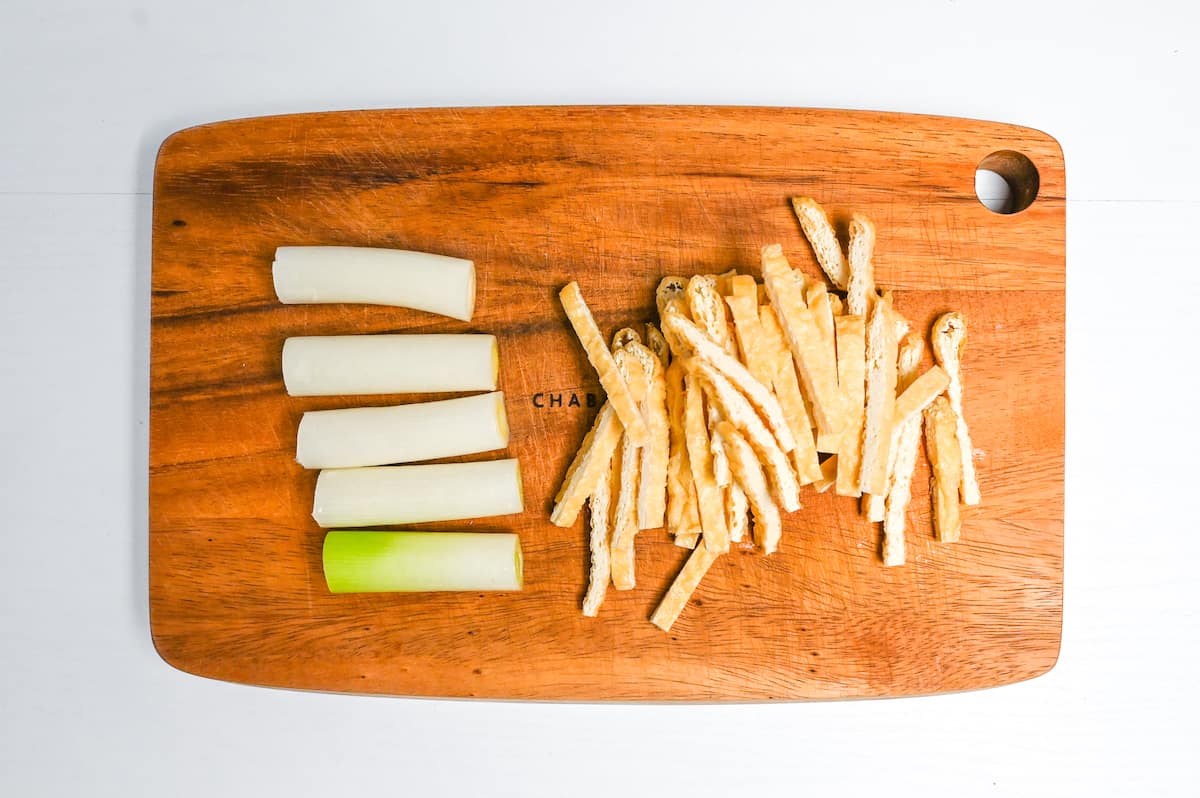
- Cut 100 g Japanese leek (naganegi) into 5cm (2 inches) lengths. Slice 2 sheets fried tofu pouch (aburaage) into thin strips.
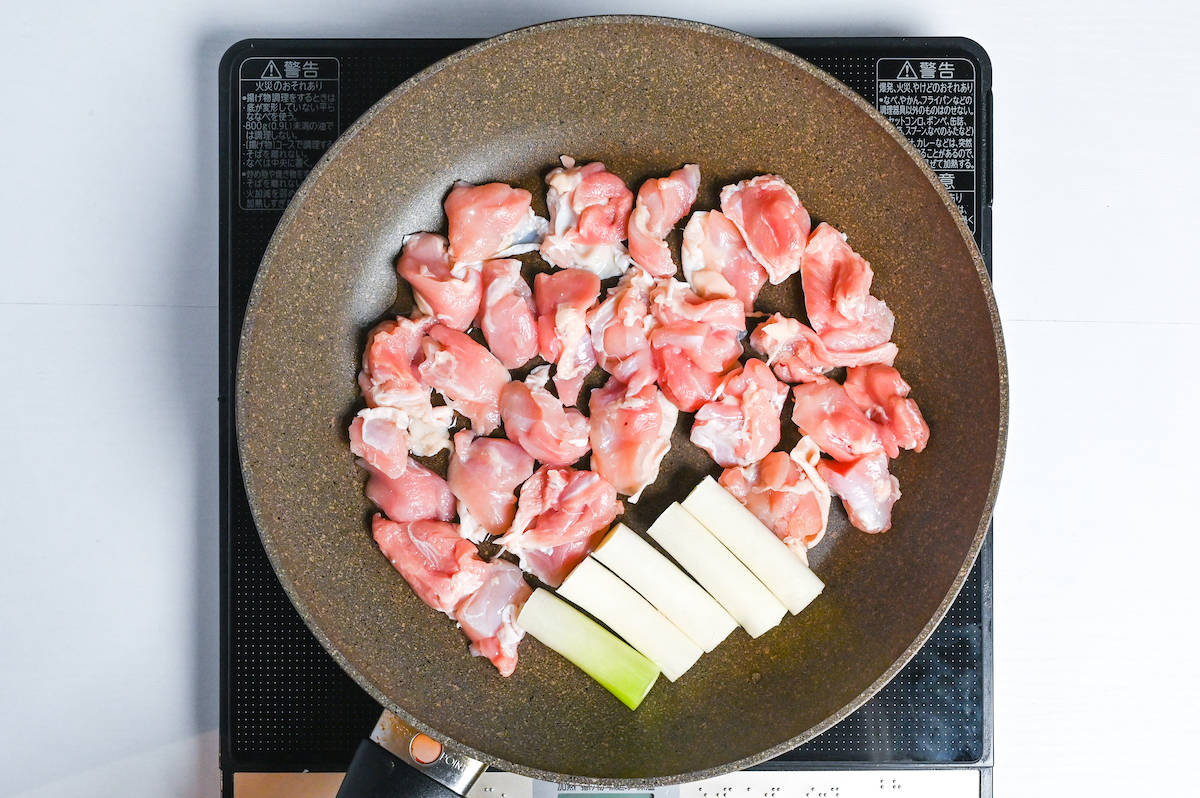
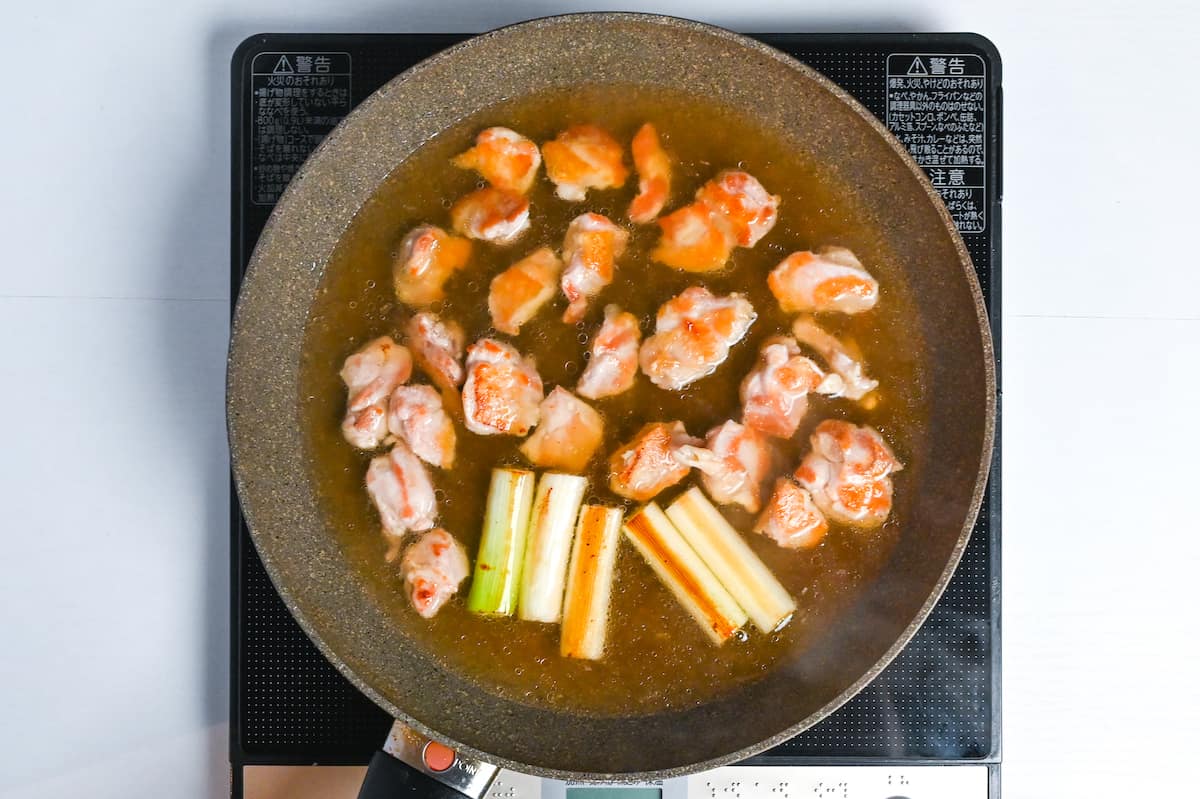
- Warm a large frying pan over medium. Once hot, add 1 tsp cooking oil and lay 250 g boneless chicken thigh in the pan skin-side down. Wedge the leek into the empty spaces, keeping every piece in a single layer.
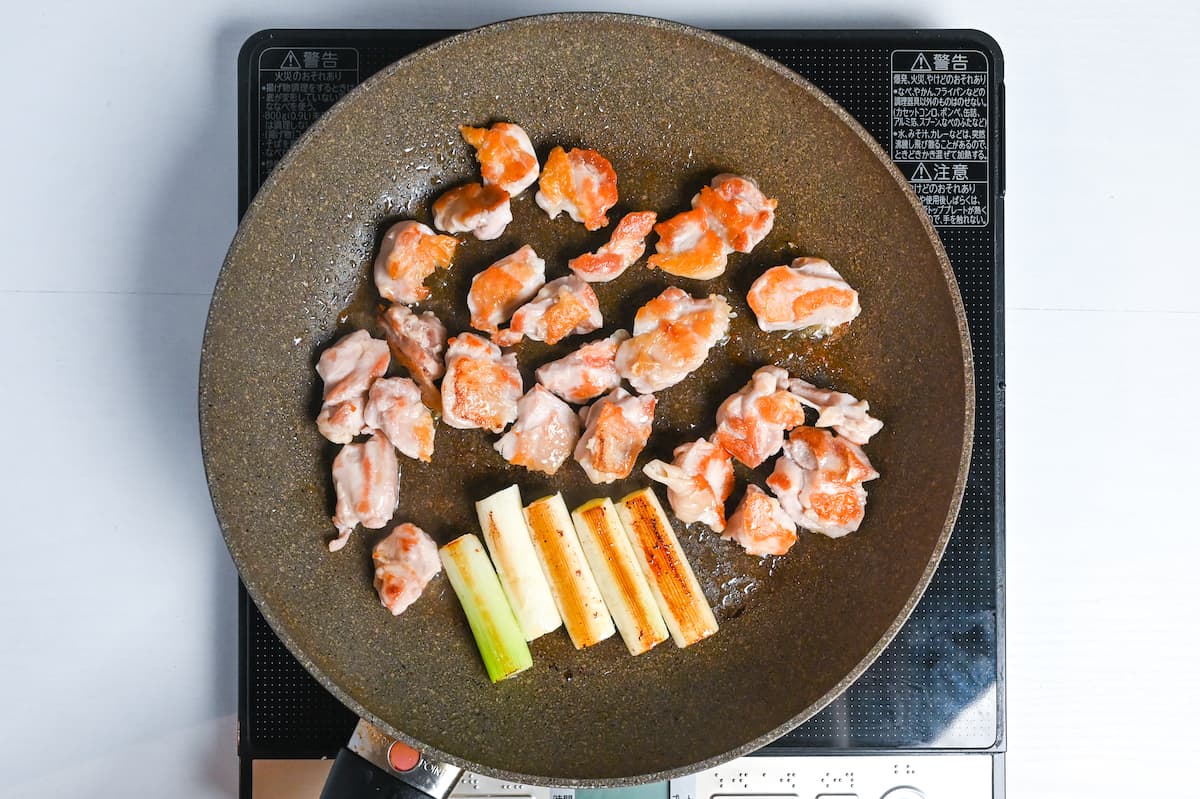
- Fry the chicken undisturbed until the skin is golden brown, then turn it and sear the other side. Roll the leek over occasionally until it's lightly charred all the way around.
- Once the chicken is seared all over, add 400 ml dashi stock and bring it to a boil. Reduce the heat to low, then add 1 tsp Chinese-style chicken bouillon powder, 1 tbsp Japanese light soy sauce (usukuchi shoyu), 1 tbsp sake, 1 tbsp mirin and ⅛ tsp salt.
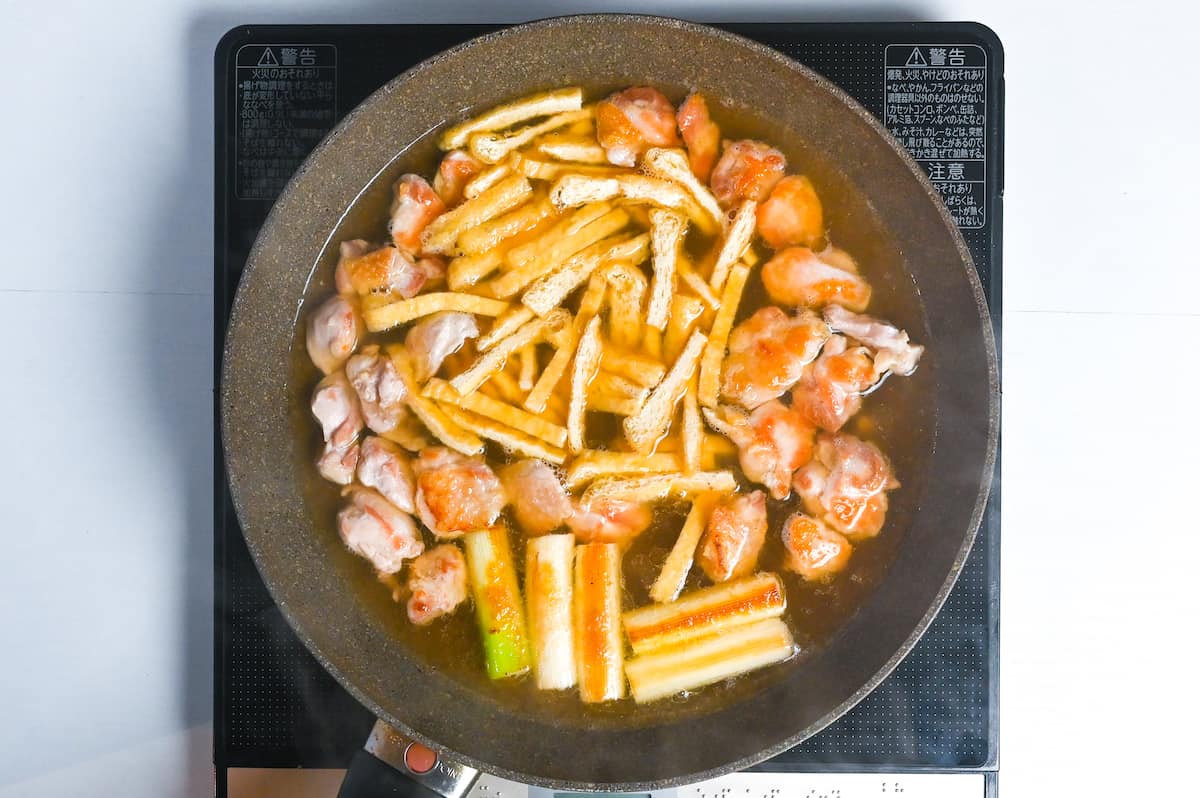
- Give it a good stir, add the fried tofu pouch strips and let it simmer for a few minutes. While you wait, cook your udon noodles and mix 1 tbsp water with 1 tsp potato starch (katakuriko) in a small bowl to make a slurry.
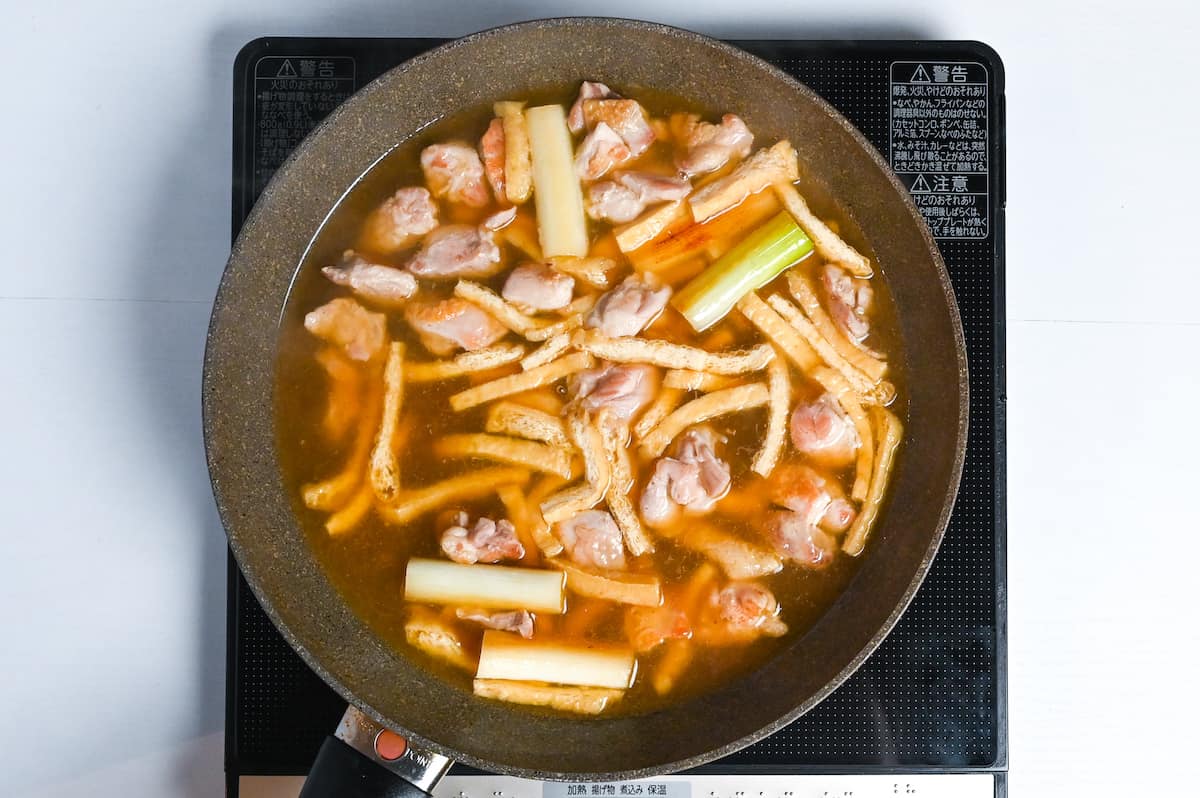
- Mix the slurry right before pouring it into the soup in a thin stream. Stir the broth and continue to cook for 1 to 2 minutes and take the pan off the heat when the soup has a light body (do not overcook it or let it get too thick).
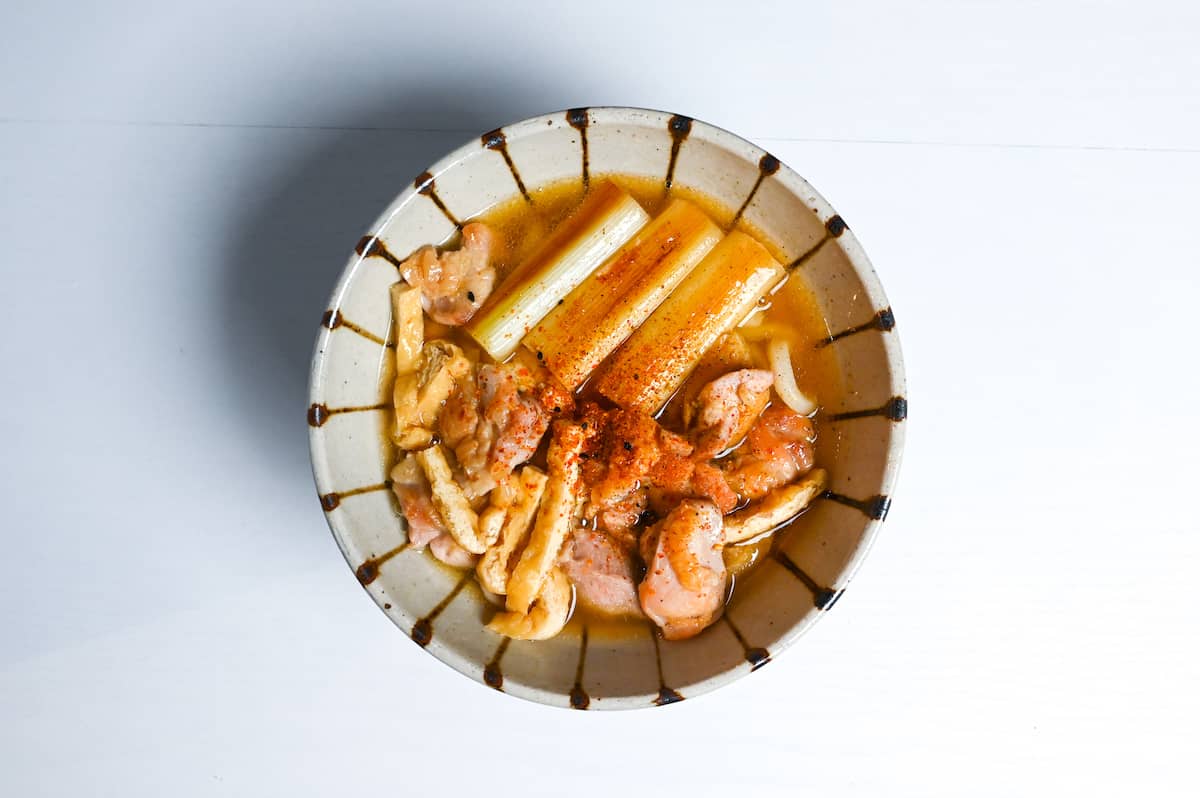
- Place 2 portions cooked udon noodles into serving bowls and share the soup, chicken, leek and tofu pouch strips equally between them. Sprinkle with a few pinches Japanese chili powder (shichimi togarashi) and serve hot. Enjoy!
Notes
Bouillon powder strength varies by brand: Mine makes 200 ml of soup per 1 tsp. Use a little less of a stronger one, like 1 tsp per 300 ml, and a little more of a milder one. Taste at the end to avoid oversalting.
Do not add light soy sauce for color: Its pale color is only how it looks. Light soy sauce is saltier than standard Japanese soy sauce, and adding more because the soup looks pale oversalts the bowl in a hurry.
The sear flavors the soup: Crowd the pan or move the pieces early and the chicken and leek steam without browning. Anything that reaches the dashi pale adds no toasty flavor to the soup.
Brown the leek in the chicken fat: Raw Japanese leek tastes sharp, and browning the cut faces turns that sharpness sweet. Leek that reaches the soup still white and wet at the ends keeps its bite.
Regular leek needs a longer sear: Keep the white and pale green sections only. It softens more slowly than Japanese leek, so leave it in the pan until the cut faces are deeply colored before the dashi goes in.
A note on the nutrition figures: In Japan, the broth of a noodle soup like this is not finished to the last drop, so the numbers here assume you drink only about 30 percent of the soup, in line with . Finish the whole bowl and the figures, sodium above all, will run considerably higher.
Full Recipe QR Code↑↑