
Yoshinoya's Pork Rice Bowl Copycat (Negi Shio Butadon)
Ingredients
- Japanese leek (naganegi) topping (alternatively you can use thinly sliced green onions instead)
- ¼ onion
- 300 g thinly sliced pork belly or other pork with good amount of fat
- 1 tsp cooking oil
- 1 pinch salt
- 200 ml water
- 1 tbsp Japanese soy sauce (koikuchi shoyu)
- 1 tbsp mirin
- 1 tsp grated ginger root or ginger paste
- ¼ tsp dashi granules
- 2 ptns cooked Japanese short-grain rice
- toasted white sesame seeds topping
Shiodare Sauce
- ⅛ onion finely diced
- 4 tbsp water
- ¼ tsp ground black pepper coarse
- ½ tsp salt
- ½ tsp sugar
- ½ tbsp lemon juice
- 1 tsp Chinese-style chicken bouillon powder based on 1 tsp = 200ml soup ratio, scale to your brand's strength
- 1 tsp honey
- 1 tbsp toasted sesame oil
- 1 tbsp water to make slurry
- 1 tsp potato starch (katakuriko) to make slurry
Instructions
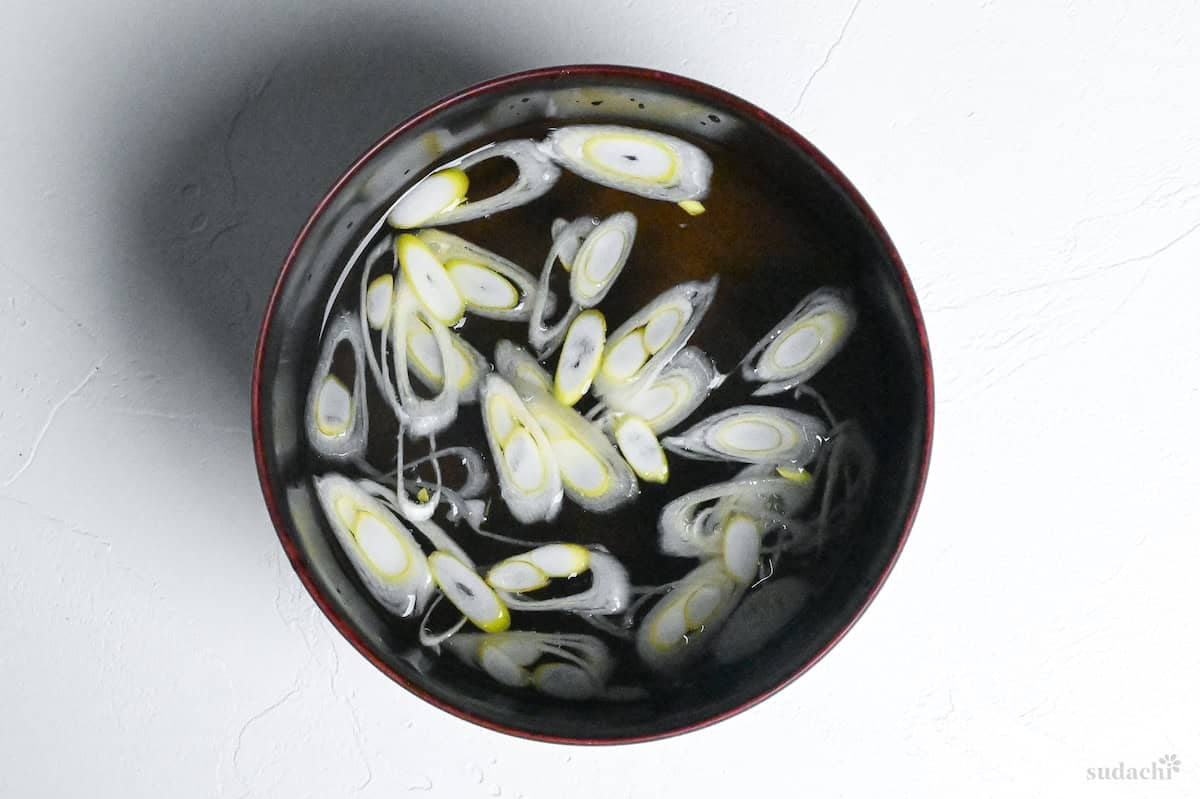
- Start boiling a large pot of water. While you wait, thinly slice the white part of a Japanese leek (naganegi) and place it in a bowl of cold water. The amount depends on how much you want to use as a topping so I left out the measurement here.
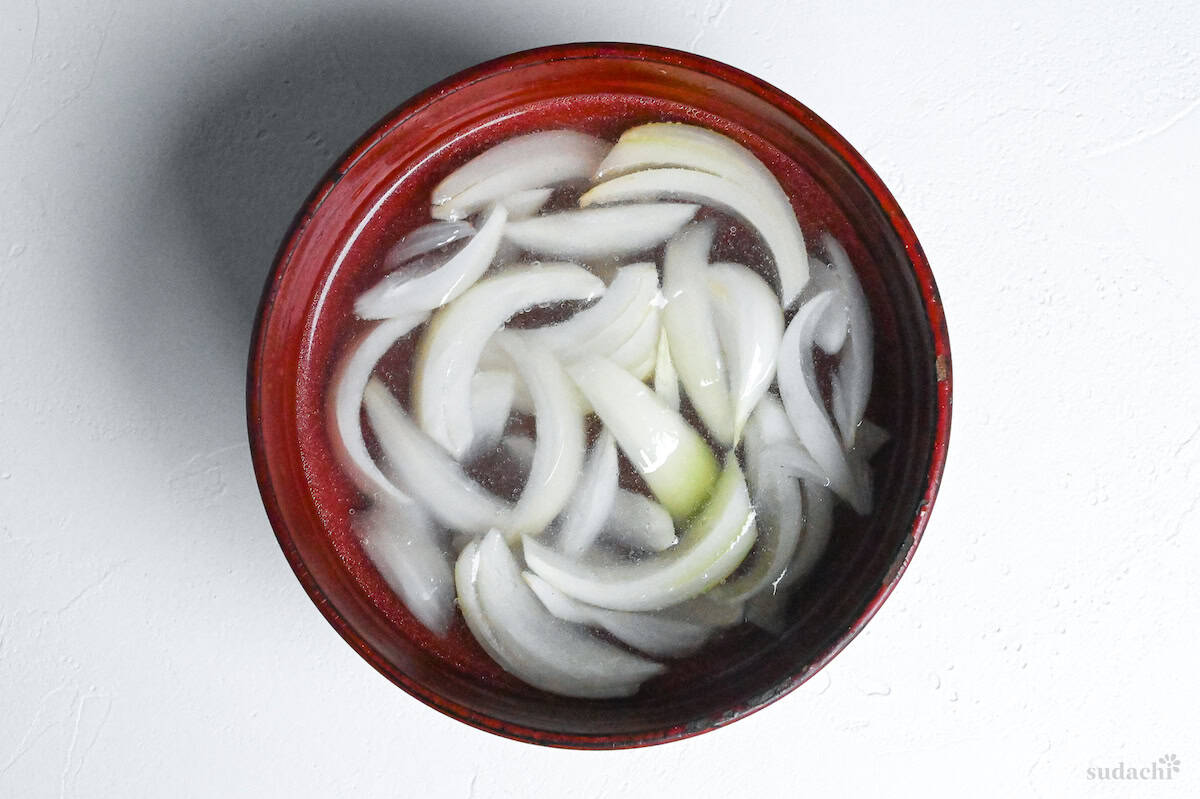
- Cut ¼ onion into wedges and place it in a separate bowl of cold water.
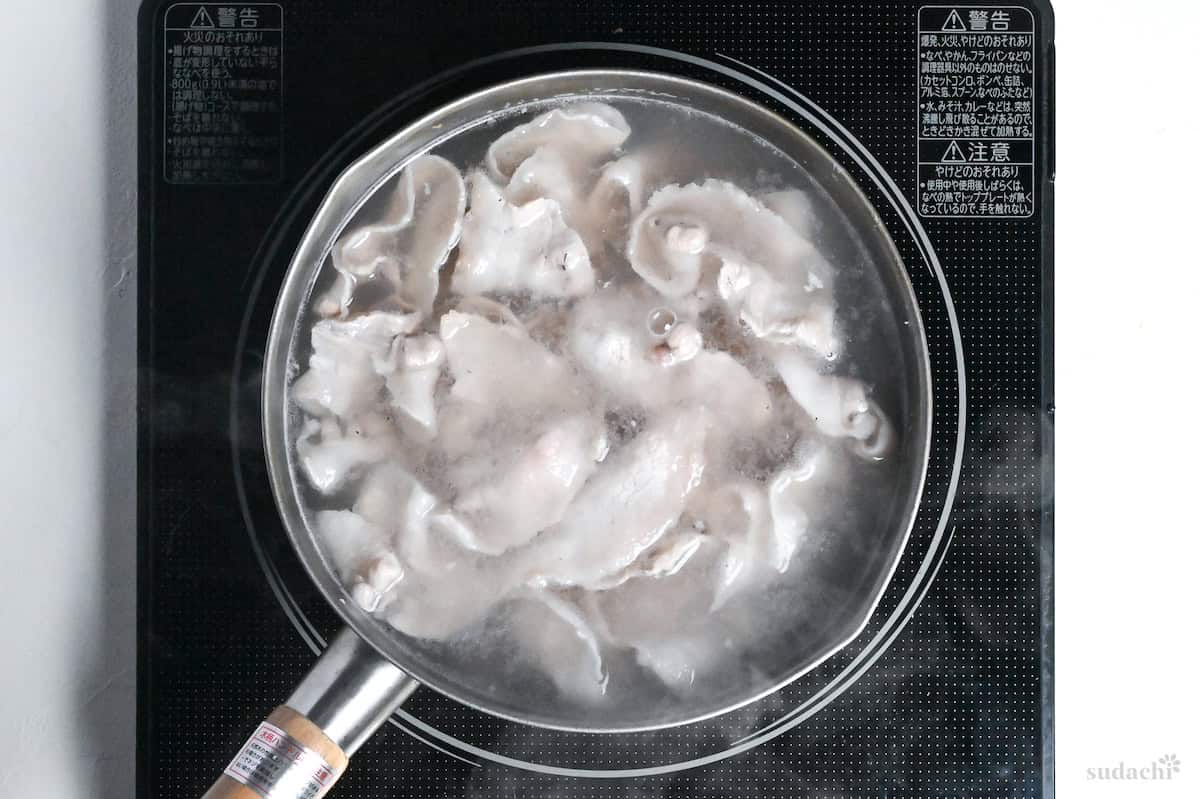
- Once your pot of water is boiling, add 300 g thinly sliced pork belly. Boil for 30 seconds to 1 minute or until the meat has changed color completely, then drain and set aside.
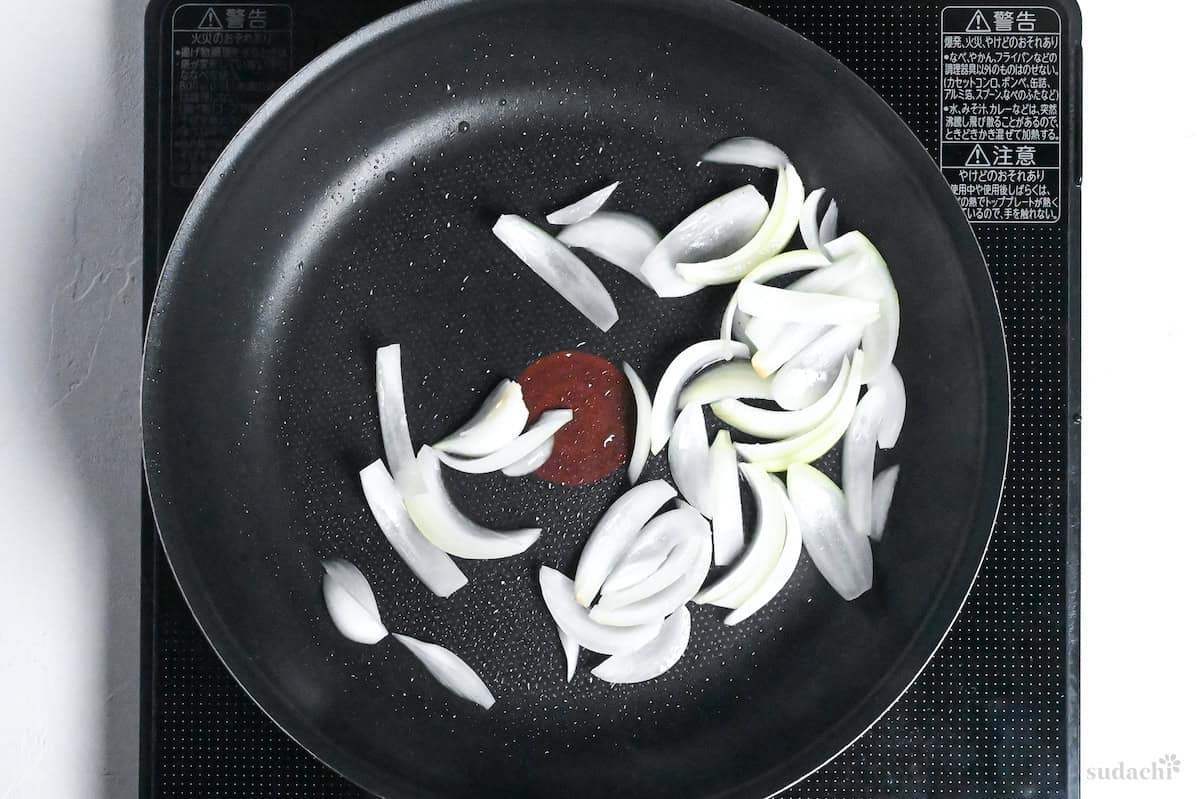
- Heat a frying pan over medium-low heat and add 1 tsp cooking oil. Drain the onion wedges from earlier and add them to the pan with 1 pinch salt. Gently fry until soft and translucent.
- Once the onions are cooked through, add 200 ml water, 1 tbsp Japanese soy sauce (koikuchi shoyu), 1 tbsp mirin, 1 tsp grated ginger root and ¼ tsp dashi granules to the pan and mix well.
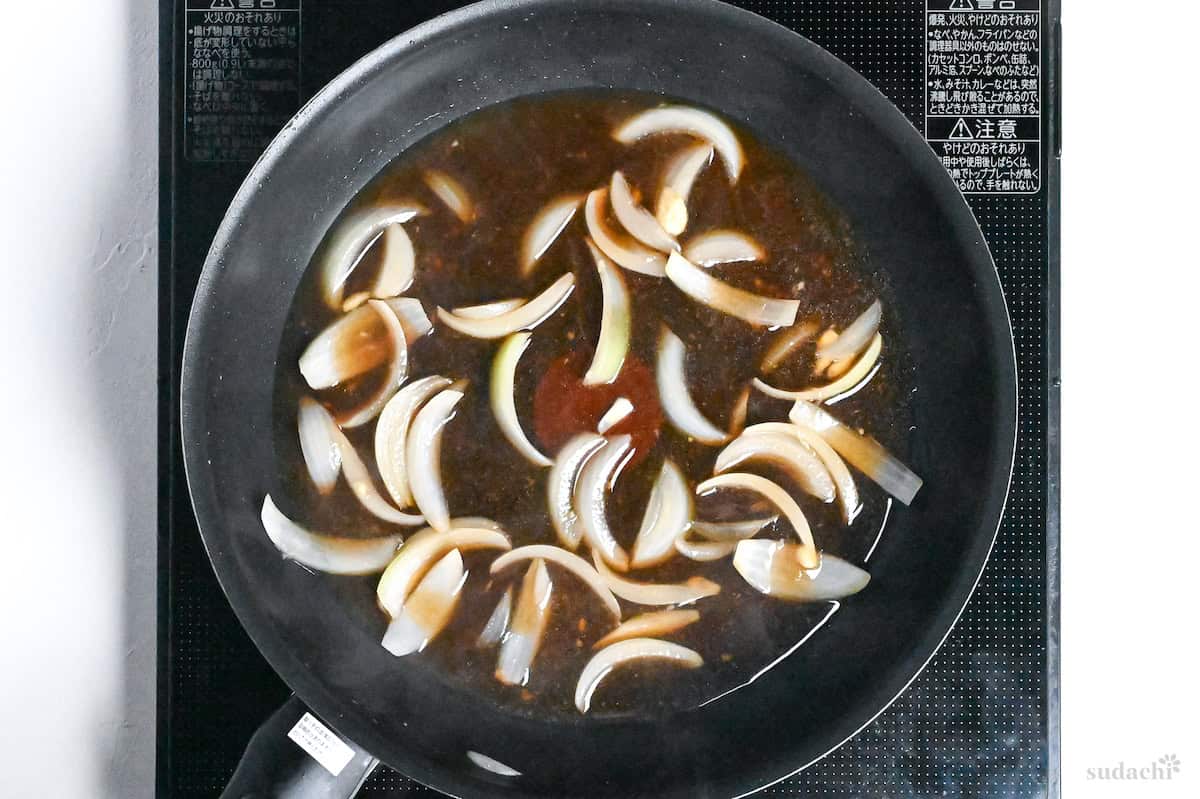
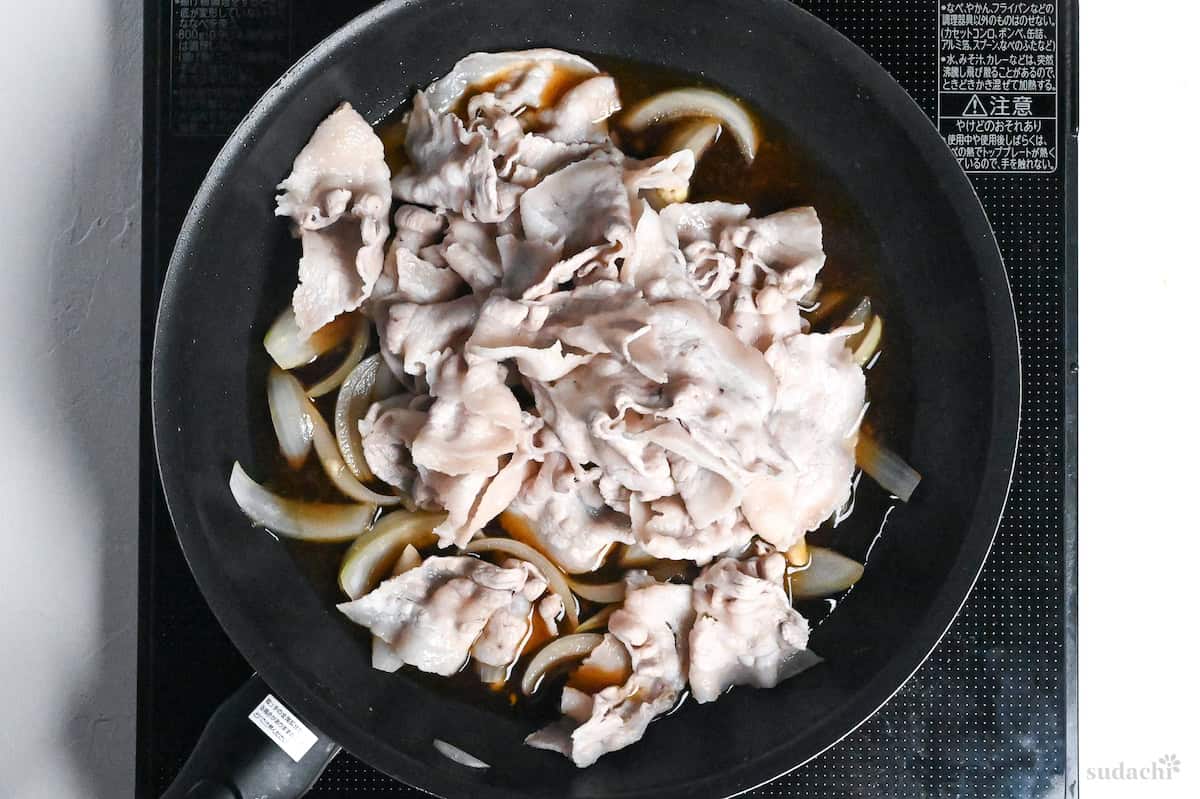
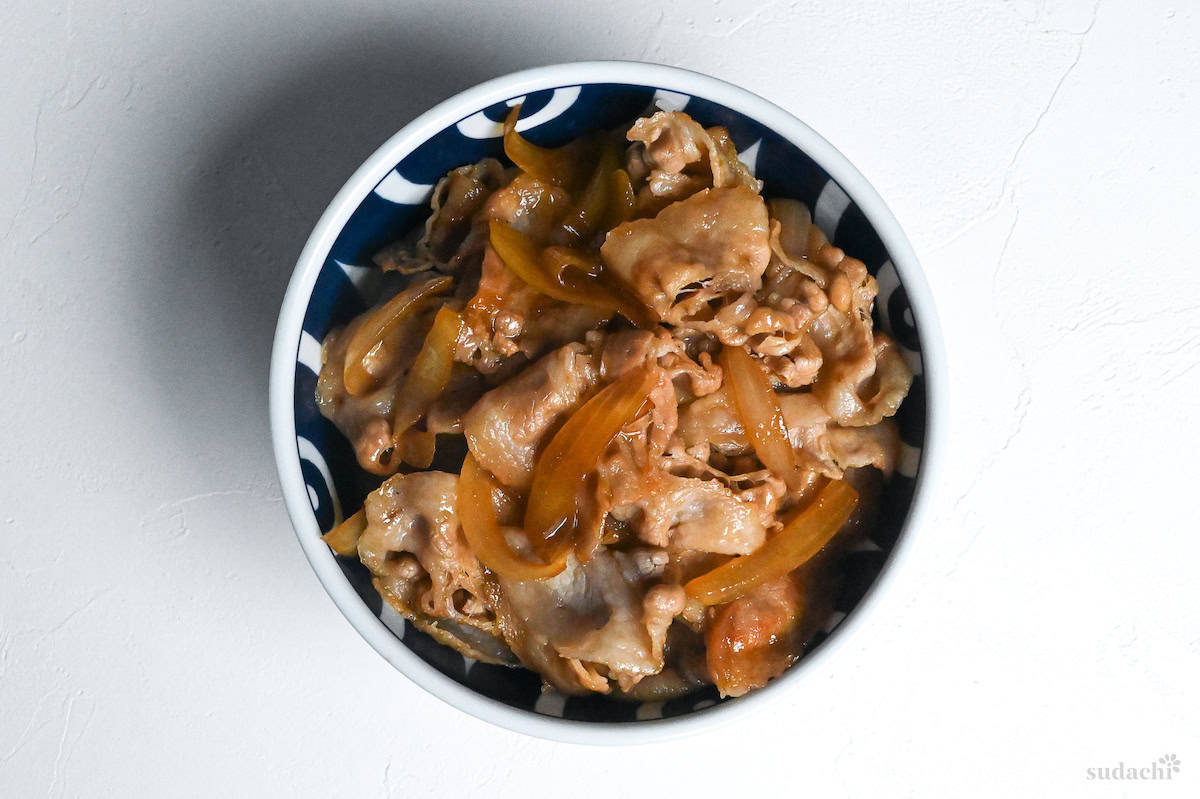
- Add the drained pork, mix and simmer until the liquid has almost completely gone.
Sauce
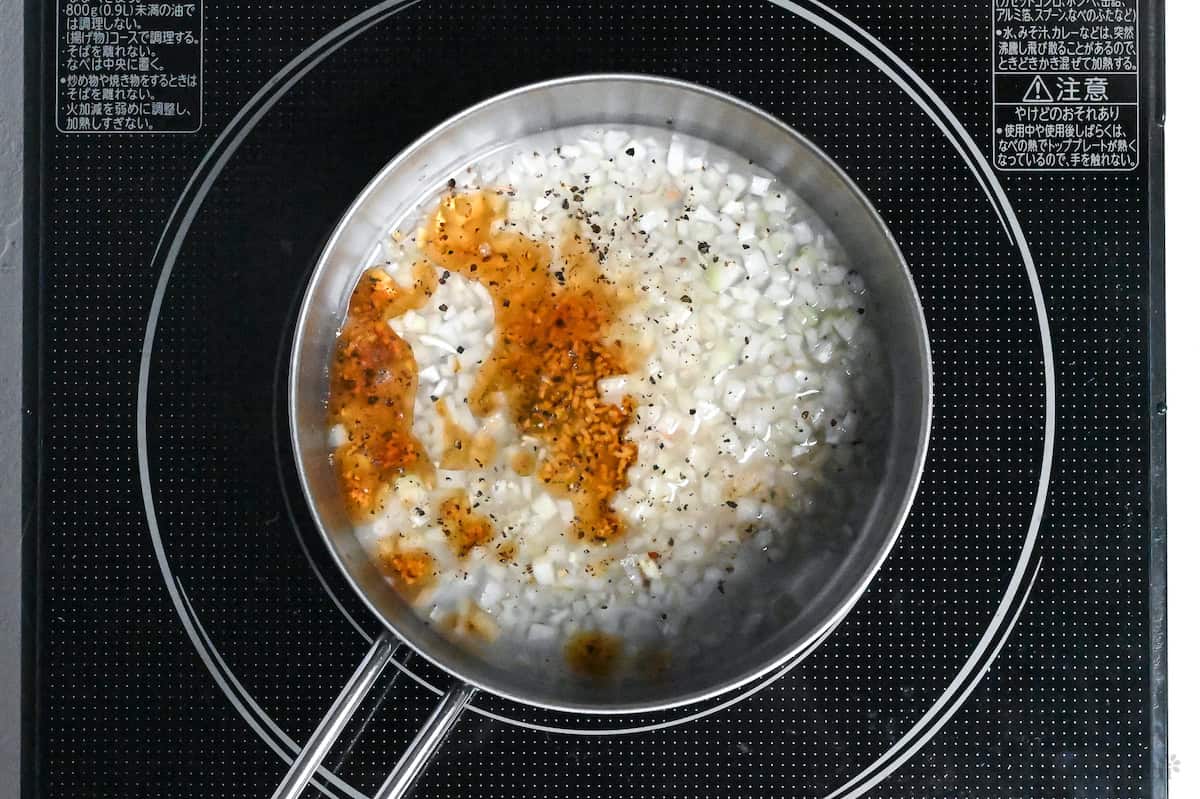
- In a separate smaller pot, add ⅛ onion (finely diced) along with 4 tbsp water, ¼ tsp ground black pepper, ½ tsp salt, ½ tsp sugar, ½ tbsp lemon juice, 1 tsp Chinese-style chicken bouillon powder, 1 tsp honey and 1 tbsp toasted sesame oil. Cook over medium-low for 1-2 minutes or until the onion is slightly softened.
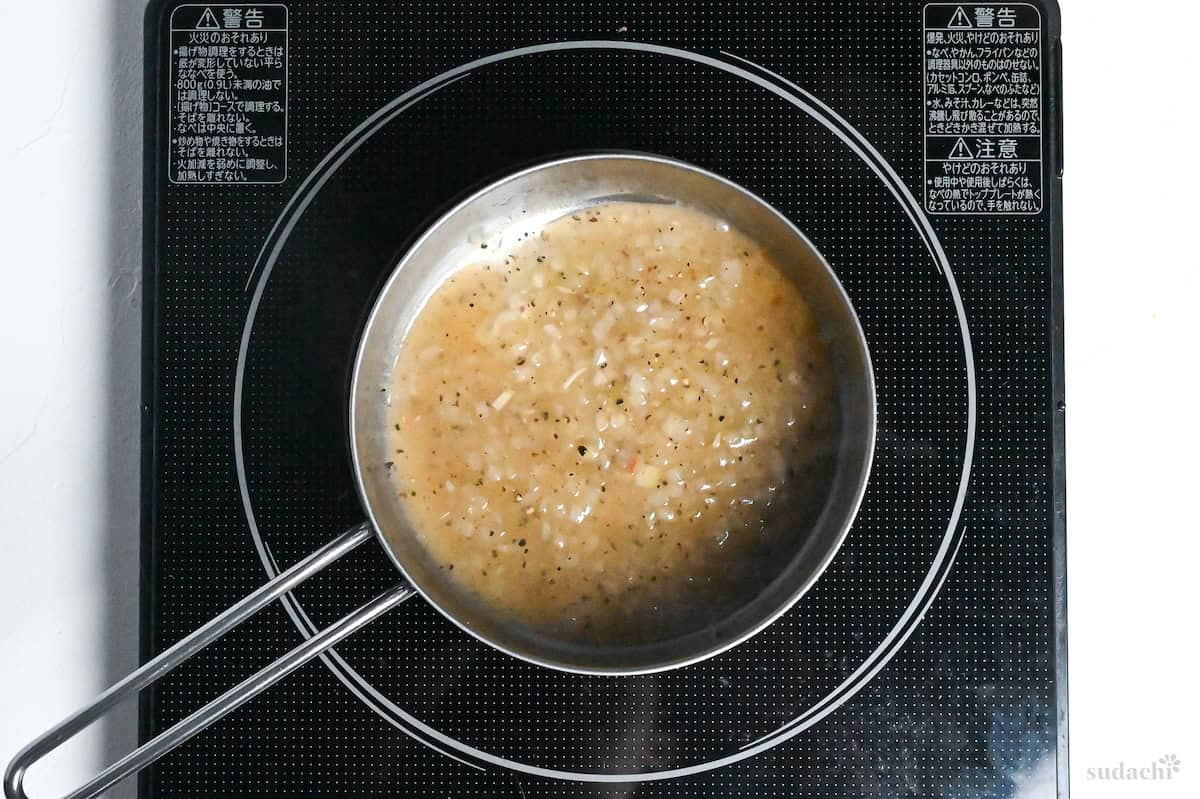
- Take a small bowl and mix together 1 tbsp water and 1 tsp potato starch (katakuriko) to make a slurry. Pour the slurry into the pot and stir over the low heat until slightly thickened and glossy, then remove from the heat.
Assembly
- Divide 2 ptns cooked Japanese short-grain rice between serving bowls and place the pork and onions on top.
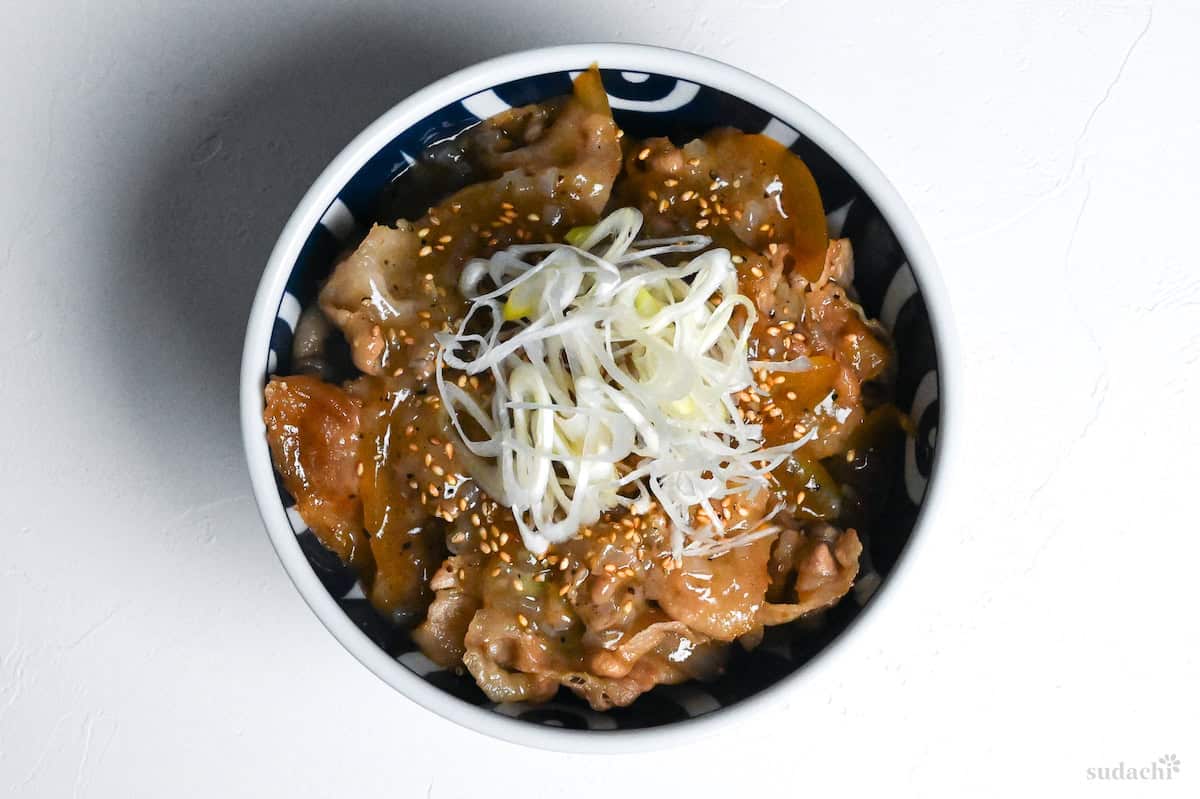
- Pour the sauce over the top, then squeeze out the soaked Japanese leeks and place them in the center. Sprinkle with toasted white sesame seeds and enjoy!
Notes
Chicken bouillon powder varies by brand. My brand is 1 tsp per 200 ml, so if yours is more concentrated (e.g., 1 tsp per 300 ml), use less to avoid oversalting.
Full Recipe QR Code↑↑