Vegetable Tempura Udon Soup
Ingredients
Tempura
- 150 ml water chilled
- 100 ml carbonated water chilled
- 30 g cornstarch
- 150 g unbleached cake flour or pastry flour, low-protein, around 7-8%
- 1 egg chilled
- 5 fresh shiitake mushroom stems removed
- 100 g eggplants cut into wedges, soaked in cold water
- 10 perilla leaves (shiso)
- 5 stalks asparagus cut into halves or thirds
- cooking oil for deep frying, vegetable, canola, peanut or rice bran
Broth and Noodles
- 1000 ml dashi stock bonito and kombu dashi, or a shop-bought dashi packet
- 5 tbsp Japanese soy sauce (koikuchi shoyu)
- 2 tbsp mirin
- ½ tsp salt
- 5 portions udon noodles
Optional topping Ideas
- kamaboko fish cake
- finely chopped green onions
- Japanese chili powder (shichimi togarashi)
Instructions
- Chill 150 ml water and 100 ml carbonated water in the fridge for 30 minutes. Sift 30 g cornstarch and 150 g unbleached cake flour together into a bowl and chill that for 30 minutes as well. Leave 1 egg in the fridge until you mix.
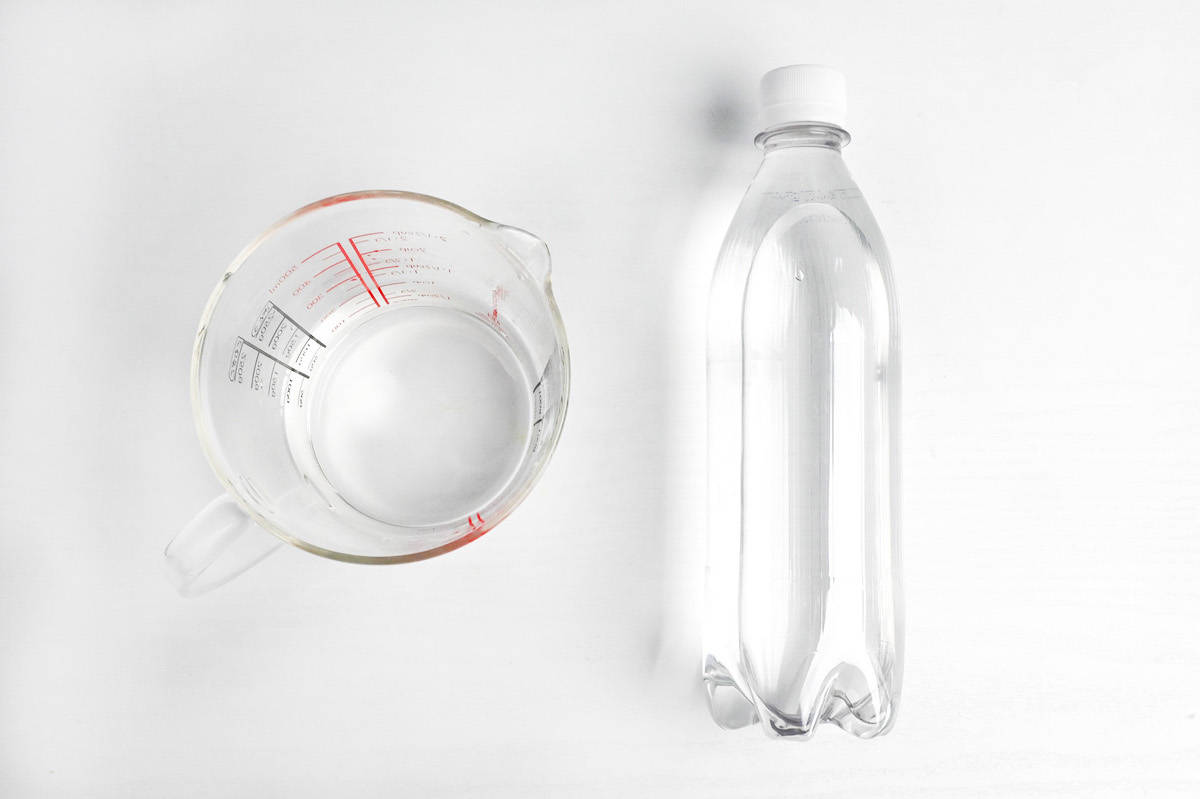
- While everything chills, prepare the vegetables. Remove the stems from 5 fresh shiitake mushroom. Cut 5 stalks asparagus into halves or thirds. Cut 100 g eggplants into wedges and leave them in cold water 5 to 10 minutes. Wash 10 perilla leaves (shiso)
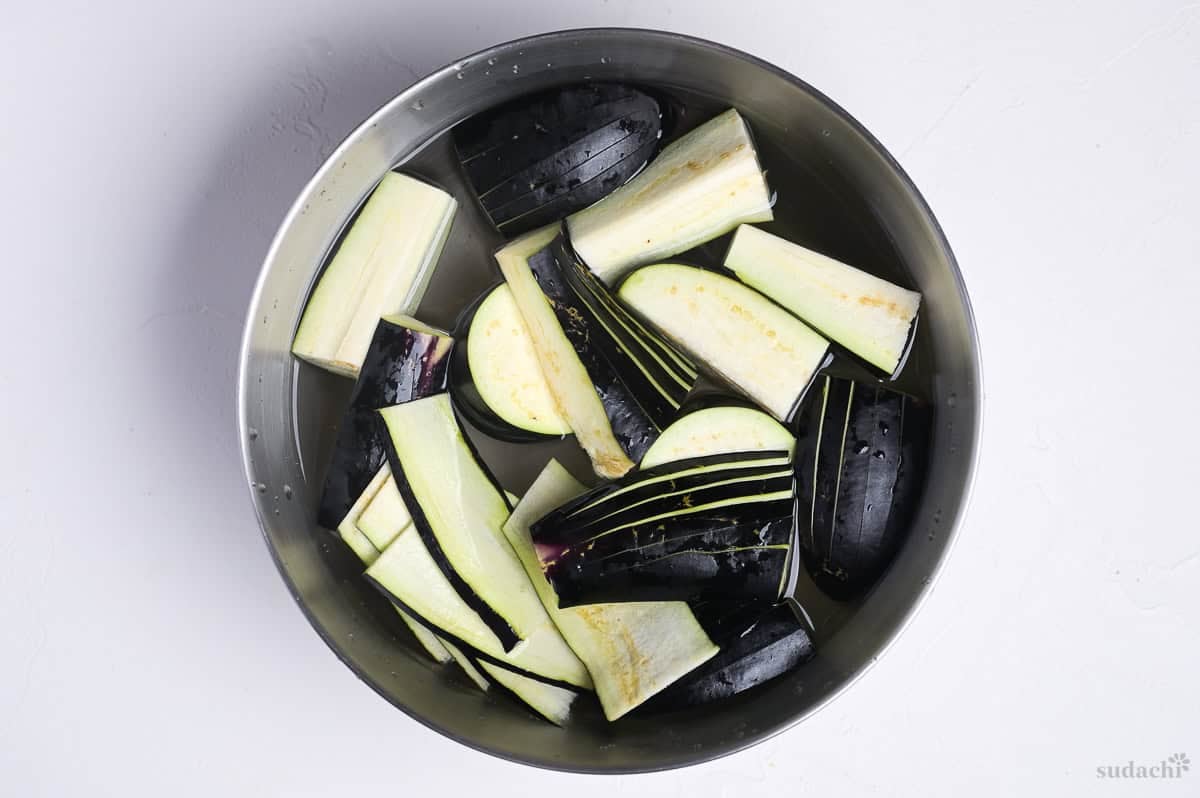
- Press every vegetable between sheets of kitchen paper and wipe until no water is left on the surface. Give the eggplant the most attention.
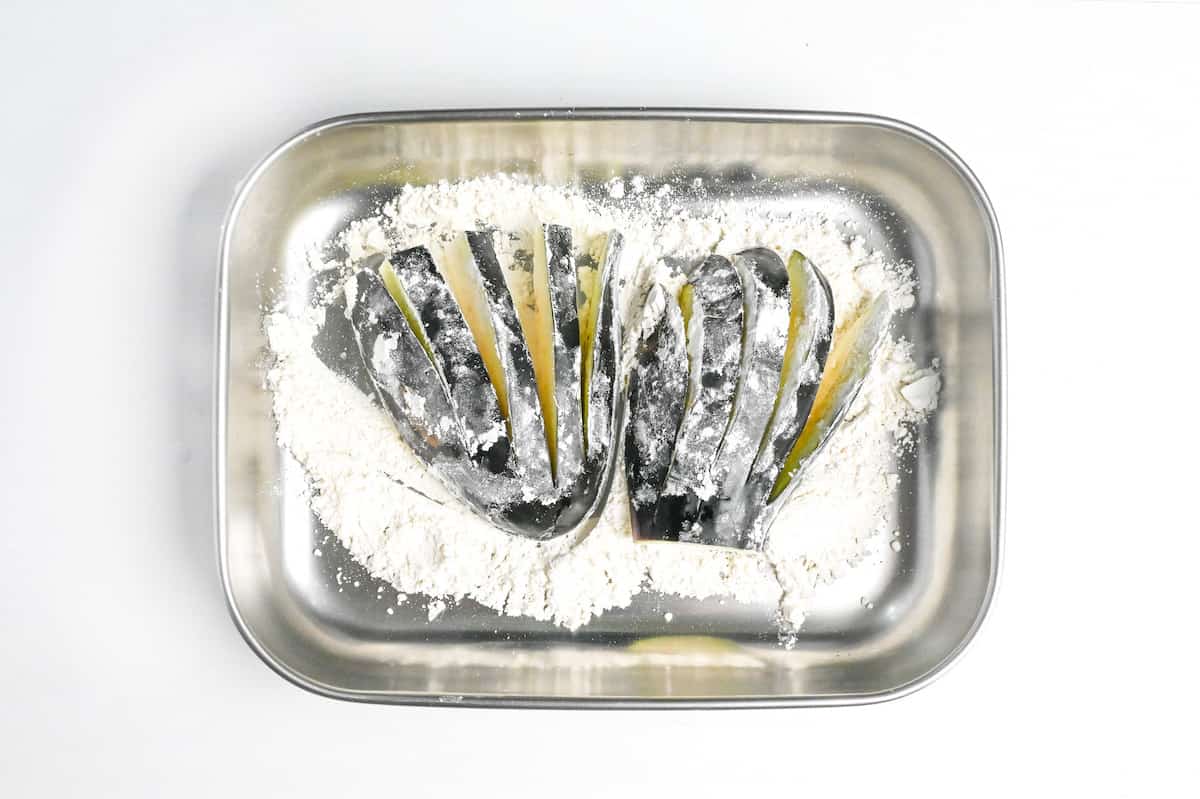
- Start heating the cooking oil to 180 °C (356 °F). Dust the dried vegetables with a thin coat of cake flour and line them up in order, perilla, shiitake, asparagus, eggplant.
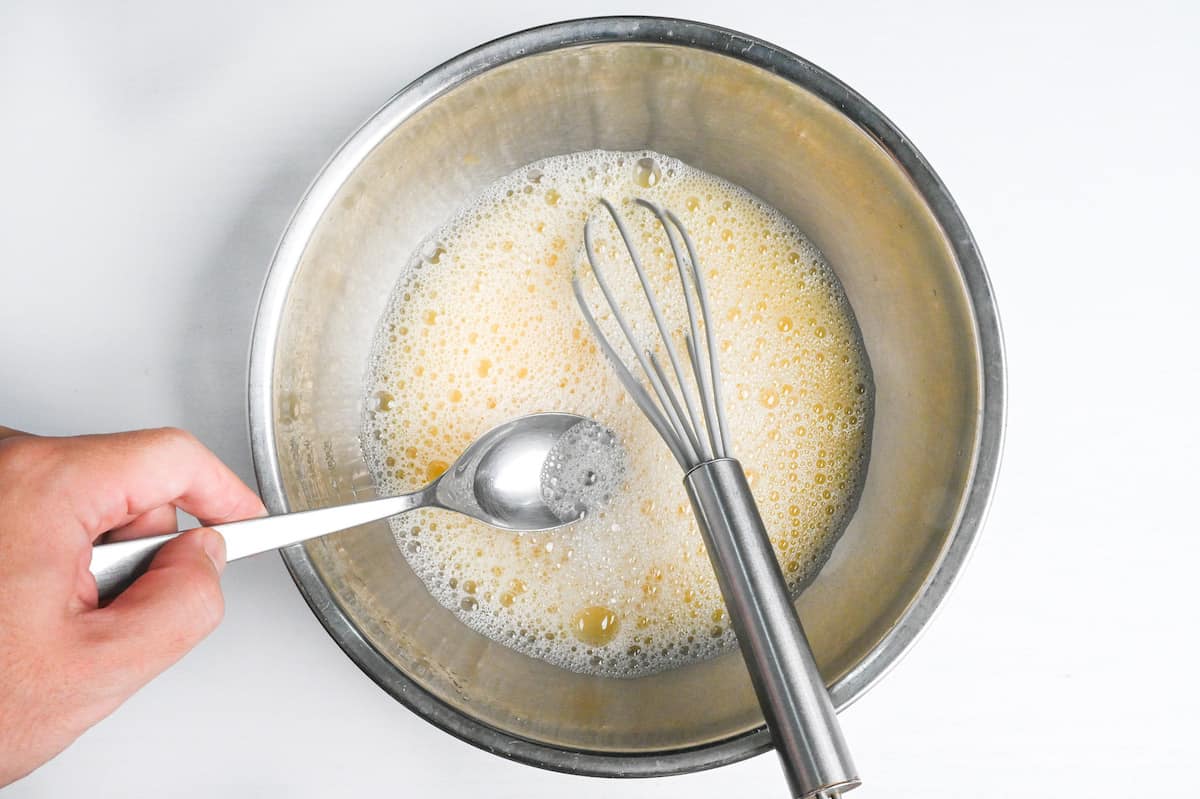
- Combine the chilled water and carbonated water in a bowl, crack in the cold egg and beat it in. Skim off any foam with a spoon.
- Sift the chilled cake flour and cornstarch in 3 additions and mix with chopsticks or a spatula, drawing crosses through the batter. Stop while small lumps are still scattered through it. Return the bowl to the fridge until you fry.
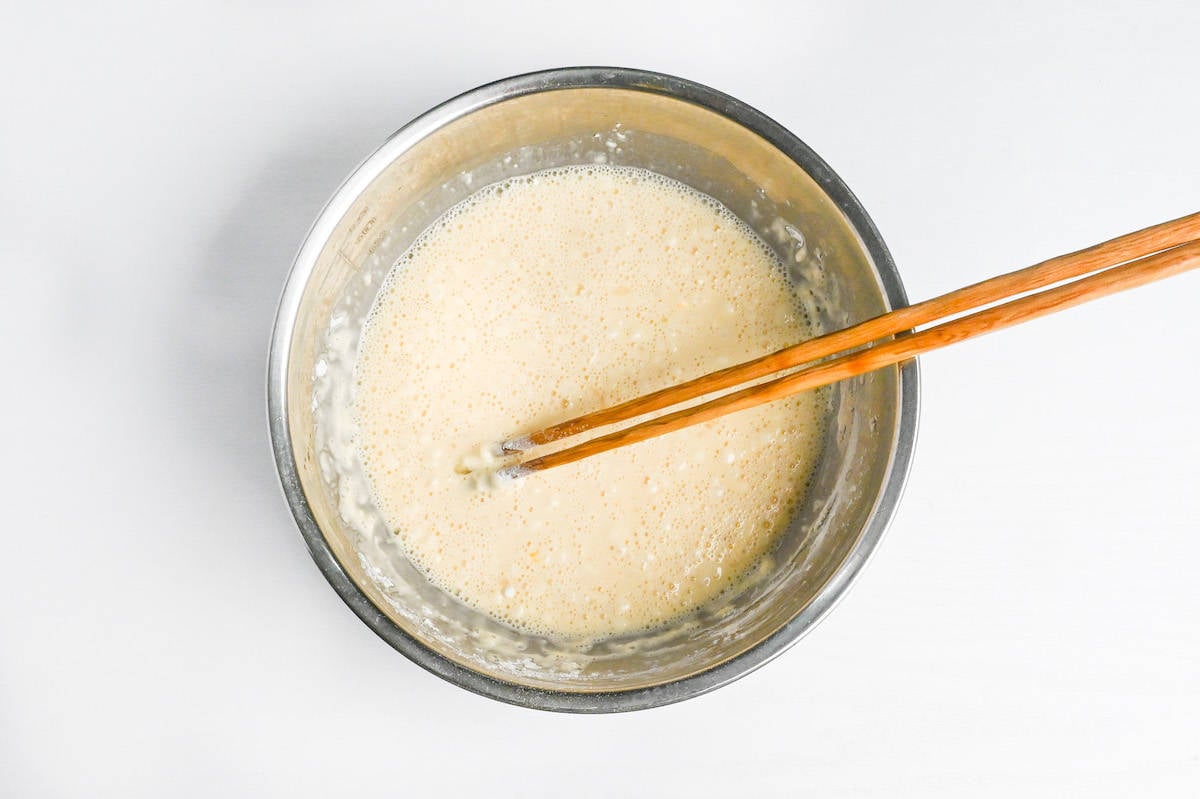
- Fry the 8 perilla leaves first. Coat one side only and lift each leaf out after a few seconds. Stand them on a wire rack to drain.
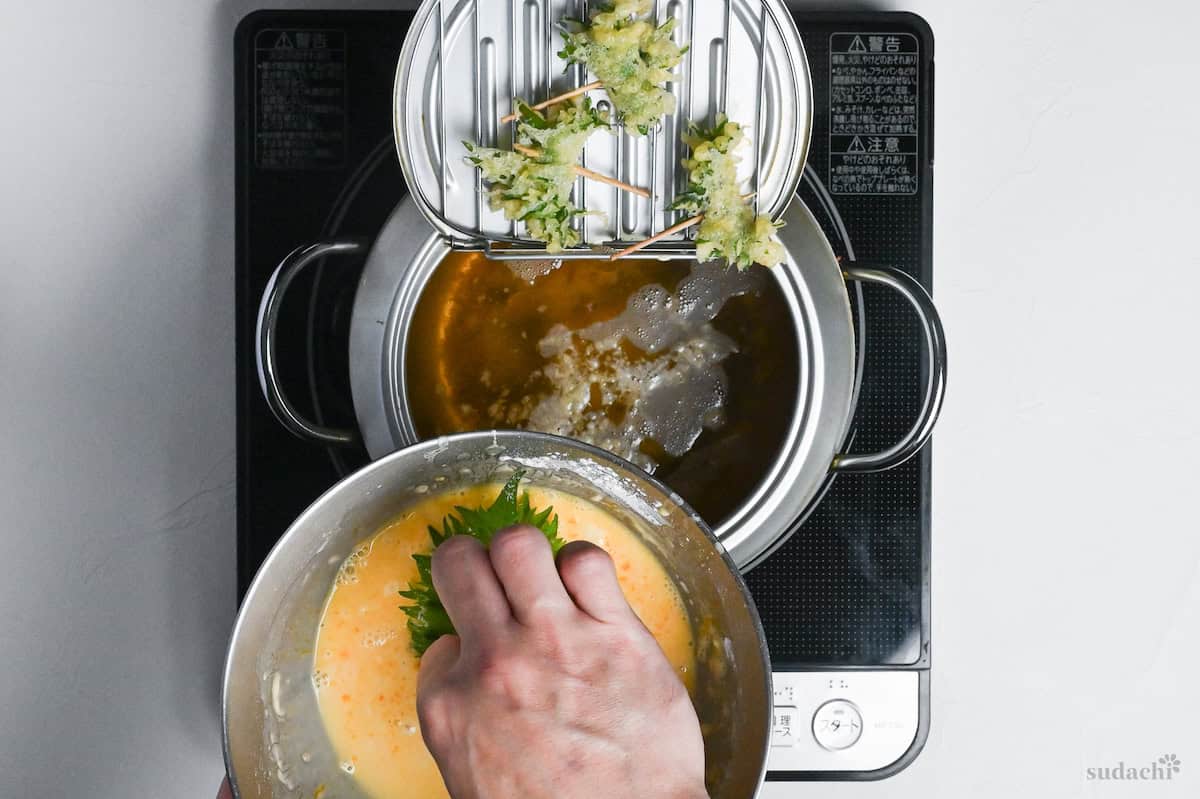
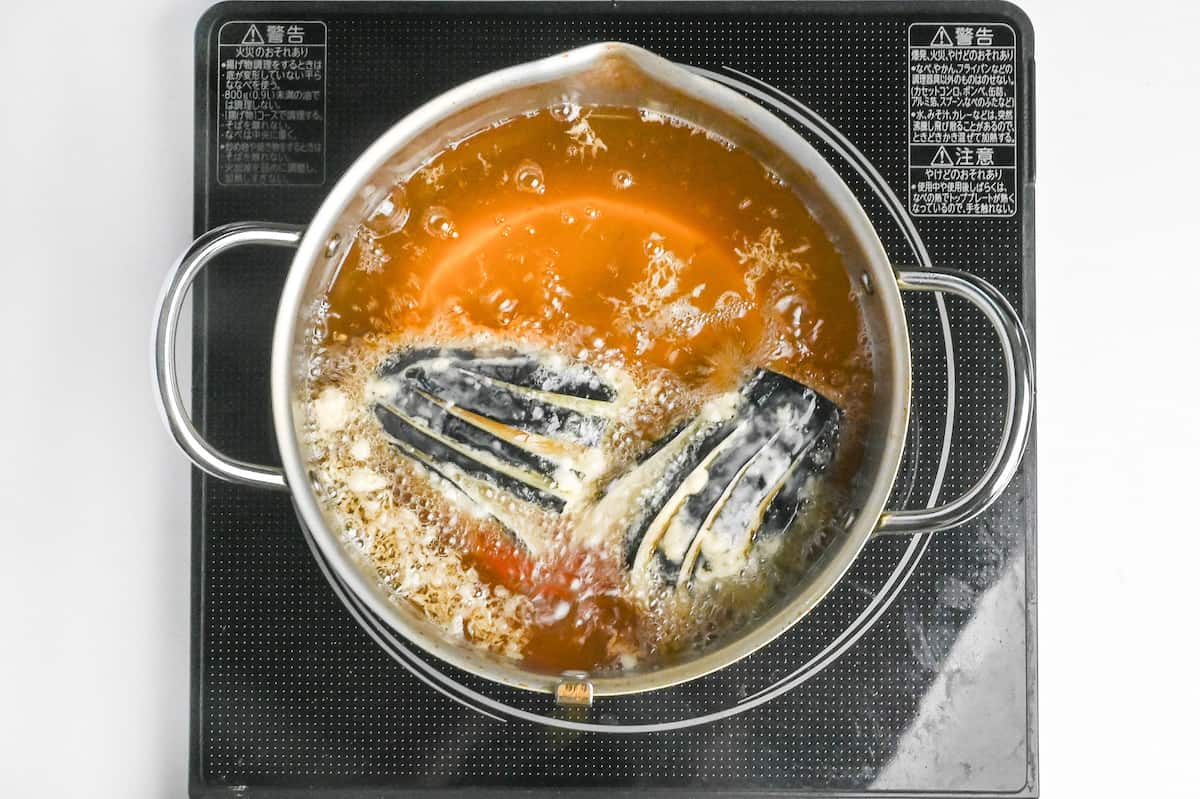
- Fry the shiitake, then the asparagus, then the eggplant. Keep each type together and add only enough to cover half the oil surface. Lift each piece out once the batter has set and just before it takes on color.
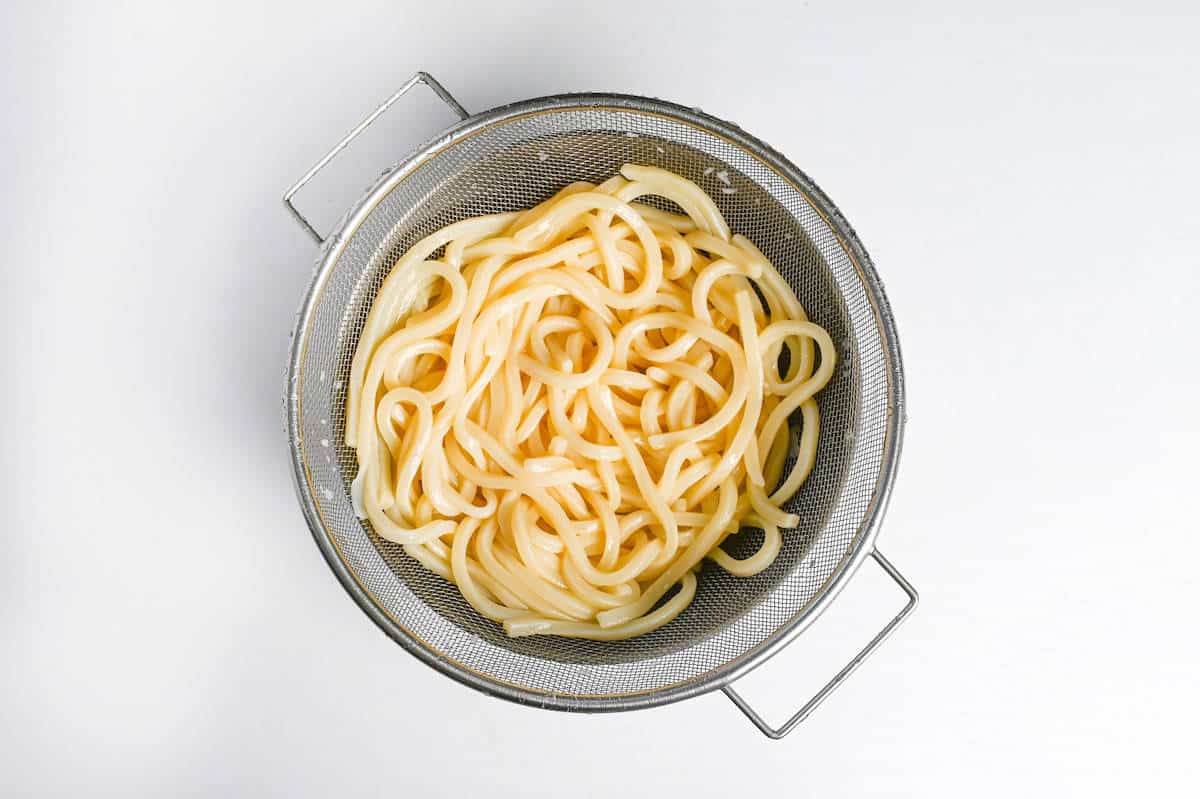
- Boil 5 portions udon noodles according to the package, drain them, and rinse quickly with fresh boiling water.
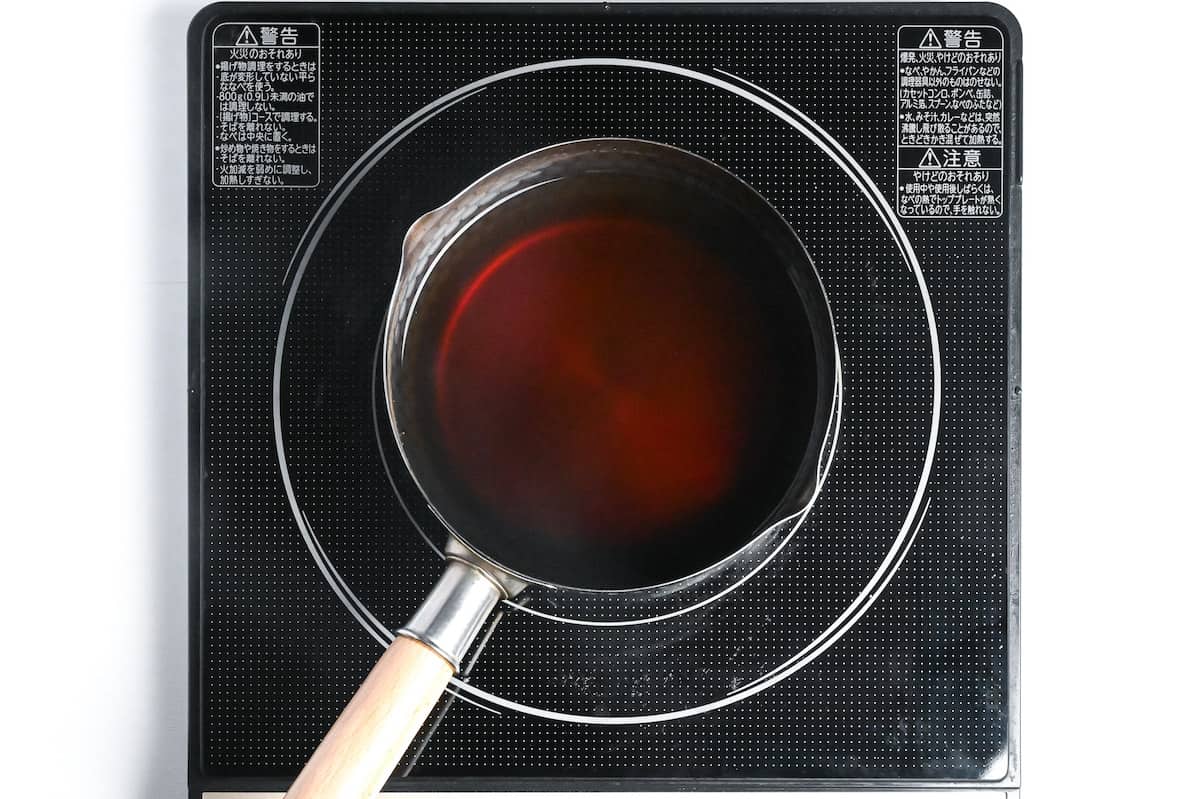
- In another pot bring 1000 ml dashi stock to a boil, add 5 tbsp Japanese soy sauce (koikuchi shoyu) and 2 tbsp mirin, and simmer 2 minutes. Turn off the heat, add ½ tsp salt and stir it through.
- Divide the udon between bowls and pour the hot broth over. Add 2 to 3 slices of kamaboko fish cake per serving and set the tempura on the noodles or on a separate plate. Scatter finely chopped green onions over the top and add Japanese chili powder (shichimi togarashi) to taste. Eat it hot. Enjoy!

Notes
Avoid bleached cake flour: Avoid bleached or chlorinated cake flour as it changes the texture. Also avoid self-rising, whole wheat pastry, and gluten-free blends. For UK/AU readers, plain flour works. See for details.
Where to stop mixing the batter: Large lumps still sitting whole means it is undermixed, and a batter that has gone smooth and even has gone too far. Stop while small lumps are scattered through it.
Dry the vegetables, then dust them: Water left on the surface flashes to steam in the oil and pushes the batter off. Pat dry between kitchen paper, then dust thinly. Eggplant holds the most water.
Mix cold ingredients only: Chill the flour, water and egg for 30 minutes first. Batter mixed at room temperature builds gluten before it reaches the pot and never fries light. Mix right before frying, and return the bowl to the fridge any time it waits.
A note on the nutrition figures: In Japan, the broth of a noodle soup like this is not finished to the last drop, so the numbers here assume you drink only about 30 percent of the soup, in line with . Finish the whole bowl and the figures, sodium above all, will run considerably higher.
Full Recipe QR Code↑↑