
Tekka Maki (Tuna Sushi Rolls)
Ingredients
Sushi Rice
- 1 tbsp unseasoned rice vinegar (komezu)
- 1 tsp sugar
- ½ tsp salt
- 320 g cooked Japanese short-grain rice
Tekka Maki
- ¼ tsp salt
- 100 g sashimi-grade tuna
- wasabi paste optional
- 2 sheets roasted seaweed for sushi (nori)
- 1 bowl cold water
- Japanese soy sauce (koikuchi shoyu) for dipping
Instructions
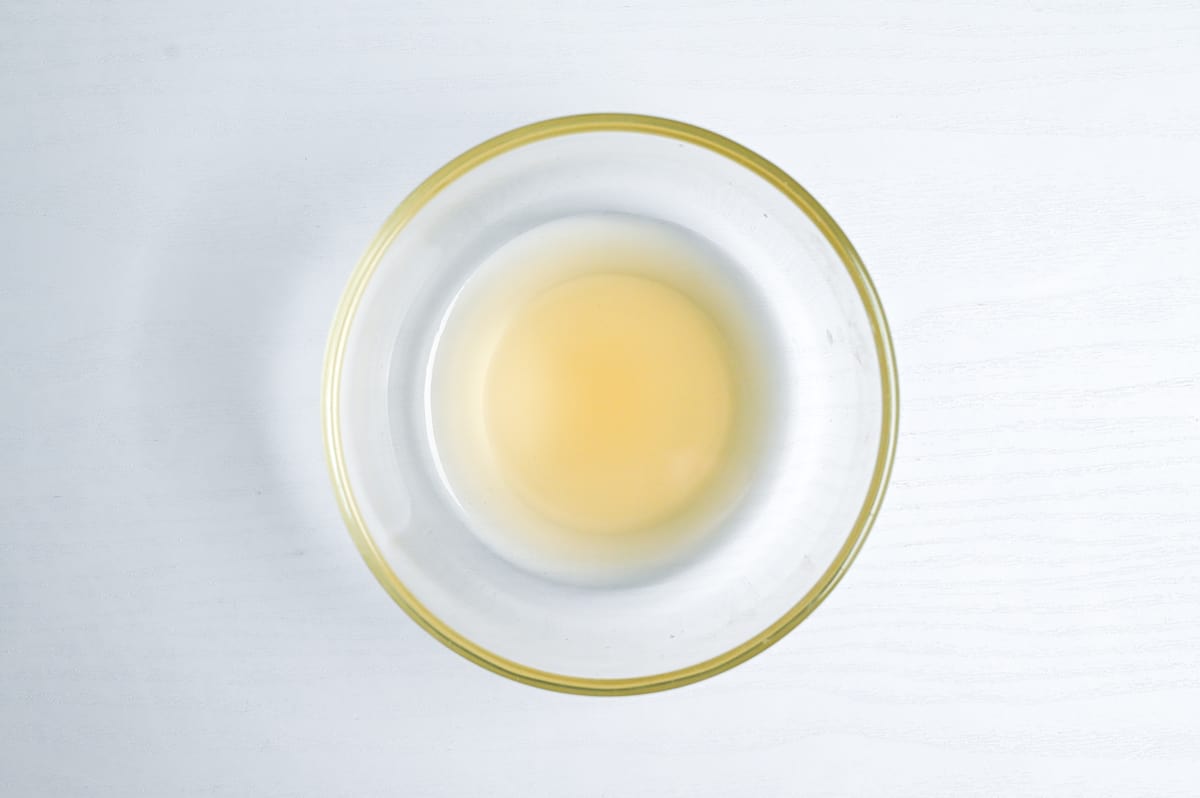
- In a small bowl, mix 1 tbsp unseasoned rice vinegar (komezu), 1 tsp sugar and ½ tsp salt until dissolved.
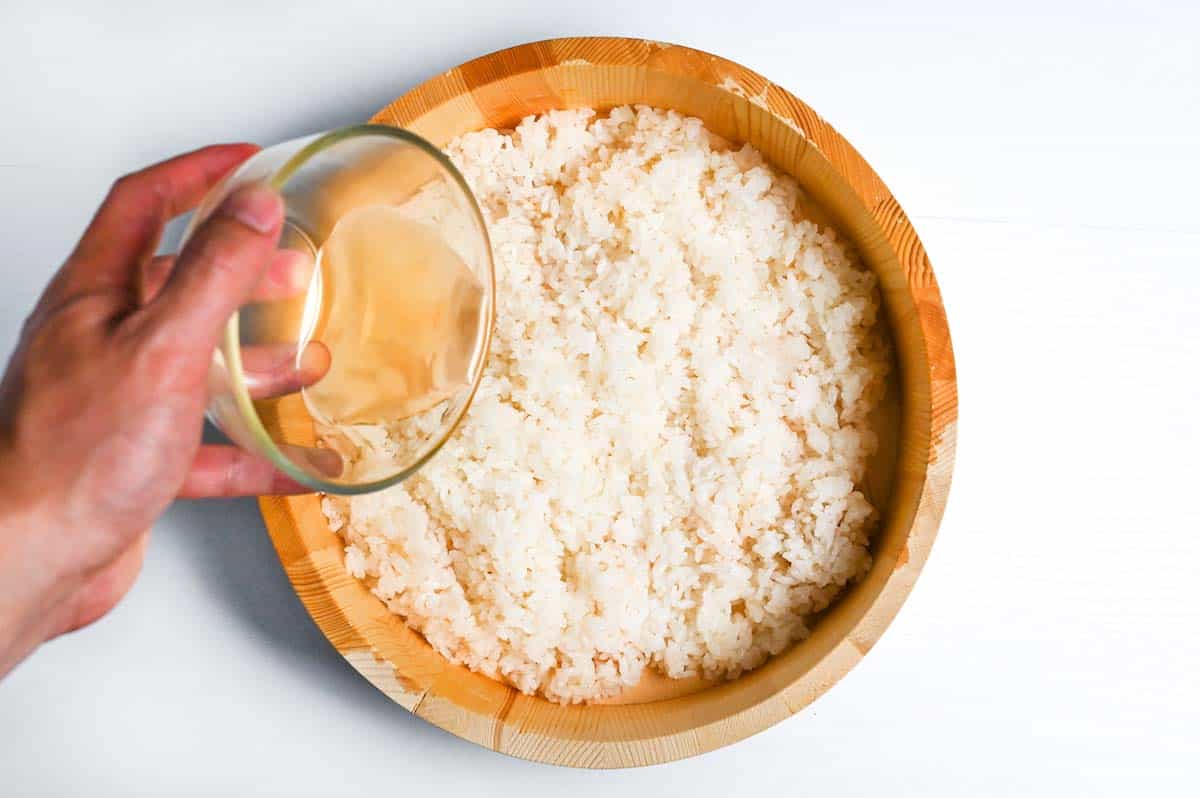
- Mix the seasoned vinegar into 320 g cooked Japanese short-grain rice while it's still warm. Gently fan to cool it while you mix using a cut and fold motion, then cover with a clean damp tea towel until it's time to use.
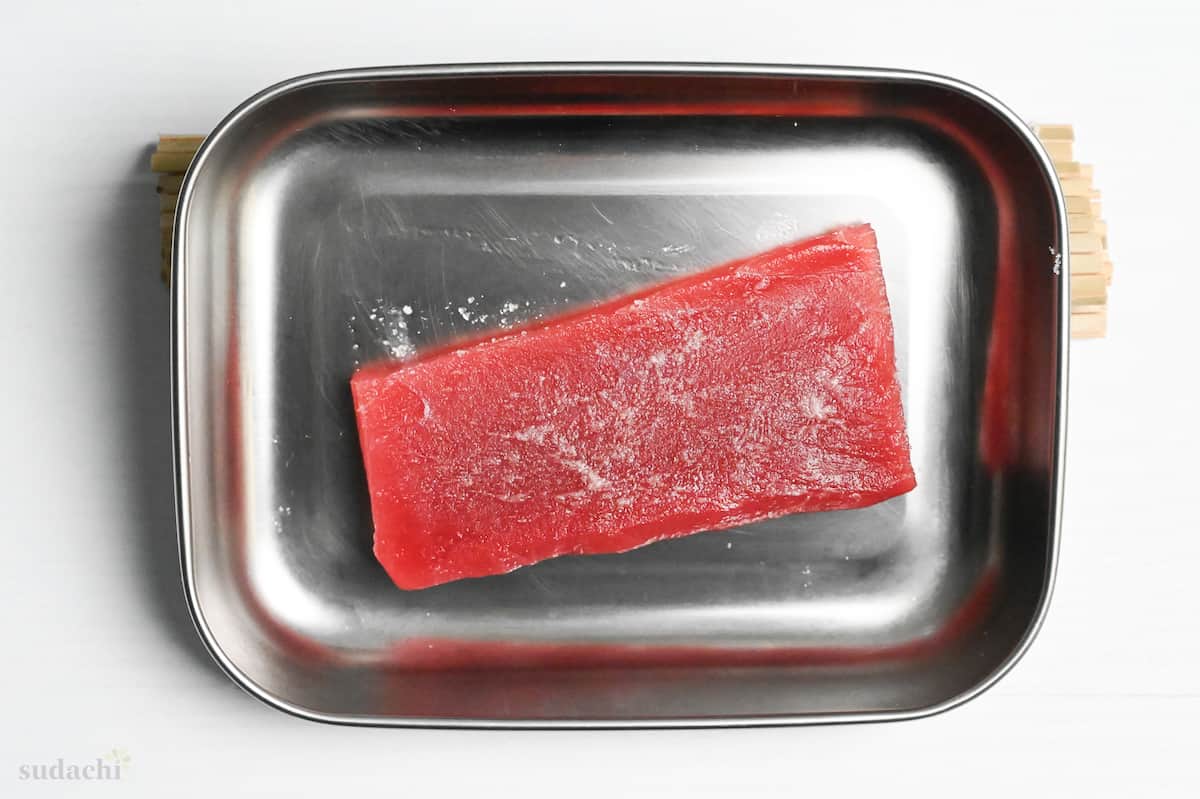
- Next, pat 100 g sashimi-grade tuna dry with kitchen paper and sprinkle with ¼ tsp salt. Spread it thinly over both sides without rubbing it in hard, then place it in a container propped up on one side to allow any excess liquid to drain to the bottom. Rest in the refrigerator for 10 to 15 minutes. After the tuna has finished resting, wipe off any moisture with kitchen paper and cut it into sticks about 7-8mm (1/3 inch) thick. (For pre-sliced sashimi, skip the salt and only pat it dry.)
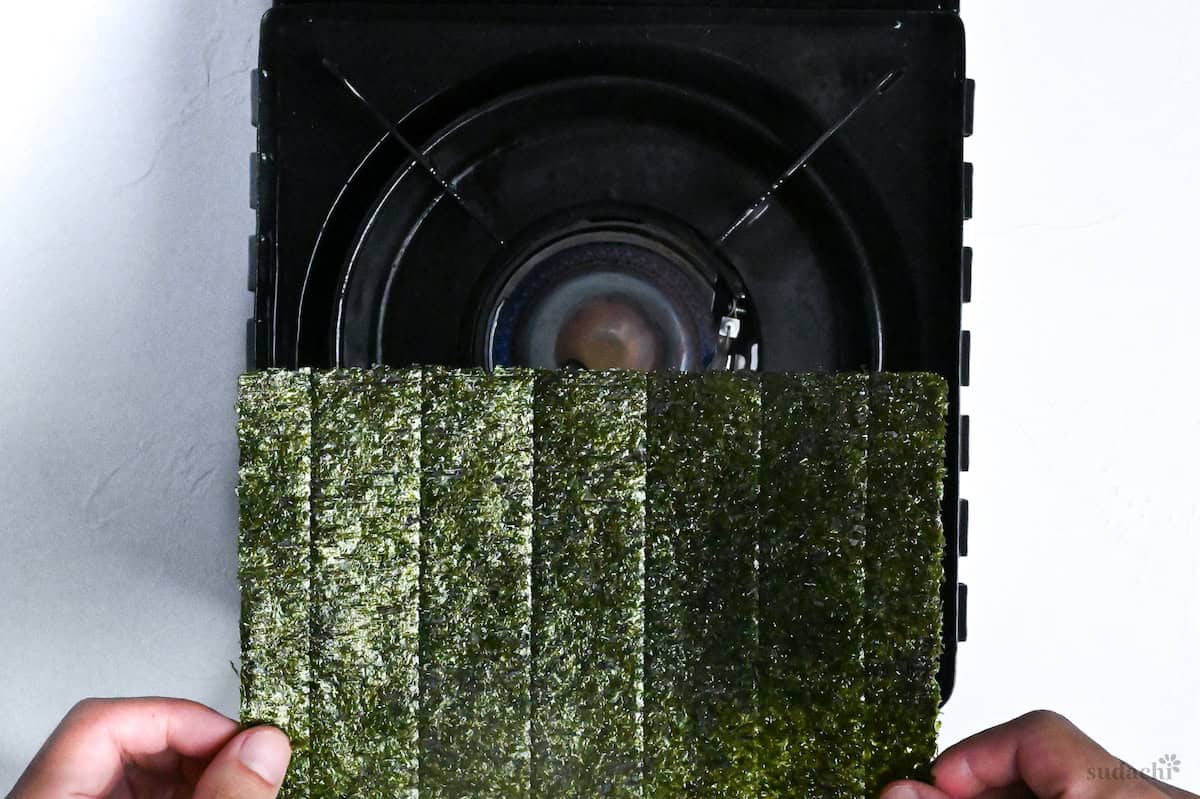
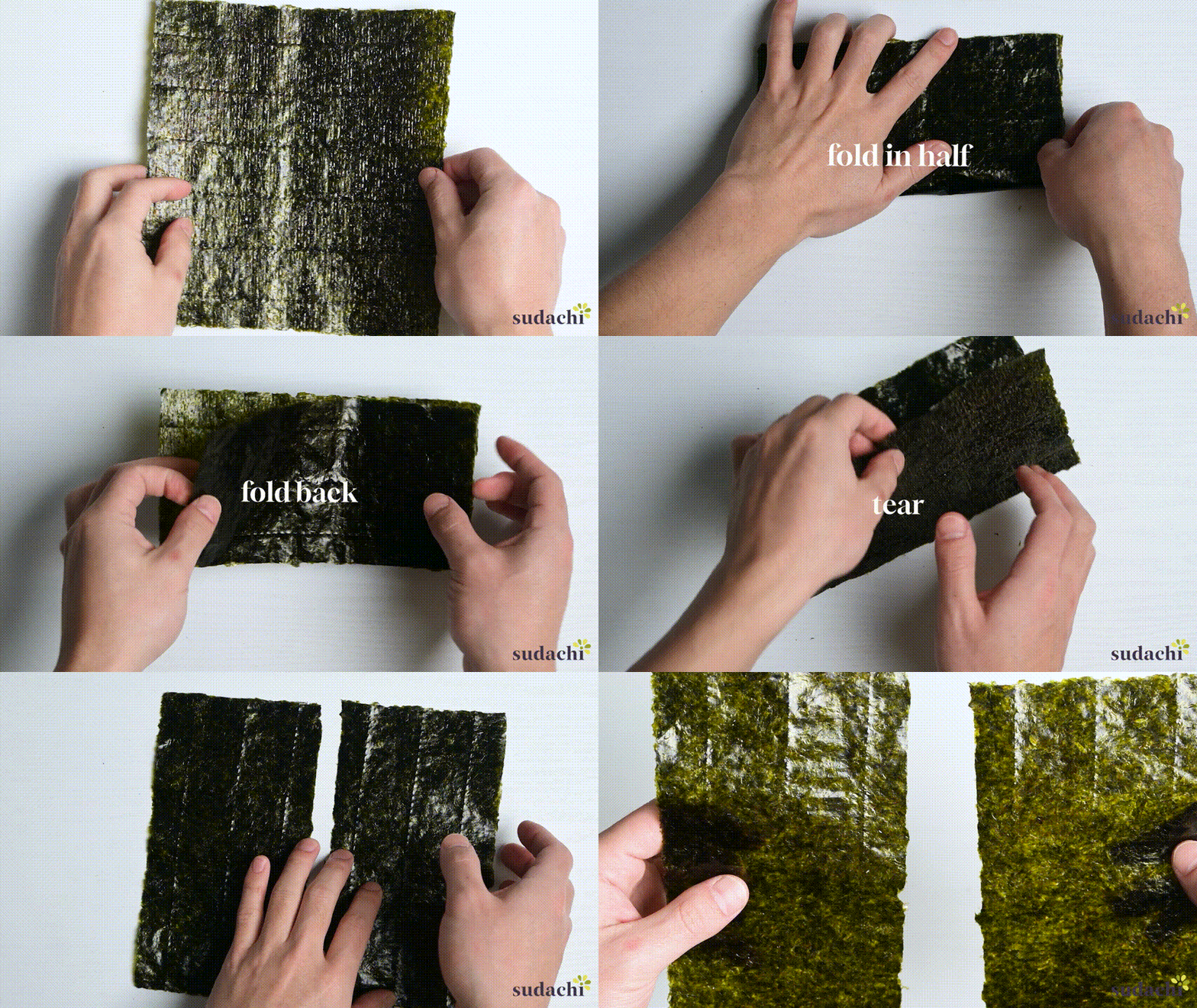
- Optional: Turn your gas burner on low and carefully fan 2 sheets roasted seaweed for sushi (nori) over the fire to improve the texture and aroma of the nori.
- Fold the nori in half and pinch along the crease so that you can neatly tear them in half. (You can use scissors if you prefer.)
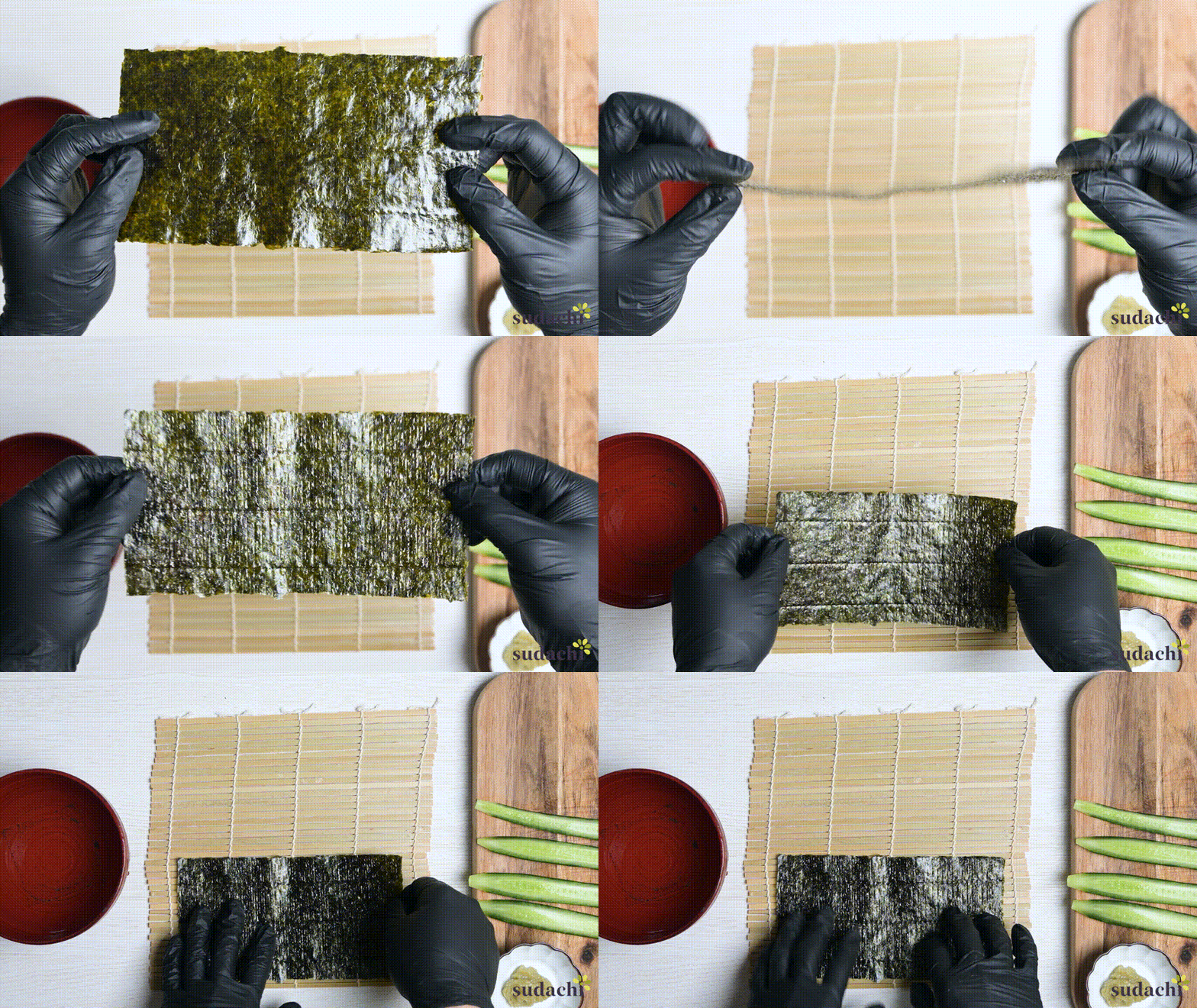
- Set the rolling mat in front of you with the bamboo laying horizontally. Place the nori down with the rough side facing up, line up the bottom edge with the bottom of the sushi mat.
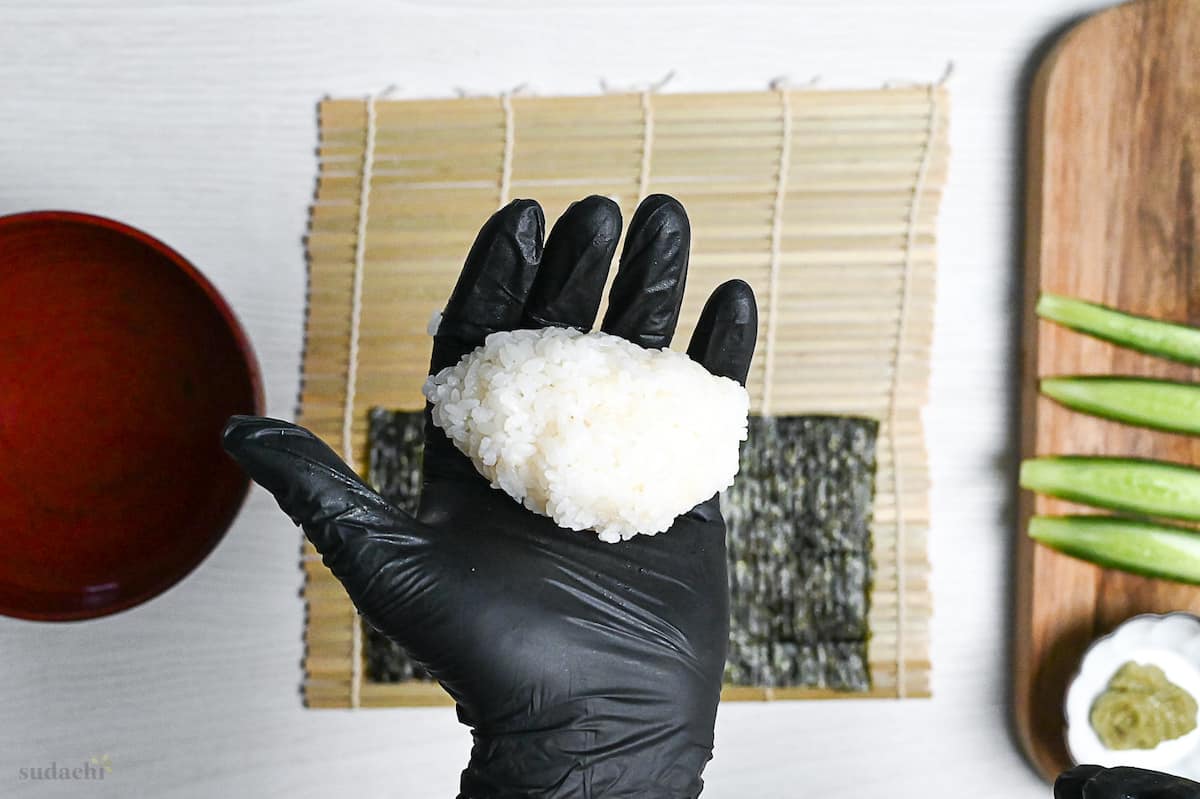
- Wet your hands with cold water. Keep a bowl of cold water nearby to use when necessary. (This helps stop rice sticking to your hands.) Take a handful of sushi rice (approx 80g) and shape it into a rough cylinder.
- Leaving a finger-width border along the top of the nori, place the rice on one side and gently spread it to the other side. (You can use a rice paddle to spread it if you prefer.)
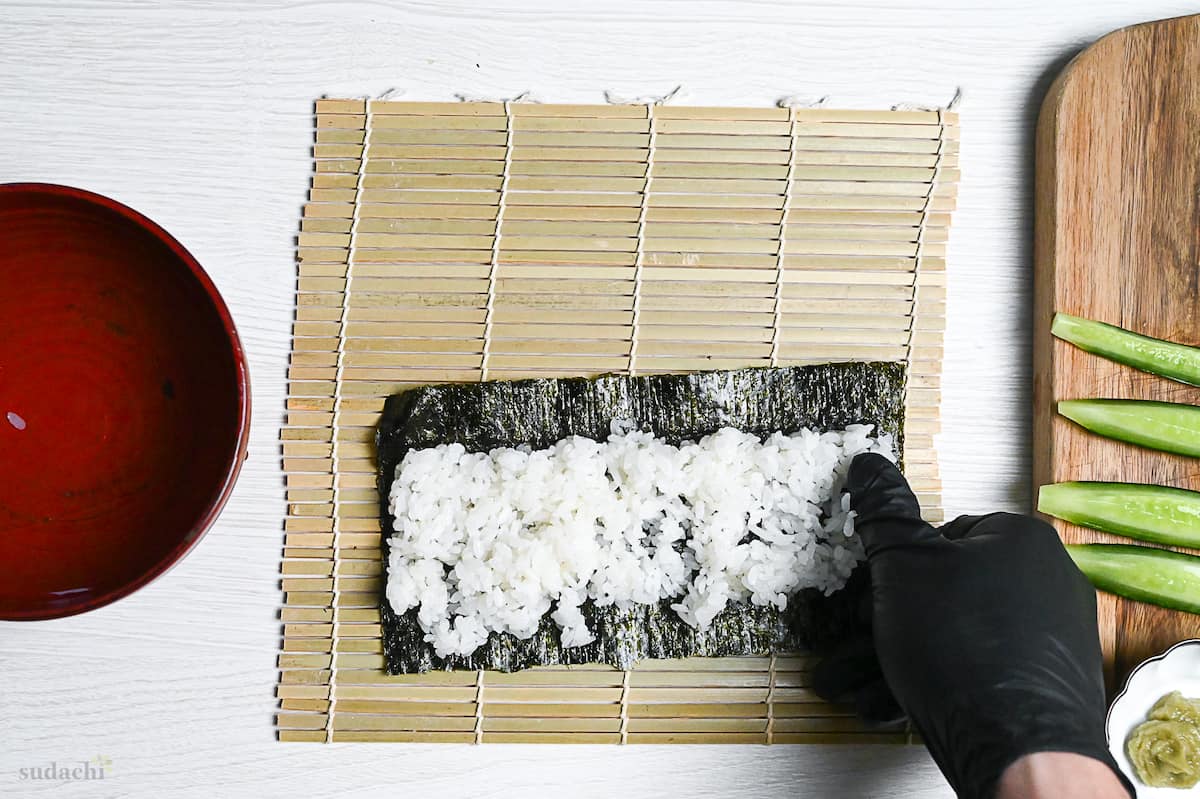
- Use your hand to make a wall and push the rice right up to the edges of the nori. Make sure to leave the border at the top clear.
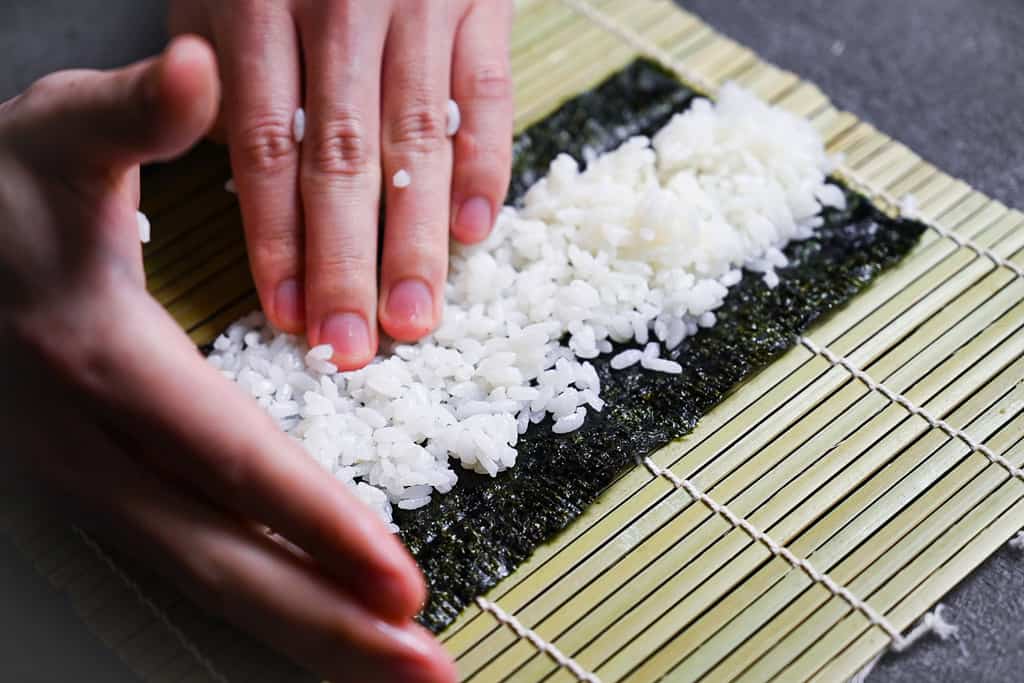
- Make a ridge with the top edge of the rice (next to the border).
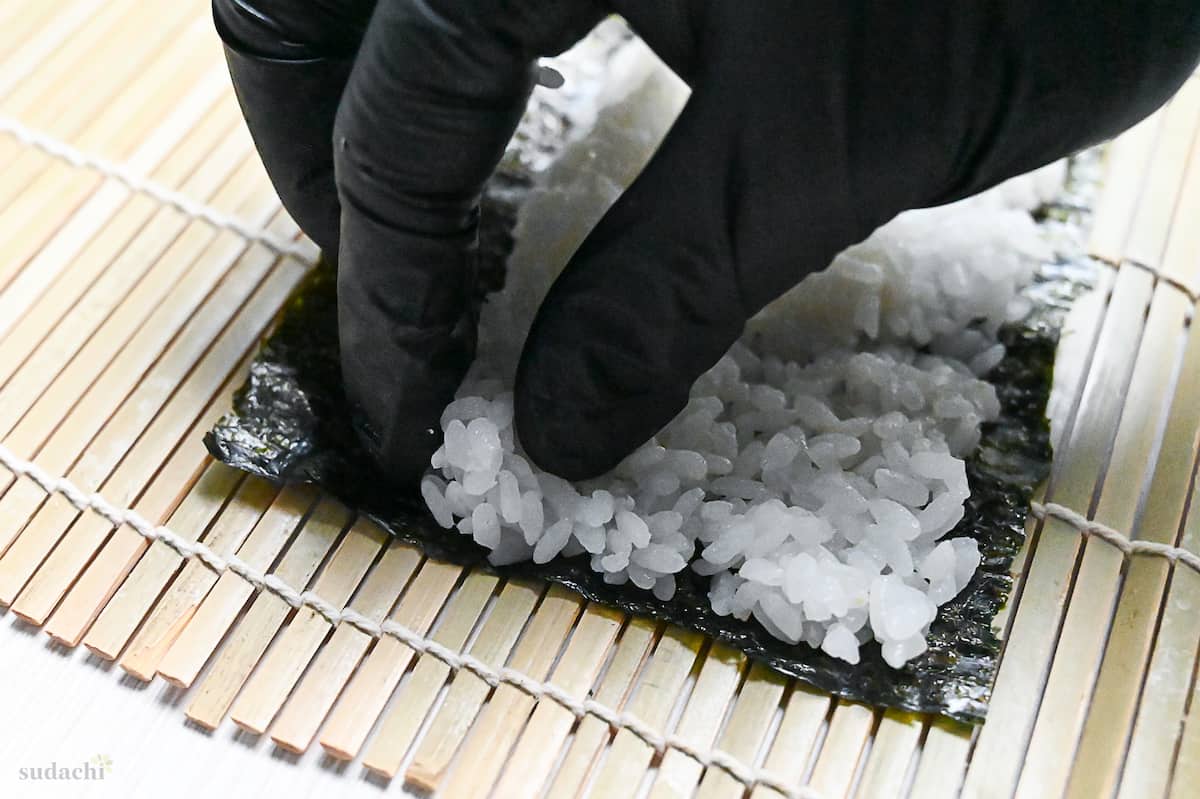
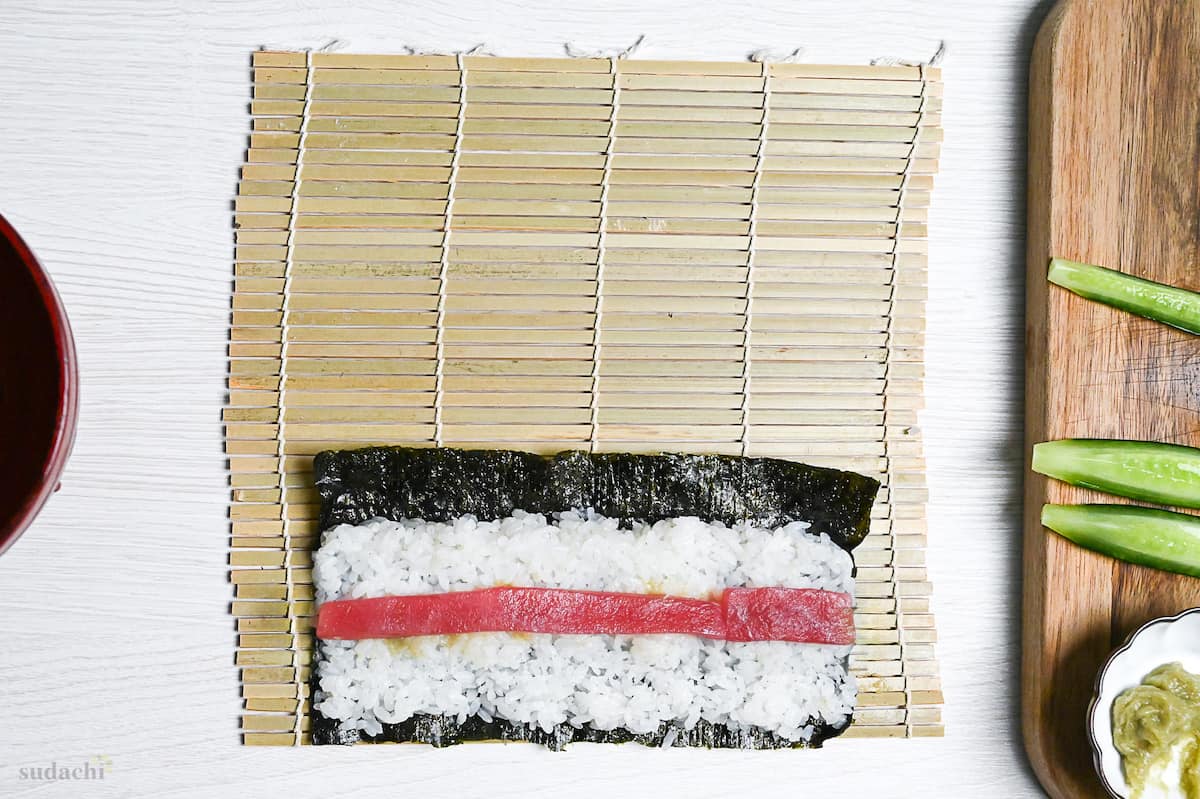
- Add a small blob of wasabi and spread it down the middle of the rice. Then, place a strip of tuna on top and gently press it into the rice to prevent it from shifting when rolled.
- Lift the edge of the bamboo mat closest to you (the bottom edge) and carefully roll it over so that the two edges of the rice meet. (Make sure it's tight!) Lift the bamboo mat slightly and roll over the flap of nori to close the sushi. You don't need to wet it down, the moisture from the rice will help the nori stick together.
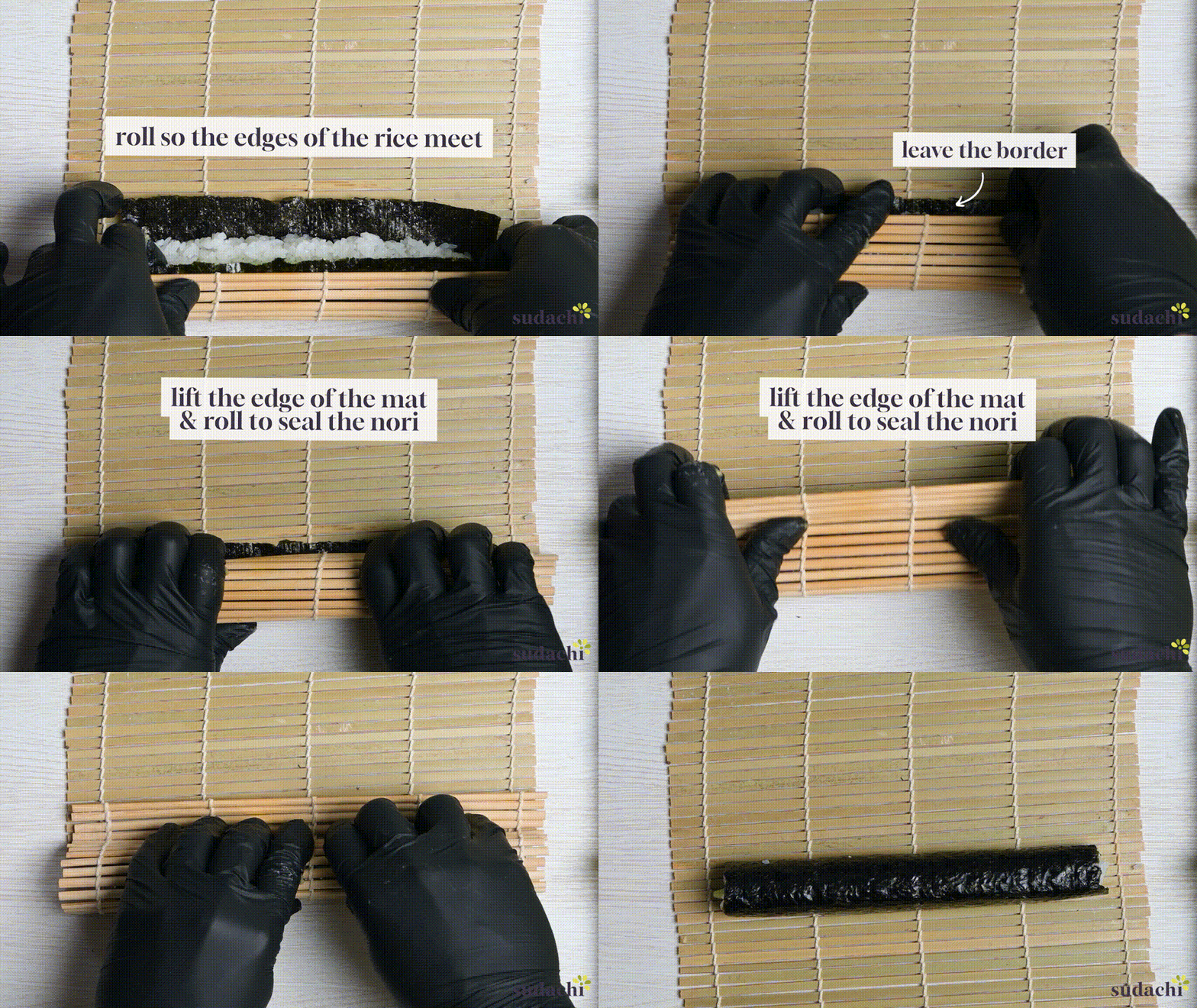
- Once you have completed the sushi roll, use the bamboo mat to press the edges and seal. Repeat with the remaining nori and sushi rice.
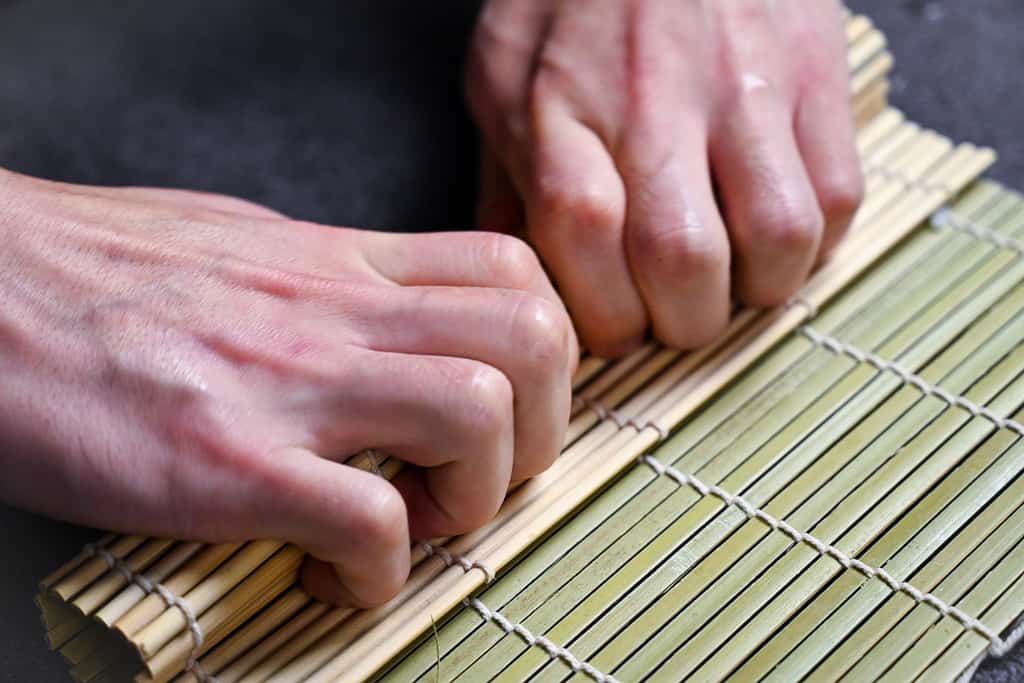
- Wipe a sharp knife with a damp cloth. Cut each sushi roll in half, then cut each half into thirds, creating 6 pieces per roll. Cut using a short, sharp sawing motion, wiping your knife between each cut.
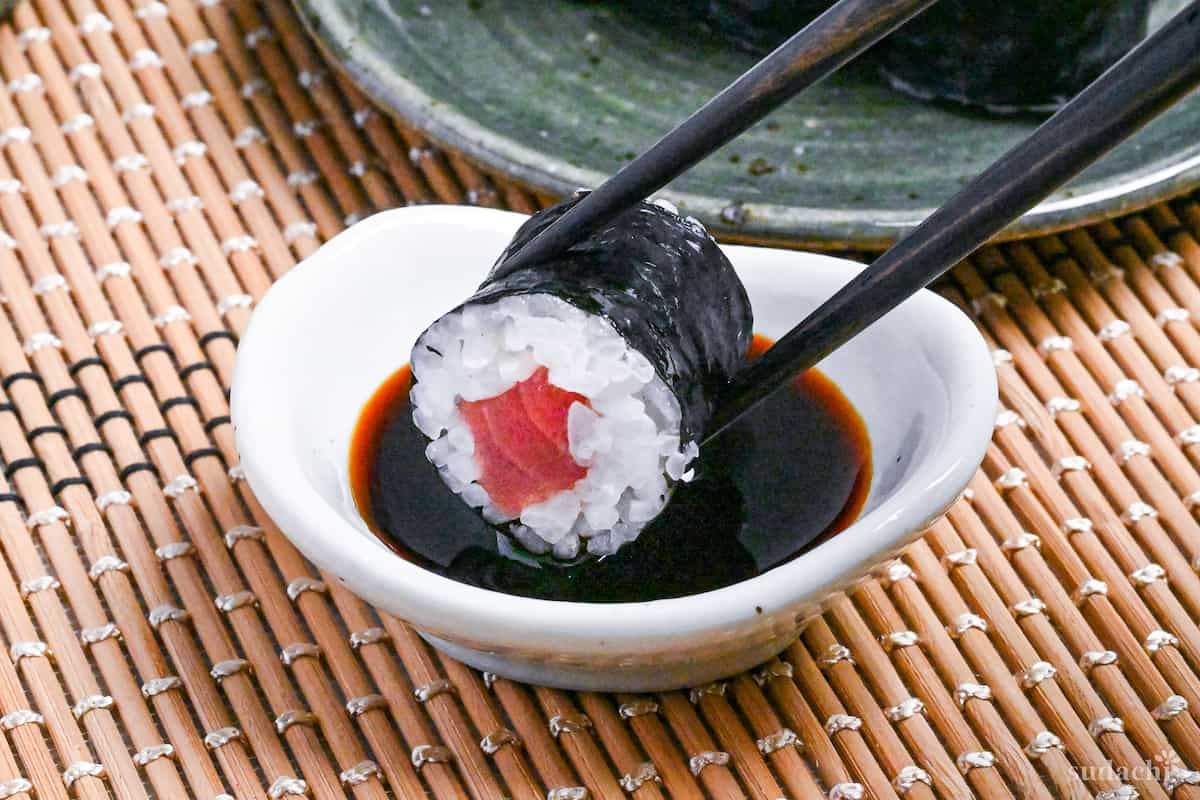
- Enjoy your homemade tekka maki with a small bowl of soy sauce for dipping!
Notes
Only tuna labeled for eating raw: An ahi steak without that label is sold for cooking, and it stays out of a raw roll.
Carry the rice to the edges: A thin roll has little rice at either end, and spreading without a hand wall leaves those ends sunken. With the wall in place, every slice comes out equally thick, end pieces included.
About 80 g of rice is the limit: With more on the nori, the bare strip runs short before the roll is finished and the seam will not meet.
Go easy on the hand water: Water dripping onto the nori wrinkles it until it will not roll. Keep your hands just moist, and if the rice still sticks to them, wear cooking gloves.
Season the rice while it is warm: Reheat cold leftover rice or packaged rice until steaming hot before the seasoned vinegar goes on. The vinegar soaks in best while the rice is warm.
If the rice has set and will not spread: Warm it in the microwave to about body temperature, and it spreads again.
Full Recipe QR Code↑↑