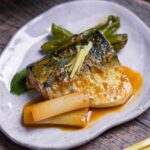
Simmered Miso Mackerel (Saba no Misoni)
Ingredients
- 3-4 mackerel fillets about 300 to 400g total, un-cured only, fresh or frozen
- salt for sprinkling
- freshly boiled water for the shimofuri blanch
- ice water to shock the blanched fish
Broth
- 150 ml water
- 150 ml sake
- 2 tbsp mirin
- 1 tbsp sugar dial down toward 1 tsp if your miso blend leans sweet or low-salt
- 1 tsp unseasoned rice vinegar (komezu) or other mild vinegar
- 20 g ginger root sliced
Miso sauce
- 2 tbsp yellow miso paste (awase) divided into 2/3 and 1/3 (or mix white and red miso half and half)
- 2 tsp Japanese soy sauce (koikuchi shoyu)
To finish
- 50 g Japanese leek (naganegi) cut into 5cm lengths
- 6 shishito peppers optional
Instructions
- Sprinkle 3-4 mackerel fillets with an even sprinkling of salt and rest for 10-15 minutes. When they have about 5 minutes left, boil some water and prepare a bowl of ice water.
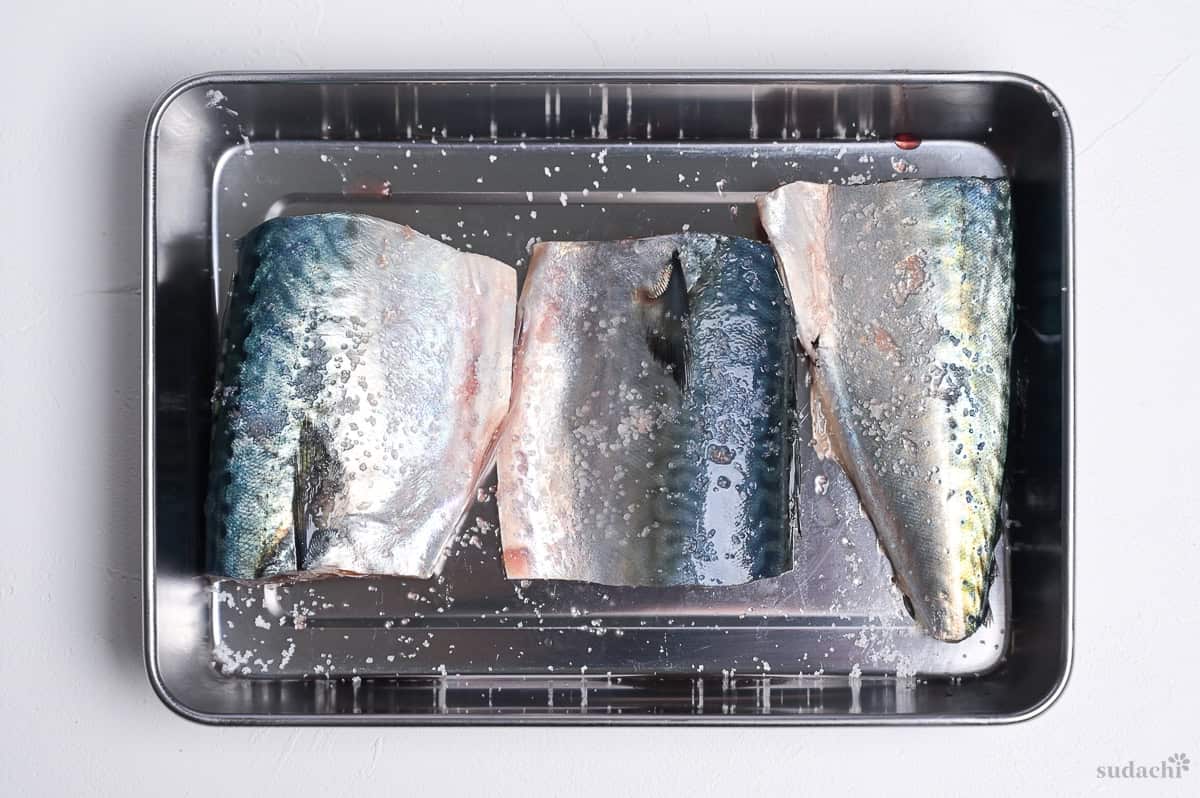
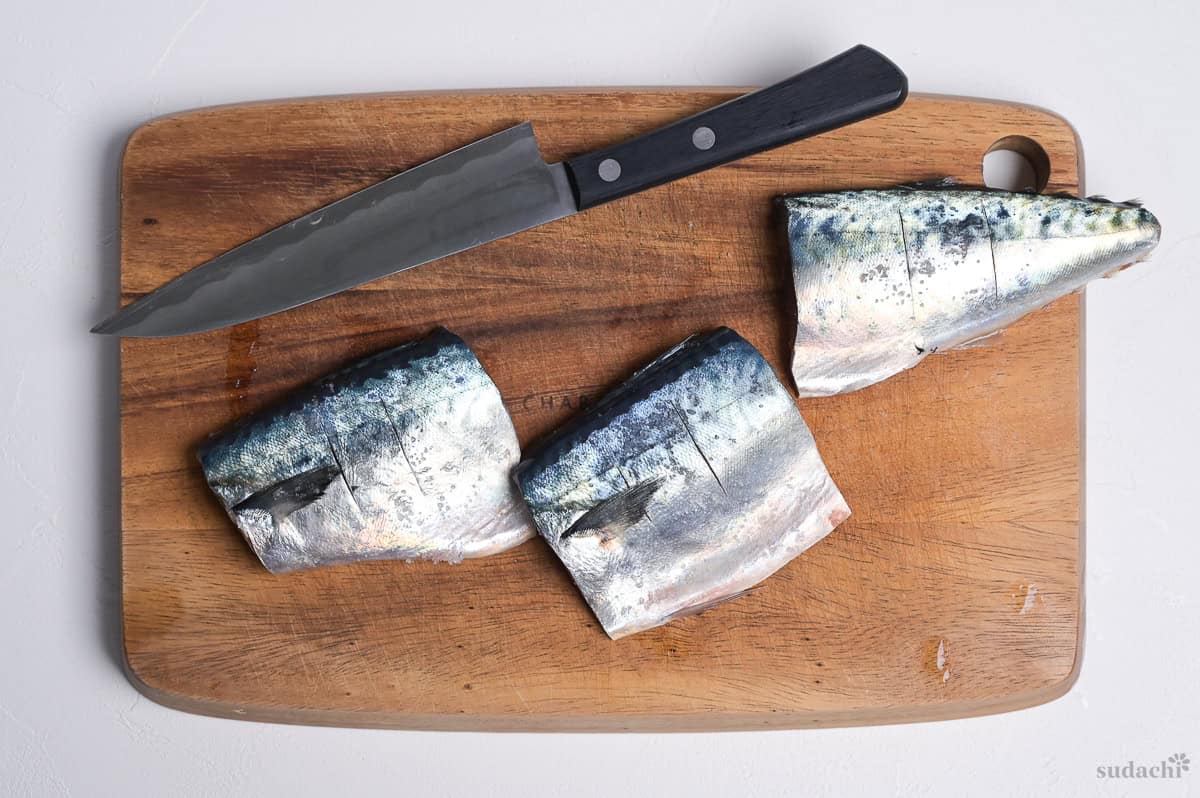
- After they've finished resting, use kitchen paper to blot the surface of the mackerel, then make two shallow incisions across the skin side. Be careful not to cut too deep.
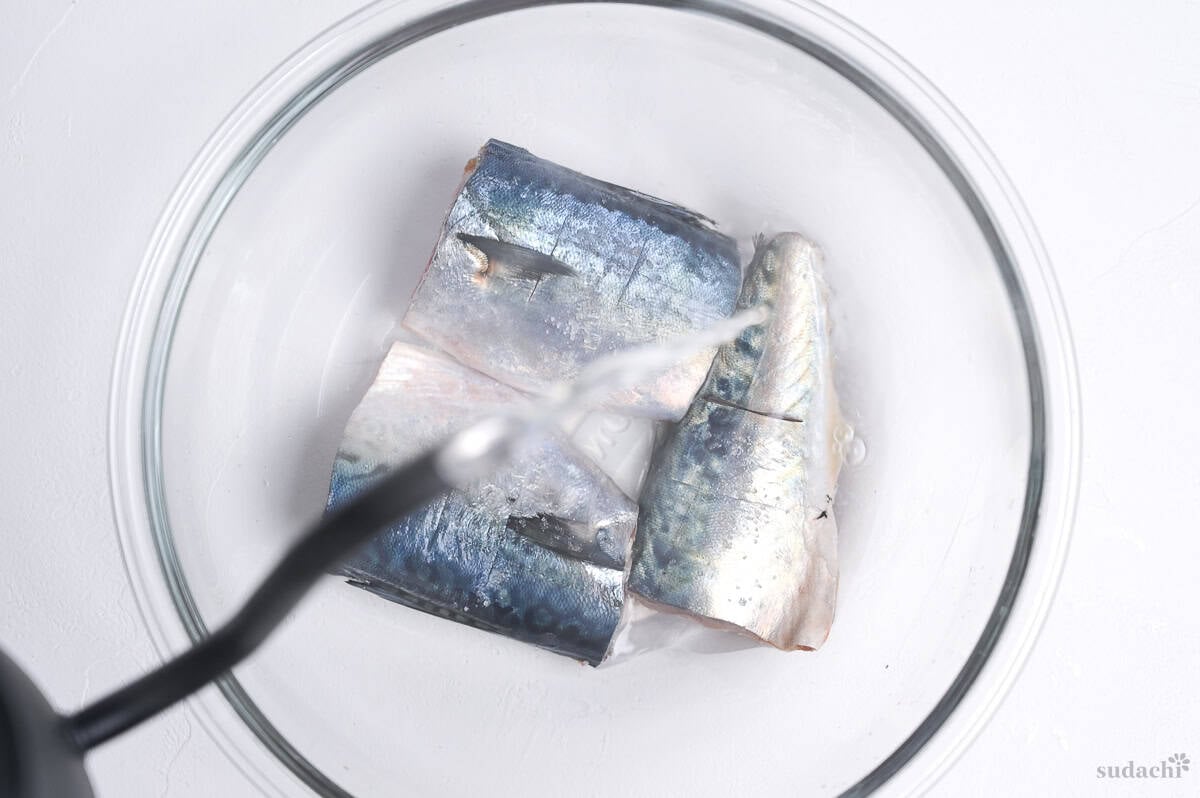
- Place the fillets in a heatproof bowl, and pour the freshly boiled water over the top.
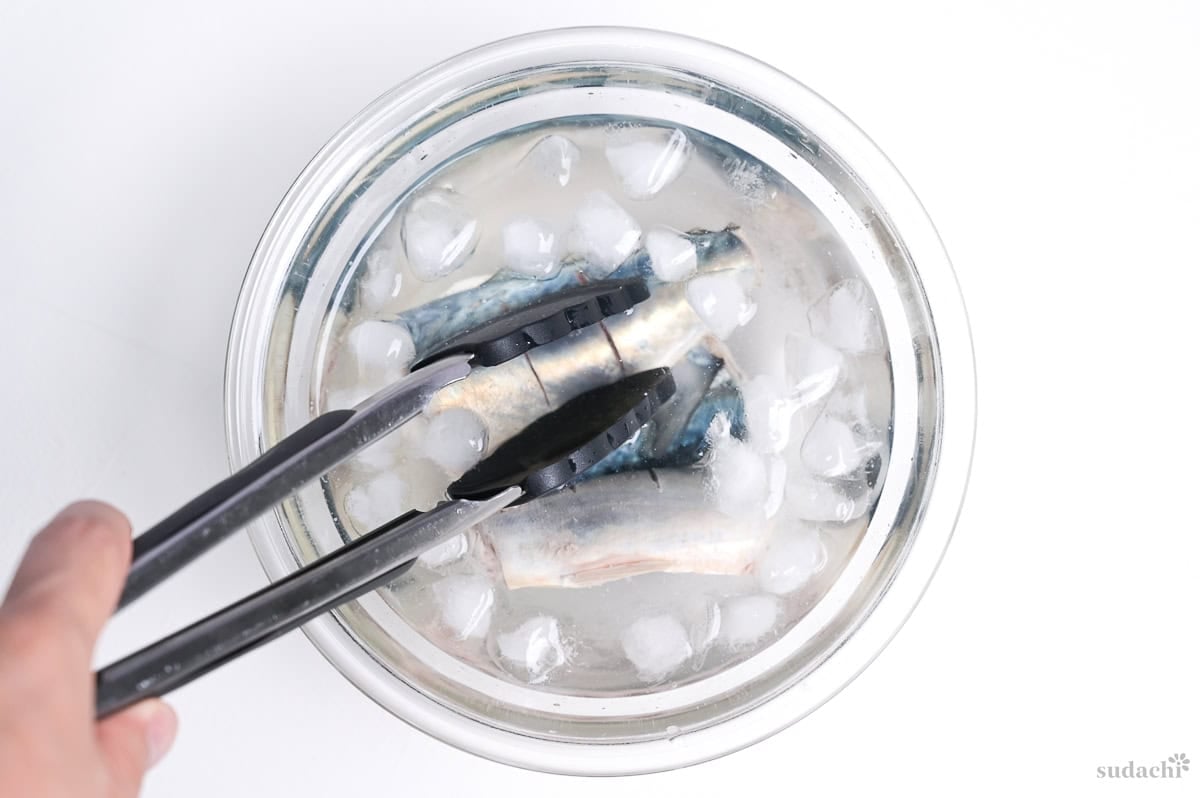
- Immediately transfer them to the bowl of ice water and gently rub the surface to clean them. Then take them out and pat them dry with kitchen paper once more.
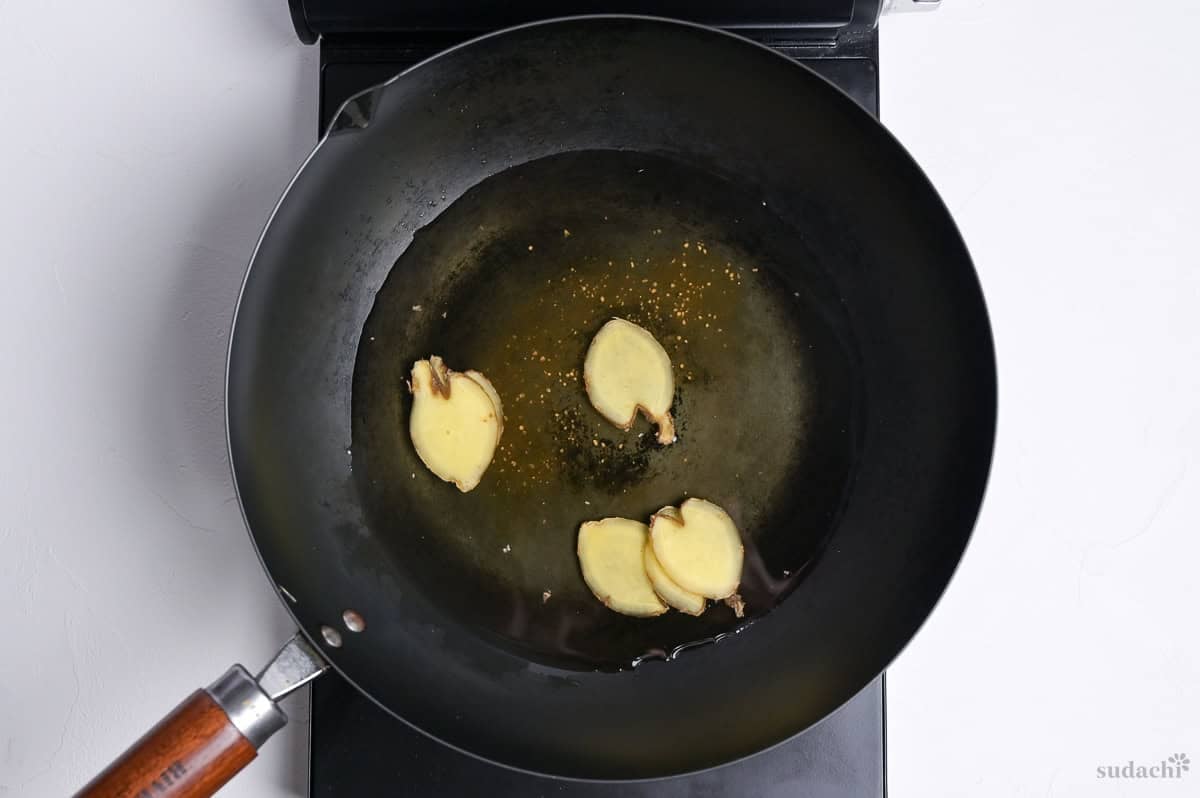
- Take a pan just about big enough to fit the fillets, and add 150 ml water, 150 ml sake, 2 tbsp mirin, 1 tbsp sugar, 1 tsp unseasoned rice vinegar (komezu), and 20 g ginger root (sliced). Bring to a simmer over medium heat.
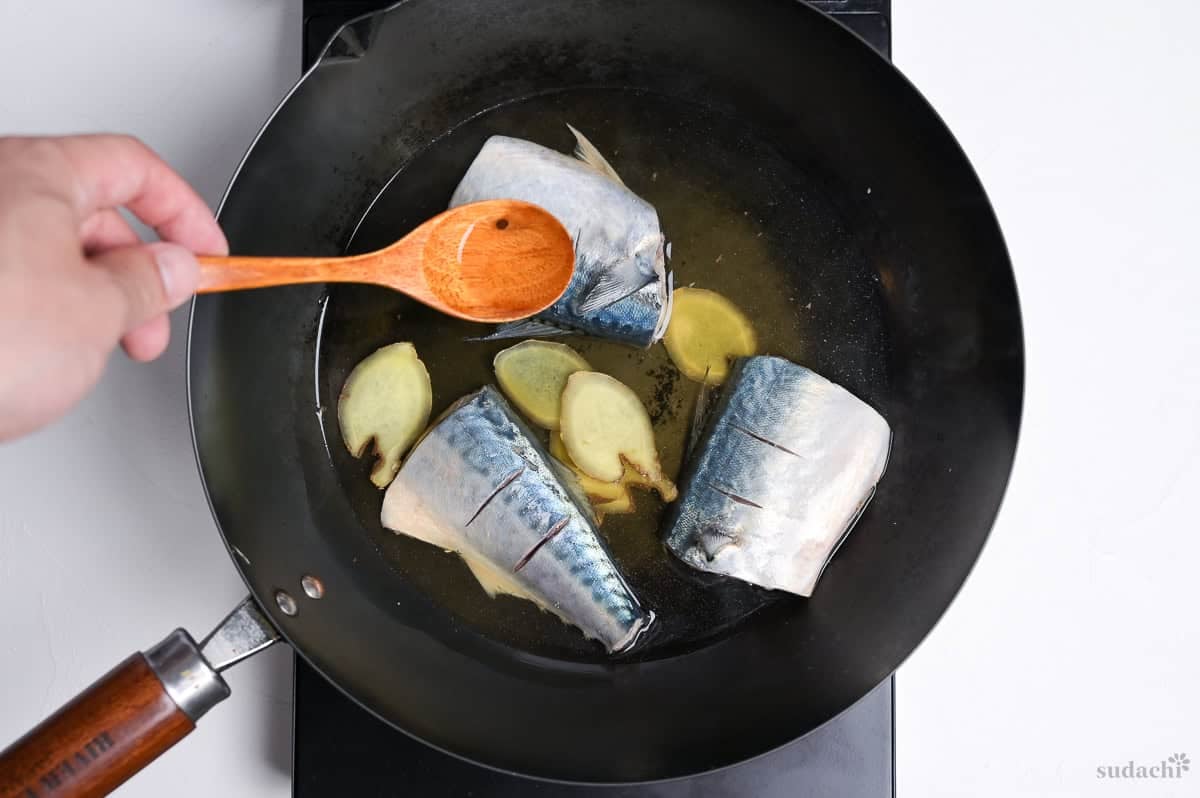
- Lower the heat and gently place the fillets in the pan with the skin-side facing up. Baste the top with the hot liquid for 1-2 minutes.
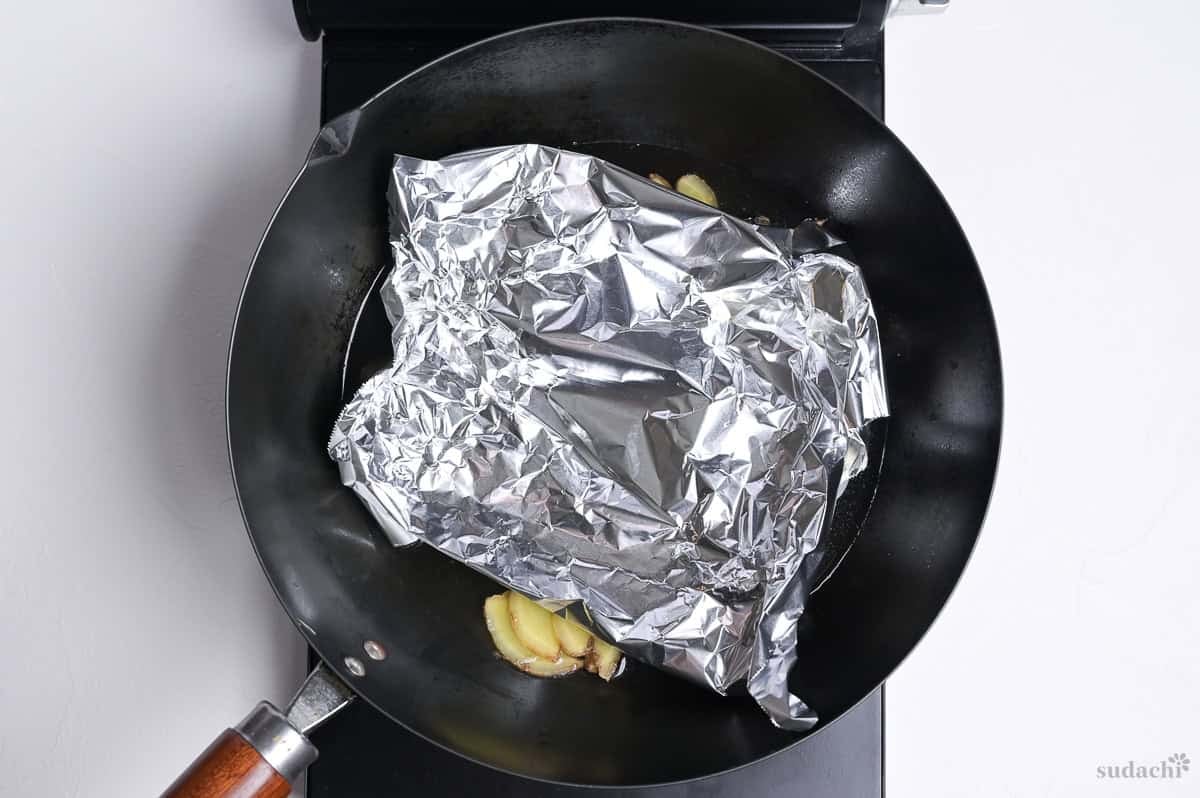
- Cover with a drop lid, and simmer gently for 10 minutes.
- In a small bowl, whisk two-thirds of the miso paste with 2 tsp Japanese soy sauce (koikuchi shoyu) to thin it out. Once smooth, lift the drop lid and add 50 g Japanese leek (naganegi), 6 shishito peppers along with the thinned miso sauce.
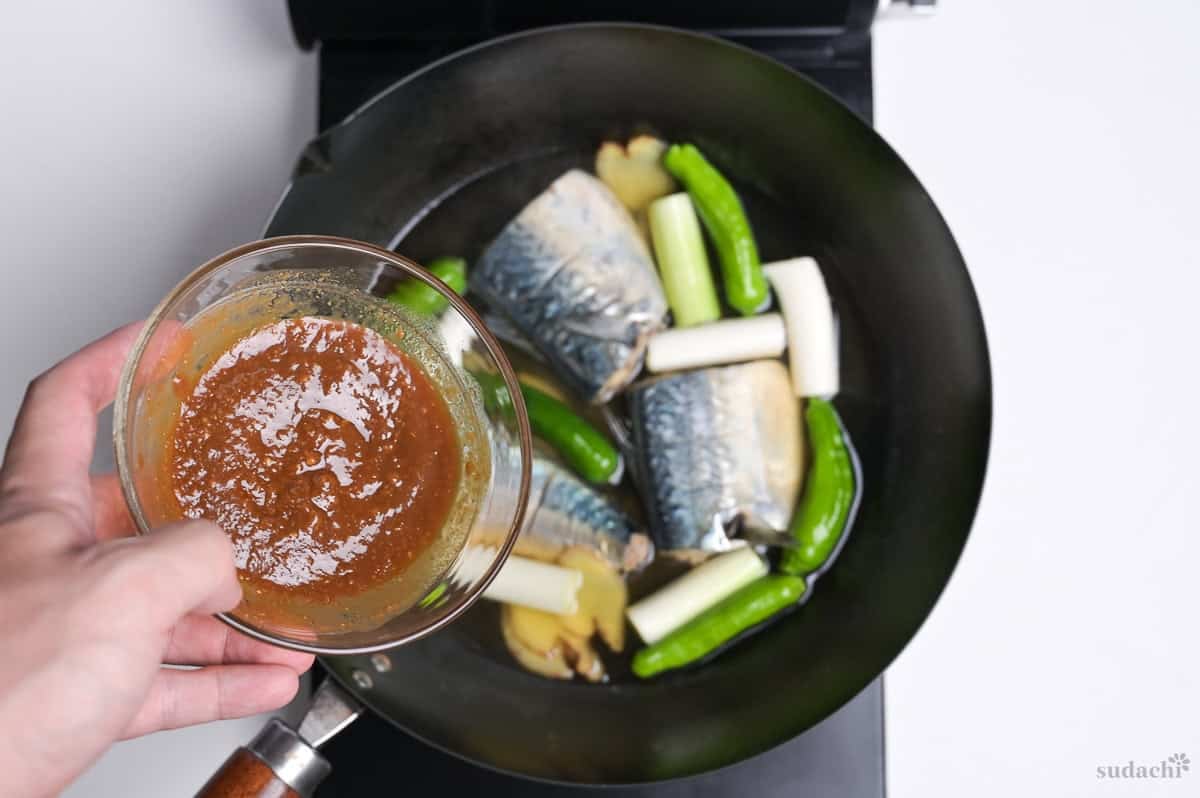
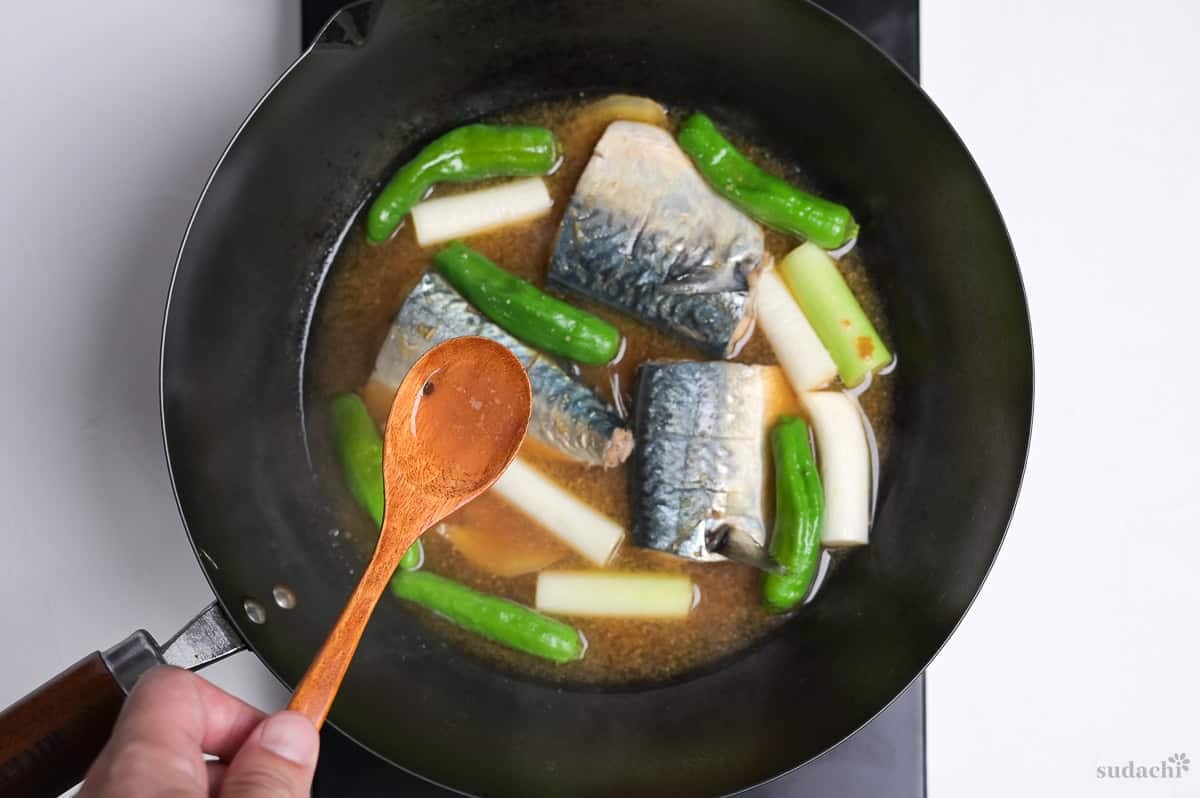
- Spoon the broth over the fish occasionally and continue to cook until the liquid has reduced by half. If the fish is cooked through, transfer it to a plate to avoid overcooking.
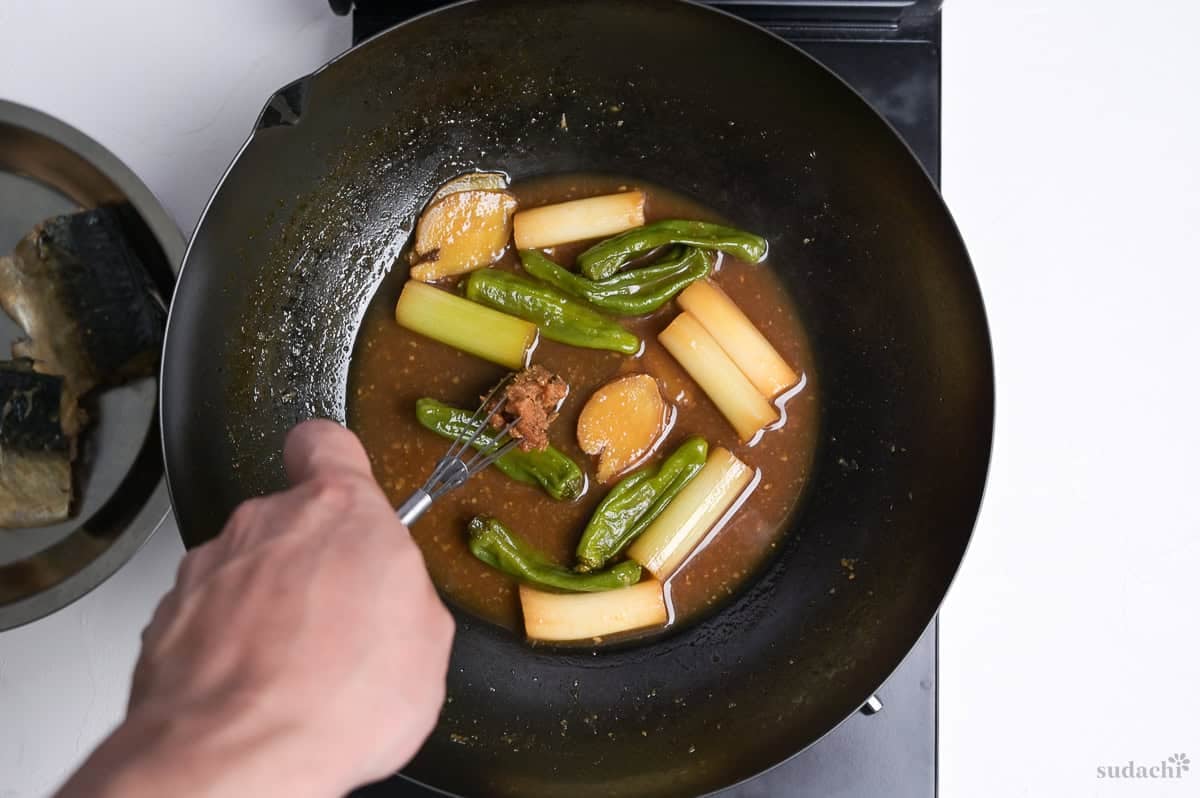
- Once the sauce has reduced, turn off the heat. Loosen the last third of the miso with a little broth, then stir it into the reduced sauce.
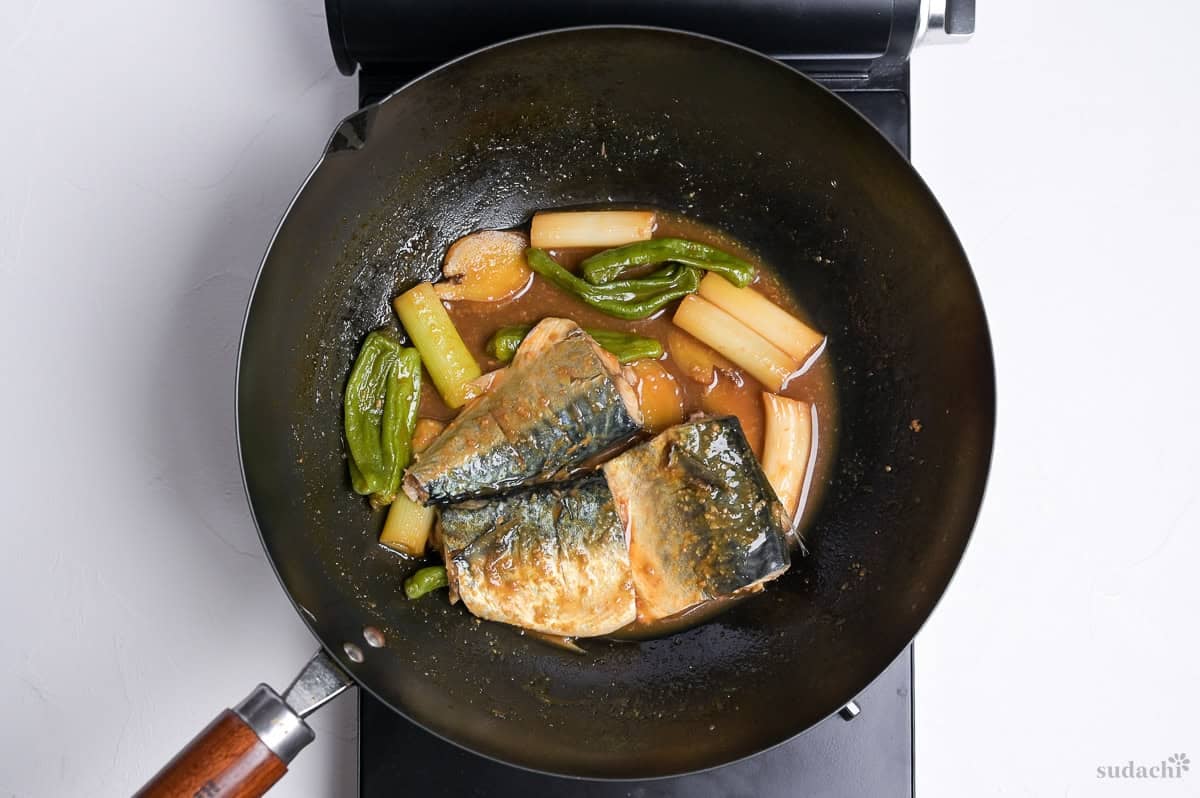
- Place the fillets back into the warm pan and gently move them around in the sauce until evenly covered.
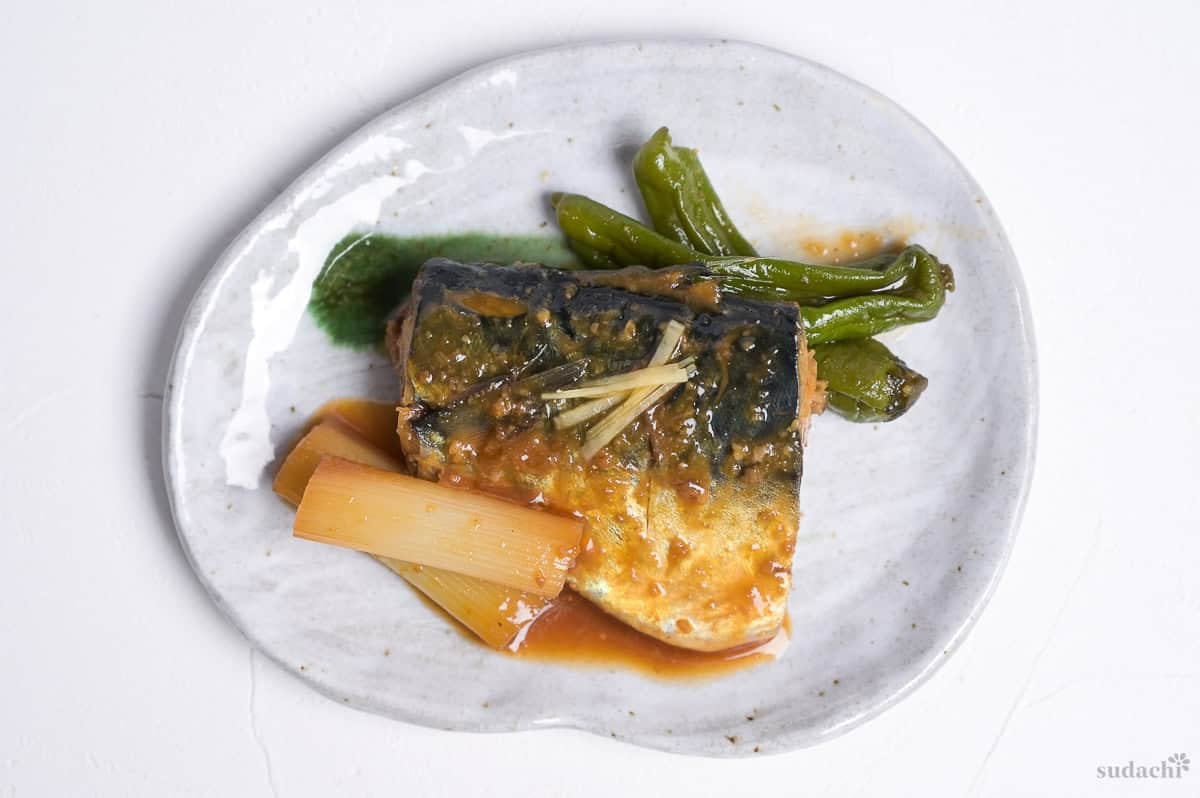
- Divide the fillets and vegetables between serving plates. Spoon the thickened sauce over the top and julienne a piece of ginger for decoration. Enjoy!
Notes
Pull the fish at about 10 minutes: Mackerel turns from tender to dry and tight fast, and overcooked fish cannot be walked back. Once it has had its short simmer, get it out of the harsh heat.
Reduce the sauce until it clings: A thin, watery sauce sliding off the fish is a half-finished dish. Let the liquid come down until it thinly coats the back of a spoon, glossy and dark.
If the sauce lags, pull the fish out: Worried the fish will overcook while the liquid is still thin? Lift the fillets out, finish reducing the sauce alone, then spoon it back over at the end.
Do not go all-in on sweet white miso: White alone drops the salt out and tips the dish too sweet. If you have white and red, mix it half and half to bring back the balance.
Do not skip the blanch or the ginger: The hot-water shimofuri and sliced ginger are the 2 moves that decide whether the dish tastes clean. Skip either and the fishiness has nowhere to hide.
Foil works just as well as a drop-lid: No need to track down a wooden otoshibuta. A sheet of foil with a few holes poked in sits on the fish, bastes it evenly, and holds the delicate flesh still.
Full Recipe QR Code↑↑