Shrimp Tempura Udon Soup (Ebiten Udon)
Ingredients
Shrimp and Prep
- 10 large shrimp black tiger or similar, 20 to 30 g each, US 16/20 count
- ½ tsp salt for cleaning
- 1 tbsp potato starch (katakuriko) or cornstarch, for cleaning
- 2 tbsp water for cleaning
Tempura Batter
- 75 ml water thoroughly chilled
- 50 ml carbonated water thoroughly chilled
- 15 g cornstarch
- 75 g unbleached cake flour or pastry flour, low-protein, around 7-8%, plus a little for dusting
- 1 egg yolk or ½ tbsp Japanese mayonnaise, 1 egg white, or about ½ a small beaten egg
- 2 ice cubes optional
- cooking oil for frying, at least 5 cm deep in a pot around 24 cm across
Broth, Noodles and Toppings
- 1000 ml dashi stock
- 75 ml Japanese soy sauce (koikuchi shoyu)
- 2 tbsp mirin
- ½ tsp salt
- 5 portions udon noodles frozen recommended
- finely chopped green onions to taste
- kamaboko fish cake 2 to 3 slices per serving, optional
- Japanese chili powder (shichimi togarashi) optional
Instructions
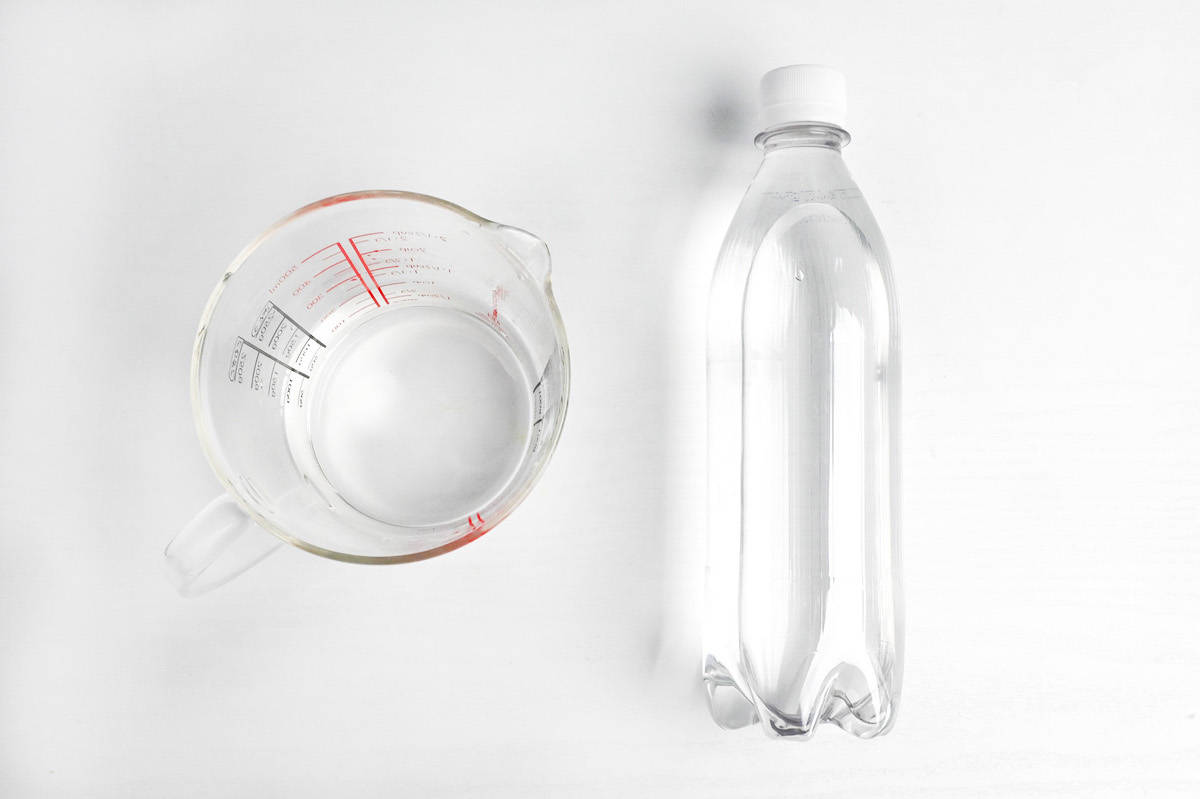
- Chill 75 ml water and 50 ml carbonated water in the fridge. Sift 15 g cornstarch with 75 g unbleached cake flour into a bowl and chill it as well, 30 minutes. Prep the shrimp in the meantime.
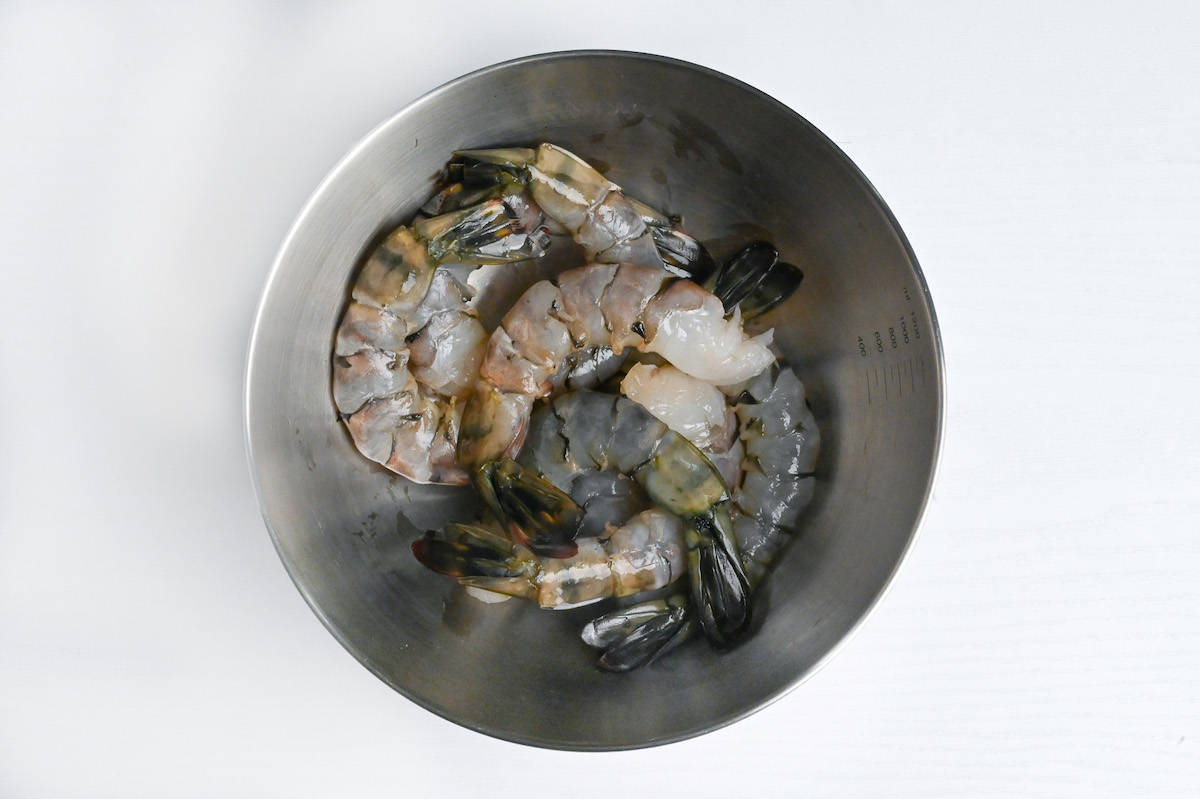
- Peel each shrimp, keeping the tail and 1 segment above it, and remove the vein. Trim the folded tail on an angle, take out the spike, and run the flat of the knife along the cut to squeeze the tail water out.
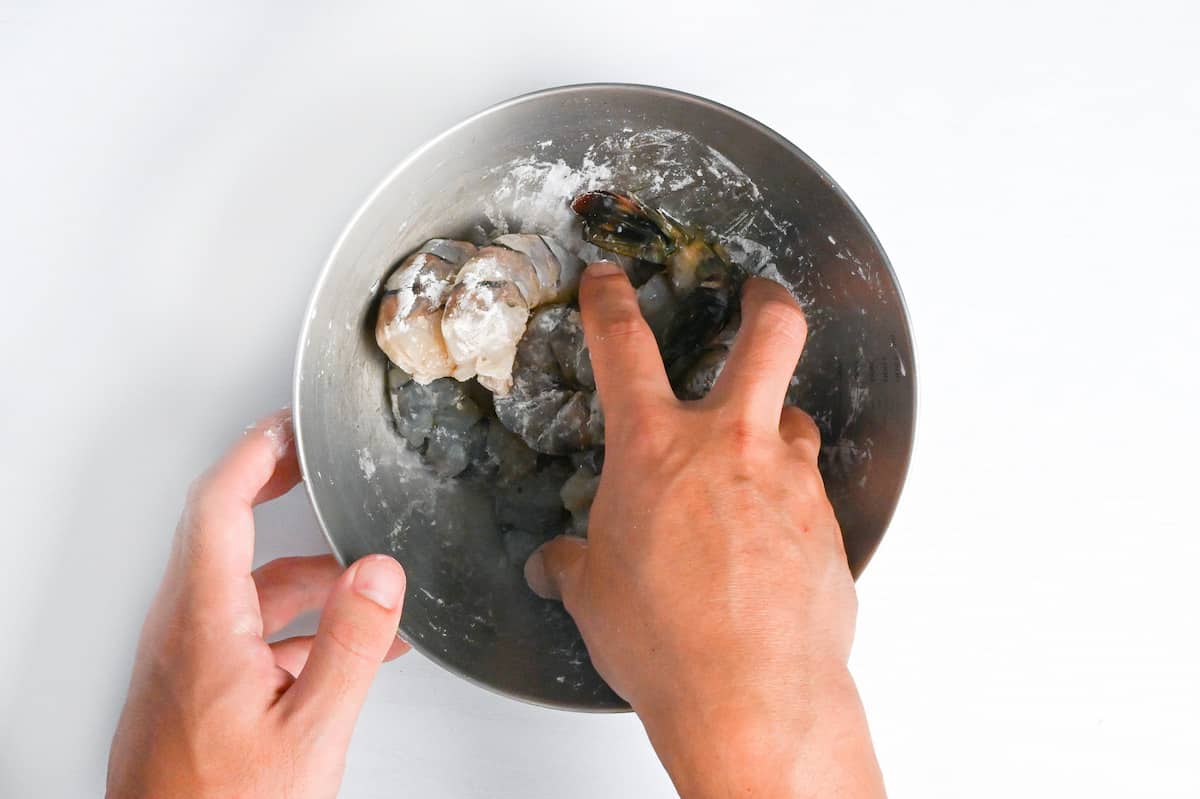
- Toss 10 large shrimp with ½ tsp salt, 1 tbsp potato starch (katakuriko), and 2 tbsp water, kneading by hand 30 seconds to a minute. Rinse under cold water until it comes off clear, then pat very dry.
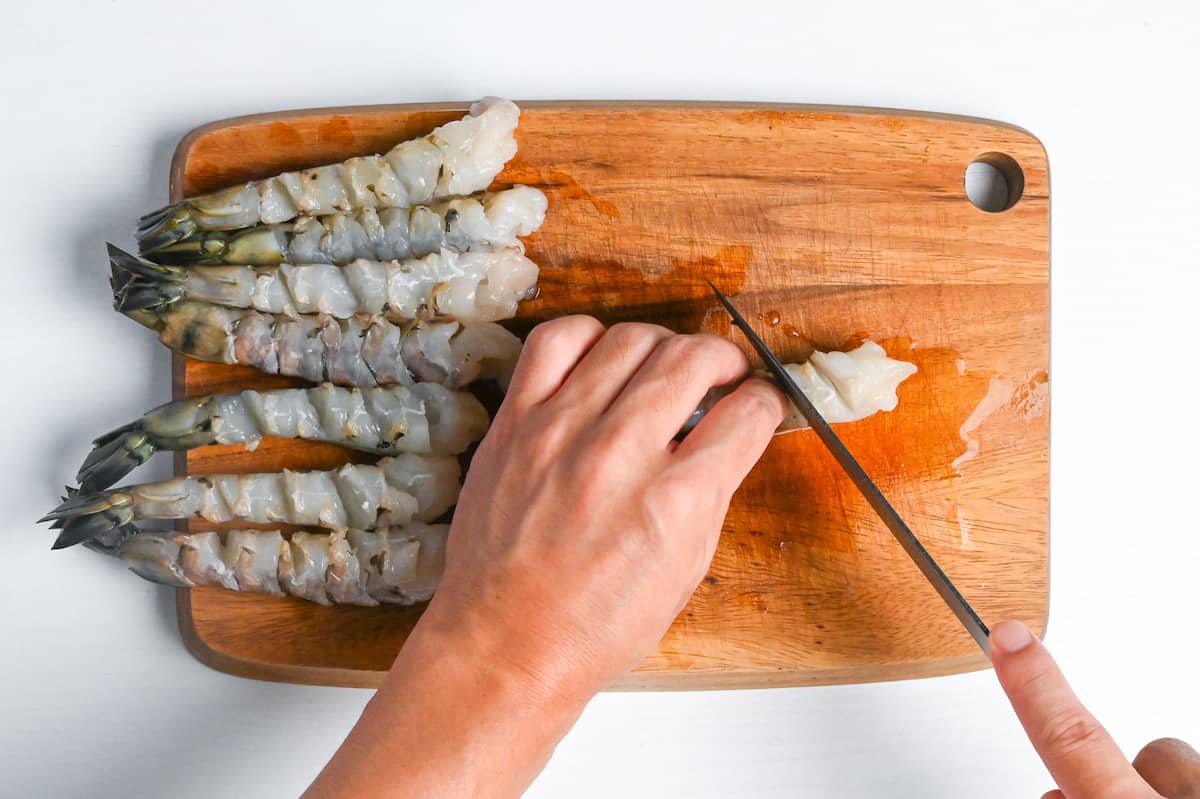
- Turn each shrimp belly-up and slash it crosswise in 4 to 5 spots, halfway deep. Flip it belly-down and press along the back in 3 to 4 places until it lies flat.Optional: Spread the shrimp on paper towel in a single layer, lay a second sheet on top, and chill 10 minutes.
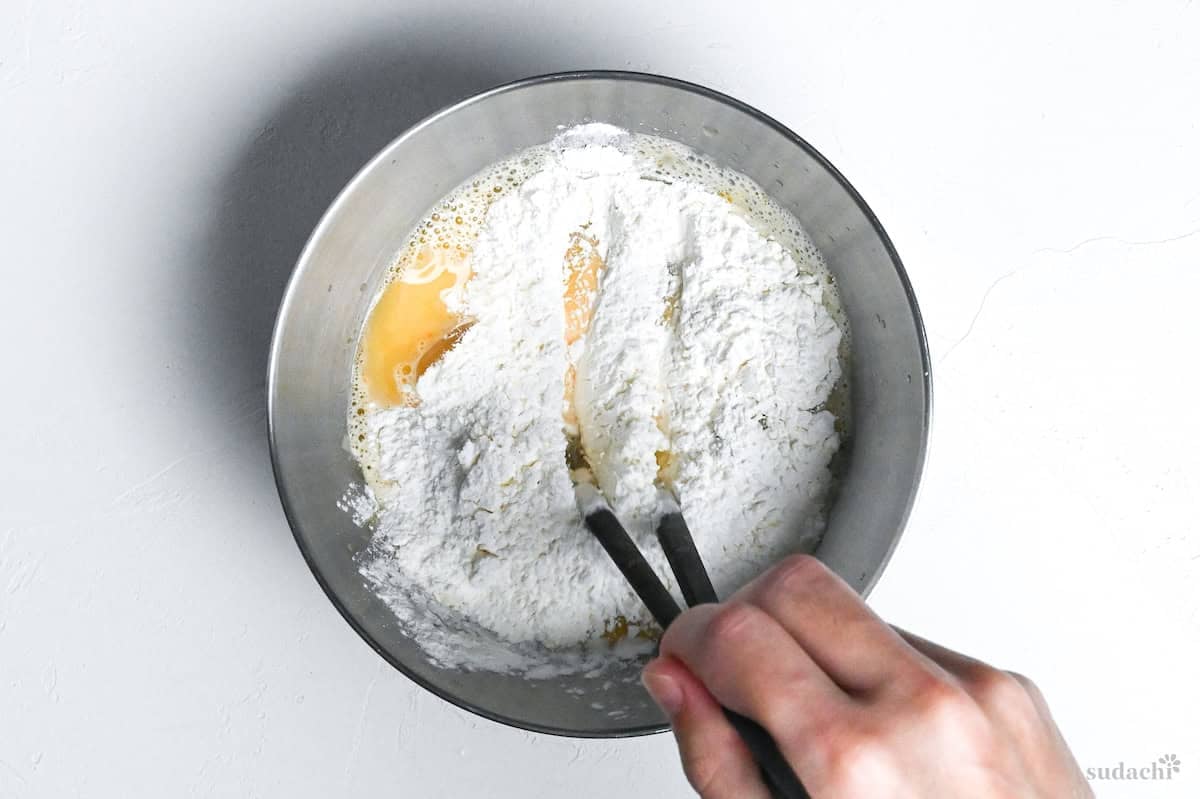
- Whisk 1 egg yolk into the water and carbonated water. Fold in the dry mix in 3 additions with chopsticks, stopping while lumps remain. Drop in 2 ice cubes if you like.
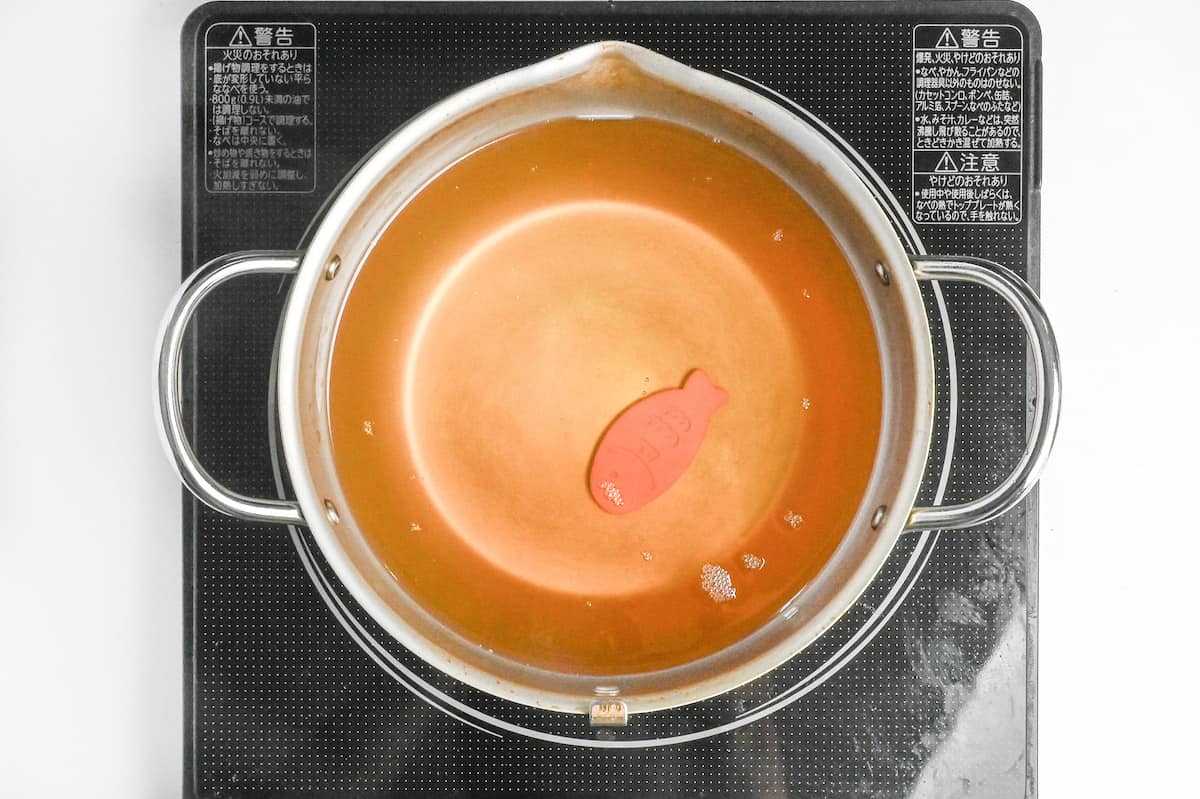
- Heat the oil to 180 °C (356 °F) to 190 °C (374 °F). Dust each shrimp lightly with cake flour and shake off the excess.
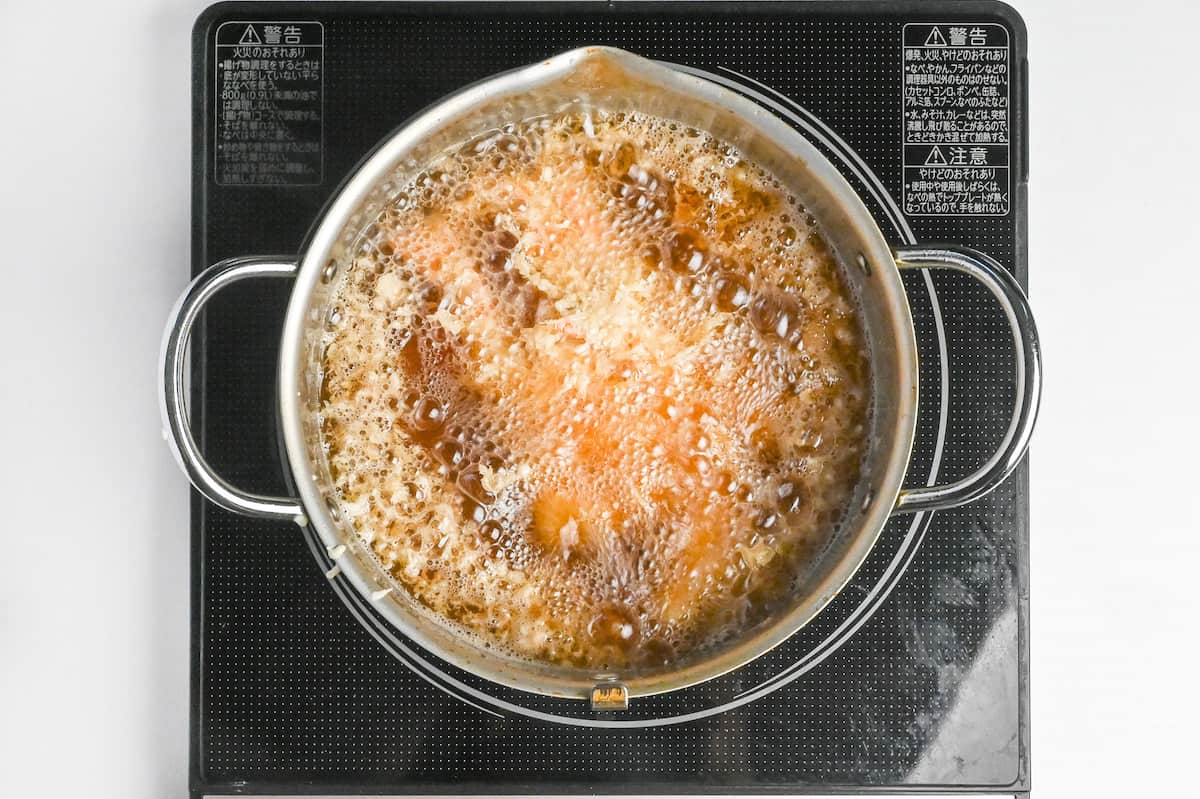
- Dust each shrimp with a thin layer of cake flour, dip them into the batter and slip them into the oil one by one, no more than 3 at a time in a 24 cm pot. Fry about 2 minutes to a crisp, pale finish, then drain on a rack. Chill the batter again between batches.
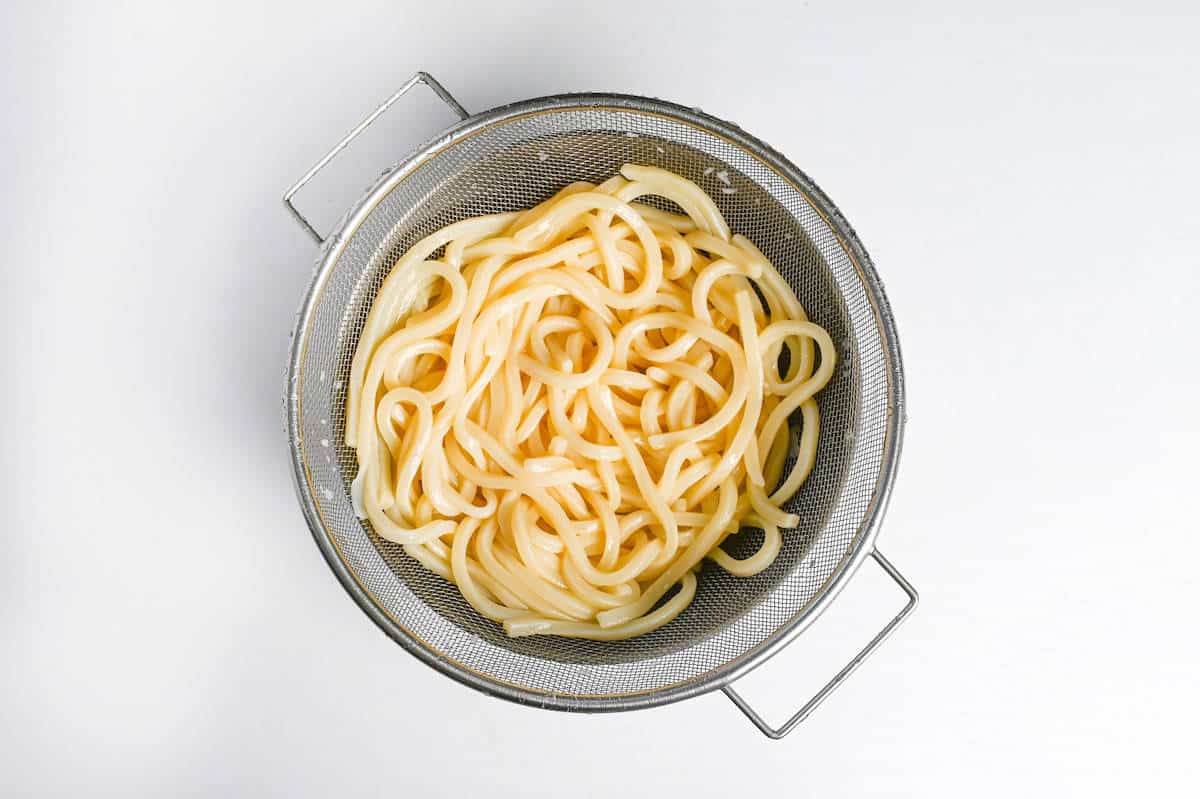
- Boil the 5 portions udon noodles in a second pot per the package, drain, and rinse the surface starch away under hot water.
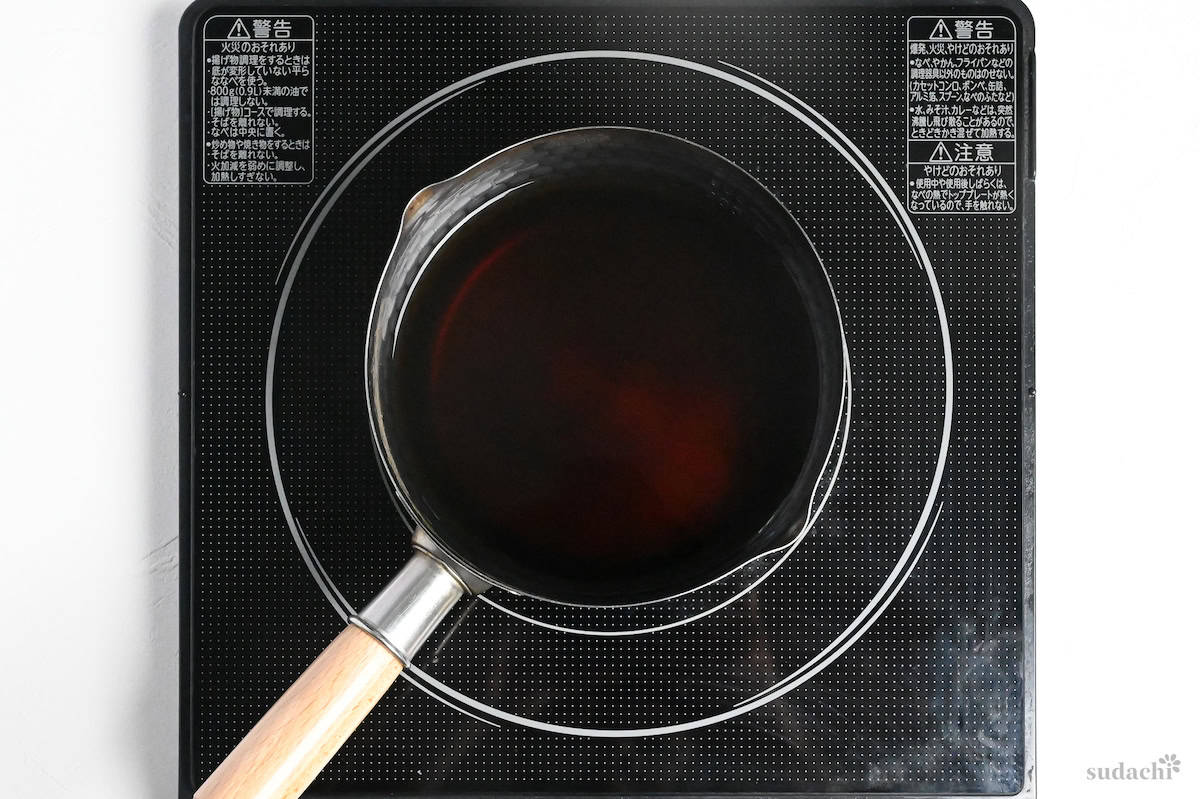
- Boil 1000 ml dashi stock, stir in 75 ml Japanese soy sauce (koikuchi shoyu) and 2 tbsp mirin, and simmer 2 to 3 minutes. Turn off the heat, and season with ½ tsp salt.
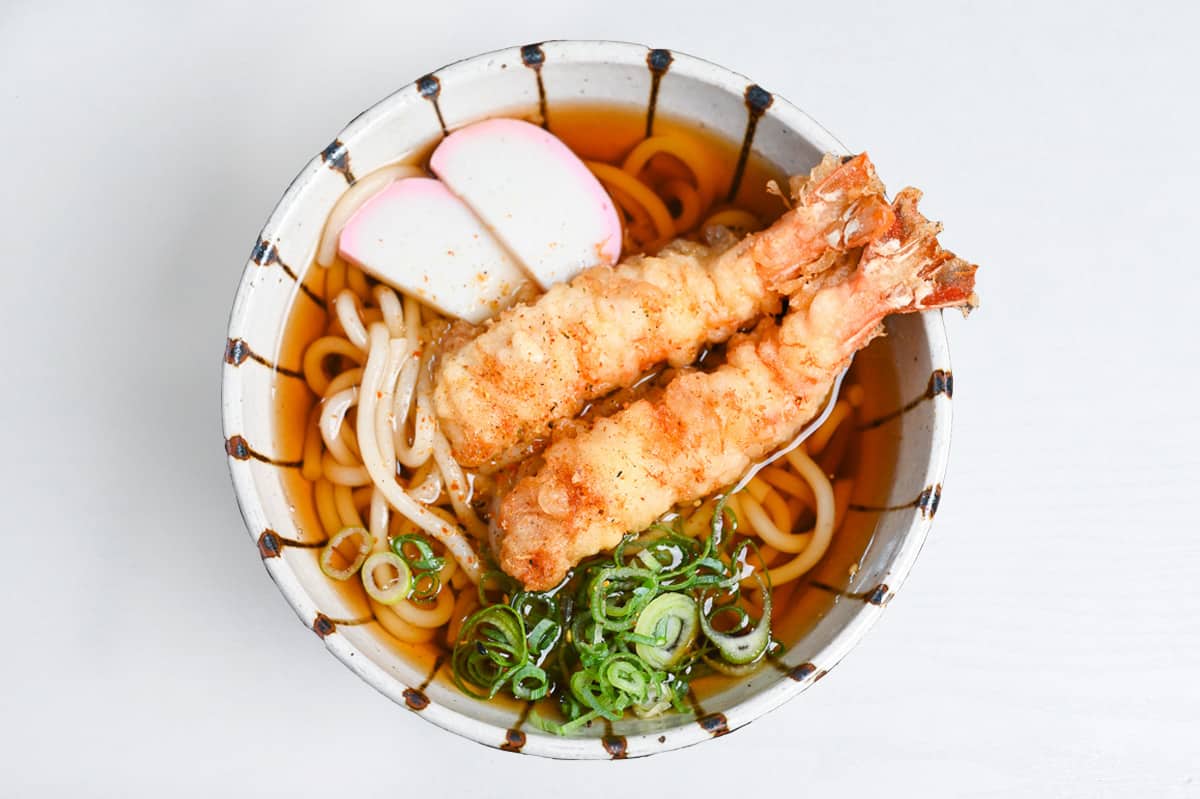
- Portion the udon into serving bowls and ladle the broth over the top. Crown each with the shrimp tempura, scatter green onions and 2 to 3 slices of kamaboko if using. Finish with shichimi togarashi to taste. Serve immediately and enjoy!
Notes
Avoid bleached cake flour: Bleached / chlorinated cake flour changes the texture. Also avoid self-rising, whole wheat pastry, and gluten-free blends. For UK/AU readers, plain flour works. See flour guide for details.
Push the water out of the tail to avoid burns: Water left in the tail shell flashes to steam in 180°C (356°F) oil and shoots up through the opening. Lay a knife tip against the cut and press until no more water comes.
Straighten the shrimp before it fries: If you do not score the belly tendons and press them flat, the belly shrinks in the heat and pulls the shrimp into a bow. It starts bending around 50°C (122°F) and cannot be fixed once fried.
Keep the batter cold and do not overmix: Linked gluten turns the batter heavy and gummy. Stop while a few lumps of flour still show, make it right before frying, and keep it in the fridge until then.
Read the frying by the bubbles and the sound: Shrimp is the hardest thing to time. When the big bubbles turn fine and the sound goes higher and lighter, it is ready. Stop at a pale color, do not wait for deep brown.
If you use frozen shrimp: Frozen shrimp thaw in a 3% brine of 200 ml water and 1 tsp salt, roughly 10 to 15 min for shell-on and 8 to 10 for shelled. Raw or already-thawed shrimp skip this.
A note on the nutrition figures: In Japan, the broth of a noodle soup like this is not finished to the last drop, so the numbers here assume you drink only about 30 percent of the soup, in line with measured Japanese consumption studies. Finish the whole bowl and the figures, sodium above all, will run considerably higher.
Full Recipe QR Code↑↑