Pork Udon Noodle Soup (Butaniku Udon)
Ingredients
Marinated Pork
- 150 g thinly sliced pork belly about 2 mm thick, the kind sold for shabu-shabu
- 2 tsp Japanese light soy sauce (usukuchi shoyu) Japanese usukuchi, a different product from Chinese light soy sauce
- 1 tbsp mirin
- ½ tsp sugar
- ½ tsp grated ginger root or a tube
- 3 tbsp dashi stock
Broth
- 500 ml dashi stock
- 1 tbsp mirin
- 1 tbsp Japanese light soy sauce (usukuchi shoyu)
To Finish
- 1 tsp cooking oil
- 2 portions udon noodles frozen, dried, fresh or any kind, about 200 g per portion, or 80 to 100 g dried per serving
- 4 slices kamaboko fish cake optional
- finely chopped green onions about 1½ tbsp per bowl, optional
- Japanese chili powder (shichimi togarashi) optional
Instructions
Prep the Pork and Onion
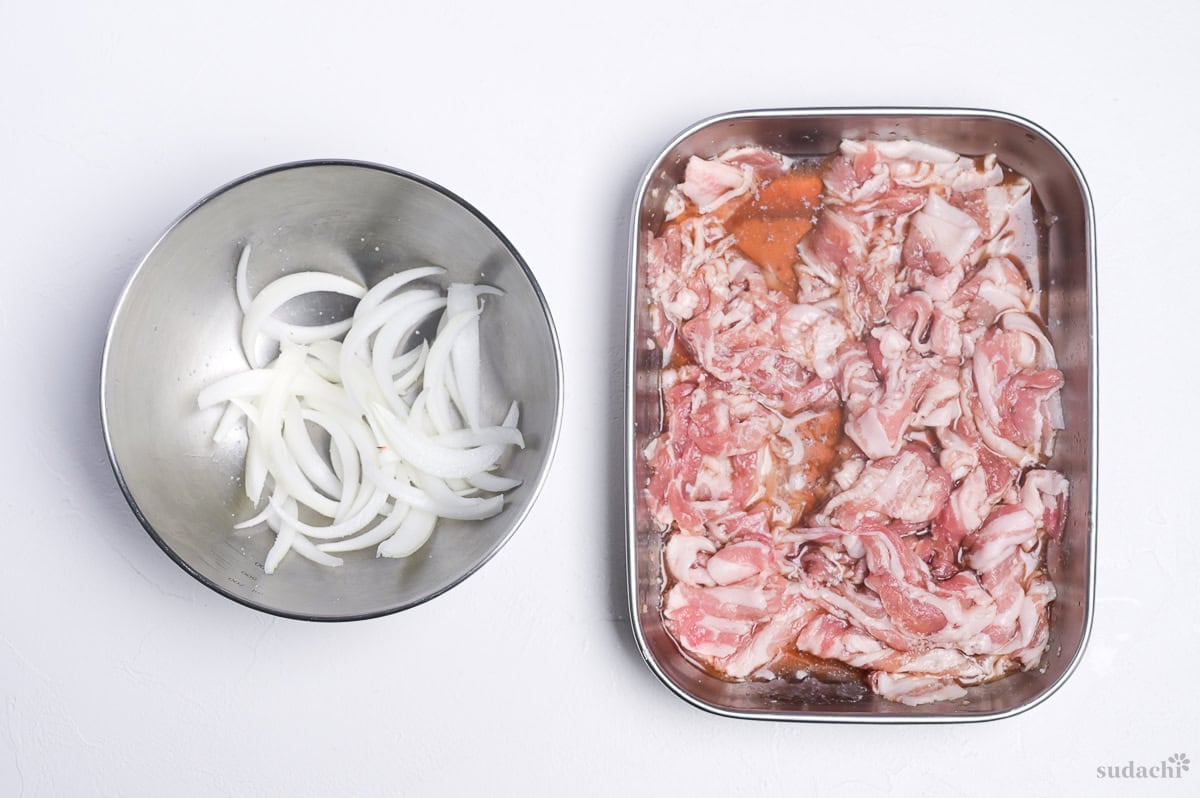
- Put 150 g thinly sliced pork belly in a container and add 2 tsp Japanese light soy sauce (usukuchi shoyu), 1 tbsp mirin, ½ tsp sugar, ½ tsp grated ginger root and 3 tbsp dashi stock. Stir until the sugar dissolves, then marinate in the fridge for 10 to 30 minutes. While the pork marinates, toss 50 g onion (cut into thin wedges) with ⅛ tsp salt in a separate bowl until every piece is coated. Leave it there until you fry it.
Make the Broth
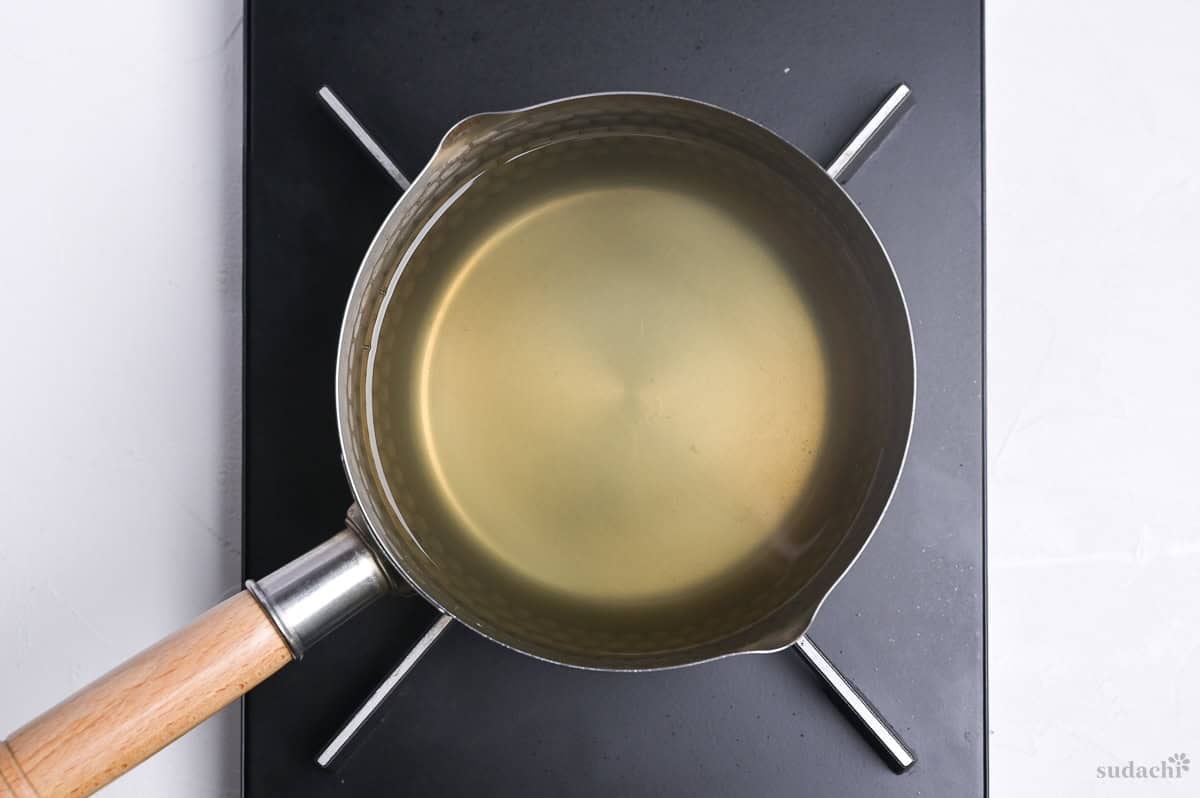
- Pour 500 ml dashi stock and 1 tbsp mirin into a pot and set it over medium heat. Bring it to a boil, boil briefly and turn off the heat.
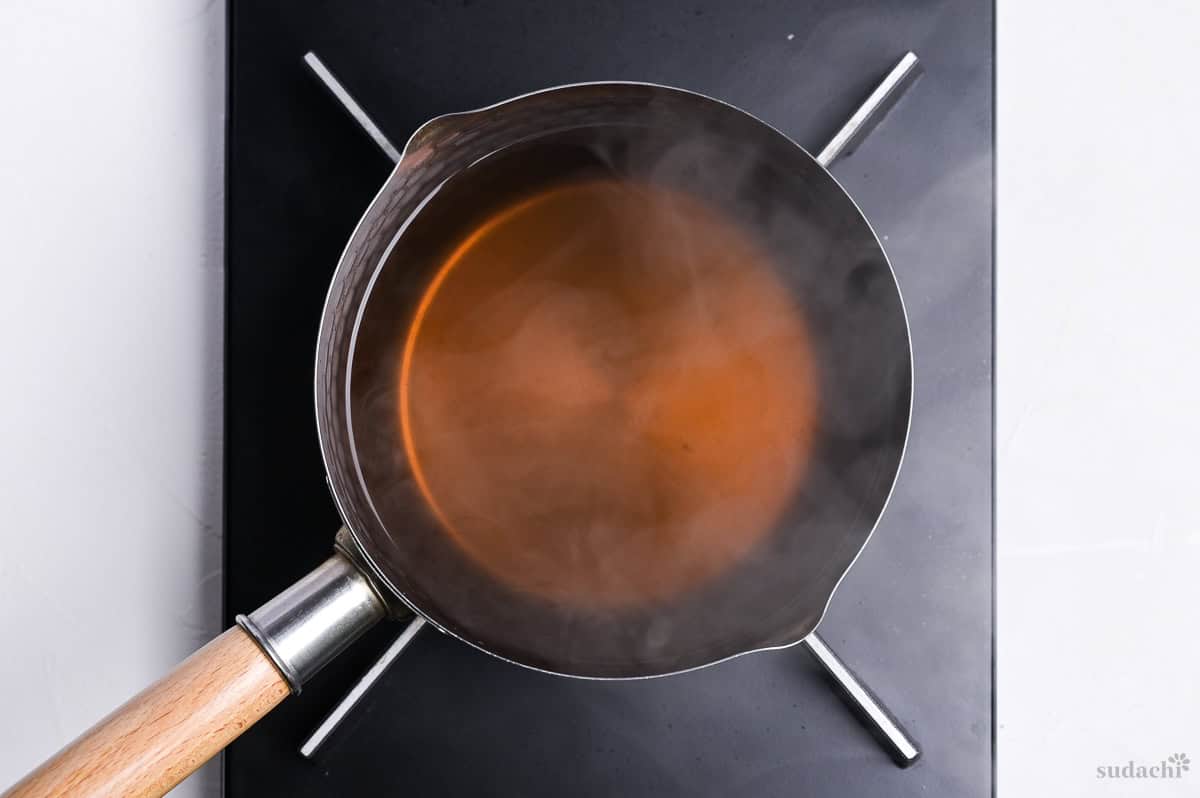
- Stir in 1 tbsp Japanese light soy sauce (usukuchi shoyu), cover, and leave the pot on the stove to keep warm.
Fry the Pork and Cook the Udon
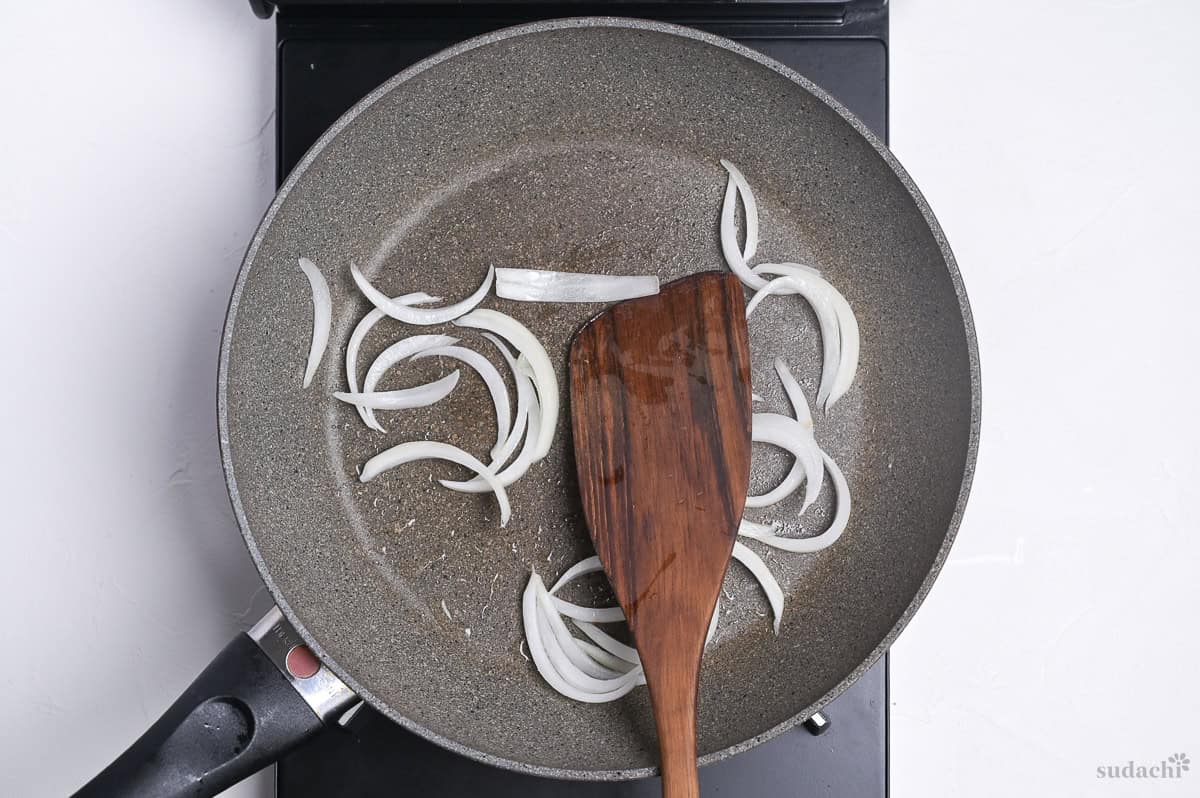
- Heat a frying pan over medium heat and add 1 tsp cooking oil and the salted onion. Fry until the onion is soft, the edges look translucent and a few spots turn pale golden.
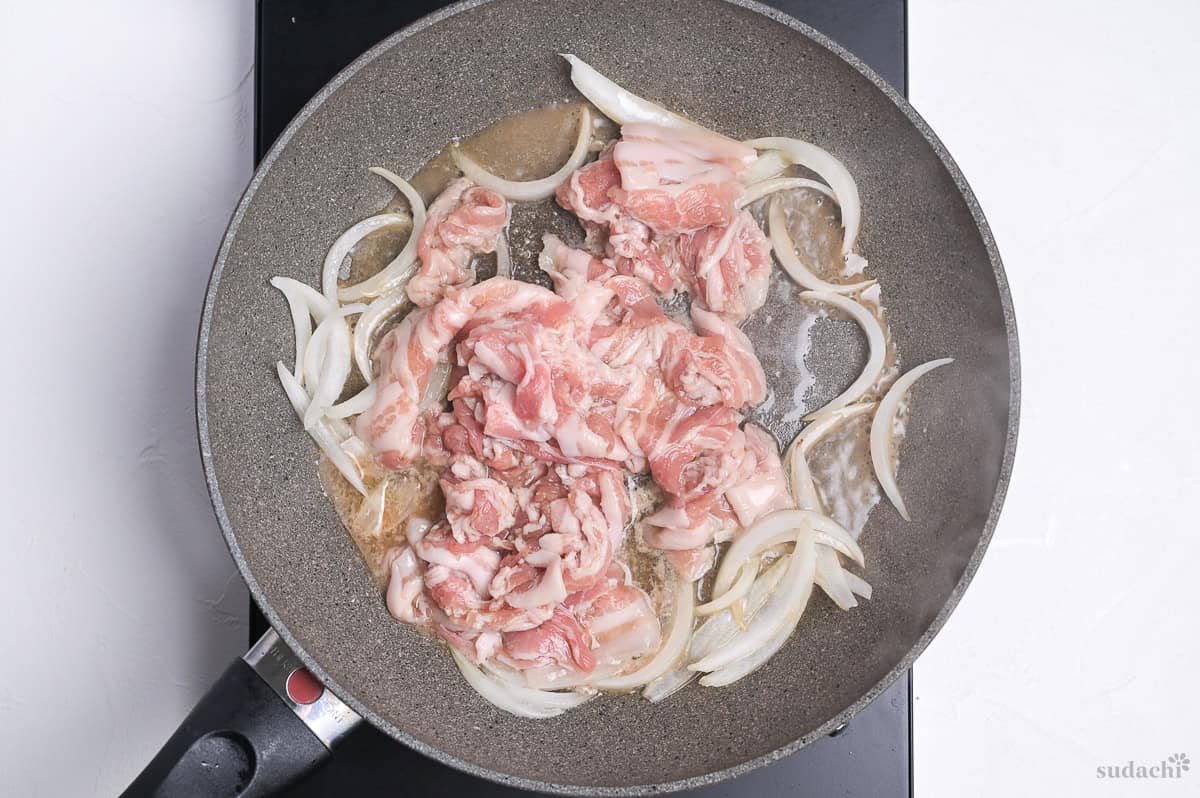
- Add the pork with all of its marinade and fry it with the onion. Leave the rendered fat in the pan. Turn off the heat once the pork has changed color and browned lightly, while there are still juices in the pan.
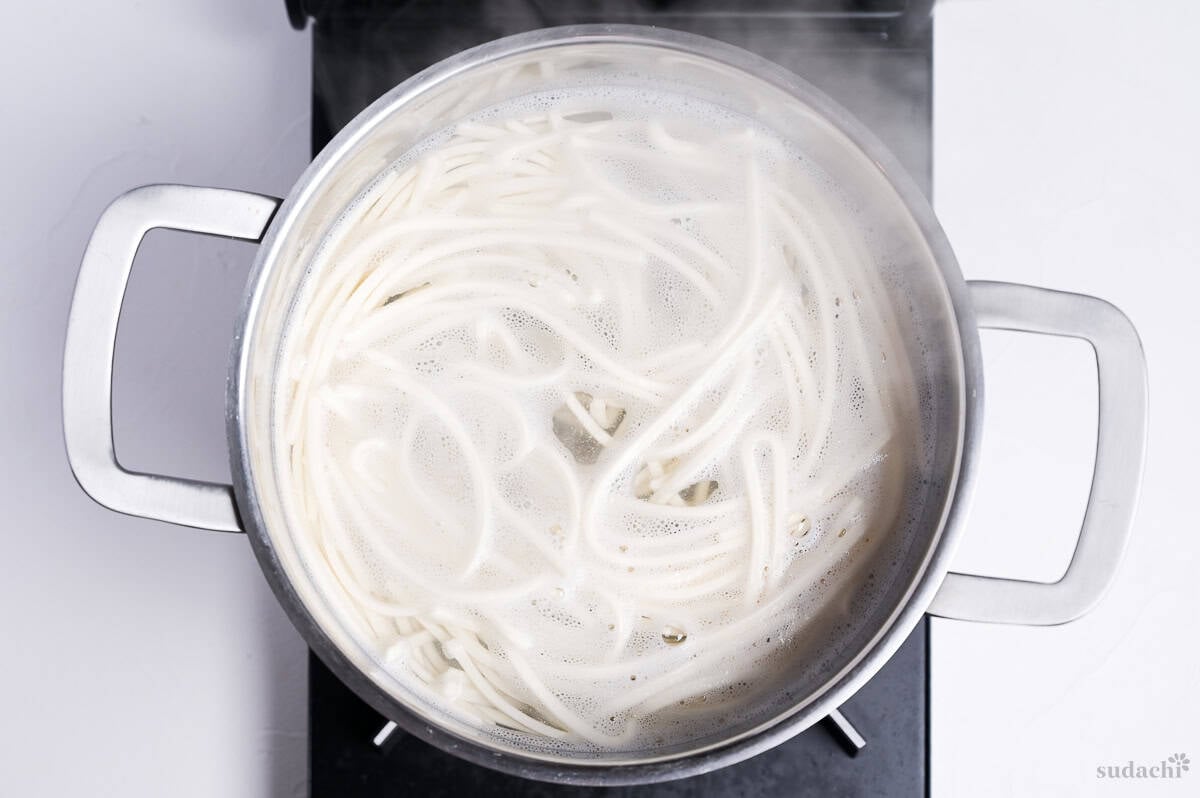
- While the pork fries, cook 2 portions udon noodles in another pot until they loosen and are hot all the way through. Cook dried udon as the package directs.
- Drain the udon and pour fresh boiling water over the noodles to rinse off the slippery surface.

Assemble the Bowls
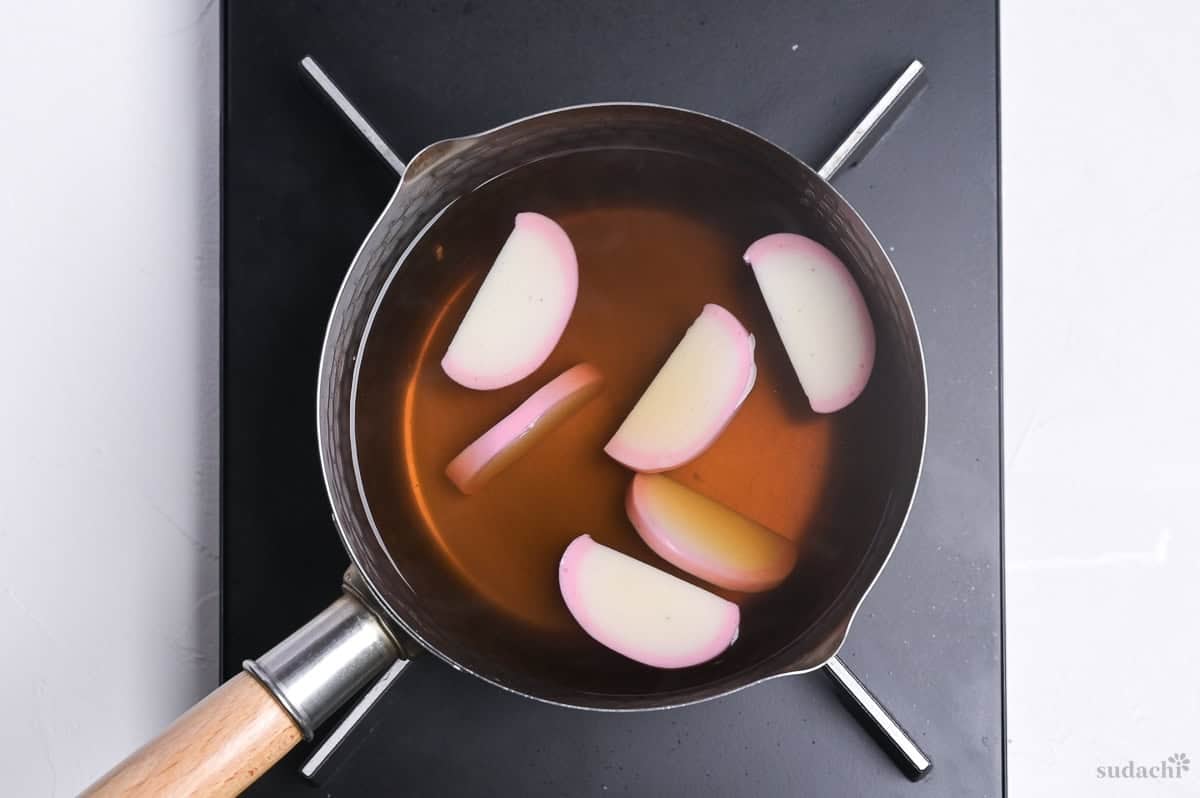
- Reheat the broth until it is just below a boil. If you are using 4 slices kamaboko fish cake, warm them in the broth for 20 to 30 seconds.
- Put 1 portion of udon in each bowl, or split cooked dried udon evenly among them, and pour in the broth. Pile the pork and onion on top and pour the pan juices, fat and all, evenly over the bowls. If you are using the kamaboko, add 2 slices to each bowl.
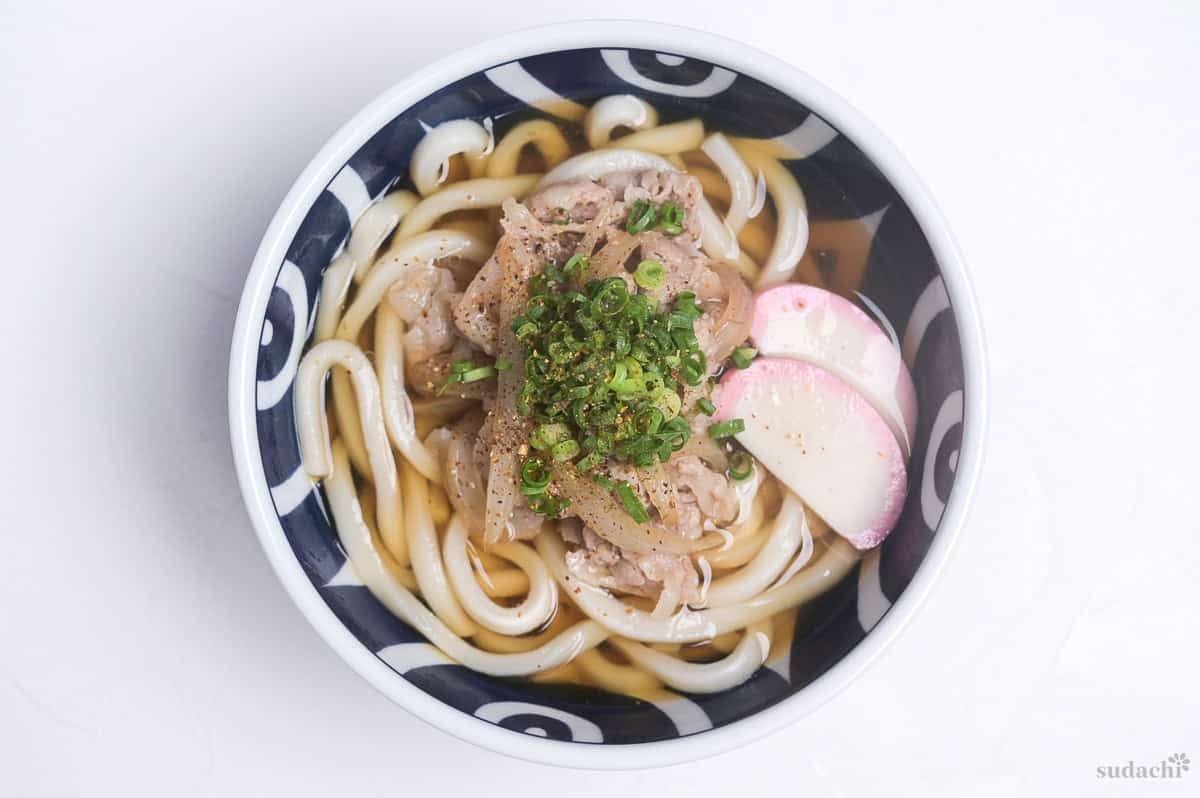
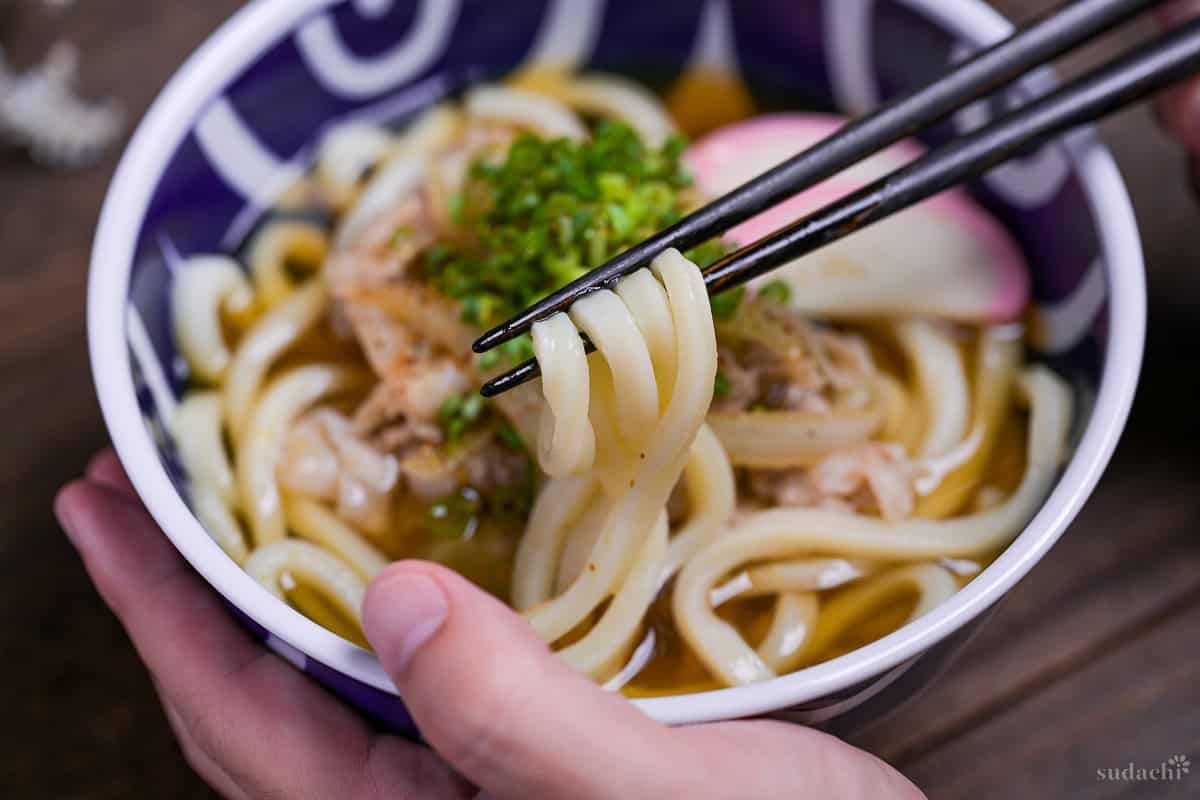
- Scatter finely chopped green onions among the bowls and sprinkle on Japanese chili powder (shichimi togarashi) if you like. Stir well before eating. Enjoy!
Notes
Judge the broth in the bowl: The broth in the pot is thin on purpose, and the pan juices bring it up to strength. If it tastes flat on its own, hold off on more soy sauce and taste once the bowl is mixed.
The pan juices belong to the bowl: The juices and fat left in the frying pan turn a light broth into a full-flavored bowl. Cook them away and the bowl never comes together, however well you stir.
Stay at the stove once the juices turn glossy: The sugar and mirin in the marinade color the moment the liquid is gone. Black, sticky spots or a bitter smell mean the pan has started to scorch.
Dissolve the sugar before the pork marinates: The pork goes into the pan with every drop of its marinade, and any grains of sugar left whole burn on the bottom of the pan first.
Spread the pork out in the pan: Piled-up slices simmer in the liquid and stay pale. Hold the heat at medium, the liquid cooks down, and the browning follows.
A note on the nutrition figures: In Japan, the broth of a noodle soup like this is not finished to the last drop, so the numbers here assume you drink only about 30 percent of the soup, in line with measured Japanese consumption studies. Finish the whole bowl and the figures, sodium above all, will run considerably higher.
Full Recipe QR Code↑↑