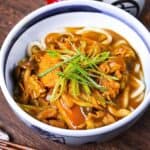
Japanese Curry Udon (Kare Udon)
Ingredients
Broth
- 500 ml dashi stock homemade or dashi packet
- 3 tbsp Japanese soy sauce (koikuchi shoyu)
- 2 tbsp mirin
- 1 tsp sugar
- 3 tbsp Japanese style curry powder S&B or any unsalted curry powder, do not use curry roux blocks
- 1 tbsp potato starch (katakuriko) or corn starch
- 5 tbsp cold water
Curry Udon
- 1 tsp cooking oil neutral
- 150 g thinly sliced pork belly or pork shoulder or chicken thigh
- 50 g Japanese leek (naganegi) diagonally sliced, or regular leek or yellow onion
- 50 g mushroom of your choice shiitake, shimeji, or cremini
- 8 slices kamaboko fish cake optional
- 2 fried tofu pouch (aburaage) thinly sliced, optional
- 2 portions udon noodles frozen, fresh, or dried
- finely chopped green onions to garnish
- Japanese chili powder (shichimi togarashi) optional
Instructions
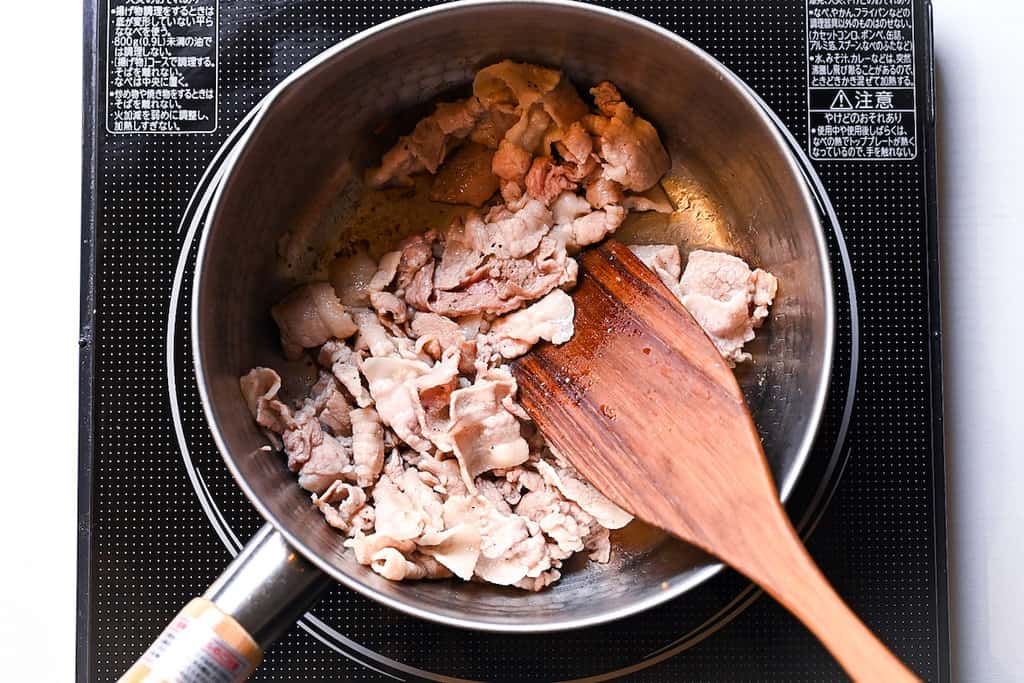
- Heat a large pot on medium. Add 1 tsp cooking oil and arrange 150 g thinly sliced pork belly in a single layer. Fry until lightly golden, then flip and repeat on the other side.
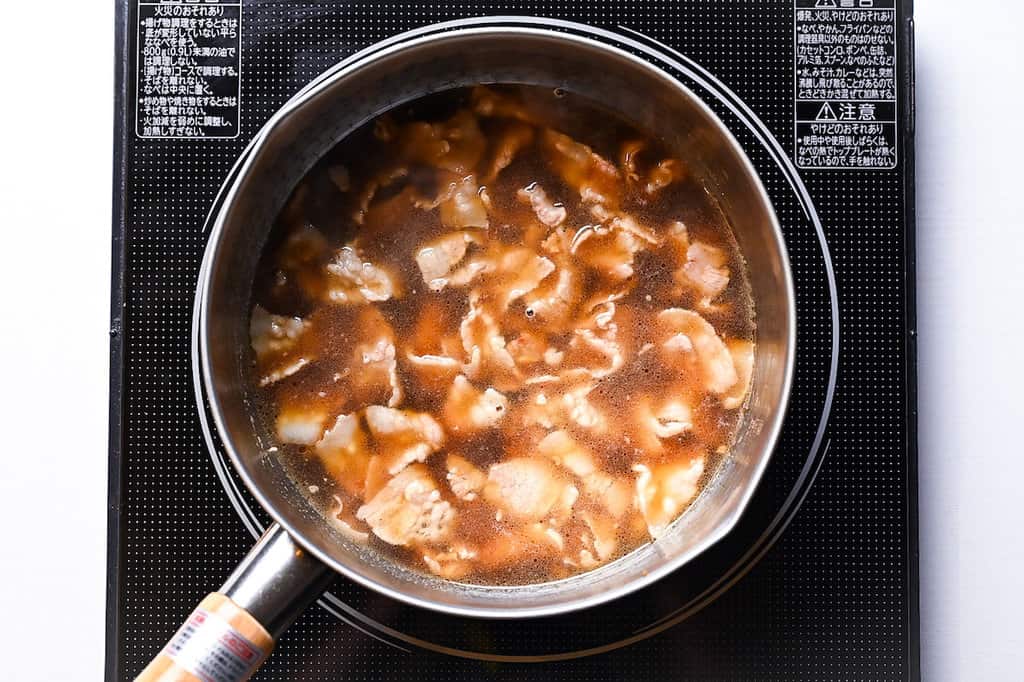
- Add 500 ml dashi stock to the pot with 3 tbsp Japanese soy sauce (koikuchi shoyu), 2 tbsp mirin and 1 tsp sugar. Mix and bring to a boil, once boiling lower the heat to a simmer.
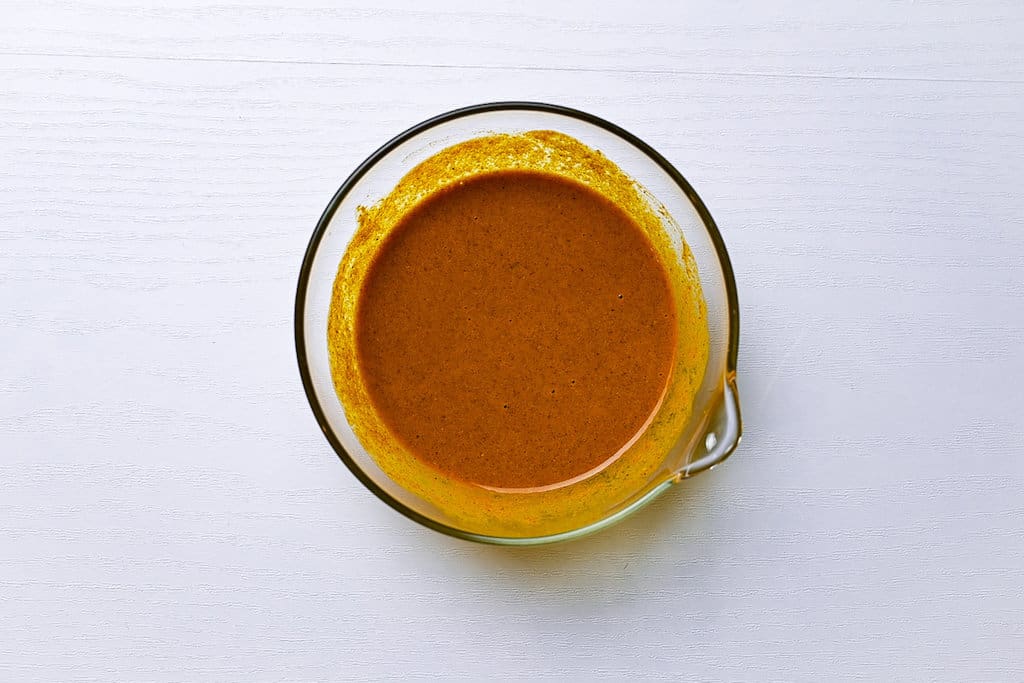
- In a small bowl, mix 3 tbsp Japanese style curry powder and 1 tbsp potato starch (katakuriko). Once combined, add 5 tbsp cold water and mix it into a smooth thin curry paste with a similar thickness to pancake batter.
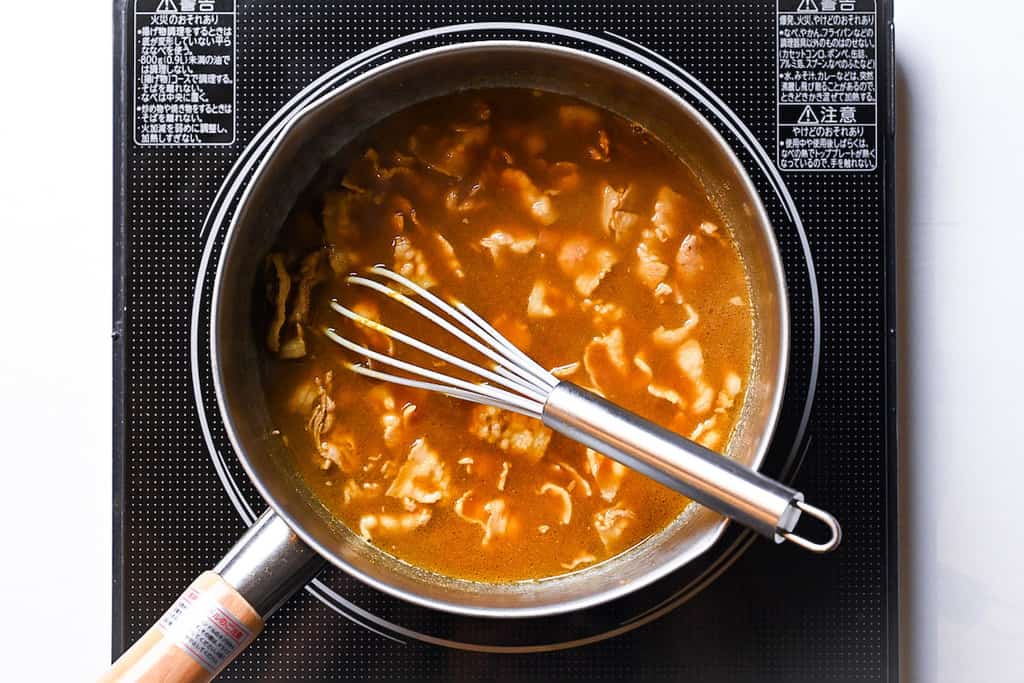
- Pour the curry paste mixture to the pot and whisk to incorporate it into the broth.
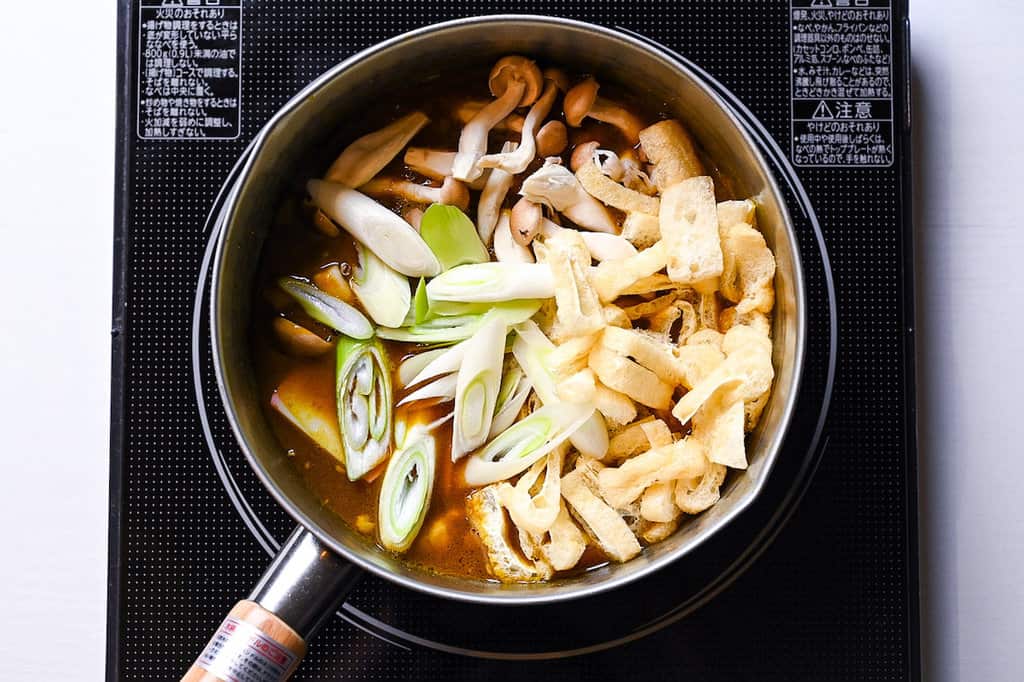
- Add 50 g Japanese leek (naganegi) and 50 g mushroom of your choice to the pot. You can also add 8 slices kamaboko fish cake and 2 fried tofu pouch (aburaage) here if you are using them.
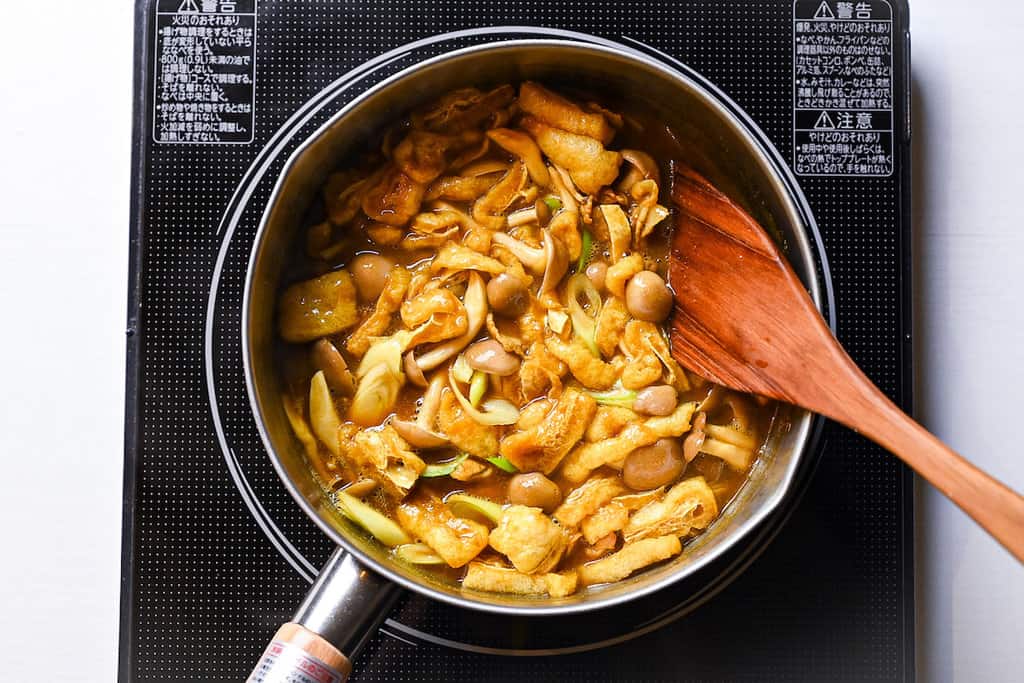
- Simmer for about 10 minutes or until thickened, stir occasionally.
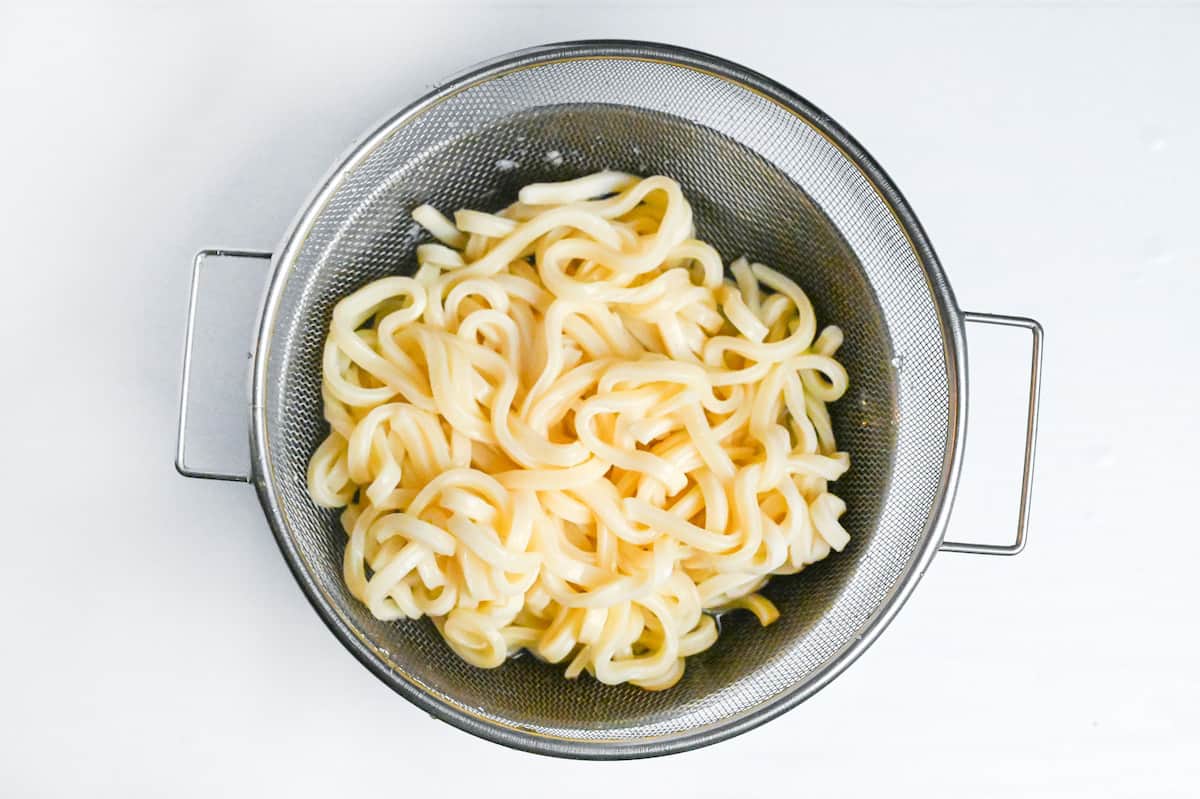
- While the soup is simmering, cook 2 portions udon noodles in a separate pot following the instructions on the packaging. Once cooked, drain in a colander and rinse with freshly boiled water.
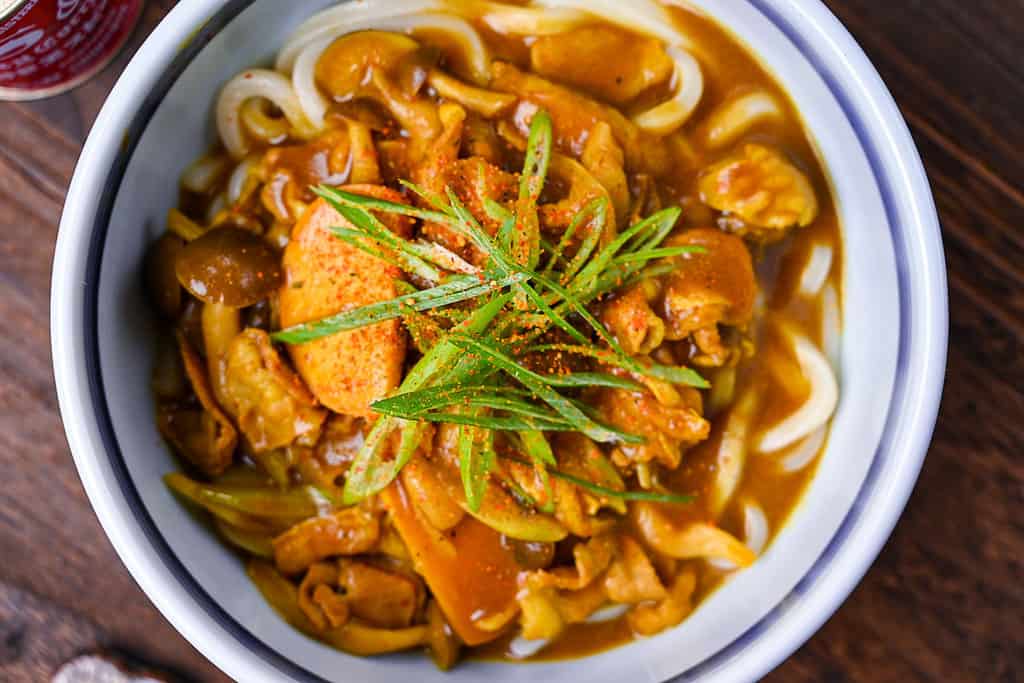
- Transfer the cooked udon to serving bowls and pour the curry soup over the top. Garnish with finely chopped green onions and Japanese chili powder (shichimi togarashi) if you like. Enjoy!
Notes
Cook udon in a separate pot, this is non-negotiable. Boiling noodles directly in the curry broth releases surface starch that over-thickens the sauce and turns it gluey. Rinse the cooked noodles with freshly boiled water (not cold) to wash away loose starch while keeping them hot for serving.
If you want to use root vegetables or ingredients that need longer cooking, add them early and simmer until half-cooked before adding the curry paste.
Whisk the slurry into a gentle simmer (not a rolling boil) so it disperses before starch gelatinizes.
Once thickened, keep heat low and stir-scrape the bottom often because thick curry reduces convection and creates hot spots (especially in thin stainless or on strong IH).
Treat seasoning as a system (dashi + soy + curry powder) and re-taste after the curry is fully mixed in, otherwise instant dashi or a saltier soy can push you from "savory" to "too salty" fast.
Full Recipe QR Code↑↑