
Harumaki (Japanese Spring Roll)
Ingredients
- 150 g pork belly roughly chopped, or shoulder/ground pork
- 1 pinch salt and pepper
- 1 tsp toasted sesame oil
- 150 g green cabbage shredded about 1cm thick
- 2 tbsp sake
- 300 ml chicken bouillon
- 30 g Japanese leek (naganegi) finely diced, or regular leek/scallion
- 10 g ginger root finely diced
- 60 g fresh shiitake mushroom thinly sliced
- 30 g carrot julienned
- 30 g bell pepper julienned
- 50 g canned bamboo shoots julienned
- ½ tbsp Japanese soy sauce (koikuchi shoyu)
- ½ tbsp oyster sauce
- ½ tbsp sugar
- 30 g thin glass noodles (harusame) dry
- 1 tbsp cold water for slurry
- 1 tsp cornstarch for slurry, or potato starch
- 10 sheets square spring roll wrappers
- 2 tbsp cold water for paste
- 1 tbsp all-purpose flour for paste
- cooking oil for shallow frying
Instructions
Spring Roll Filling
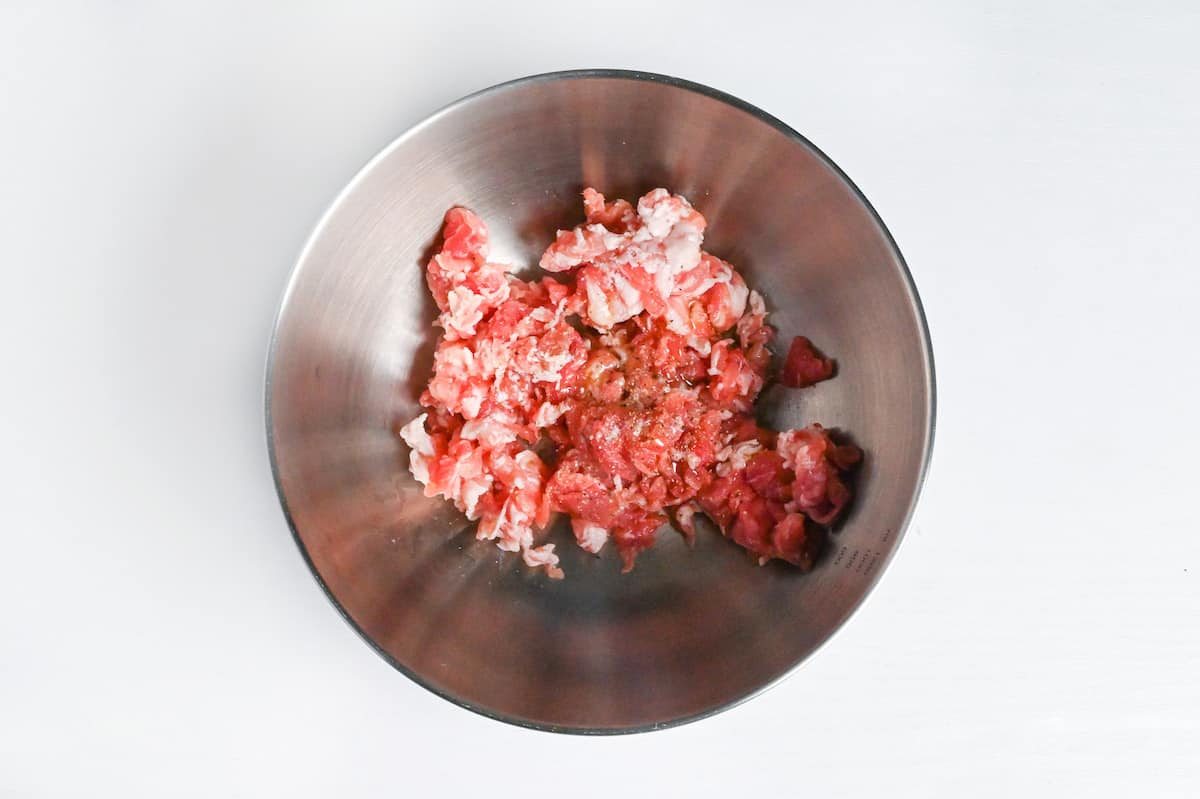
- Roughly chop 150 g pork belly and place it in a bowl with 1 pinch salt and pepper and 1 tsp toasted sesame oil. Mix well and set aside.
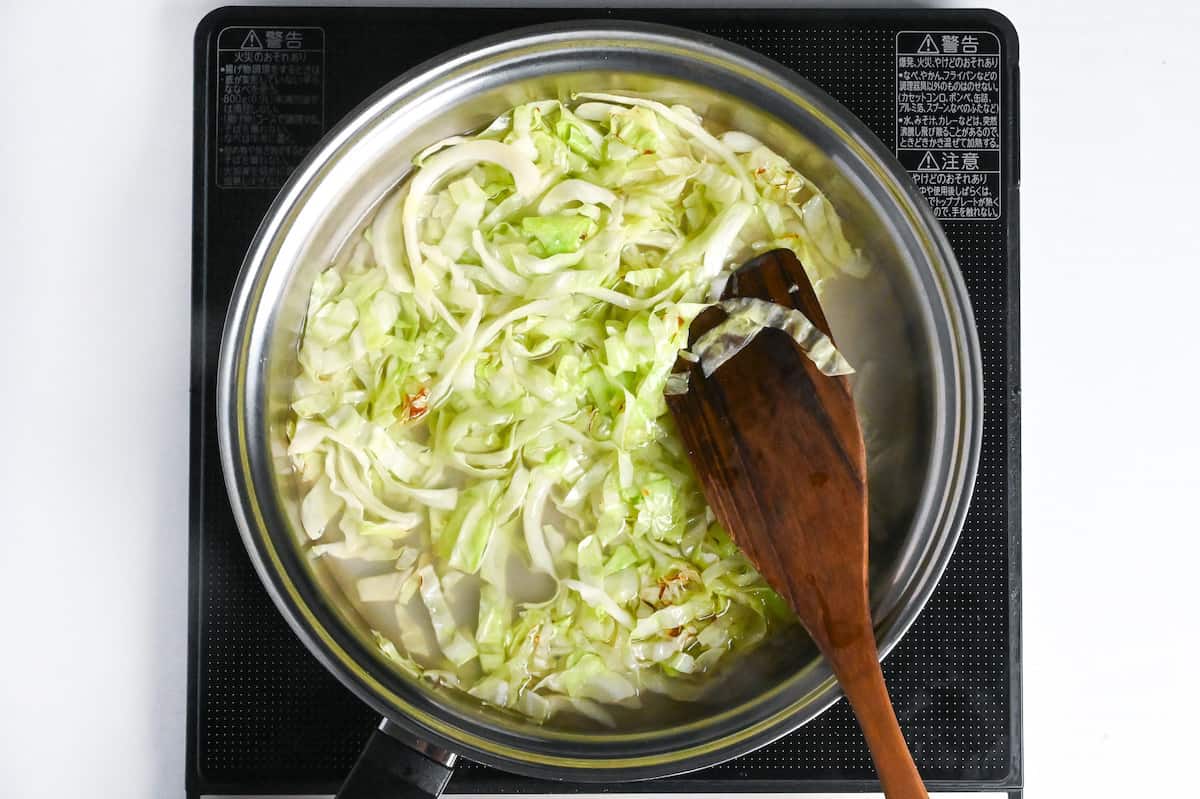
- Heat up a pan (that has a lid) on medium with a drizzle of oil. Add 150 g green cabbage. When it starts to soften, add 2 tbsp sake and 300 ml chicken bouillon. Cover with a lid and steam for 3 minutes, then remove the pan from the heat.
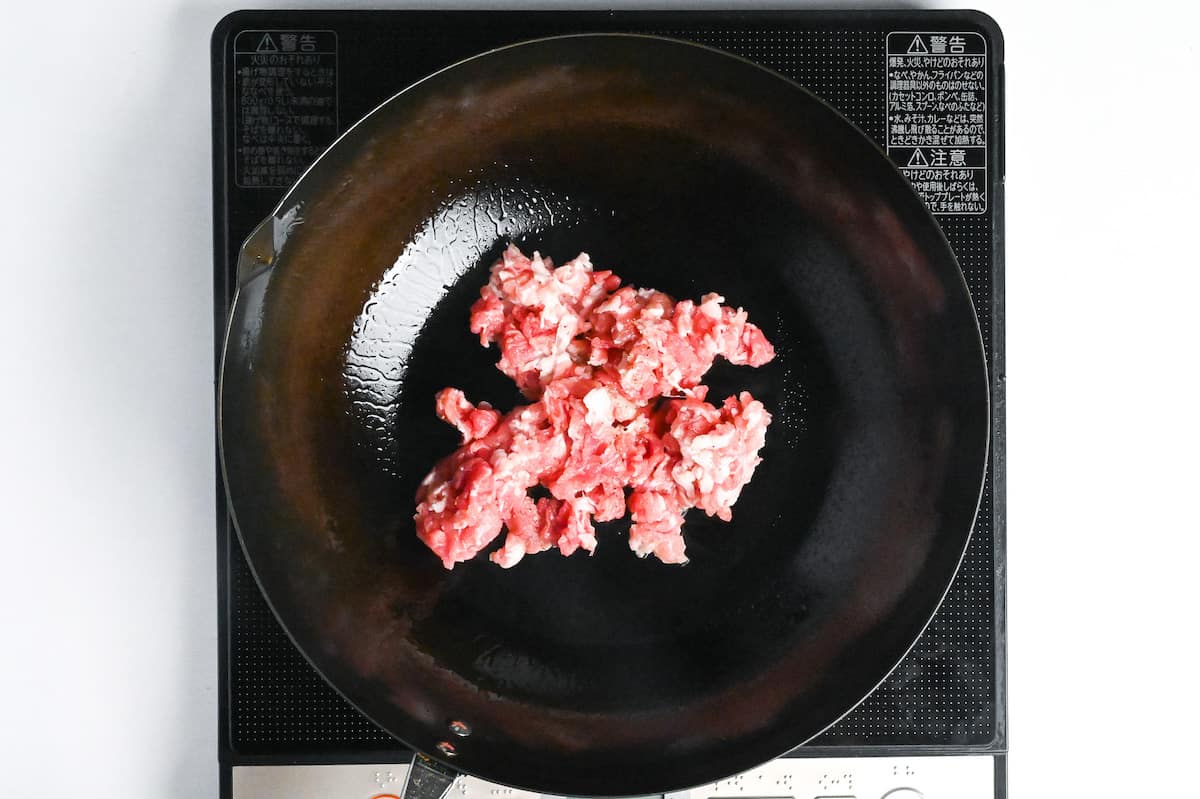
- Heat a large pan or wok over medium-low with a thin layer of oil. Add the pork and fry until seared all over and lightly browned.
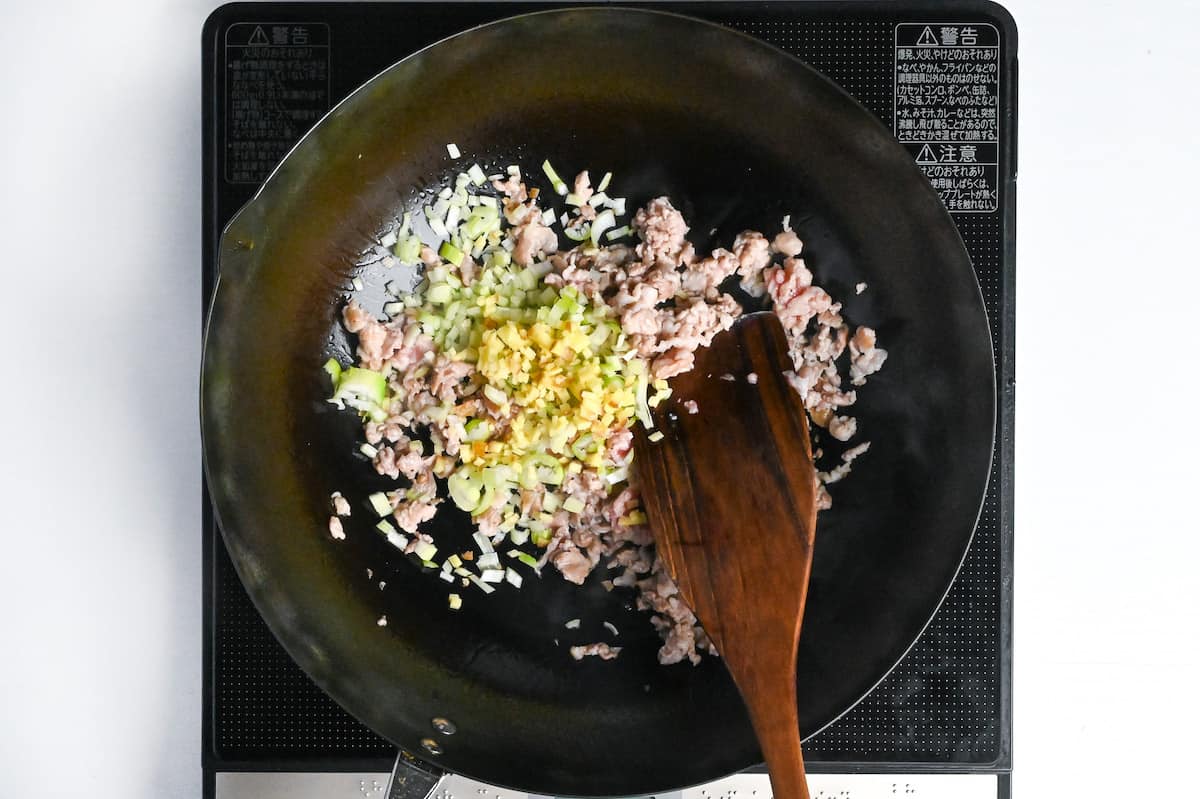
- Add 30 g Japanese leek (naganegi) and 10 g ginger root (finely diced), and fry until fragrant.
- Increase the heat to medium-high and add the julienned vegetables (60 g fresh shiitake mushroom, 30 g carrot, 30 g bell pepper and 50 g canned bamboo shoots). Stir fry for about 3 minutes or until tender crisp.
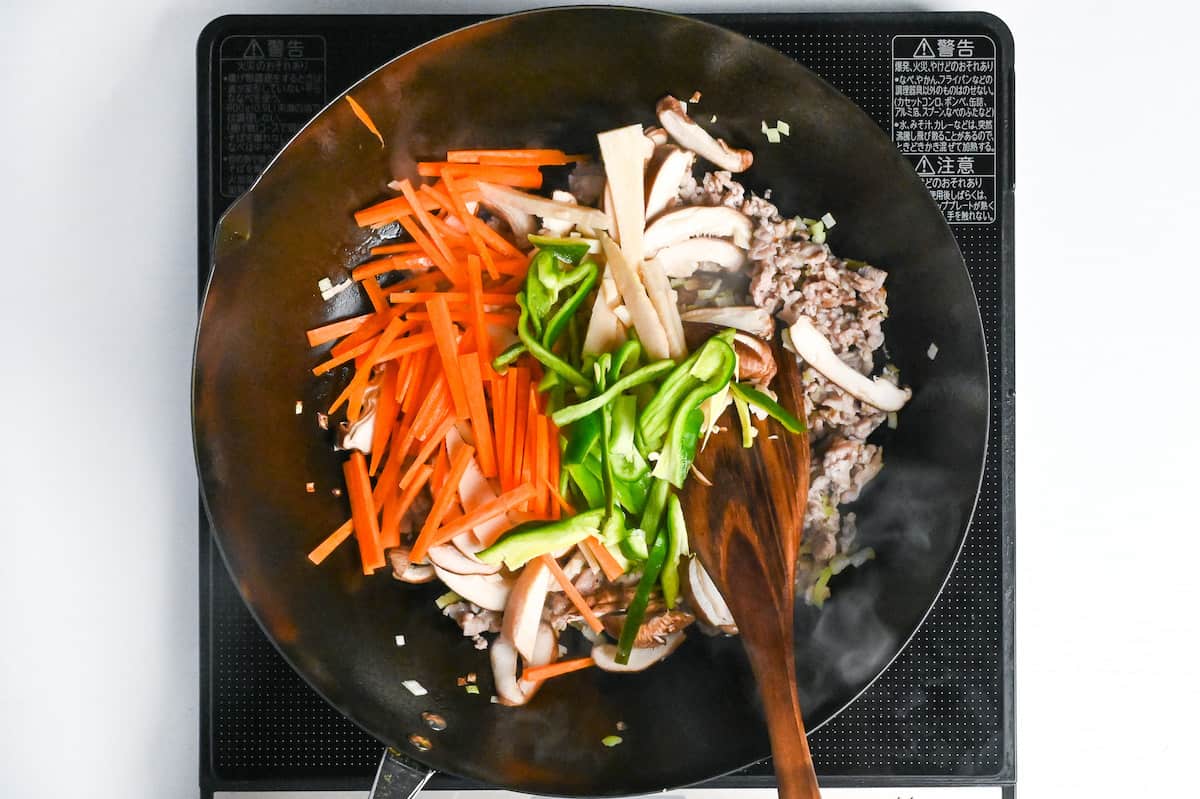
- Add ½ tbsp Japanese soy sauce (koikuchi shoyu), ½ tbsp oyster sauce and ½ tbsp sugar to the pan and mix well, then pour in the contents of the other pan (cabbage and chicken stock).
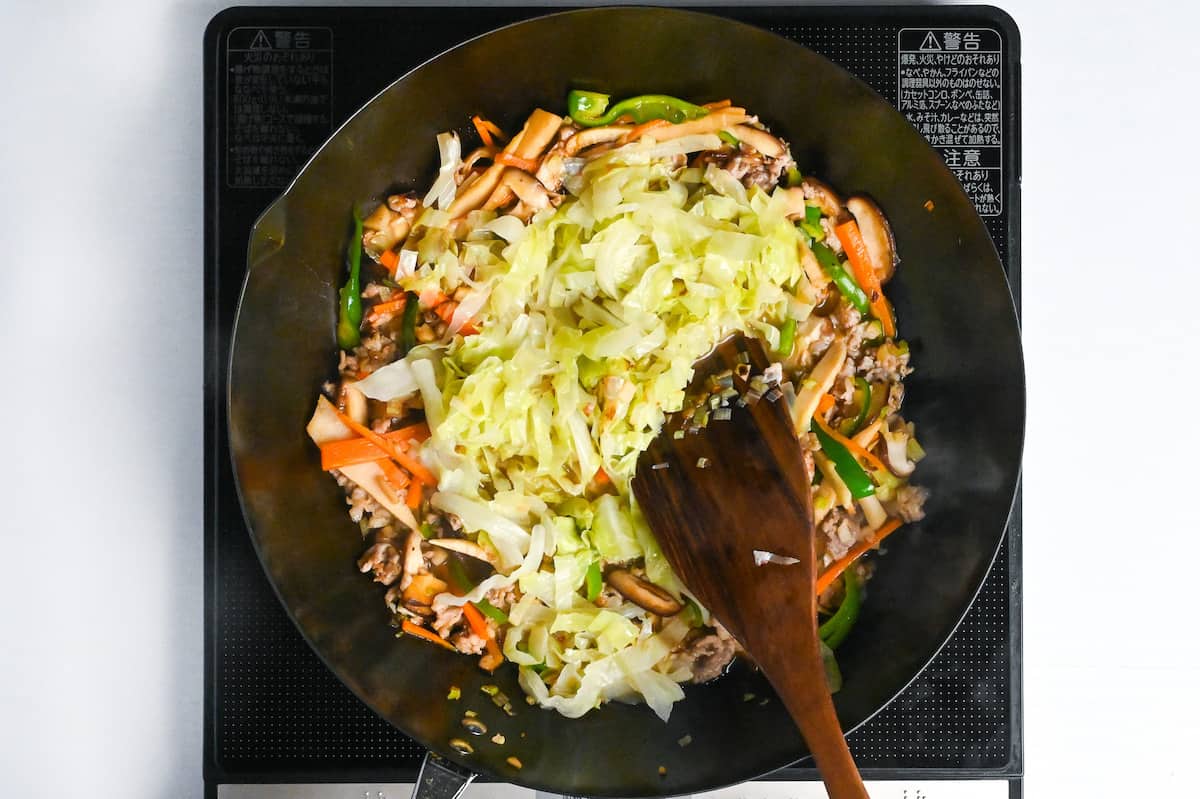
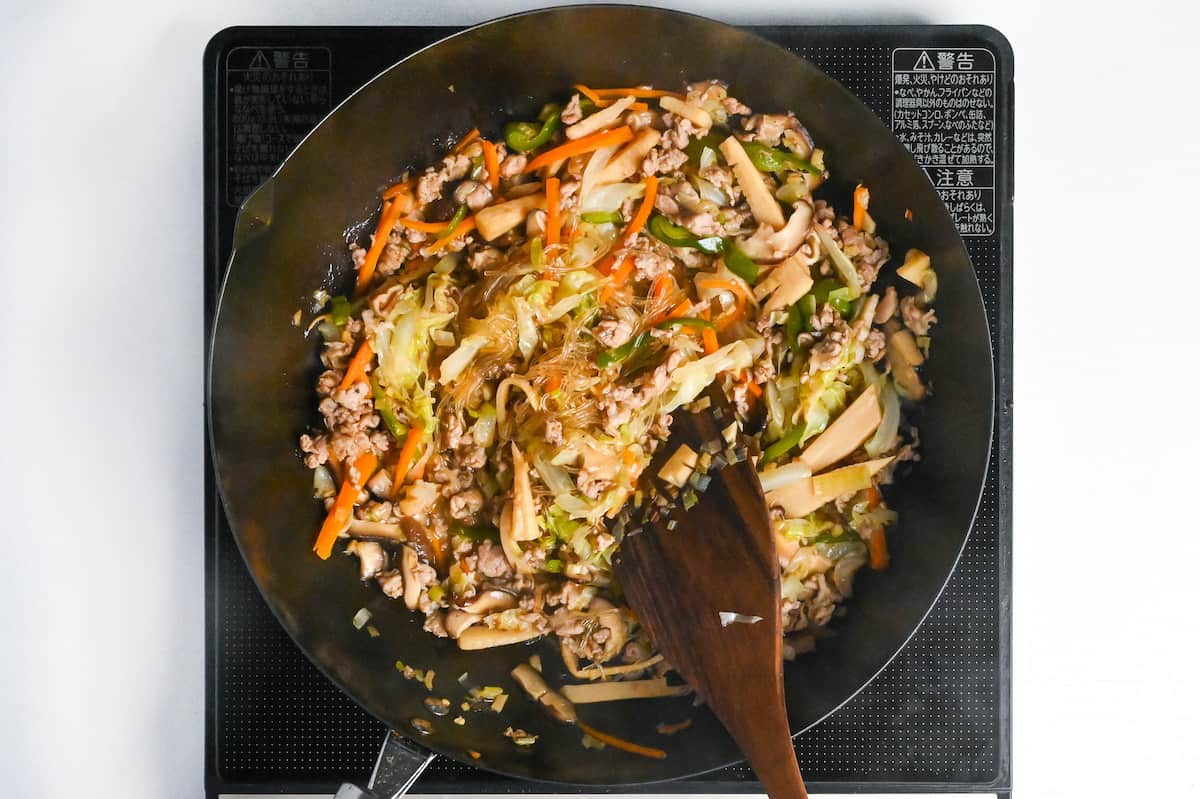
- Submerge 30 g thin glass noodles (harusame) into the chicken stock and simmer until softened. Make a slurry by mixing 1 tbsp cold water and 1 tsp cornstarch in a small bowl. Pour it into the pan and simmer until thickened and glossy.
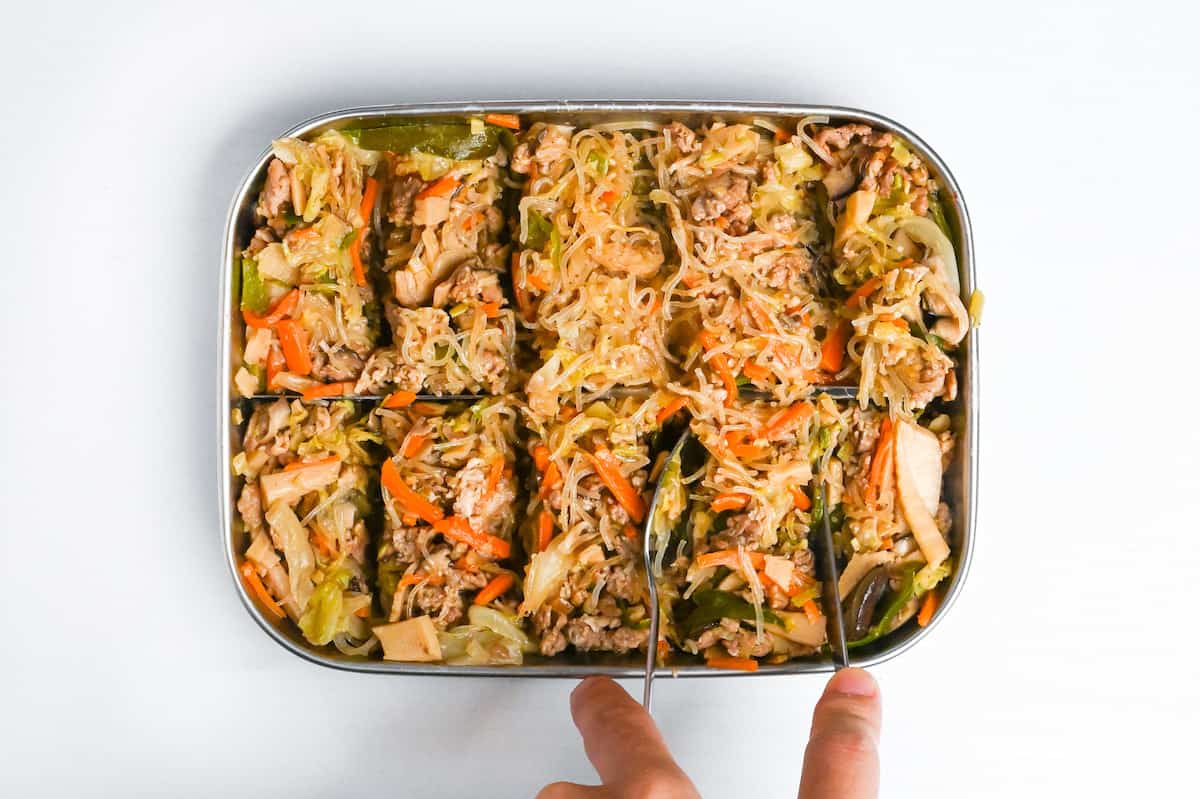
- Remove from the heat and transfer to a wide container to cool (about 20-30 minutes).
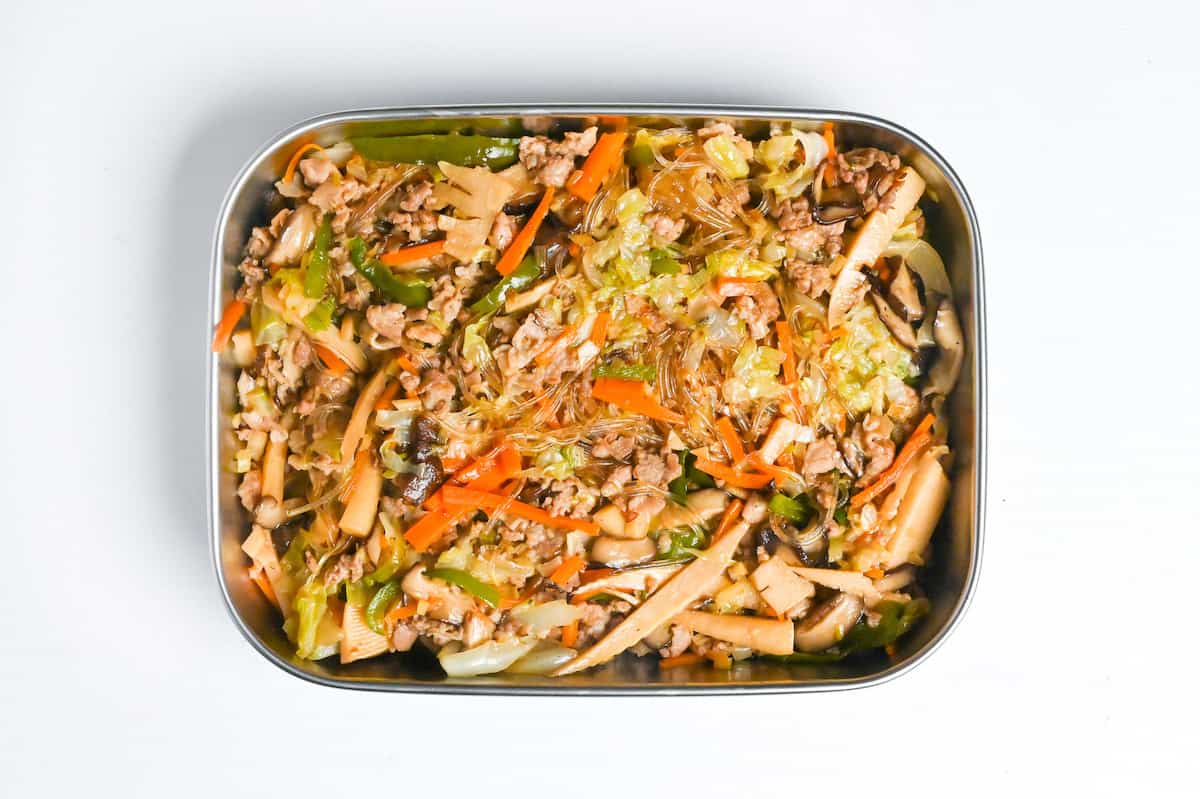
- When it's cool enough to touch, cut the glass noodles with scissors so that they are 5-10cm in length. (This is only necessary if your glass noodles are long.) Chill in the refrigerator until you're ready to assemble.

How to roll
- Divide the filling into portions equal to the number of wrappers (10 sheets square spring roll wrappers).
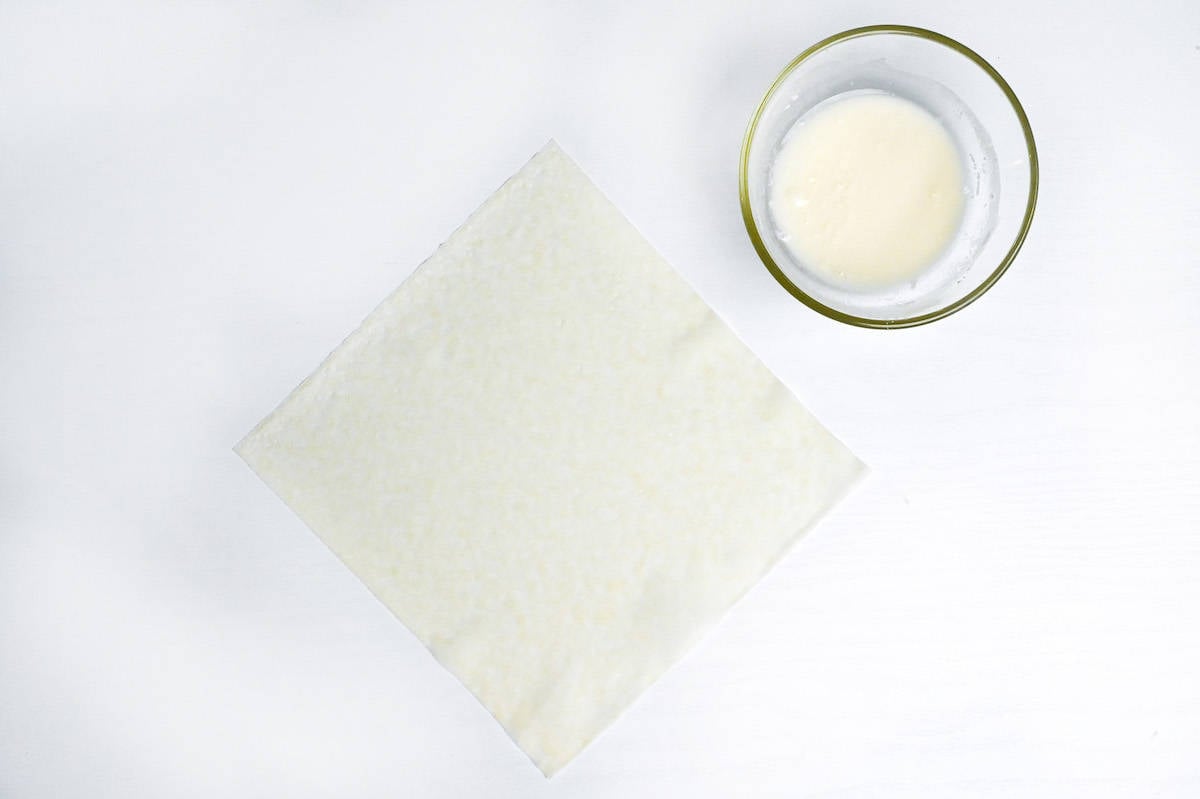
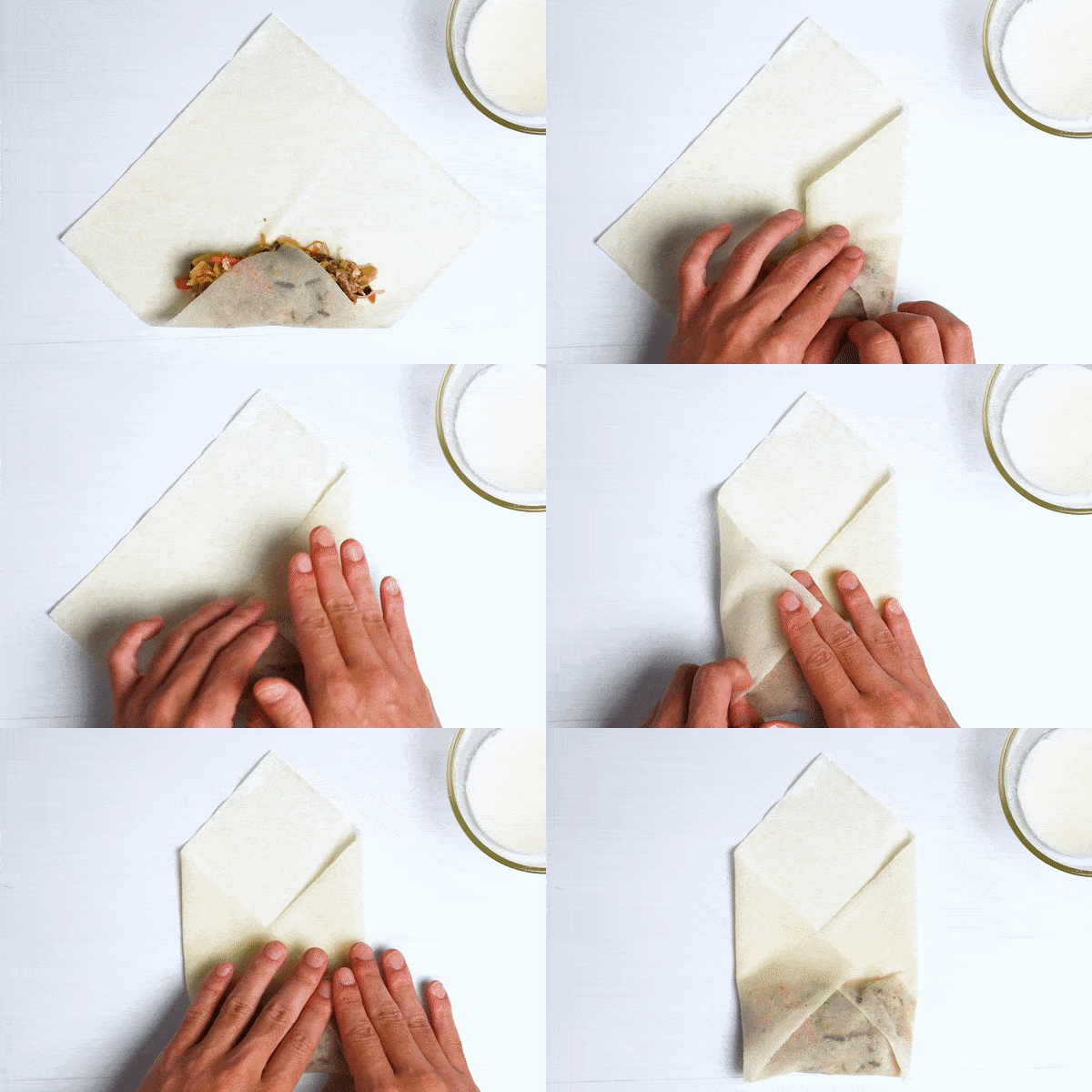
- Add 2 tbsp cold water and 1 tbsp all-purpose flour to a small bowl and mix until smooth to make a "glue". Position the wrapper on a flat surface in front of you at a 45-degree angle so it looks like a diamond.
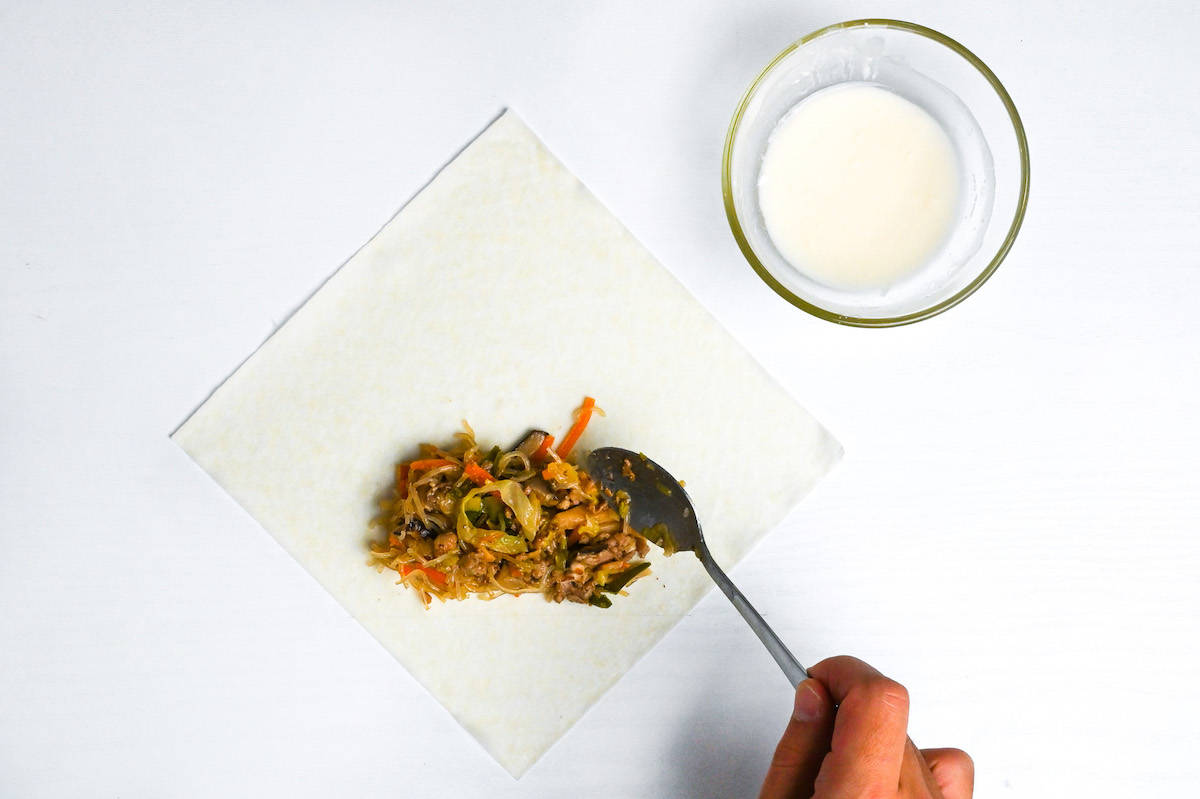
- Spread a portion of filling horizontally just below the center, making sure not to let it get too close to the edges.
- Tightly pull the bottom corner over the filling and wrap it snugly over the top.
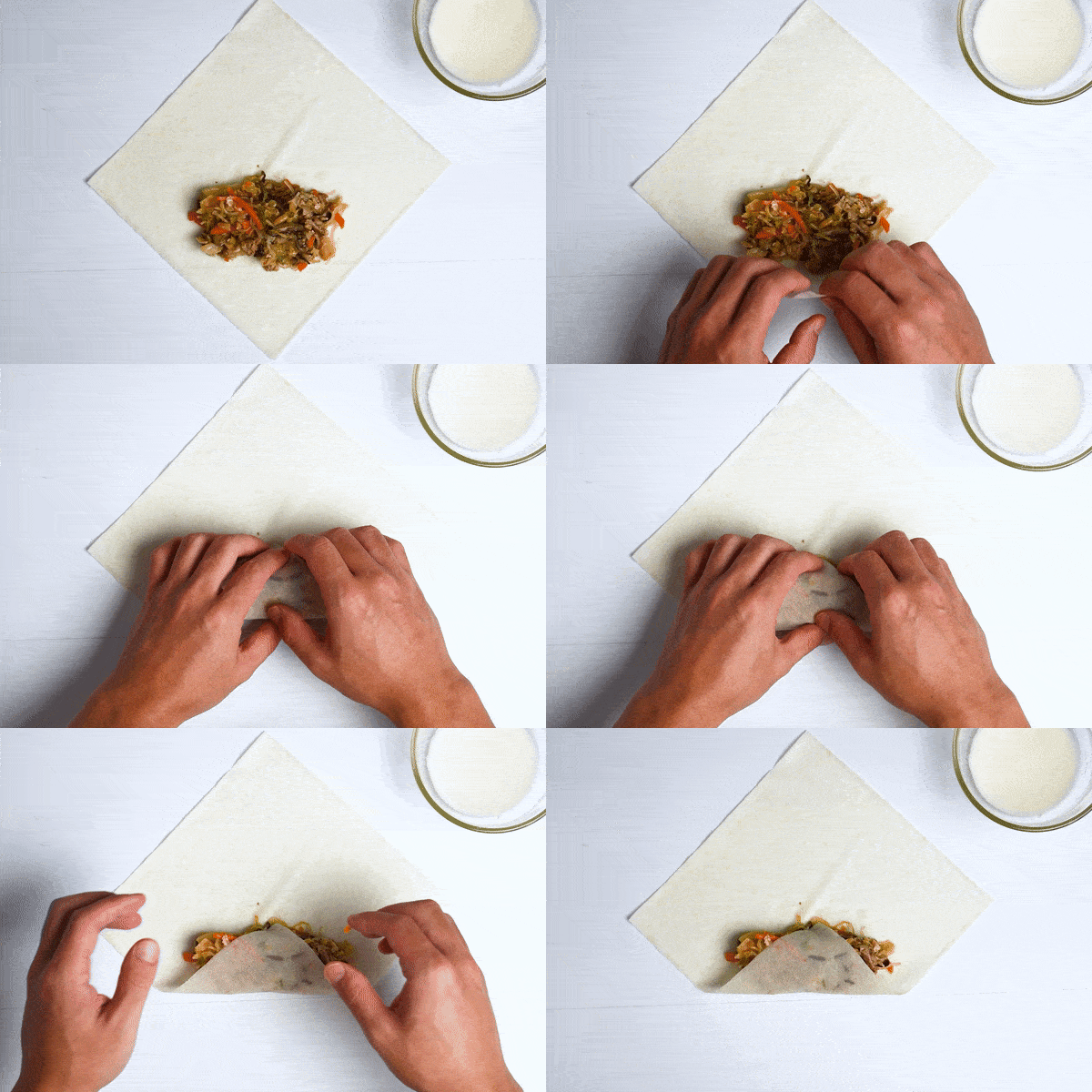
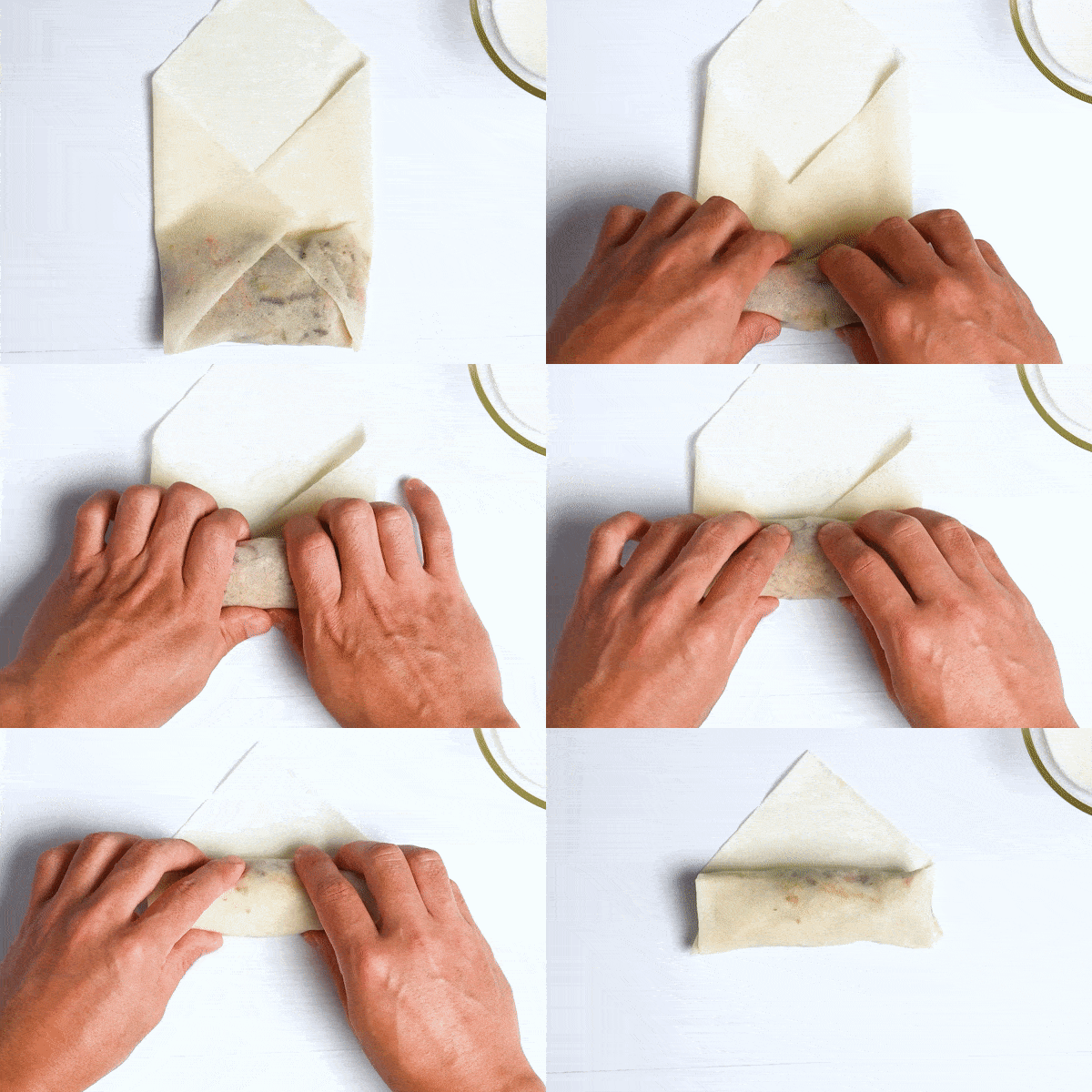
- Bring the left and right corners over the center and press the edges down to secure them.
- Roll it up, leaving the point at the top.
- Wet the top edges of the point with the water/flour mixture and finish the roll. Press down to secure.
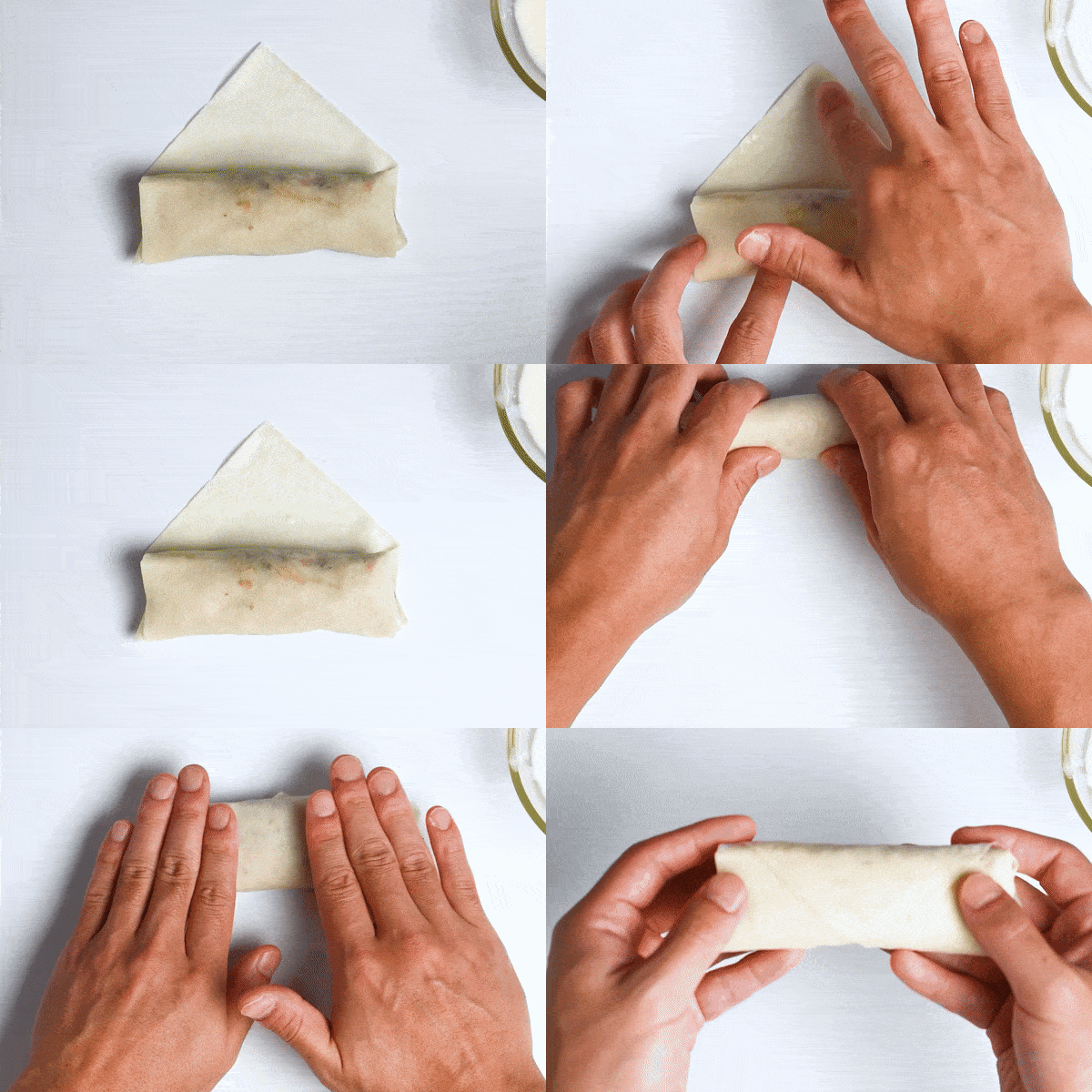
- Repeat until all the wrappers and filling are used up.
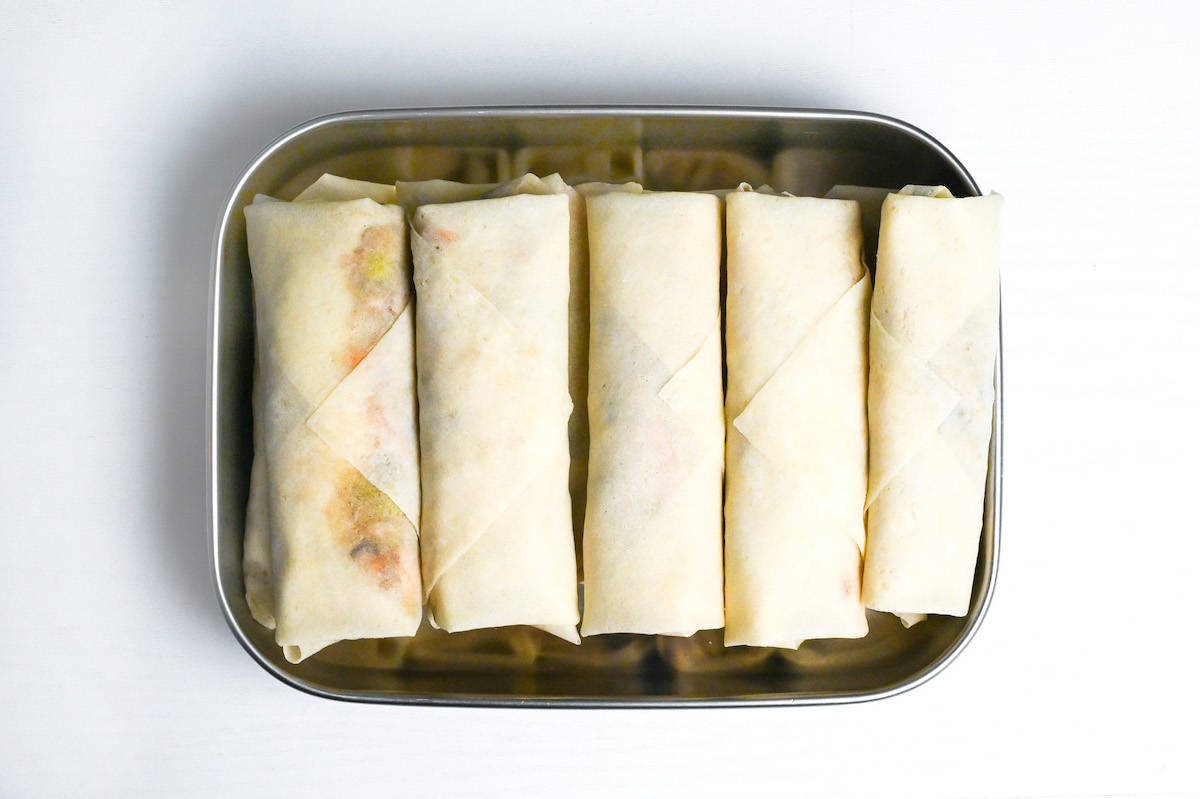
Fry
- Take a pan and add 2cm (1 inch) of cooking oil. Heat to 160 °C (320 °F) and add the spring rolls with the sealed side facing down.
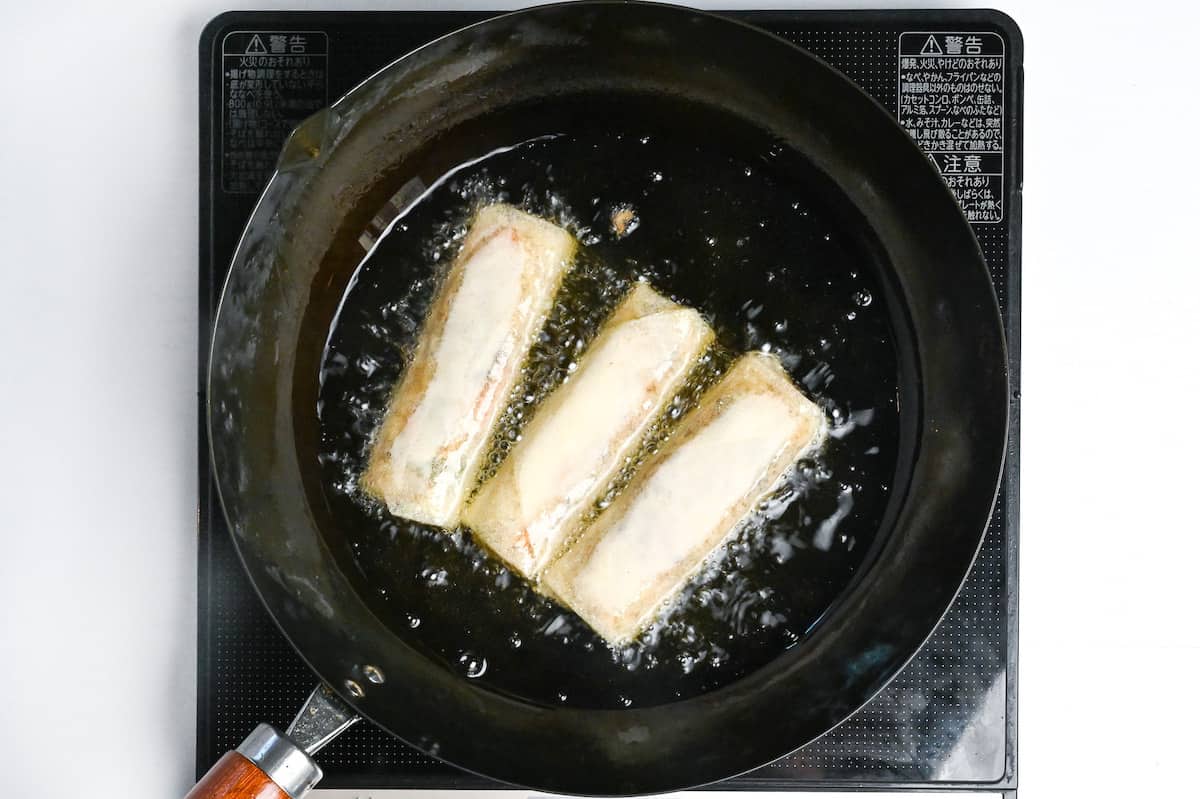
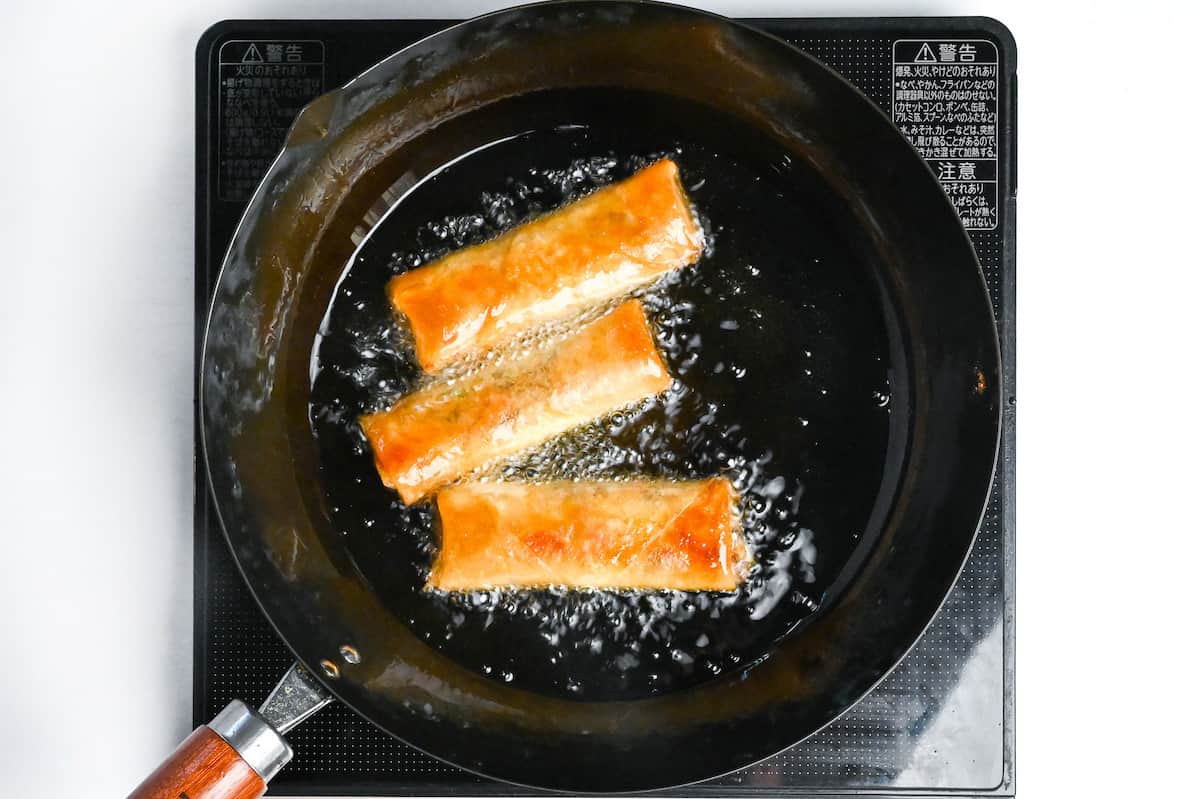
- Cook for a few minutes until golden and then flip and repeat on the other side. (The filling is already cooked, so the main purpose is to make it golden and crispy.)
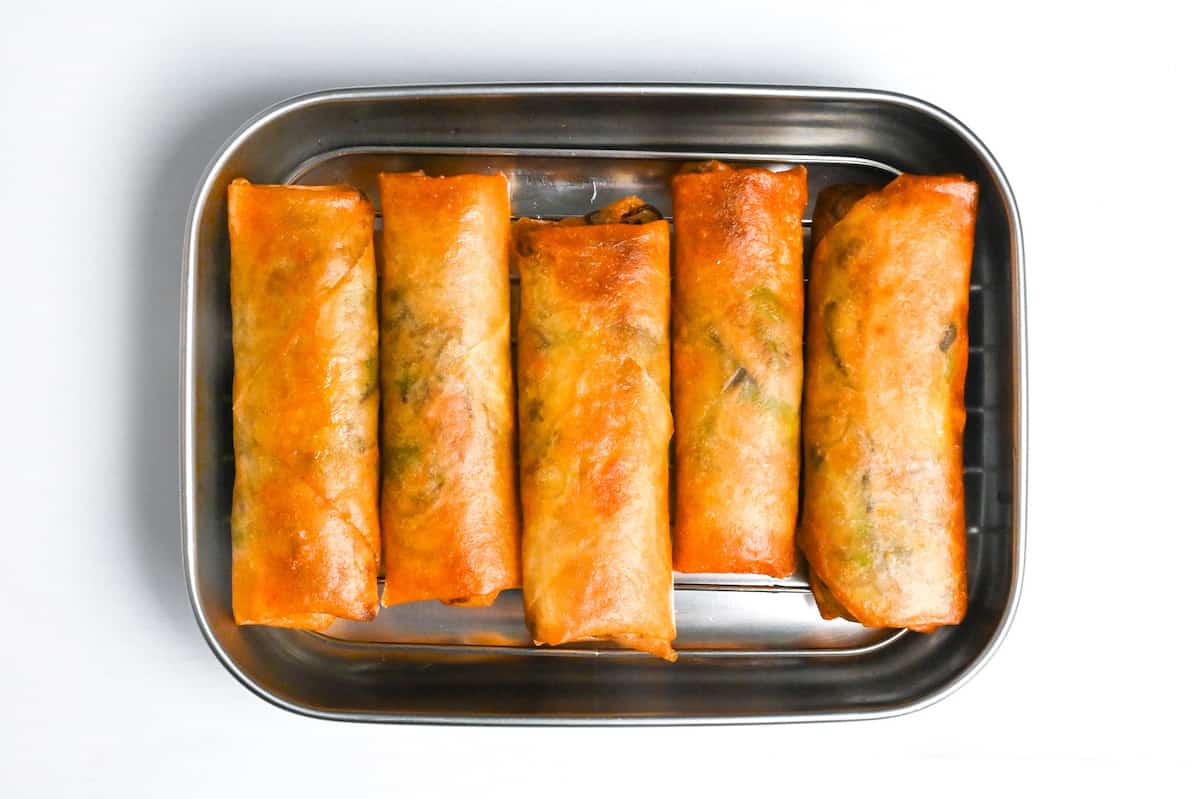
- Rest on a wire wrack for a few minutes to drain the excess oil.
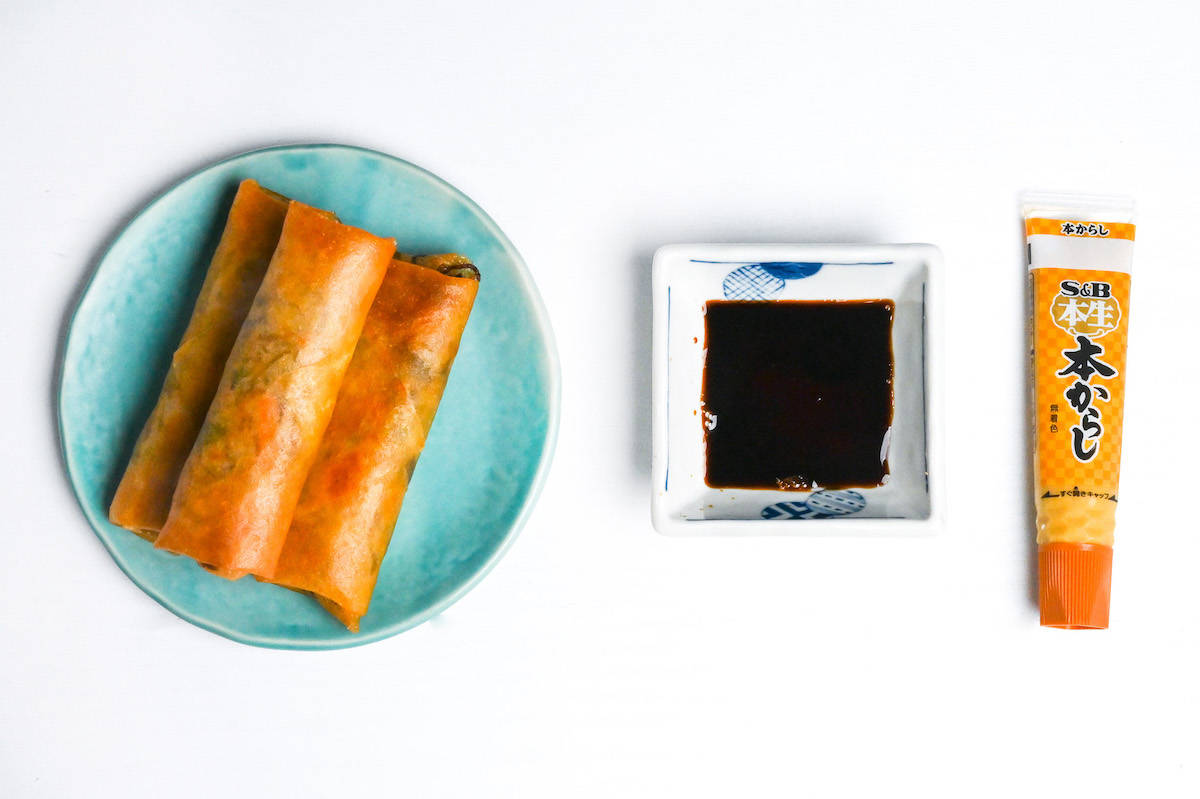
- Serve with soy sauce and Japanese mustard, and enjoy!
Notes
The two-pan cabbage method is intentional: steaming cabbage first lets you control how much liquid ends up in the filling, which is key for no-burst, crisp harumaki.
Most wrappers have a smooth and rough side. Put the smooth side outside for more even browning and a cleaner finish.
Your filling should look thick and glossy, not soupy. Thin liquid is the #1 cause of wrapper leaks and steam blowouts.
Glass noodles aren't just "bulk." They act like a moisture buffer by soaking up broth, helping the filling stay cohesive instead of watery.
Color cue: pull rolls when they're a shade lighter than "perfect." Carryover heat deepens the color on the rack, while going too dark can taste bitter.
Storage & Meal Prep: Fridge cooked harumaki airtight (paper towel-lined) up to 1 day. For make-ahead, prep and fully cool the filling up to 2 days and roll/fry just before serving (unfried rolls freeze up to 1 month, fry from frozen-no thaw).
Serving Ideas: Japanese Cucumber Salad, Traditional Miso Soup, Steamed Japanese Rice, Chilled Tofu (Hiyayakko)
Full Recipe QR Code↑↑