
Easy Oyakodon (Japanese Chicken and Egg Rice Bowl)
Ingredients
- 300 g boneless chicken thigh skin-on preferred, or breast possible
- 1 pinch salt
- 1 tbsp all-purpose flour for coating
- 1 tsp cooking oil neutral flavor
- 100 ml dashi stock
- 3 tbsp mirin
- 1 tbsp light brown sugar or granulated sugar
- 1 tsp Chinese-style chicken bouillon powder or regular chicken bouillon powder
- ½ onion yellow or white, thinly sliced
- 2 tbsp Japanese soy sauce (koikuchi shoyu)
- 3 eggs room temperature
- kizami nori (shredded nori) optional garnish
- Japanese wild parsley (mitsuba) or chopped green onion, optional garnish
- 2 portions cooked Japanese short-grain rice or Calrose
Instructions
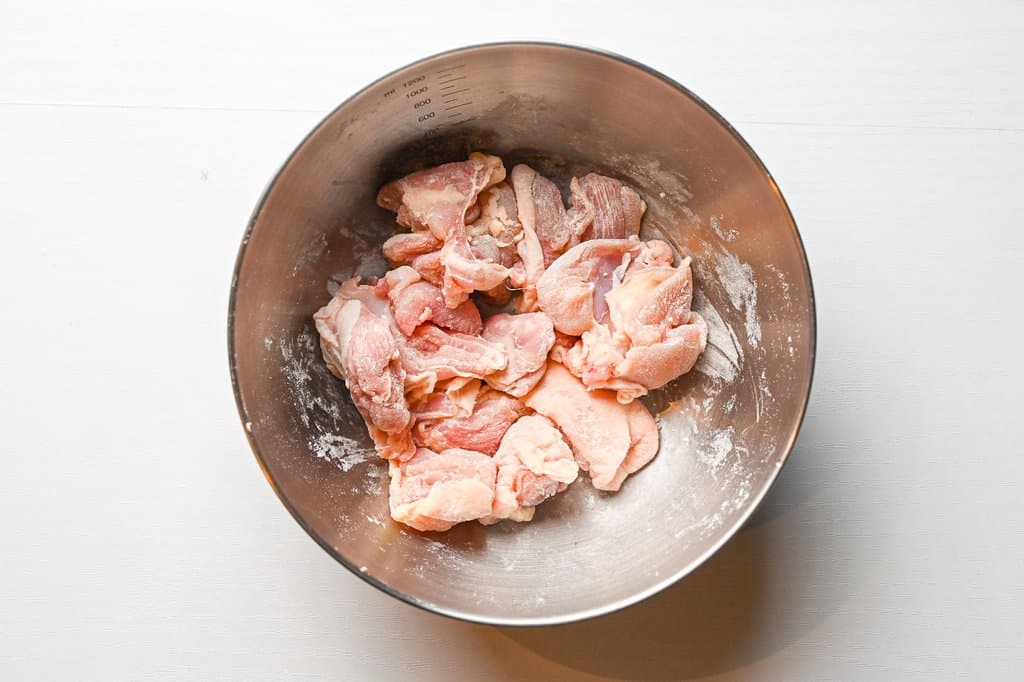
- Cut 300 g boneless chicken thigh into bitesize pieces and place them in a bowl. Sprinkle with 1 pinch salt and 1 tbsp all-purpose flour, and mix until evenly coated.
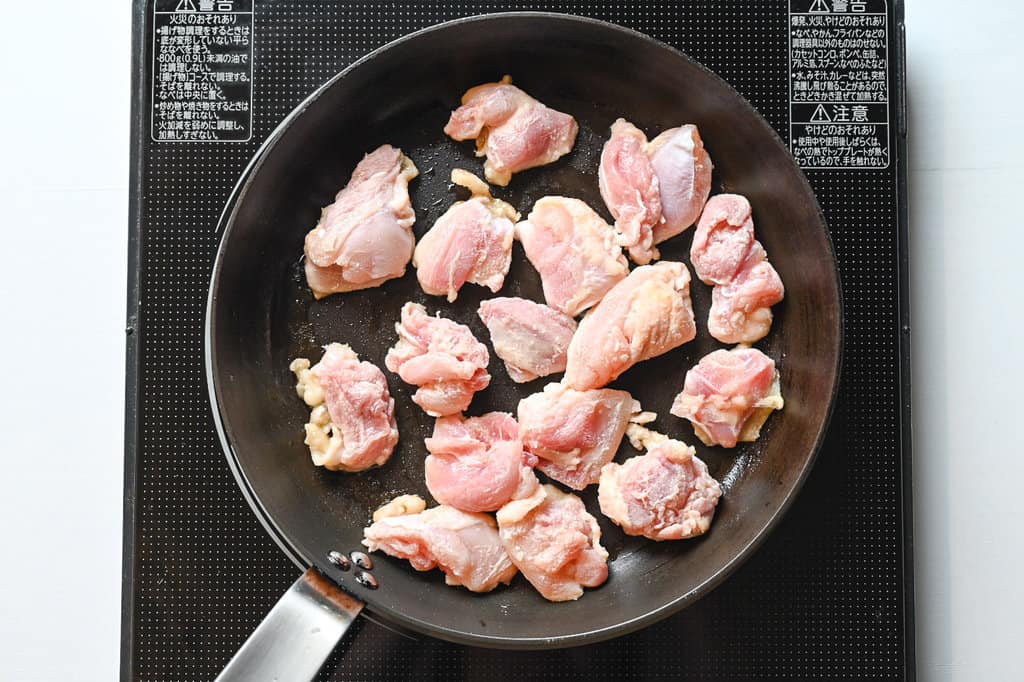
- Heat a frying pan on medium and once hot, add 1 tsp cooking oil. Place the chicken thigh pieces skin-side down in a single layer and fry until crispy and golden, about 2-3 minutes.
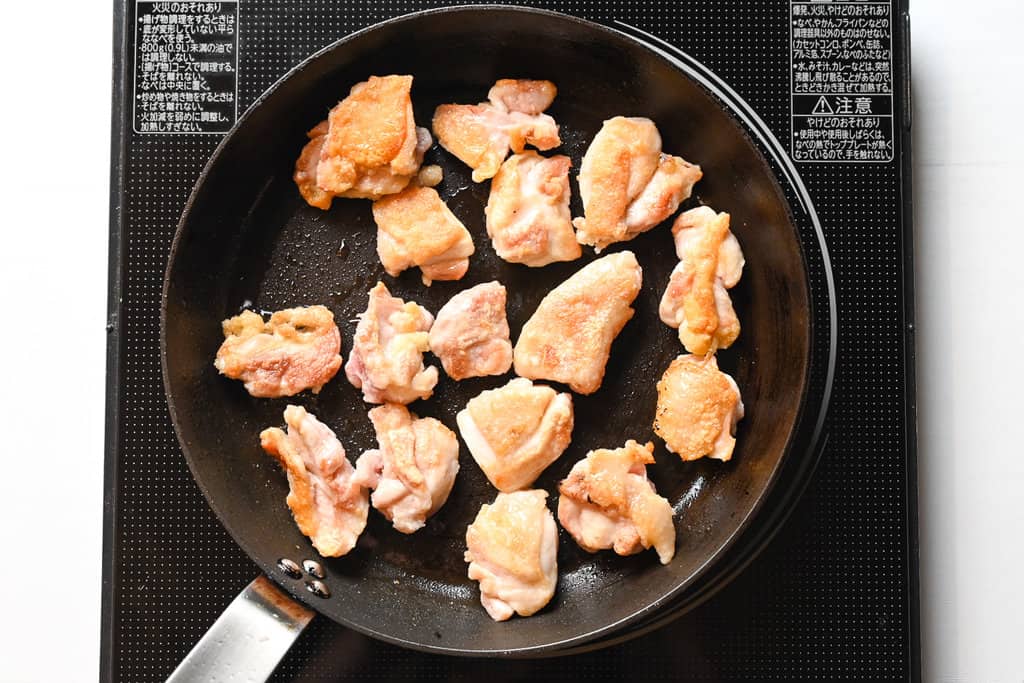
- Flip and sear on the other side. When there is no more pink visable, turn off the heat and transfer the chicken to a plate.
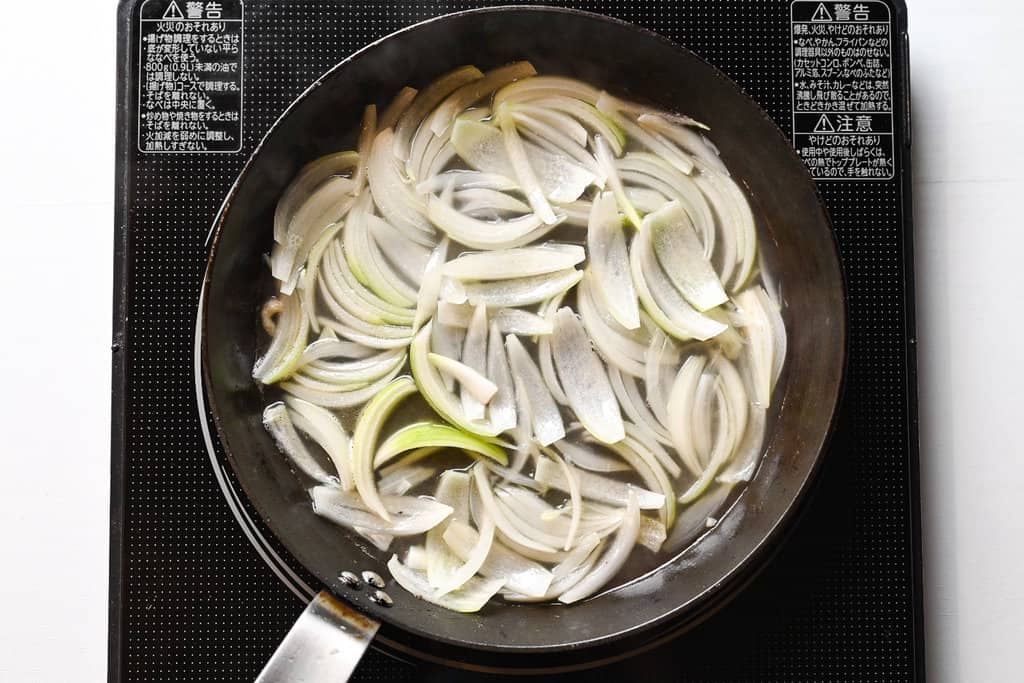
- Wipe the pan with kitchen paper to remove any excess oil and pour in 100 ml dashi stock, 3 tbsp mirin, 1 tbsp light brown sugar, and 1 tsp Chinese-style chicken bouillon powder. Mix well, then add ½ onion (thinly sliced) to the broth and simmer over medium heat until softened.
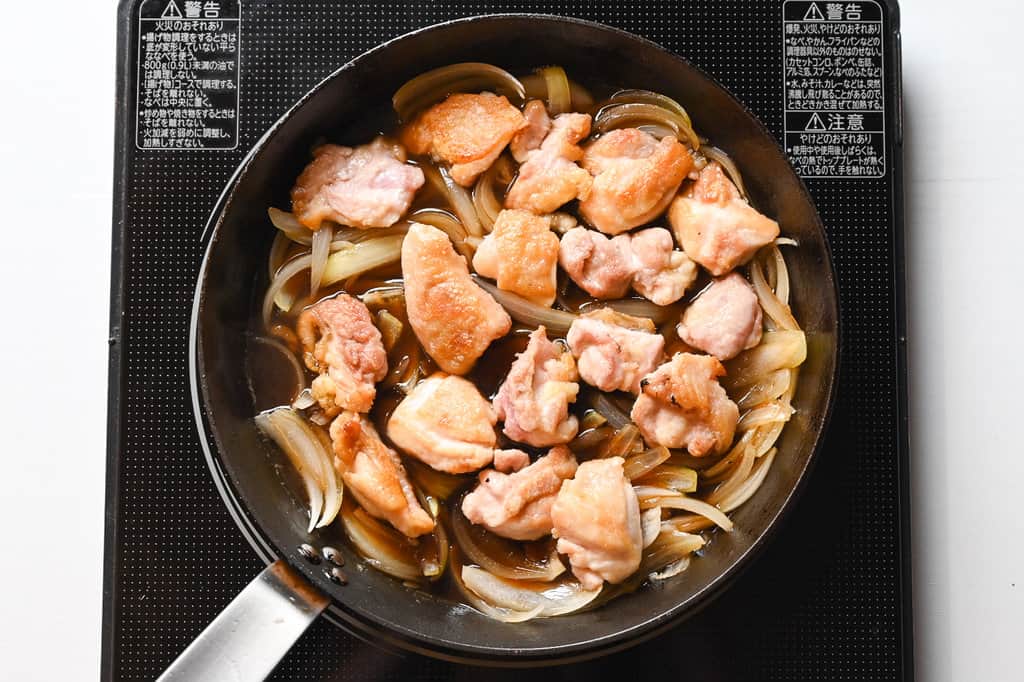
- Pour 2 tbsp Japanese soy sauce (koikuchi shoyu) around the pan and add the chicken pieces back in, evenly spaced apart.
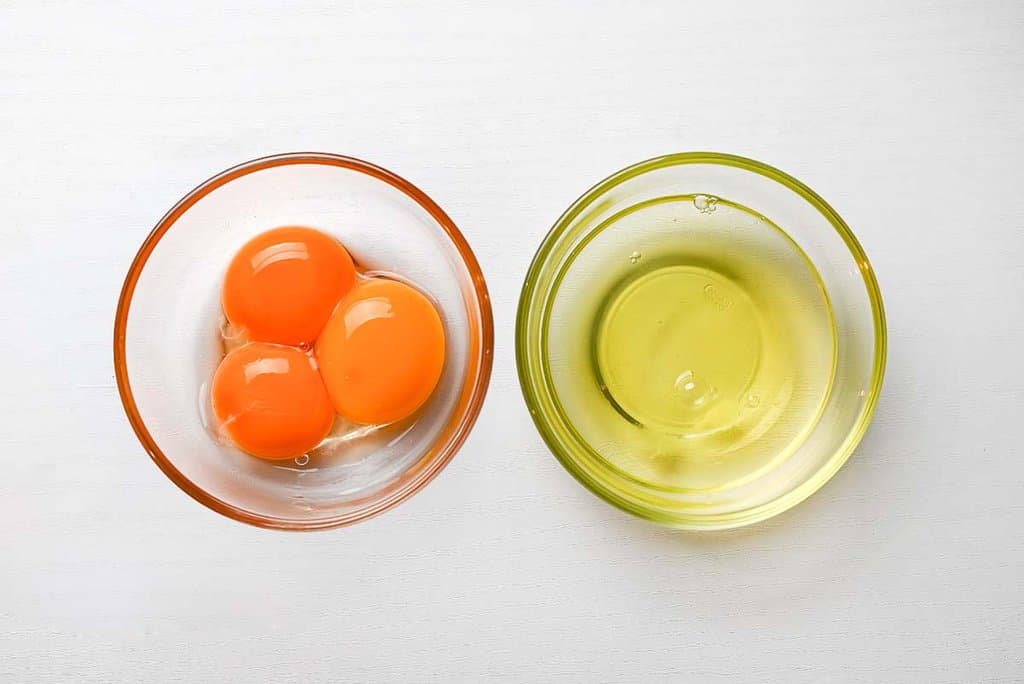
- Separate the whites and yolks of 3 eggs into two bowls.
- Whisk the egg whites and pour them around the pan. (Do not add the yolks yet.)
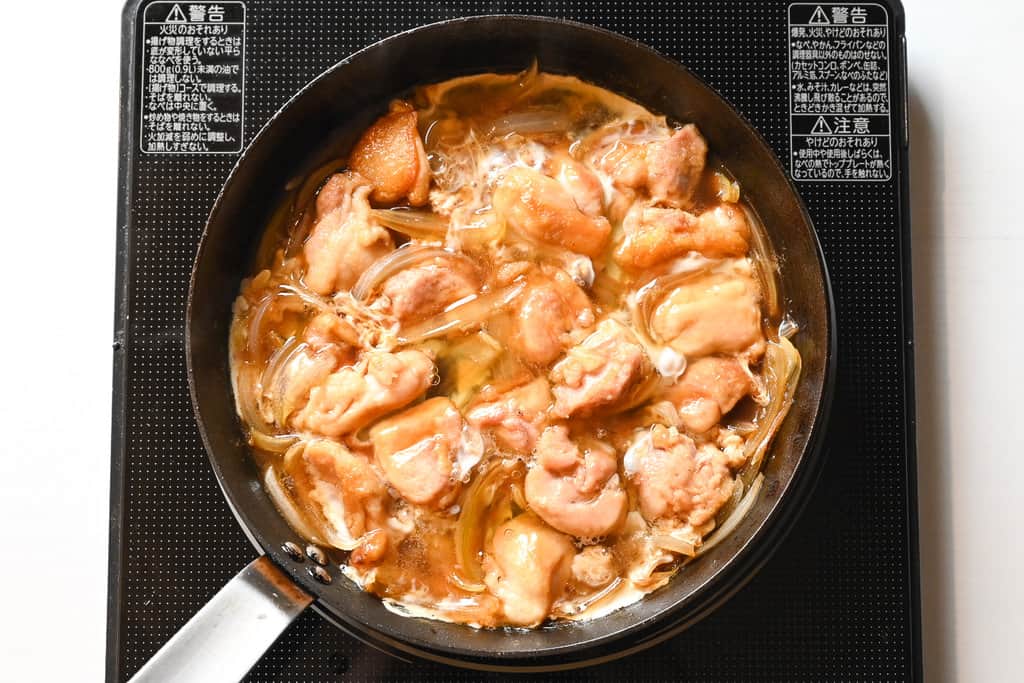
- Place a lid on top and cook for a few minutes, or until the whites are just starting to turn opaque.
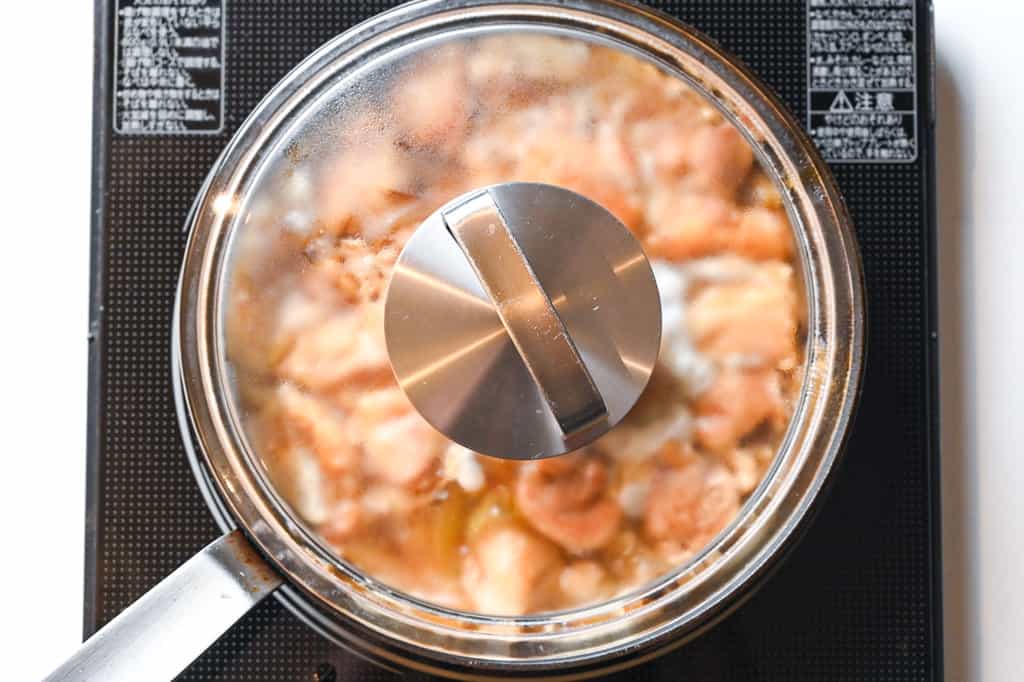
- Reduce the heat to the lowest setting and remove the lid. Whisk the egg yolks and pour them around the pan. Place the lid back on and continue to steam-cook until the eggs reach your preferred doneness. (Authentic oyakodon should have eggs that are only just cooked, slightly runny yolks are recommended.)
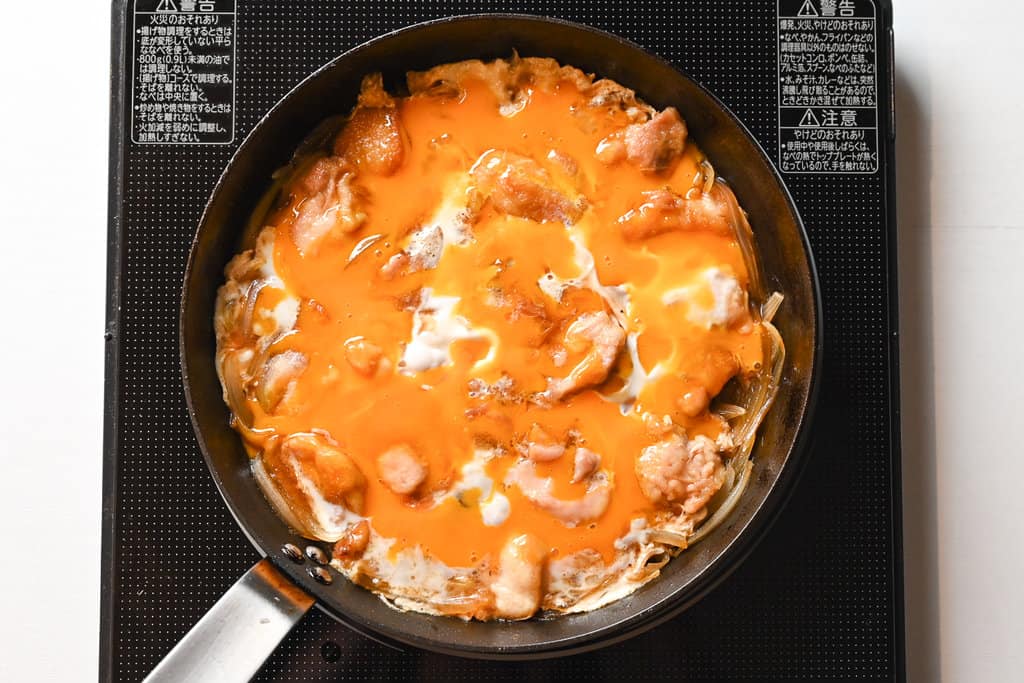
- Use a spatula to divide the egg into pieces that will fit on top of your serving bowls. Dish up 2 portions cooked Japanese short-grain rice, then use a spatula or large serving spoon to scoop the egg and chicken mixture onto the rice.
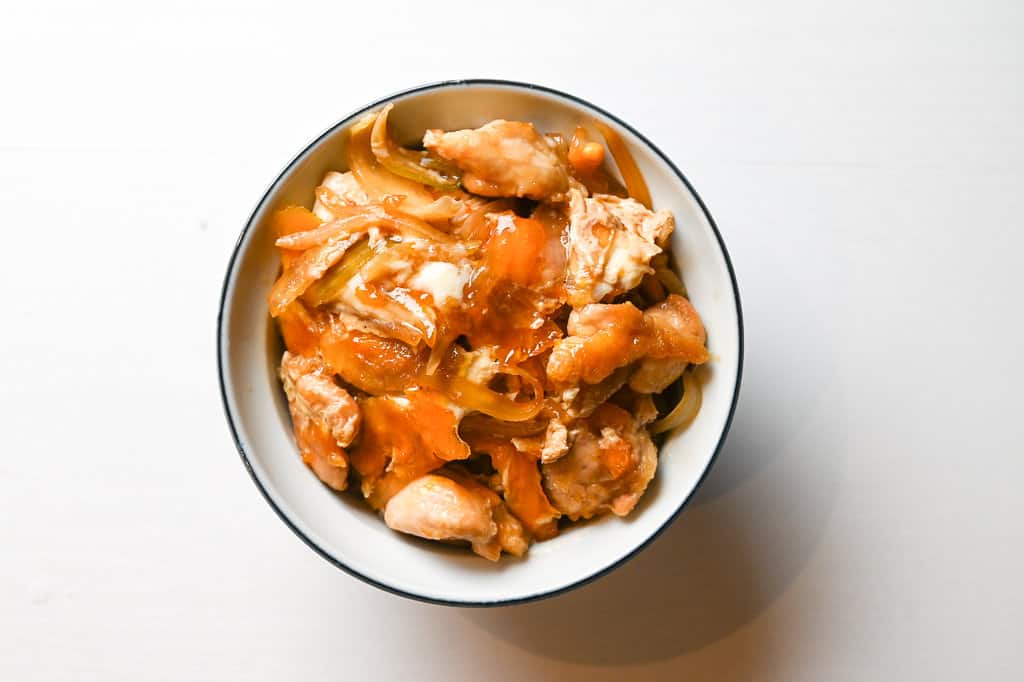
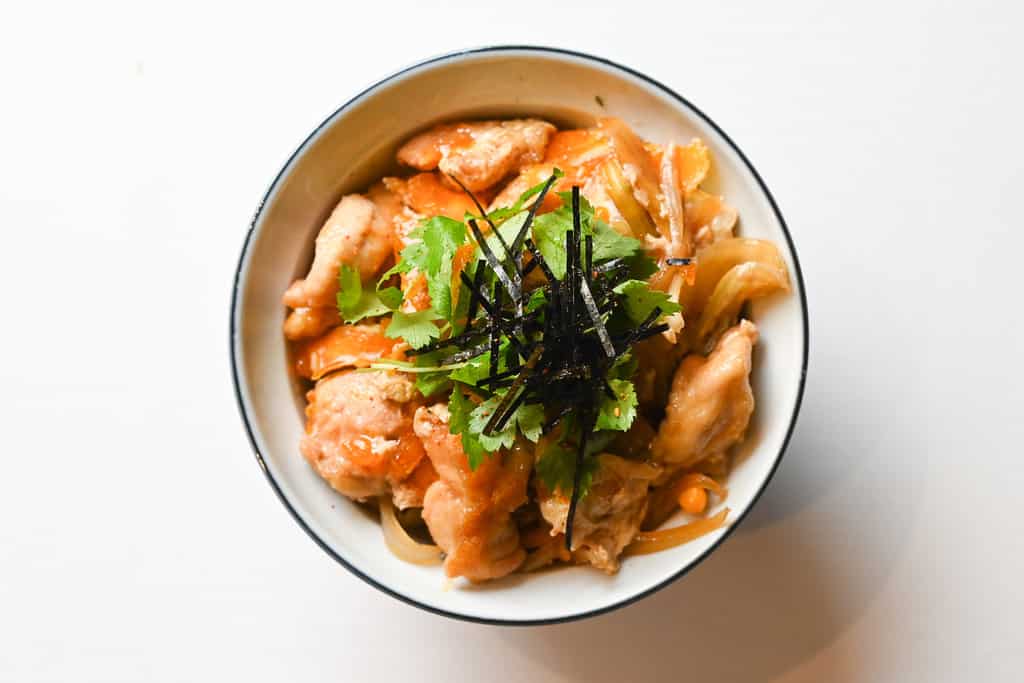
- Drizzle any leftover sauce in the pan evenly over each portion and garnish with kizami nori (shredded nori) and/or Japanese wild parsley (mitsuba). Enjoy!
Notes
Chicken bouillon powder varies by brand. My brand is 1 tsp per 200 ml, so check the label and if yours is more concentrated (e.g., 1 tsp per 300 ml or 1 cup), use touch less to avoid oversalting.
Regular Japanese soy sauce is the default, but you can use usukuchi (Japanese light soy sauce) for a paler, refined look. Use slightly less because it's saltier.
Taste the sauce before adding eggs and fine-tune with a tiny splash of soy/sugar/water as needed. It should taste a touch rich because it will be softened by eggs and plain rice.
Whites need more heat/time to firm (around 82℃ (180°F)), while yolks thicken sooner (around 70℃ (158°F)), which is why the two-stage approach is consistent.
If the eggs firm up too much, spoon a little sauce over the top and serve immediately.
This recipe makes 2 standard donburi servings or 4 mini-don (side) servings.
Storing leftover is generally not recommended.
Meal prep: Prep the chicken/onion and measure seasonings ahead, or make the chicken-and-onion base in advance and add eggs before eating for the signature silky finish.
Serving ideas: Traditional Miso Soup, Japanese Cucumber Salad, Cucumber Tsukemono, Pickled Napa Cabbage
Full Recipe QR Code↑↑