Chikuzenni (Japanese Simmered Chicken and Vegetables)
Ingredients
- 3 dried shiitake mushrooms soaking liquid needs to be kept
- 200 ml cold water
- 300 g boneless chicken thigh skin-on, cut into large bite-size pieces
- 100 g burdock root (gobo) scrubbed with a brush, not peeled, roughly cut
- 100 g lotus root (renkon) halved lengthwise, then roughly cut
- 100 g carrot roughly cut
- 200 g konjac (konnyaku) torn into bite-size pieces with a spoon
- 1 tbsp cooking oil neutral oil, plus a little more if the pan runs dry
- 350 ml dashi stock the shiitake soaking liquid counts toward this measure
- 2 tsp light brown sugar or regular sugar
- 4 tbsp sake
- 3 tbsp Japanese soy sauce (koikuchi shoyu)
- 3 tbsp mirin
- 10 snow peas strings pulled
Finishing condiments
- 1½ tbsp Japanese soy sauce (koikuchi shoyu)
- 2 tbsp mirin
- toasted sesame oil to taste
Instructions
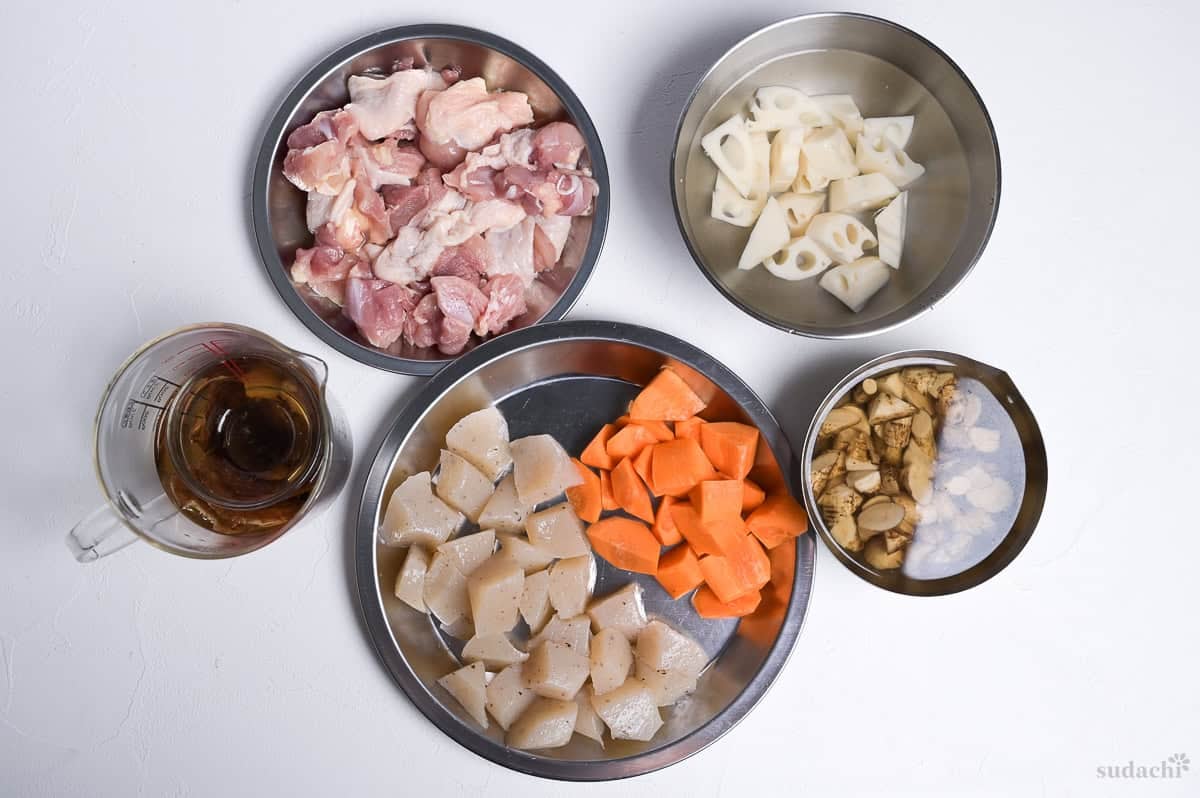
- Submerge 3 dried shiitake mushrooms in 200 ml cold water and leave to soak for at least 30 minutes (or in the fridge overnight if you're prepping). Cut 300 g boneless chicken thigh into bitesize pieces. Peel and roughly cut 100 g burdock root (gobo), 100 g lotus root (renkon), and 100 g carrot. Place the burdock and lotus roots in separate bowls of cold water, add a splash of vinegar to the lotus. Roughly tear 200 g konjac (konnyaku) into bitesize pieces so the surface is jagged rather than smooth.
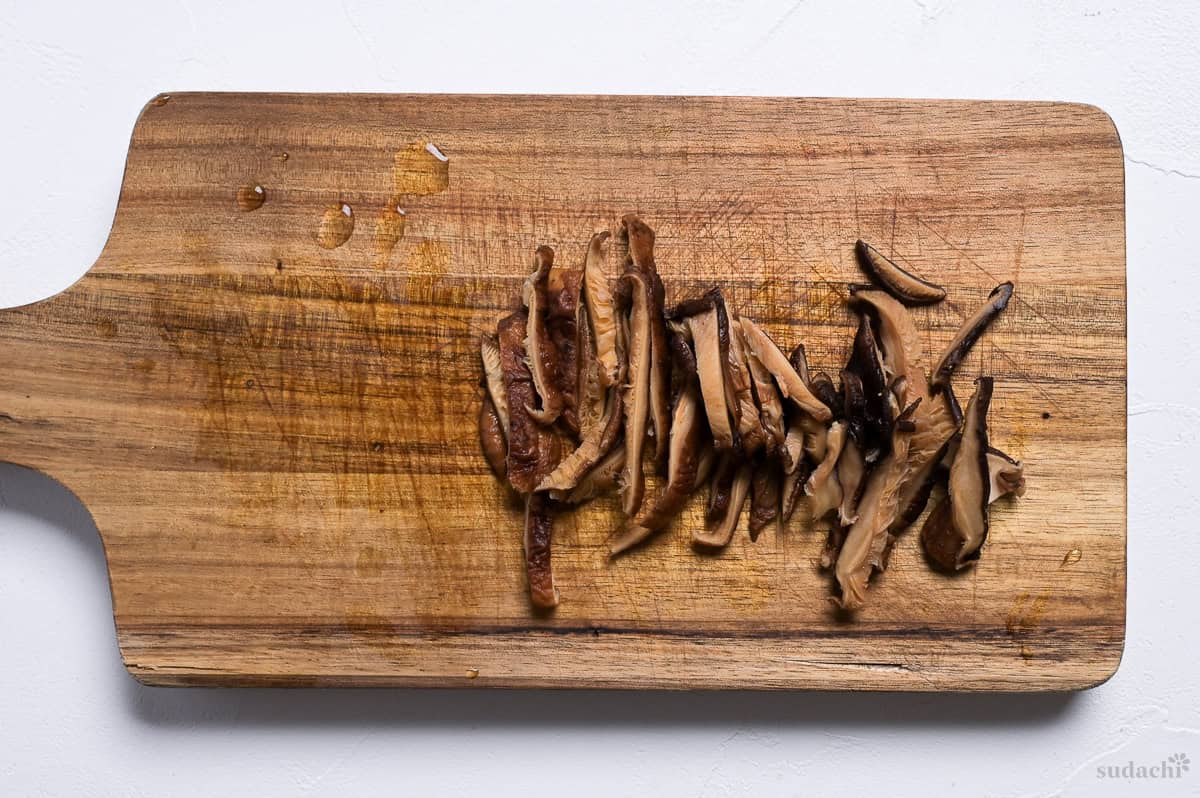
- Once the shiitake are rehydrated, trim off the stems and thinly sliced the caps. Save the soaking liquid, which is now shiitake dashi.
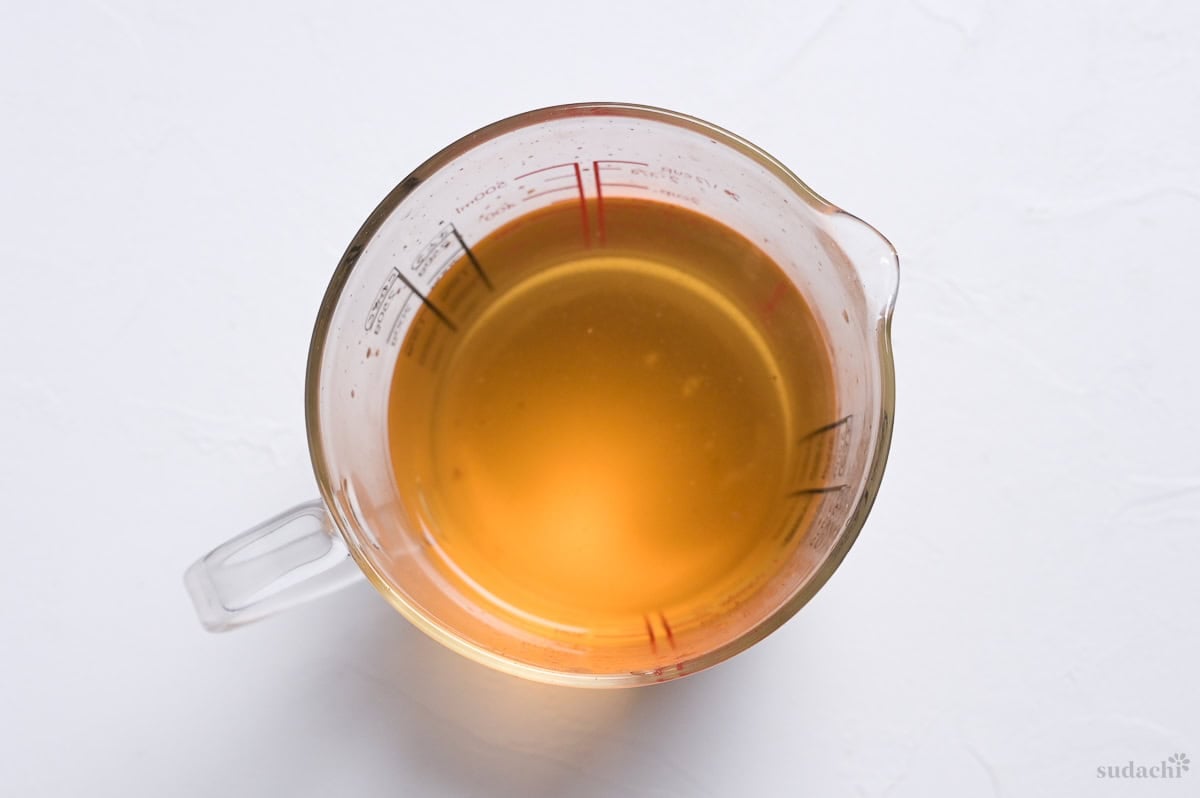
- Pour the shiitake dashi into a measuring jug and top it up with regular awase dashi until you have 350 ml dashi stock in total.
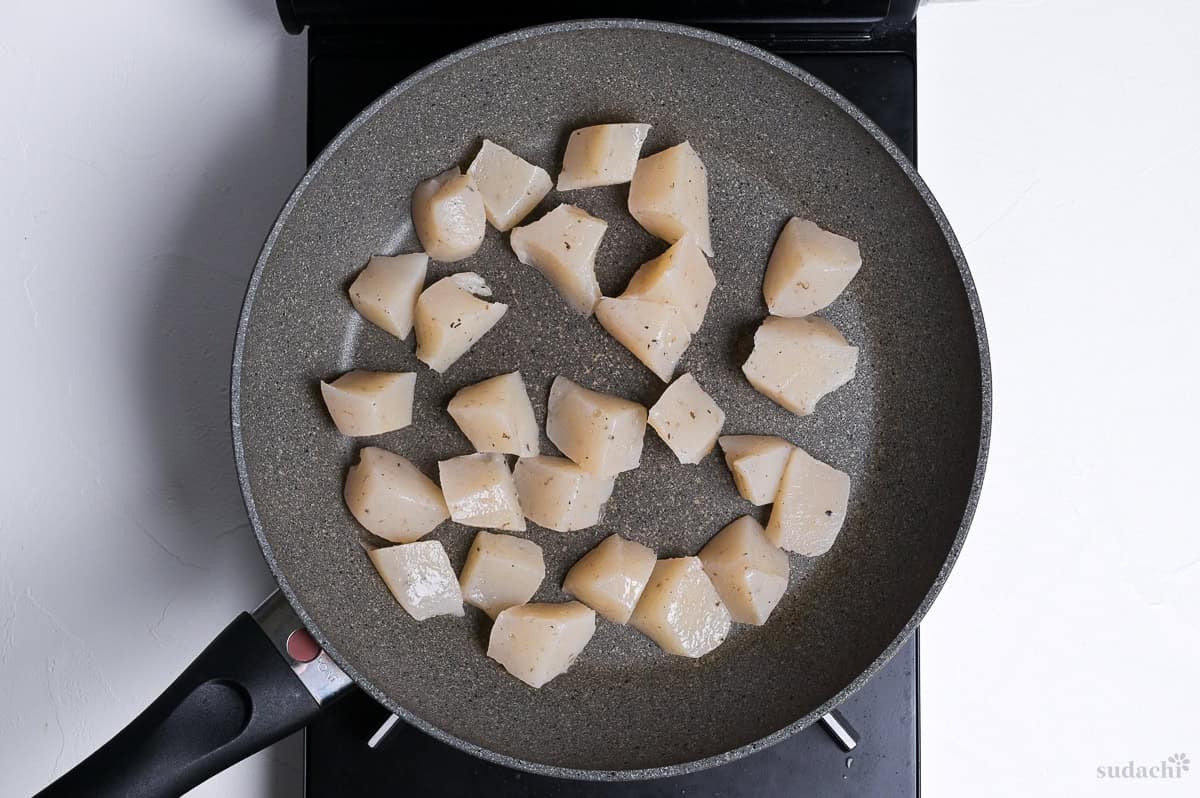
- Place the konnyaku in a single layer in a dry frying pan. Heat on medium and gently fry all sides until the water cooks off and the surface squeaks against the pan, then transfer to a plate and set aside for now.
- In the same pan, 1 tbsp cooking oil and arrange the chicken thigh in a single layer with the skin side facing down and fry until golden. It doesn't need to be cooked all the way through at this point.
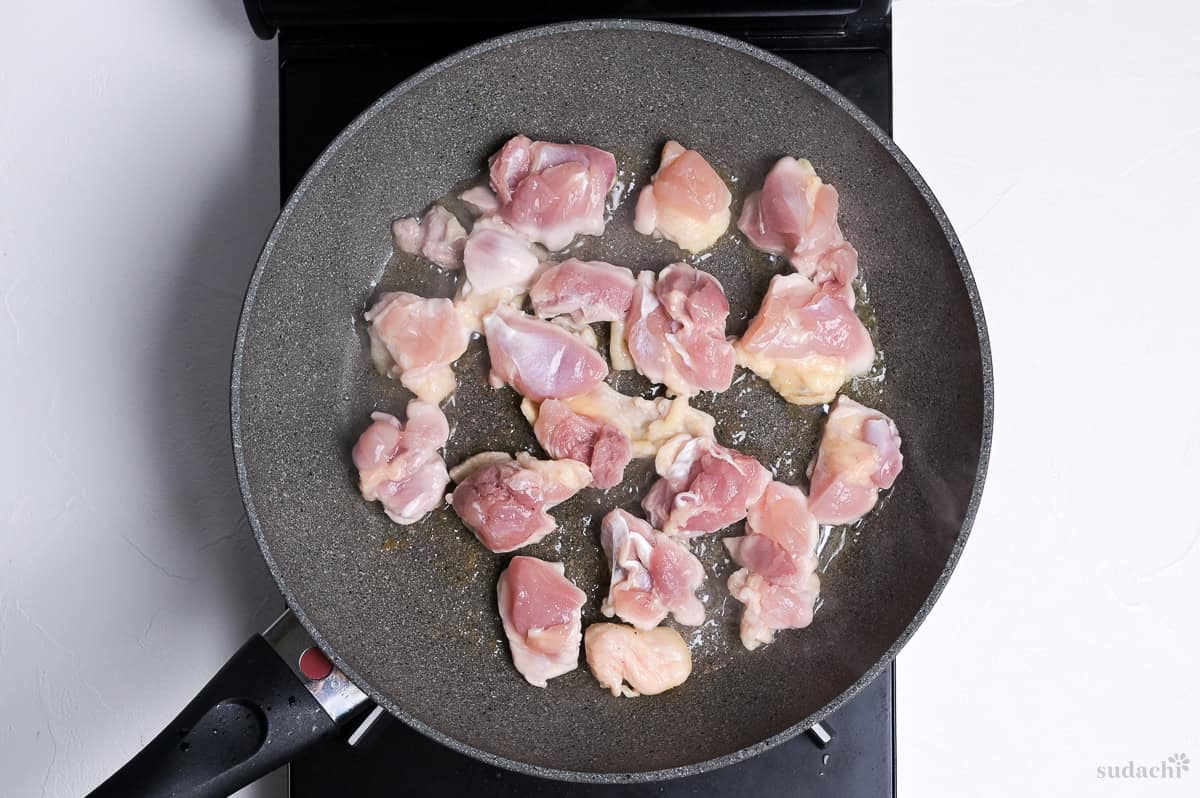
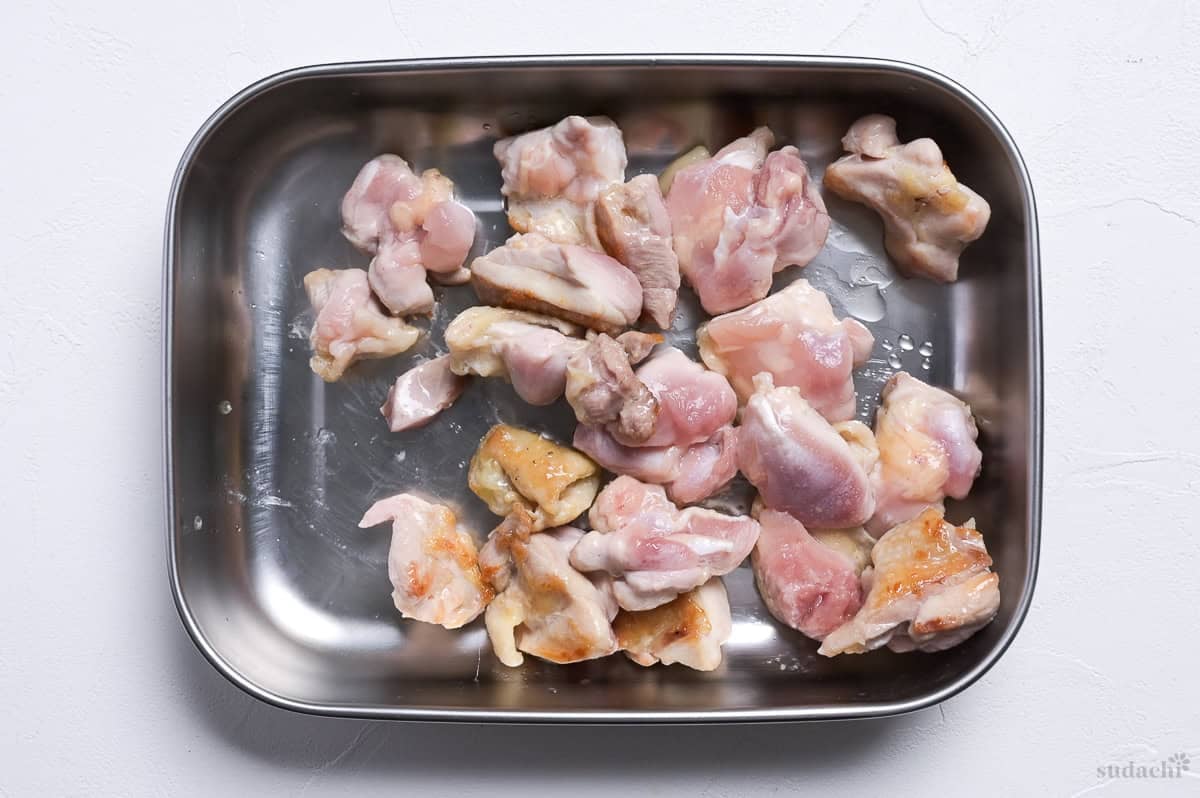
- Once the skin is crisp, transfer the partially cooked chicken pieces to a plate or container.
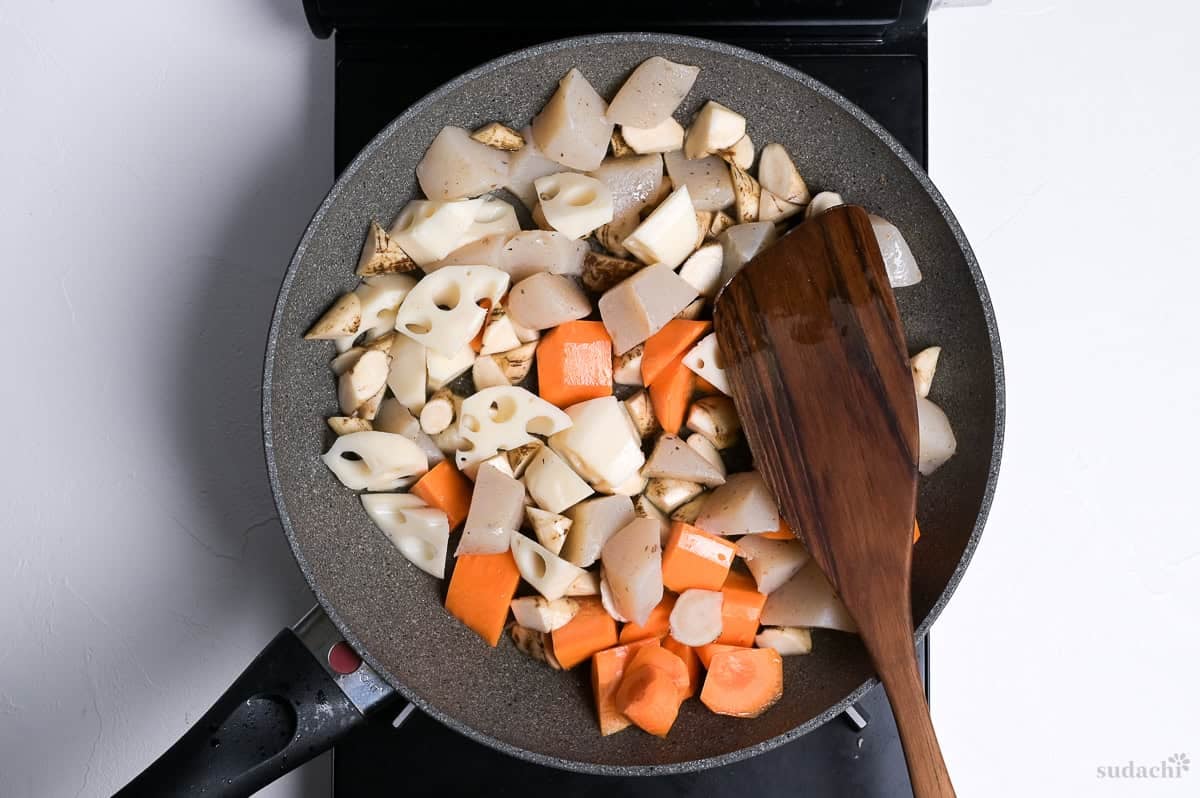
- Drain the vegetables and pat them dry thoroughly with kitchen paper. Place them into the same pan, adding a touch more oil if needed. Fry for a few minutes, stirring occasionally.
- Add the dashi and sliced rehydrated shiitake to the pan along with 2 tsp light brown sugar and 4 tbsp sake. Bring to a boil, and scoop any scum off the surface of the broth.
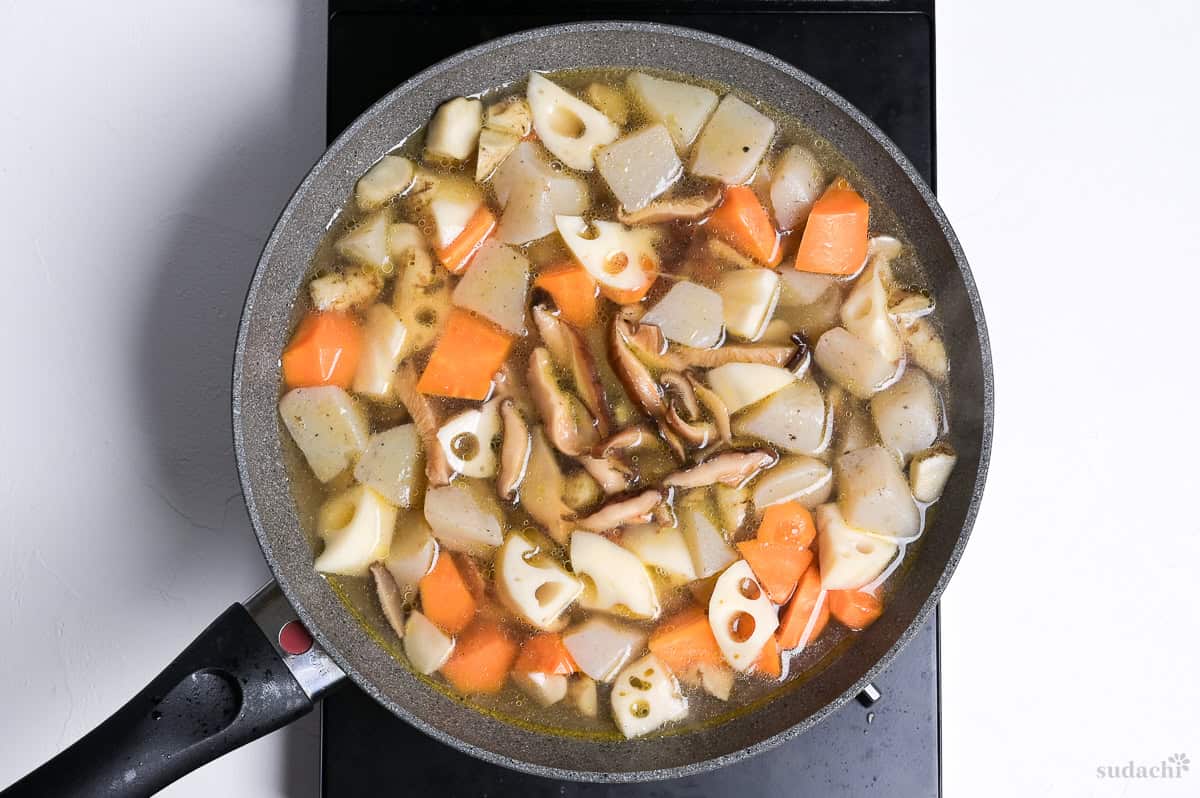
- Once it's boiling, reduce the heat to medium low and place a drop lid (or foil/baking paper) directly on top of the broth. Simmer until the liquid has reduced to half of the original volume, about 5-8 minutes.
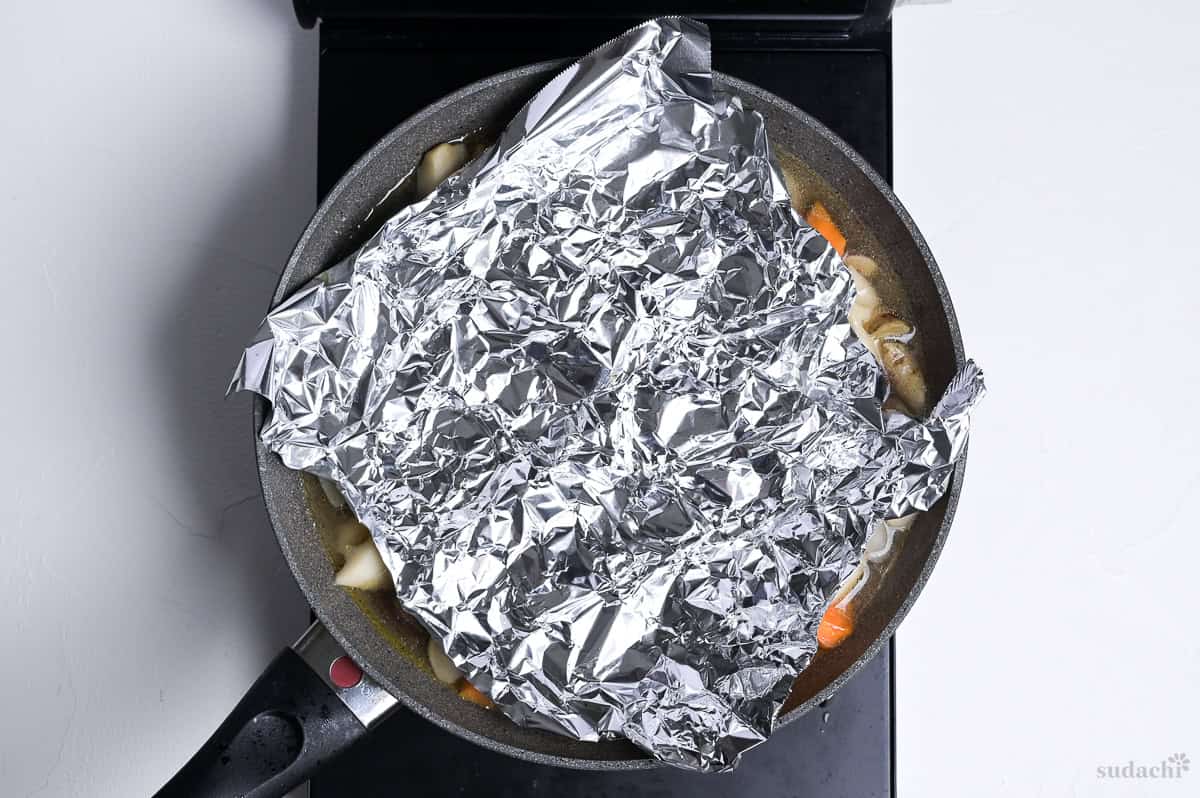
- Lift the drop lid and pour in 3 tbsp Japanese soy sauce (koikuchi shoyu) and 3 tbsp mirin. Avoid stirring here, instead, tilt the pan to distribute the sauces.
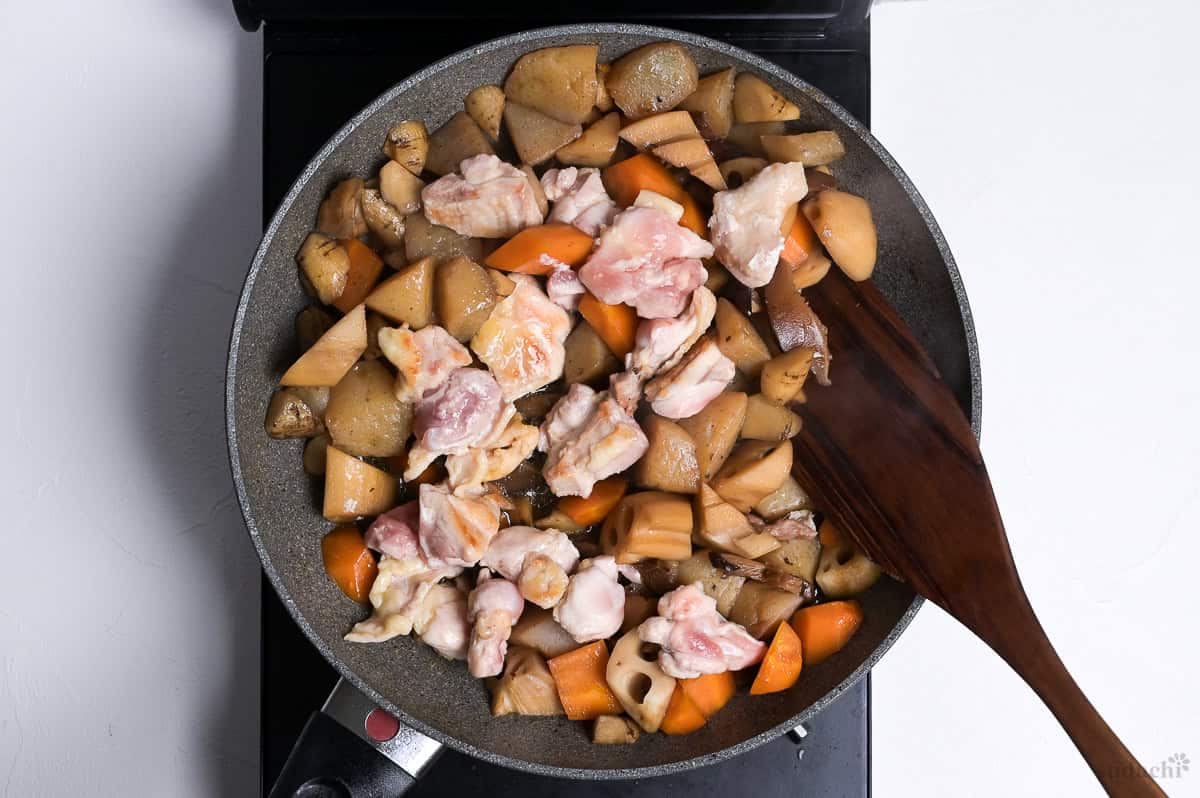
- Place the drop lid back on top, and continue to simmer until only a thin film of liquid covers the bottom of the pan. Add the chicken back in and place a lid on top. Steam fry for a few minutes until the chicken is cooked all the way through.
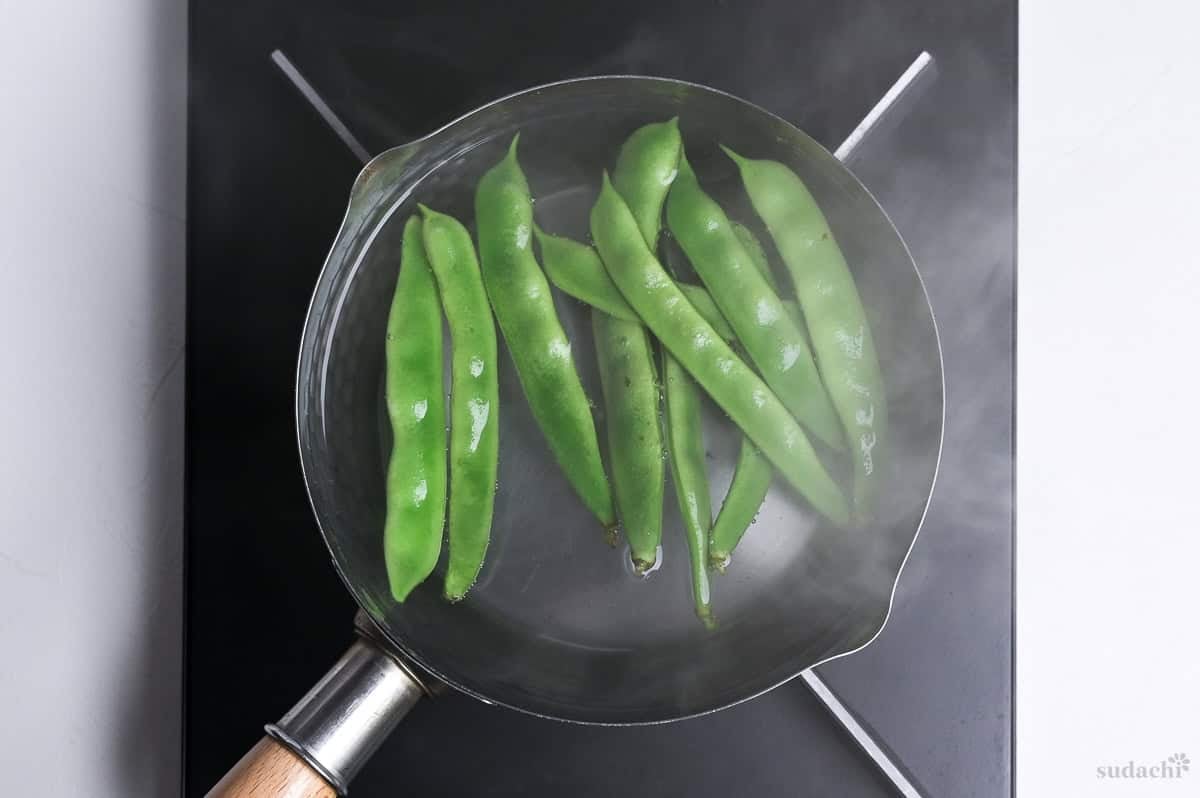
- Pour 1½ tbsp Japanese soy sauce (koikuchi shoyu) and 2 tbsp mirin around the pan and tilt to distribute. Turn off the heat and drizzle with toasted sesame oil.If you have time, let the chikuzenni rest for 30-60 minutes to let the flavors deepen (place in the fridge once it reaches room temperature). When you're ready to serve, reheat on the stove and blanch 10 snow peas in a separate pot of boiling water with a pinch of salt for 20-30 seconds.
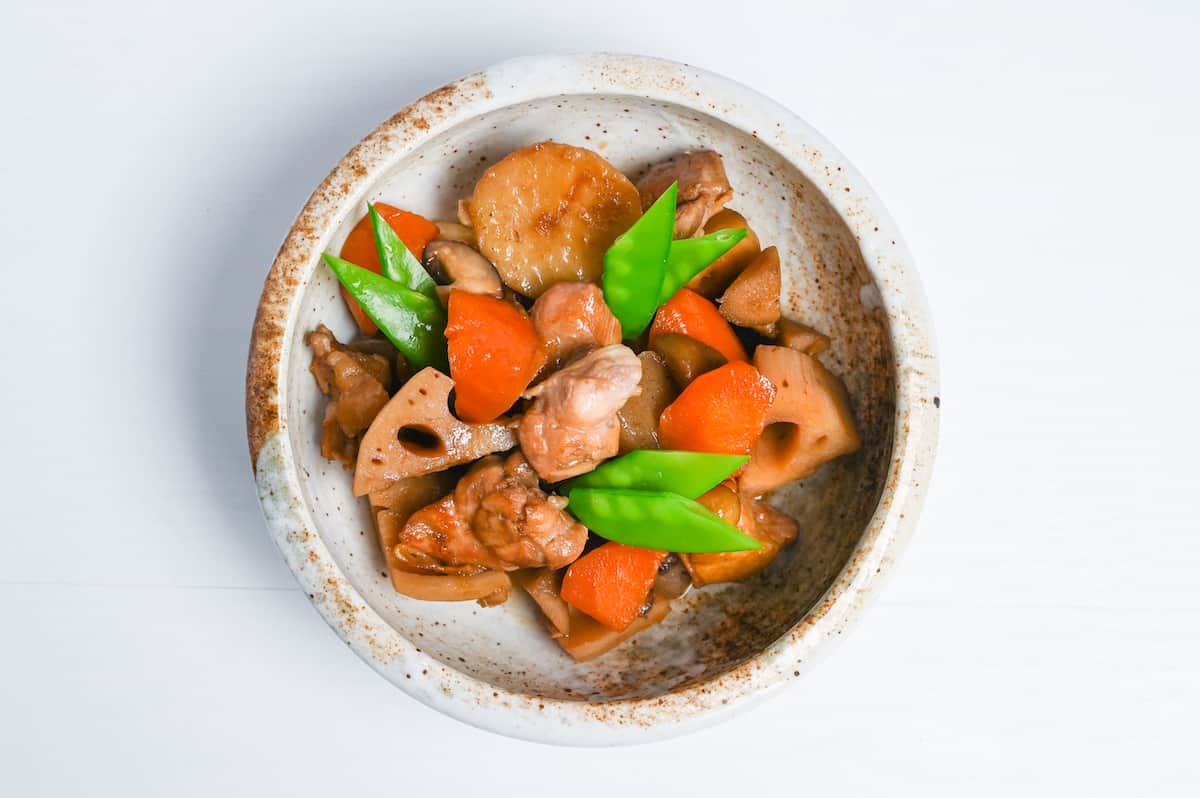
- Divide the chikuzenni between serving bowls. Slice the snow peas on the diagonal and scatter them over each bowl.
Notes
Never pour the shiitake water away: More of that savory depth sits in the bowl than in the caps. Topping the pot up with plain water instead leaves the whole thing tasting thin.
Pat every vegetable dry before it meets the oil: Water still clinging to the cut faces stops them browning and leaves them soggy. A colander alone is not enough. Use a towel.
Cut the burdock and lotus root smaller than the carrot: Dense roots soften and take seasoning slower. Matching pieces leave the carrot finished while the burdock is still woody and tasting of very little.
Chase the glaze, not the broth: You are finished when only a thin film is left on the base and the pieces look coated rather than swimming. Liquid still pooling around them means more time.
Tilt the pot rather than stirring it: Once the liquid is in, root vegetables break apart under a spoon. Running the liquid over them by tilting seasons everything without touching a single piece.
Go light with the toasted sesame oil: A heavy pour flattens the burdock and the shiitake you spent the whole cook building. A small drizzle is all this needs.
Full Recipe QR Code↑↑