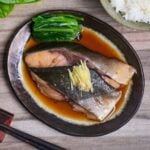
Sakana no Nitsuke (Japanese Simmered Fish Dish)
Ingredients
Fish Prep
- 200 g white fish fillets about 100 g each, thick and skin-on, such as cod, rockfish or sea bass
- ¼ tsp salt about 0.5 to 1% of the fish weight
- ice water as needed, for blanching the fish
- freshly boiled water as needed, for blanching the fish
Simmering Sauce
- 20 g ginger root
- 150 ml water
- 150 ml sake junmai, with no added salt preferred
- 3½ tbsp mirin
- 2 tbsp sugar
- 3 tbsp Japanese soy sauce (koikuchi shoyu)
To Serve
- 50 g green vegetable of your choice such as spinach, komatsuna or bok choy
Instructions
- Sprinkle ¼ tsp salt over both sides of 200 g white fish fillets and leave them for 10 minutes. While they sit, slice 20 g ginger root 2mm thick and set out a bowl of ice water.
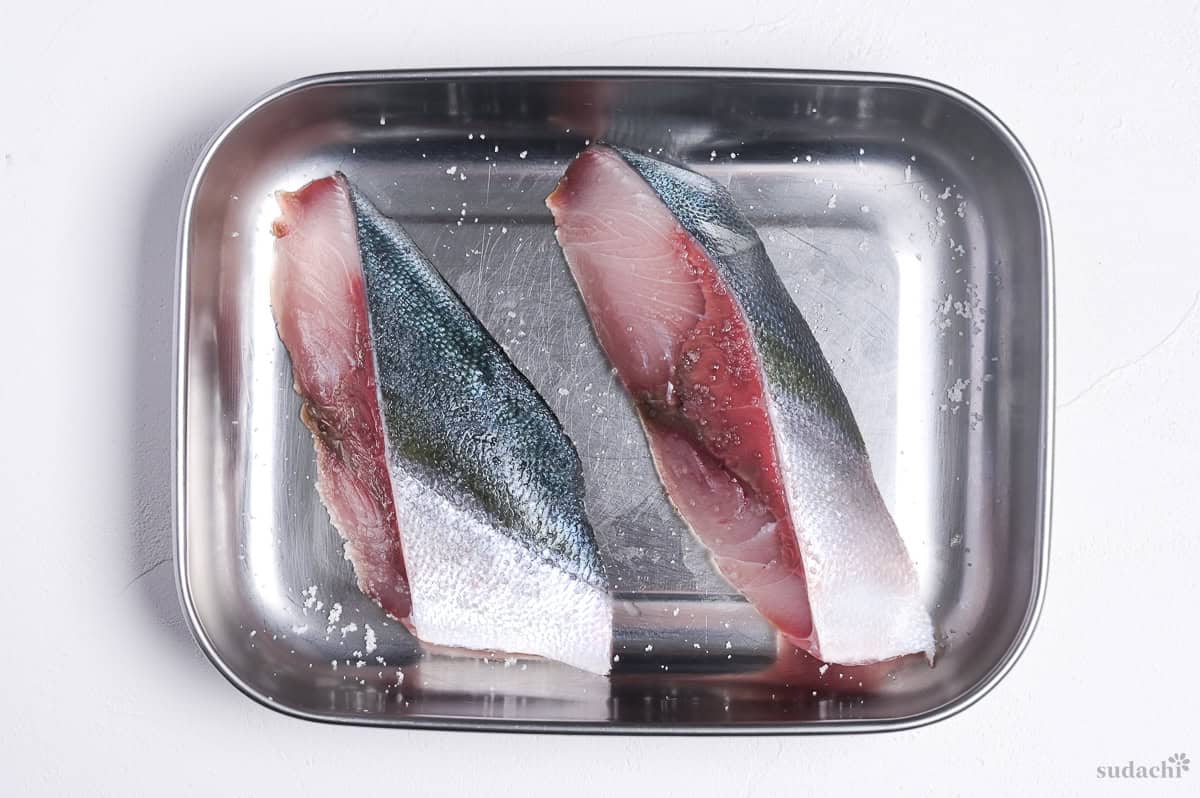
- After 10 minutes, blot off the liquid on the surface with paper towels until the fish is dry. Make a shallow cut in the thickest part of the side that will face up on the plate, and 1 cut on the underside (for a whole fish, score both sides).

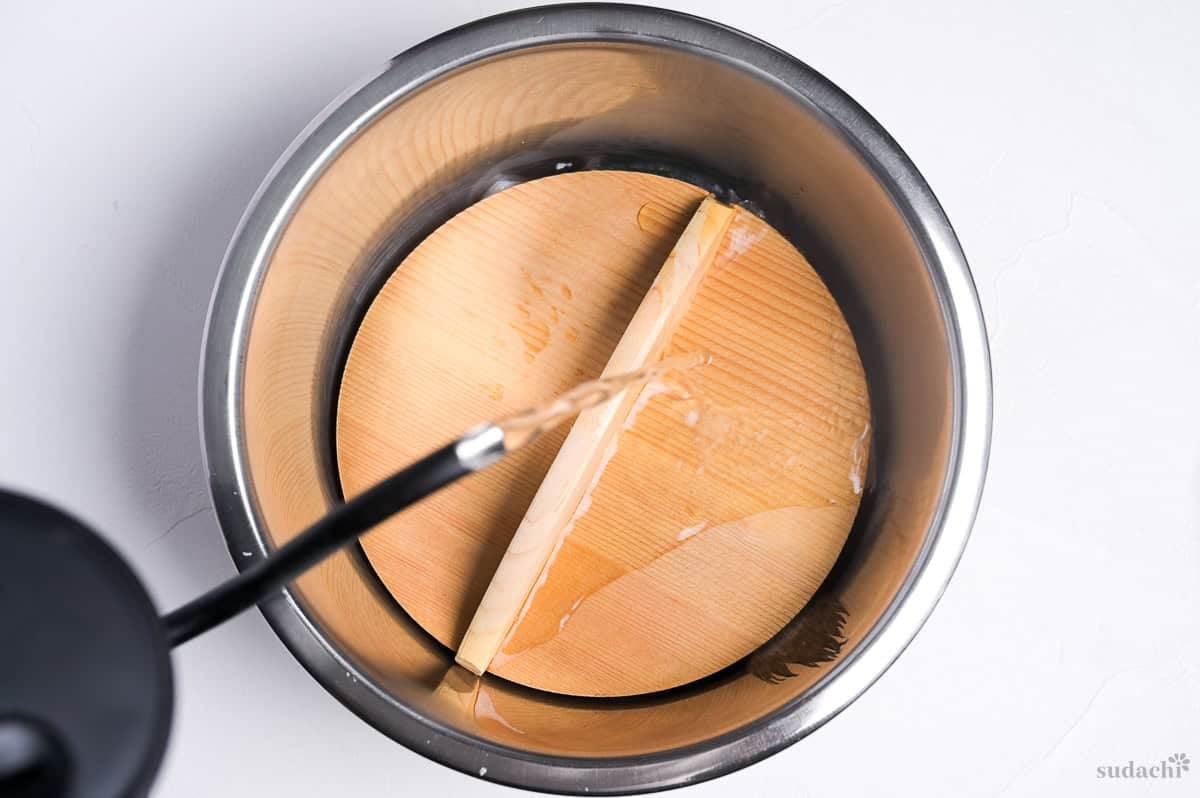
- Cool freshly boiled water to about 80°C (176°F) by adding about a quarter as much tap water. Put the fish in a bowl, cover it with a drop lid (or a plate), pour the hot water slowly over the lid and stir gently with chopsticks right away.
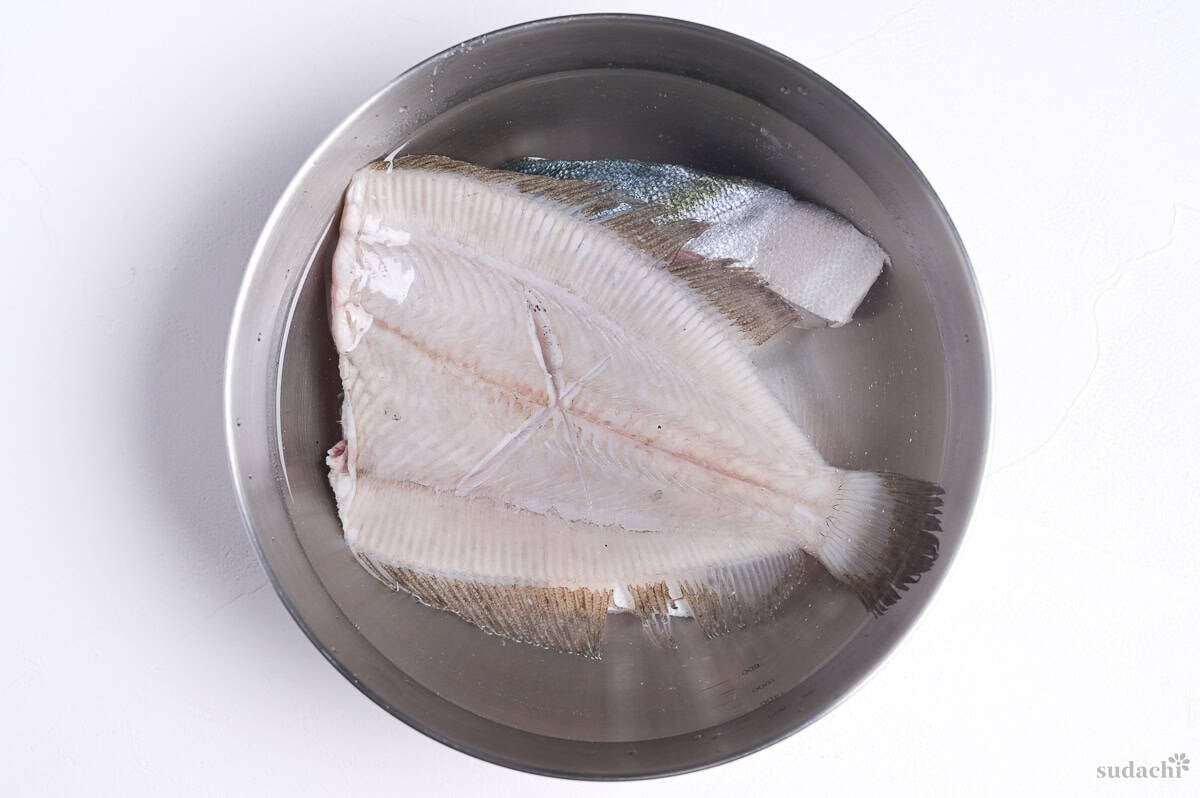
- When the skin contracts and the surface turns whitish, drain off the hot water at once and transfer the fish to the ice water. With a spoon, clean off leftover blood, slime and the white scum that has set on the surface, then dry the fish well with paper towels.
- Pour 150 ml water and 150 ml sake into a saucepan, add 3½ tbsp mirin, 2 tbsp sugar and the sliced ginger, and bring to a full boil over medium heat.
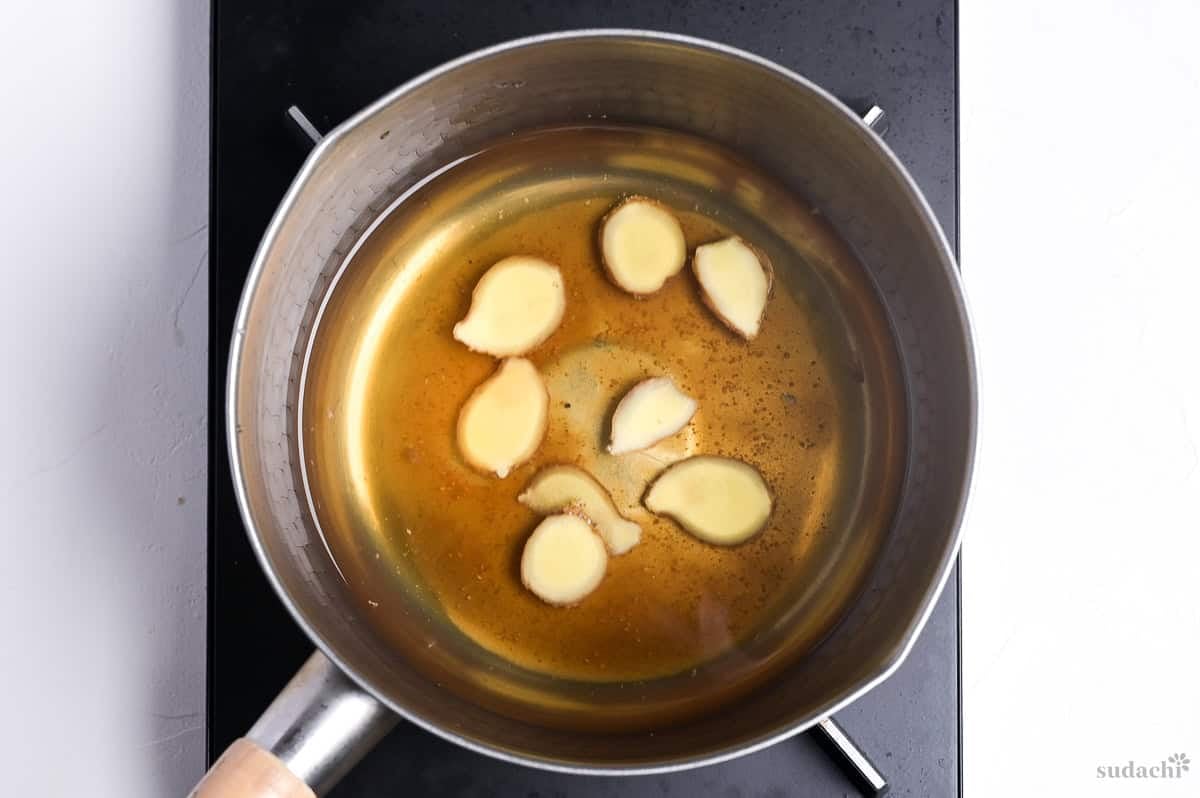
- Lower the fish gently into the boiling sauce, skin side up. Reduce the heat, cover with the drop lid and cook for 3 minutes.
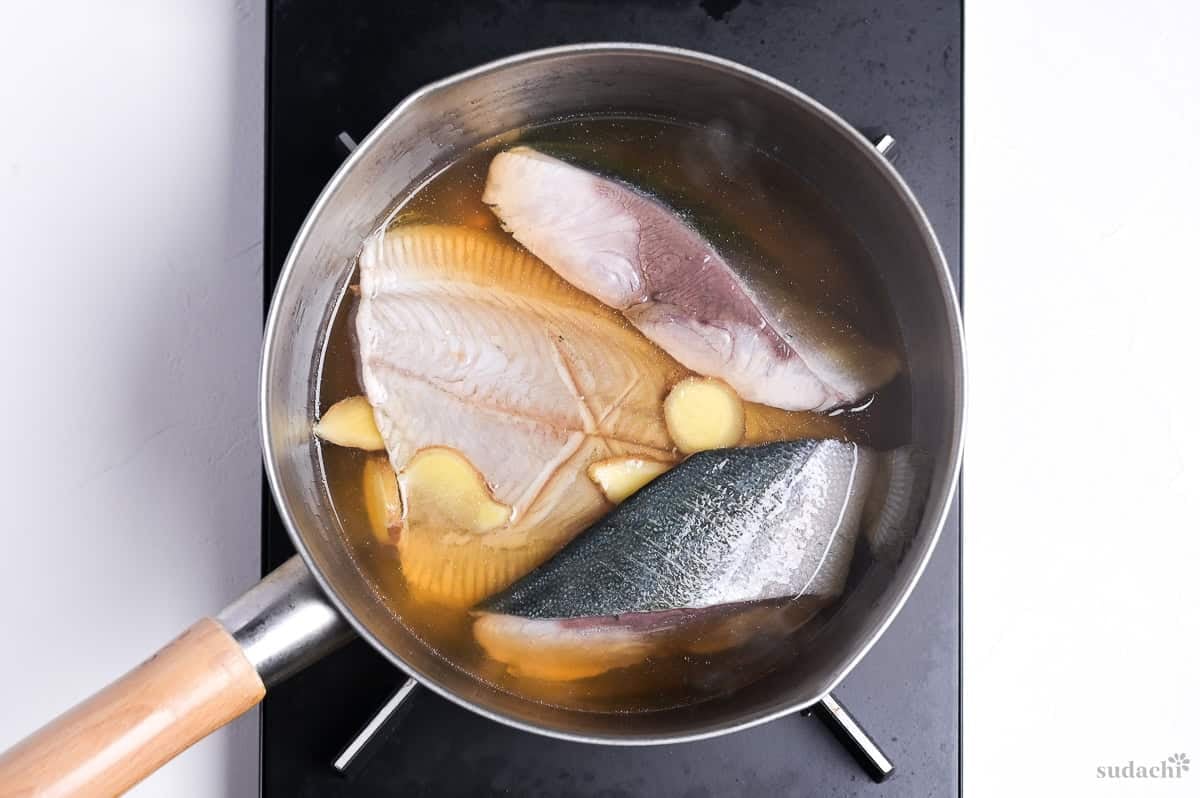
- Lift off the drop lid. Add 3 tbsp Japanese soy sauce (koikuchi shoyu) in 3 stages, spooning the sauce over the fish after each one and waiting until it has mixed in before the next.
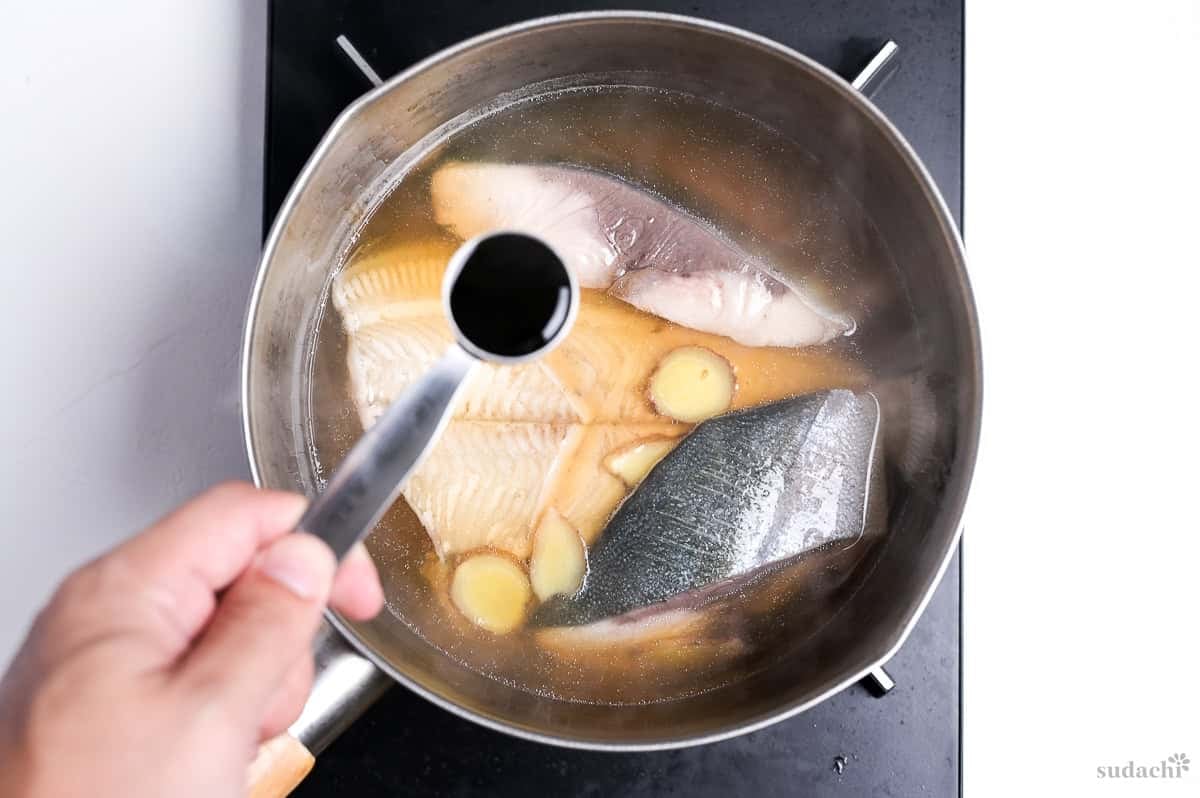
- Replace the drop lid and simmer over medium-low heat for 4 to 5 minutes (7 to 8 minutes in all for fillets, 12 to 15 for a whole fish). Meanwhile, bring water to a boil in a second pot with a little extra salt and cut 50 g green vegetable of your choice into 5 cm pieces.
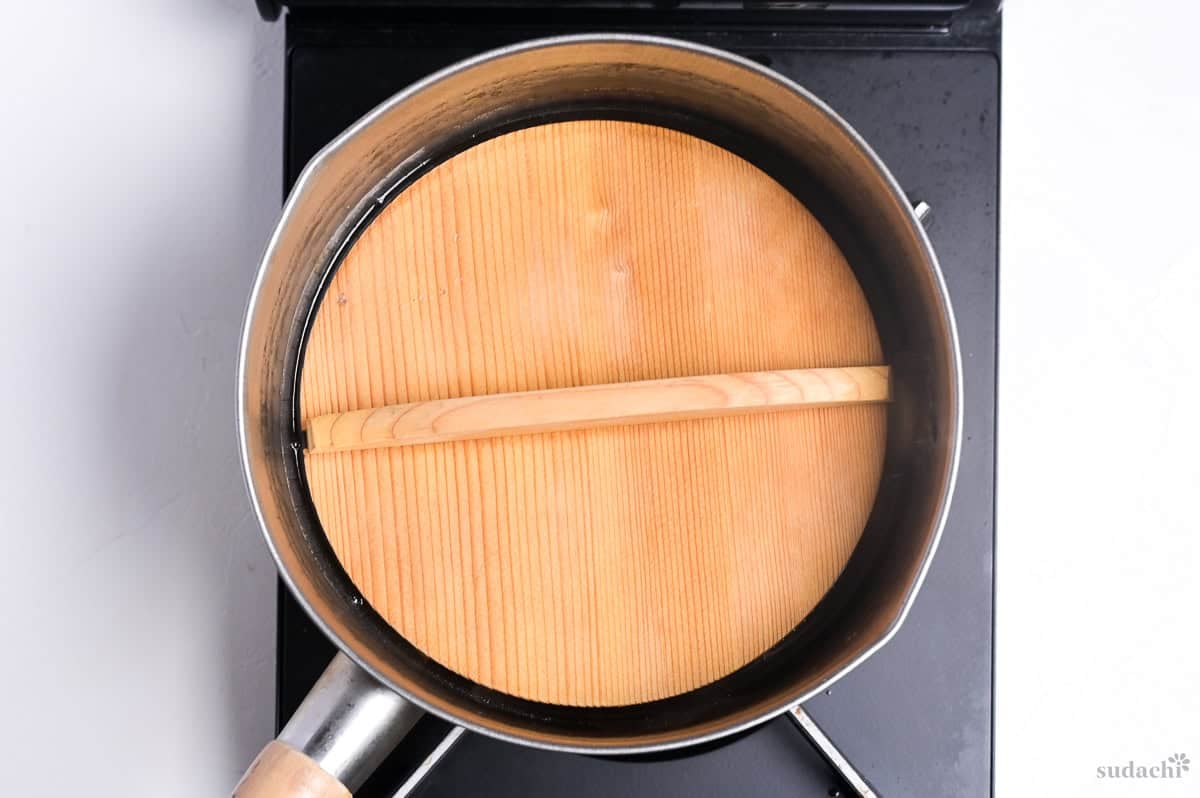
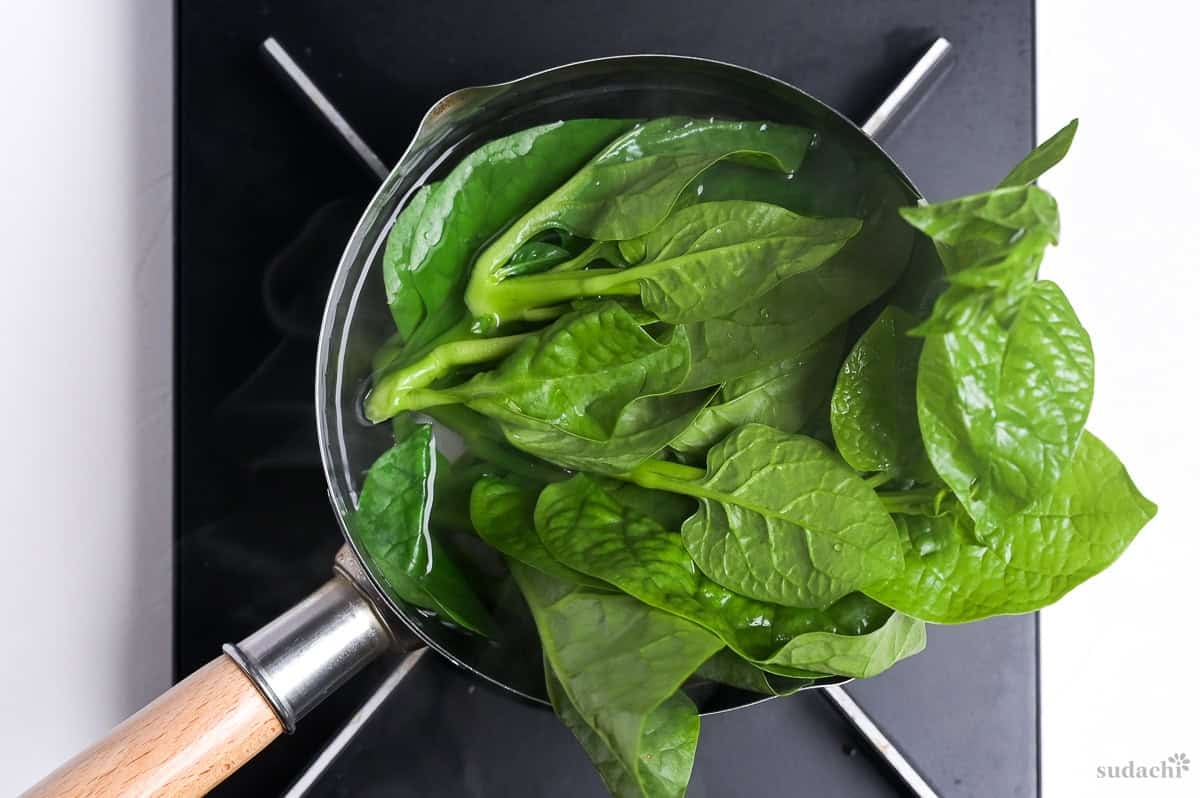
- Cook the green in the boiling water for 1 minute, then transfer it to cold water.
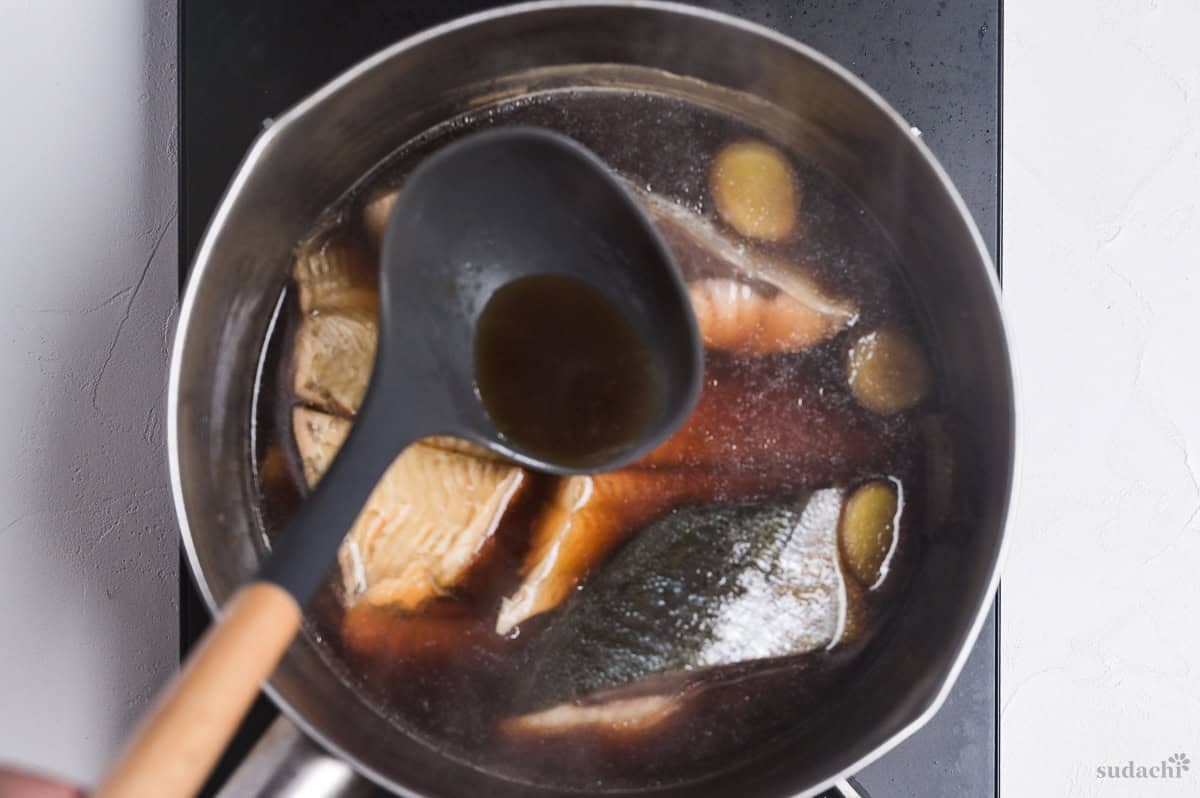
- Test the fish with a bamboo skewer in the thickest part. Once it slips in easily, remove the drop lid and boil the sauce down over medium-low heat for 5 to 7 minutes, spooning it over the fish all the while. As the sauce thickens and the bubbles get larger, lower the heat.
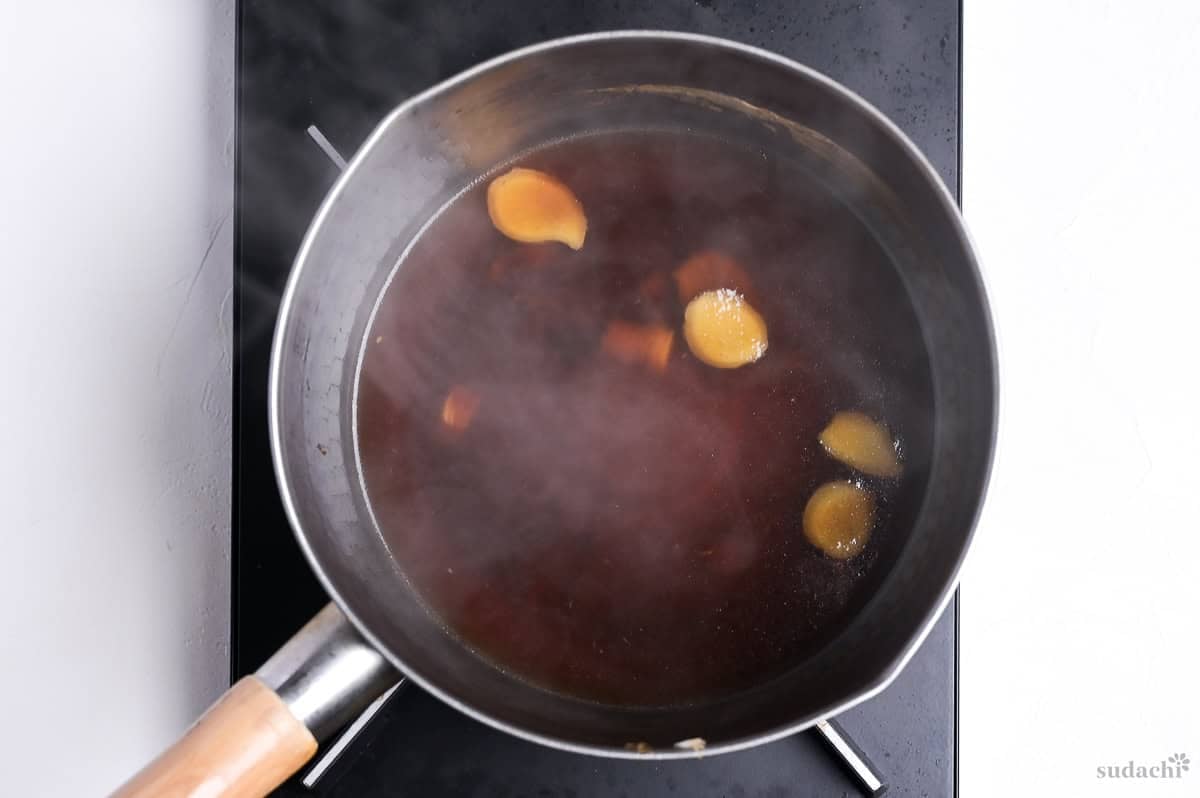
- Turn off the heat when about ⅓ of the starting sauce is left, the bubbles change and the sauce turns glossy with a little body. Taste it, and if it needs more seasoning, add soy sauce a little at a time.
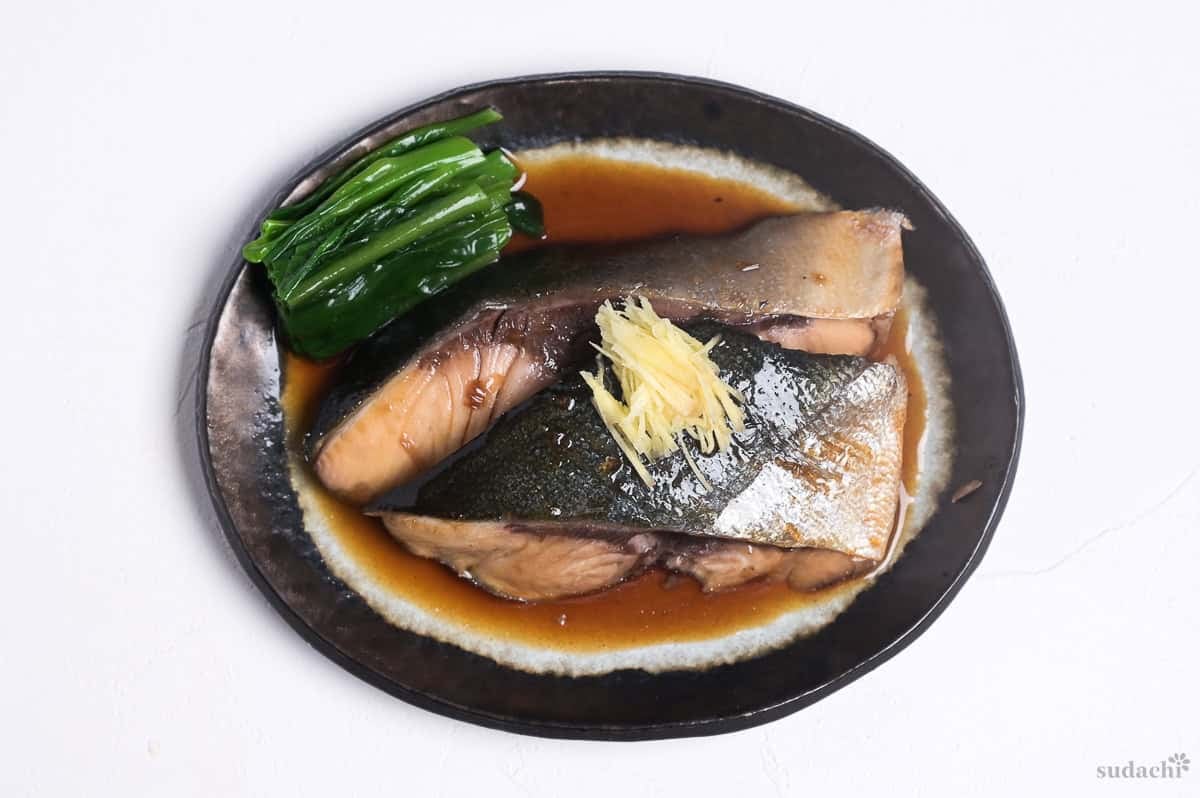
- Transfer the fish to plates, top it with the ginger and finish with a few spoonfuls of the remaining sauce. Squeeze the greens dry, arrange them beside the fish and serve at once. Enjoy!
Notes
Keep every prep step: Skip the salting or the blanching and the fishy smell stays in the sauce, where the simmering pot can hardly touch it. I used to leave out some of the prep. These days every step stays in.
Never turn the fish: Flipping it tears the underside, which is already cooked. Move it to the plate only once the boil has subsided, too.
Use a pan the fish nearly fills: The recipe makes very little sauce, and in a wide pan it never reaches the top of the fish. I make this in a 20 cm stainless steel saucepan.
Stop when the sauce has a little body: A thin, runny sauce slides off the fish and off the rice. Reduce it too far and it turns salty and scorches easily. A little body is what suits plain white rice.
Adjust with soy sauce only once the heat is off: The further the sauce reduces, the saltier it gets. Soy sauce added partway through ends up too salty by the time the reduction is done.
If you reduce the sauce too far: Loosen a salty, overreduced sauce with a little water, boil it again and reduce it once more. Stop short of thick.
Some fish melt in the pot: I once made nitsuke with aburakarei, a fatty flatfish from my local market, and the flesh dissolved into the sauce. Avoid very fatty fish with soft flesh. Arrowtooth flounder, sold in North America, also falls apart as it simmers.
Doneness for a whole fish: It is cooked when the pectoral fins stand upright, the flesh inside the cuts has turned white and a bamboo skewer slips easily into the thickest part. If the flesh near the bone is still translucent, give it more time.
If all you have is cooking sake: Cooking sake sold with salt in it turns saltier as the sauce reduces, so use a little less soy sauce.
If the fish is done before the sauce: Move the fish to the plates first, then reduce the sauce on its own until it has a little body and spoon it over.
If you use bok choy: Put the stems in first and add the leaves after about 30 seconds, so the thick stems cook through in time.
Full Recipe QR Code↑↑