Pan Fried Japanese Teriyaki Salmon
Ingredients
- 100 g Oriental spinach or baby spinach
- 100 g asparagus pencil asparagus, or green beans
- 1 tbsp unsalted butter
- salt and pepper
- 1 ½ tbsp Japanese soy sauce (koikuchi shoyu)
- 1 ½ tbsp mirin
- 1 ½ tbsp sake
- 1 tsp sugar
- 2-4 salmon fillets skin-on, boneless, about 2 cm / ¾ in thick
- 1 tbsp potato starch (katakuriko) or cornstarch
- 1 tbsp cooking oil neutral
- 2 portions cooked Japanese short-grain rice or Calrose
- toasted white sesame seeds optional garnish
- finely chopped green onions optional garnish
Instructions
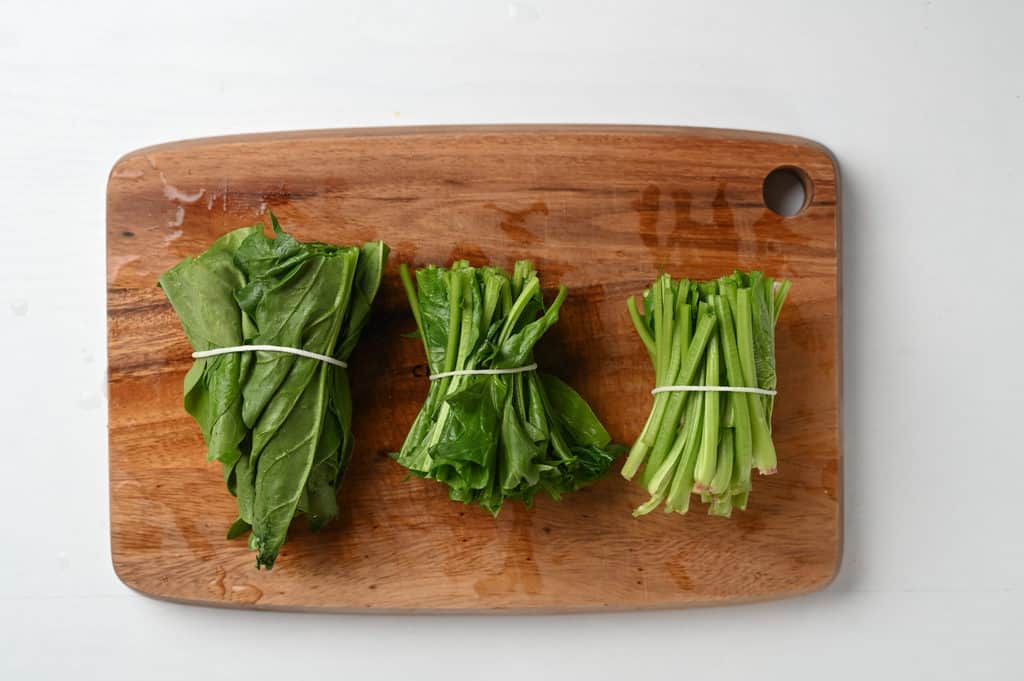
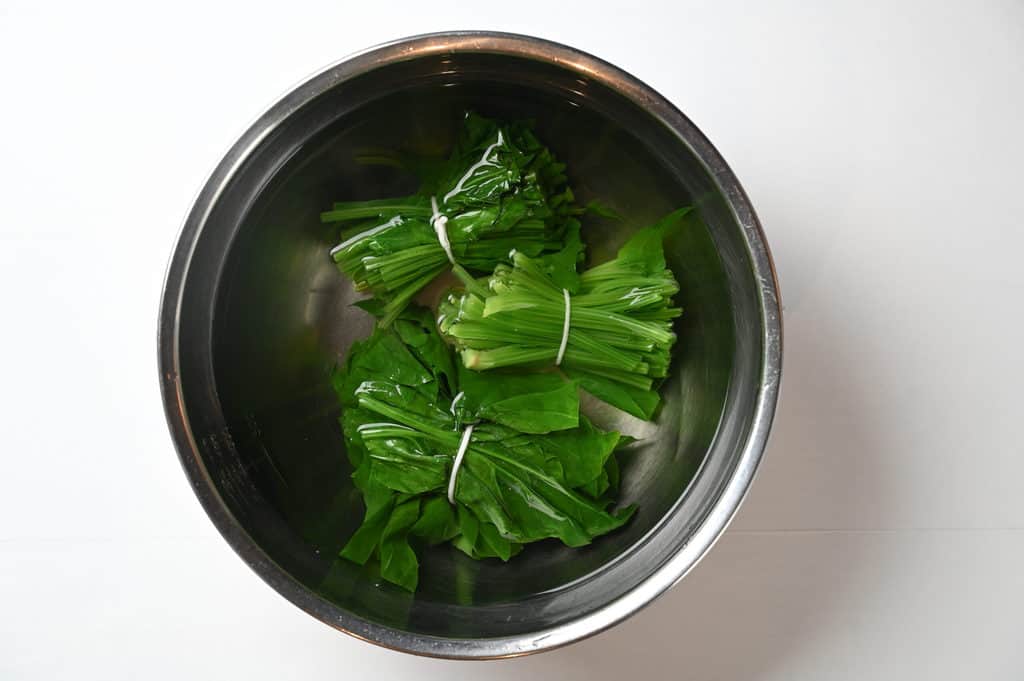
- Wash 100 g Oriental spinach with cold water and cut it into 3 parts, the stems, the middle and the leaves. Tie each bundle together with butcher's string. (If you're only using the spinach leaves you can skip these steps.)Bring a small pot of water to a boil and add a pinch of salt. Prepare a bowl of ice-cold water next to it.
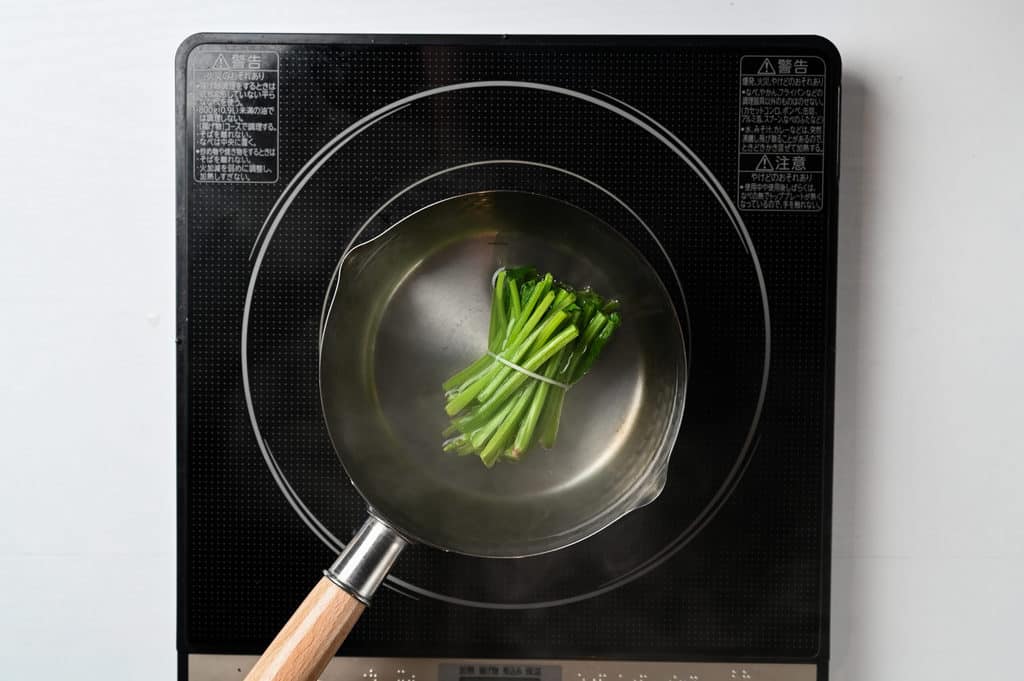
- Add the thickest spinach stems to the water and set a timer for 1 minute.
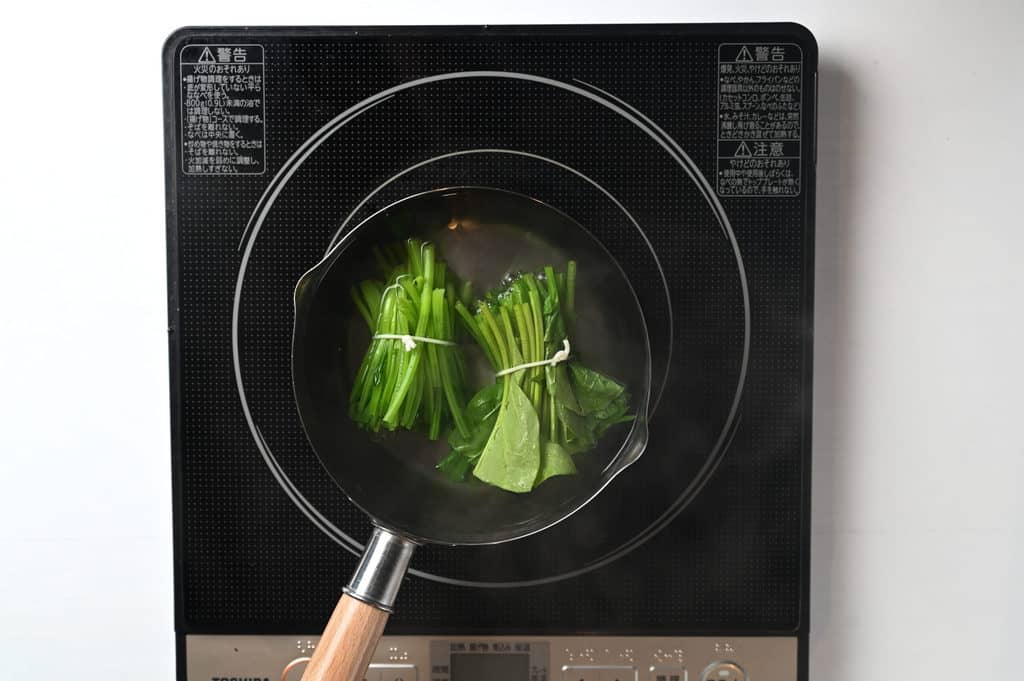
- After 1 minute, add the middle part and set a timer for 45 seconds.
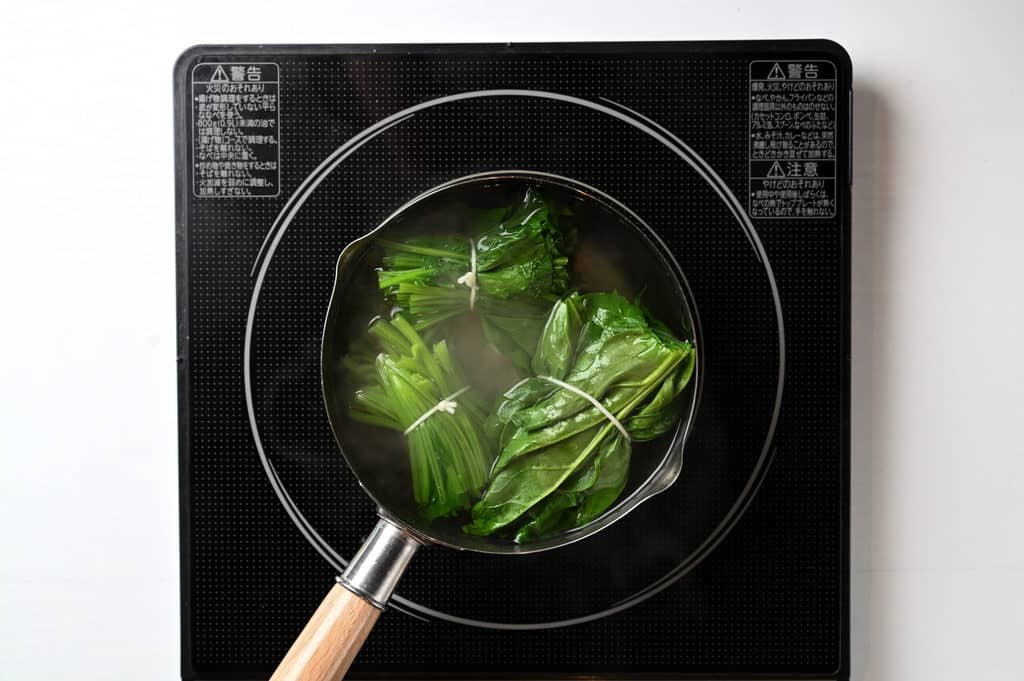
- After 45 seconds, add the leaves and blanch together for 30 seconds.
- Transfer each bundle to the ice cold water and cool for 1-2 minutes. Gently squeeze each bundle and place them on a few pieces of kitchen paper to absorb the excess.
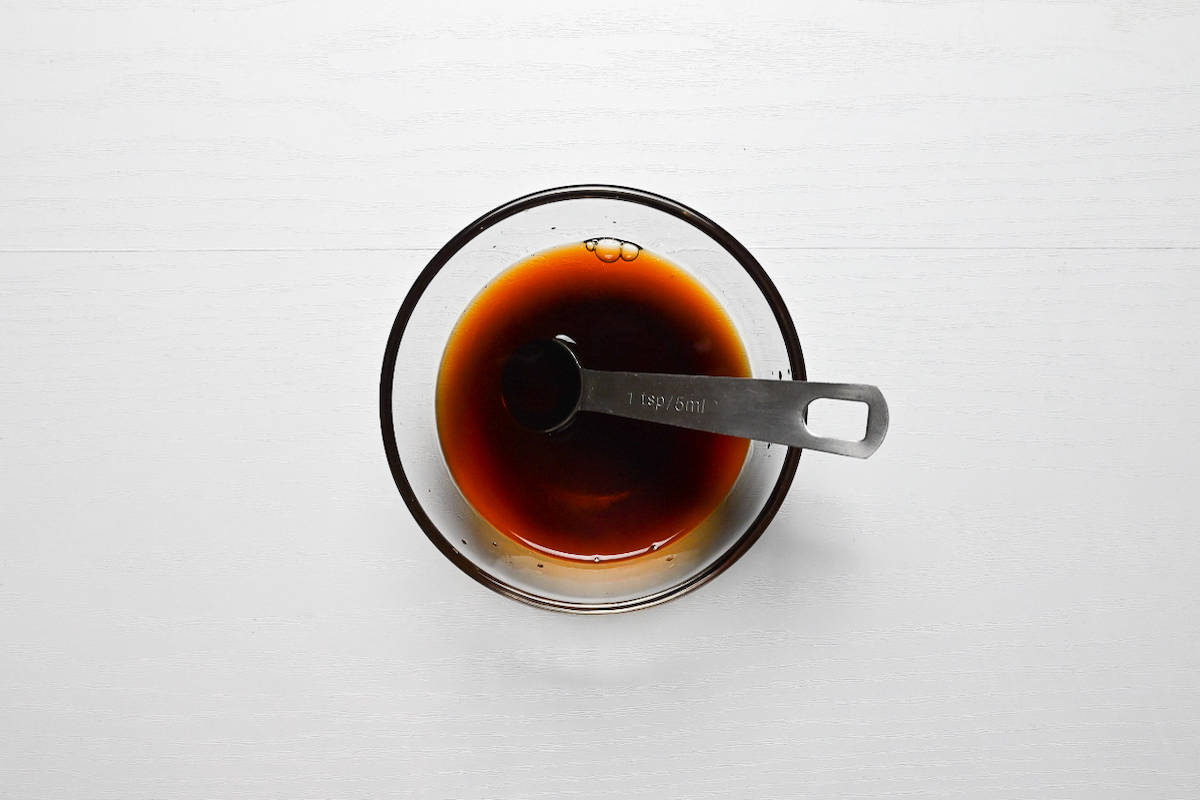
- In a small bowl, mix the 1 ½ tbsp Japanese soy sauce (koikuchi shoyu), 1 ½ tbsp mirin, 1 ½ tbsp sake and 1 tsp sugar until the sugar is dissolved to make the teriyaki sauce. Set aside for later.
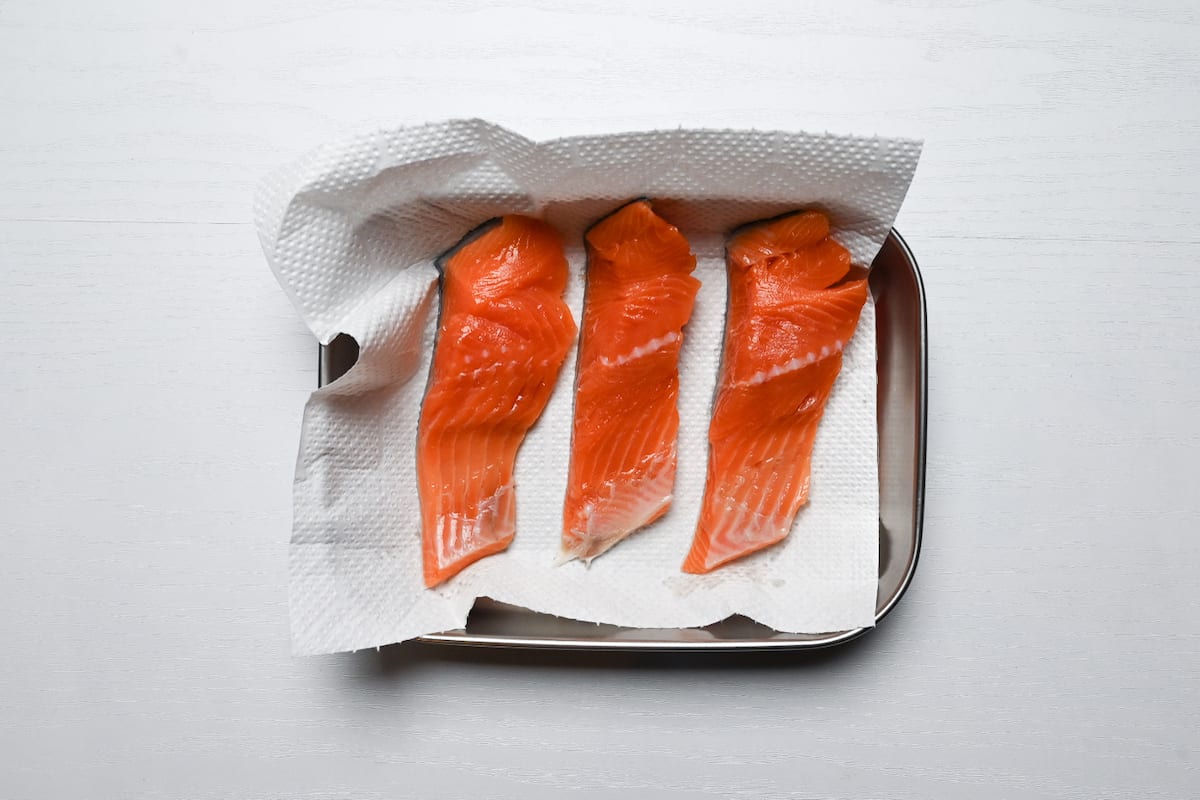
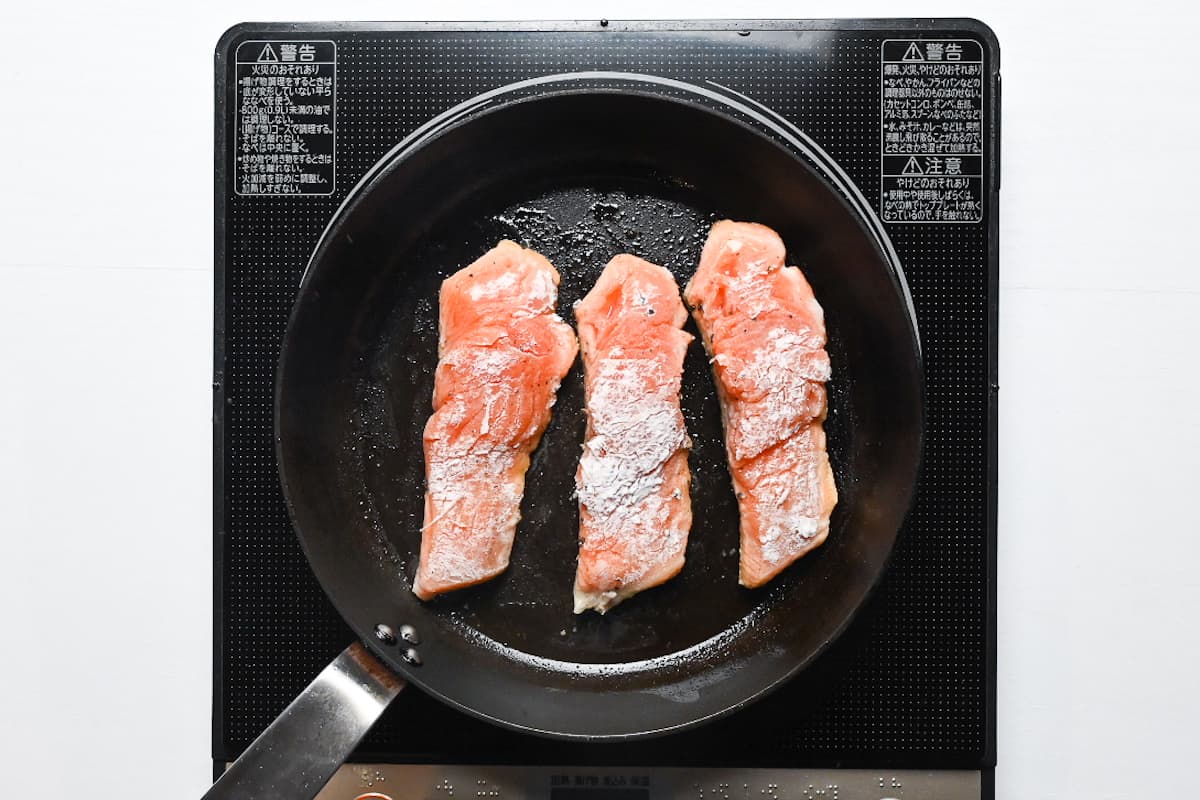
- Heat a frying pan on medium. Pat 2-4 salmon fillets thoroughly dry with kitchen paper and sprinkle salt and pepper on each side.
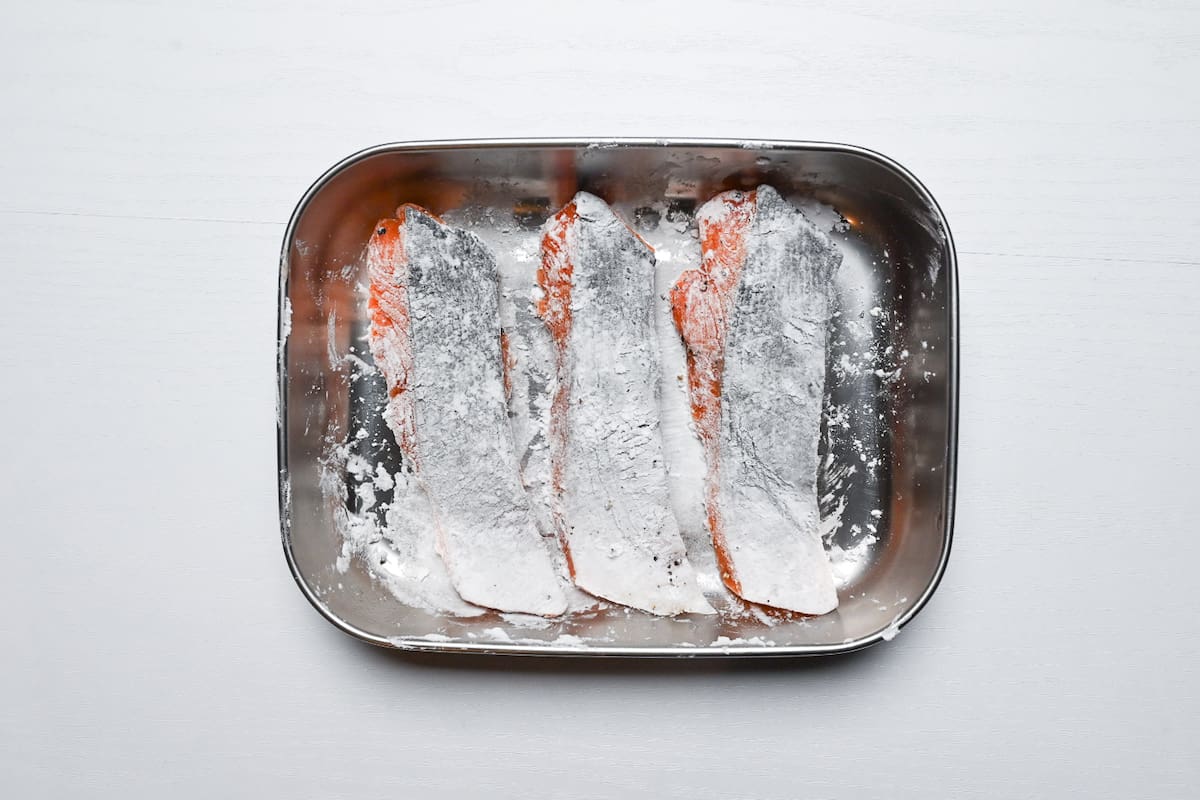
- Dust the surface of the salmon fillets with 1 tbsp potato starch (katakuriko), rub or brush to create a thin, even layer, then gently tap off any excess.
- Once the pan is hot, add 1 tbsp cooking oil and place the salmon fillets skin side down. Fry for approximately 4 minutes or until the skin is crispy and golden.
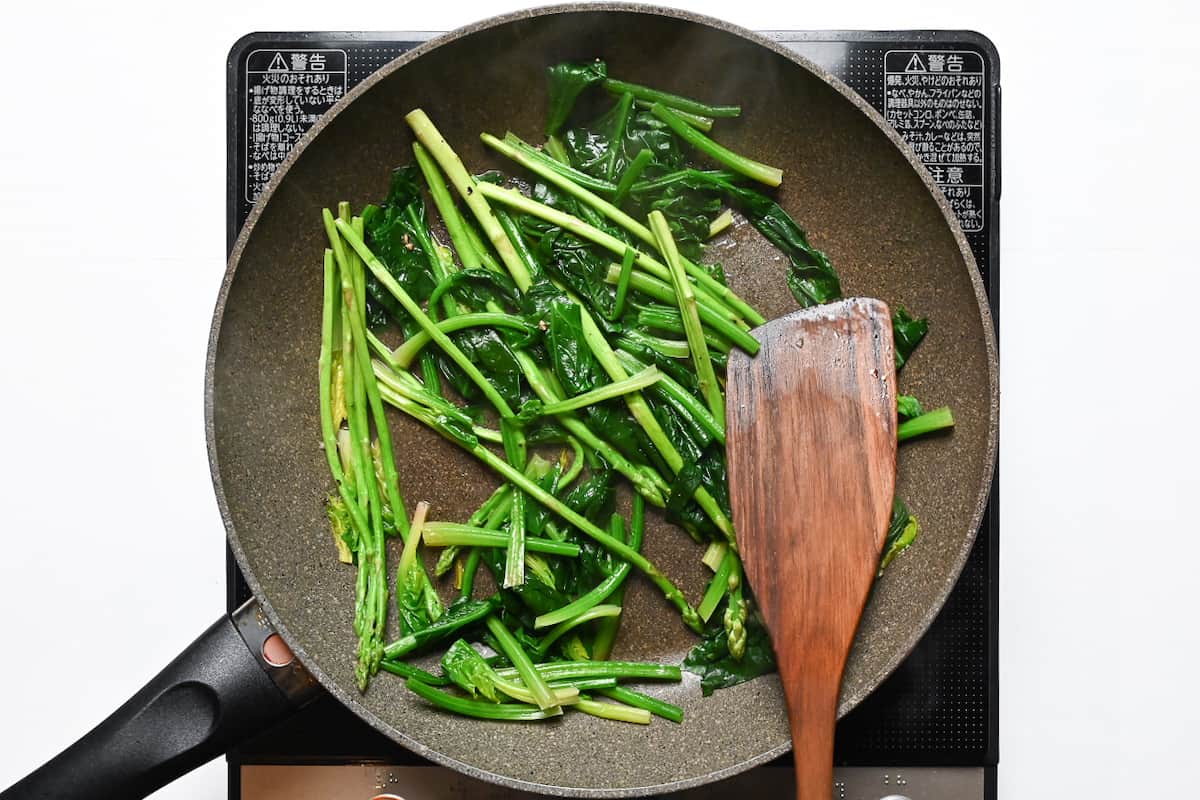
- While you wait, heat another pan on medium and melt 1 tbsp unsalted butter.Add 100 g asparagus to the pan along with a pinch of salt and pepper. Stir fry for 2-3 minutes (up to 4-5 minutes for thicker asparagus). Once tender crisp, add the blanched spinach and fry together for another 1-2 minutes before taking the pan off the heat.
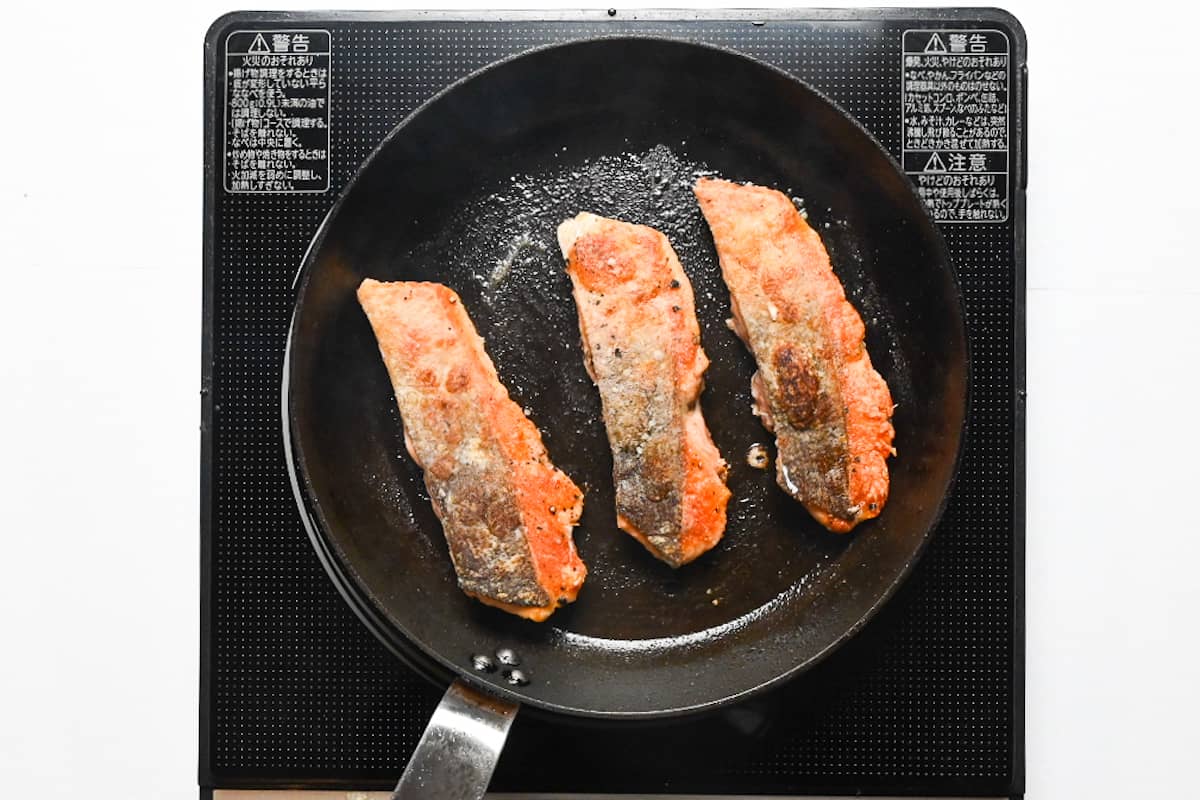
- Flip the salmon fillets and fry on the other side for 2 minutes.
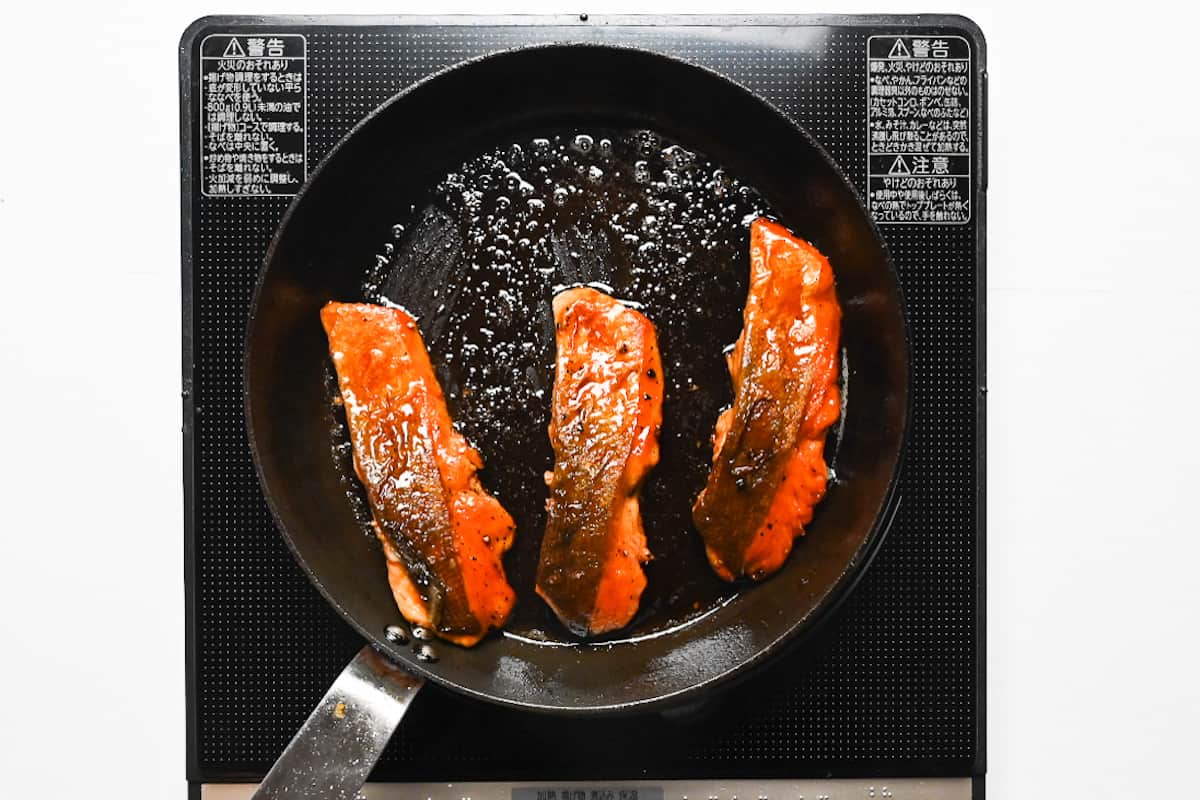
- Pour the teriyaki sauce over the salmon. Move the salmon around the pan so that the sauce sticks to the bottom and spoon it over the top to coat the skin side.Once the sauce is thick and glossy, remove the pan from the heat.
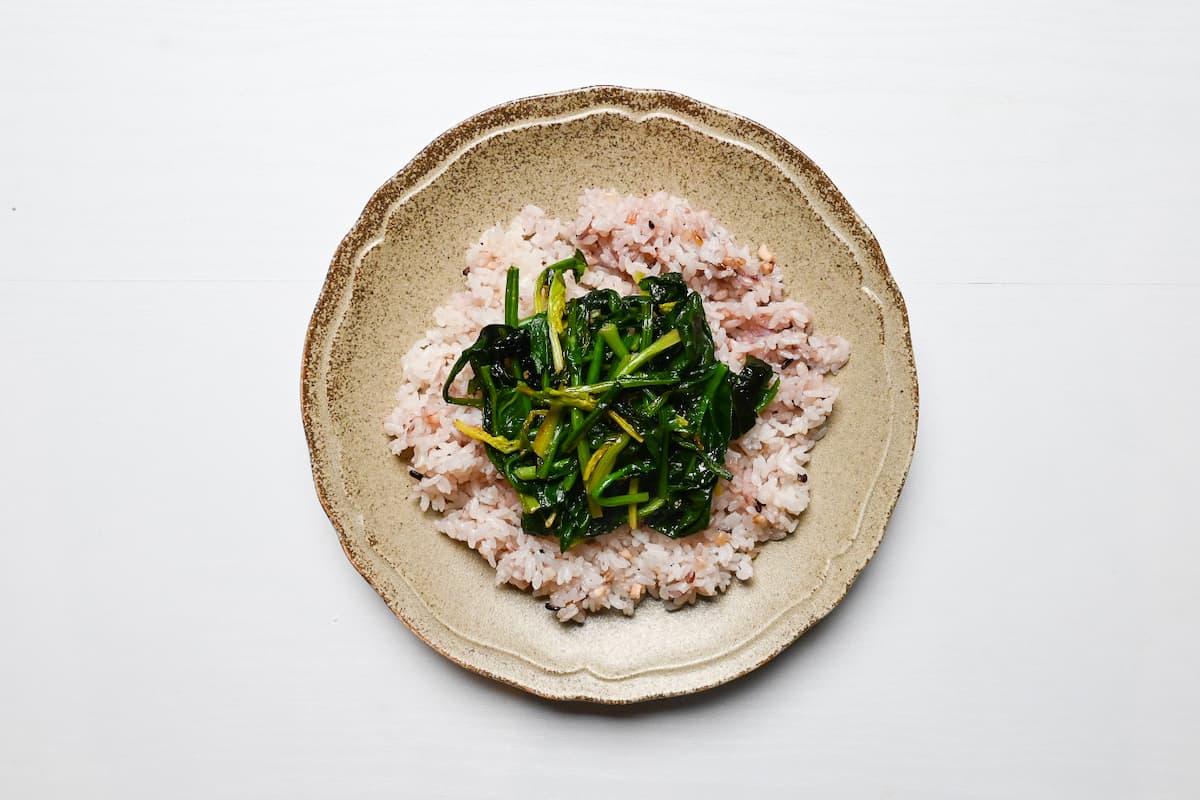
- Dish up 2 portions cooked Japanese short-grain rice and top with a bed of buttery spinach.
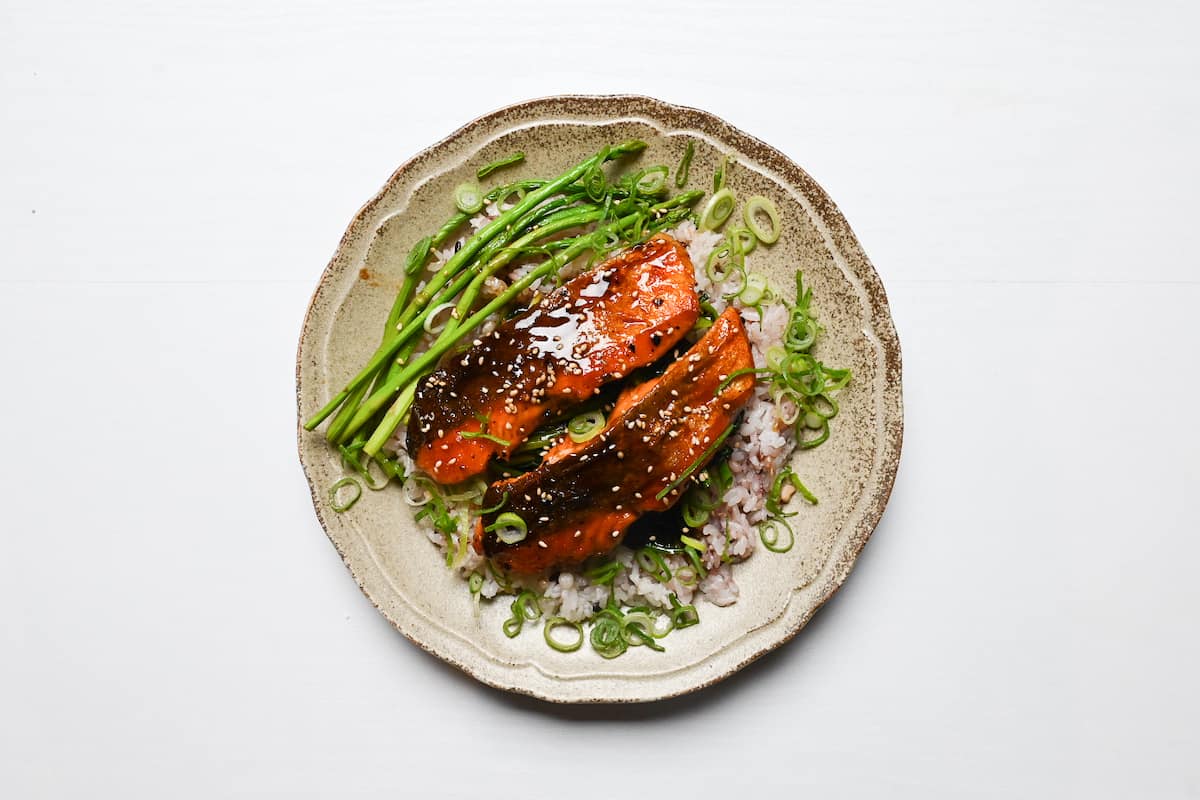
- Place the salmon fillets on top and arrange the asparagus next to them. Pour the leftover sauce from the pan over the salmon and garnish with toasted white sesame seeds and finely chopped green onions. Enjoy
Notes
Read doneness on the side, then trust carryover: when the opaque band climbs to about ¾ up the fillet and the center feels springy (like the pad below your thumb), pull it-carryover heat finishes the middle.
Pour the sauce in only after the salmon is nearly cooked through. If it goes in too early, the fish is still releasing water and fat that dilute the glaze and force sugars onto high heat too long.
Rescue a runny glaze by removing the fish first: If the sauce still looks thin after a minute of basting, lift the salmon onto a plate and let the sauce reduce alone for 30-60 seconds. Pull it just slightly thinner than your ideal, because the glaze continues to set as it cools on the plate.
Full Recipe QR Code↑↑