
Ebi Chili (Japanese Shrimp in Chili Sauce)
Ingredients
- 450 g shrimp medium/large size recommended, deshelled & deveined, save shells for flavoring the oil
- ¼ tsp salt to clean
- ½ tbsp potato starch (katakuriko) to clean, or cornstarch/tapioca starch
- 2 tbsp cooking oil neutral
- 1 tbsp potato starch (katakuriko) to coat, or cornstarch/tapioca starch
- 2 tsp chili bean sauce (toban djan)
- 1 tbsp ginger root finely diced
- 2 cloves garlic finely diced
- 30 g Japanese leek (naganegi) white part, or regular leek/onion/shallot, finely diced
- 2 tbsp tomato ketchup
- 150 ml water
- 1 tsp Chinese-style chicken bouillon powder or regular chicken bouillon powder
- ¼ tsp sugar
- 1 tsp potato starch (katakuriko) to make slurry, or cornstarch/tapioca starch
- 1 tbsp cold water to make slurry
- 2 tbsp green peas optional garnish
Garnish (optional)
- finely chopped green onions
- chili threads
- toasted sesame oil or chili oil
Instructions
- Place 450 g shrimp (deshelled and deveined) in a large bowl and sprinkle with a ¼ tsp salt and ½ tbsp potato starch (katakuriko). Toss until evenly covered and sit for 3 minutes.

- Heat a wok over medium heat and add 2 tbsp cooking oil. Once hot, add about 5 shrimp shells to the oil and fry gently for 3 minutes or until they turn orange and fragrant, then discard.

- Rinse the shrimp thoroughly with fresh cold water and pat dry with kitchen paper. Dry the bowl, place the shrimp back in and add 1 tbsp potato starch (katakuriko). Toss until evenly coated.

- Add the shrimp to the hot infused-oil and stir fry over medium until about 80% opaque (approx 2 minutes), then transfer to a heatproof container. They should be slightly underdone, we will continue to cook them later.

- In the same wok, add 2 tsp chili bean sauce (toban djan) and fry in the oil for about 1 minute.
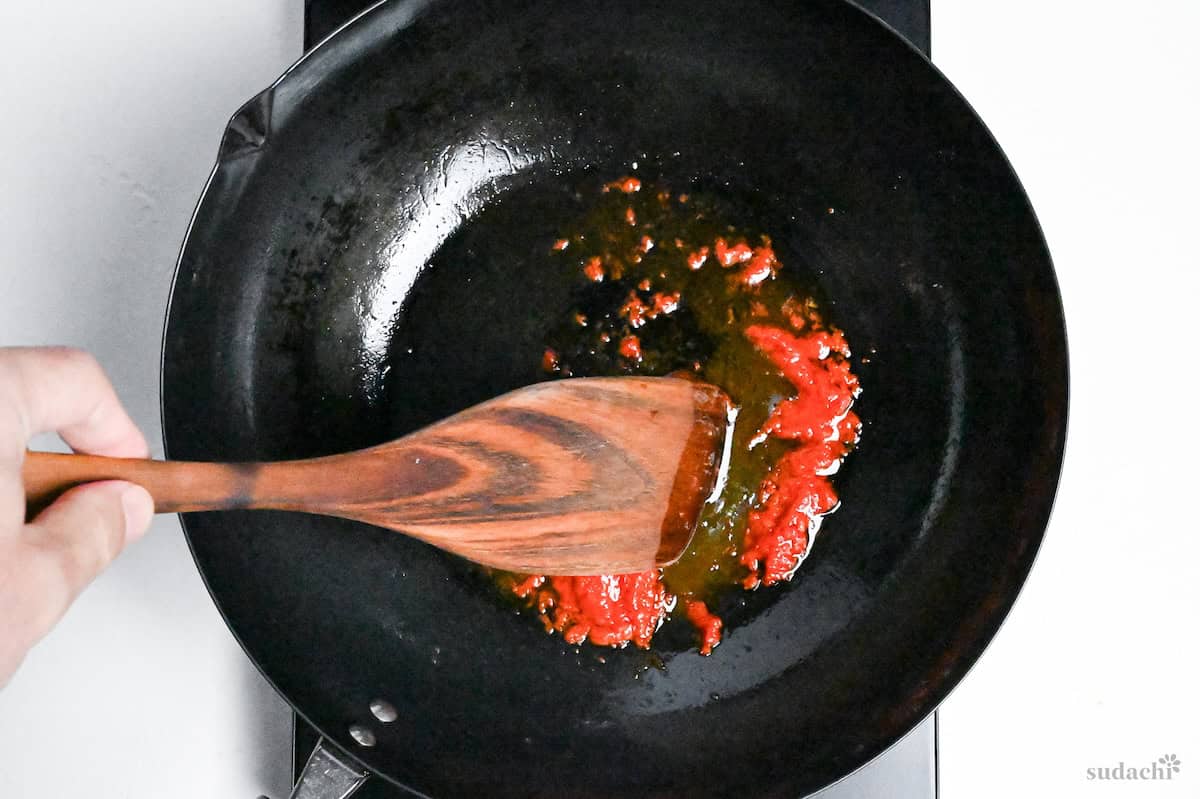
- Add 1 tbsp ginger root, 2 cloves garlic and 30 g Japanese leek (naganegi), all finely diced. Stir fry until fragrant (about 30 seconds).

- Add 2 tbsp tomato ketchup and fry for 1-2 minutes, stirring continuously. Add 150 ml water, 1 tsp Chinese-style chicken bouillon powder and ¼ tsp sugar. Bring to a simmer and while you wait, take a small bowl and mix 1 tsp potato starch (katakuriko) and 1 tbsp cold water to make a slurry.

- Taste test the sauce and adjust if needed. (Salt or bouillon powder for savory/saltiness, sugar for roundness, chili bean paste for extra heat.) Once you're happy with the flavor, pour in the slurry while stirring continuously.
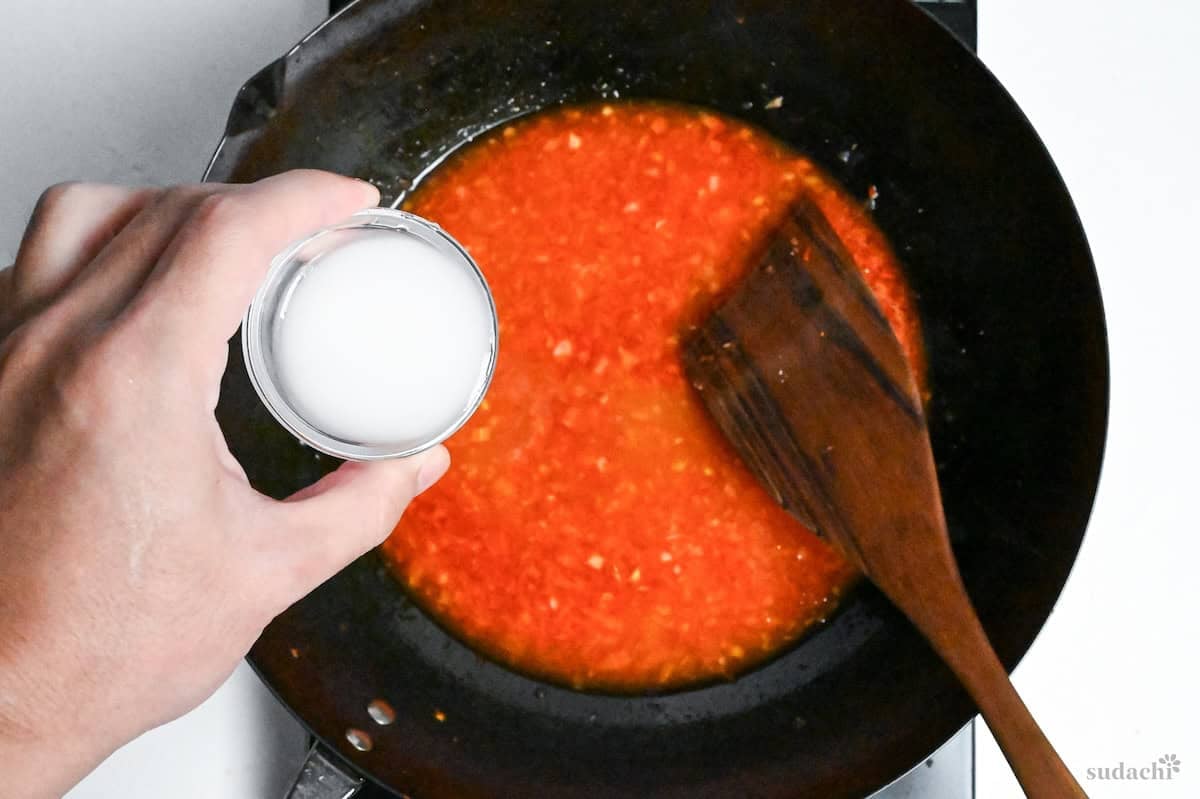
- Once thickened enough to thinly coat the back of a spoon, add the shrimp back in along with 2 tbsp green peas. Finish cooking the shrimp until opaque and springy, then remove the wok from the heat.

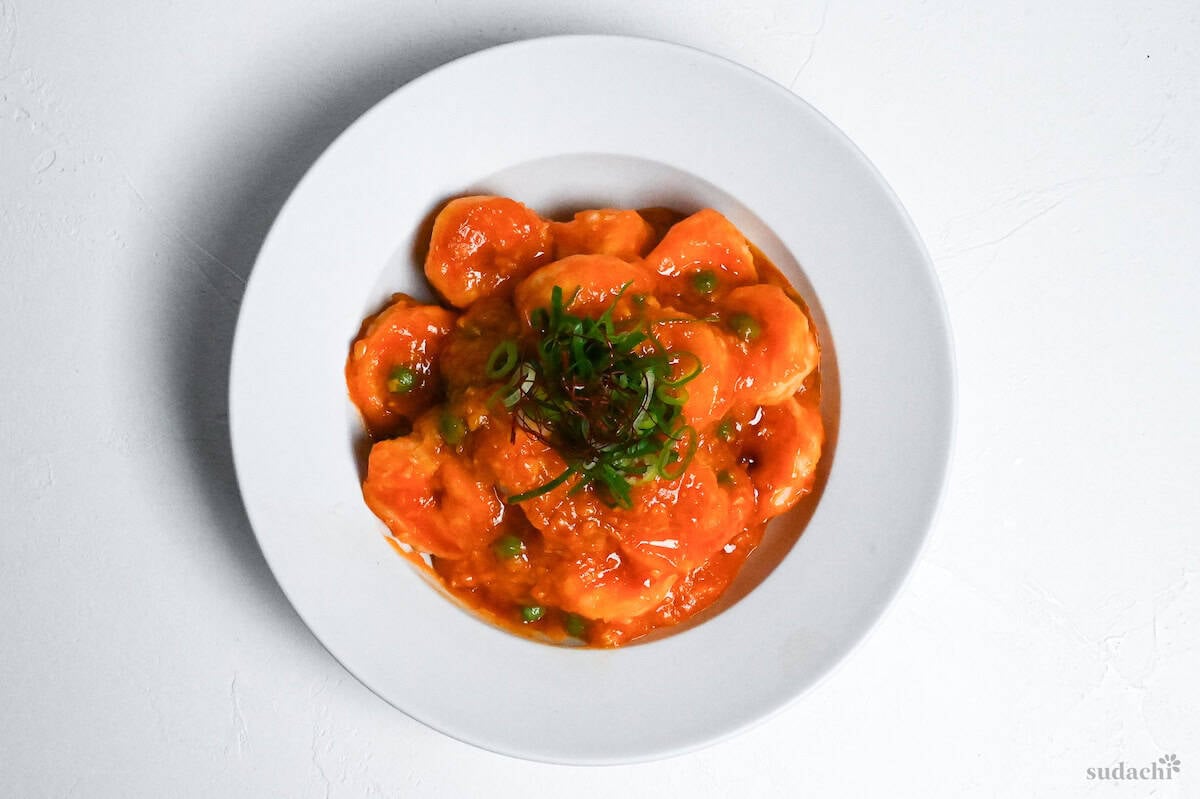
- Plate up and garnish with a drizzle of toasted sesame oil (or chili oil), finely chopped green onions and chili threads. Serve with plain rice and enjoy!
Notes
Chicken bouillon powder varies by brand. My brand is 1 tsp per 200 ml, so check the label and if yours is more concentrated (e.g., 1 tsp per 300 ml or 1 cup), use touch less to avoid oversalting.
Choose larger shrimp (about 16-20 count per pound) for more forgiving results. Thaw in 3% saltwater if you use frozen shrimp.
Make it spicier at the table by adding chili oil or red pepper flakes so different diners can customize heat individually.
Tone down heat easily by halving the chili bean sauce and adding 1-2 extra tablespoons of ketchup for a gentler, sweeter sauce.
Taste and balance the sauce just before thickening using salt/bouillon for savoriness, sugar for roundness, doubanjiang for heat, or rice vinegar for brightness.
Store ebi chili for up to 3 days in the fridge or 1 month in the freezer. Expect some texture loss.
Meal-prep efficiently by making only the sauce base ahead, refrigerating 4 days or freezing 2-3 weeks, then finishing with freshly cooked shrimp for best texture.
Serving ideas: Steamed white rice, Egg drop soup, Japanese miso soup, Pickled Japanese cucumber
Full Recipe QR Code↑↑