
Chicken Sukiyaki (Kashiwa no Sukiyaki)
Ingredients
Warishita (Cooking Sauce)
- 3 tbsp sake drinking-grade recommended
- 3 tbsp mirin
- 1½ tbsp light brown sugar or white sugar
- 2½ tbsp Japanese light soy sauce (usukuchi shoyu)
- 3 tbsp dashi stock
- ¼ tsp dashi granules
Sukiyaki
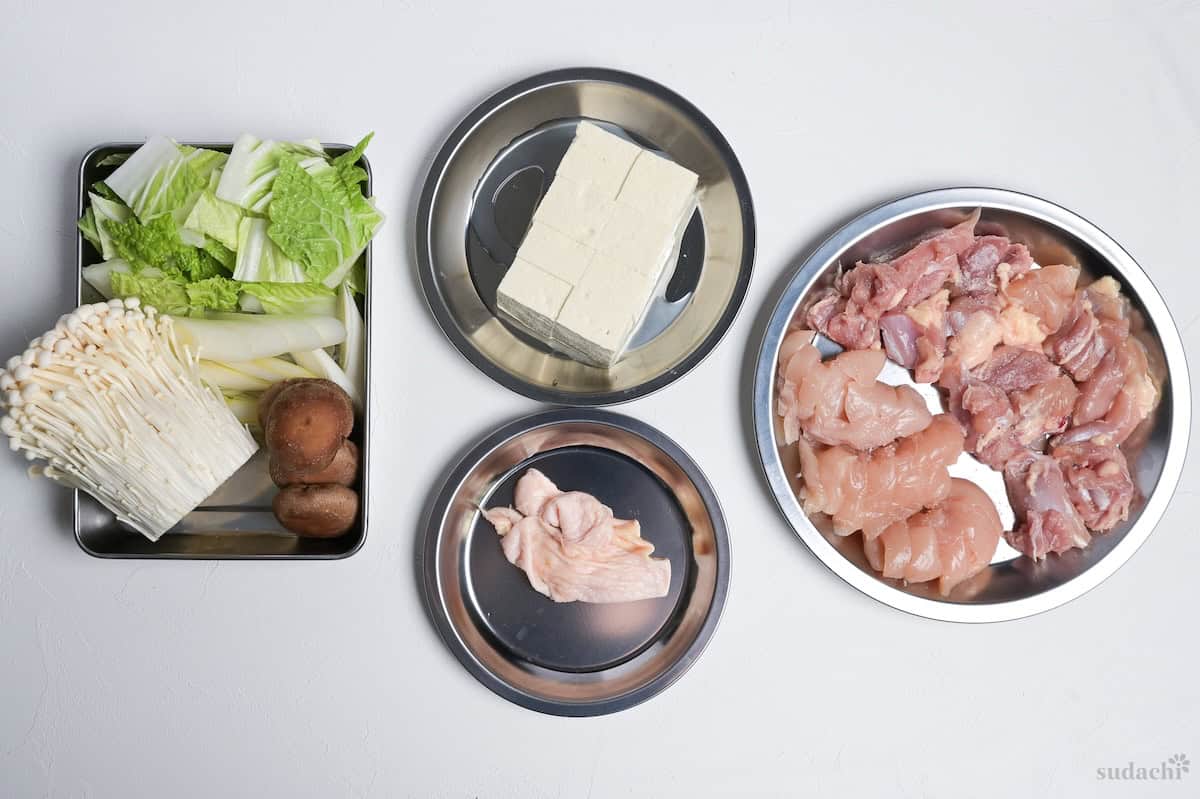
- 200 g boneless chicken thigh skin-on, skin reserved for rendering
- 100 g chicken tenderloin thinly sliced against the grain, or chicken breast
- 200 g firm tofu or grilled tofu, drained and cut into large pieces
- 2 leaves Napa cabbage or green cabbage
- 4 fresh shiitake mushrooms or button mushrooms
- 60 g enoki mushrooms trimmed
- 1 Japanese leek (naganegi) or leek, white and light green parts only
- 2 pasteurized eggs optional, for dipping
- Japanese sansho pepper to taste
Instructions
- Separate the skin and meat of 200 g boneless chicken thigh. Cut the meat into bitesize pieces, and 100 g chicken tenderloin into thin slices against the grain. Season everything with a few pinches of salt. Drain 200 g firm tofu and cut it into large pieces. Roughly cut 2 leaves Napa cabbage and diagonally slice 1 Japanese leek (naganegi). Trim the stems/roots of 4 fresh shiitake mushrooms and 60 g enoki mushrooms, then sprinkle with salt.
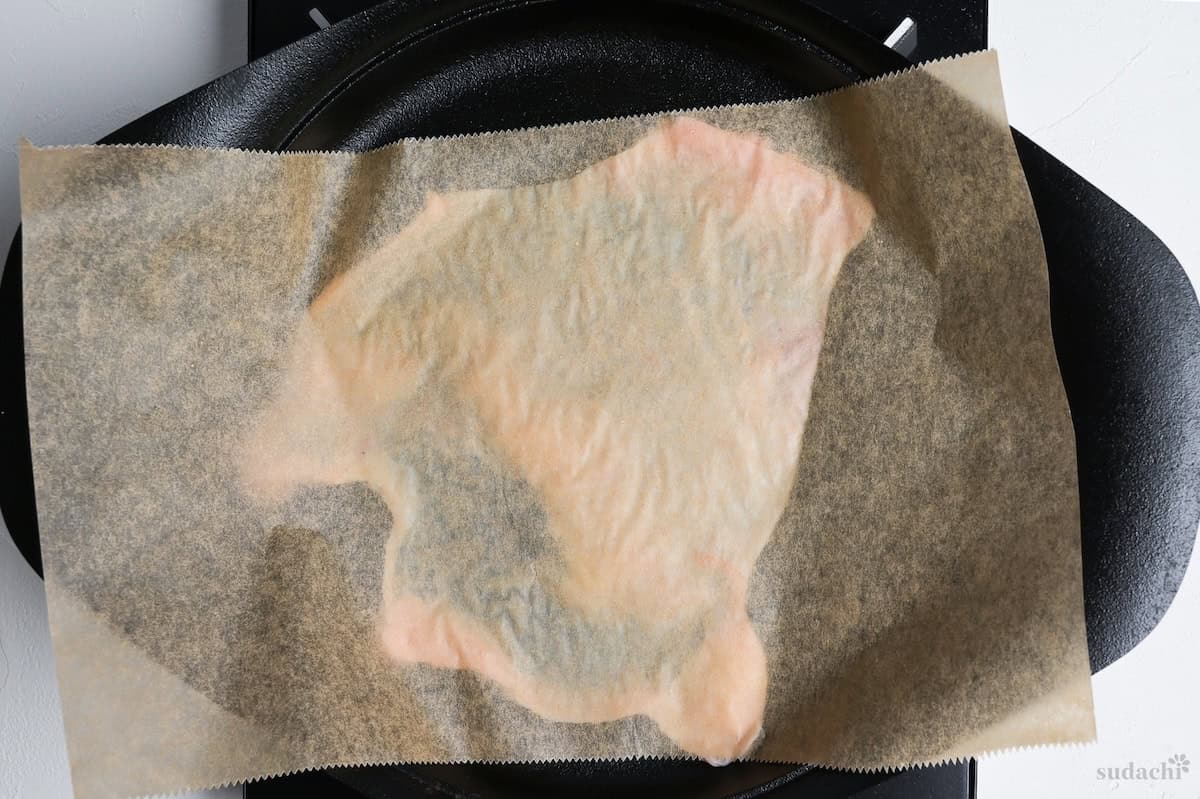
- Spread the chicken skin out in a large cold skillet, then cover with a sheet of parchment paper and a heavy weight (like a pot filled with water). Heat on low/medium-low until golden and crispy.
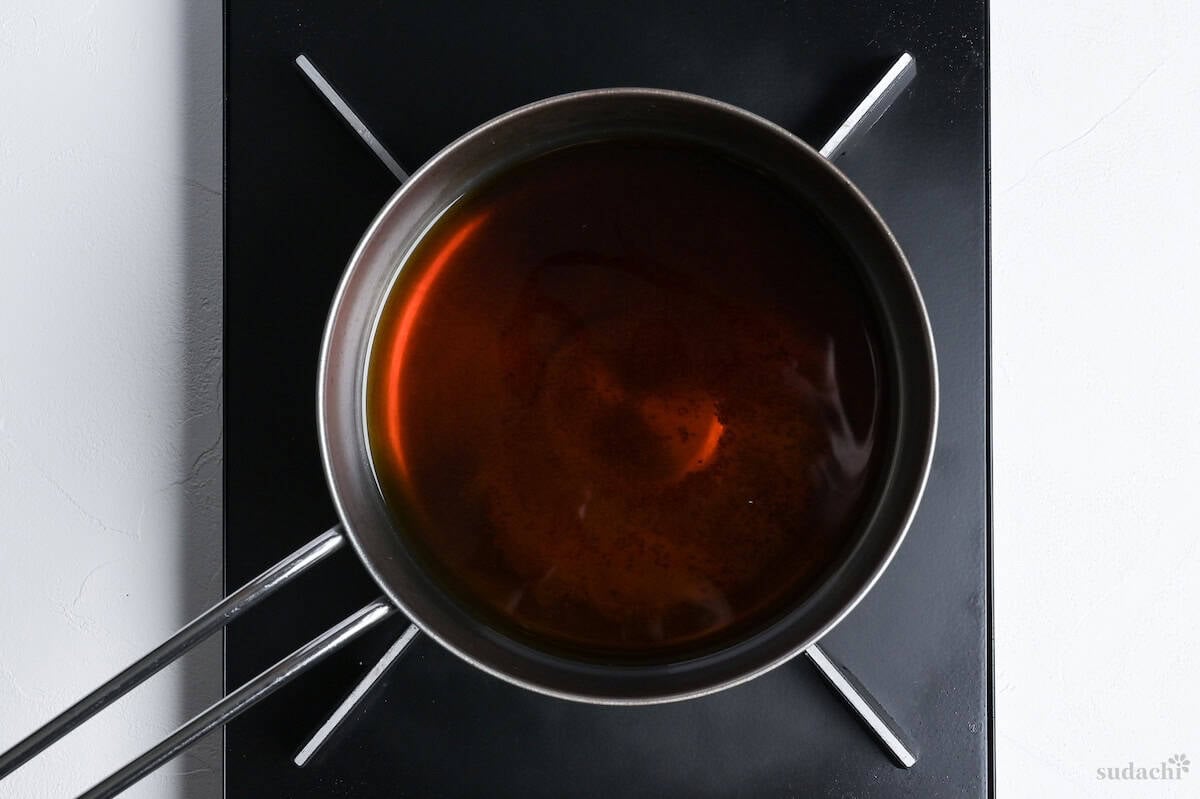
- While you wait, make the warishita sauce. Pour 3 tbsp sake and 3 tbsp mirin into a small saucepan. Boil for a minute to burn off the harsh alcohol, then set the heat to medium low and add 1½ tbsp light brown sugar, 2½ tbsp Japanese light soy sauce (usukuchi shoyu), 3 tbsp dashi stock, and ¼ tsp dashi granules. Stir over the heat until the sugar and dashi granules have dissolved, then remove from the heat.
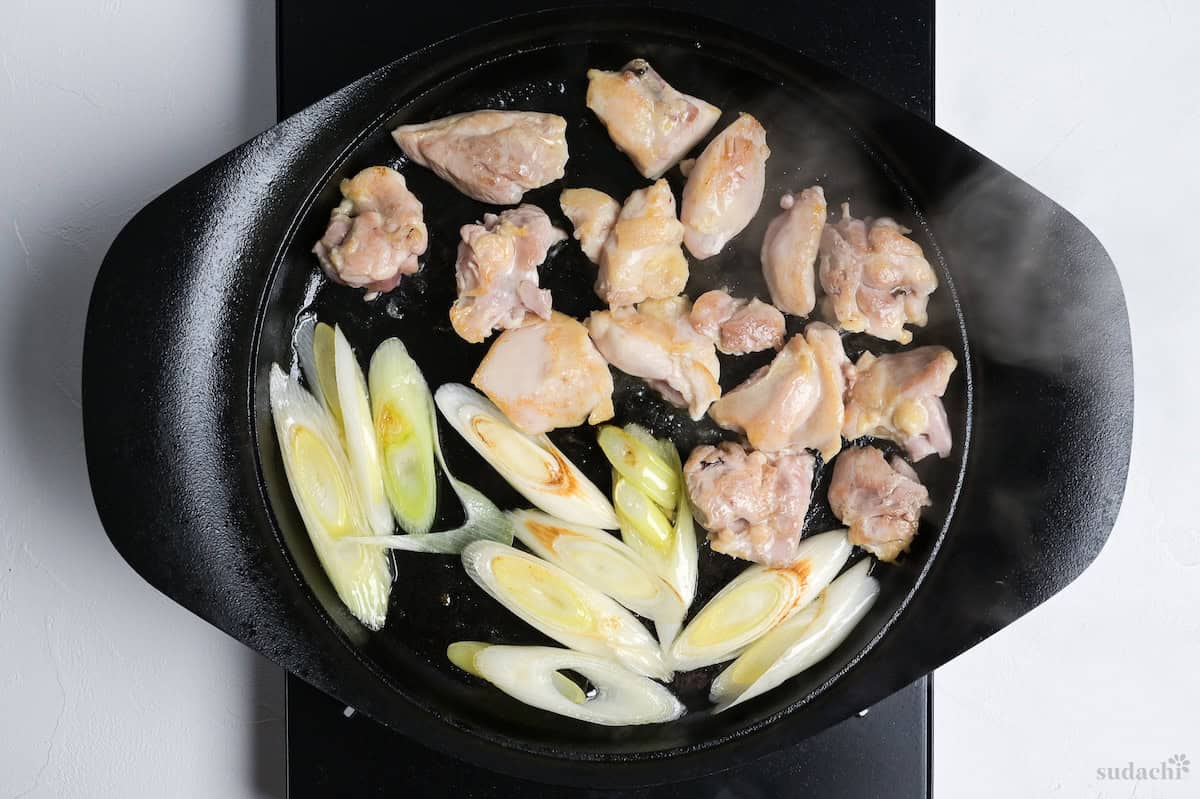
- Remove the crispy chicken skin from the skillet and set it on a wire rack to drain excess oil. Add the chicken thigh and Japanese leek to the skillet and fry over medium heat in the rendered chicken fat until lightly browned all over.
- Transfer the seared chicken thigh to a plate for now. Pour the prepared warishita sauce into the skillet, and arrange the tofu and vegetables in the sauce. Bring to a boil, then reduce the heat to a simmer. Make a space between the ingredients and add the seared chicken thigh back in, along with the uncooked tenderloin. Make sure everything is in contact with the sauce.
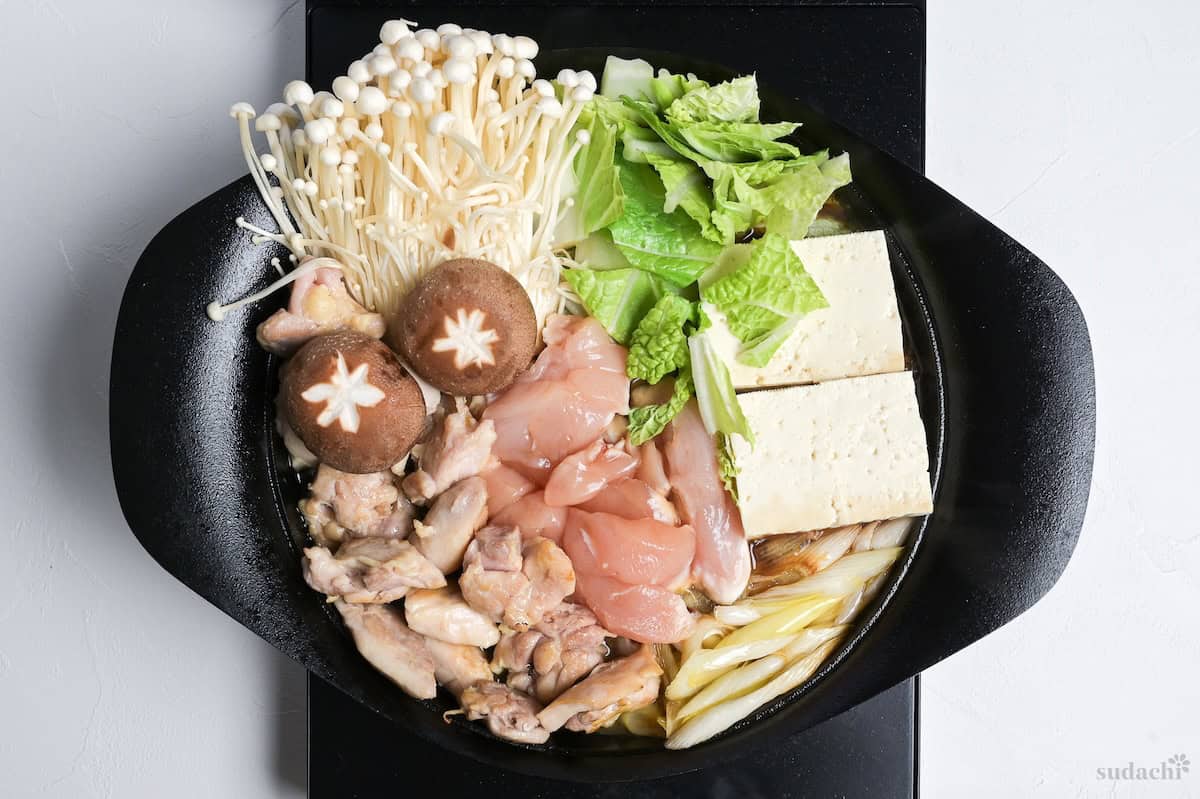
- Crack 1 pasteurized egg per person into individual dipping bowls. Whisk until the yolk and whites are combined. As each ingredient cooks to your preferred doneness, remove it from the skillet, then dip it into the egg and enjoy. Sprinkle with Japanese sansho pepper to taste.
Turn the ingredients occasionally to ensure even cooking, and flip the tofu after a few minutes to flavor both sides.
Notes
Buy skin-on thigh. The rendered chicken fat is what coats the pan and replaces beef suet. Without it, the warishita carries all the richness alone. If only skinless is available, use a thin layer of cooking oil, but expect a lighter result.
Chicken must be fully cooked. Unlike beef sukiyaki, no pink center is safe. Aim for 75°C (167°F) at the thickest point.
Usukuchi is saltier than regular soy sauce. This recipe is designed around usukuchi's higher salt concentration and lighter color. If using regular Japanese soy sauce, increase the amount a little bit or add a pinch of salt. The broth will be darker.
Dilute if the sauce gets too salty. The shallow pan evaporates liquid quickly, concentrating salt and sugar. The first few minutes before vegetables release their water are the riskiest window. A splash of water or sake brings it back.
Full Recipe QR Code↑↑