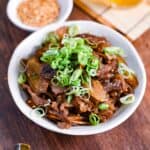
Beef Shigureni (Simmered Wagyu)
Ingredients
- 150 g burdock root (gobo)
- 1 dash unseasoned rice vinegar (komezu) for the gobo soak
- 20 g ginger root fresh, julienned along the grain
- 250 g thinly sliced beef preferably with marbling fat
- ½ tbsp cooking oil
- 4 tbsp white wine dry, unoaked, or sake
- 3 tbsp Japanese soy sauce (koikuchi shoyu)
- 2 tbsp light brown sugar
- 1 tbsp mirin
- finely chopped green onions to garnish
- toasted white sesame seeds to garnish
- toasted sesame oil
Instructions
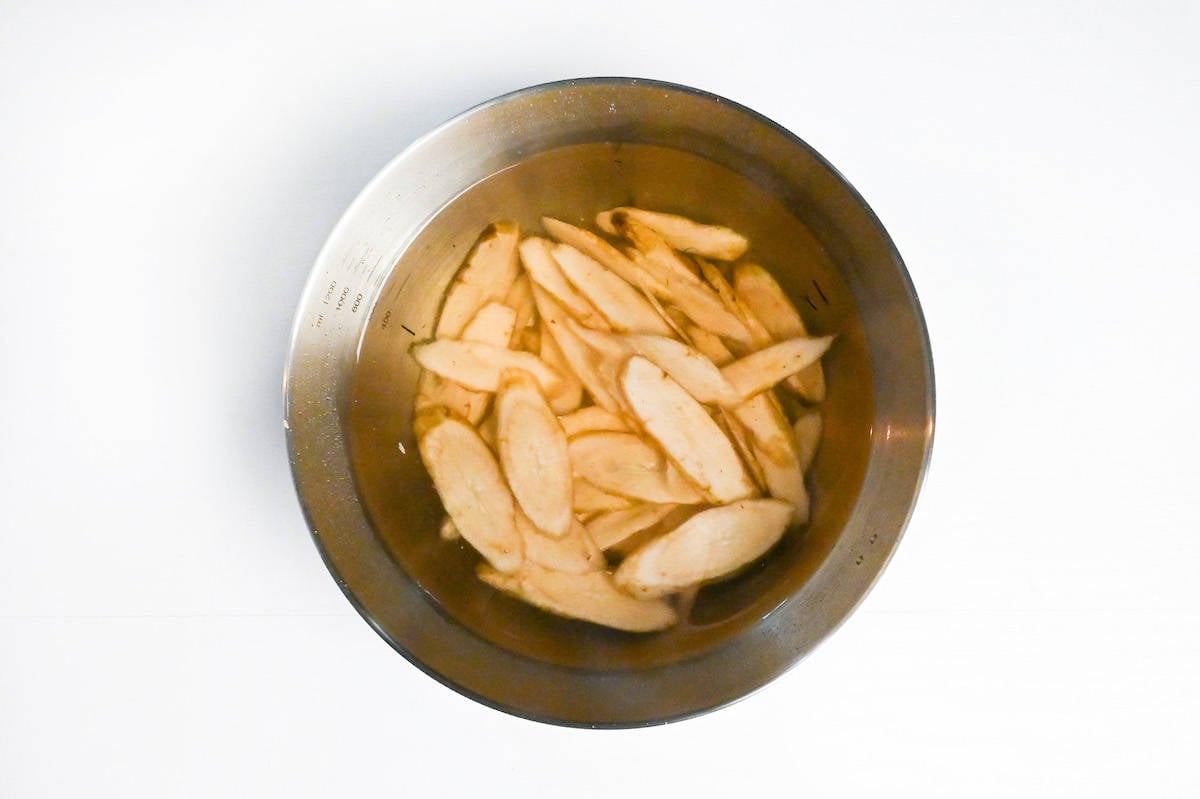
- Throughly scrub 150 g burdock root (gobo), then rinse and diagonally slice about 2mm thick. Submerge in a bowl of cold water with 1 dash unseasoned rice vinegar (komezu) and set aside for later.
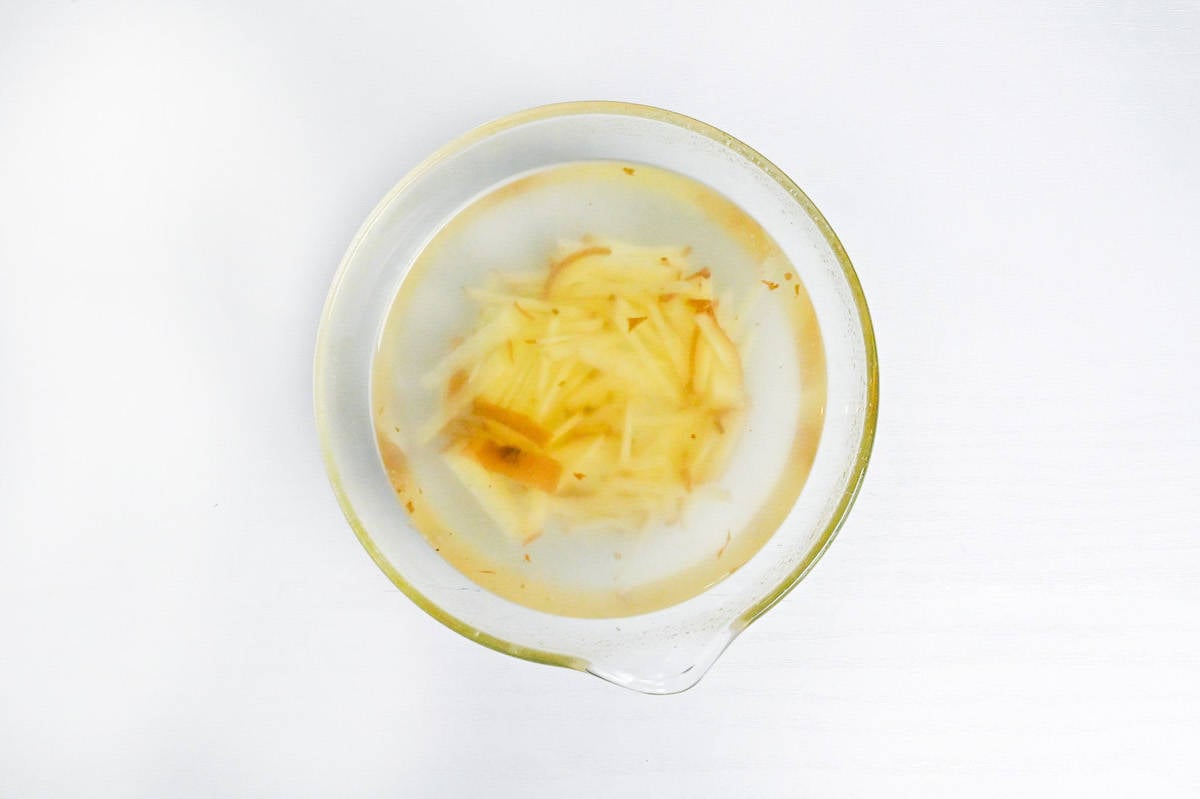
- Scrape off the skin of 20 g ginger root with a spoon and cut it into thin matchsticks (julienne). Submerge in a separate bowl of cold water and set aside for later.
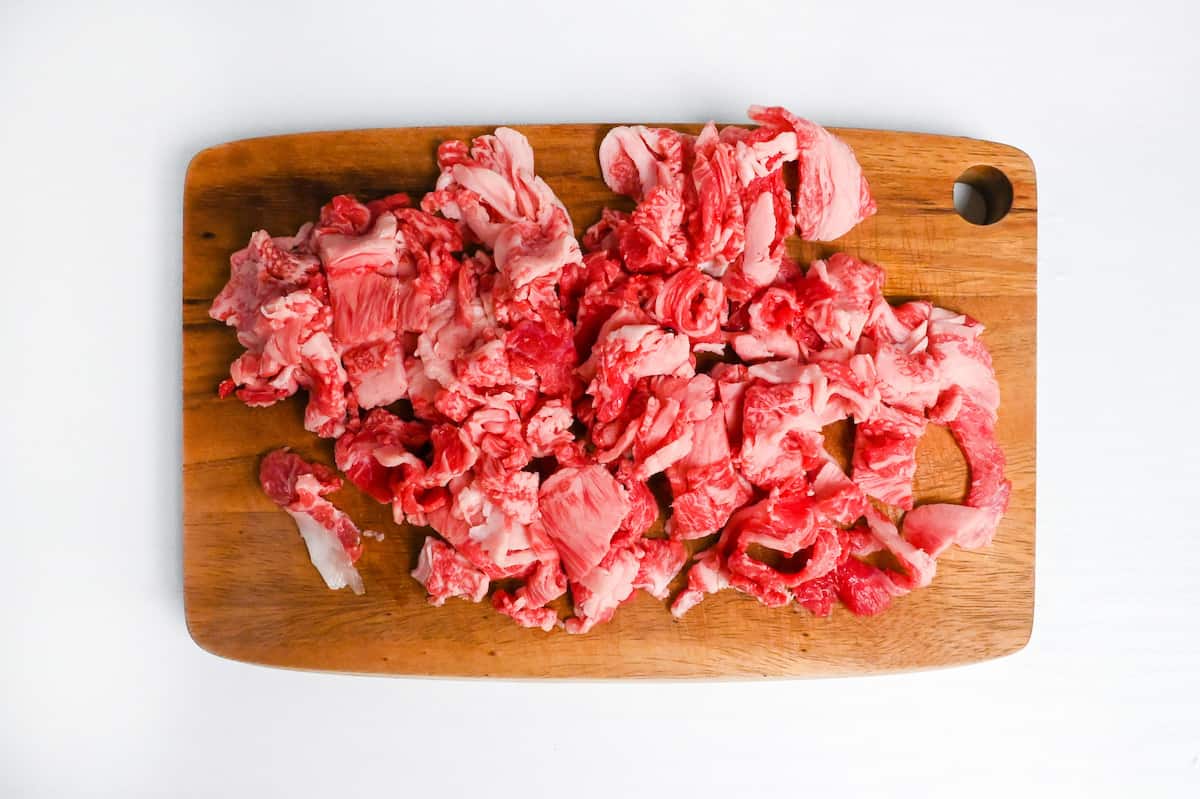
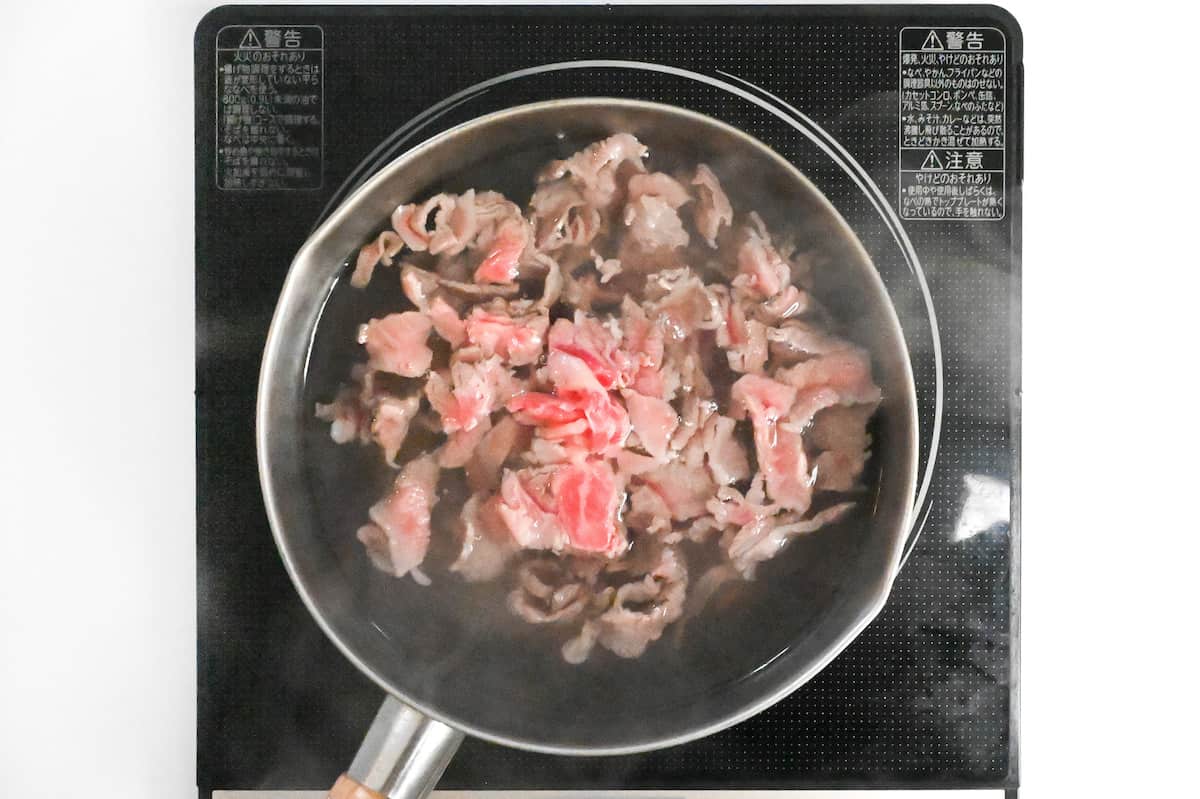
- Bring a medium-sized pot of water to a boil. While you wait, cut 250 g thinly sliced beef into 2-3cm (1 inch) pieces and prepare a bowl of ice-cold water.
- Once the water is boiling, turn off the heat and blanch the beef by submerging for about 30 seconds or until lightly cooked (it should still be a little pink).
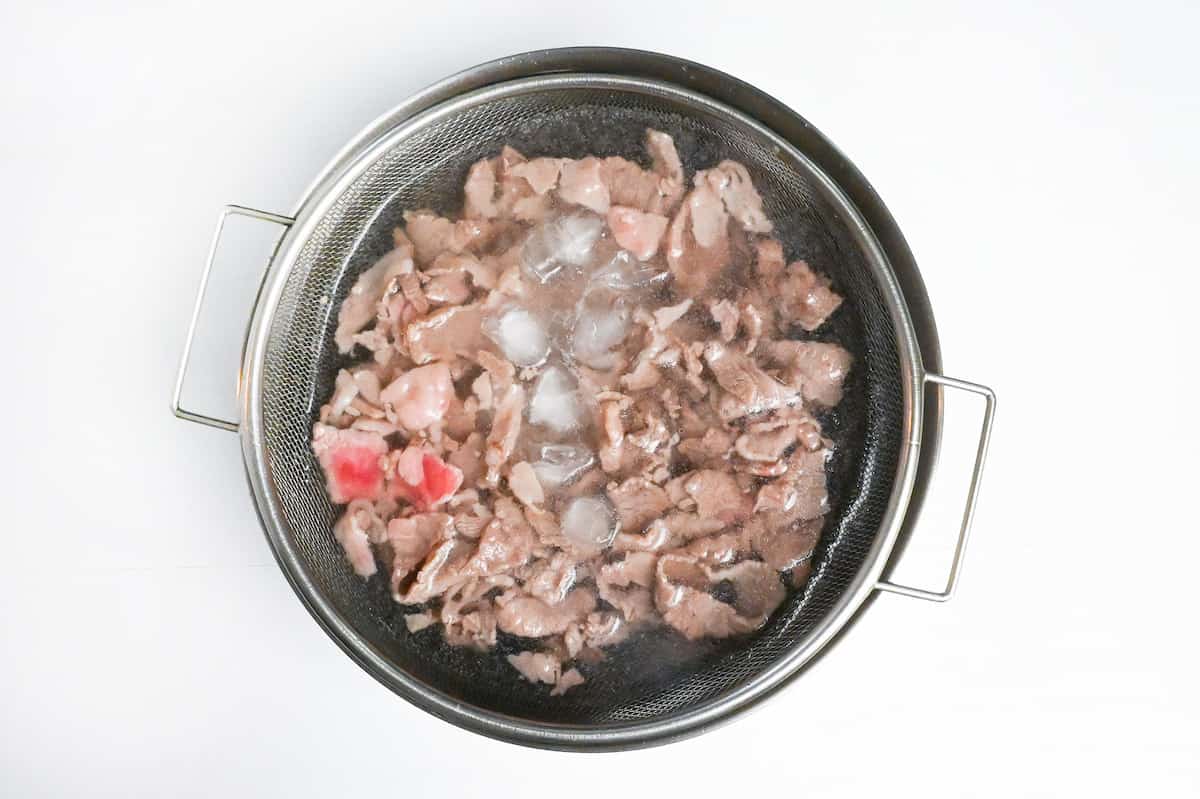
- Use a sieve to drain the hot water and quickly transfer the blanched beef to the bowl of ice-cold water to halt the cooking process and cool for a few minutes. Once cooled, drain and set aside for later.
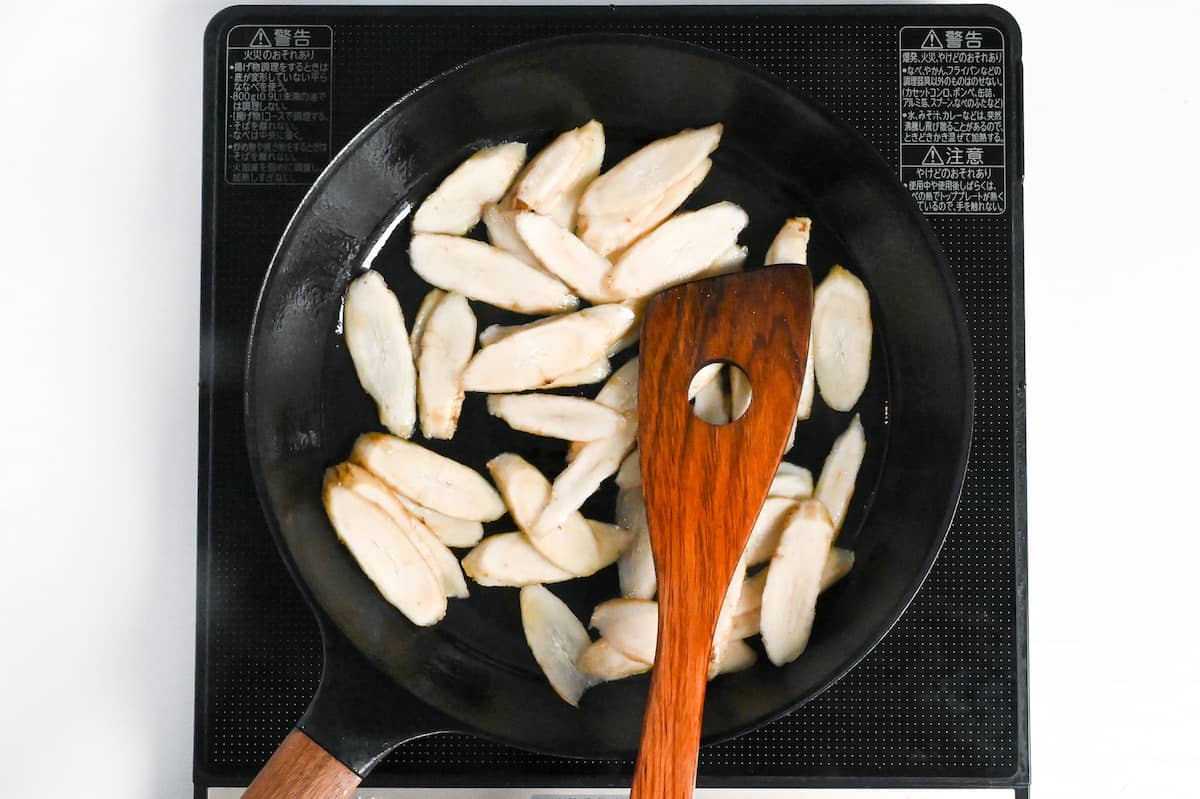
- Heat a frying pan on medium and add ½ tbsp cooking oil. Once hot, drain the burdock root and add it to the pan. Fry for 2 minutes.
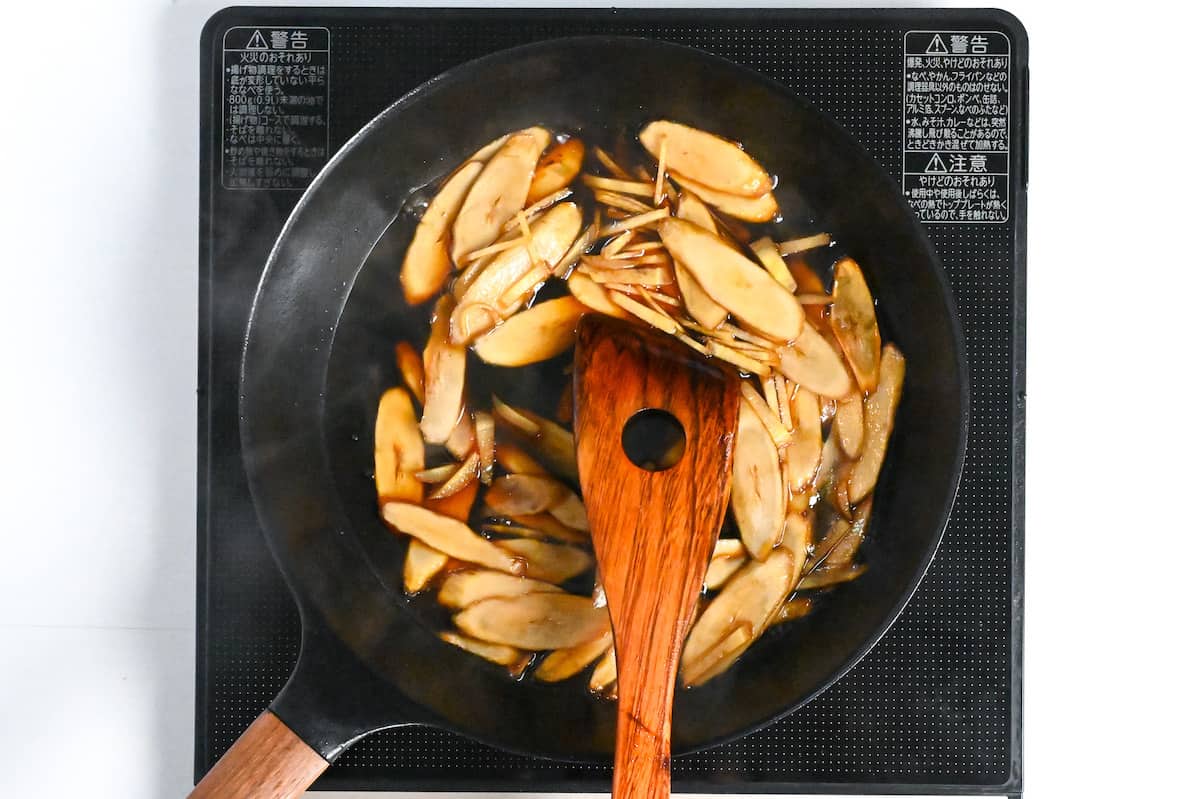
- Drain the ginger and add it to the pan along with 4 tbsp white wine, 3 tbsp Japanese soy sauce (koikuchi shoyu), 2 tbsp light brown sugar and 1 tbsp mirin. Mix well and simmer over a medium heat until the liquid ingredients are reduced by two-thirds.
- Add the blanched beef to the pan and increase the heat to medium-high.
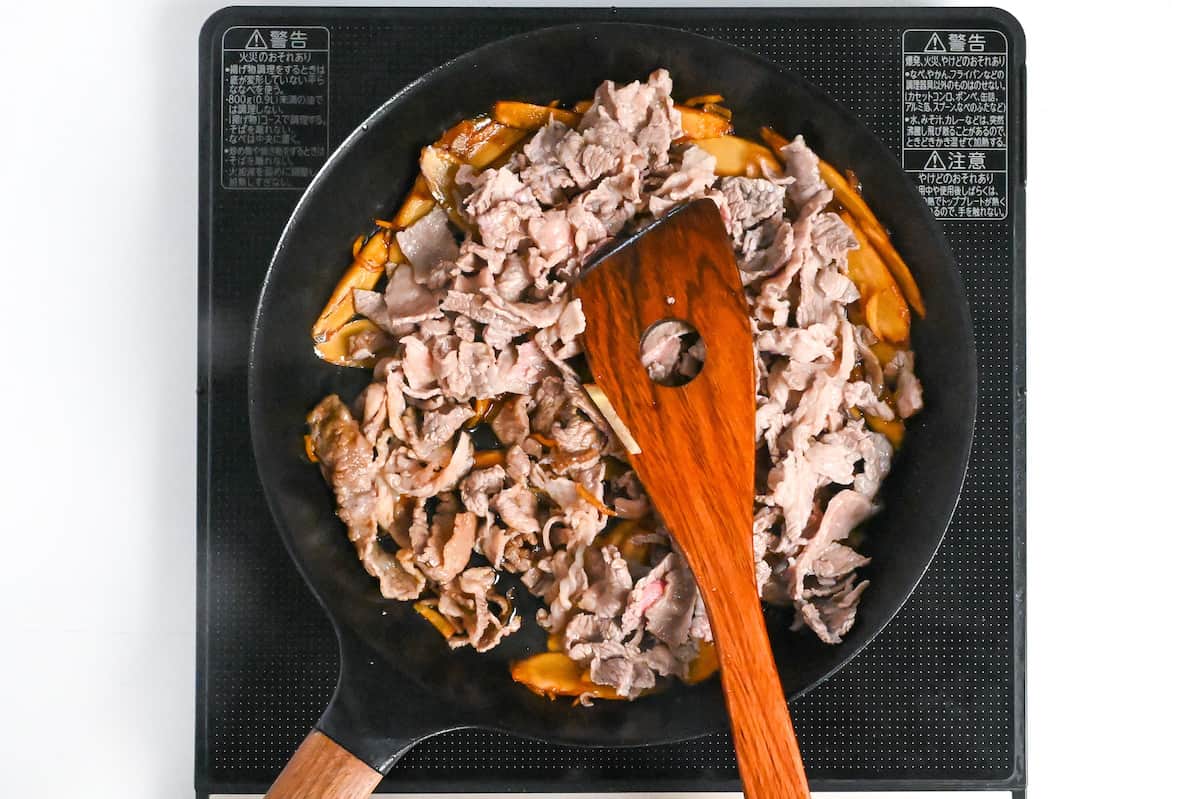
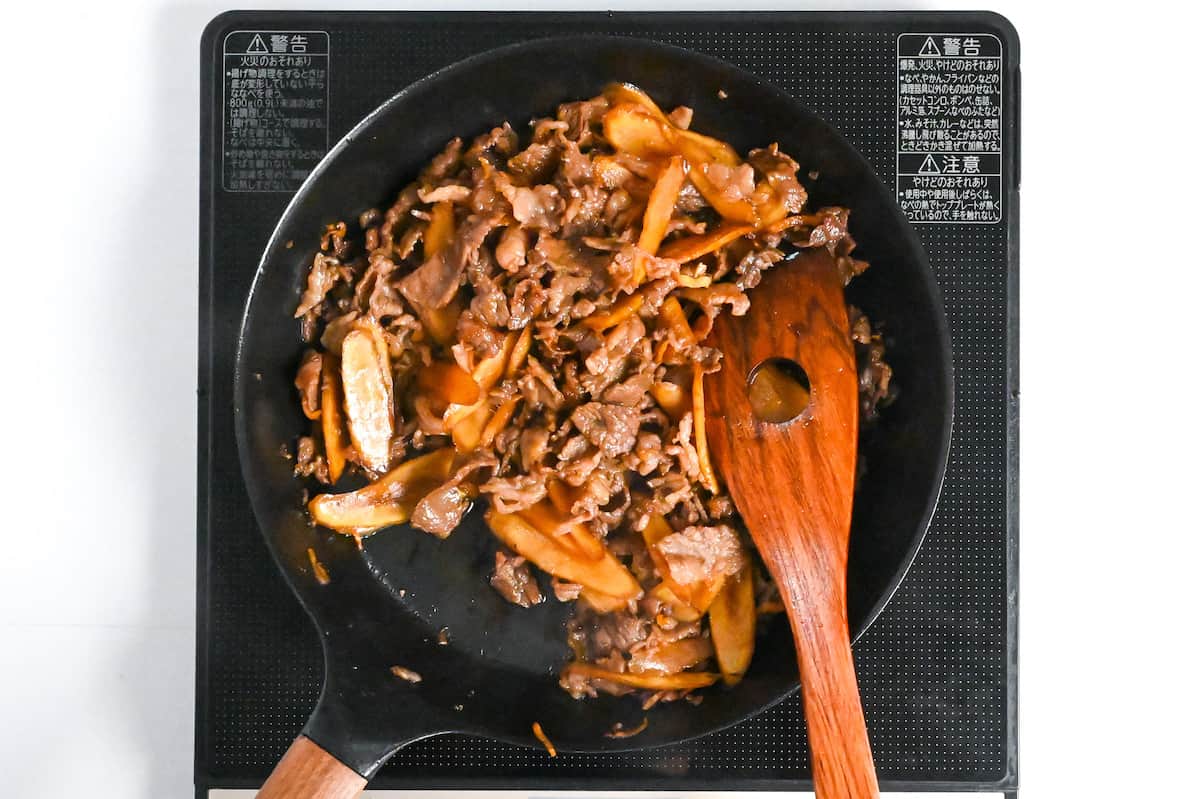
- Stir fry everything together until the liquid has almost gone and the beef is coated in the sauce, then turn off the heat.
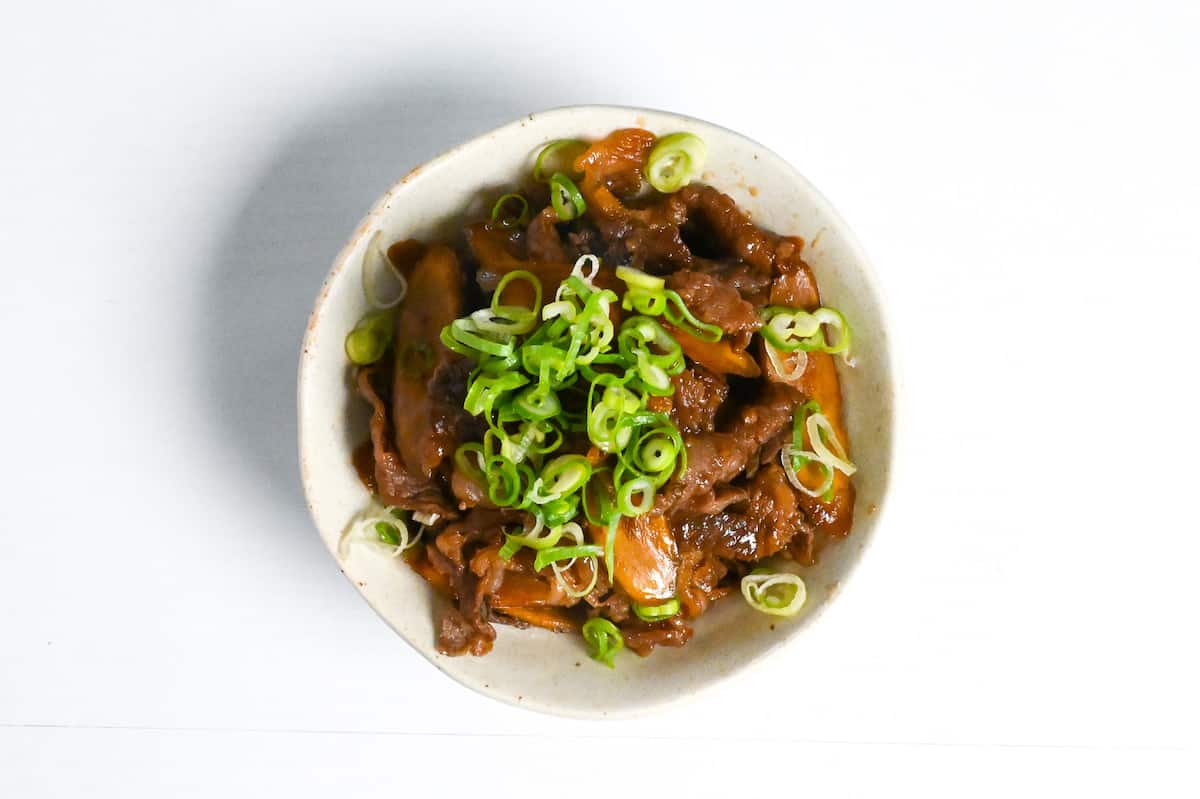
- Transfer to serving bowls and garnish with finely chopped green onions, toasted white sesame seeds and a drizzle of toasted sesame oil. Enjoy!
Notes
Reduce the glaze first. The single biggest reason home beef shigureni comes out tough is adding raw beef to the full volume of seasoning liquid at the start. Let the glaze reduce by roughly two thirds before the beef enters the pan.
Stop at the glistening film. When the beef is almost done, push it aside with chopsticks and look at the pan bottom. A thin layer of liquid should still catch the light. A visible puddle means under-reduced and watery. A completely dry pan means you are 30 seconds past scorch. That one visual cue is the whole stopping test.
Day 2 beats day 1. This dish is designed to be eaten the next day. Overnight rest in the fridge rounds and unifies the flavor.
Full Recipe QR Code↑↑