
Authentic Osaka Style Okonomiyaki (Traditional Japanese Savory Pancake)
Ingredients
Batter
- 100 g unbleached cake flour or AP/plain flour
- ⅛ tsp baking powder
- 75 ml dashi stock cooled
- 1 tsp milk
- 1 tsp Japanese soy sauce (koikuchi shoyu)
- 1 tsp mirin
- 1 egg relatively large
Okonomiyaki Sauce
- 2 tbsp tomato ketchup
- 1 tbsp Worcestershire sauce
- 1 tbsp oyster sauce
- 1 tbsp honey
- 1 tsp Japanese soy sauce (koikuchi shoyu)
Fillings (see in post for more ideas)
- 150 g green cabbage or spring/pointed cabbage
- 2 tbsp tempura flakes (tenkasu) optional, or crushed plain potato chips
- 2 tsp red pickled ginger (benishoga) optional
- 100 g thinly sliced pork belly
- 2 tbsp cooking oil neutural flavor
- 2 eggs
Toppings (see in post for more ideas)
- Japanese mayonnaise to taste
- bonito flakes (katsuobushi) to taste
- aonori (dried green seaweed powder) to taste
Instructions
Batter
- Sift 100 g unbleached cake flour and ⅛ tsp baking powder into a large bowl. and add the 75 ml dashi stock, 1 tsp milk, 1 tsp Japanese soy sauce (koikuchi shoyu), 1 tsp mirin and 1 egg to the bowl. Mix until the ingredients are well incorporated, but be careful not to over mix.
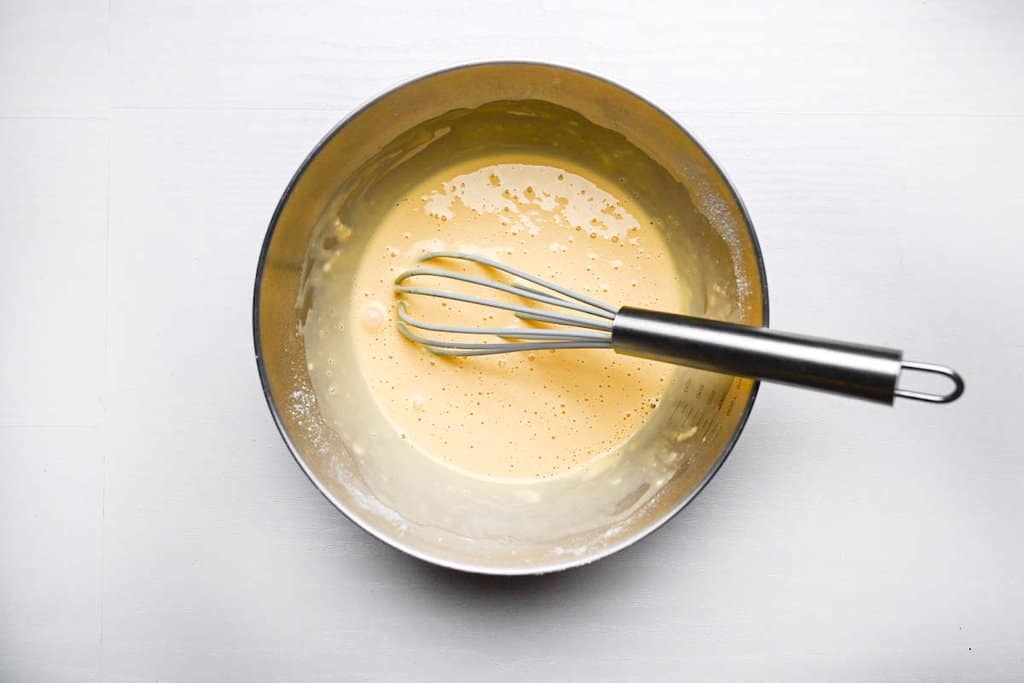
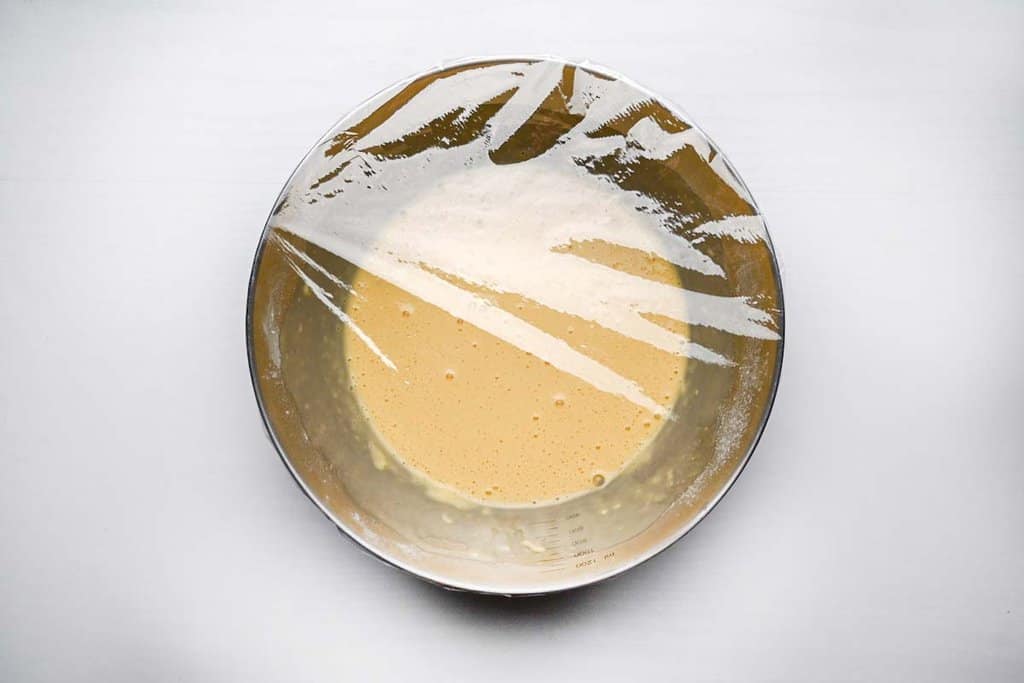
- Cover the bowl and rest it in the fridge for 30 minutes.
Okonomiyaki Sauce
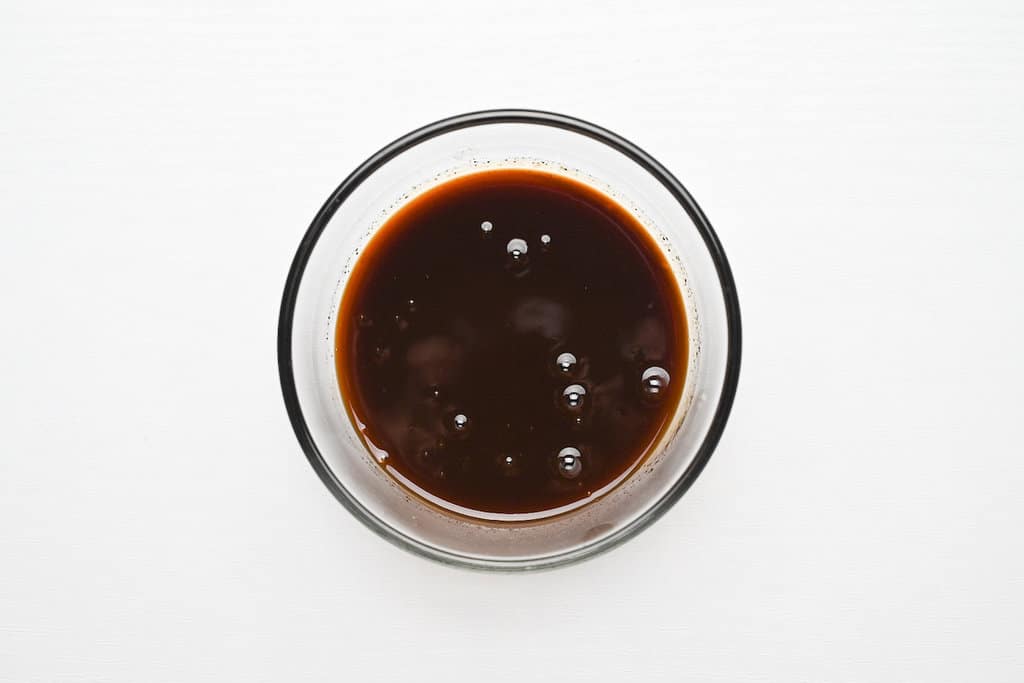
- Take a small bowl and add 2 tbsp tomato ketchup, 1 tbsp Worcestershire sauce, 1 tbsp oyster sauce, 1 tbsp honey and 1 tsp Japanese soy sauce (koikuchi shoyu). Mix well and set aside for later.
Fillings
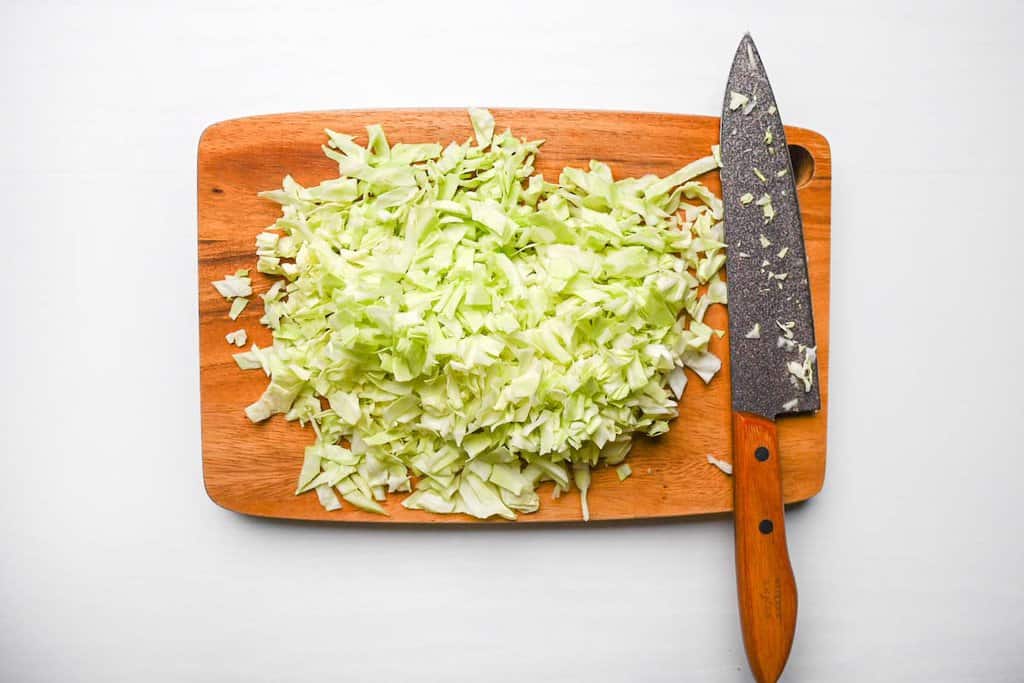
- Cut the 150 g green cabbage into into small rough pieces.Once the batter has been resting for 30 minutes, pour half of it into a new bowl. Place the original bowl back in the fridge for later. Alternatively, make two simultaneously in two separate frying pans.
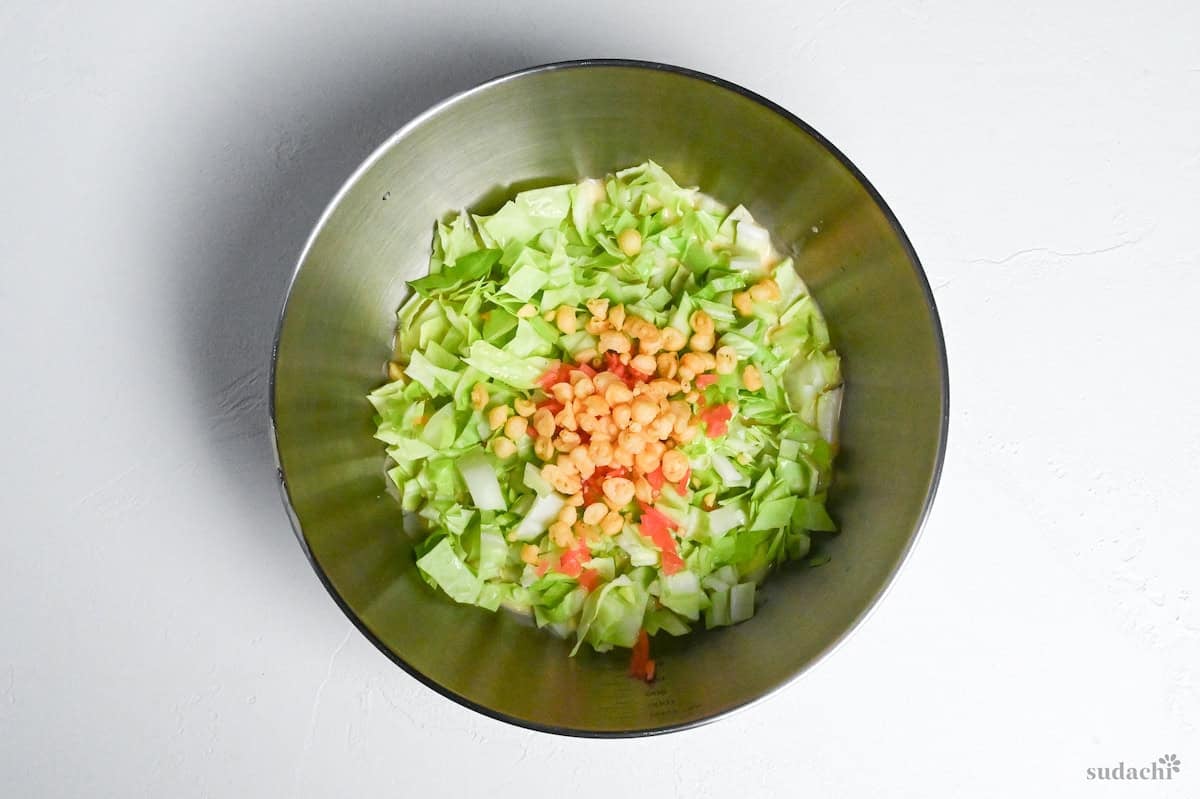
- Start preheating your pan on a medium/medium-high setting.While you wait, add half of the cabbage to the bowl of batter along with 1 tbsp tempura flakes, and 1 tsp red pickled ginger. If you want to add other ingredients such as cheese, kimchi, mochi etc add them here. Mix until everything is evenly distributed.
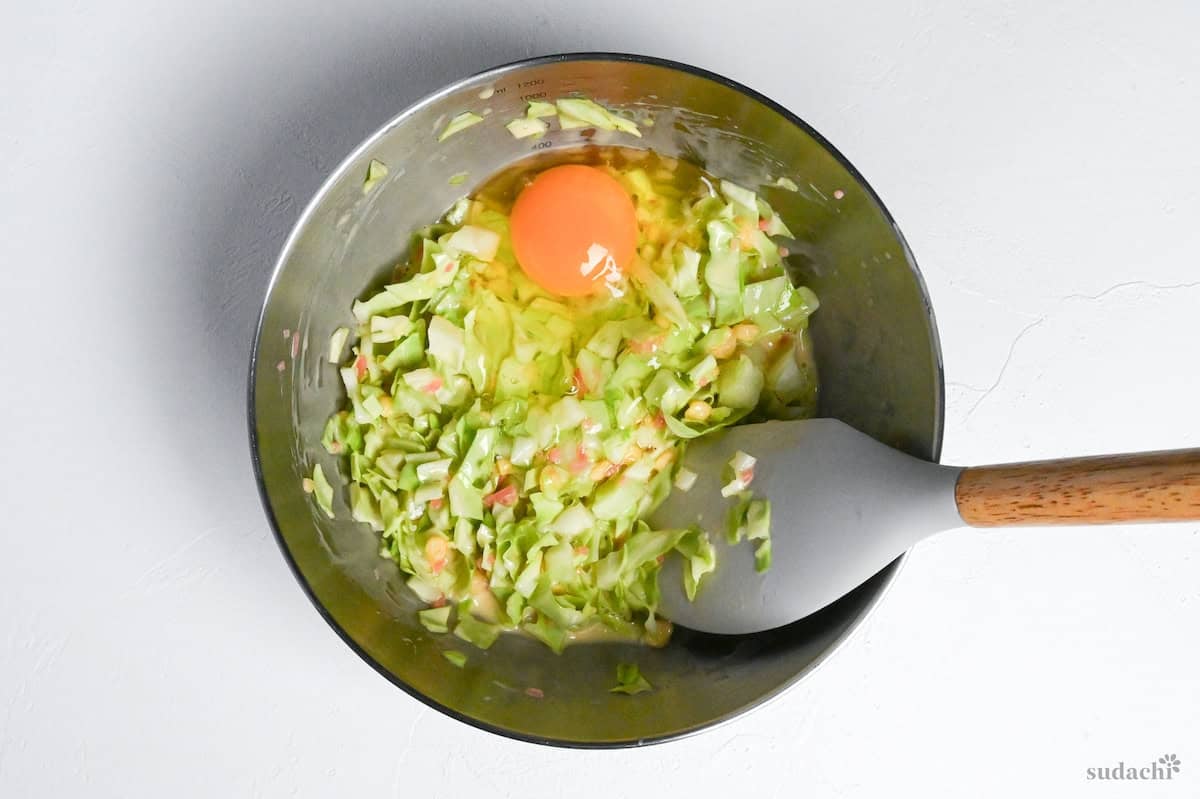
- Add 1 egg and mix again until it's incorporated. Be careful not to over mix.
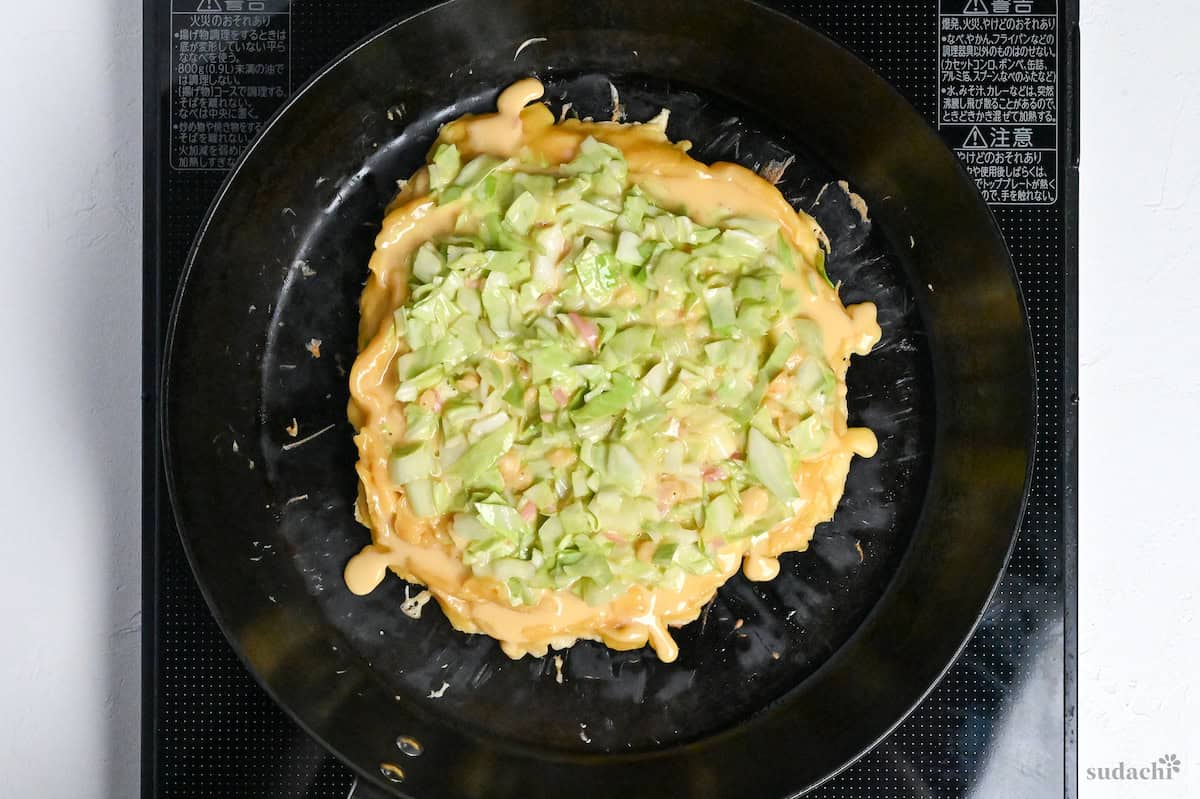
- Add the oil to the pan and swirl around until evenly coated. Wipe out the excess with kitchen paper and pour the okonomiyaki mixture into the center of the pan. Use a spatula to neaten up the edges.
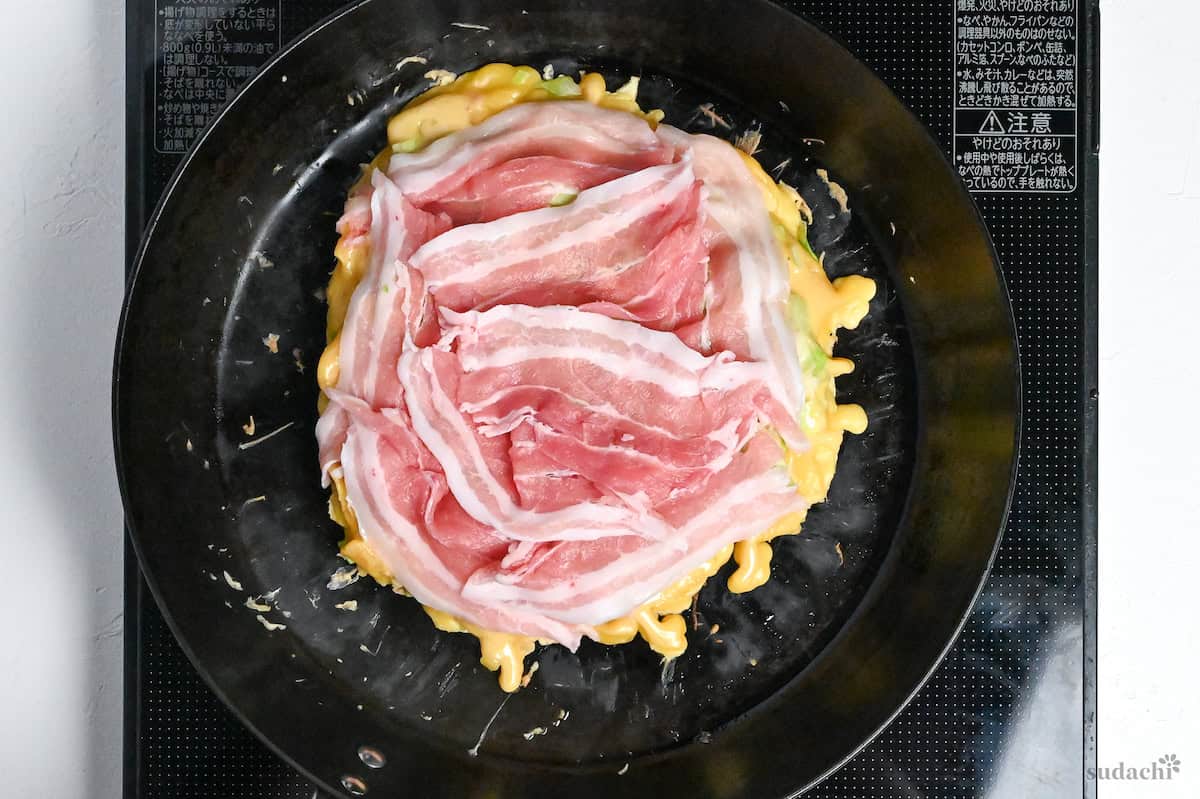
- Lay the slices of pork belly over the top of the wet mixture and fry the okonomiyaki until the bottom starts to become brown and crispy.
- Carefully flip it over and place a lid on the pan. Reduce the heat to medium-low and continue to fry with the lid for about 5 minutes or until cooked all the way through.
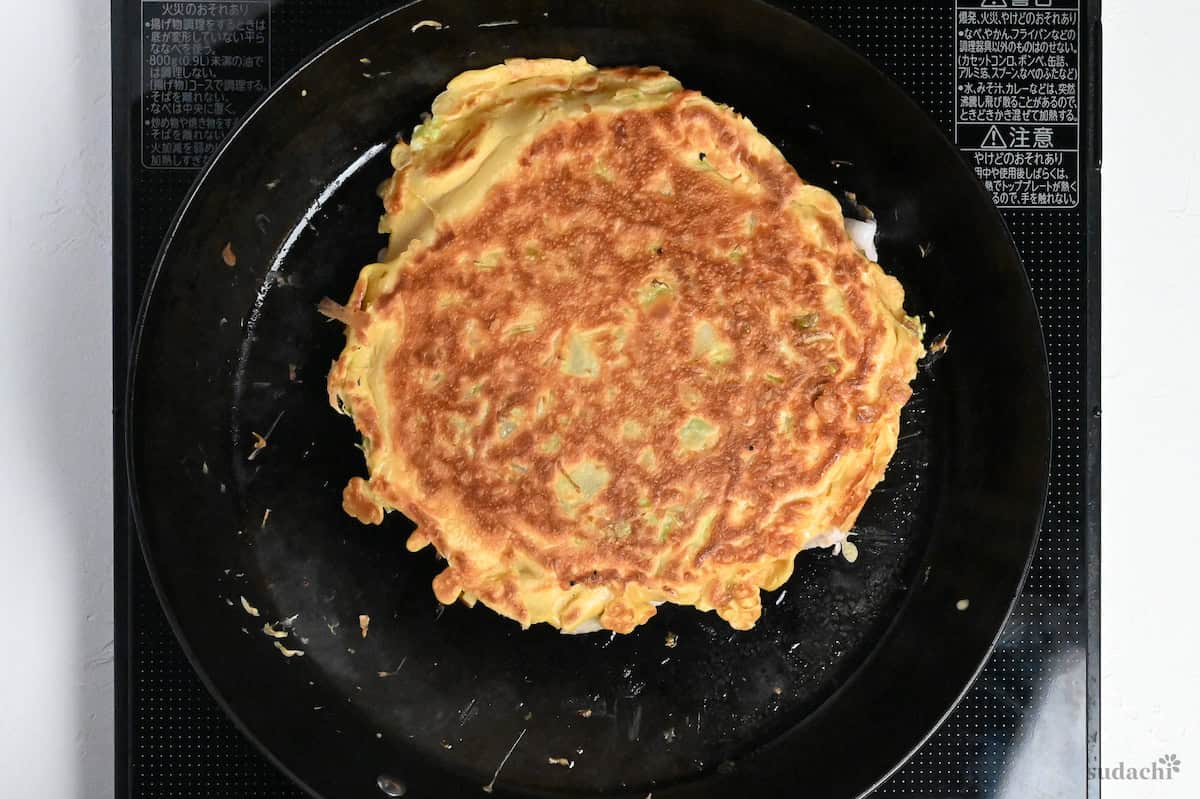
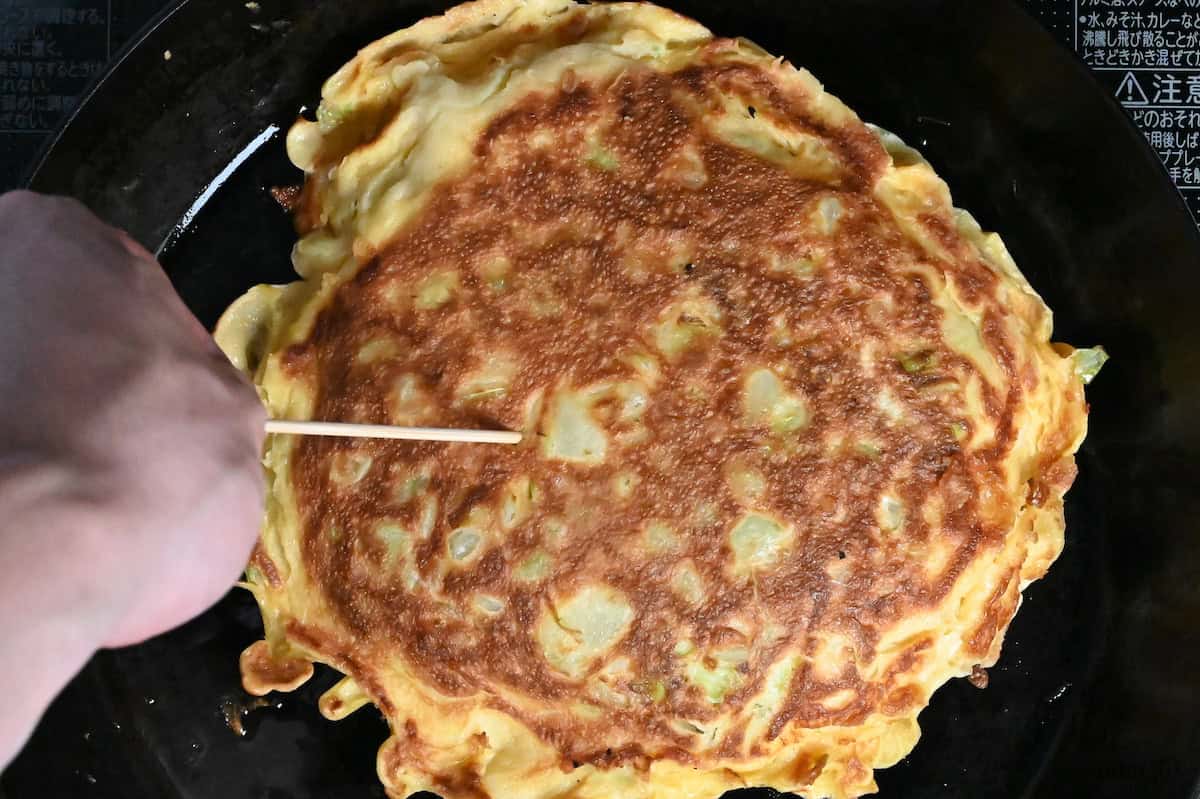
- Pierce the middle with a toothpick to make sure it's cooked. If the toothpick doesn't come out clean, continue to cook on a low heat and check it every few minutes until it's done.
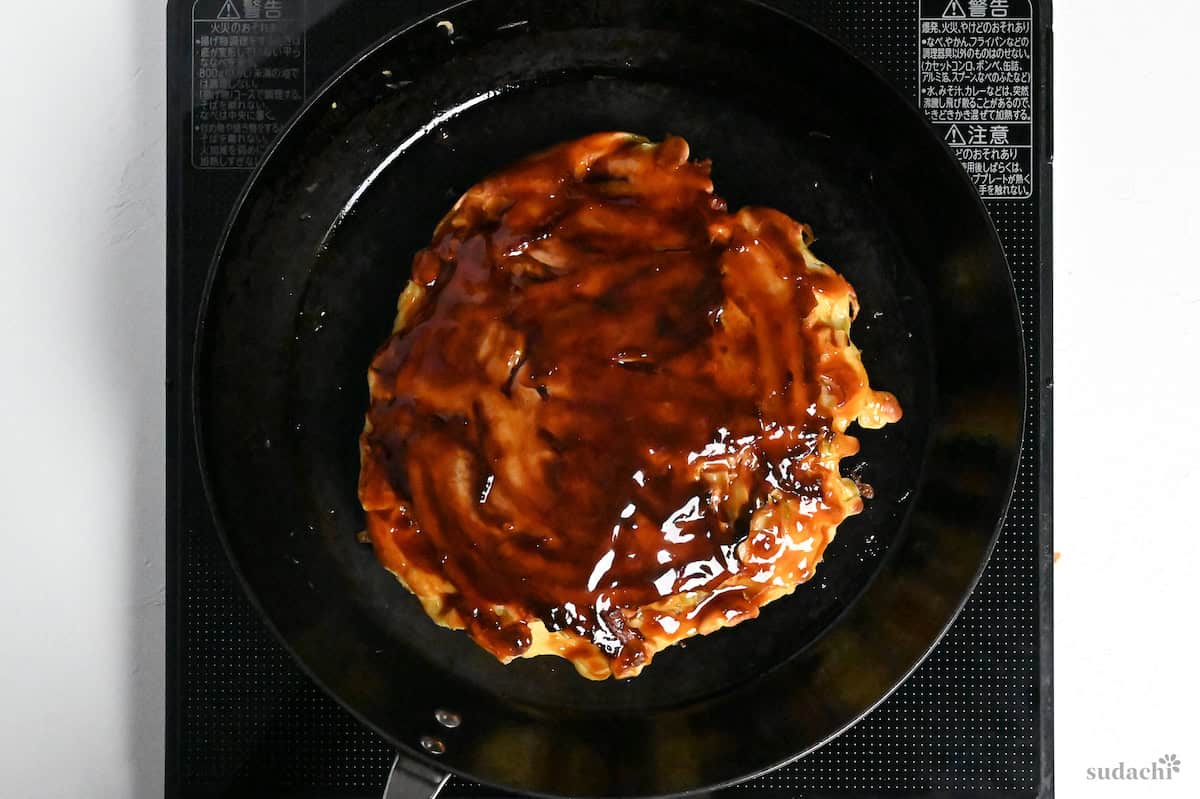
- Once it's cooked through, flip it over again and pour half of the sauce over the top. Use a pastry brush or spoon to spread it evenly. You can do this while it's still in the pan or slide it onto a plate first.
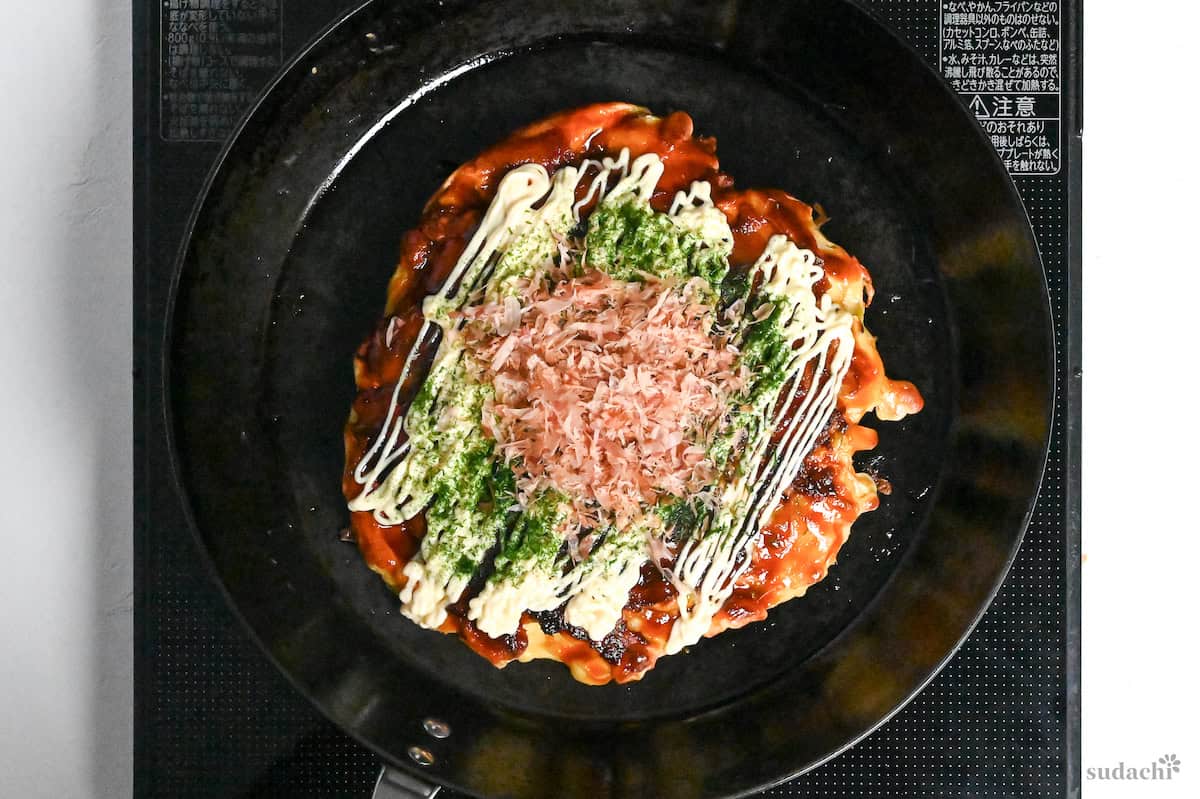
- Drizzle with mayonnaise and sprinkle generously with bonito flakes and aonori. Repeat steps 2-8 with the other bowl of batter in the fridge. Enjoy!
Notes
Use cooled dashi, never hot: Hot dashi races the gluten ahead and the batter turns gummy and heavy. Cool it to room temperature or chill it before it touches the flour, every time.
Do not over-mix the cabbage batter: Once cabbage and egg go in, fold loosely for about 30 seconds, like tossing a salad. Over-stirring toughens the gluten and knocks out the trapped air.
Cut the cabbage small but rough: Not a fine julienne. Cut too fine and the cabbage weeps water and the inside goes soggy. Small-but-rough keeps the texture and stops the batter going sticky.
Do not press down with the spatula: The urge is strong but pressing squeezes out the air and steam you trapped, leaving a flat, chewy round. Leave it completely alone while it cooks.
Toothpick test: An undercooked middle is the most common failure, because the outside browns long before the inside cooks. Rather than sticking to strict timers, check the center with a toothpick; it comes out clean when done.
Flip once, decisively: Wait until the bottom is deep golden and the edges look dry, then slide a wide turner fully under and turn in 1 motion. A timid, half-committed flip is how it breaks apart.
Full Recipe QR Code↑↑