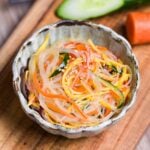
Harusame Salad (Japanese-Style Glass Noodle Salad)
Ingredients
Vegetables
- 50 g Japanese cucumber or Persian cucumber
- 50 g carrot
- 5 g ginger root peeled
- ¼ tsp salt for the vegetables
Noodles and add-ins
- 50 g thin glass noodles (harusame)
- 1 boiled wood ear mushroom or 5 g dried
- 50 g imitation crab or ham
Kinshi tamago (optional)
- 1 egg
- 1 pinch salt
- ½ tsp sugar
- ½ tsp potato starch (katakuriko) or cornstarch
- 1 tsp water
- 1 tsp cooking oil a neutral oil such as canola or rice
Sauce
- 1 tbsp Japanese soy sauce (koikuchi shoyu)
- 1 tbsp unseasoned rice vinegar (komezu) not seasoned sushi vinegar
- 1 tbsp sugar
- 1 tsp Japanese mustard (karashi) in a tube, or English mustard such as Colman's
- ½ tsp Chinese-style chicken bouillon powder
- 1 tsp toasted white sesame seeds ½ tsp for the dressing, ½ tsp reserved for the top
- ½ tbsp toasted sesame oil
- 1 pinch ground white pepper
Instructions
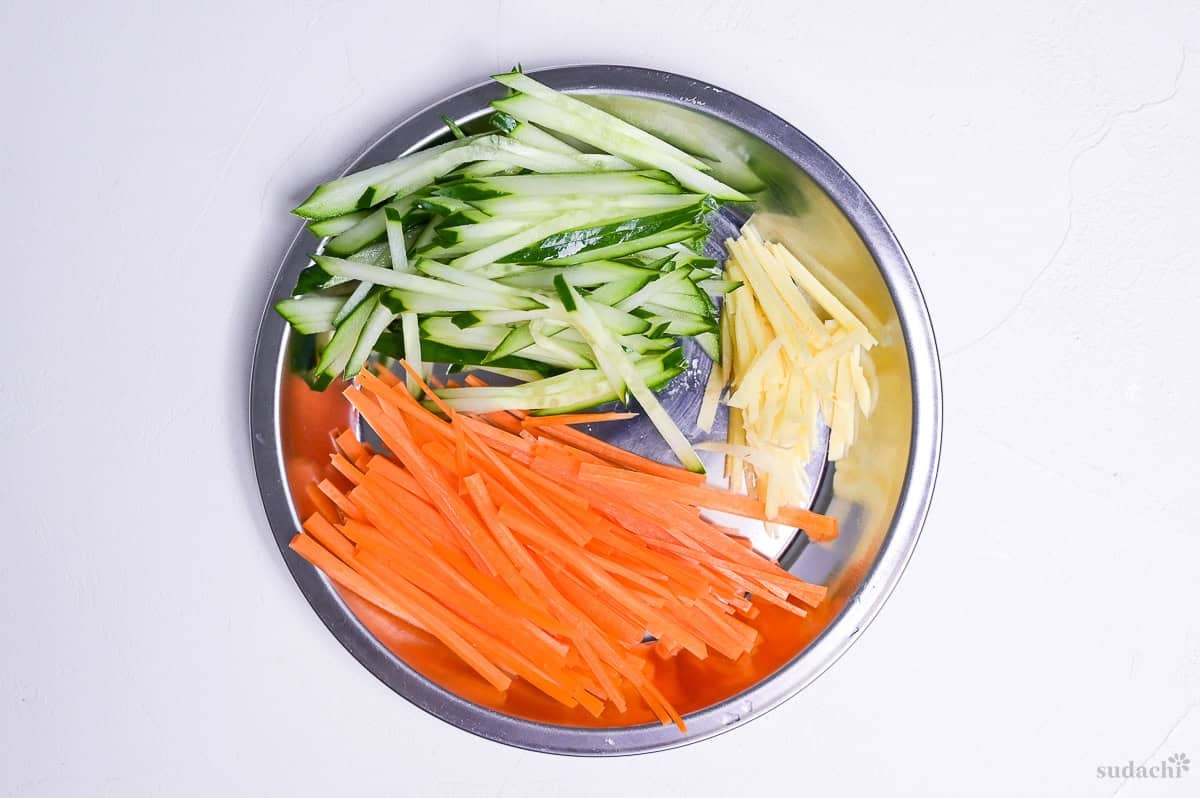
- Cut 50 g Japanese cucumber, 50 g carrot, and 5 g ginger root into fine matchsticks a similar thickness to the noodles. Toss them in a bowl with ¼ tsp salt until every shred is coated, then cover and rest in the fridge for 15 minutes.
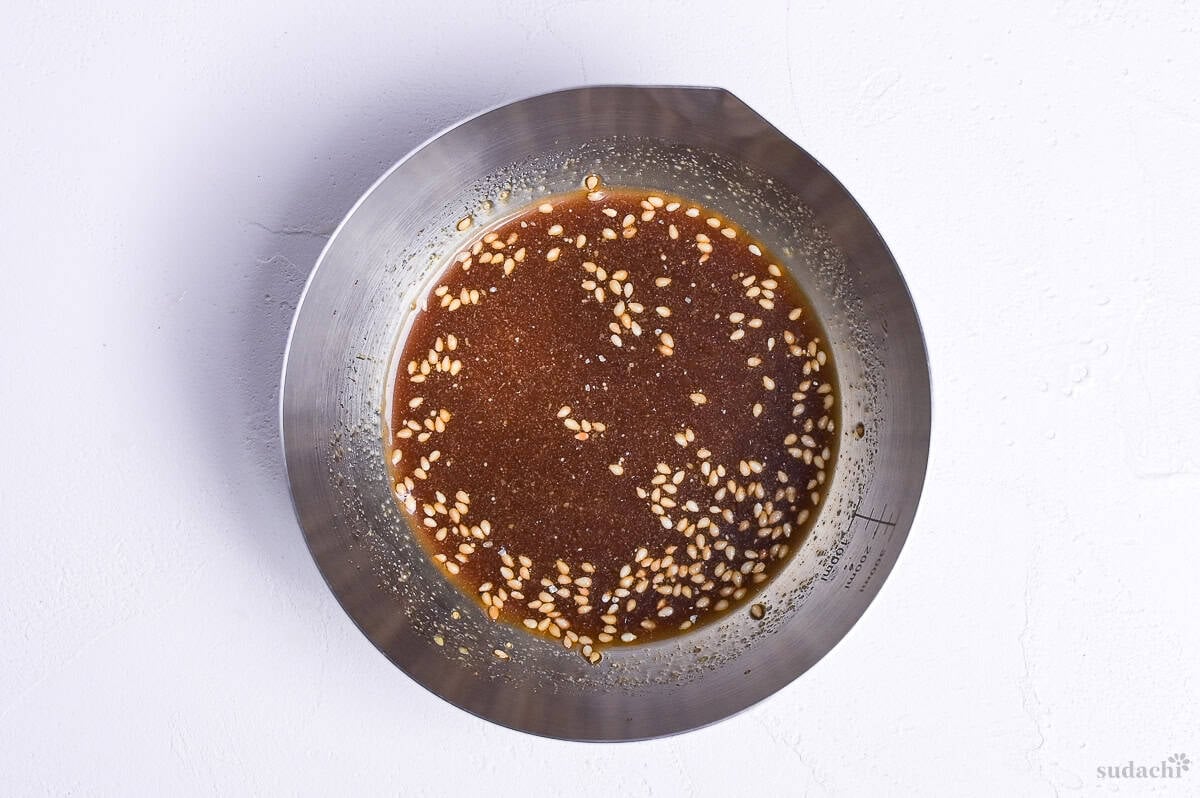
- In a small bowl, stir 1 tbsp Japanese soy sauce (koikuchi shoyu), 1 tbsp unseasoned rice vinegar (komezu), 1 tbsp sugar, 1 tsp Japanese mustard (karashi), ½ tsp Chinese-style chicken bouillon powder, and half of the toasted white sesame seeds until the sugar and bouillon powder dissolve completely.
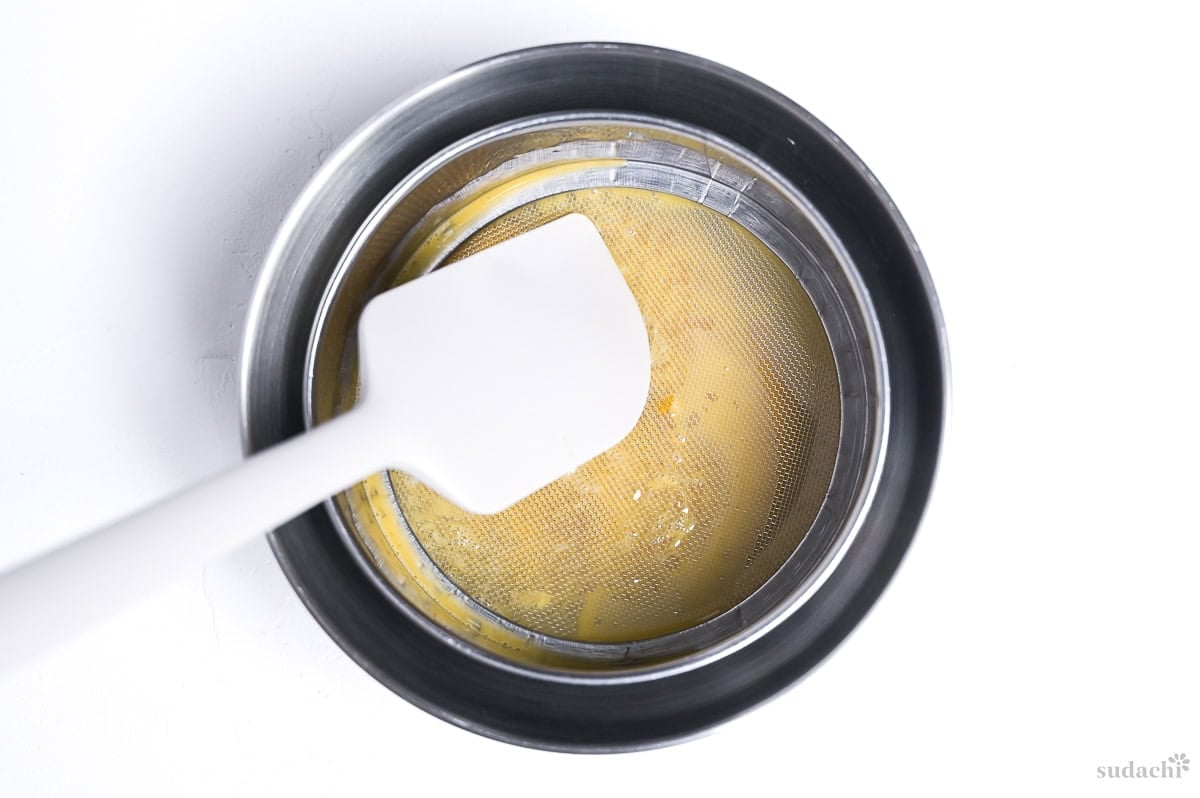
- For the kinshi tamago (optional), crack 1 egg into a bowl with 1 pinch salt and ½ tsp sugar, and stir with chopsticks in a side-to-side cutting motion. Strain the egg through a fine sieve into a clean bowl. In a small separate bowl, mix ½ tsp potato starch (katakuriko) and 1 tsp water into a slurry, then stir that into the strained egg.
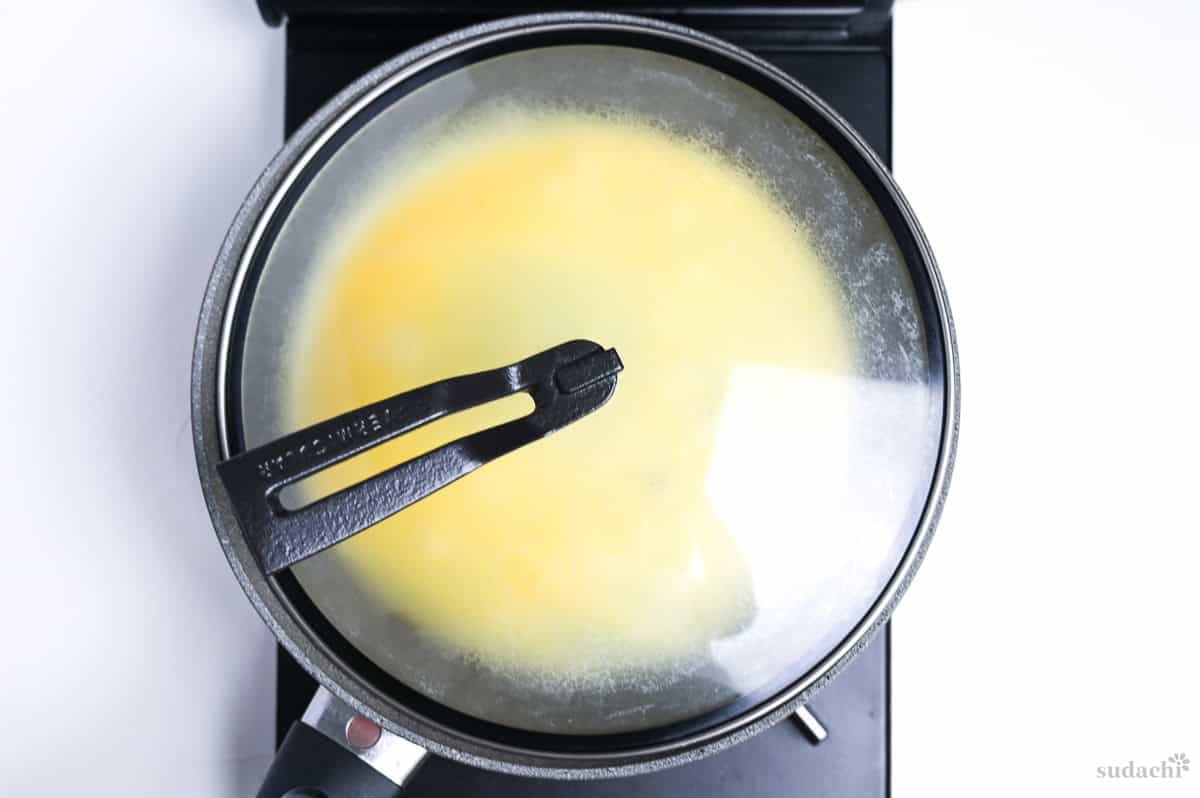
- Wipe a pan with 1 tsp cooking oil, then wipe most of it back off. Set the heat low, pour in the egg, and tilt the pan until it runs thin and even. When the top is no longer wet, cover for 20 seconds, then turn off the heat and leave the lid on. Do not flip it.
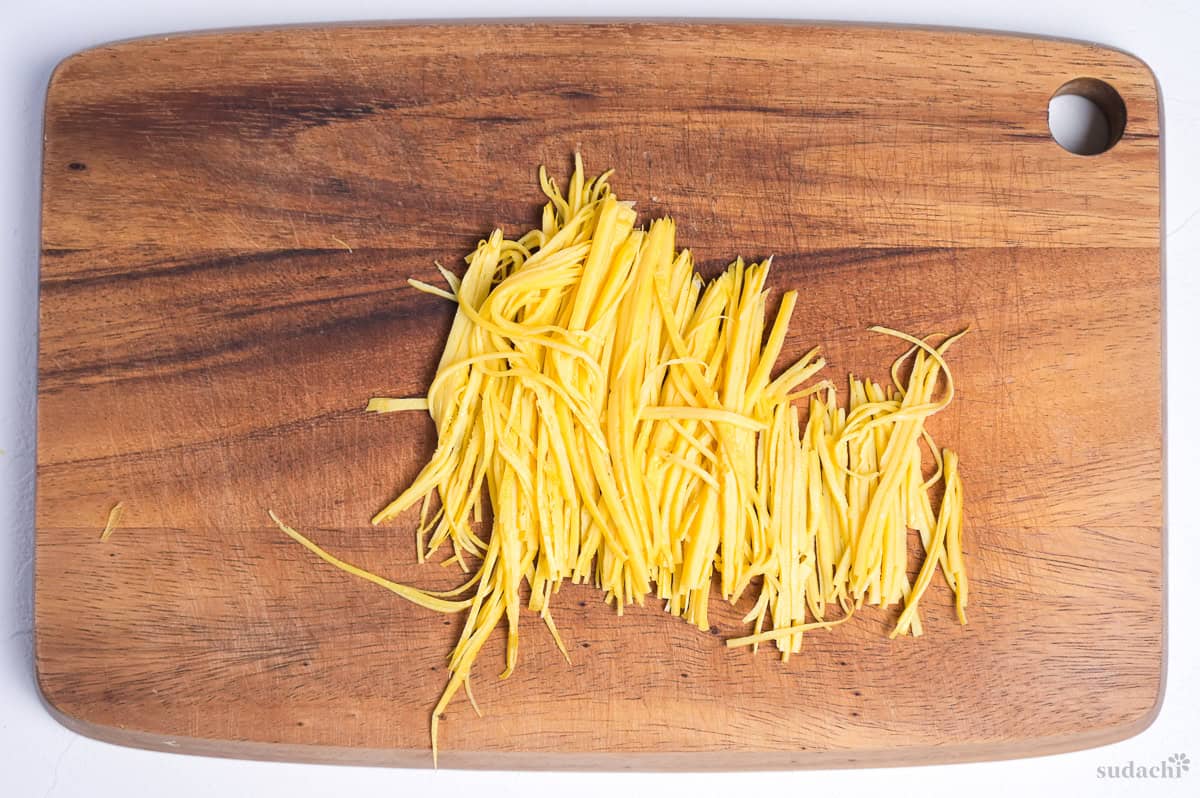
- Slide a chopstick under an edge, lift the sheet, and peel it off in one direction. Lay it flat on a paper towel, not folded or stacked, and let it cool completely. Roll or loosely stack the cold sheet, slice it thin, and fluff the threads apart with your fingers.
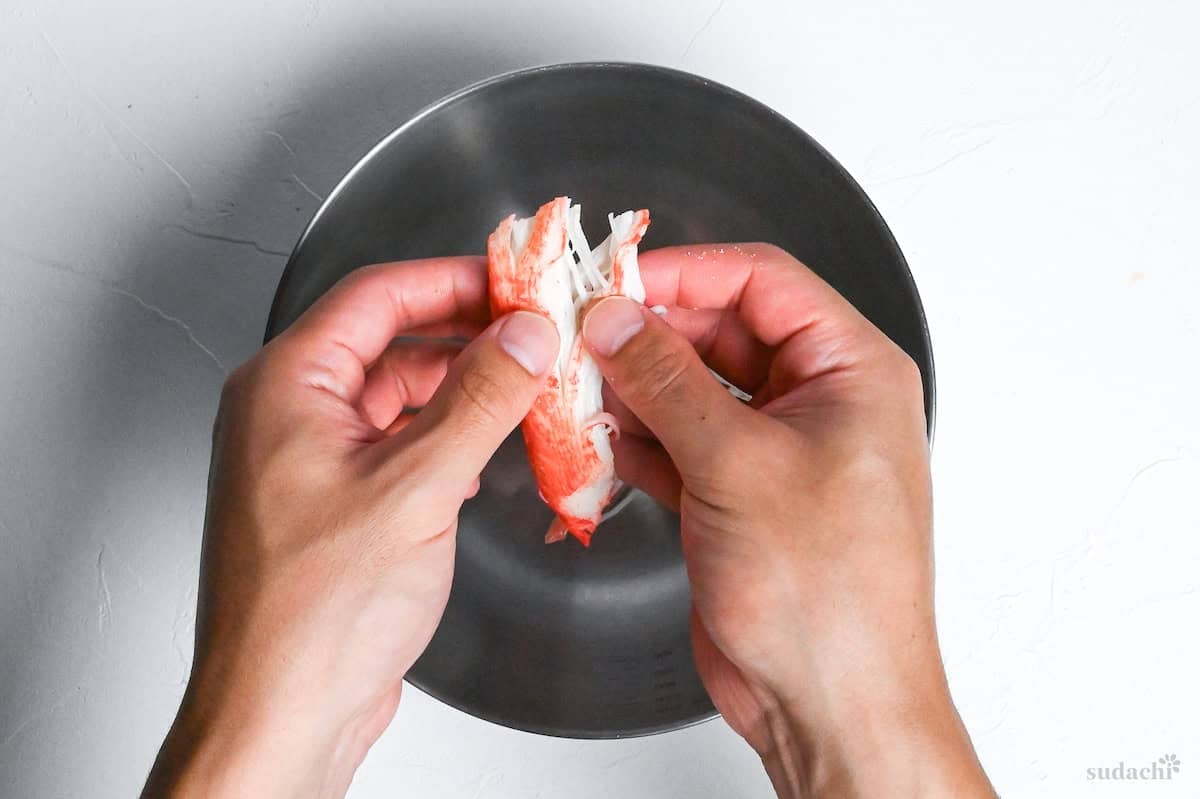
- Blanch wood ear mushroom in boiling water for 1 to 2 minutes (for 5 g dried, soak it in warm water for 20 minutes first, then blanch). Drain, cool, and press it dry between paper towels before slicing it thin. Pull 50 g imitation crab into shreds with your fingers.
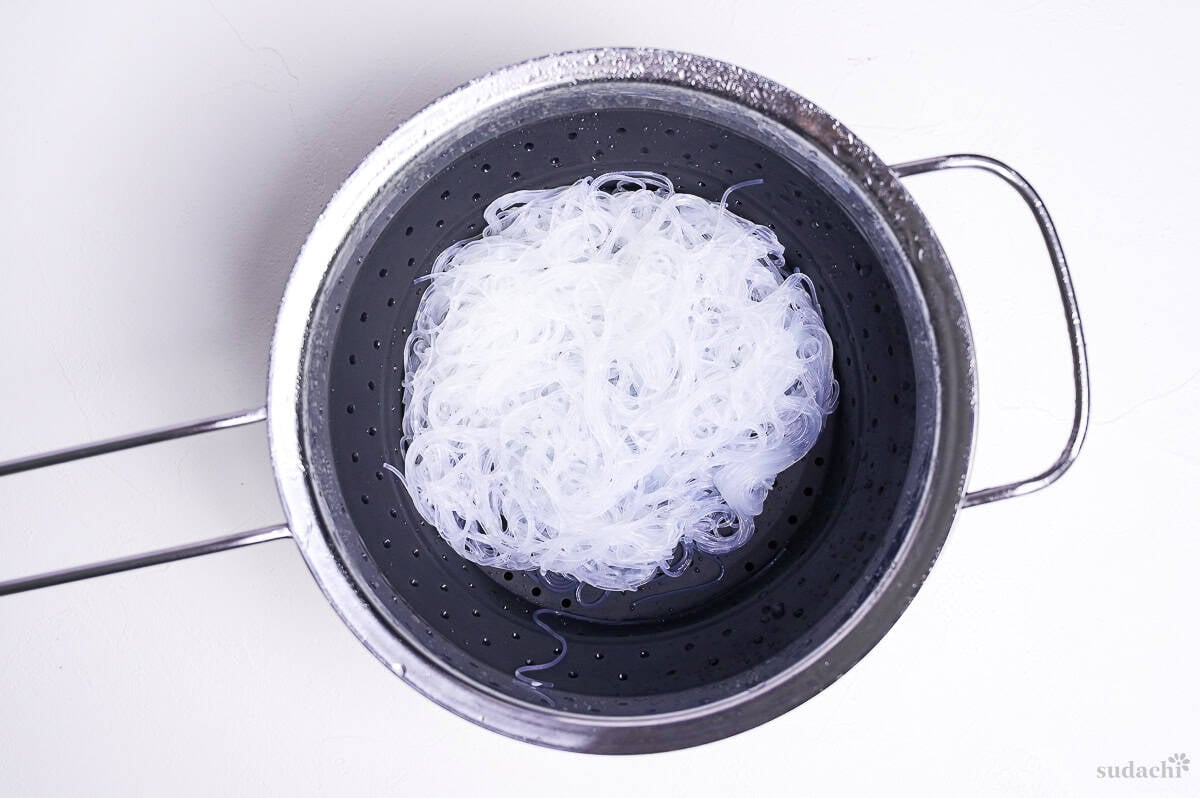
- Cook 50 g thin glass noodles (harusame) according to the time on the package. Taste test to make sure they're soft, then drain and rinse under cold running water. Slide them into a bowl of iced water for 1 minute and drain again. Press them dry between paper towels and cut to about 10 cm if long.
- Drain the salted vegetables, gather them in your fist, and squeeze. Squeeze again, harder, until almost nothing comes out.
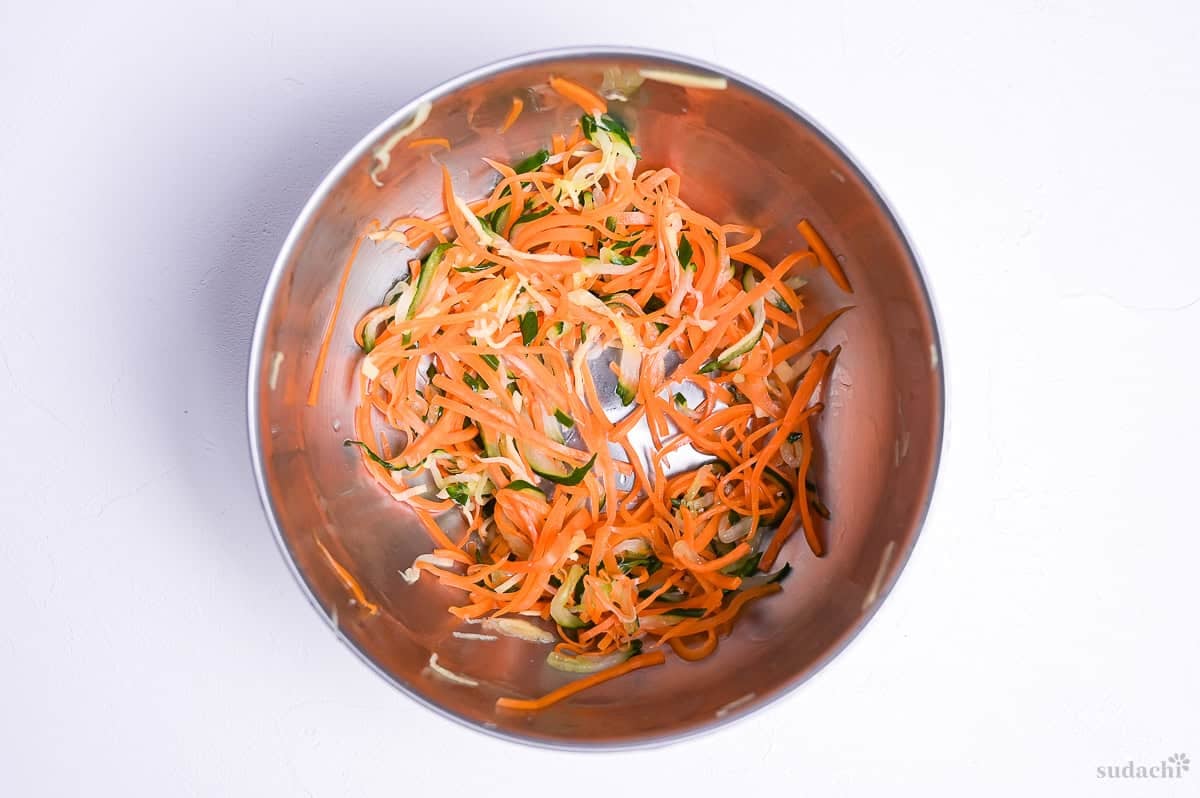
- Spoon the dressing into the bottom of a large bowl. Tip in the salted vegetables and the wood ear and turn them through until coated. Add the noodles and toss well, lifting from underneath. Gently fold in the kinshi tamago and the crab last.
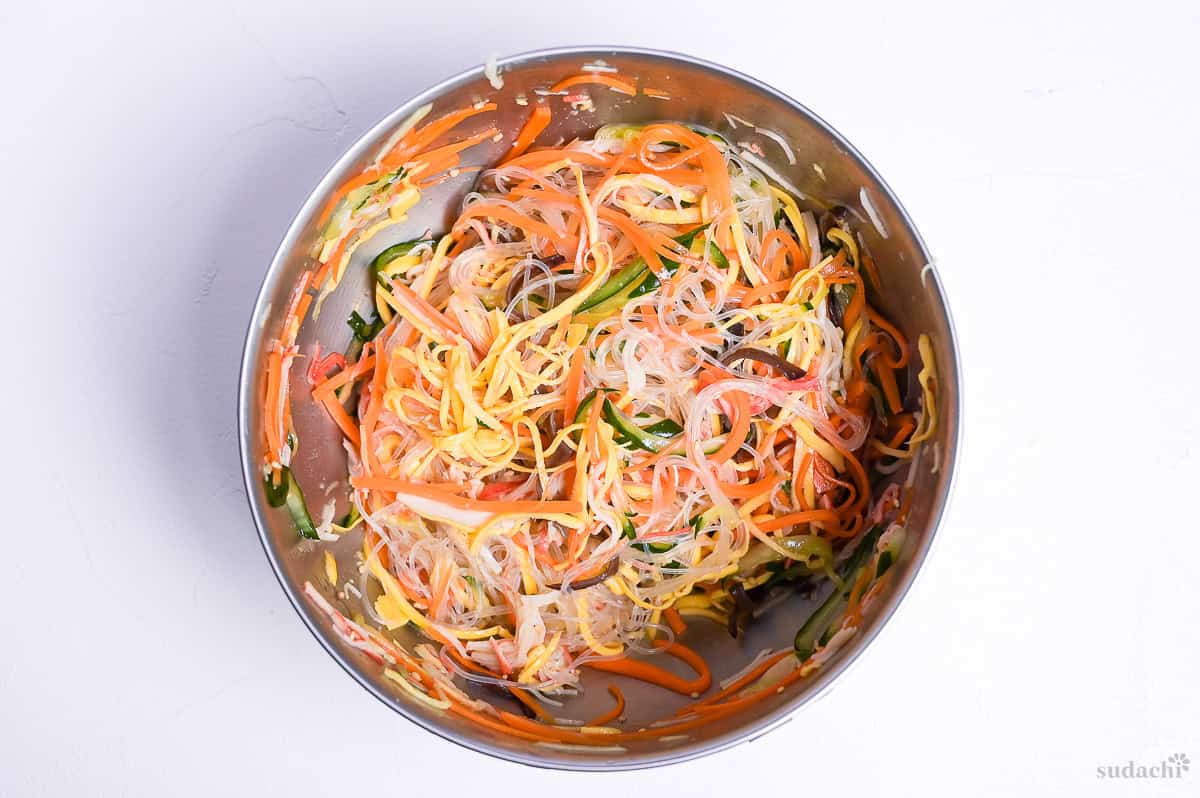
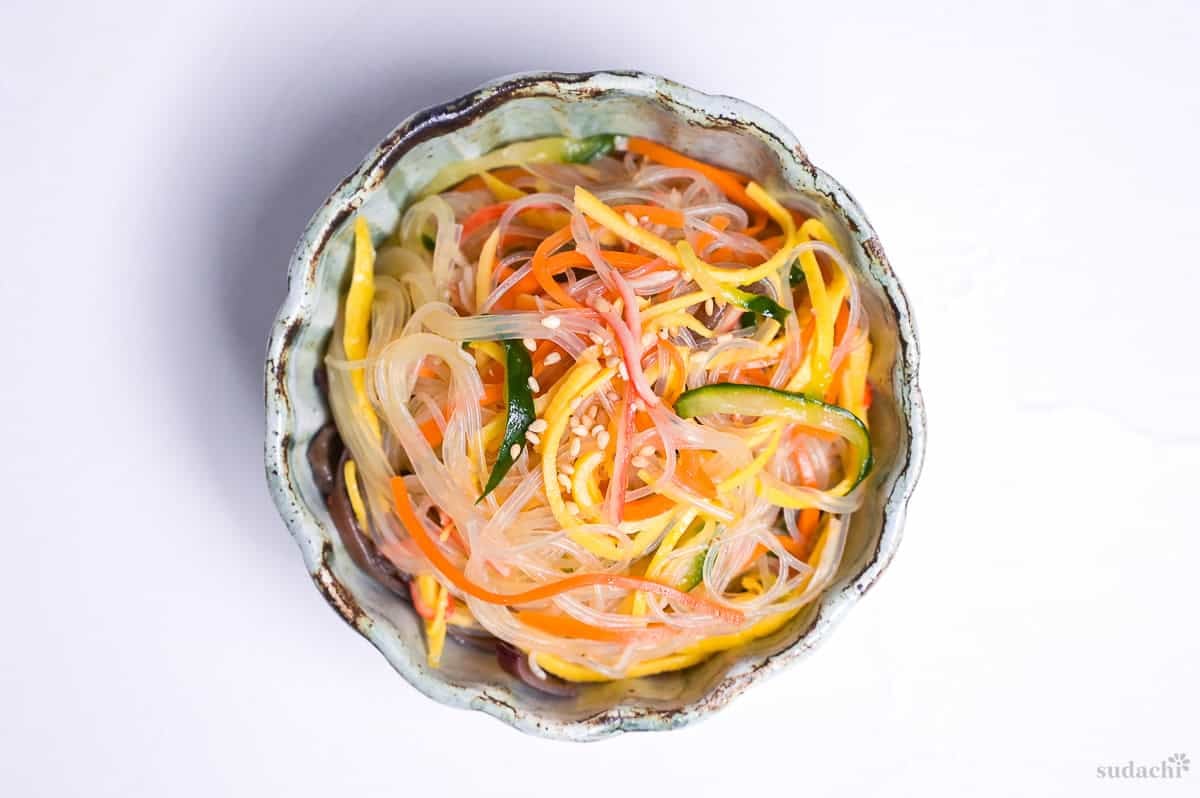
- Drizzle the ½ tbsp toasted sesame oil over the top, add 1 pinch ground white pepper, and toss lightly. Serve lightly chilled. Scatter the reserved the other half of toasted white sesame seeds over the top and add a few more drops of sesame oil just before serving. Enjoy!
Notes
Squeeze the vegetables until it feels like too much: Water left in the shreds turns up under the finished salad and thins the dressing you already tasted and approved. That thinning does not come back, so gather them in your fist and go past reasonable.
Boil the noodles, do not soak them: Hot water off the heat softens the outside of the strand and leaves the middle chalky, so cook them for the full time on the package.
Dissolve the bouillon powder completely: Undissolved grains land on the tongue as salty specks and leave the rest of the dressing tasting thin.
Strain the egg before the starch, not after: Send the slurry through the mesh and the mesh keeps the starch, and the thin sheet then tears the moment you try to peel it. Strain first, slurry second.
Dress the salad just before you eat it: The noodles keep drinking the dressing after you stop tossing, so a bowl that tasted right can land faint 20 minutes later. It is at its best within the hour.
Full Recipe QR Code↑↑