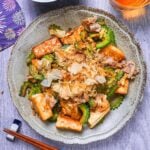
Goya Champuru (Okinawan Bitter Melon Stir Fry)
Ingredients
- 1 Okinawan bitter melon (goya) large coarse bumps mean a milder melon, small dense bumps on a deep green skin bite sharper
- ½ tsp salt
- ¼ tsp sugar
- 150 g thinly sliced pork belly pick slices with plenty of visible white fat
- 1 pinch salt and pepper
- 200 g firm tofu
- 1 egg whisked
- 1 tsp Japanese soy sauce (koikuchi shoyu) for cooking
- 1 tsp Japanese soy sauce (koikuchi shoyu) for finishing
- bonito flakes (katsuobushi) do not skip
- 1 tbsp cooking oil any neutral oil with high smoke point
Instructions
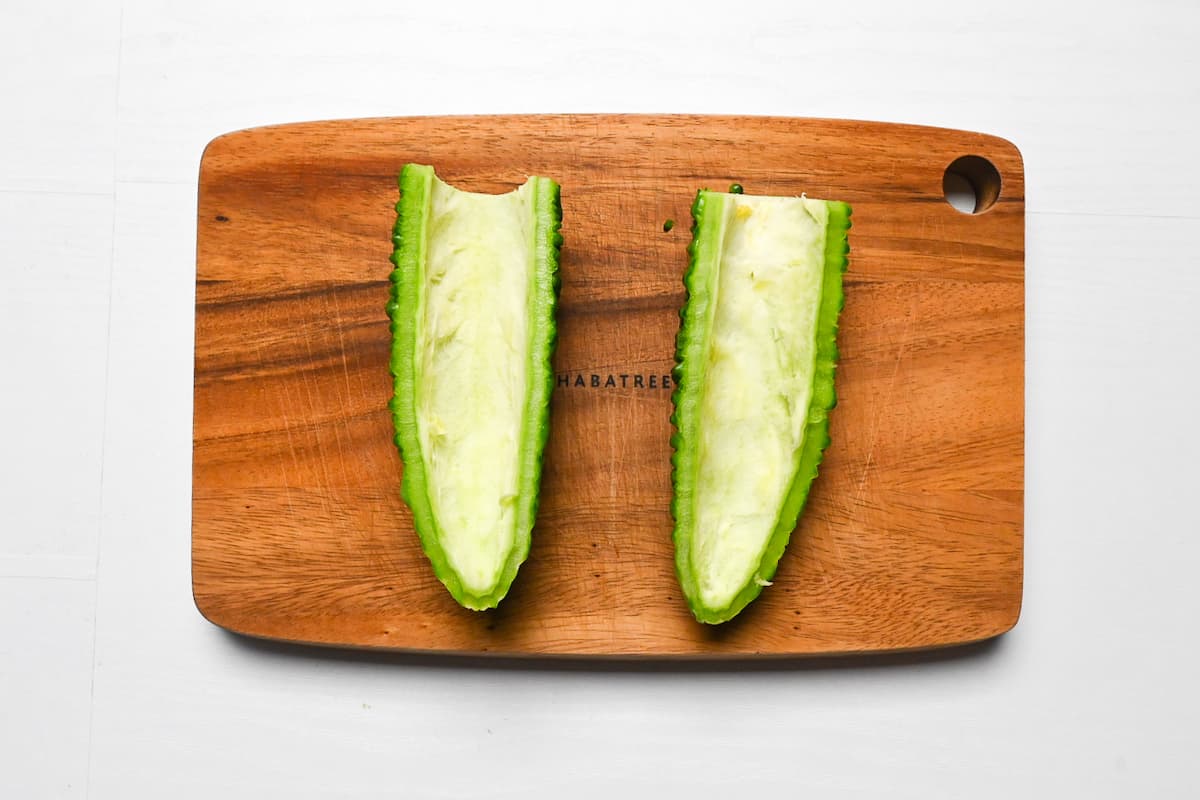
- First, cut 1 Okinawan bitter melon (goya) in half lengthways and scoop out the seeds.
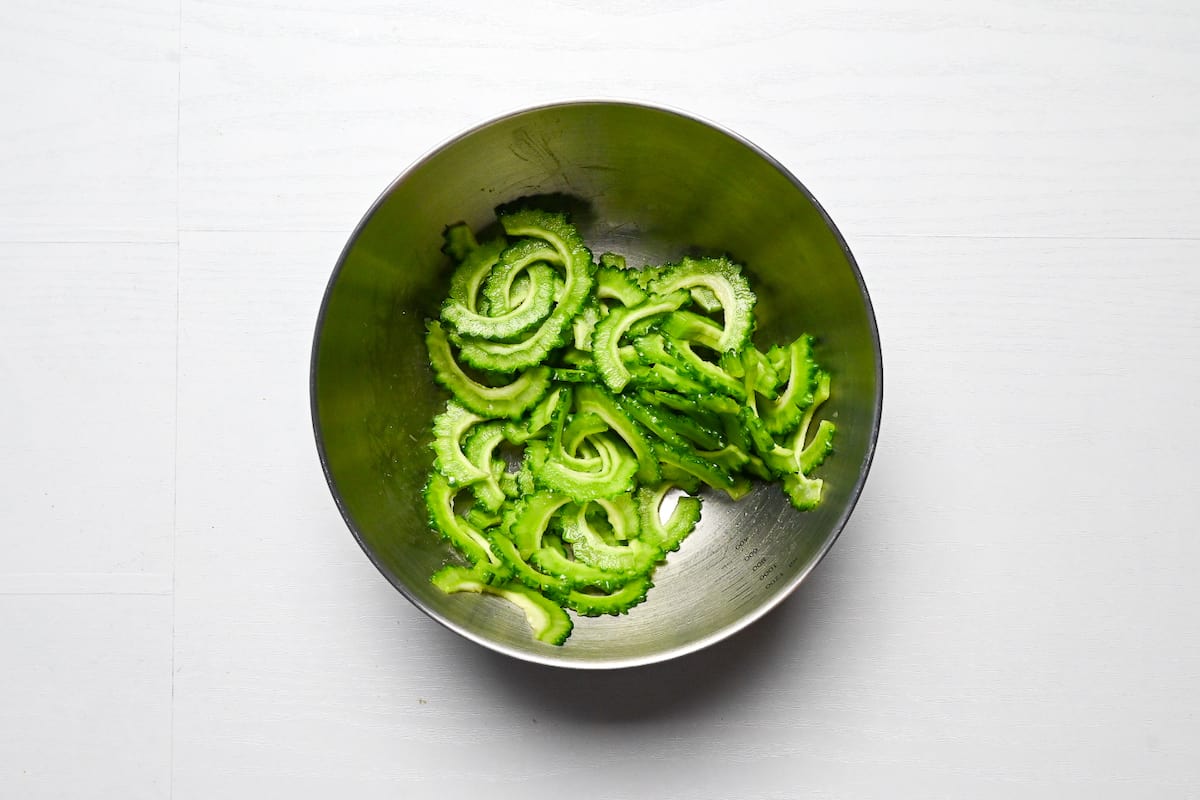
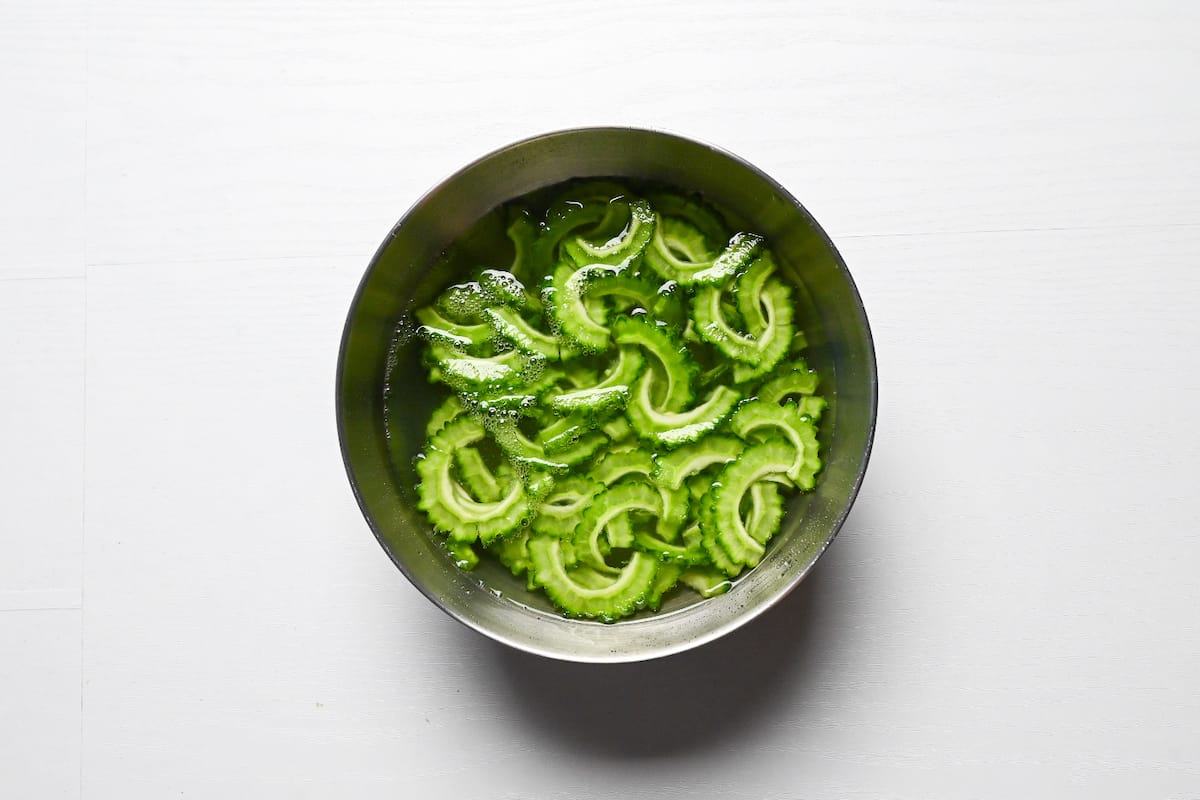
- Cut it into 5mm slices and place in a bowl. Add ½ tsp salt and ¼ tsp sugar and massage until evenly covered. Rest for 10 minutes.
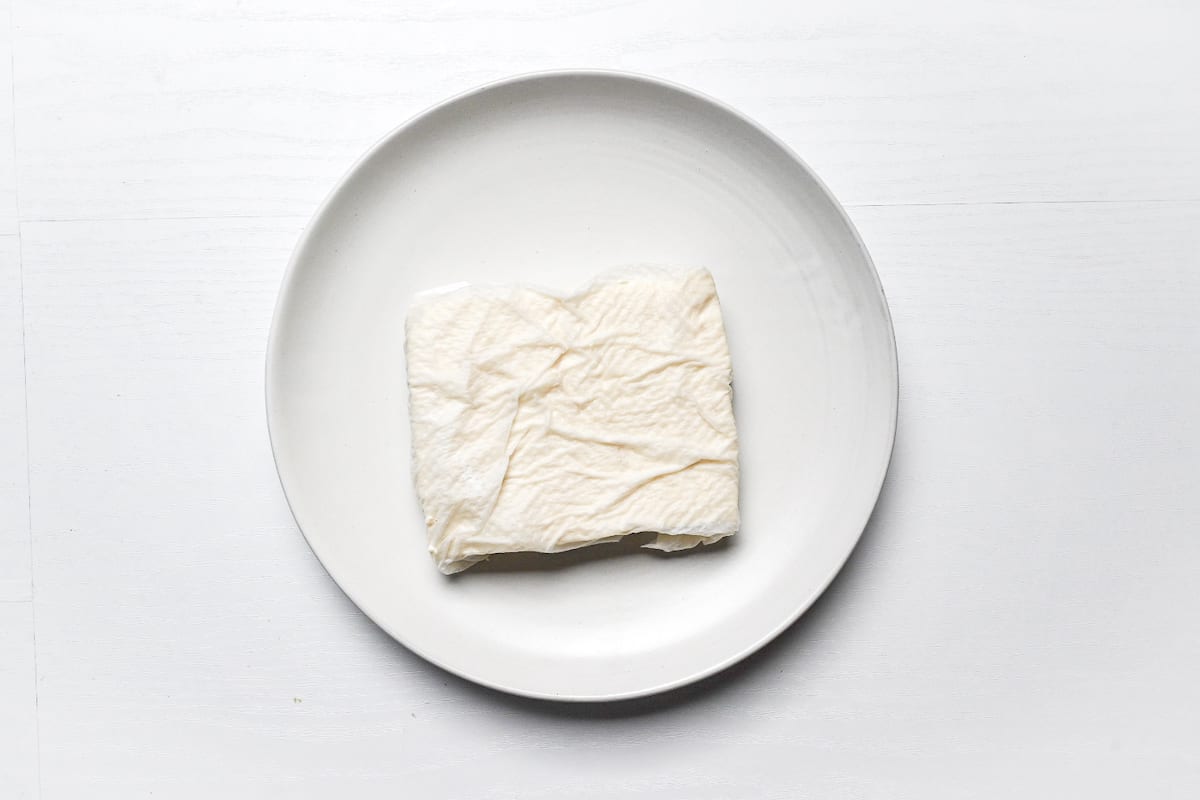
- Wrap 200 g firm tofu with kitchen paper and place it on a microwavable plate. Microwave uncovered for 1 ½ minutes at 600W to evaporate excess liquid. Leave to cool for a few minutes.
- After 10 minutes of resting, fill the bowl of goya with fresh water, swish and pour it through a colander to drain. Shake thoroughly and set by the stove for later.
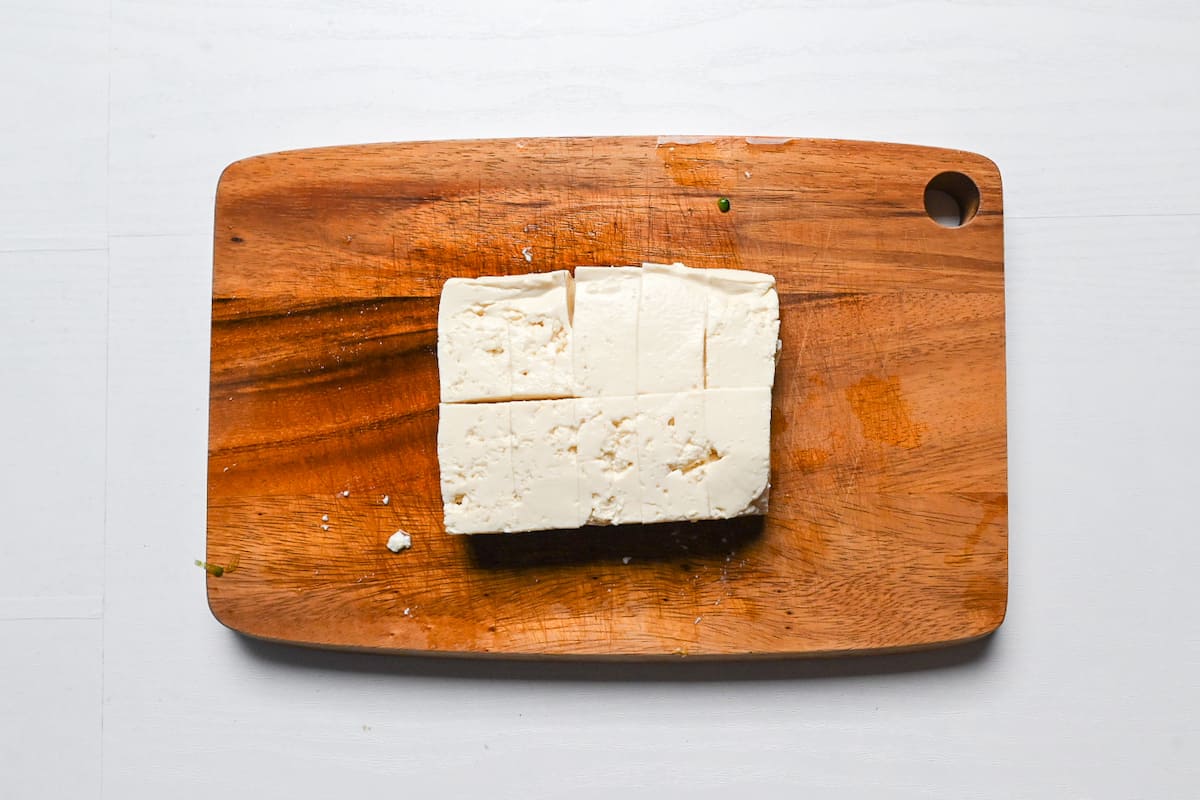
- Once the tofu is cool enough to touch, cut it into bitesize cubes and start heating a frying pan on medium.
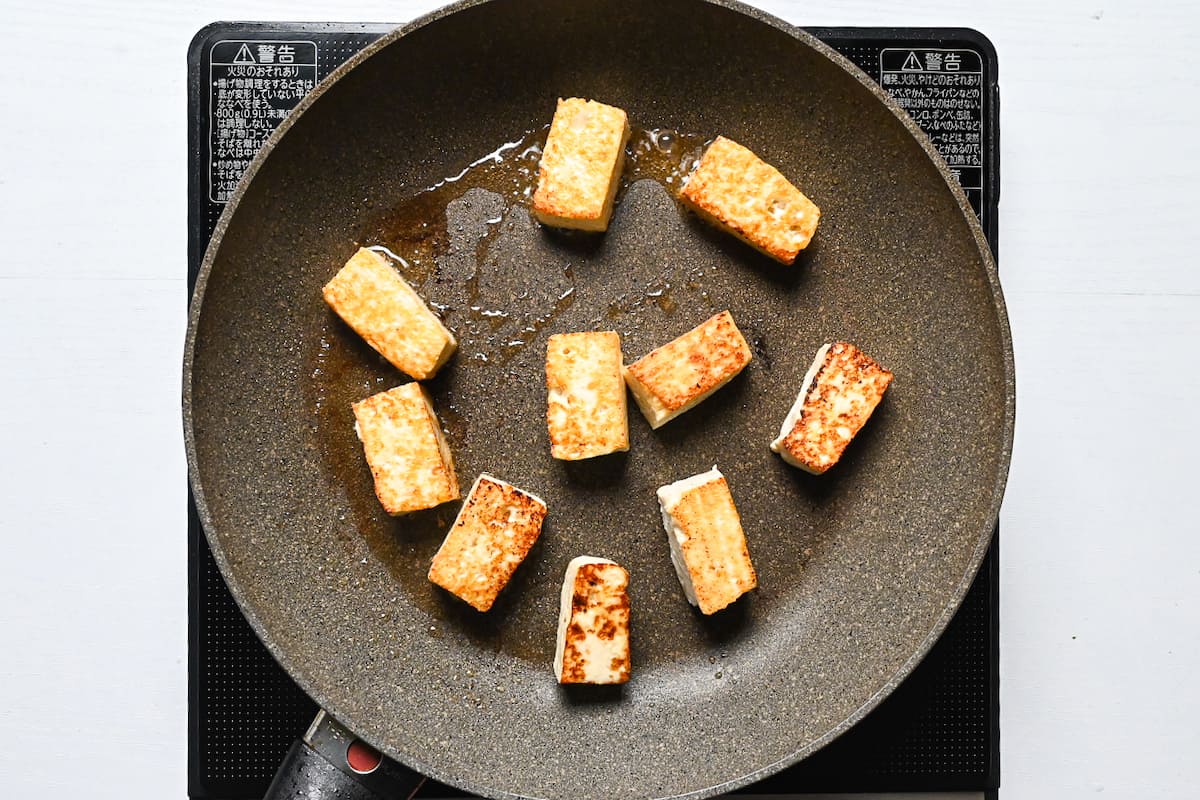
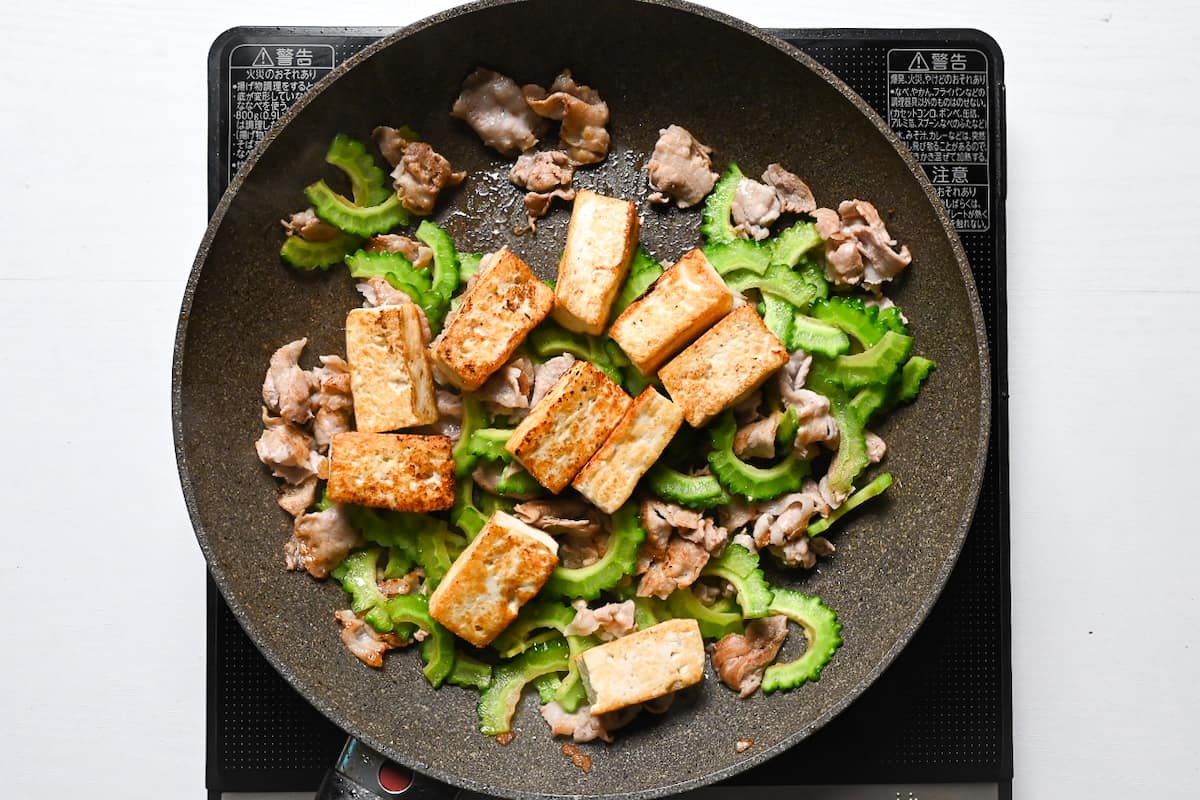
- Once the pan is hot, add 1 tbsp cooking oil. Place the tofu down and brown it on each side. When it's brown and slightly crispy all over, remove it from the pan and transfer it to a heatproof plate.
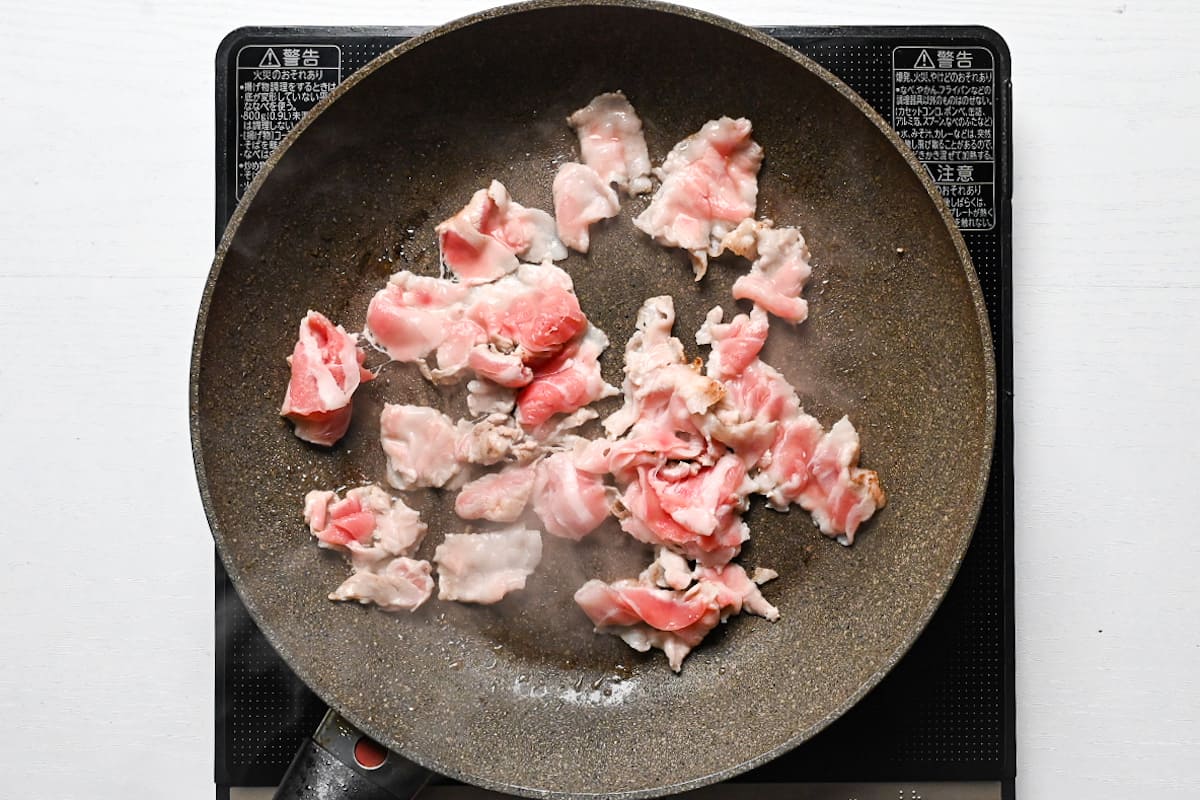
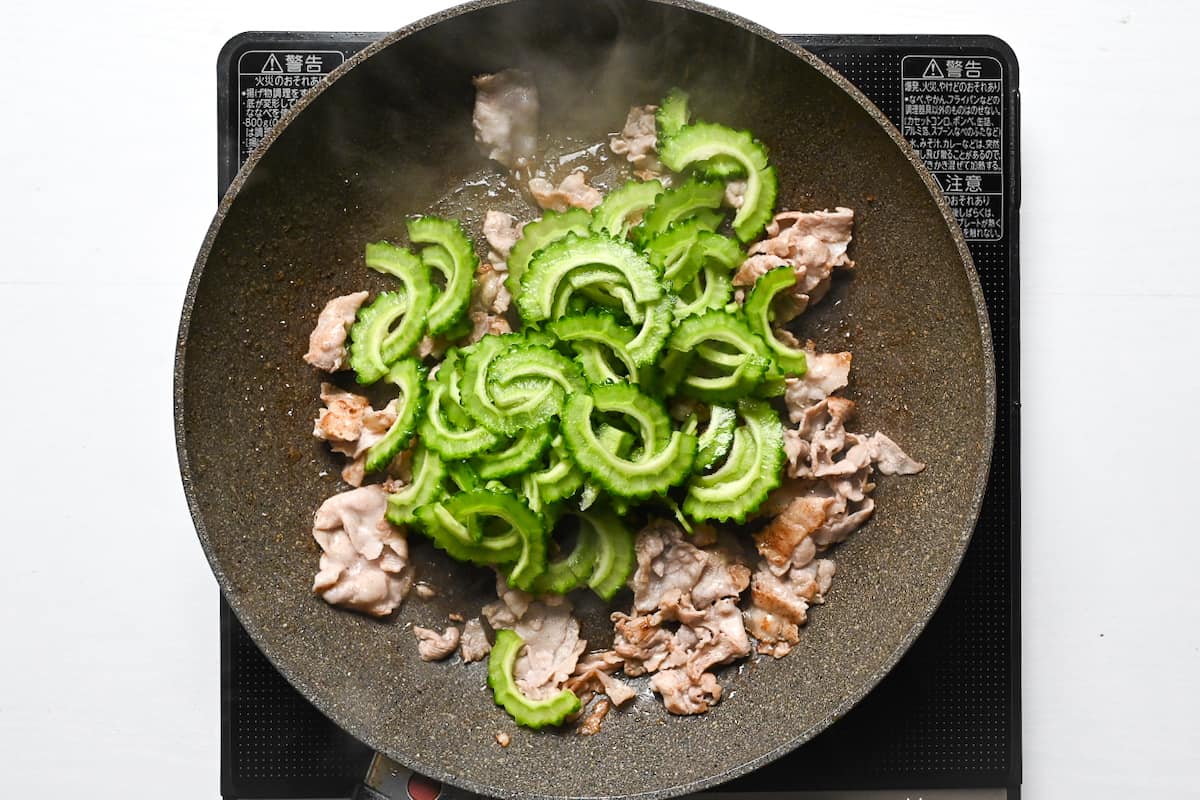
- In the same pan, sear 150 g thinly sliced pork belly on both sides until the fat begins to crisp up.
- Add the goya to the pan and stir fry for 2-3 minutes.
- Add the tofu back into the pan and sprinkle with 1 pinch salt and pepper. Pour 1 tsp Japanese soy sauce (koikuchi shoyu) around the edge of the pan, let it bubble for 10 seconds and then mix it through the ingredients.
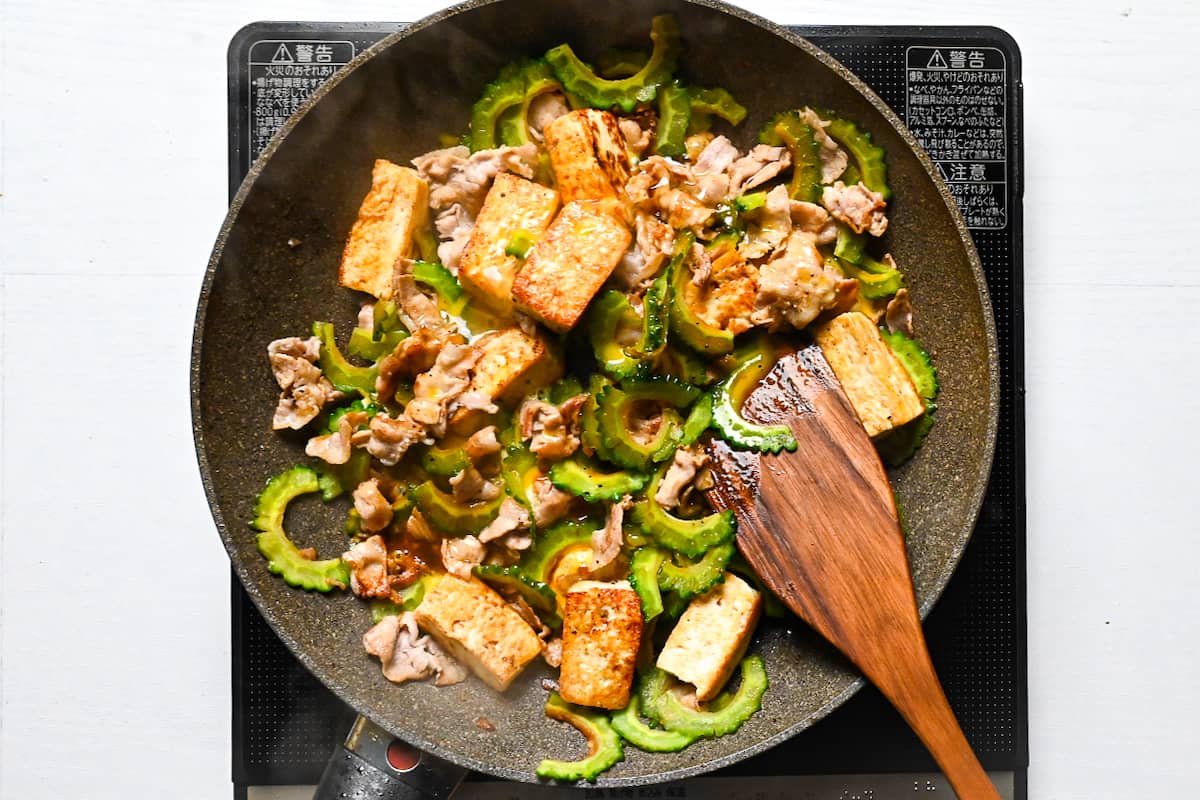
- Crack 1 egg into a bowl and whisk until the whites and yolks are combined. Pour it into the pan and without mixing, cook until half done.

- Turn off the heat, then add another 1 tsp Japanese soy sauce (koikuchi shoyu) and break up the egg with a spatula, mixing gently until evenly distributed.
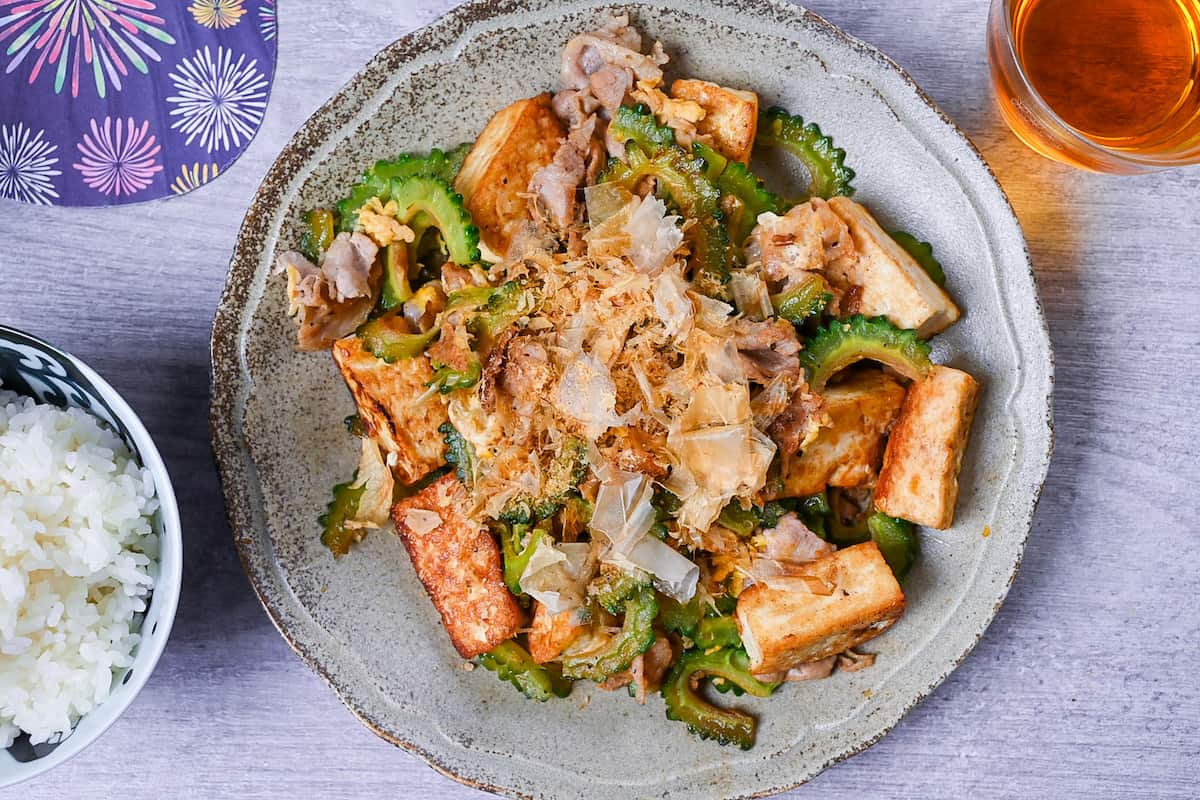
- Plate up and generous sprinkle bonito flakes (katsuobushi) over the top. Enjoy!
Notes
Use pork belly with plenty of visible fat: The rendered sweet fat is what carries the goya, and sugar or a leaner cut cannot rebuild it. Pick slices with generous white running through them and sear both sides properly before the goya goes in.
Cook hot and fast, and stir less than you want to: Goya turns limp and dull the moment the pan drops below a real sizzle. Keep the heat high and move the slices as little as you can, so they hold a crisp-tender bite.
Add the finishing soy off the heat, then pull the pan: Stir the second splash of soy sauce in as you cut the heat, then lift the pan off the burner. The residual warmth keeps the soy fresh and finishes the egg soft instead of rubbery.
Slice the goya about 5mm thick: Too thin and the slices lose their bite in the pan, too thick and the bitterness reads louder and sharper.
Do not over-scrape the white pith: The bitterness lives in the green flesh, not the pith. Scoop out only the seeds and the loose spongy center, which is about keeping the slices from turning watery, not removing bitterness.
Full Recipe QR Code↑↑