
Chilled Chicken and Citrus Somen Noodle Soup
Ingredients
Chicken
- 150 g chicken breast
- 2 pinches salt to season
- 1 tsp cornstarch
- ½ tbsp sake
- 1 tsp mirin
- 1 tsp Chinese-style chicken bouillon powder
- ½ tsp salt for cooking "sauce"
- ¼ tsp sugar
Soup
- 30 g Japanese leek (naganegi) white part
- 500 ml water
- 3 tbsp Japanese soy sauce (koikuchi shoyu)
- ½ tbsp Chinese-style chicken bouillon powder
- 1 tsp grated garlic or garlic paste
- 1 tsp salt
- 1 pinch sugar
Somen
- 200 g dry somen noodles
- ice cubes optional
- 1 sudachi (or lime / lemon) thinly sliced
- 1 Japanese cucumber (or persian cucumber) julienned
- 1-2 boiled eggs halved
- toasted sesame oil
- ground black pepper to taste
Instructions
Chicken
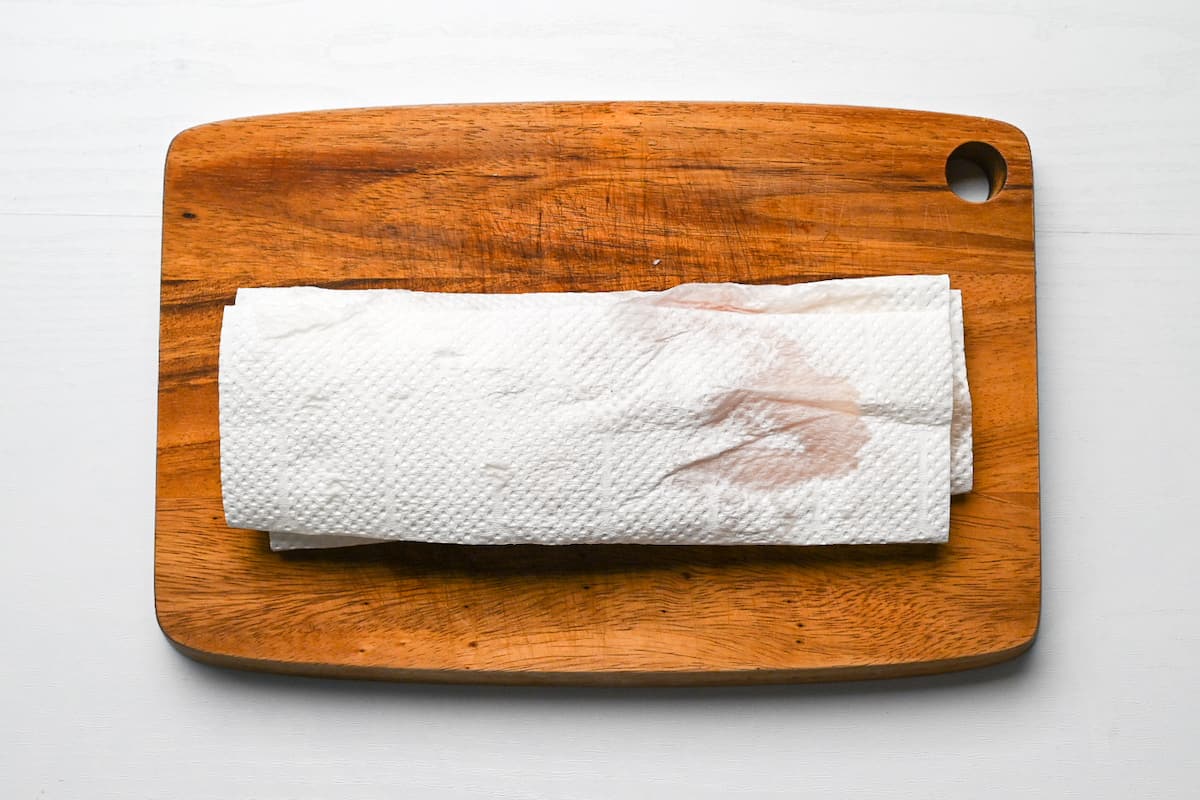
- Dry the surface of 150 g chicken breast with kitchen paper.
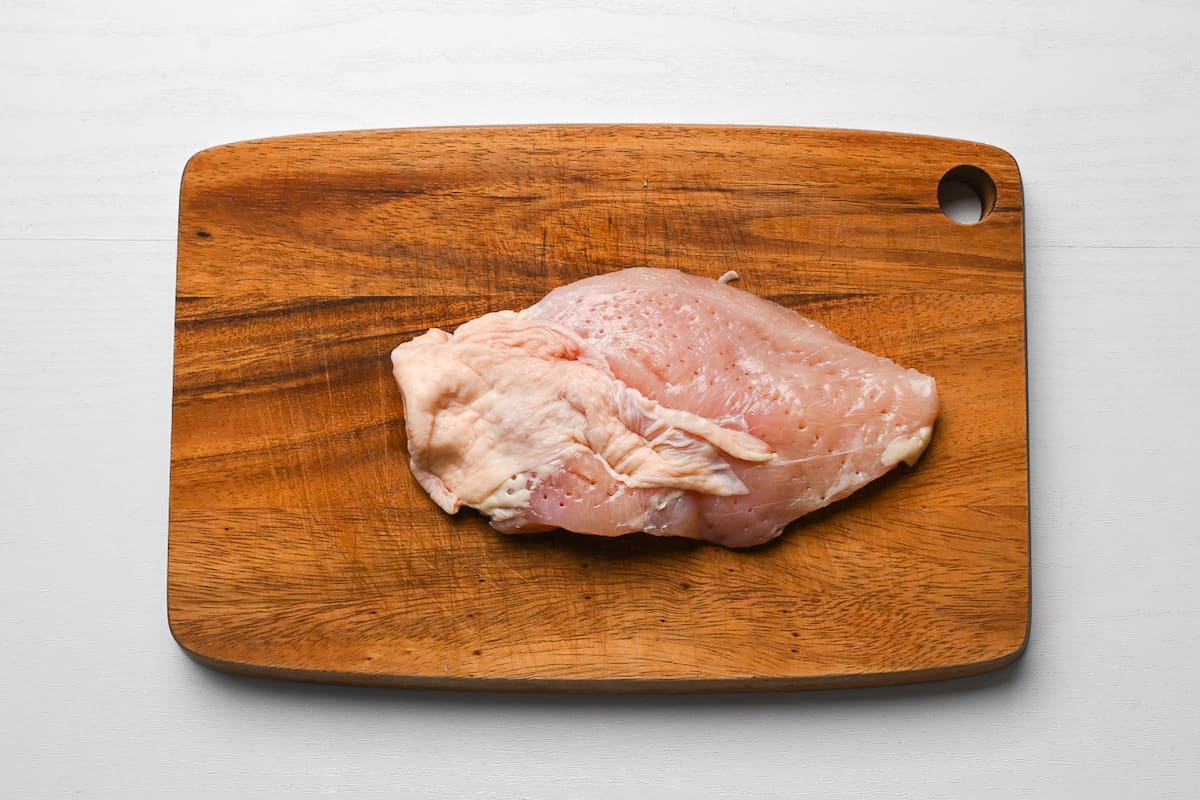
- Stab with a fork all over on both sides.
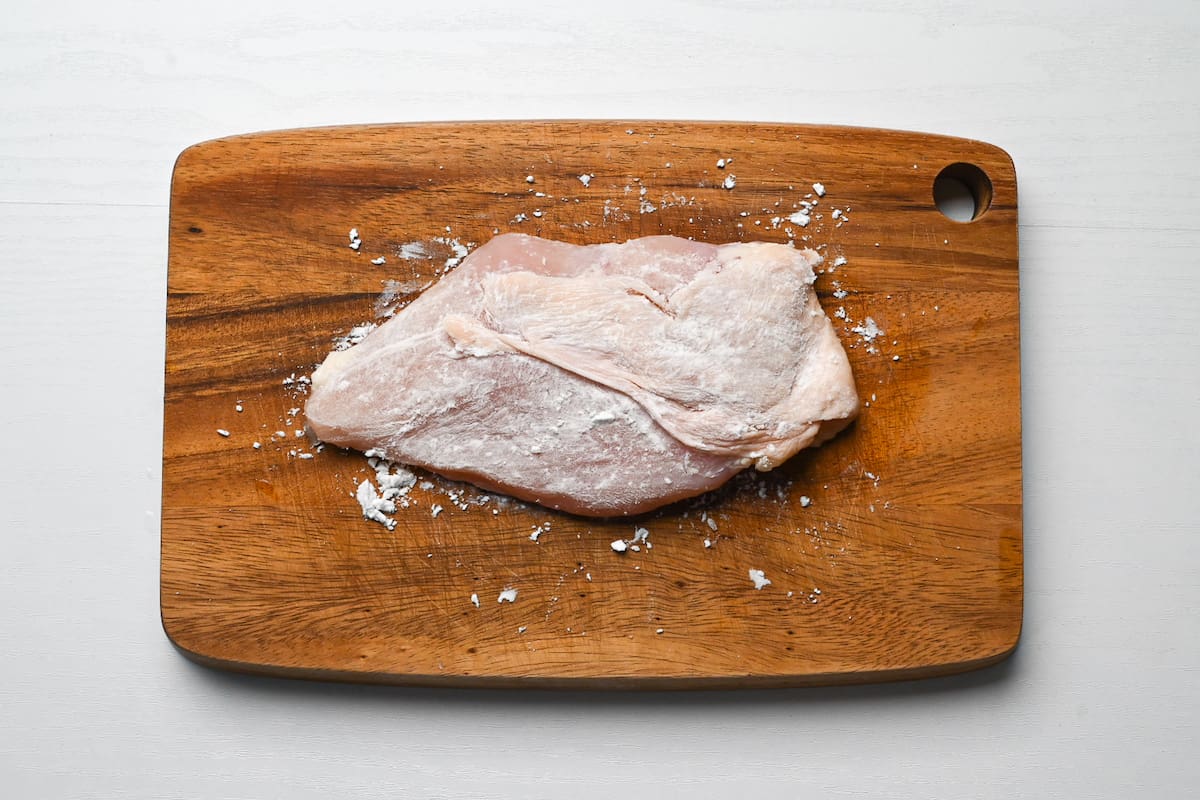
- Sprinkle with a 2 pinches salt and 1 tsp cornstarch, then rub it over to make a thin even coating.
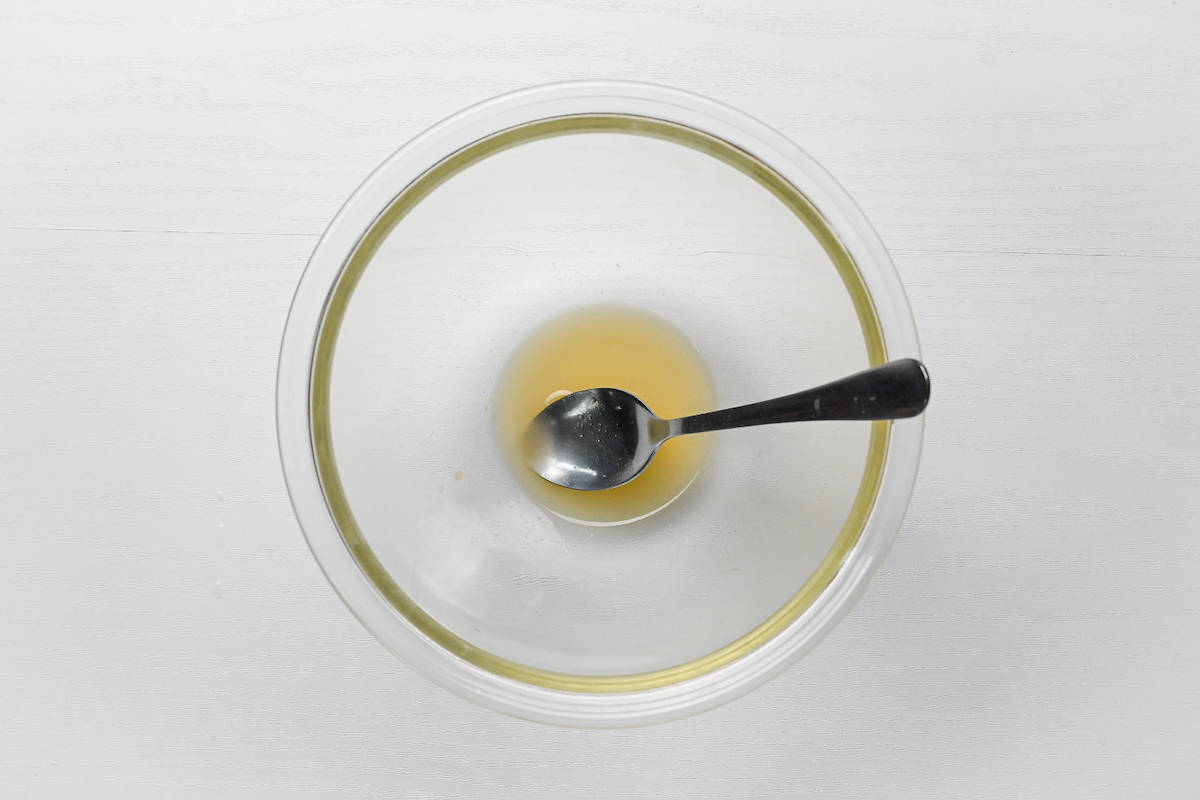
- Take a microwavable bowl and add ½ tbsp sake, 1 tsp Chinese-style chicken bouillon powder, 1 tsp mirin, ½ tsp salt and ¼ tsp sugar. Mix well.
- Add the chicken breast to the bowl and place cling film loosely over the top. Microwave for 1 ½ mins at 600W.
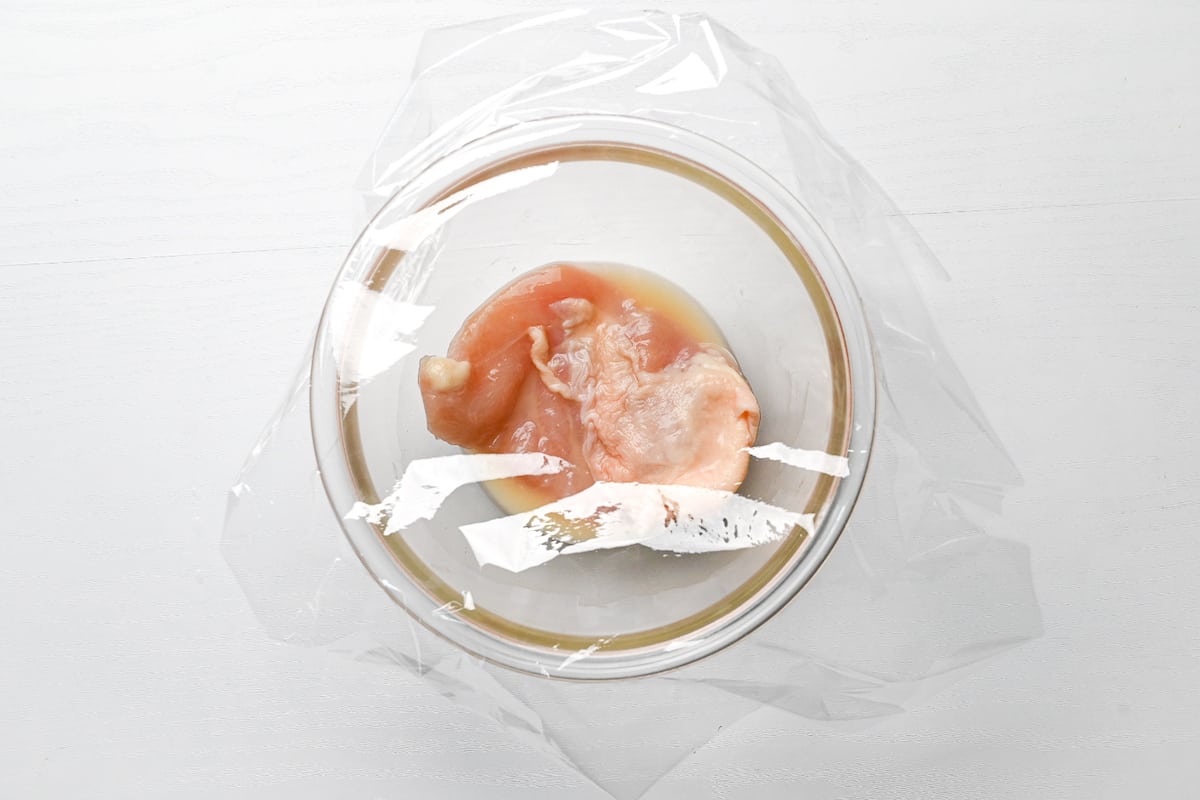
- Flip the chicken over (be careful of the steam), place the cling film back on and heat for another 1 ½ mins 600W. Leave the bowl in the microwave and allow the chicken to rest in the steam for 10 minutes. It will continue to cook in the residual heat.
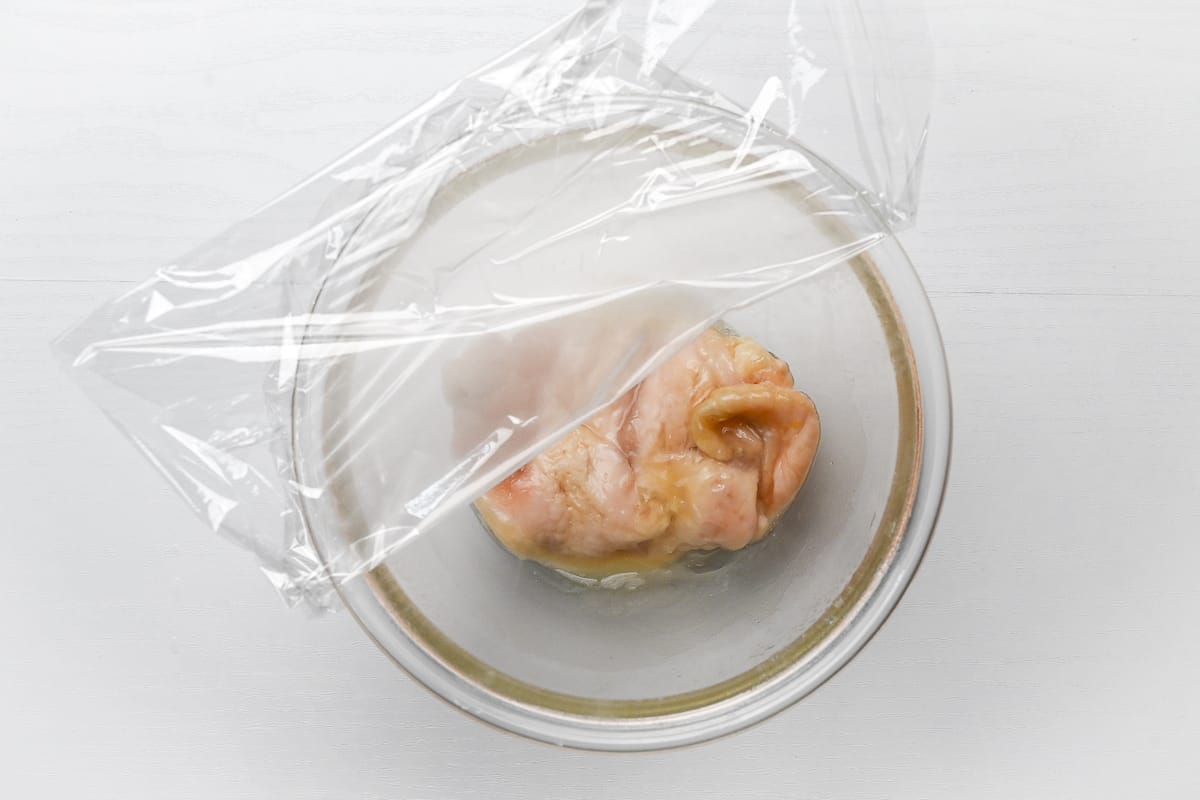
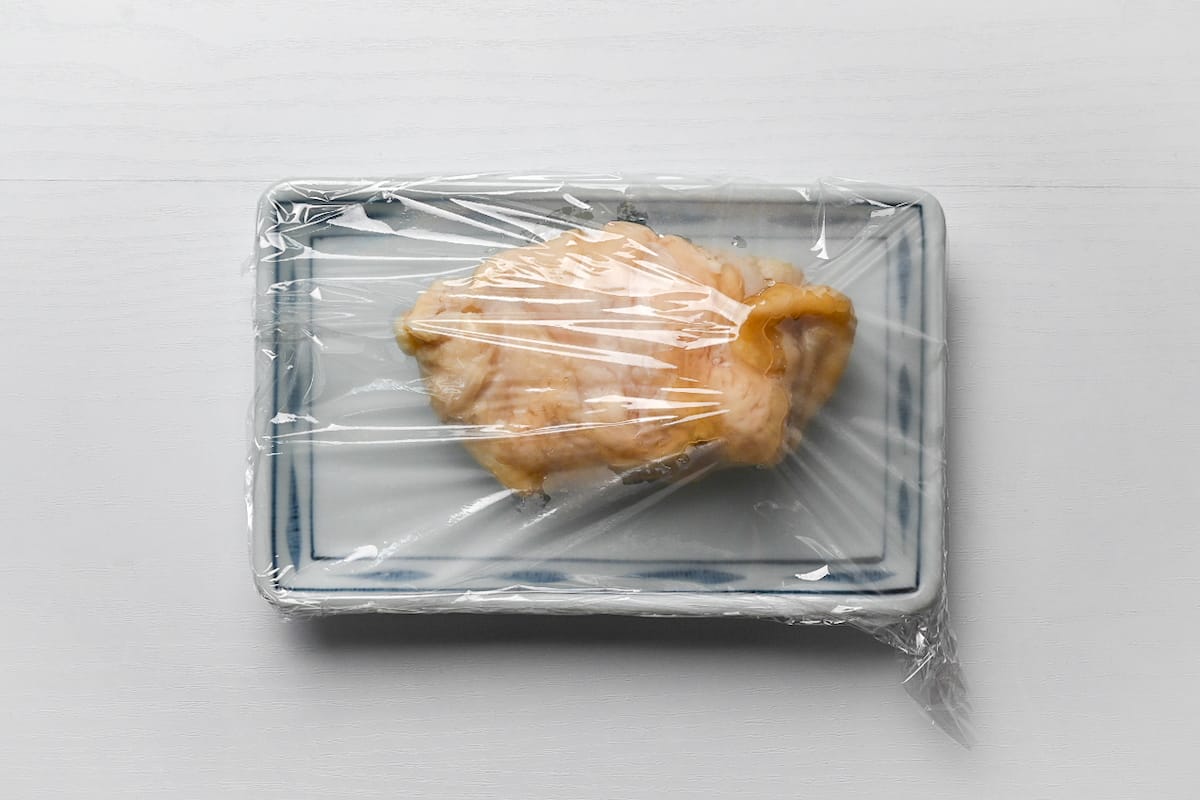
- After 10 minutes, remove the chicken from the bowl and allow to cool for about 10 minutes. Save the juices, we will add them to the soup later. Once the chicken cool to the touch, wrap and store it in the fridge until chilled. (30 mins - 1 hour)
Soup
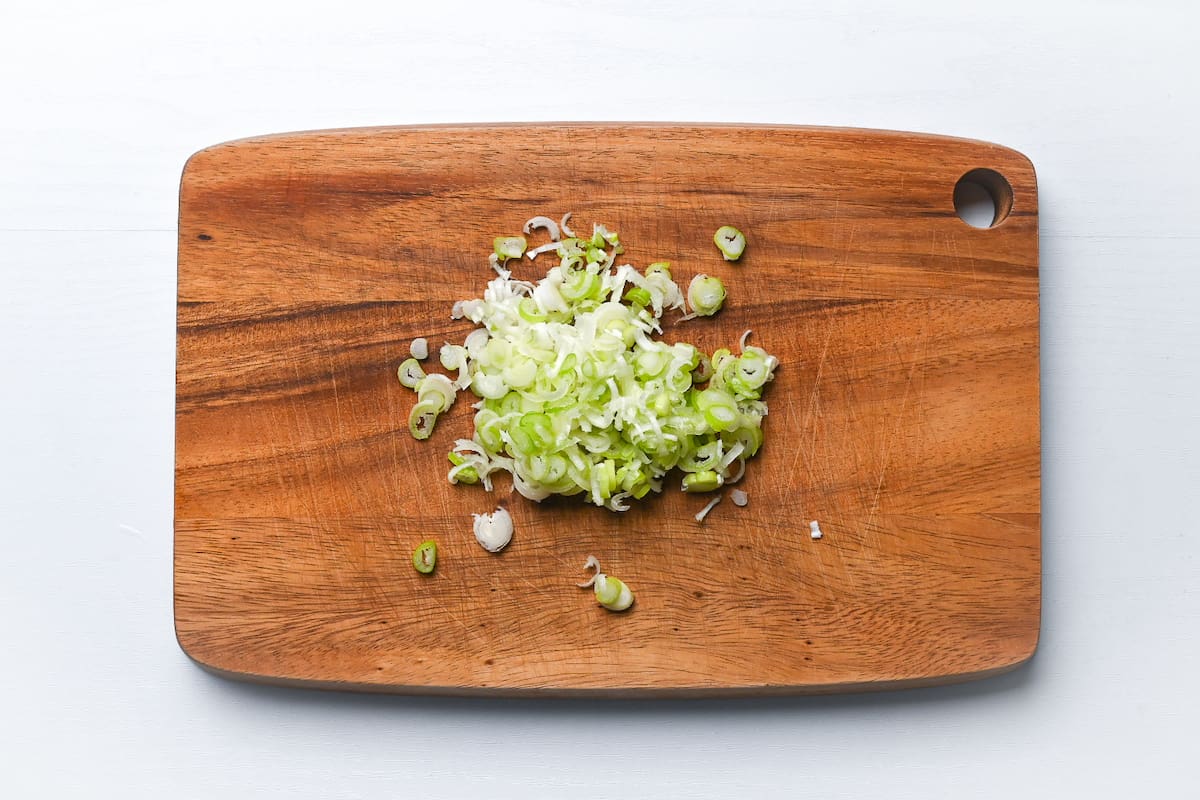
- Finely dice 30 g Japanese leek (naganegi).
- Mix 500 ml water, 3 tbsp Japanese soy sauce (koikuchi shoyu), ½ tbsp Chinese-style chicken bouillon powder, 1 tsp grated garlic, 1 tsp salt and 1 pinch sugar in a microwavable jug and heat in the microwave at 600w for 2 ½ minutes.
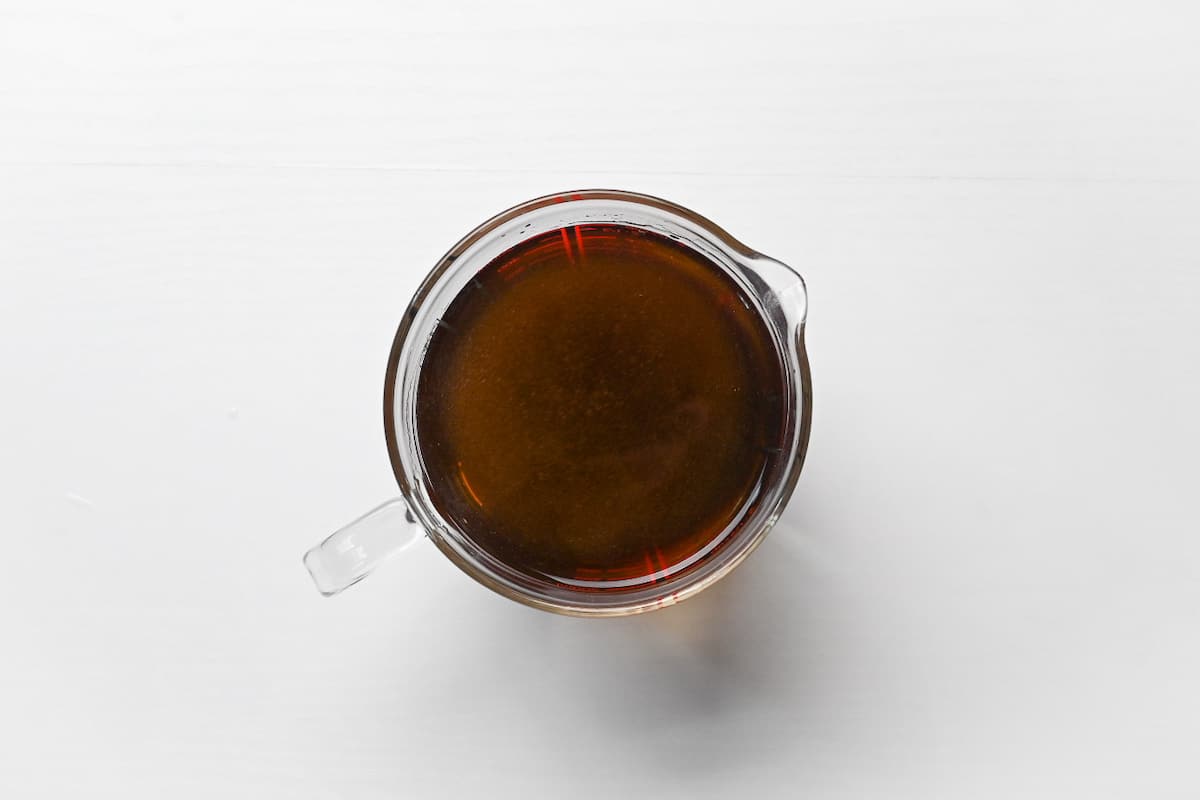
- Add the spring onion and juices from the chicken to the jug, then allow to cool for about 10 minutes.
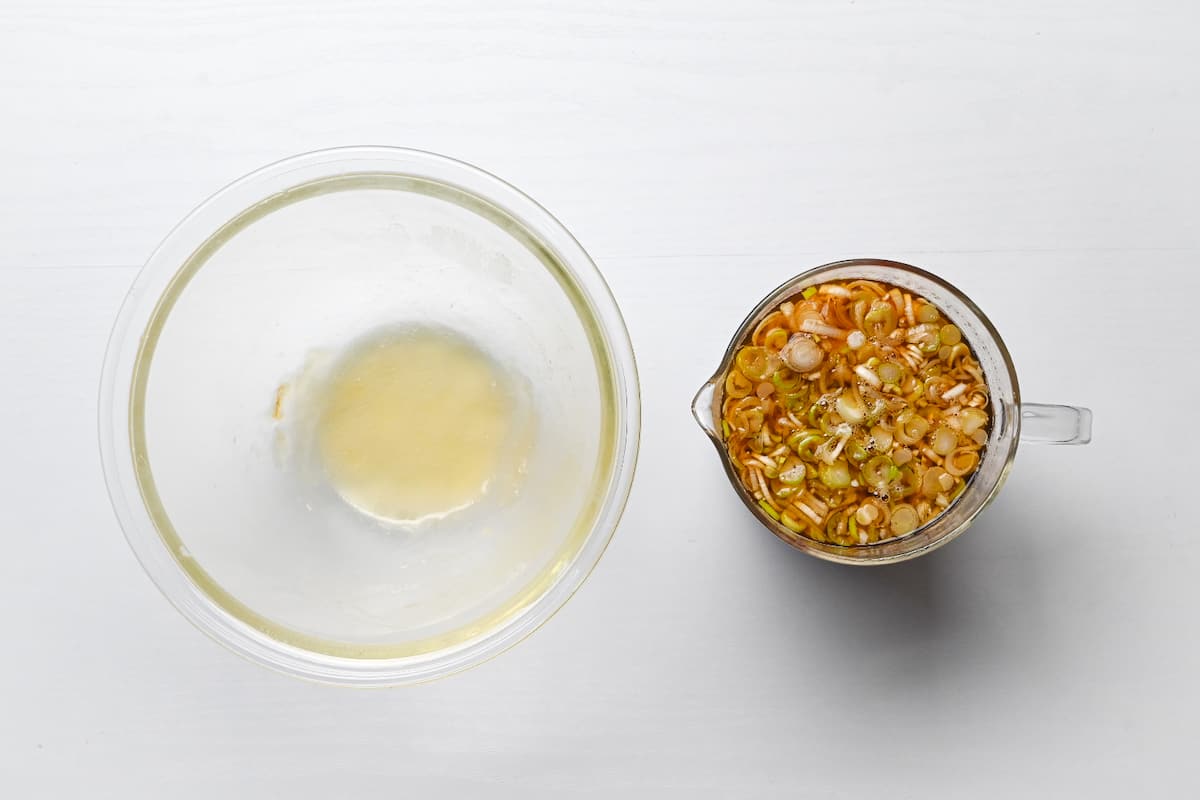
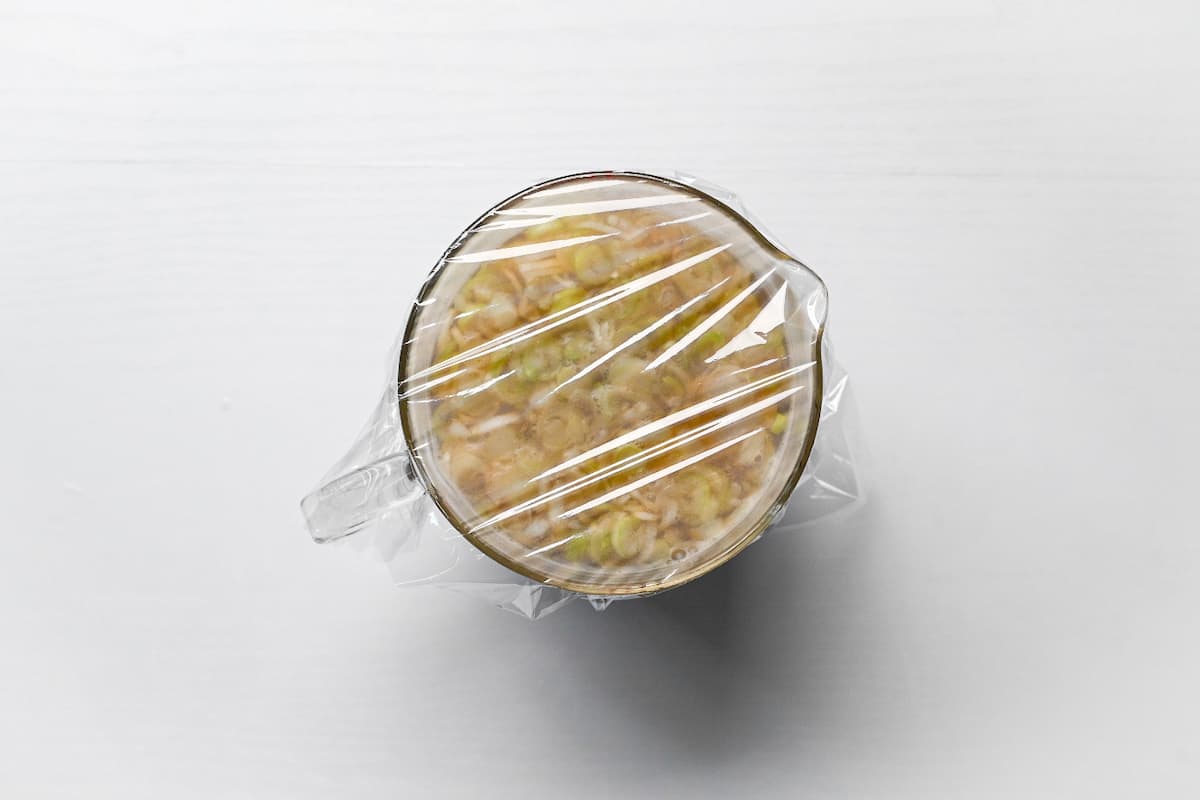
- Cover the jug and store in the fridge until properly chilled (approx 30 mins - 1 hour).
Assembly
- Boil 200 g dry somen noodles for the time stated on the packaging (usually approx 2 minutes). Pour through a mesh sieve to drain and wash with cold running water. Place over a bowl and add a few ice cubes to make them extra cold.
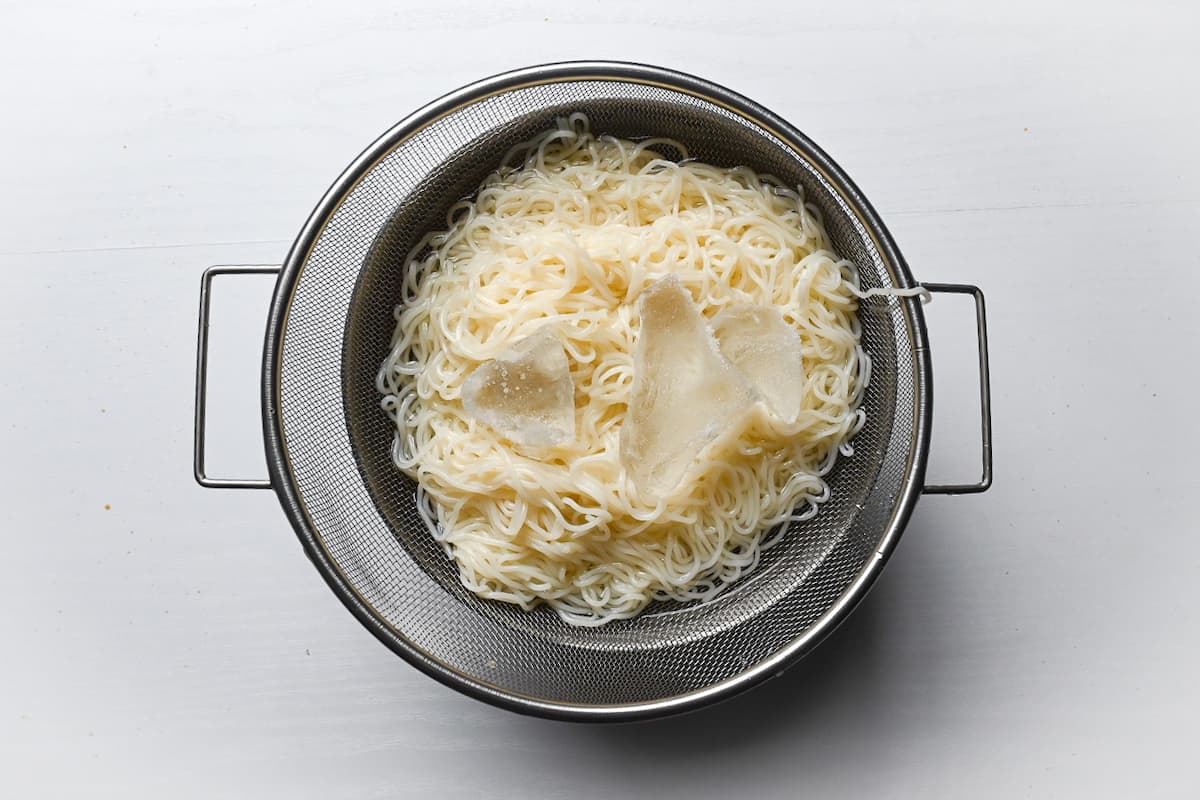
- Divide the soup into serving bowls and add the noodles. Slice the chicken breast and place it on top of the noodles along with the julienned cucumber, boiled egg and citrus slices.
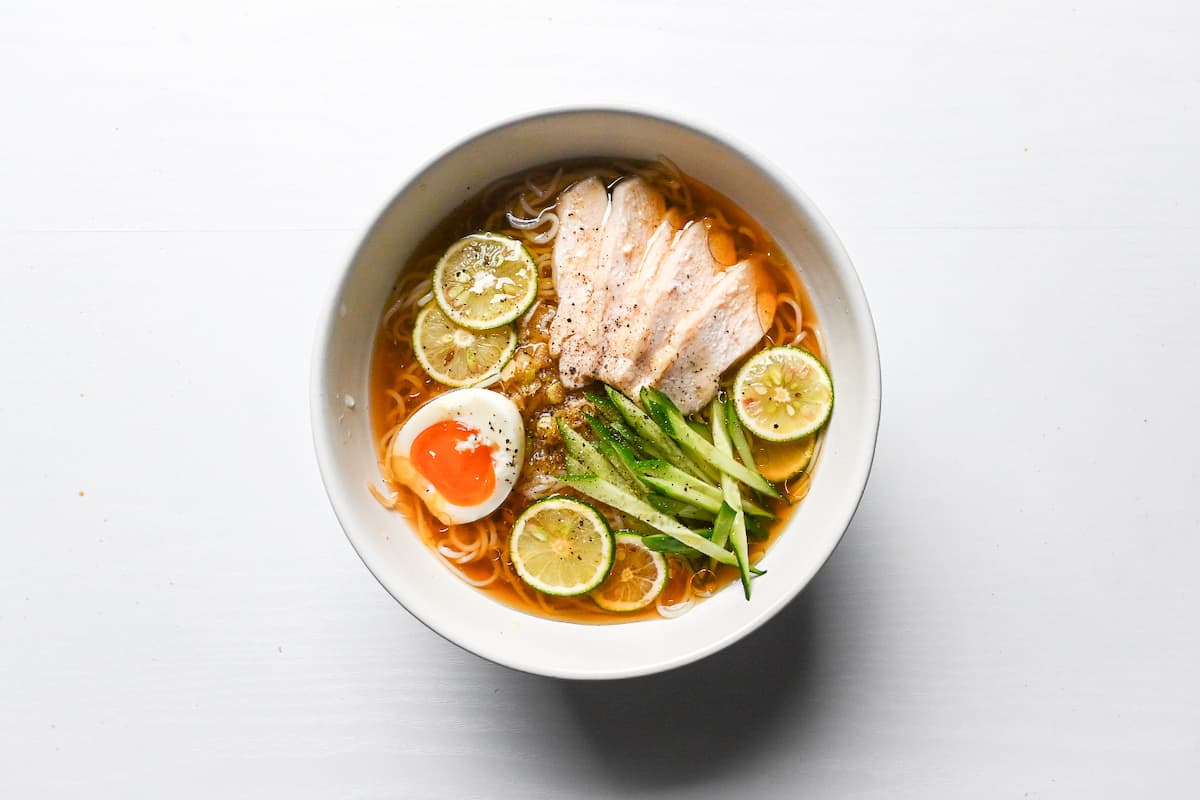
- Garnish with a sprinkle of pepper and a drizzle of sesame oil. Add a squeeze of citrus juice to the soup for some added zing. Enjoy!
Notes
Chicken bouillon powder varies by brand. My brand is 1 tsp per 200 ml, so if yours is more concentrated (e.g., 1 tsp per 300 ml or 1 cup), use touch less to avoid oversalting.
Note: The nutritional value is based on drinking up the soup (I personally do not drink up the soup in this dish)
Full Recipe QR Code↑↑