Sweet Potato Tempura (3 Japanese Ways to Make)
Ingredients
Sweet Potato
- 600 g Japanese sweet potatoes a cream-fleshed variety is the closest match
- cooking oil neutral with high-smoke point
Tempura Batter
- 75 ml cold water thoroughly chilled
- 50 ml carbonated water thoroughly chilled
- 15 g cornstarch
- 75 g unbleached cake flour or pastry flour, low-protein, around 7-8%
- 1 egg yolk or ½ tbsp Japanese mayonnaise for 1 yolk
- unbleached cake flour for dusting
- 2 ice cubes optional
To Serve
- ½ tsp salt
Instructions
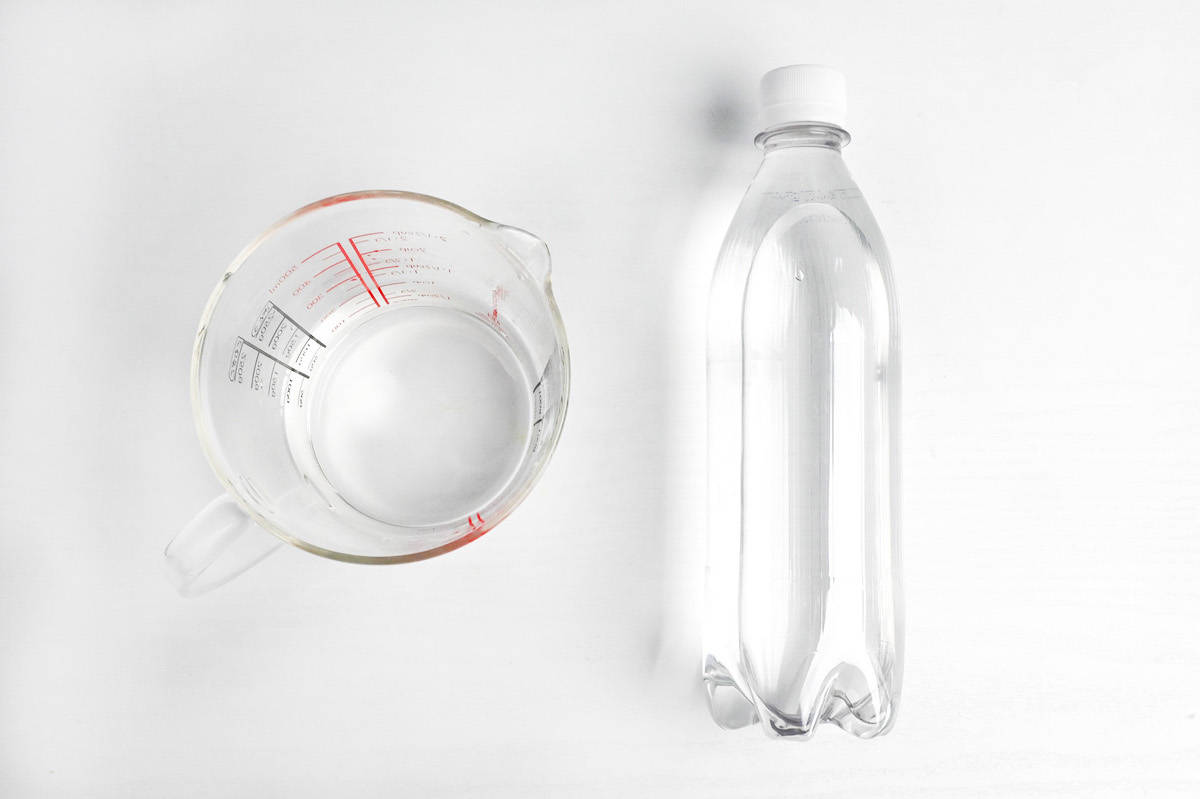
- Chill 75 ml cold water and 50 ml carbonated water in the refrigerator for 30 minutes. Sift 15 g cornstarch and 75 g unbleached cake flour into a bowl and chill the bowl for 30 minutes in the freezer.
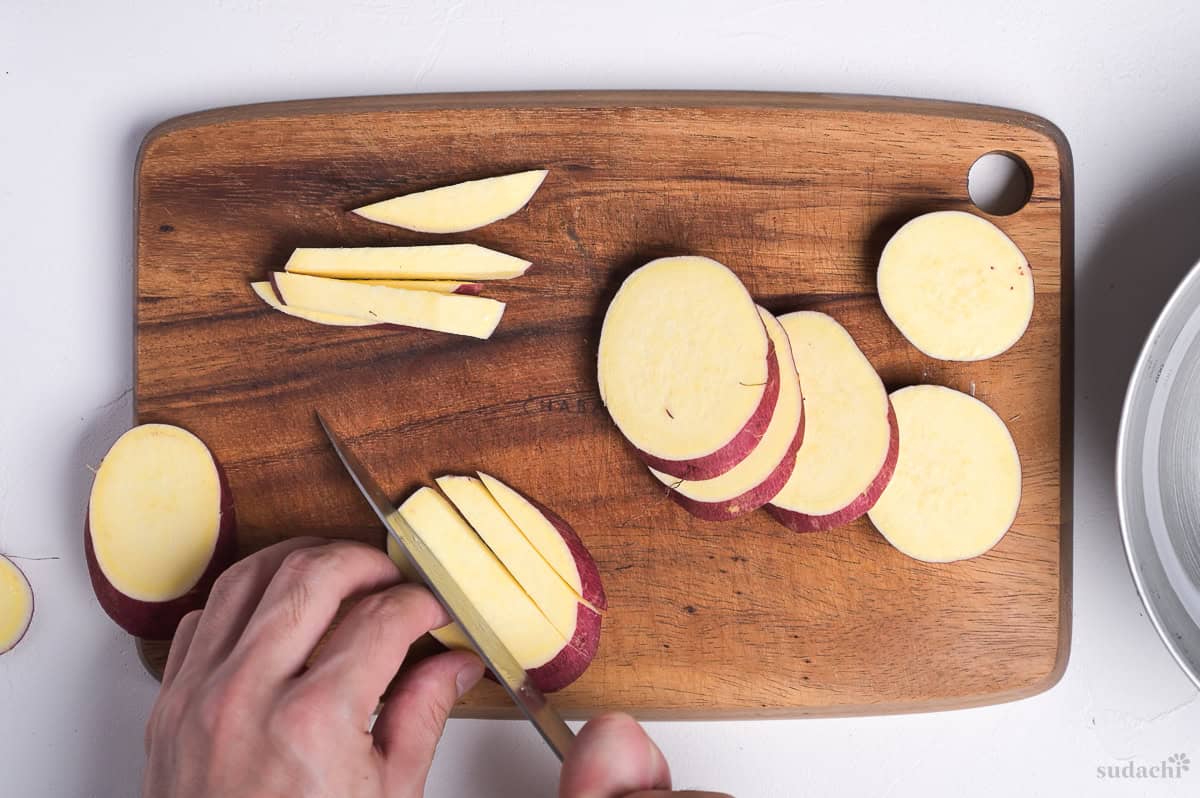
- While they chill, scrub 600 g Japanese sweet potatoes and trim 1 to 1.5 cm off each end. Leave the skin on and cut to your chosen shape. Thin rounds or diagonal slices 8 to 10 mm, thick rounds 25 to 30 mm, sticks 10 to 12 mm square. Each stick keeps 1 face of skin.
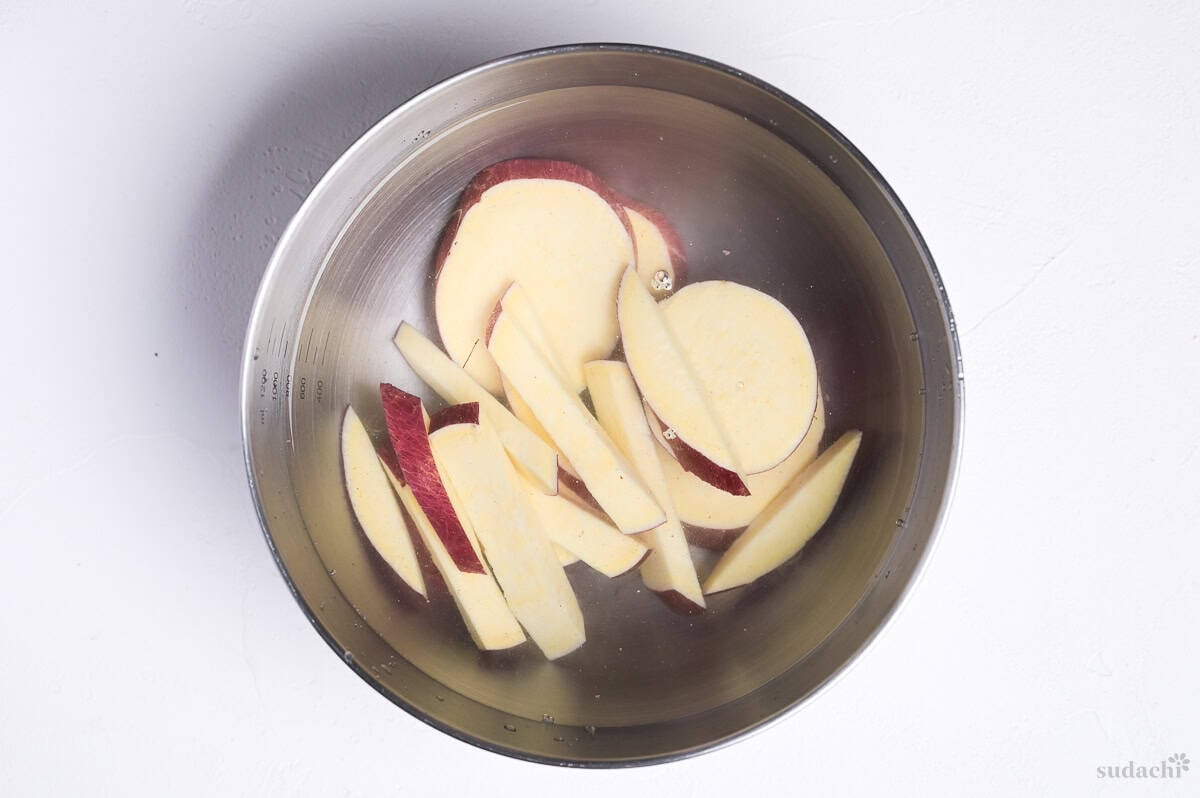
- Drop the pieces into cold water as you cut, 3 to 5 minutes for the thin cuts and 5 to 10 minutes for thick rounds. Do not soak them longer than this.
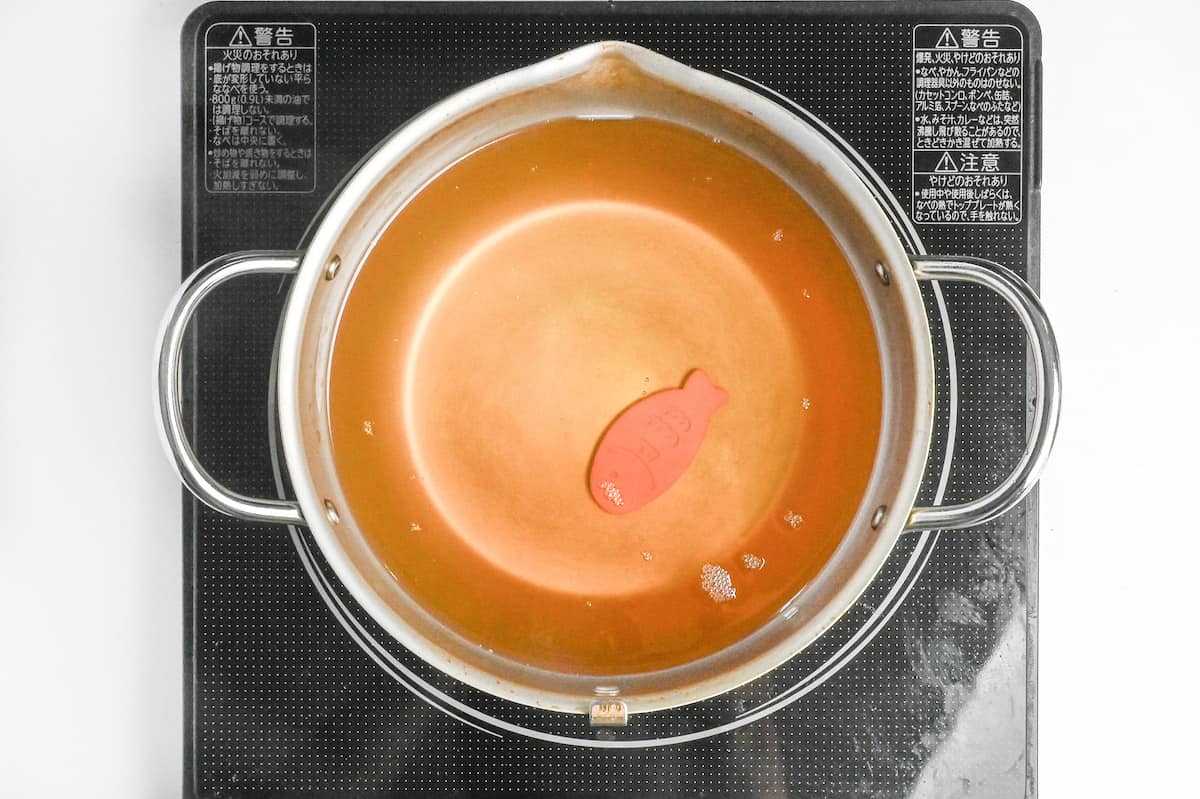
- Pour cooking oil into a heavy pot and start heating. Set 165 °C (329 °F) to 170 °C (338 °F) for thin rounds, diagonal slices and sticks, and 160 °C (320 °F) for thick rounds. Keep the cut sweet potato at room temperature.
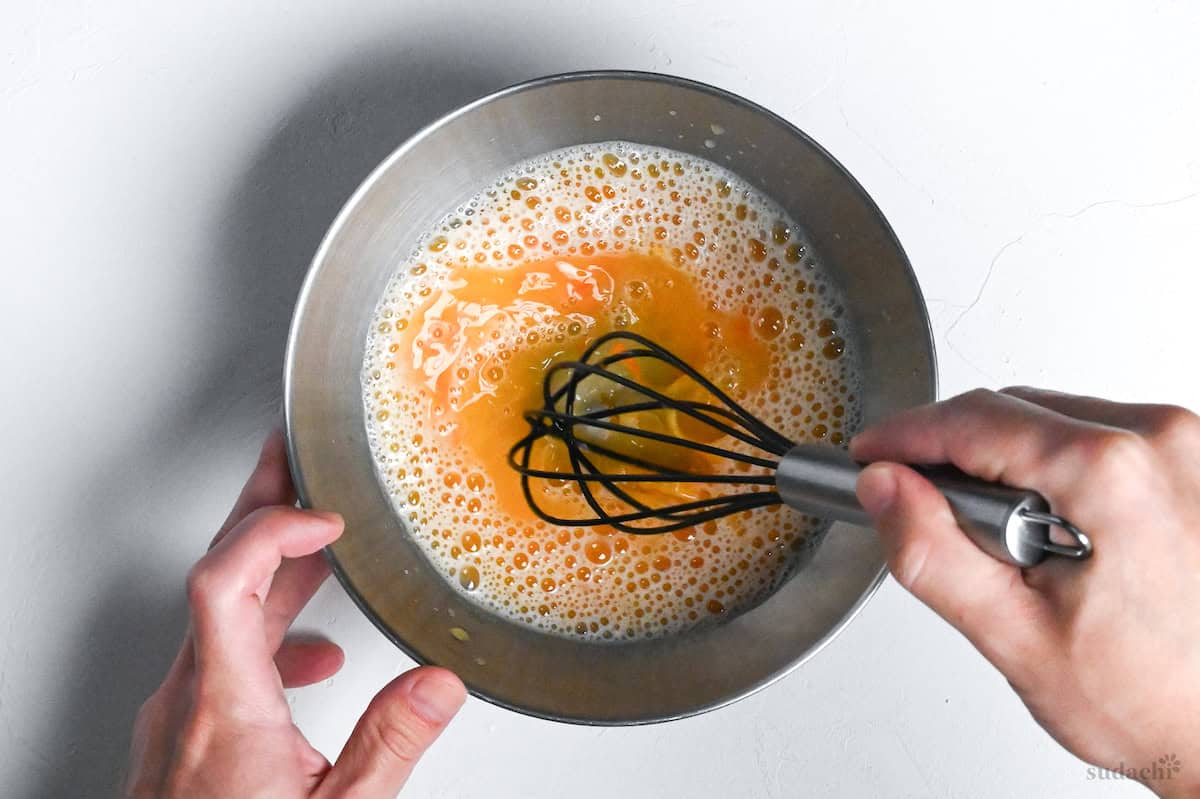
- Pour the chilled waters into a bowl and add 1 egg yolk. Gently whisk until incorporated.
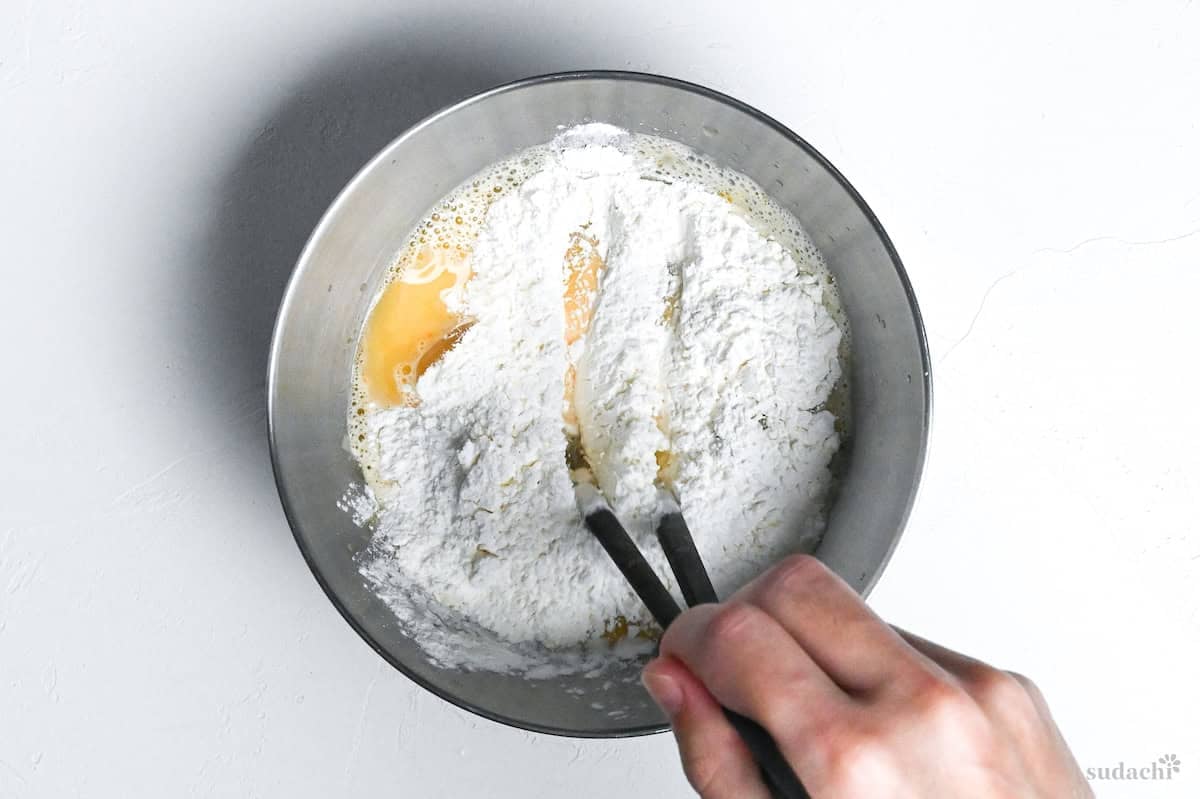
- Add the chilled flour in 3 additions and mix with chopsticks, drawing crosses and cutting through the batter. Do not use a whisk here and stop while there are still small lumps of flour. Stir in 2 ice cubes to keep it extra cold.
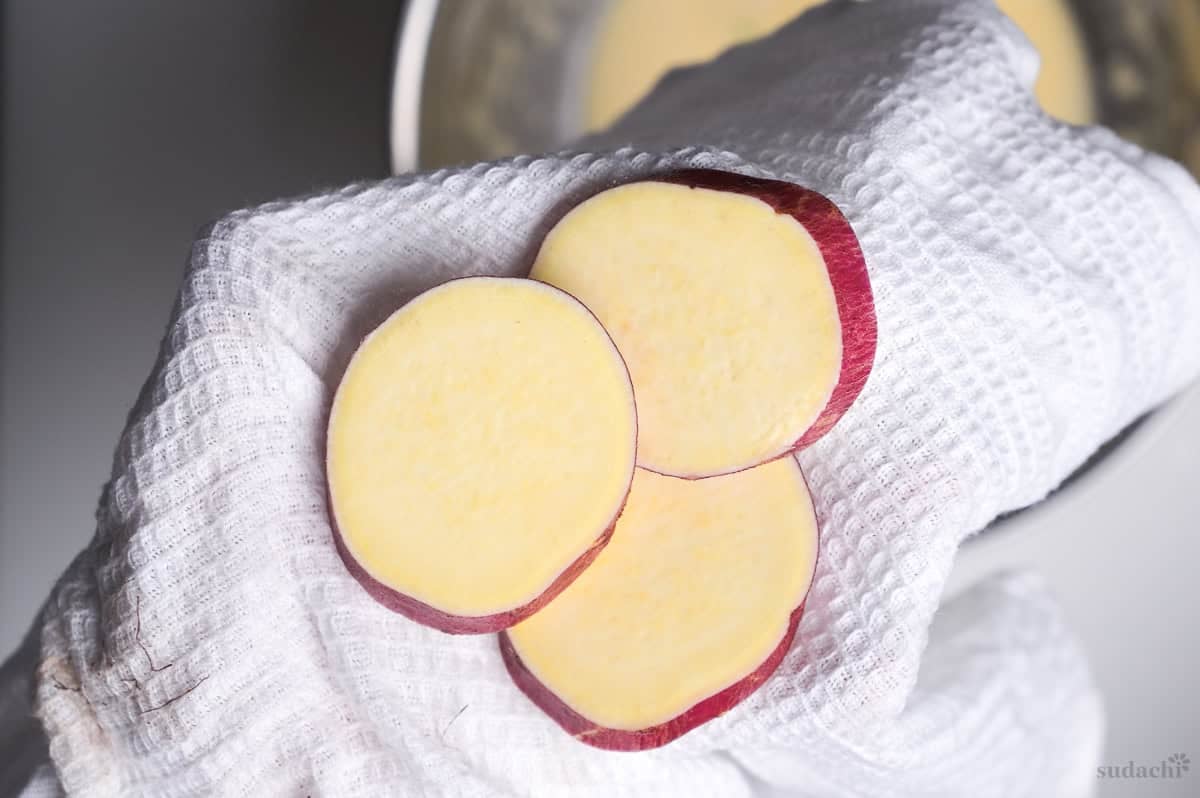
- Pat the sweet potato thoroughly dry with paper towels. Dust it thinly with cake flour and knock off the excess.
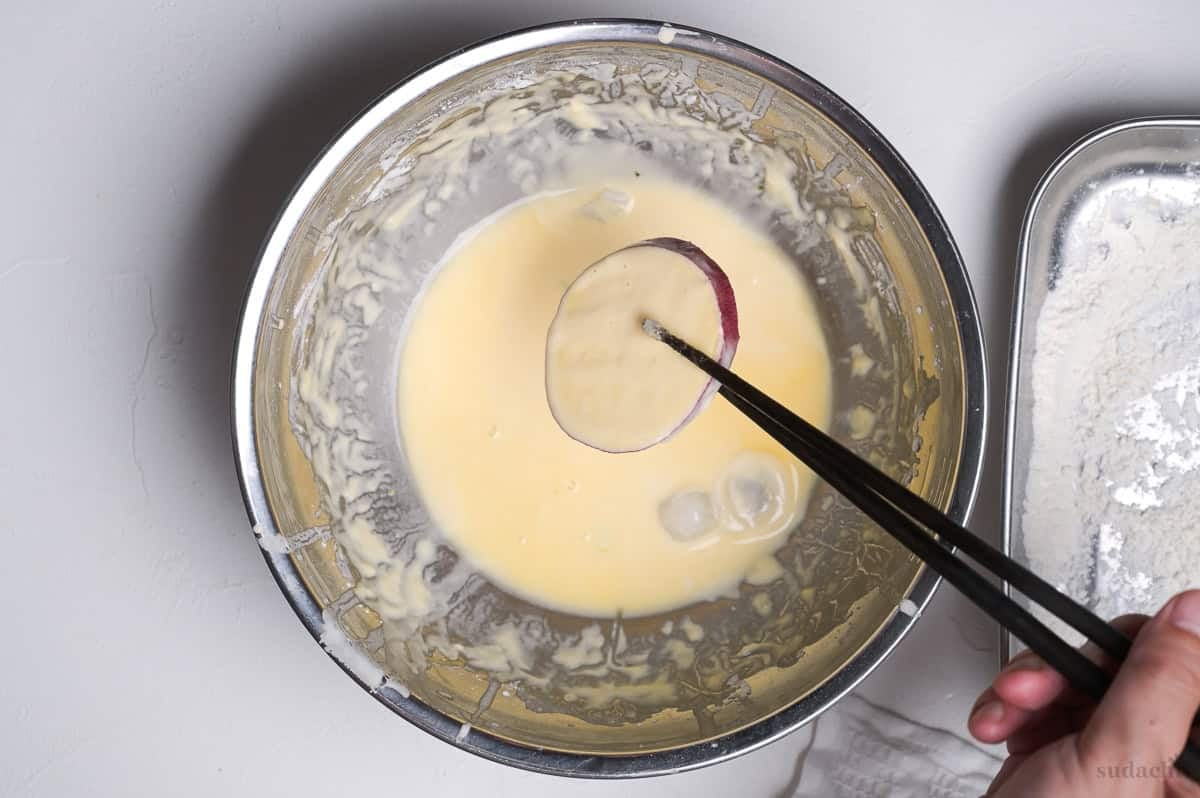
- Dip each piece into the batter and coat it all over with no gaps, then lower it straight into the oil.
- Fry thin rounds, diagonal slices and sticks at 165 °C (329 °F) to 170 °C (338 °F) for 4 to 5 minutes, turning once. Fry thick rounds at 160 °C (320 °F) for 10 to 12 minutes turning half way through, then raise the oil to 175 °C (347 °F) to 180 °C (356 °F) for 30 to 60 seconds and lift them out at a light color.
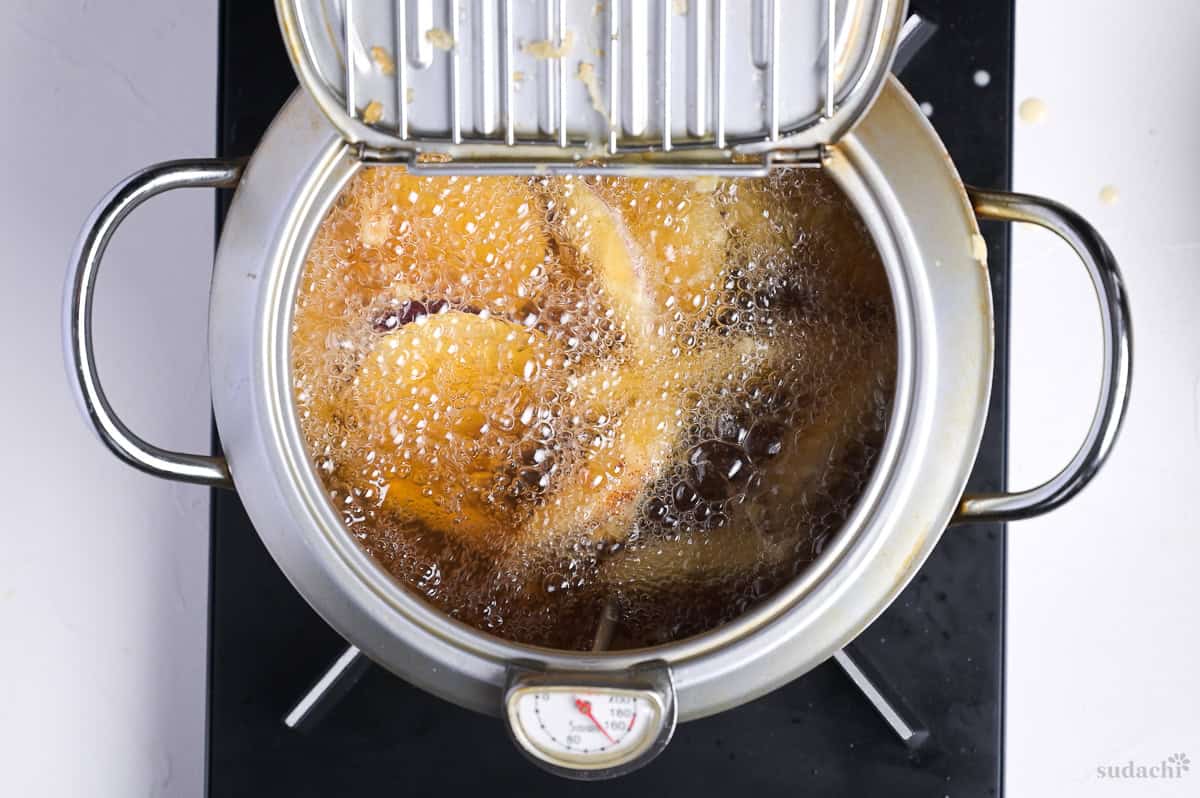
- Drain in a single layer on a wire rack. Sprinkle half of the ½ tsp salt over while hot. Move the pieces to a plate while the coating is still crisp and serve the rest of the salt in a small dish. Enjoy!
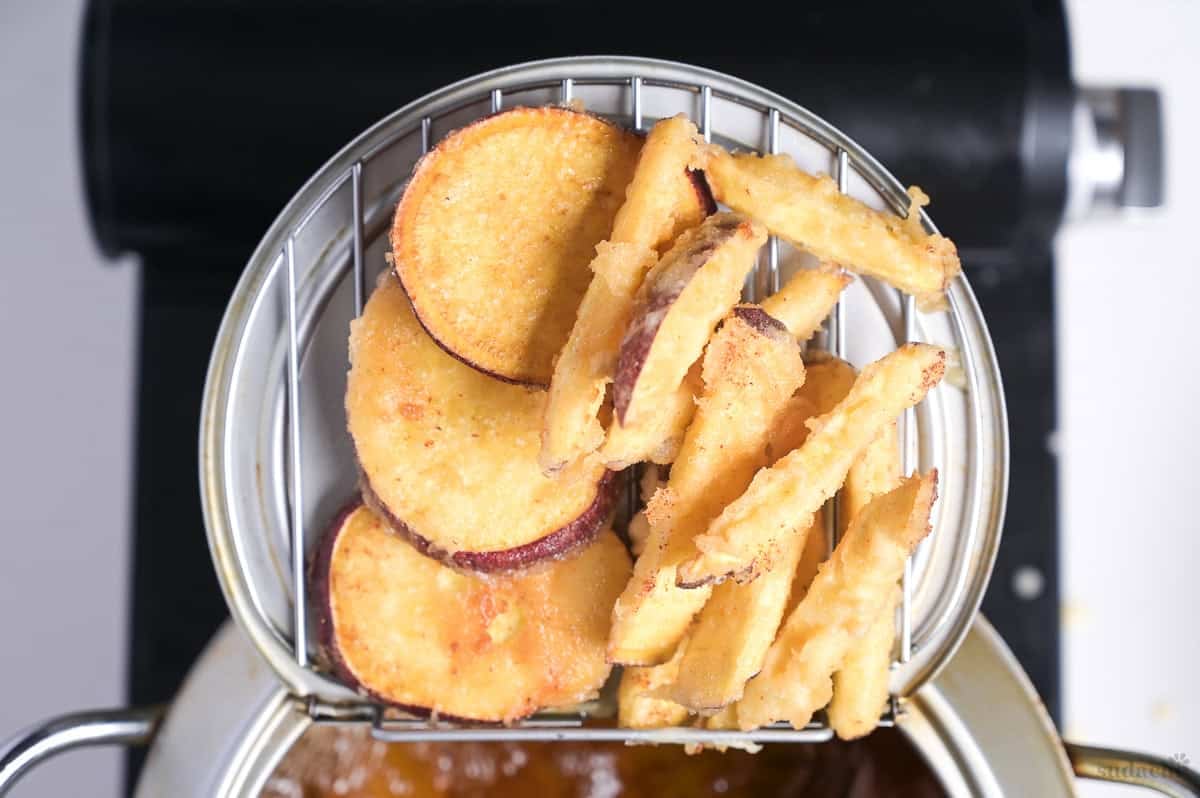
For thick rounds, shave the corners flat and score a shallow cross into both faces, about ⅓ of the way through.
Lift a thick round out once a bamboo skewer slides through the center. Between batches, return the batter to the refrigerator, turn the heat down, and wait until the oil is back at its set temperature before the next batch goes in.
Notes
Avoid bleached cake flour: Avoid bleached or chlorinated cake flour as it changes the texture. Also avoid self-rising, whole wheat pastry, and gluten-free blends. For UK/AU readers, plain flour works. See for details.
When all you have is all-purpose flour: Swap the 75 g cake flour and 15 g cornstarch for 65 g all-purpose flour (plain flour in UK/AU) and 25 g cornstarch. The higher starch share thins the gluten, so a stronger flour still fries light.
Stop mixing while lumps are still there: A batter mixed smooth cannot be undone once it hits the oil. Draw crosses through it with chopsticks and stop while small lumps are scattered through it.
Room temperature potato, cold batter: Straight from the refrigerator, the surface burns before the heat reaches the center. Let the sweet potato come to room temperature before you cut it.
Dust only after the surface is dry: Water left on the potato turns to steam the moment it meets the oil, pushes the coating off from the inside and drops it.
Never let the ice reach the oil: If you put ice in the batter, scoop up batter only. An unmelted cube in hot oil is very dangerous, throwing off a burst of steam and spitting violently.
If orange-fleshed sweet potato is all you can find: It carries more water, so skip the thick rounds. Go for thin rounds or diagonal slices instead and dust every piece properly.
If the center is still firm: Do not raise the oil temperature. Give it more time and do not lift it out until a bamboo skewer slides through the center.
Full Recipe QR Code↑↑