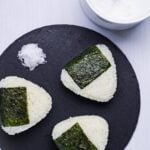
Simple Shio Onigiri (Salted Japanese Rice Ball)
Ingredients
- 700 g cooked Japanese short-grain rice about 100-120 g per rice ball, freshly cooked with your usual water ratio, still hot
- ½ tbsp salt fine sea salt with no additives
- 6 strips roasted seaweed for sushi (nori) unseasoned, optional (1 sheet of sushi nori usually cuts into 2-3 strips)
- 1 bowl ice cold water
Instructions
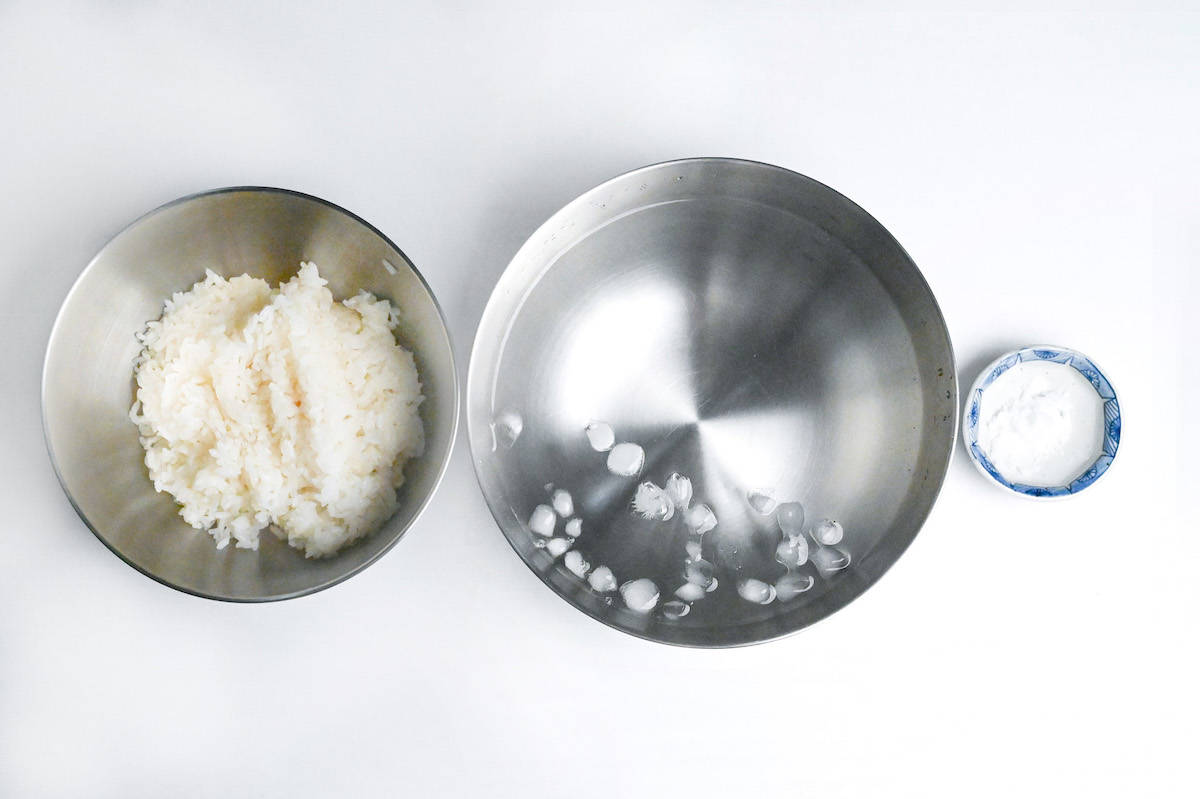
- Set out 1 bowl ice cold water and tip ½ tbsp salt into a small dish. Keep 700 g cooked Japanese short-grain rice, freshly cooked and still hot, close by.
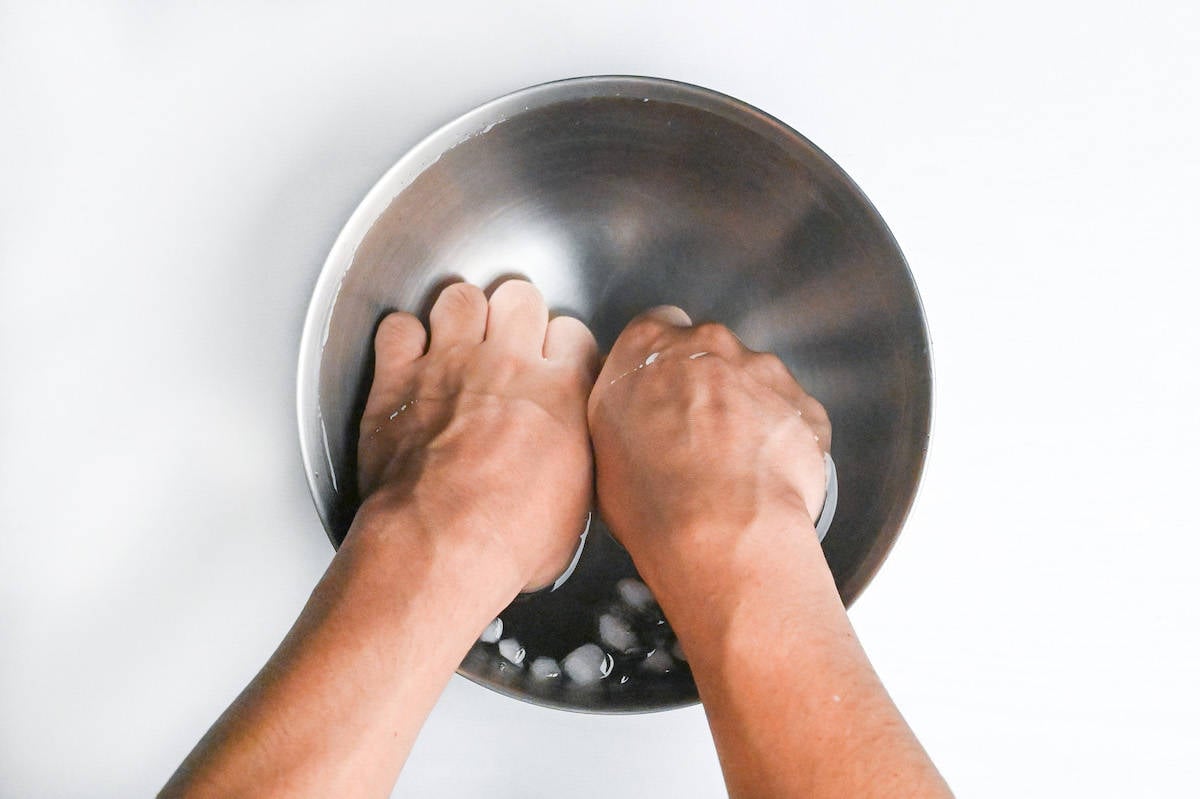
- Wash your hands well, then plunge them into the ice water for 15-20 seconds. Lightly shake off any water that drips, but do not dry your hands.
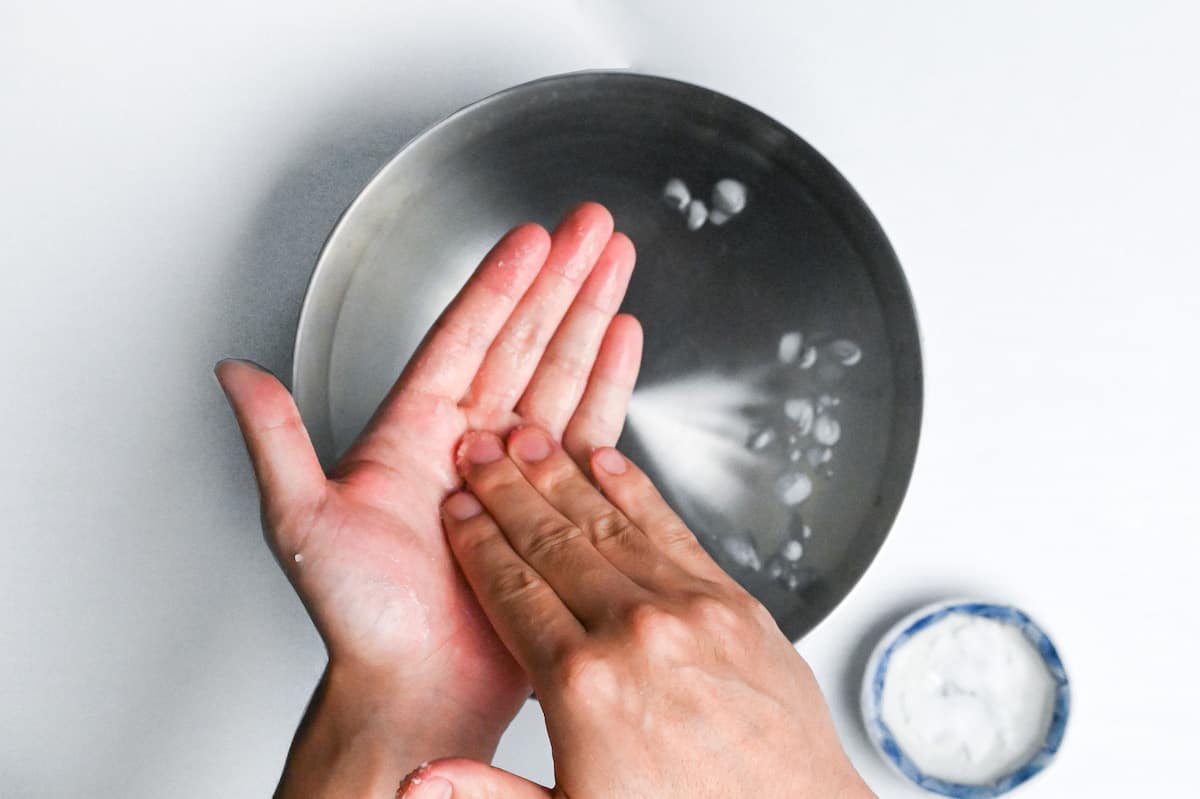
- Pick up 1 or 2 pinches of salt from the dish with your fingertips and rub it over both palms.
- Set a handful of the warm rice on one palm. With that hand cupped loosely underneath, press a corner with your other hand as you rotate the rice. Repeat this press and turn until you have a triangle. Stop as soon as the shape holds (do not squeeze too hard).
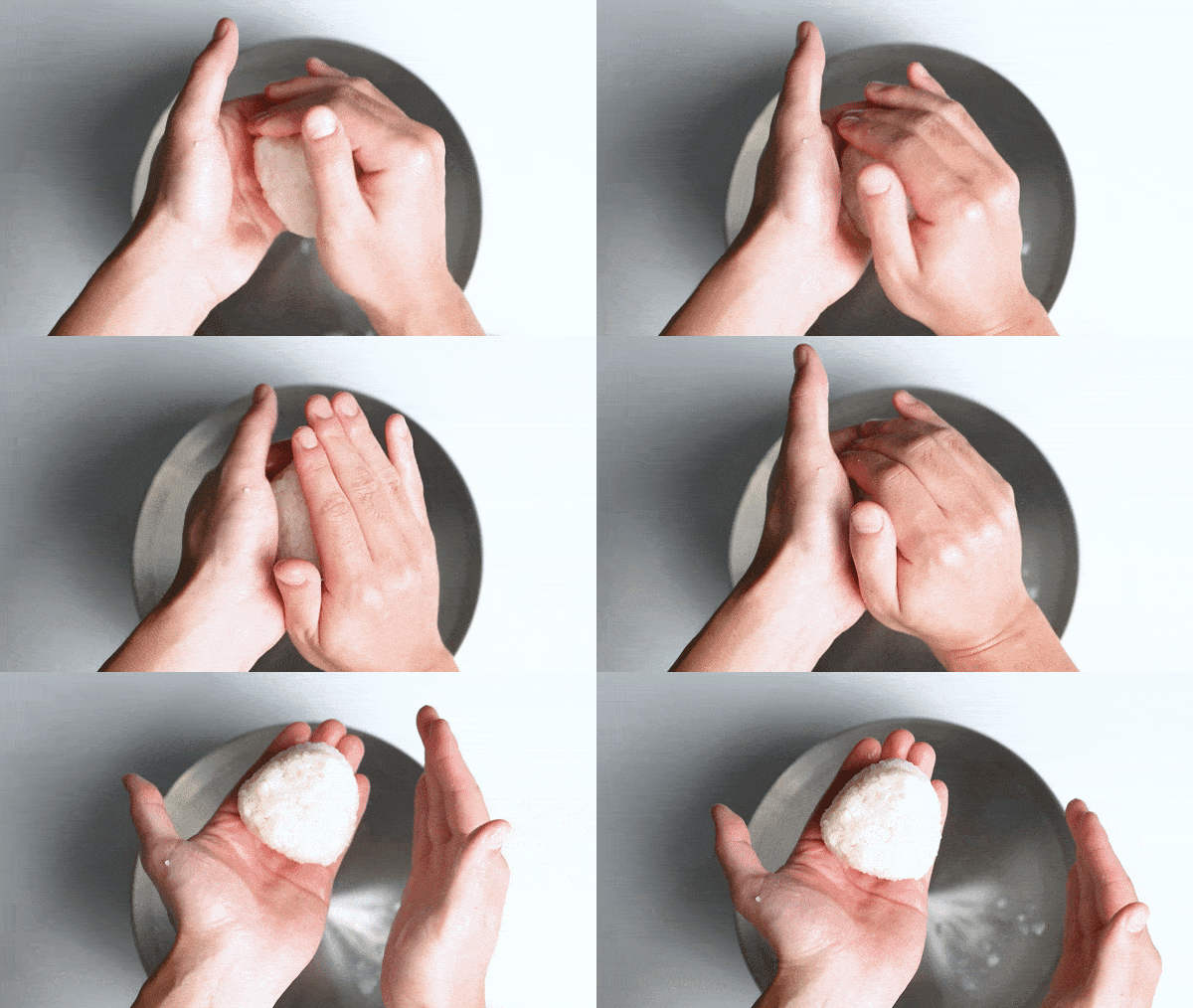
- Before each new rice ball, dip your hands in the ice water again, shake them and rub on fresh salt, then shape. Carry on until all the rice is used.
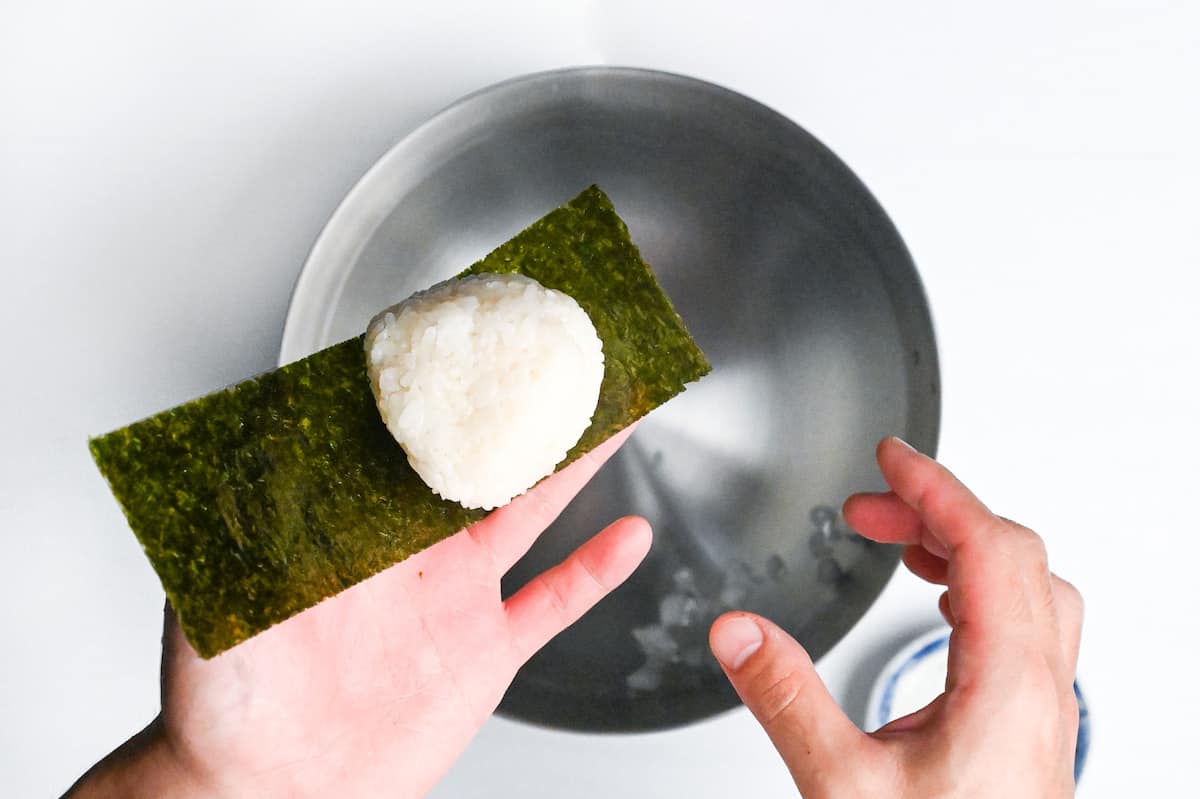
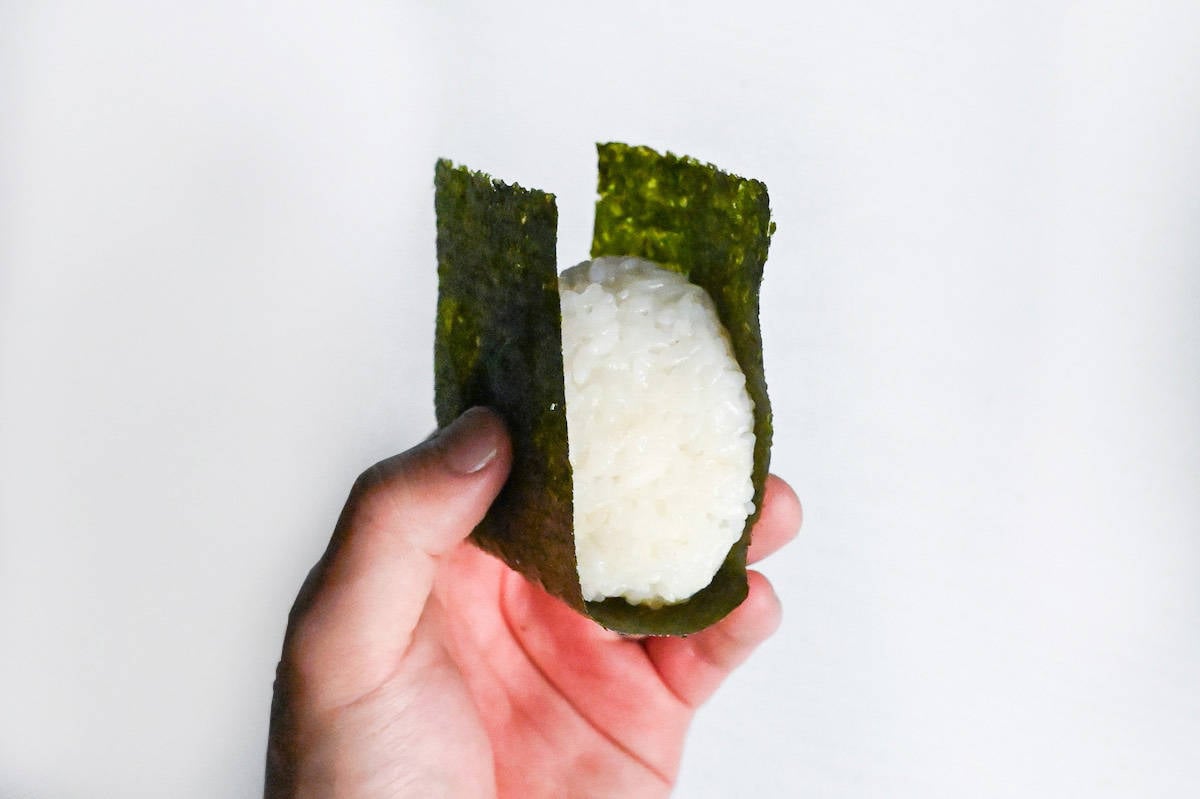
- If you are eating them now, take 6 strips roasted seaweed for sushi (nori) and wrap one strip around each rice ball just before the first bite.To pack them in a lunch box, cool them first, wrap each one in plastic wrap and tuck an ice pack in beside them. Wrap the nori separately in foil or a ziptop bag and put it on right before eating. Enjoy!
Notes
Work with hot rice: Rice that has started to cool will not stick grain to grain when you press it, and the only way to make it hold is to crush it. When the balls keep falling apart, check how hot the rice is.
Why the ice water: Freshly cooked rice is too hot to keep shaping with warm hands. Chilled hands can handle ball after ball. Cooling the rice instead leaves you with grains that will not hold together.
Dripping hands mean a bland rice ball: Water still dripping from your palms dissolves the salt and carries it away, and the flavor turns flat.
Salt your palms for every ball: Shape the next ball without salting again and that one comes out as plain, under-seasoned rice. With nothing inside, the salt on the surface does all the seasoning.
Taste the first ball to set your pinch: Eat the first rice ball as soon as it is shaped. Settle how much salt you pick up, then shape the rest.
How firmly to press: Pressed too lightly, the ball crumbles when you pick it up. Pressed too hard, it turns mushy and dense. A slightly mashed, shiny surface means too hard. Gaps between the grains mean too loose.
Without Japanese rice: Reach first for Korean short-grain rice, which comes close in texture and flavor. Calrose holds a triangle, but its grains come apart once it cools. Jasmine and other long-grain rice keeps its grains separate and never comes together.
Why the nori waits: Left wrapped around the rice, nori soaks up the moisture, goes limp and loses its crisp bite.
Full Recipe QR Code↑↑