Kinshi Tamago (Shredded Egg Crepe)
Ingredients
- 1 egg the finished thread is the color of the yolk, so for a vivid gold pick a deep-yolk fresh egg
- 1 pinch salt
- ½ tsp sugar for water-holding
- ½ tsp potato starch (katakuriko) cornstarch works 1 to 1
- 1 tsp water
- 1 tsp cooking oil a neutral, flavorless oil like canola or rice oil, for release only
Instructions
- Crack 1 egg into a bowl and add 1 pinch salt and ½ tsp sugar. Stir with chopsticks in a side-to-side cutting motion, so you do not beat air into it.
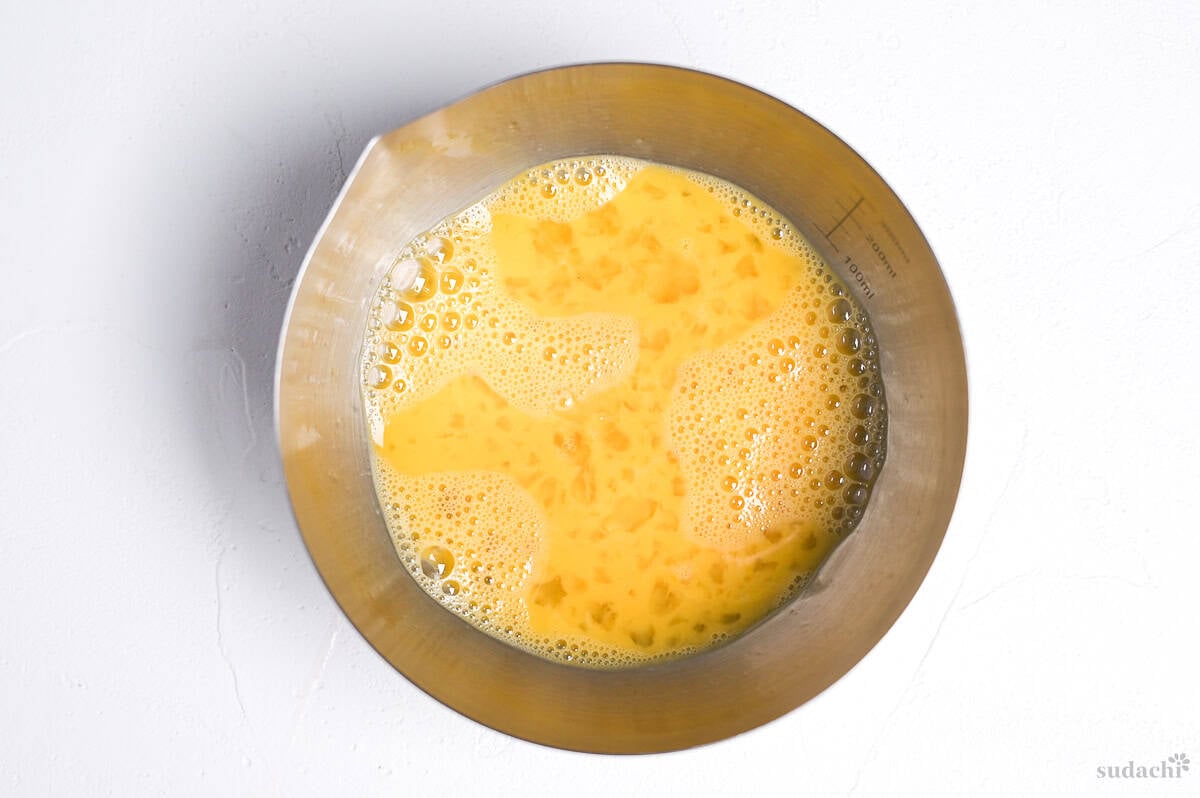
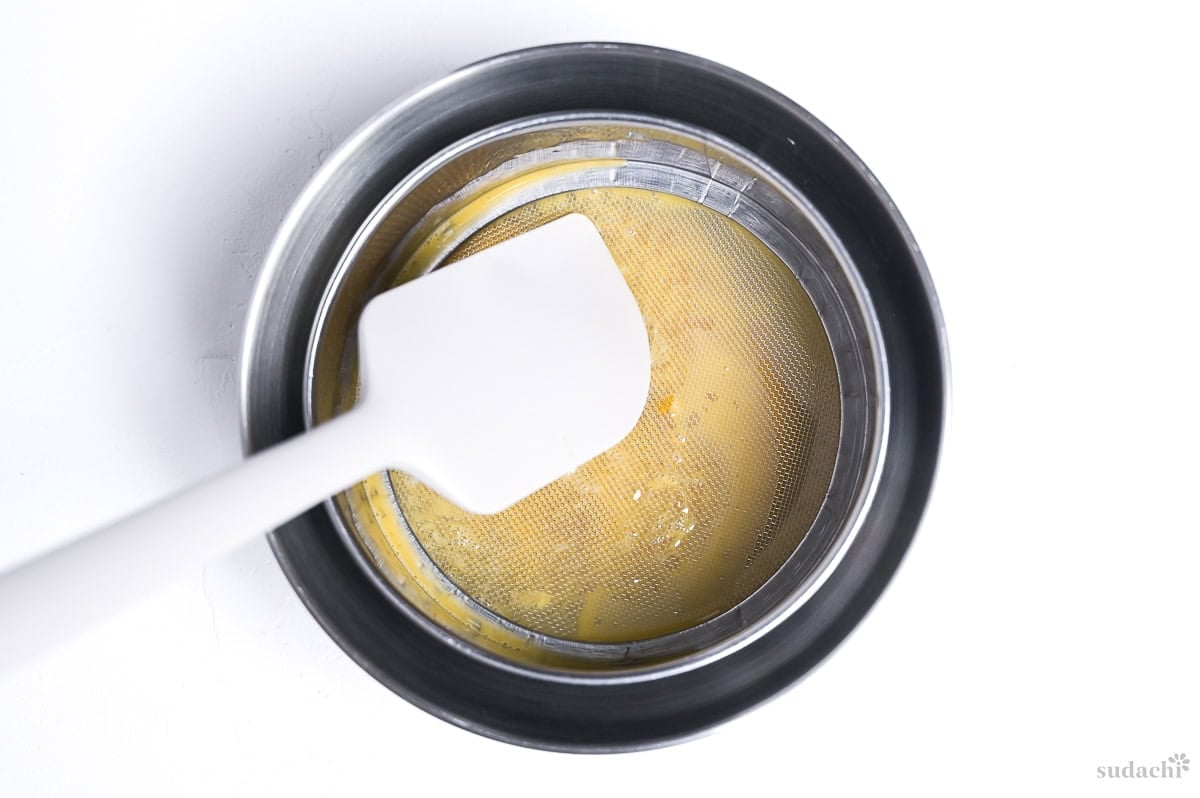
- Start preheating your pan on medium. Mix the egg once more, then pour the mixture through a fine-mesh sieve to catch any lumps.
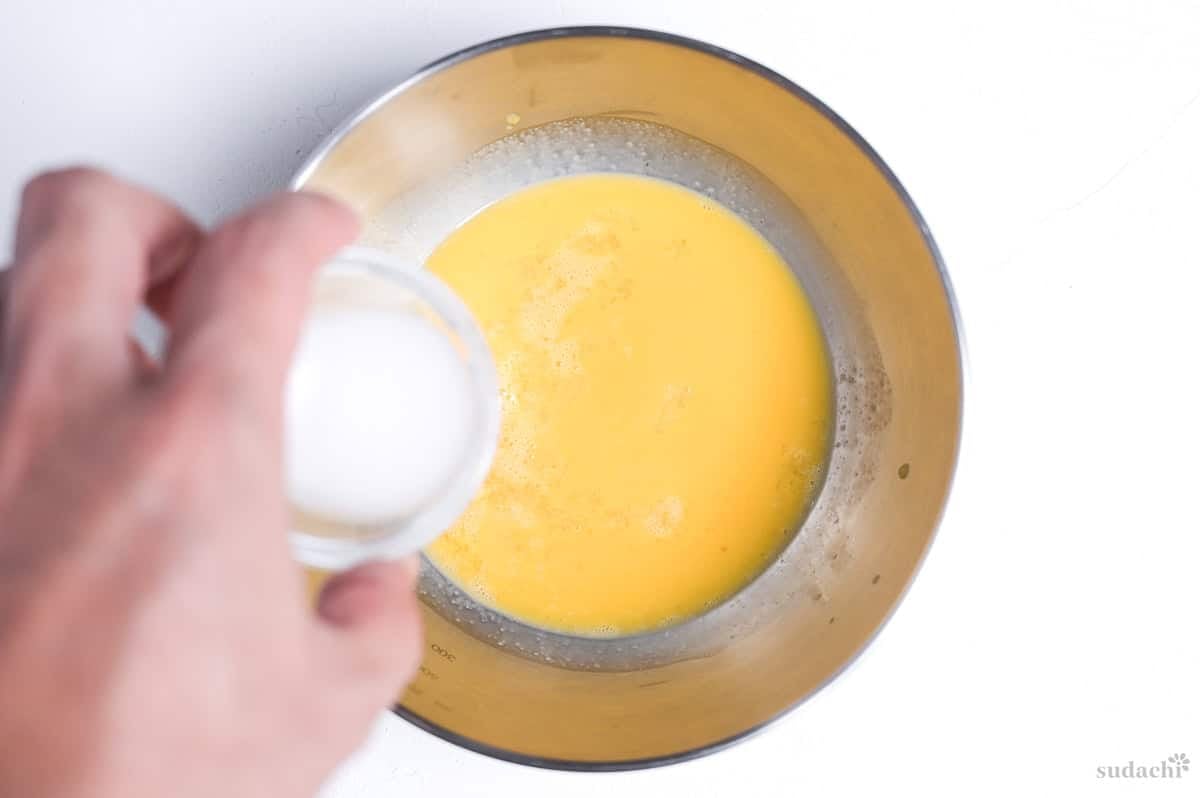
- Mix ½ tsp potato starch (katakuriko) and 1 tsp water together in a small bowl, then stir it into the egg mixture. Avoid vigorous mixing, we want few air bubbles as possible.
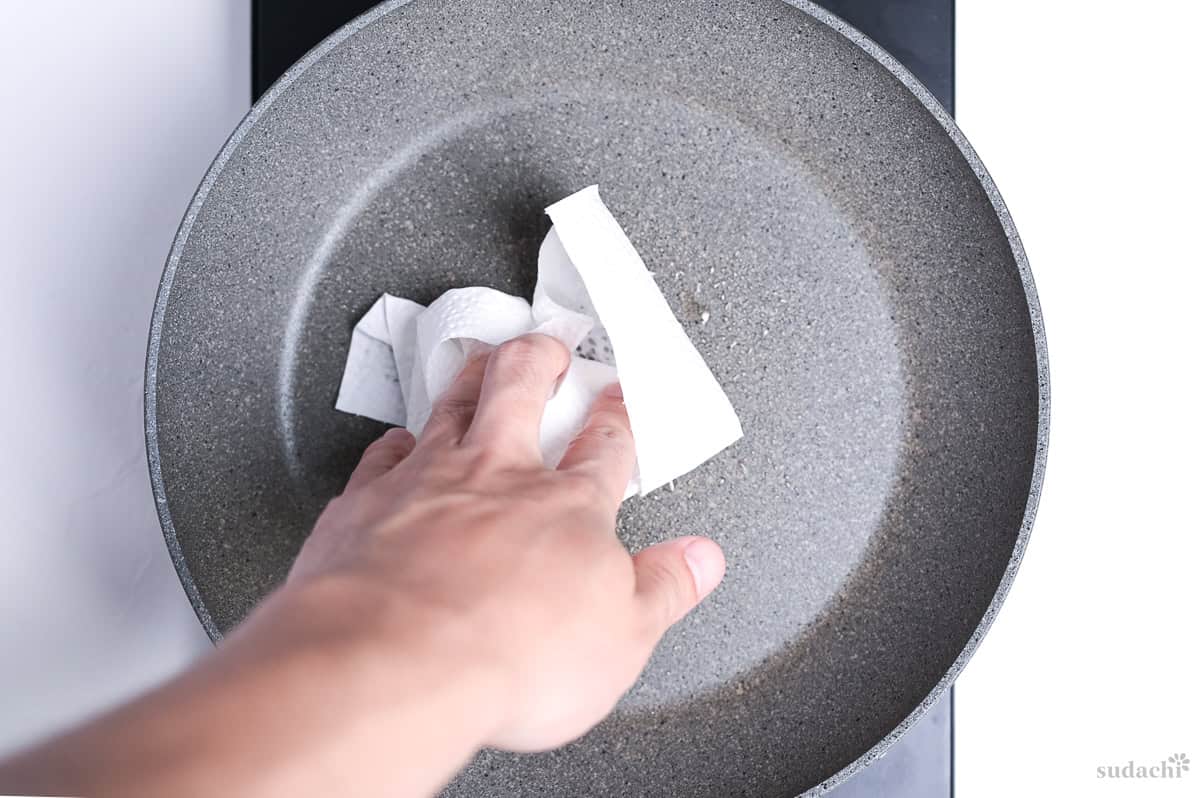
- Grease the hot pan with 1 tsp cooking oil. Wipe the excess out with kitchen paper.
- Pour the egg mixture into the pan and tilt to spread it into a thin even layer and let it cook undisturbed until about 80% done.
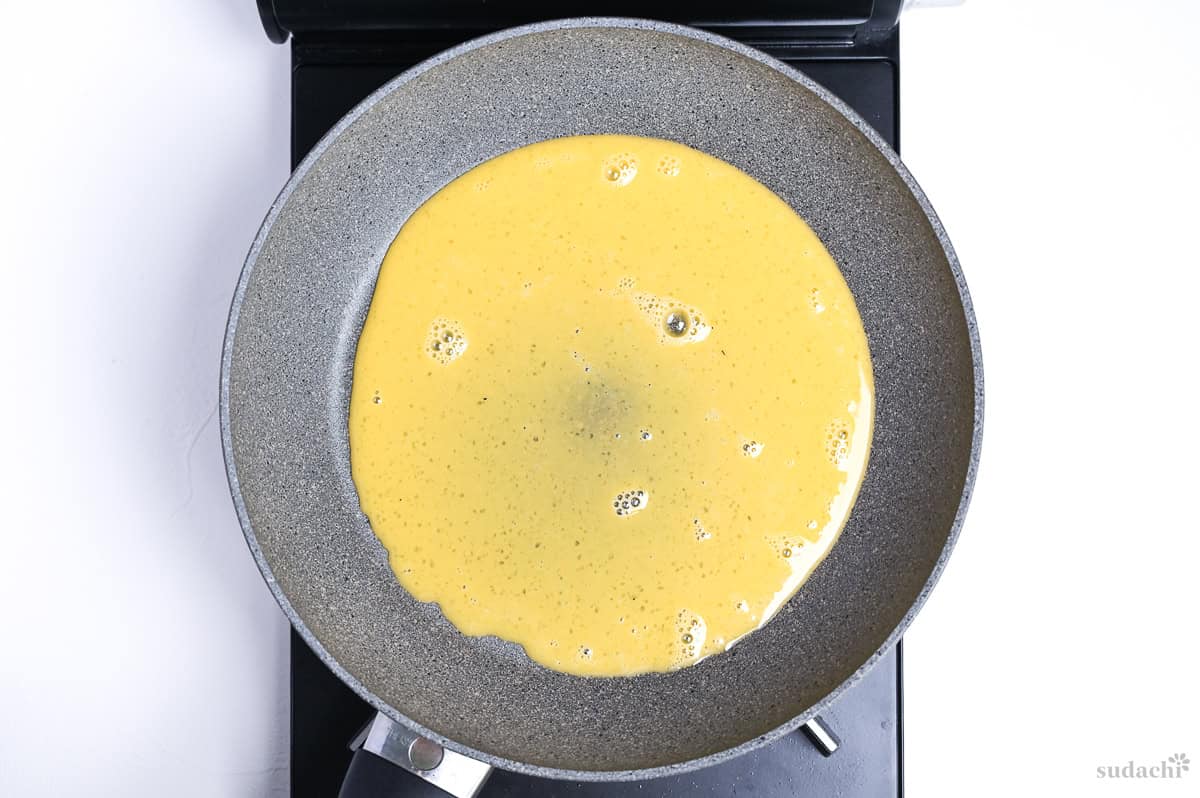
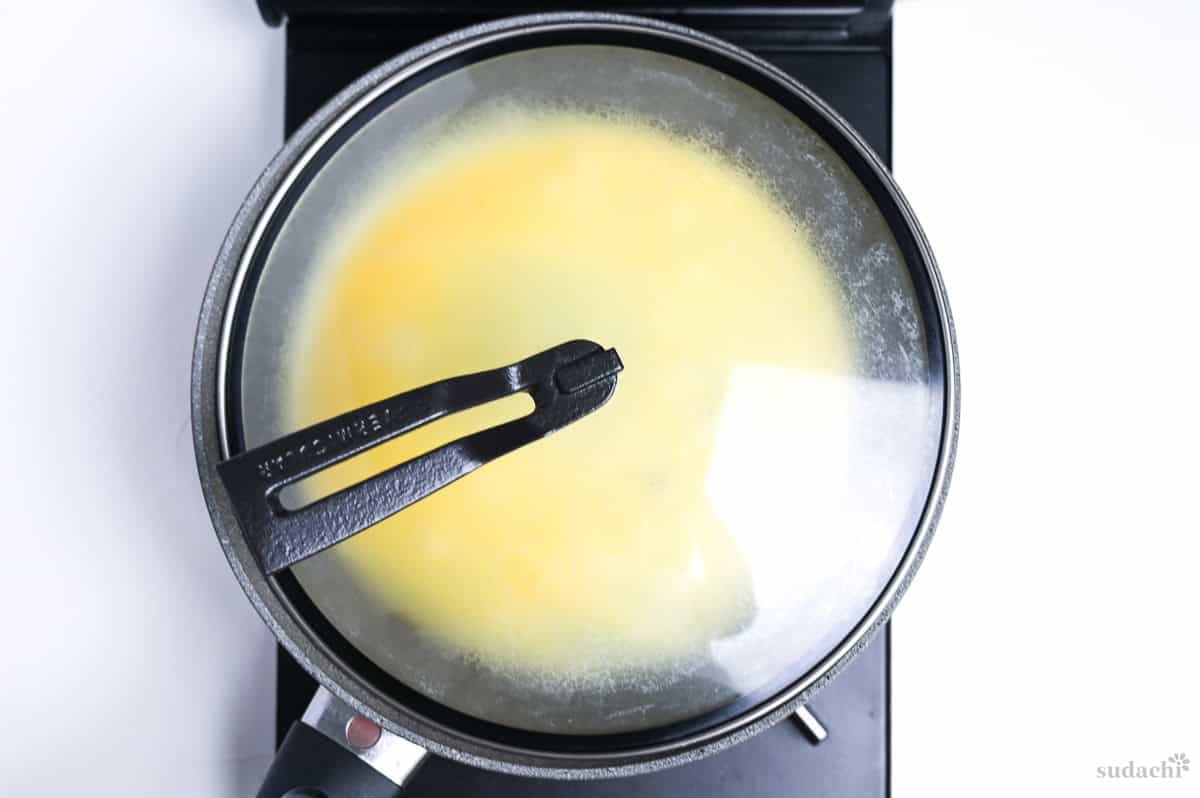
- When the top is no longer wet, cover with a lid. After 20 seconds, turn off the heat and let the residual heat finish cooking the surface. This usually takes about 1 minute 30 seconds.
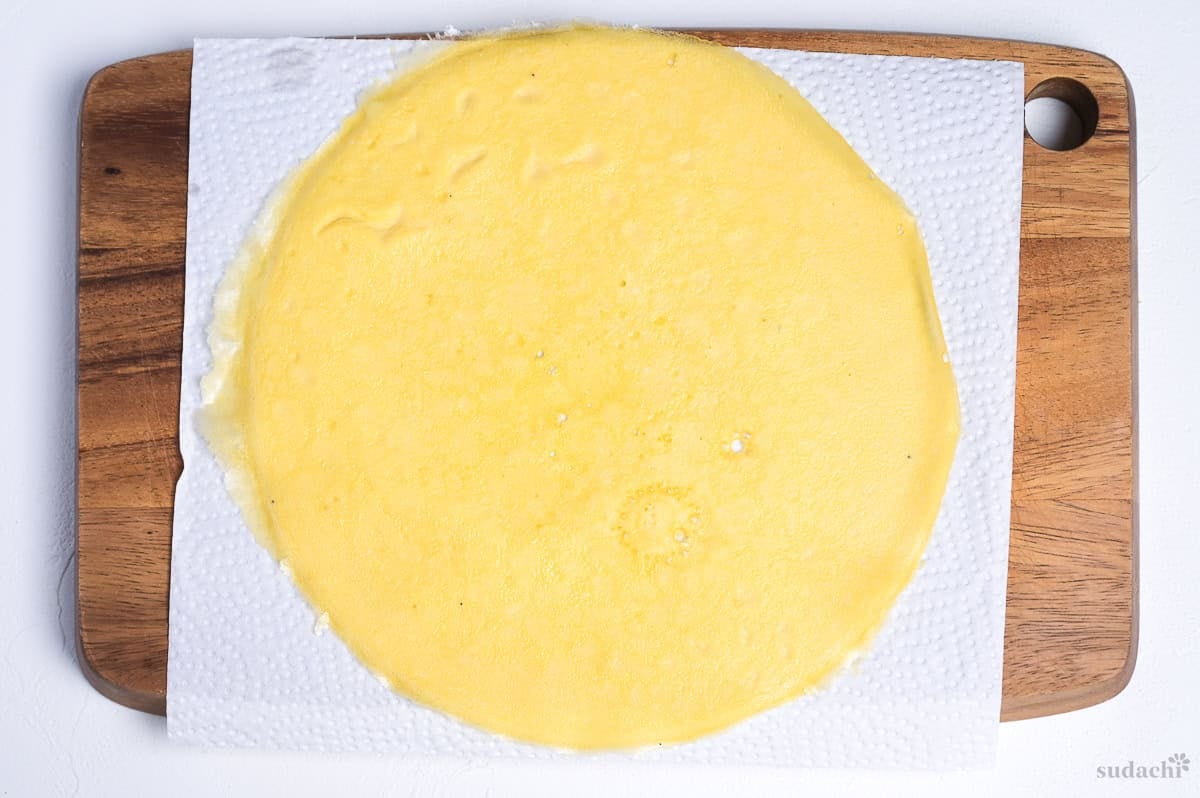
- Once the surface is fully set, push chopsticks or the corner of a spatula under one of the edges. When it comes loose, hold it with your fingers and slowly pull it in one direction to remove it from the pan. Place it on a piece of kitchen paper to absorb any excess oil.
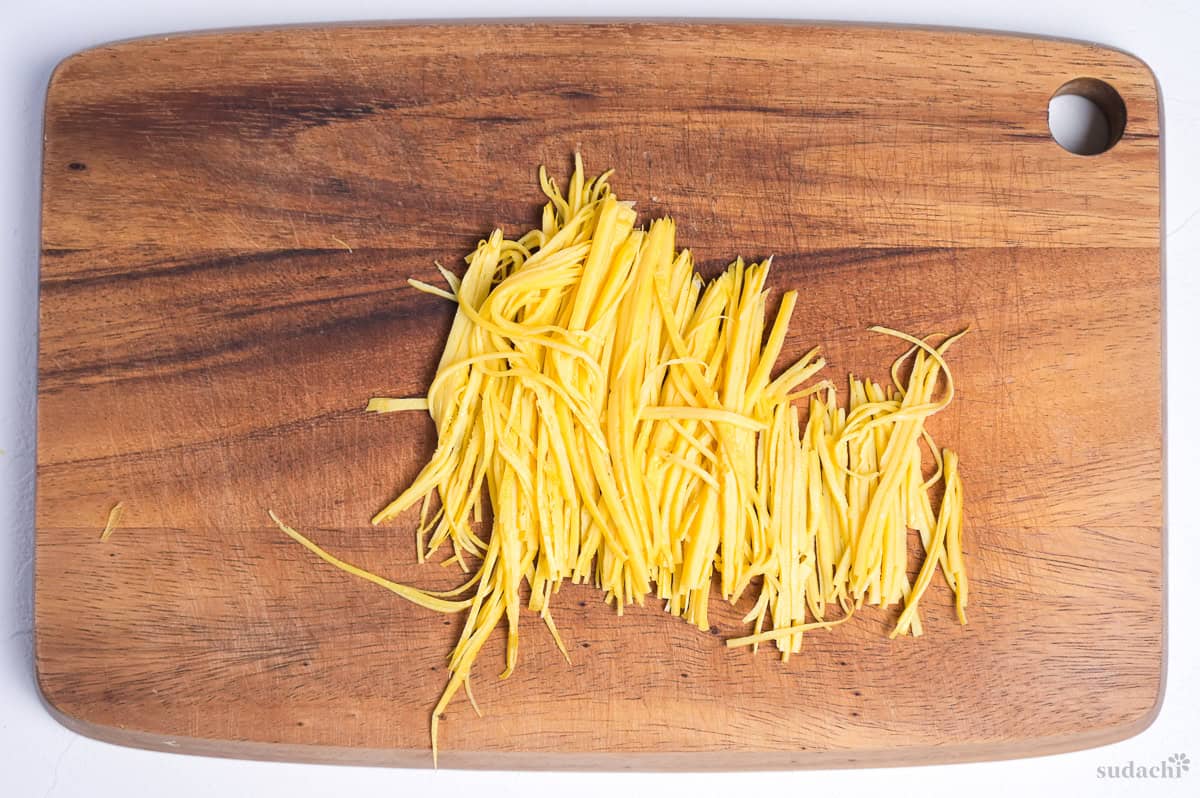
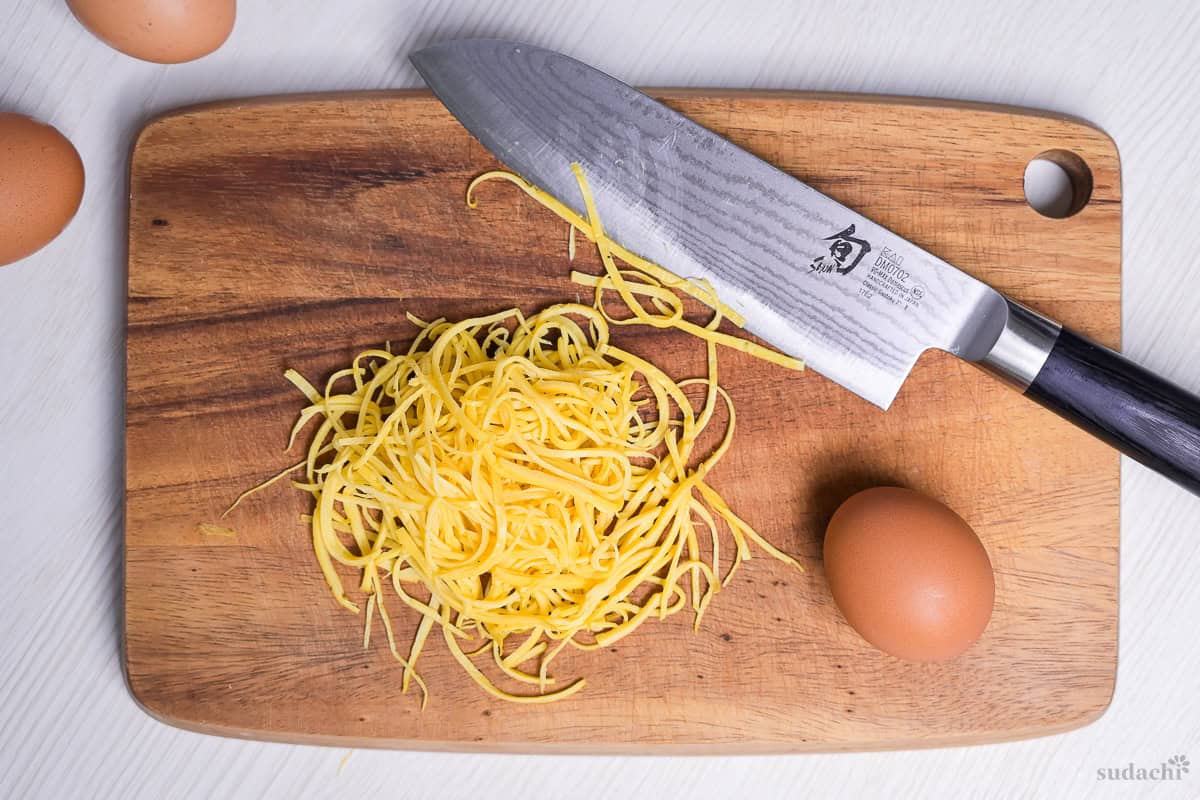
- For shorter strands, cut the kinshi tamago into halves or quarters, then stack the pieces and thinly slice. For longer strands, roll it up gently and slice.
- Fluff it up, then serve on rice or noodles, enjoy!
Notes
Stir in a potato starch slurry to stop tearing: Loosen the starch in water and stir it into the egg before cooking. It threads through the thin sheet like a second net so it lifts, folds, and slices without splitting. Stir again right before pouring, since the starch sinks.
Keep the heat low so the gold never browns: Browning starts around 140 to 165°C (284 to 329°F), so a hot pan scorches the egg the moment it lands. Cook gentle, rest the pan on a damp cloth before you pour, and finish covered off the heat with no flip.
Strain the egg and cut up the white first: Pale blotchy patches are clumps of egg white that never blended into the yolk. Break the white up as you mix, then strain the egg through a fine sieve. Strain before adding the starch, or the mesh catches the slurry.
Cool the sheet completely flat before slicing: While the egg is warm the protein bonds are soft, so a knife crushes it into ragged crumbs instead of clean threads. Spread the sheets flat to cool, never stacked where they trap steam, and slice only once cold and firm.
Full Recipe QR Code↑↑