Easy Homemade Gyoza Wrappers
Ingredients
Gyoza Wrapper Dough
- 100 g unbleached cake flour or all-purpose flour for both
- 100 g bread flour or all-purpose flour for both
- 30 g glutinous rice flour (mochi flour) or an equal amount of cake/bread/all purpose flour
- 1 tsp lard for improved extensibility and flavor, or cooking oil
- 115 g freshly boiled water 90-100°C/194-212°F
- ½ tsp salt fine easy-to-dissolve sea salt recommended
- ½ tsp sugar
- cooking oil for coating the dough
- potato starch (katakuriko) or cornstarch
Instructions
- Measure out 100 g unbleached cake flour, 100 g bread flour, and 30 g glutinous rice flour into a large mixing bowl. Mix with chopsticks until well distributed.
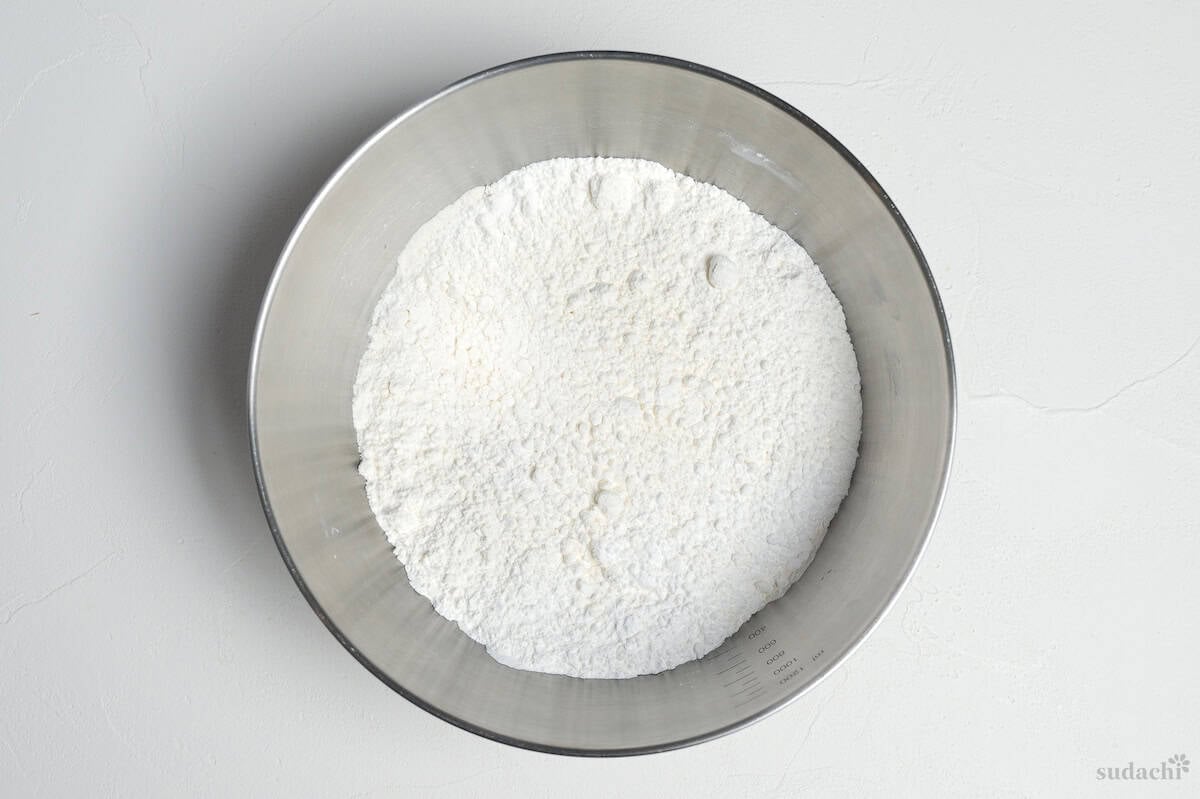
- Pour 115 g freshly boiled water into a heatproof jug and add ½ tsp salt and ½ tsp sugar. Mix until fully dissolved.
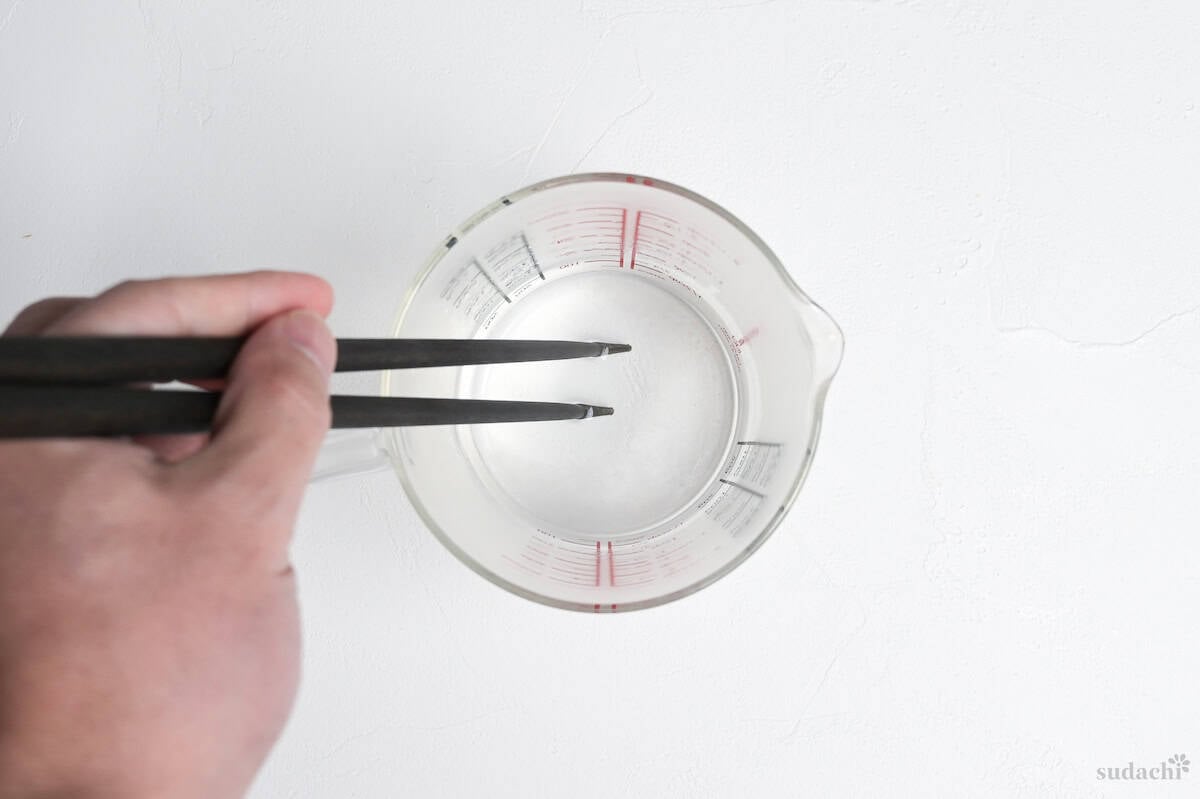
- Drizzle the hot water into the bowl of flours while stirring with chopsticks until it forms a shaggy dough. Then let it cool enough to handle.
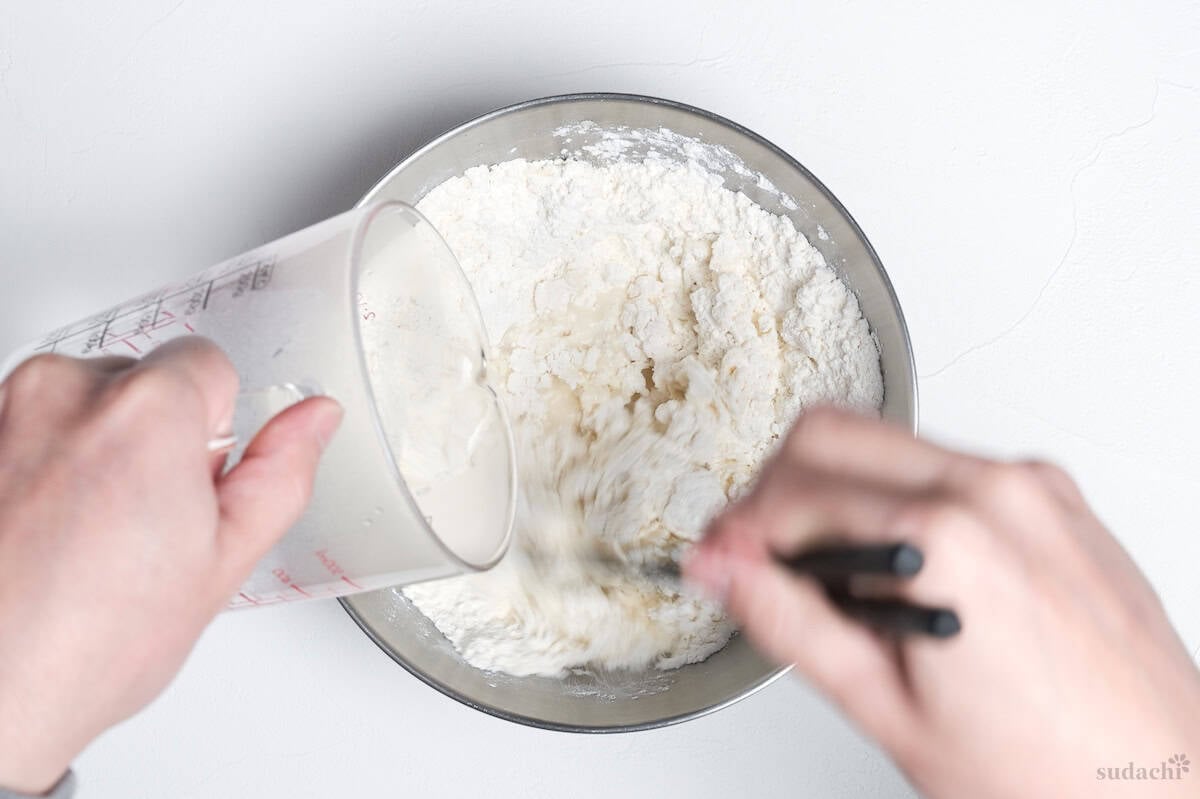
- Transfer the cooled dough to a clean dry surface, then knead by pressing, folding and turning it. Repeat and knead for 5-10 minutes or until smooth with the softness of an earlobe.
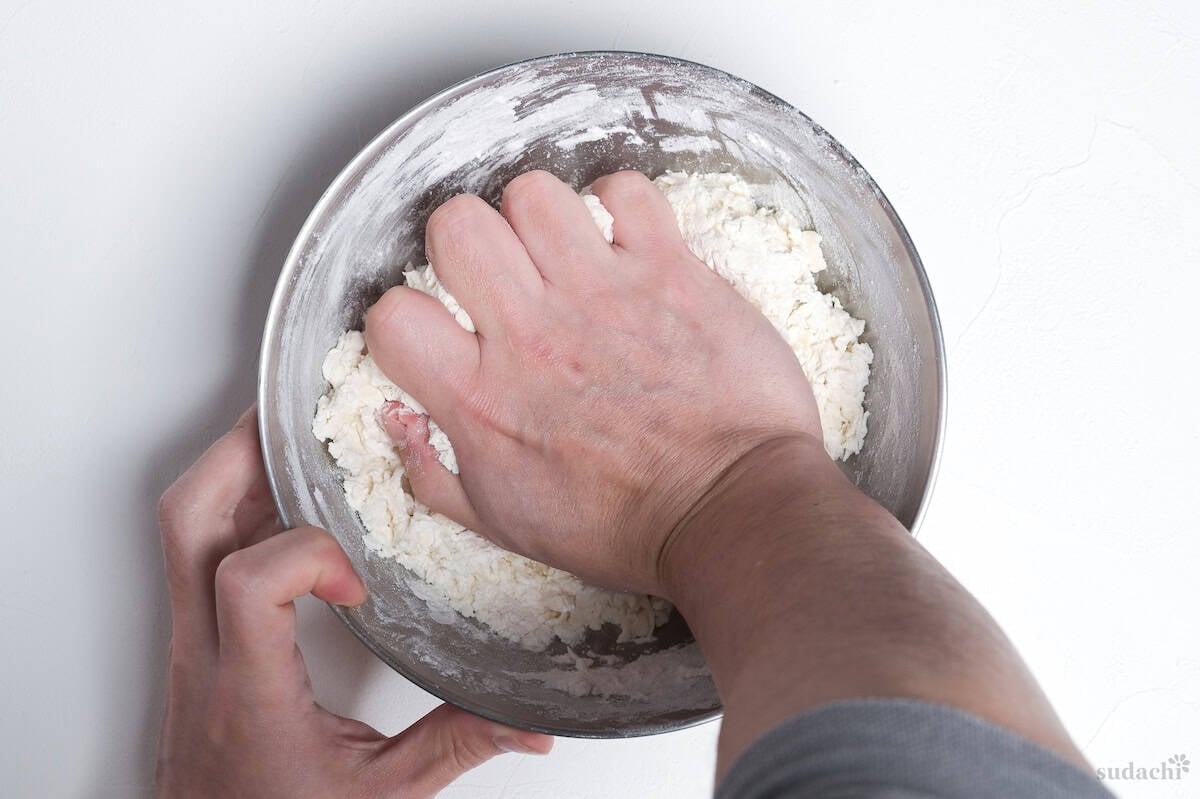
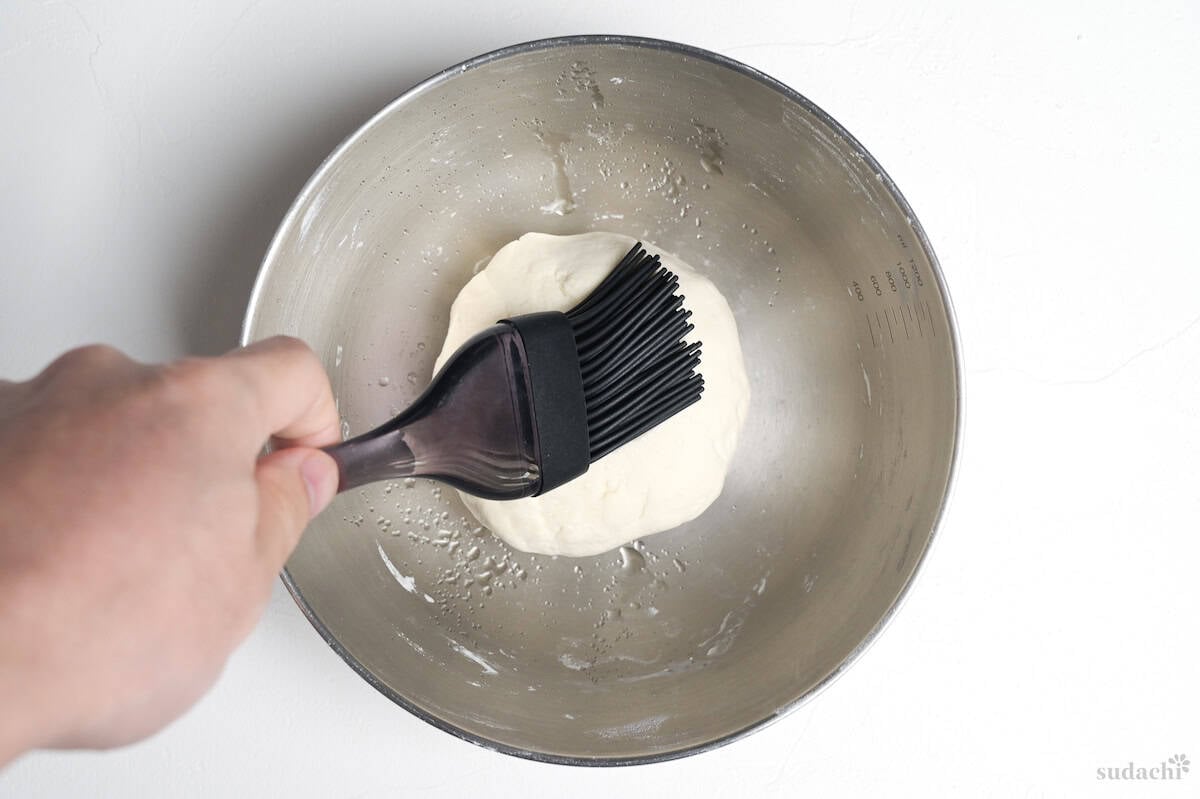
- Brush the dough with a thin film of cooking oil and cover the bowl with plastic wrap. Rest at room temperature for 15-20 minutes in a warm environment, or 30-45 minutes in a cold environment.
Optional: Rub 1 tsp lard into the dry ingredients for a stretchier dough. Note: If you can't get glutinous rice flour (mochiko), sub with an equal amount of cake/bread/all purpose flour.
Pasta Machine Method
- After a rest, knead the dough for 30 seconds. Dust your work surface generously with potato starch (katakuriko), then place the dough on top and sprinkle with extra potato starch to prevent sticking.
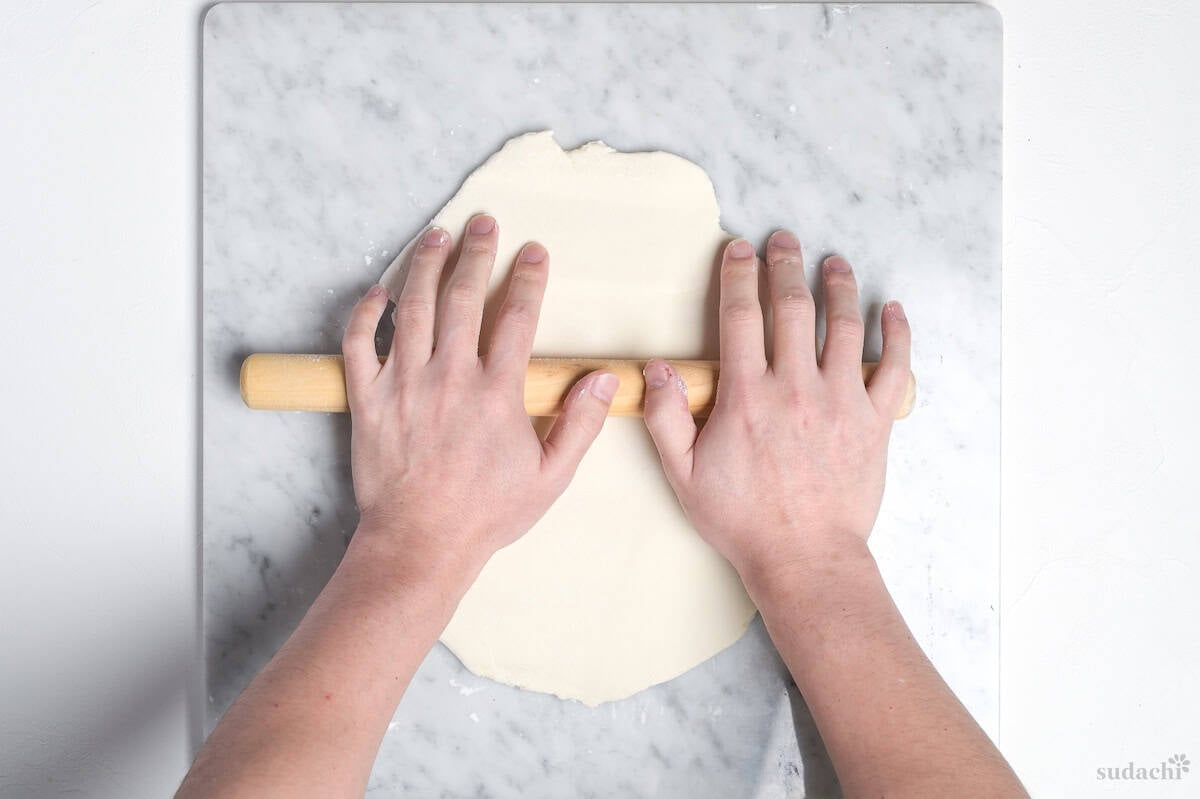
- Flatten the dough by hand, then roll with a rolling pin until no more than 1cm thick. Cut into strips wide enough to fit a pasta machine.
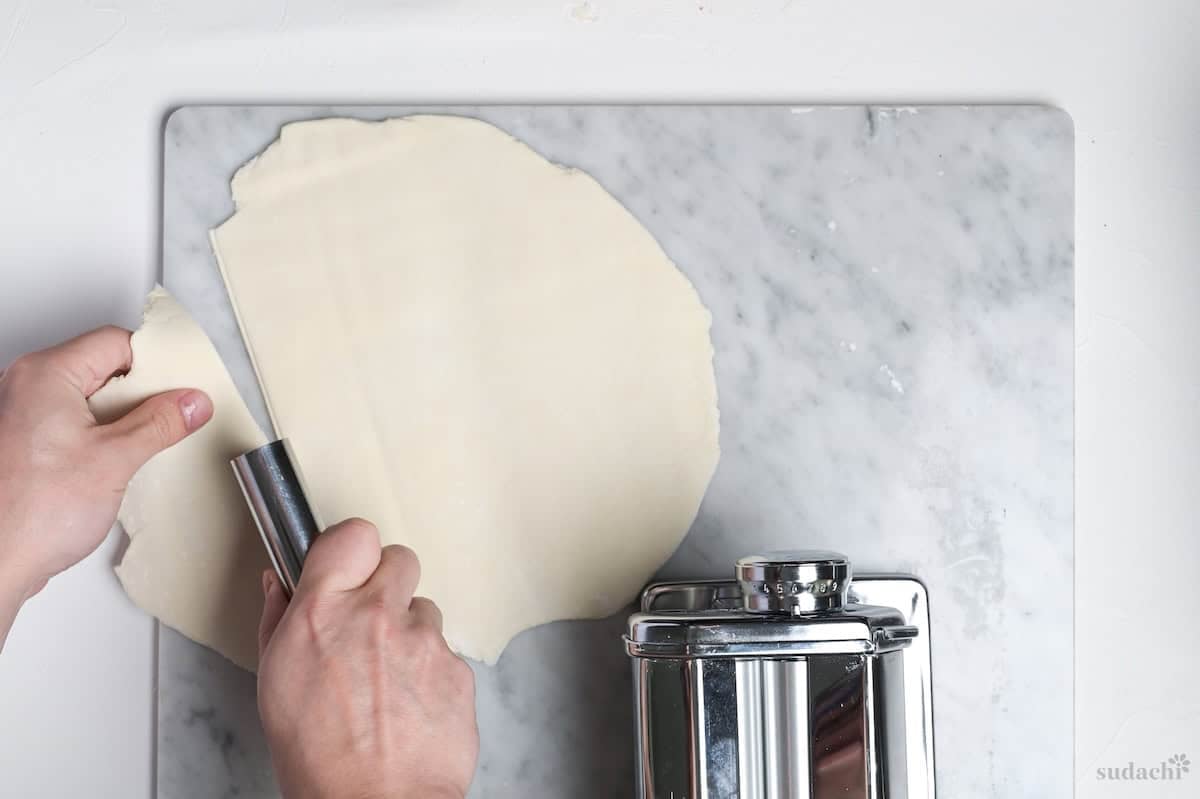
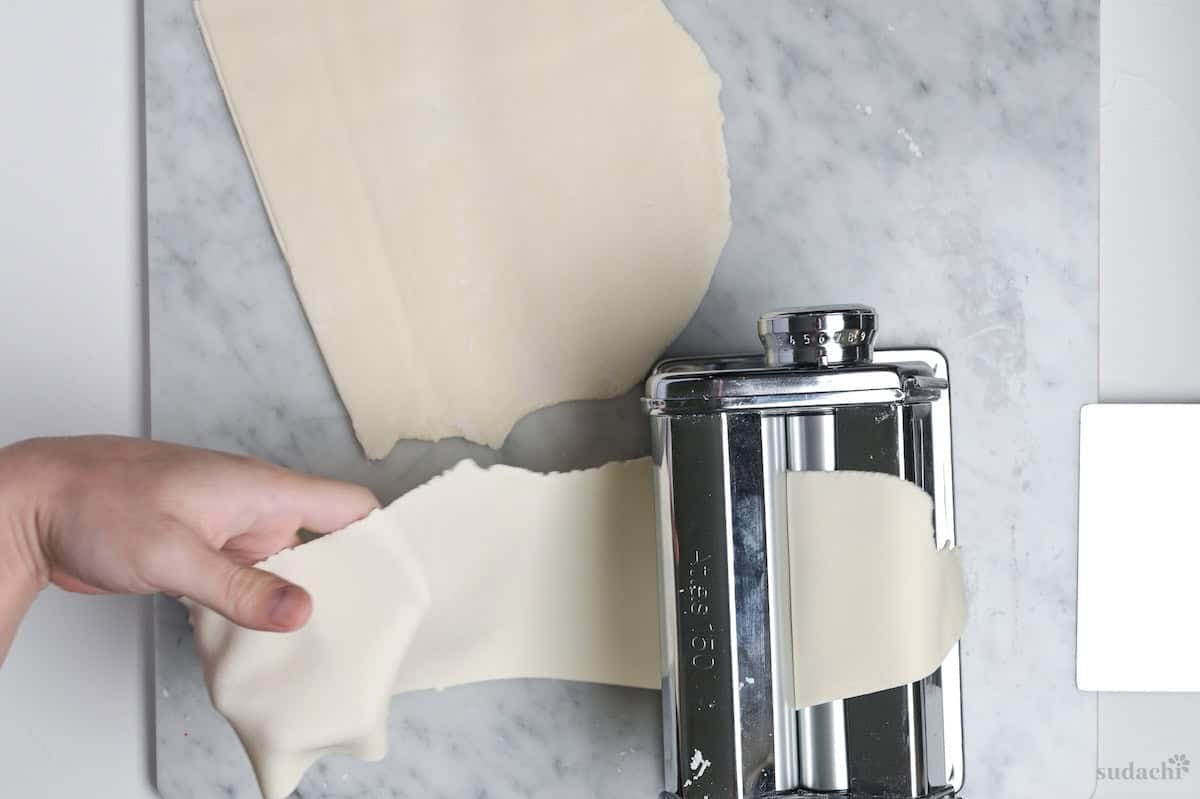
- Feed the strips through the pasta machine one at a time on the widest setting, then reduce the thickness by one notch and repeat. Continue feeding each strip through until it reaches 1mm thick. (This is setting 6 on my atlas 150 pasta machine).
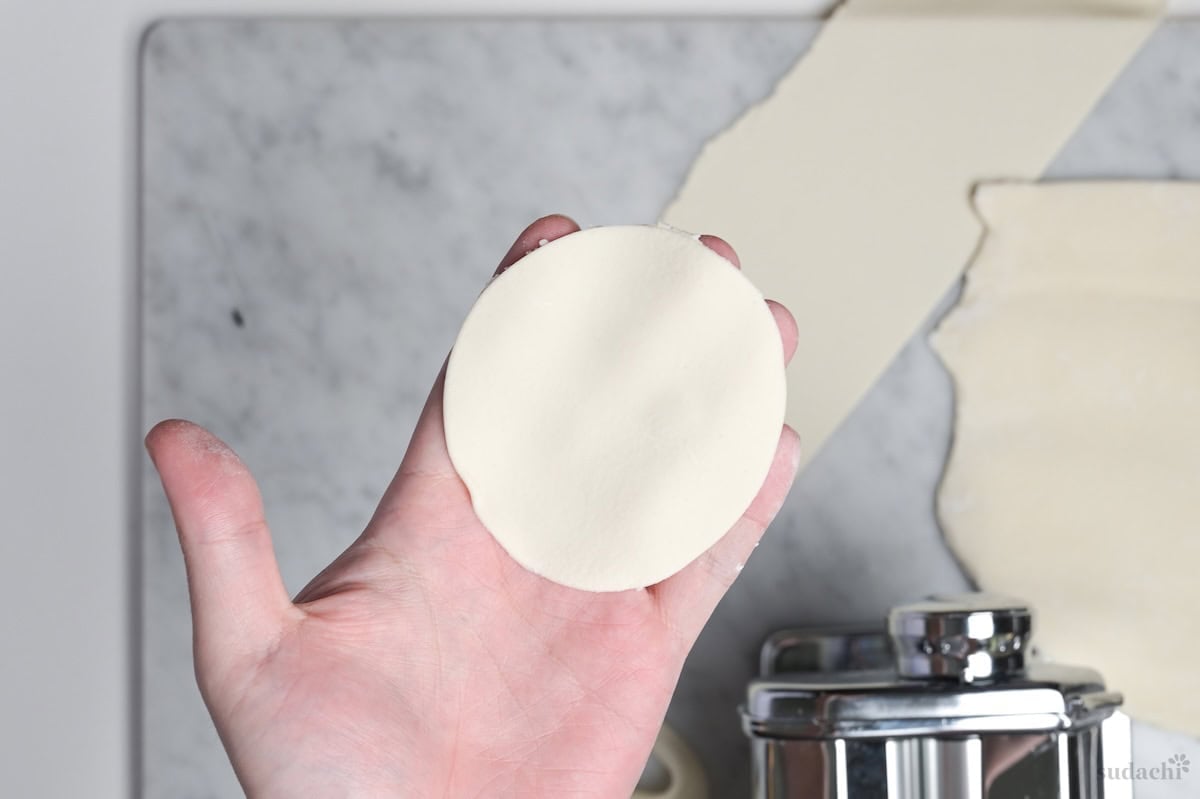
- Lay out the rolled sheet and use a circular cutter (8-9cm) to cut your wrappers. Sprinkle with extra starch to prevent sticking, and store them in an airtight container to protect them from drying out.
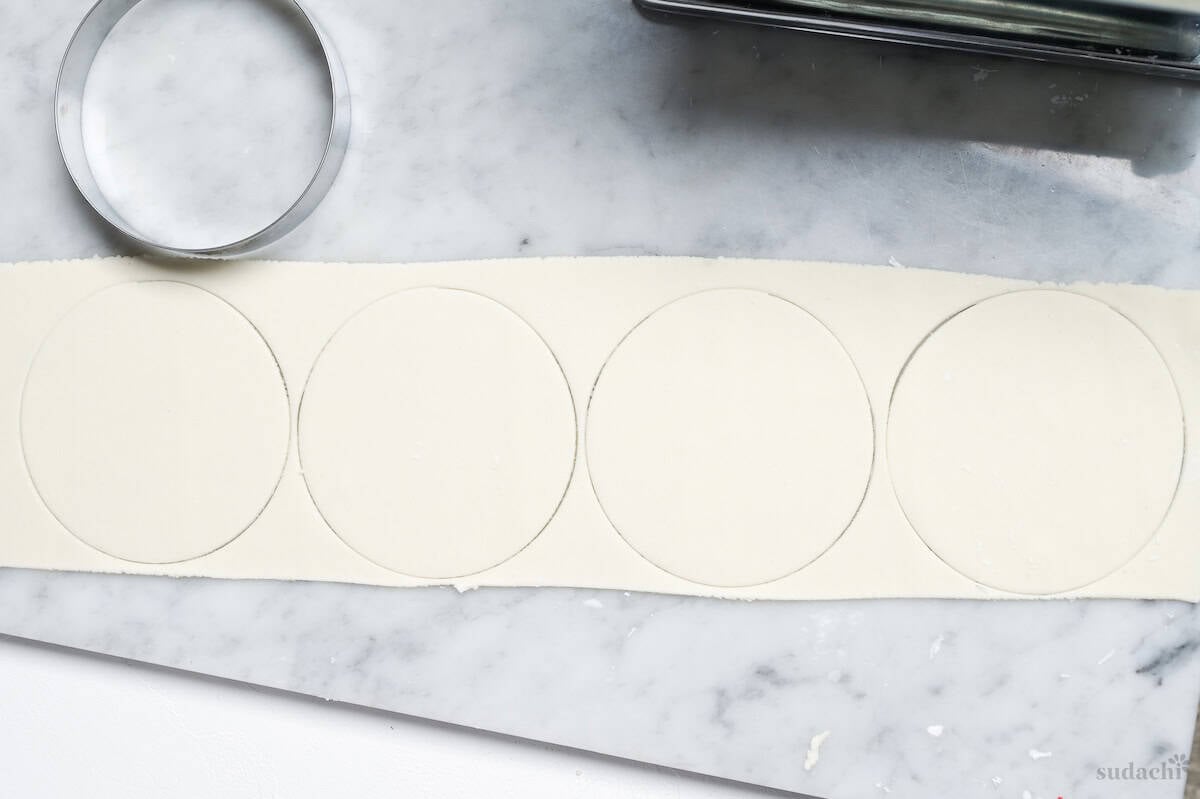
- Press the leftover scraps together, then roll and feed it through the pasta machine again. Repeat until you've run out of dough.
Hand Rolled Method
- Cut the dough in half and roll into two equal sized cylinders, about 2cm in diameter. Wrap one cylinder with plastic wrap (or store in an airtight container) while you work the other.
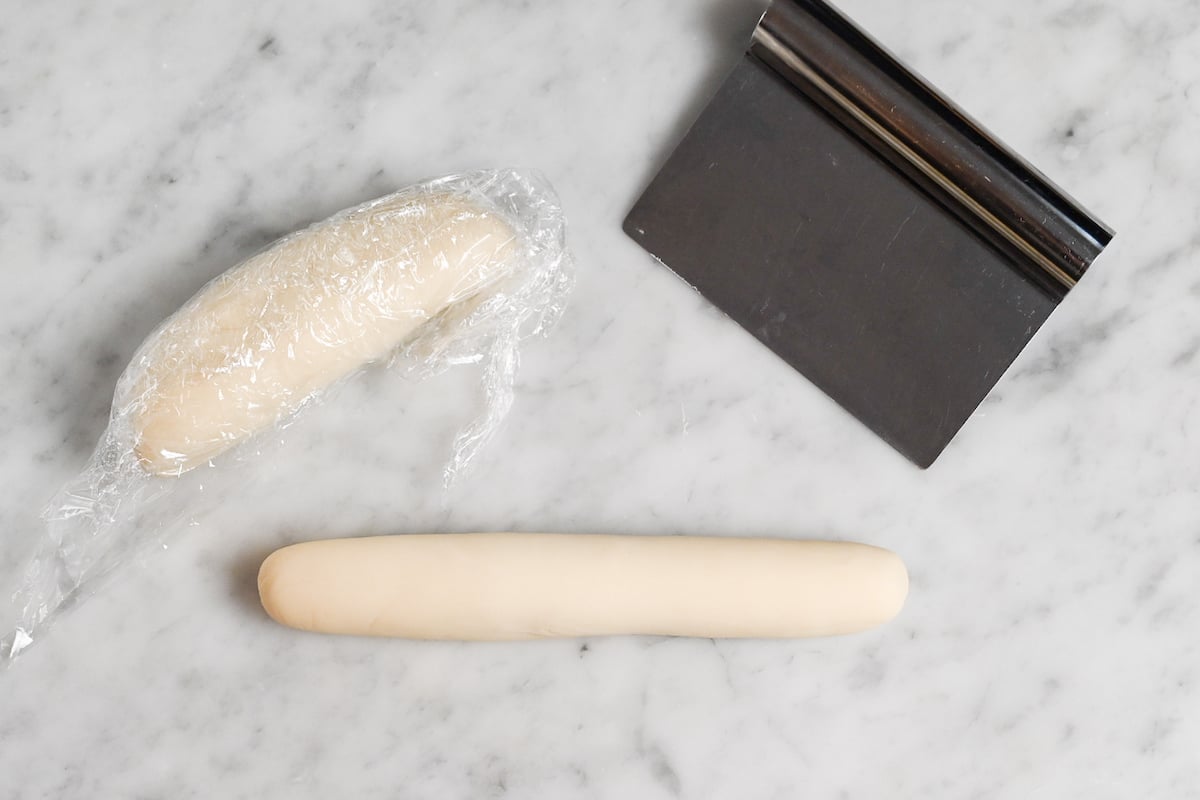
- Cut the cylinder in half, each half in half again, and repeat until you have 16 equal pieces from one roll.
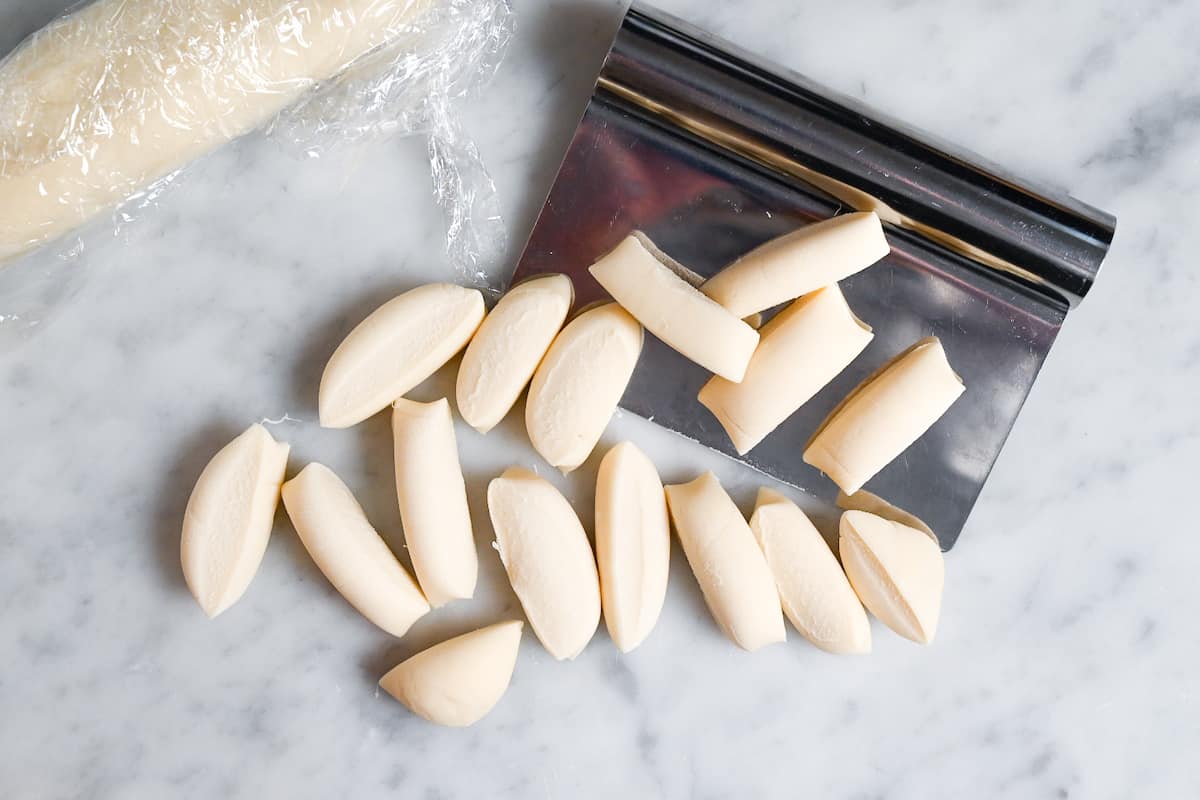
- Roll each piece into a ball, then press to make a small disc.
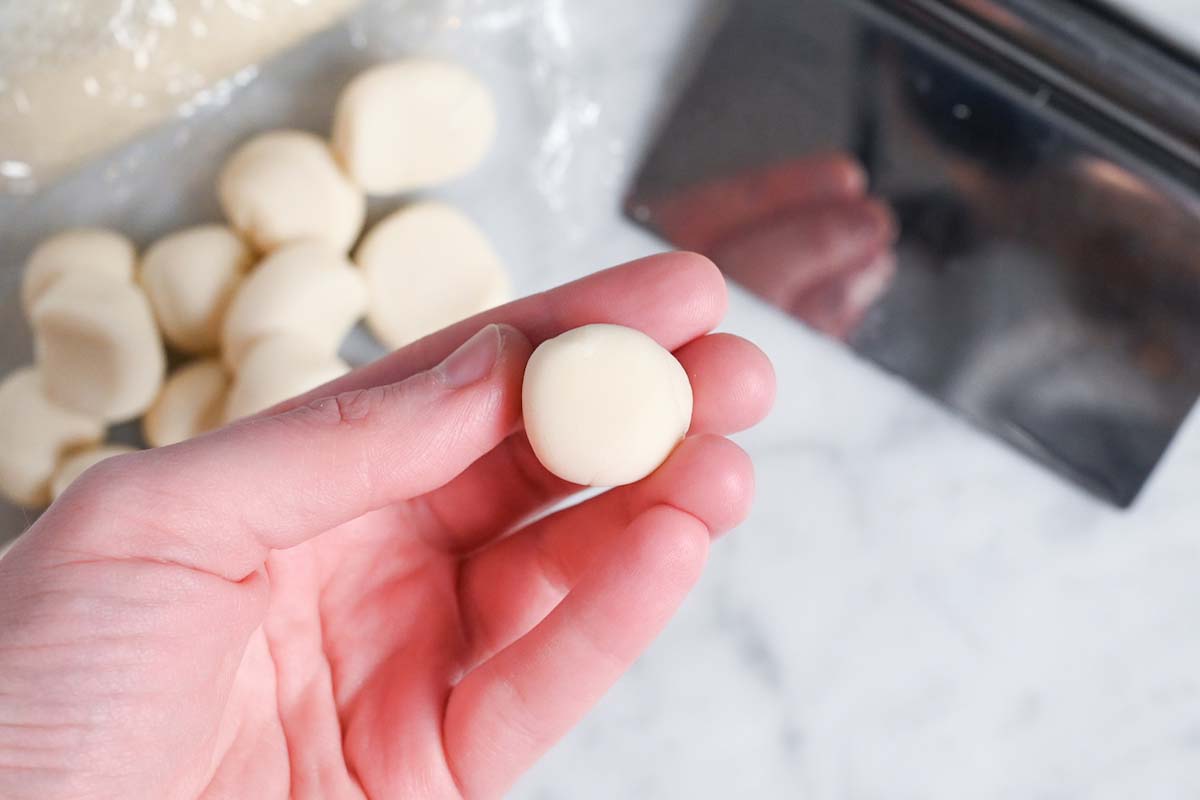
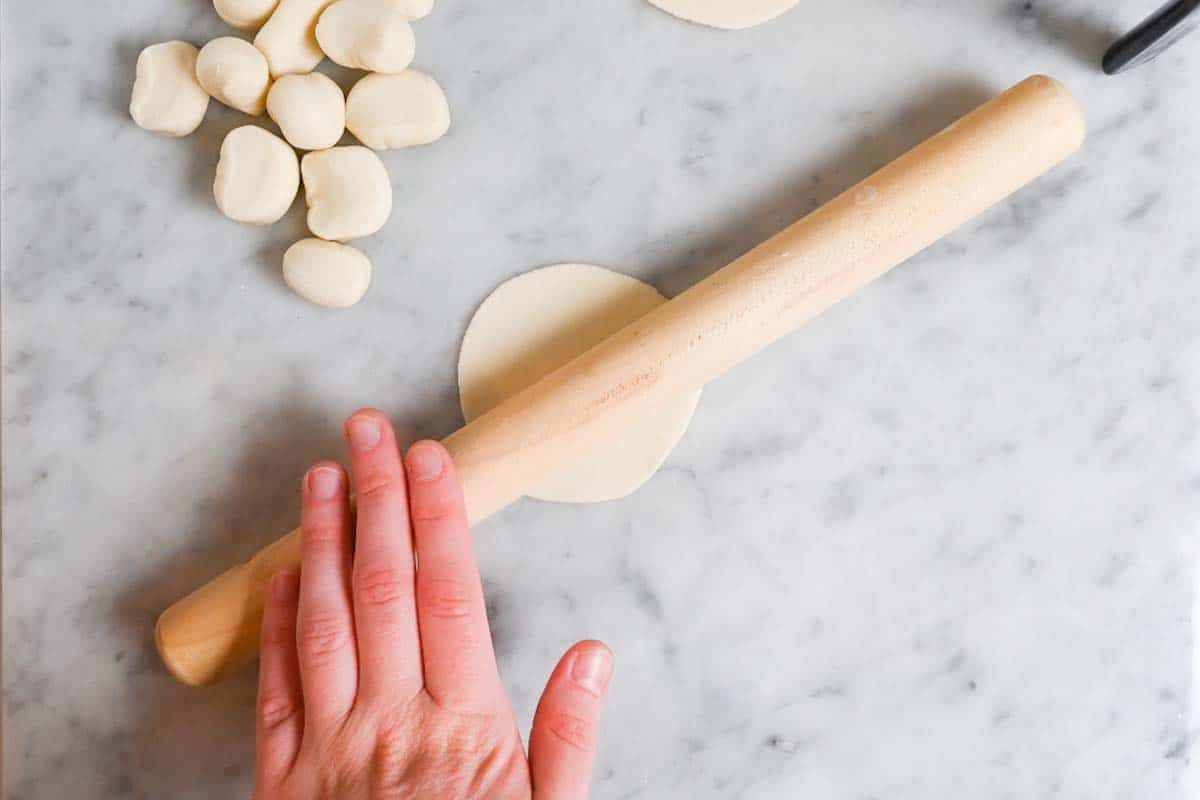
- Use a rolling pin to roll it flat, starting from the center and working outwards, then rotate the dough about 15 degrees and repeat. This will help keep it round. Continue to roll until about 1mm thick.
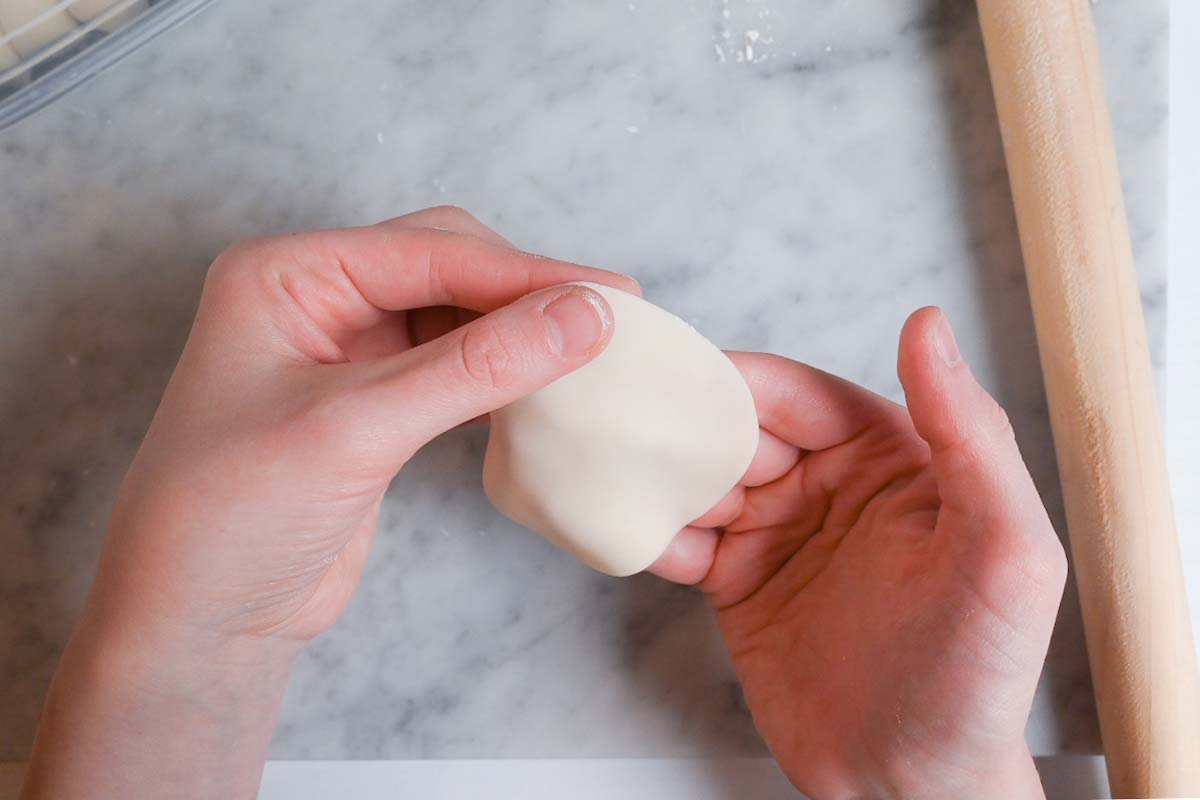
- Pinch all around the edges with your fingers so that the edge is slightly thinner (this makes better pleats).
- Fill with your favorite gyoza fillings, and enjoy!
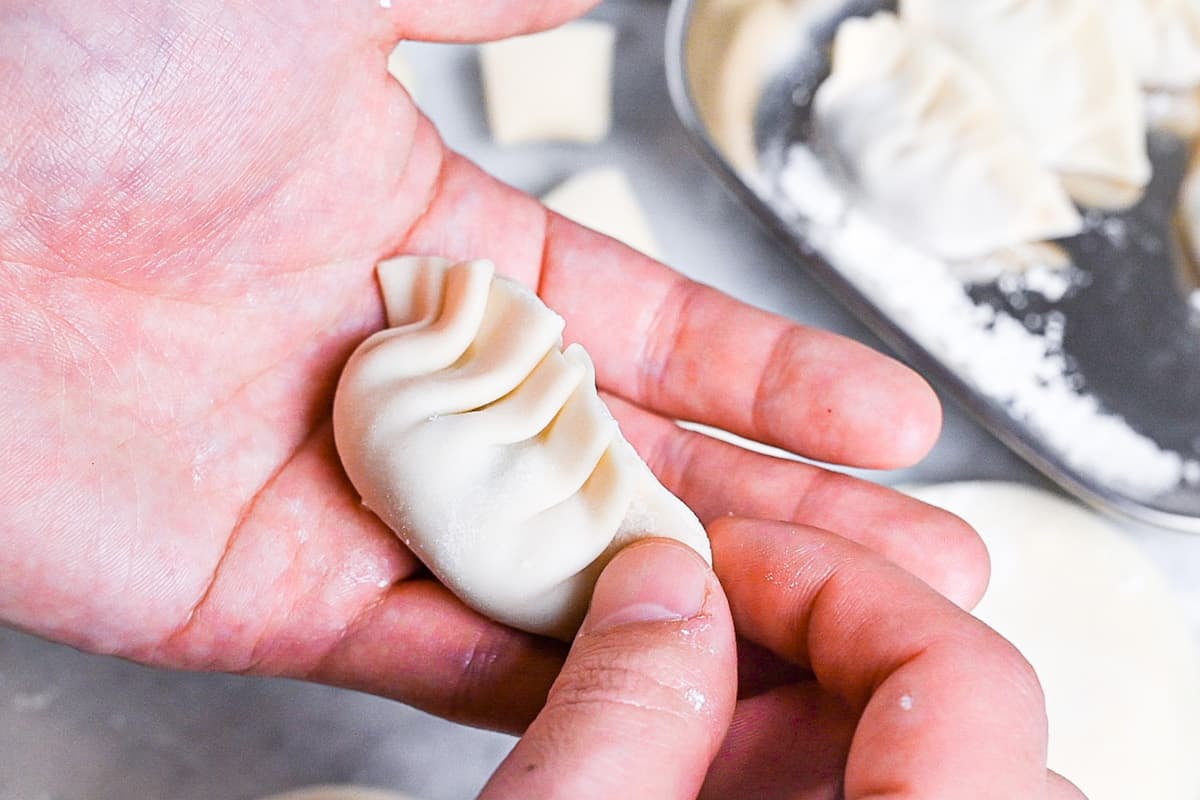
Keep in mind that rolling by hand takes longer, and might be less uniform in size and shape (but will still be delicious!).
Notes
Use a kitchen scale, not cups. The flour-to-water ratio determines whether this dough works or not. Even 10g of extra water turns the dough from rollable to impossibly sticky.
The water must be at a full rolling boil. Water that is merely hot from the tap (around 60-70°C/140-158°F) will not gelatinize the starch. You need 90°C+ (194°F+) to trigger the chemical reaction that makes the dough pliable and chewy.
Do not skip the resting step. Freshly kneaded dough fights back when you try to roll it.
Cover everything you are not touching. Homemade dough contains no preservatives and dries out within minutes. Keep unused dough and finished wrappers under plastic wrap, a lightly damp cloth or airtight container at all times.
Use starch for dusting, not wheat flour. Wheat flour absorbs into the dough during rolling and stacking, making the finished wrappers heavy and tough.
Roll thicker if you are new to folding. 1mm is ideal, but a slightly thicker wrapper is far more forgiving and still delicious. Thin dough tears and sticks as you pleat. Never roll below 1mm.
Full Recipe QR Code↑↑