
Anpan (Japanese Red Bean Buns)
Ingredients
- 100 g bread flour
- 50 g all-purpose flour
- 3 g salt
- 25 g sugar
- 3 g instant dry yeast or double the weight for fresh yeast
- 30 g whisked egg reserve the rest for egg wash at the end
- 55 g whole milk
- 20 g water
- 20 g unsalted butter room temperature
- 240 g red bean paste (anko)
- black sesame seeds
Instructions
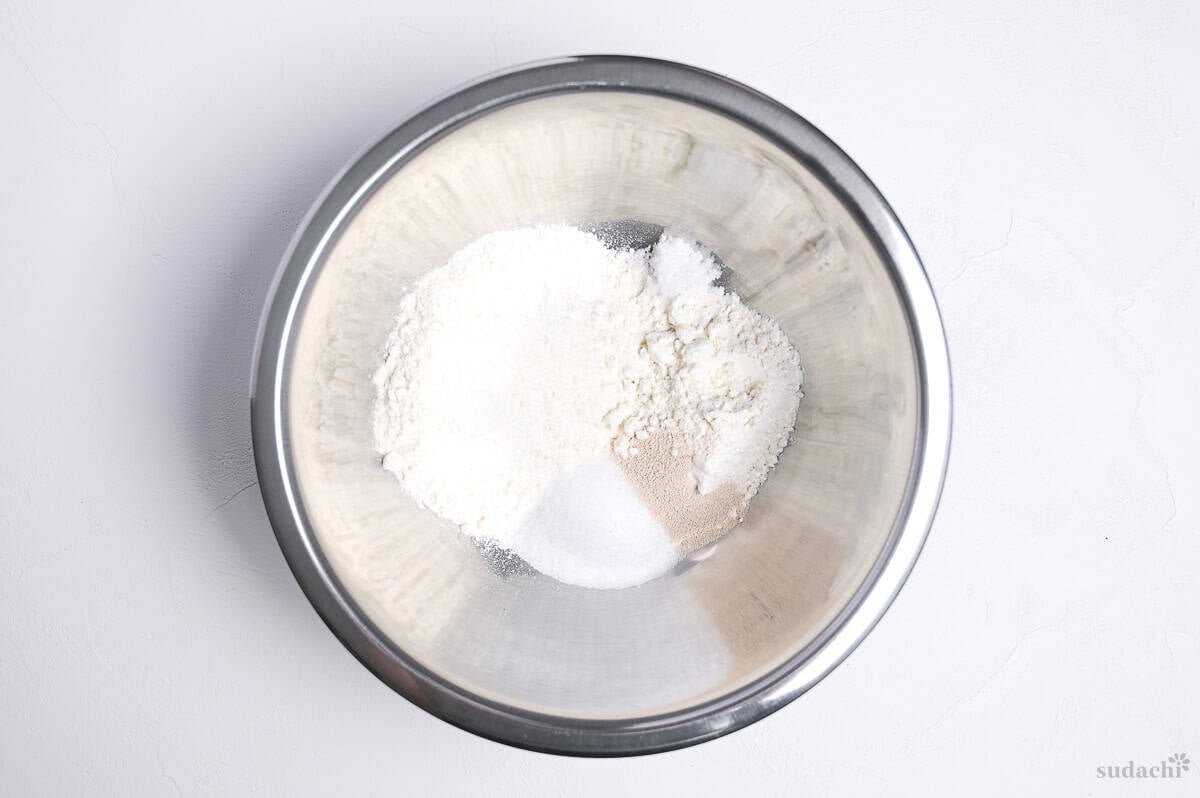
- In a large mixing bowl, add 100 g bread flour, 50 g all-purpose flour, 3 g salt, 25 g sugar, and 3 g instant dry yeast and mix to evenly distribute.
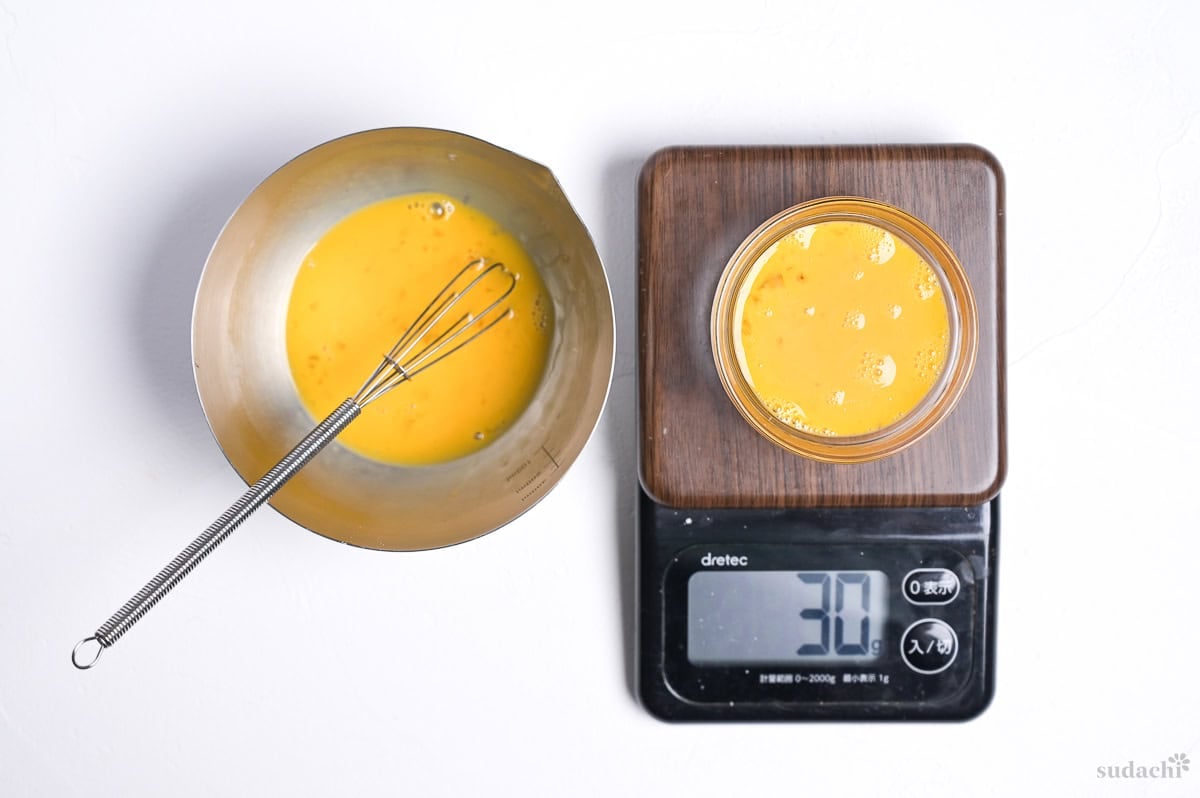
- Crack an egg into a bowl and whisk until the white and yolk are combined. Measure out 30 g whisked egg to add to the dough, then cover and store the leftovers in the fridge to use for egg wash later.Measure out 20 g unsalted butter and set it on the counter for later.
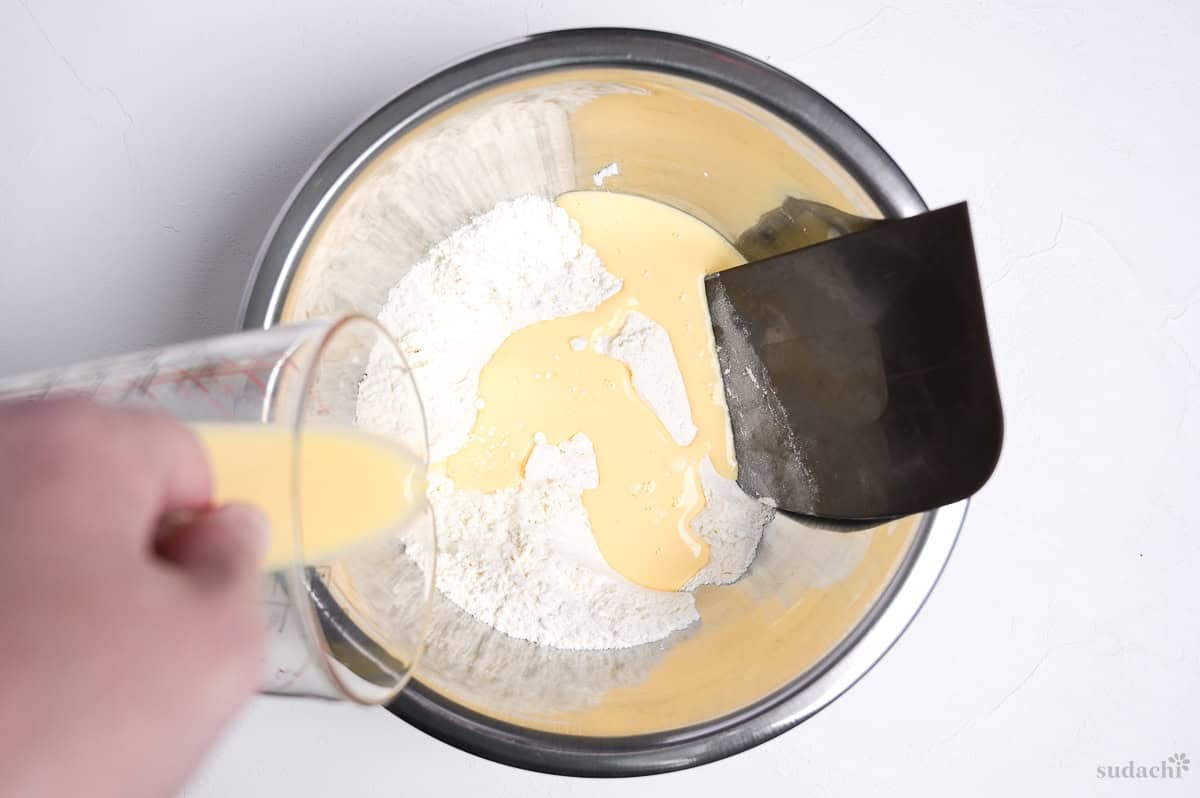
- Measure 55 g whole milk and 20 g water into a heatproof jug. Microwave for 10-15 seconds or until warm to the touch (not hot), then add the measured egg and whisk. Pour the contents of the jug into the bowl with the flour, and mix thoroughly until it forms a rough dough.
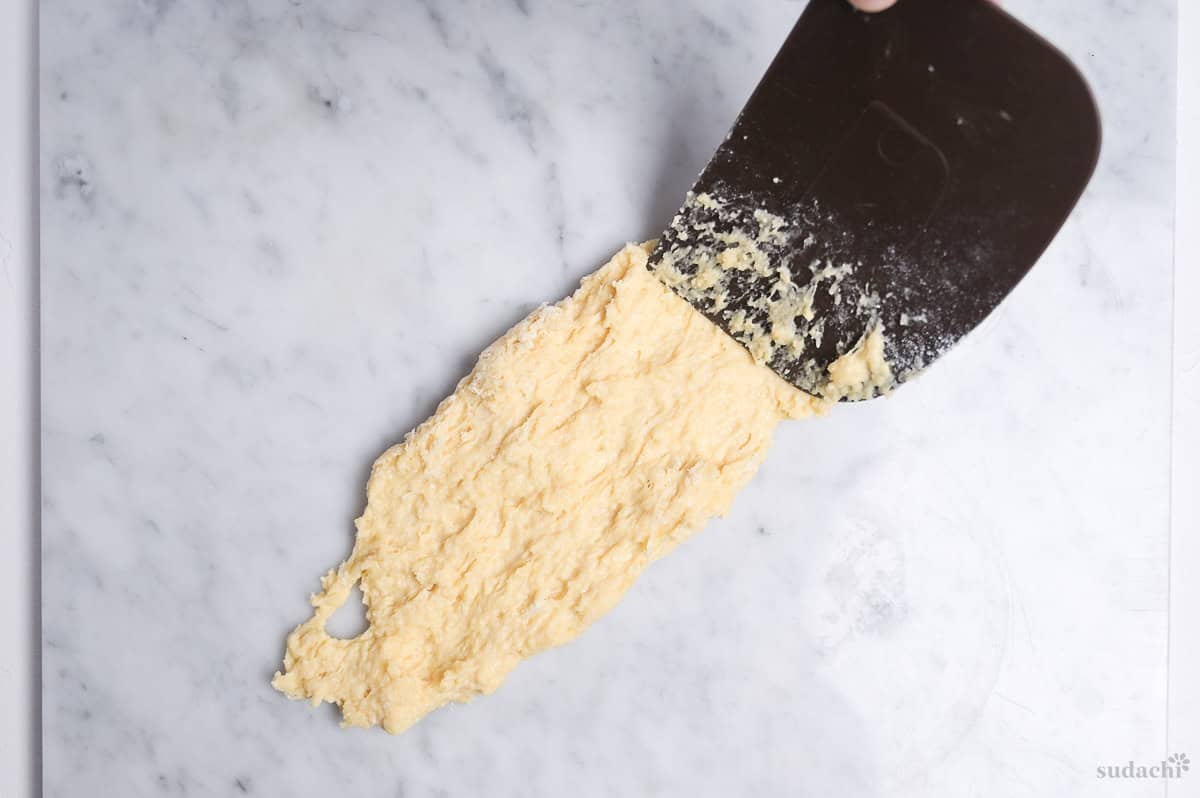
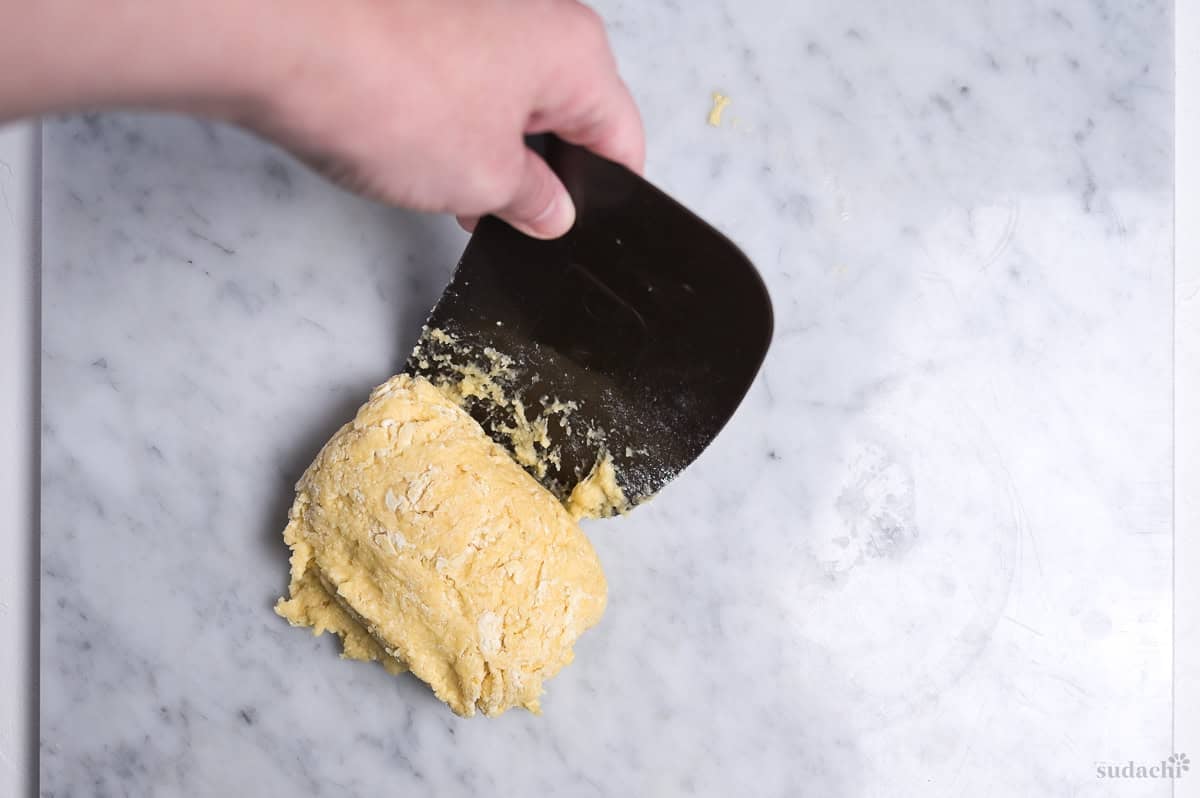
- Transfer the dough out onto a clean dry surface and use a bench scraper to smear the dough across the surface.
- Scrape the dough back up and repeat smearing and gathering in different directions until it becomes stretchy and more manageable.
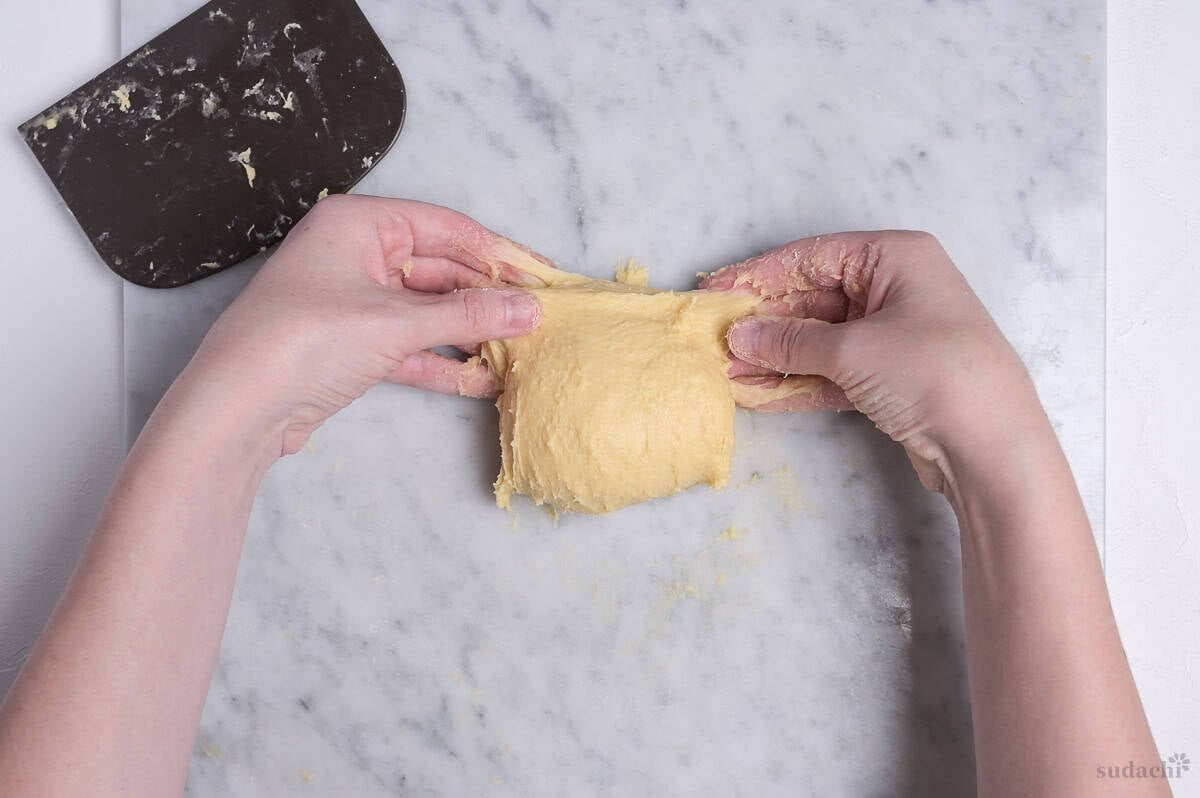
- Switch to the slap and fold method. Hold the edges of the dough, slap it onto the surface away from you and stretch it back towards you.
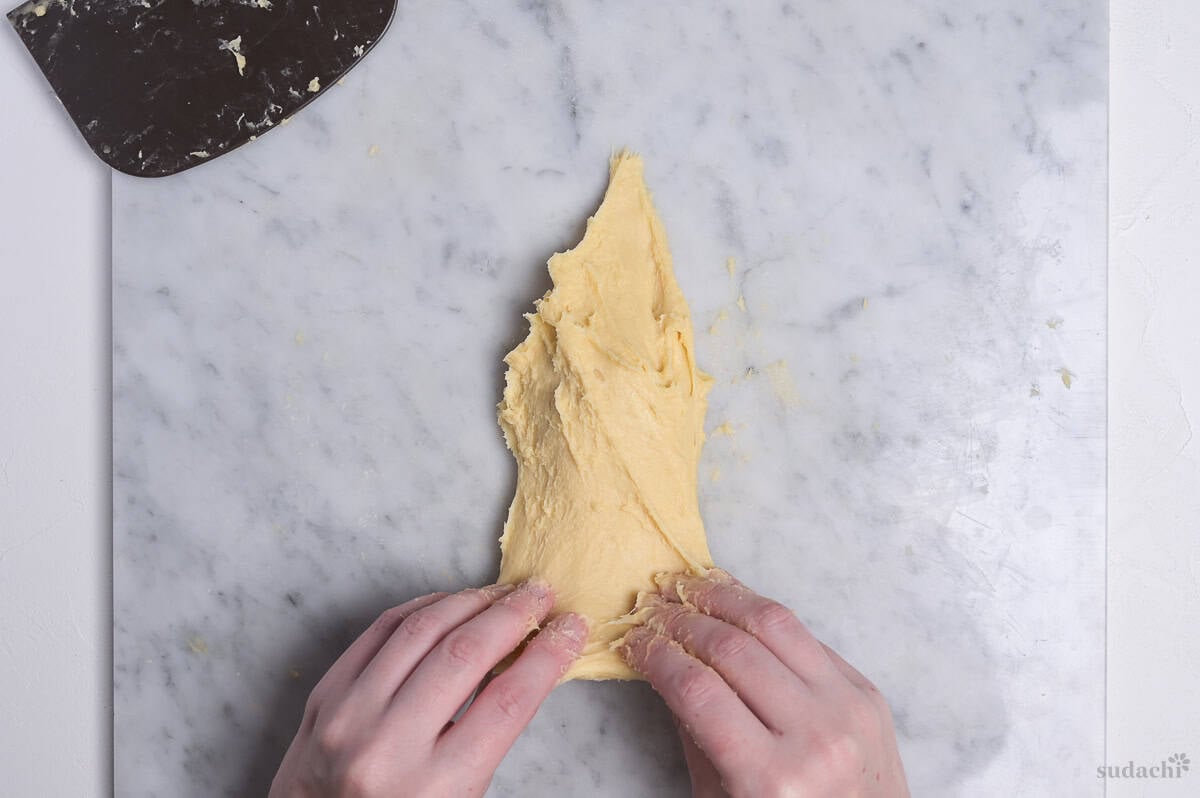
- Pull the dough away from you and over itself. Turn the dough 90° and repeat until smooth and passes the windowpane test.
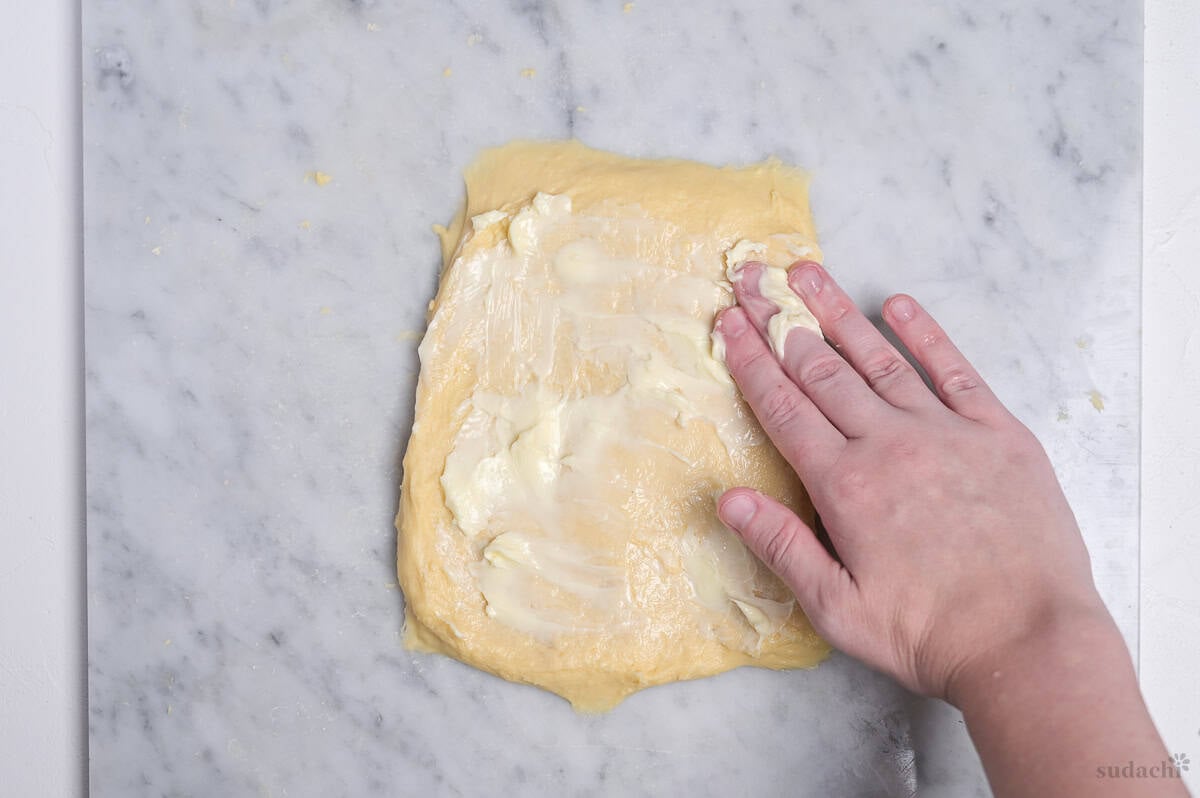
- Spread the dough out into a large rectangle, as big as you can without tearing it, and spread the room temperature butter over the top.
- Roll the dough up, then knead again until smooth and the dough no longer feels greasy.
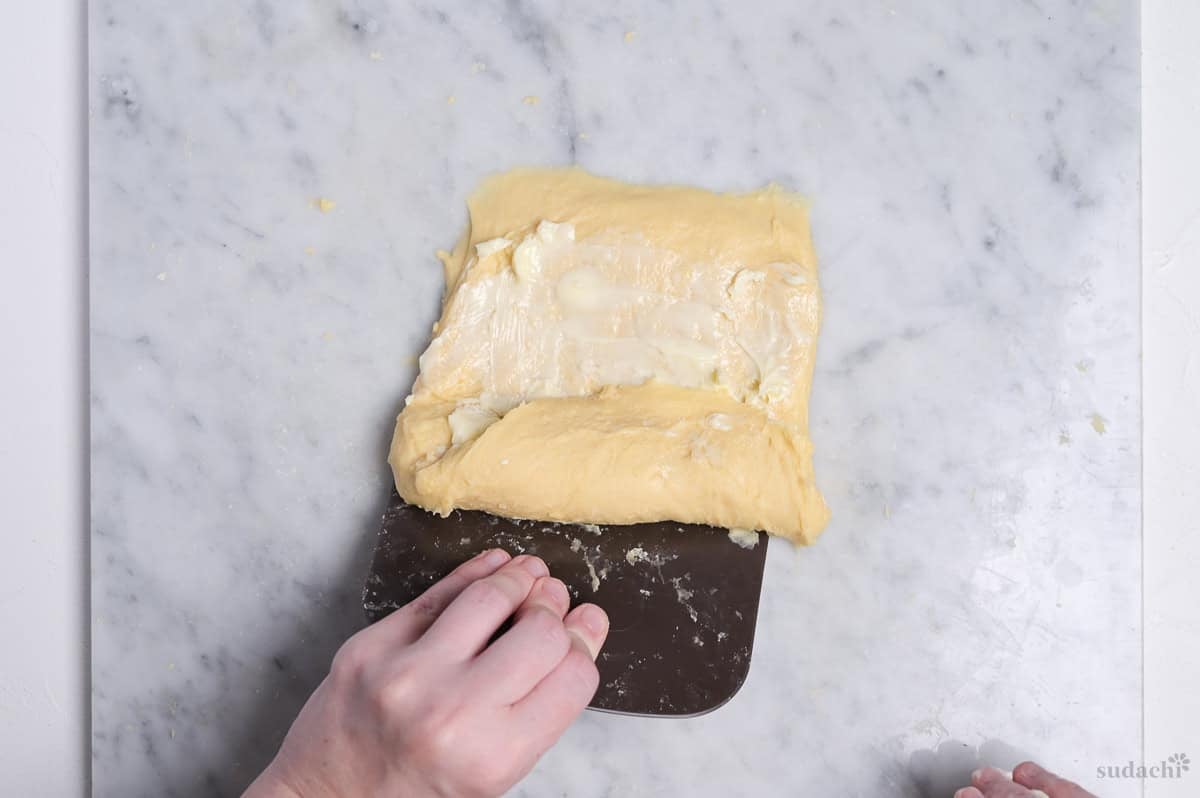
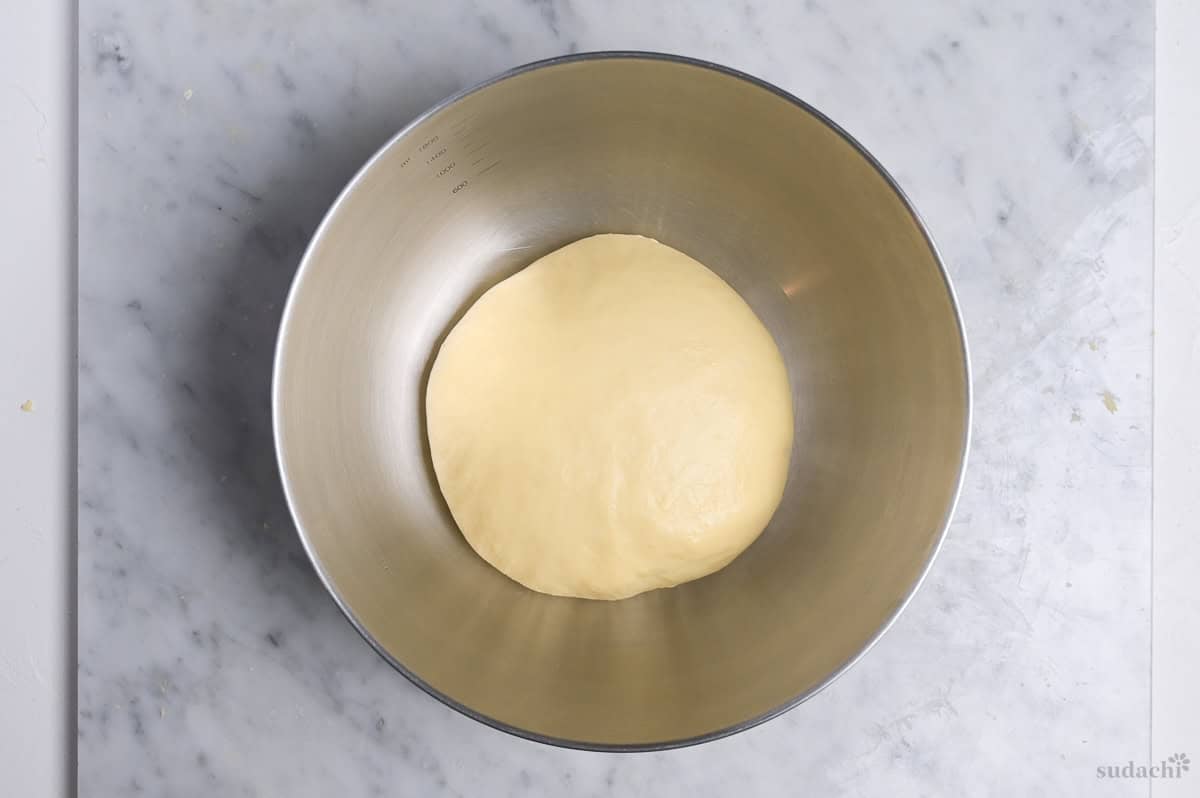
- Place the dough in a clean bowl covered with a clean damp tea towel. Leave to rise in a warm draft-free area until doubled in size (approx 40-60mins at 30 °C (86 °F)).
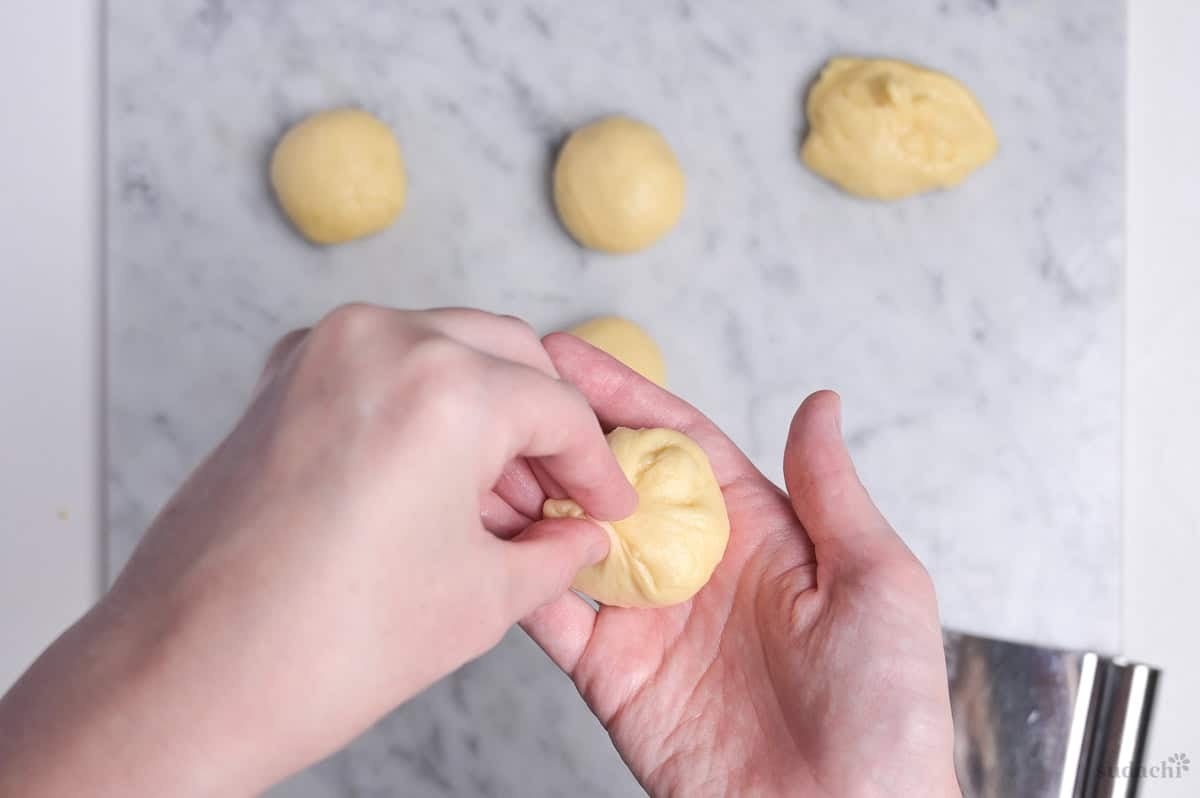
- Degas the dough by pressing it, then weigh it and divide it into approximately 45g pieces. Pull the edges of each piece down and underneath, then gather them into a point at the bottom to make tight ball shapes.
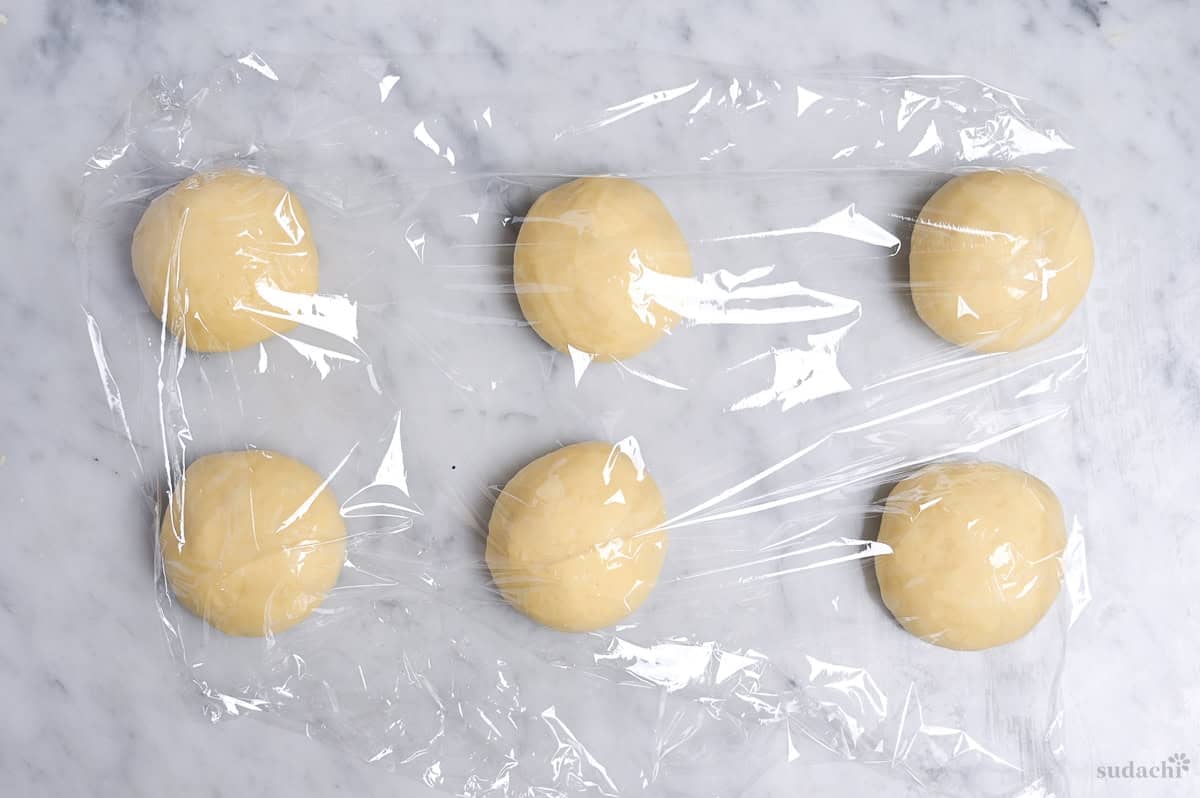
- Loosely cover with plastic wrap and rest at room temperature for 15-20 minutes.
- While you wait, divide 240 g red bean paste (anko) into 40g balls and store in the fridge.

- Lightly dust your work surface with flour and roll each ball out into a 15cm (6") diameter circles. Hold the dough in your palm and place a ball of anko in the center.
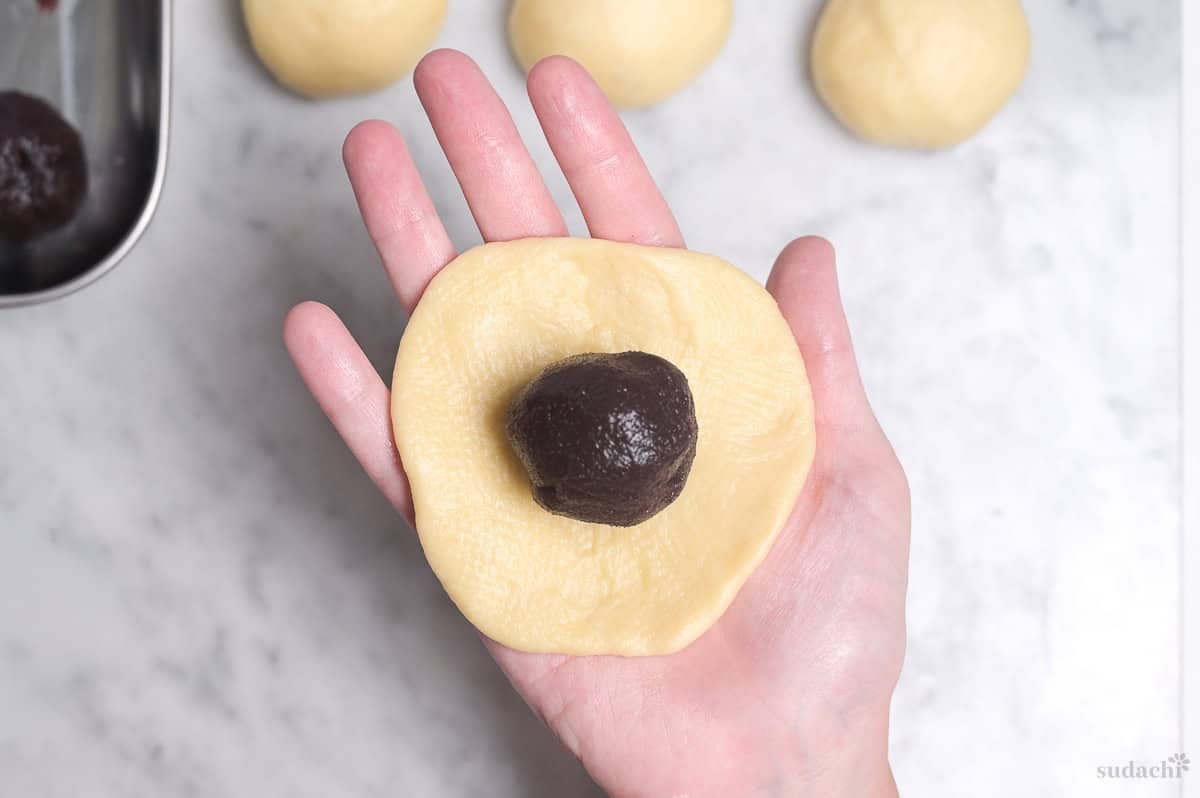
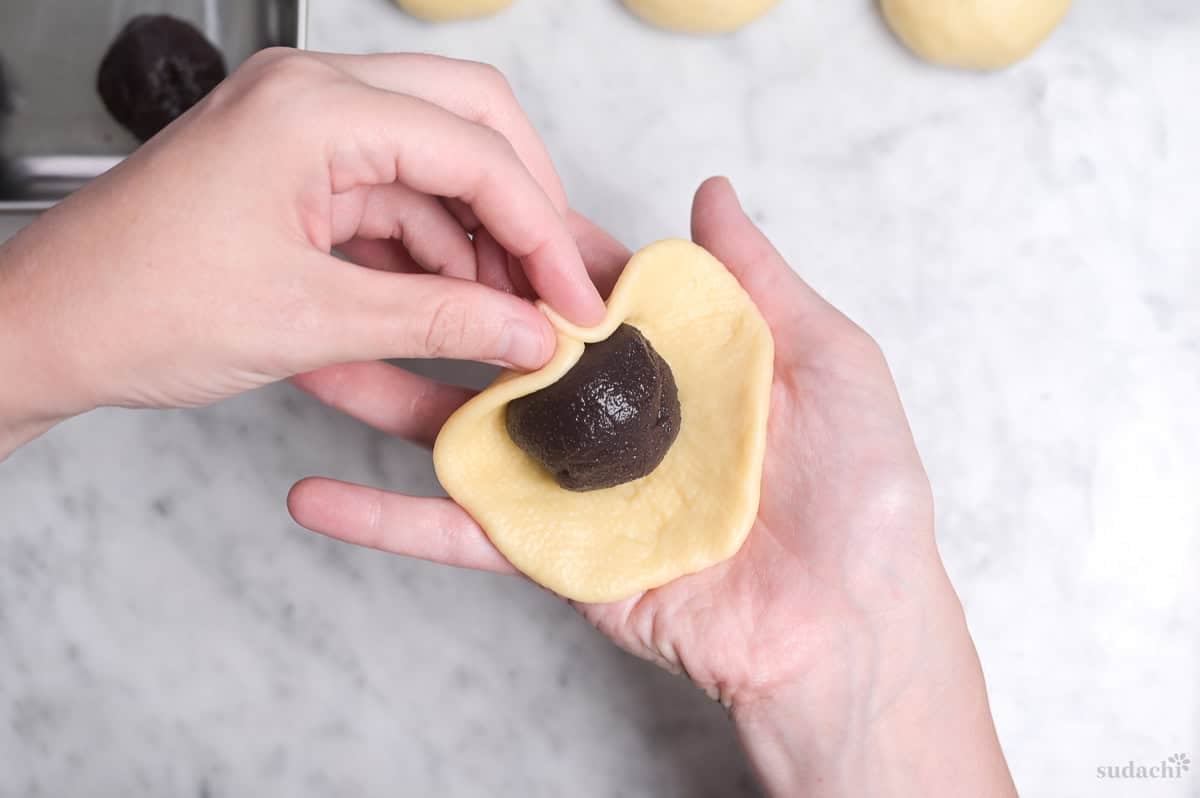
- Pull the edge of the dough over the anko and gather, making small pleats until the dough closes.
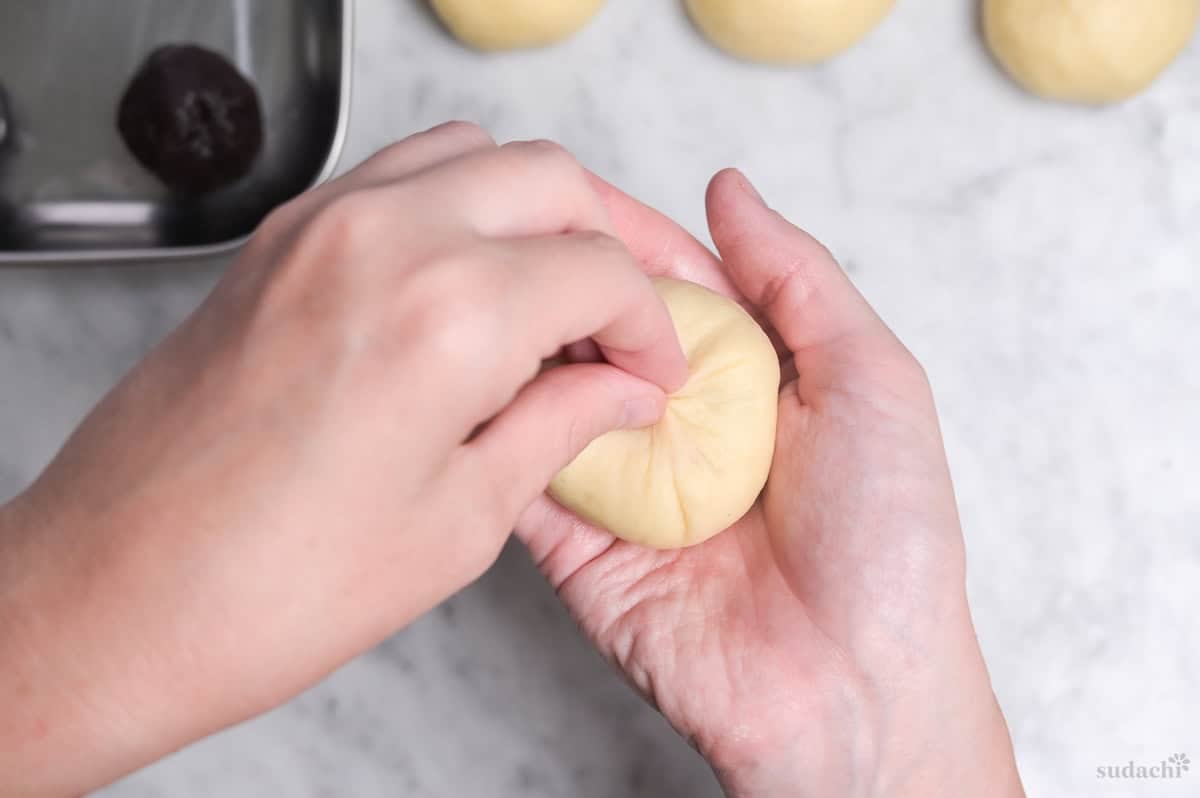
- Pinch the seam to secure the base and roll on the kneading board once more to make them neat and round.
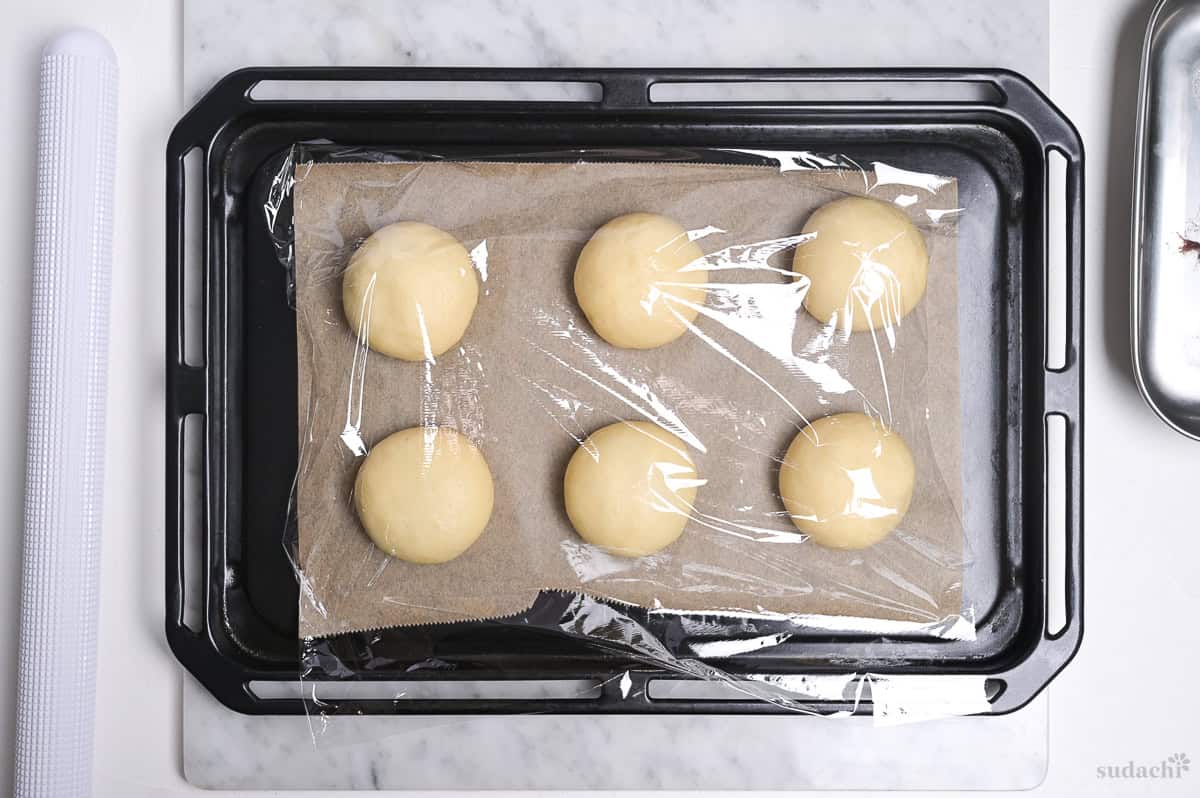
- Arrange the shaped anpan on baking tray lined with baking paper. Leave plenty of space between each one and cover with plastic wrap. Leave to rise until the size has increased by about 1.5x or they pass the finger poke test (approx 45-60mins at 30 °C (86 °F)). About halfway through, preheat your oven to 180 °C (356 °F) fan or 200 °C (392 °F) conventional.
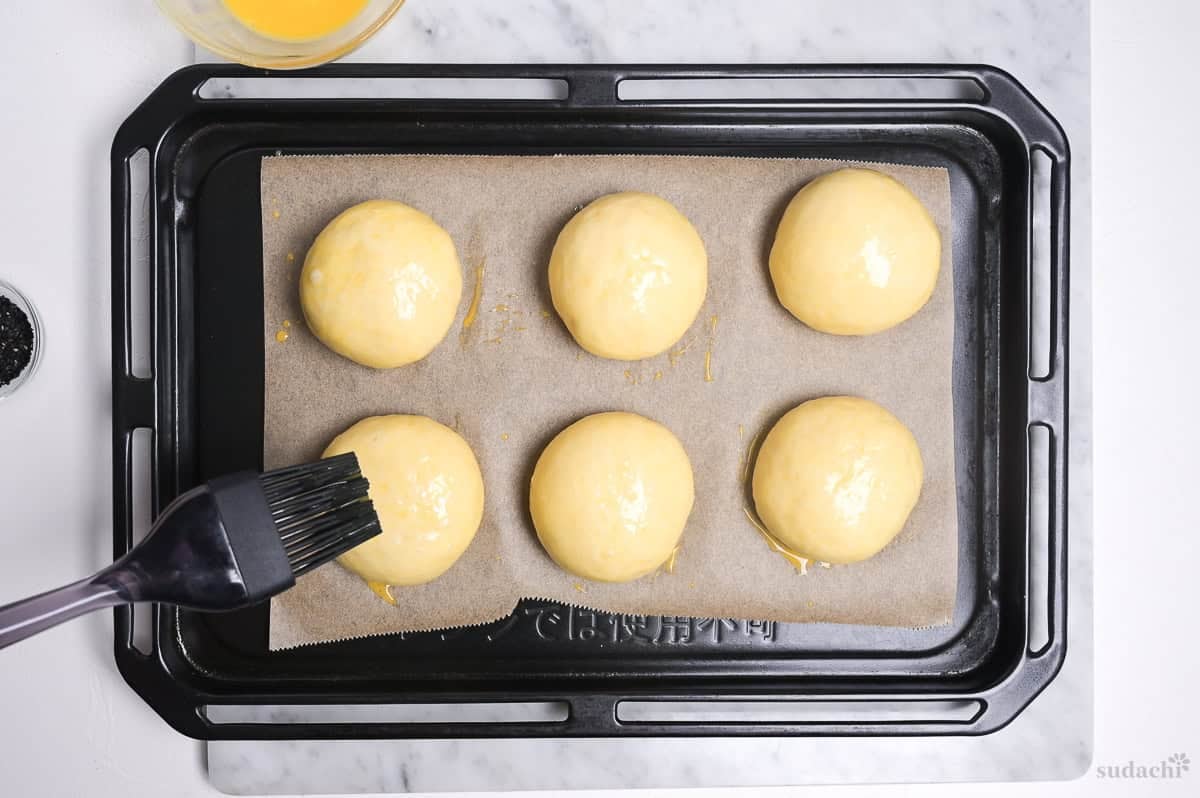
- Take the leftover egg from the fridge, add about ⅛ tsp water and whisk. Right before baking, use a pastry brush to coat the tops and sides with an even layer of whisked egg.
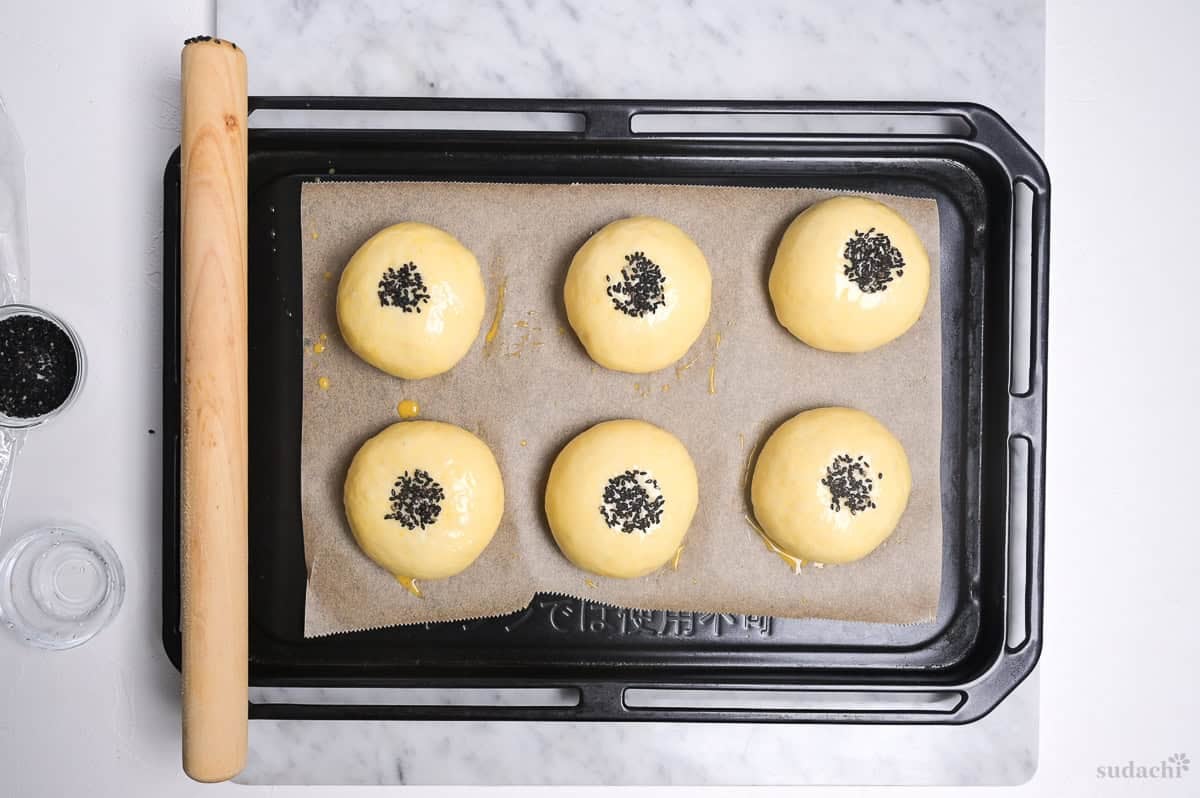
- Sprinkle black sesame seeds in the center.
- Bake for 12 minutes or until golden brown. Turn the baking sheet around half way through if your oven bakes unevenly.
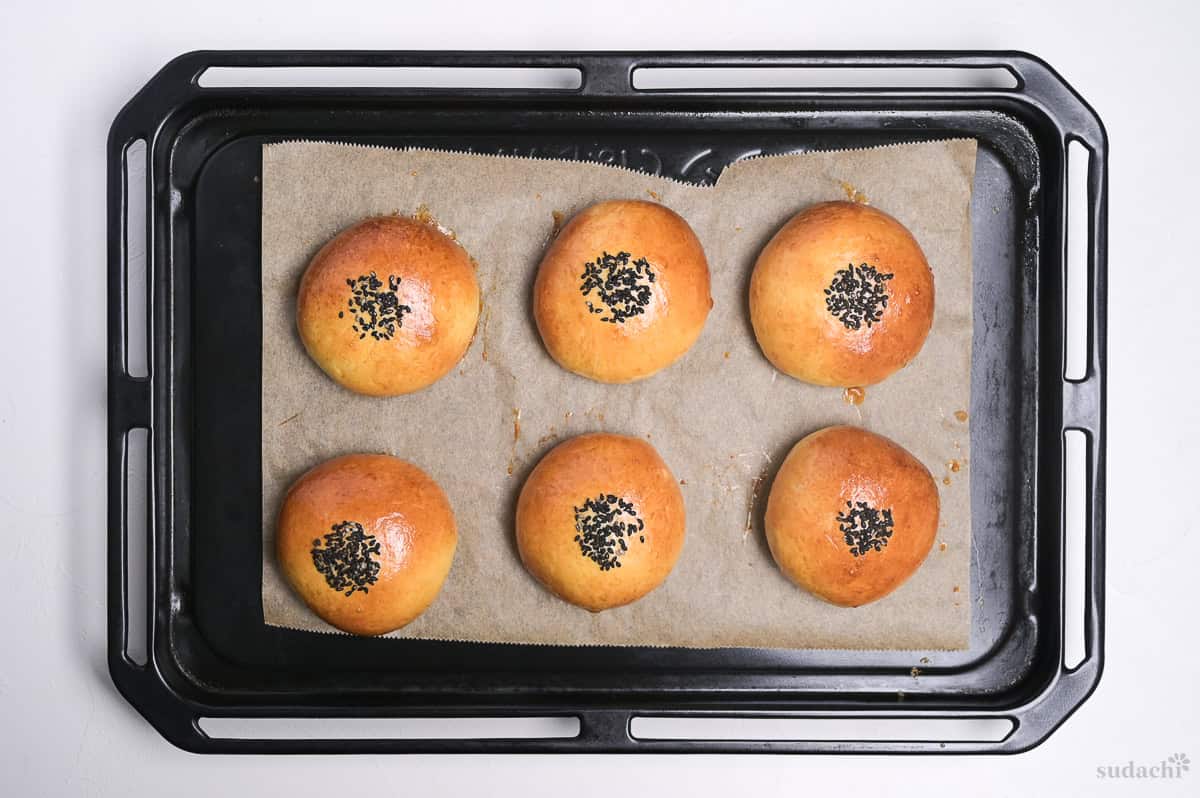
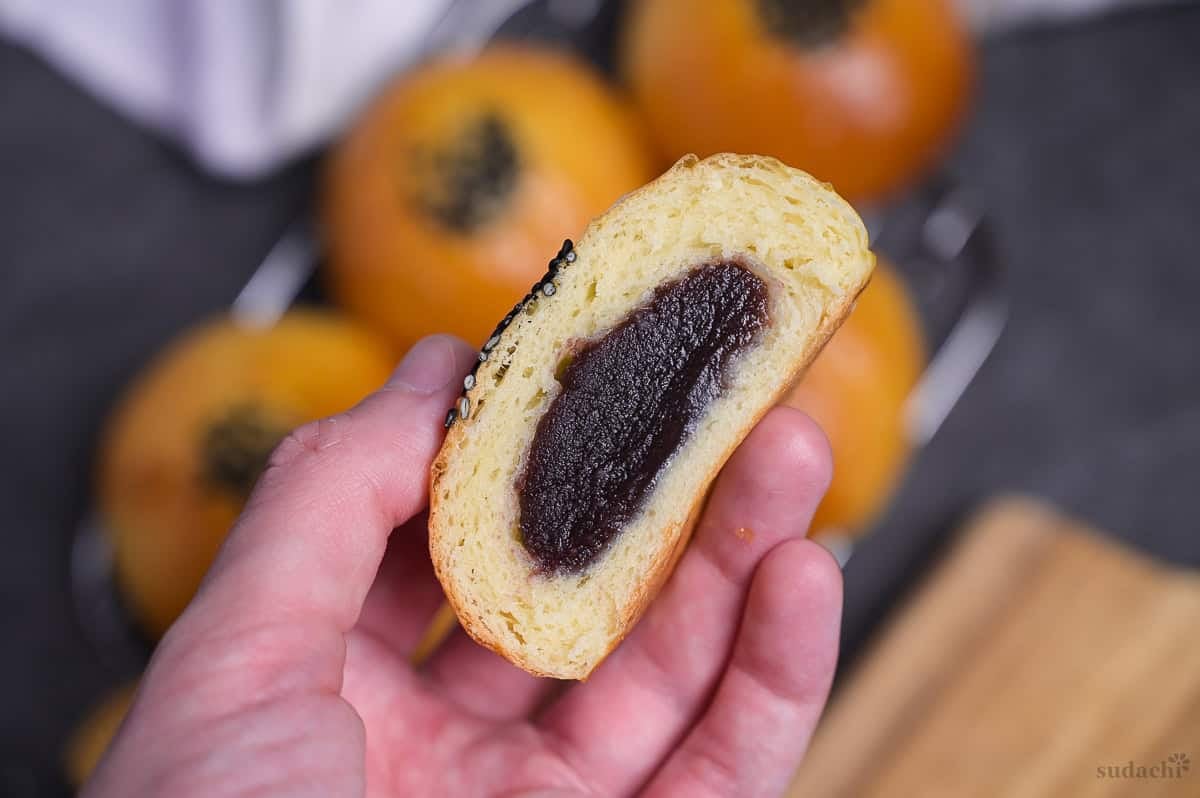
- Cool on a wire rack until they reach room temperature. Serve and enjoy!
This dough starts off very sticky, but avoid adding extra flour. It will become easier to handle as you work the dough.
Dip a wooden, flat topped utensil in a bowl of water. Dab away the excess, then dip the damp side into a small bowl of black sesame seeds. Gently press it in the center of each anpan, the sesame seeds will stick to the egg wash.
Notes
- Store in an airtight container once cooled.
- Make the anko up to 1-2 days in advance and store in the fridge, it should be fully chilled before use.
- Avoid adding any flour when kneading the dough. It will be very sticky at first and that is normal. It will become more manageable as you knead it.
- The dough should pass the windowpane test (stretches thin enough to see light through without tearing) before adding the butter.
- Enriched doughs take longer to rise because the sugar, egg, and butter are working against the yeast. Base the rise on the size and feel of the dough, not the time it takes. First rise should double in size, second rise should increase by about 1.5x or pass the finger poke test (dent slowly fills back in when poked).
- Preheat your oven early, about halfway through the second rise, or earlier your oven takes a long time to heat up.
Full Recipe QR Code↑↑