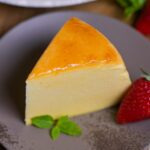
Japanese Soufflé Cheesecake
Ingredients
- 50 g egg yolks approx 3 eggs
- 100 g egg whites approx 3 eggs
- 120 g cream cheese full fat block type (not spread)
- 15 g unsalted butter plus extra for greasing the pan
- 90 g whole milk
- 20 g unbleached cake flour
- 10 g potato starch (katakuriko) or cornstarch
- 1 pinch salt
- ½ tsp vanilla essence
- ½ lemon zest
- ½ tsp lemon juice
- 70 g granulated sugar
- 2 tsp honey pourable liquid honey, or agave syrup
- 1 tbsp apricot jam
Instructions
Cream cheese base
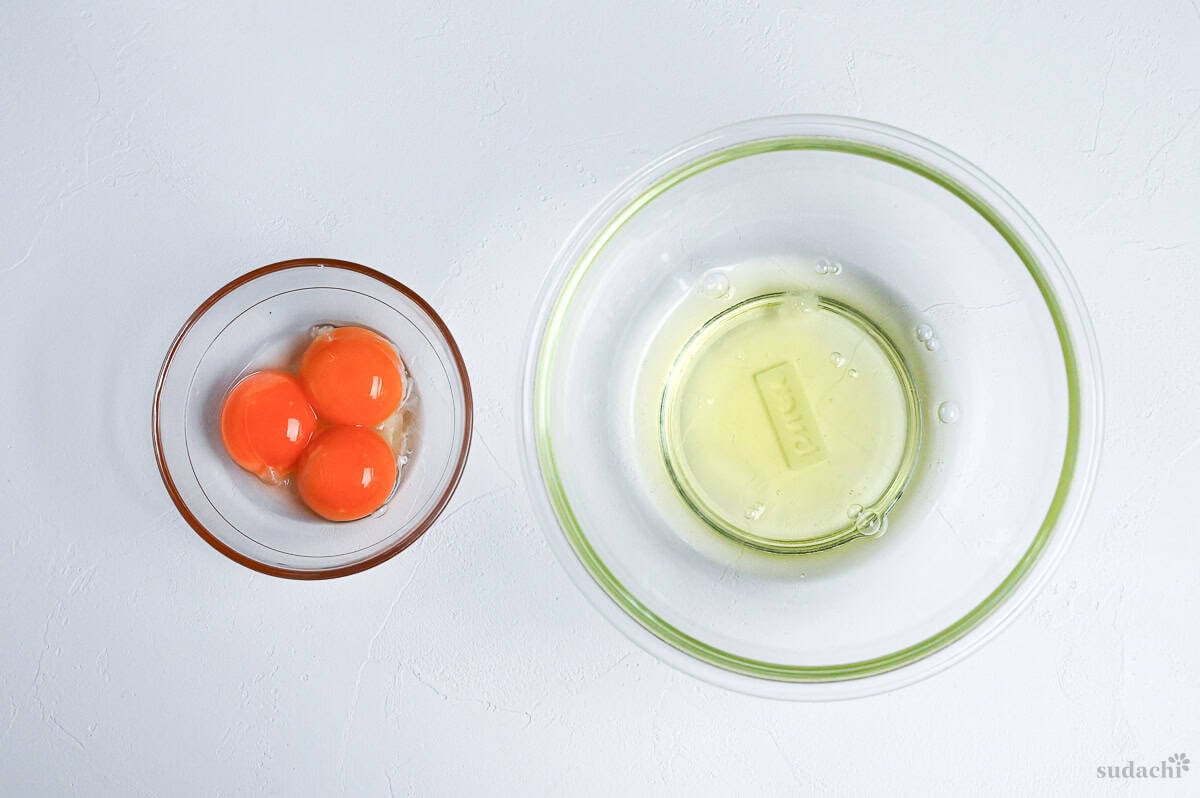
- Separate the eggs, 50 g egg yolks into a small bowl and 100 g egg whites into a clean and dry glass mixing bowl. Preheat your oven to 160 °C (320 °F).
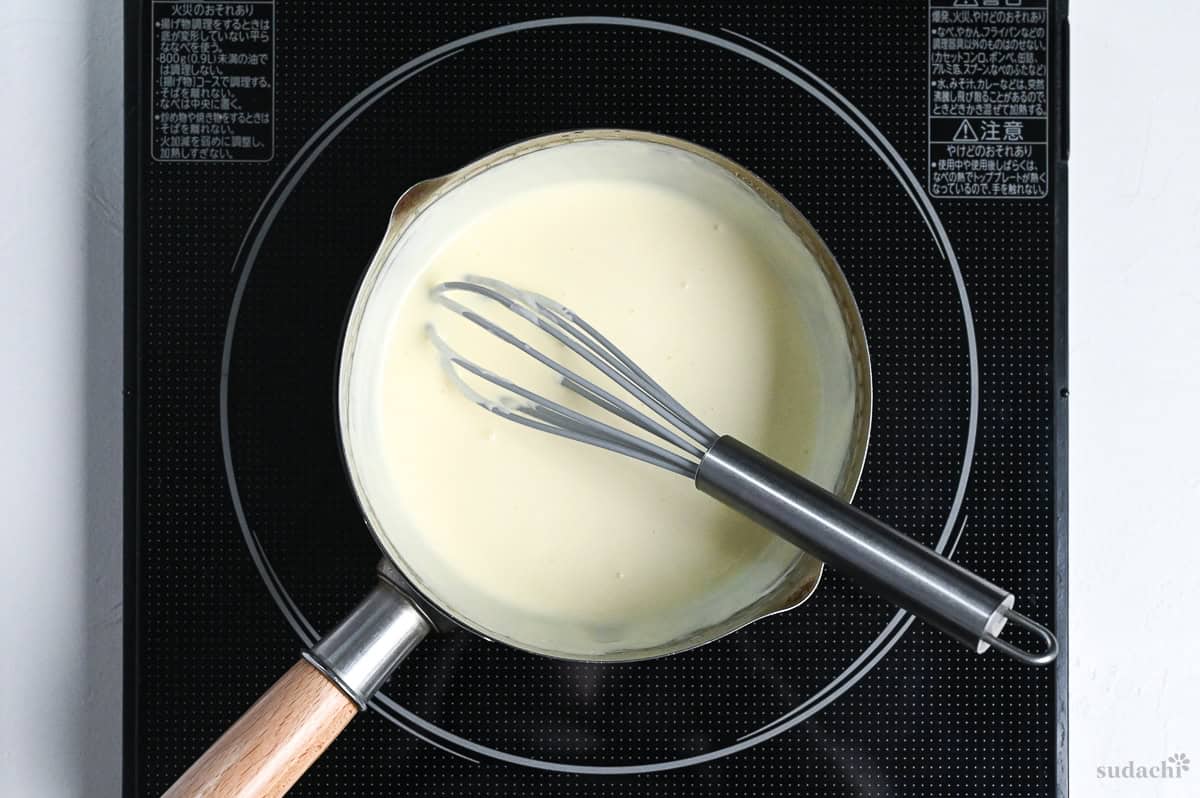
- Take a small saucepan and add 120 g cream cheese, 15 g unsalted butter, and 90 g whole milk. Heat on the lowest setting and stir continuously until the cream cheese has mostly melted and smooth, do not let it boil. Alternatively, melt everything together in the microwave in 20-30 second increments. Leave to cool.
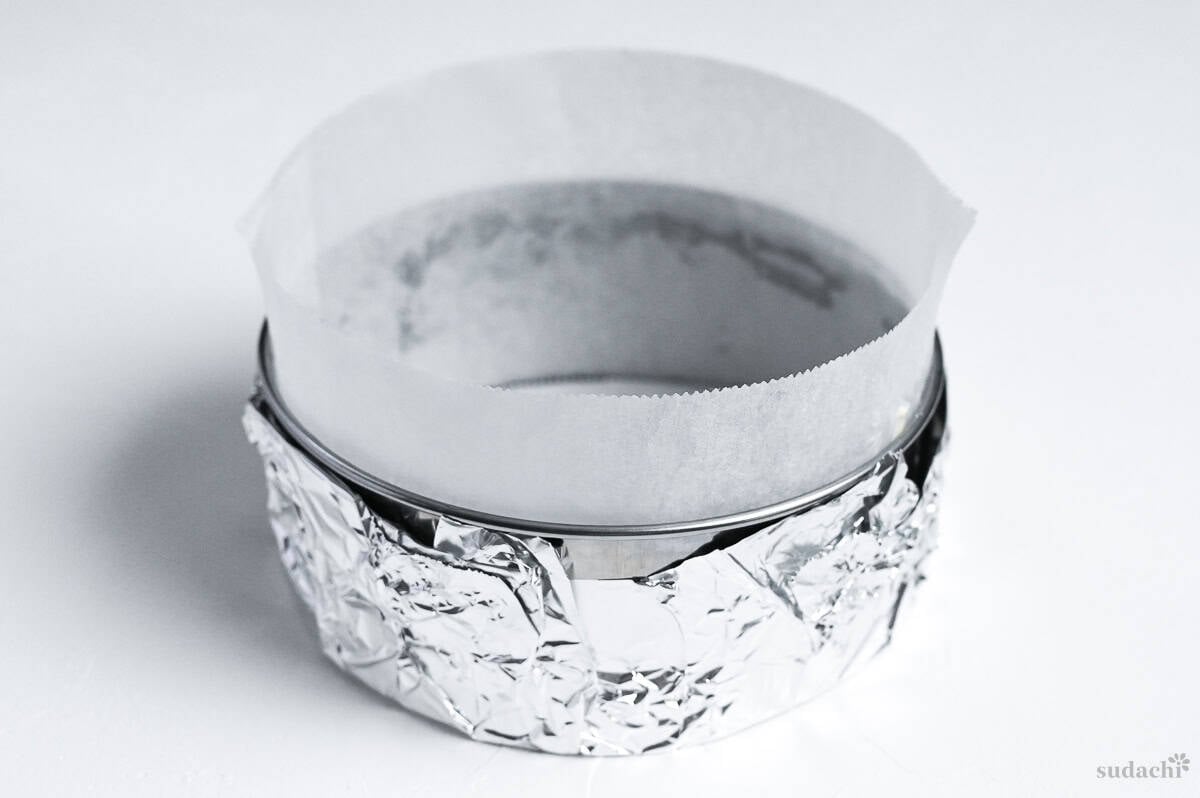
- While you wait, measure out the rest of your ingredients. Lightly grease the cake pan with butter, then line with baking parchment. If using a springform pan, wrap the base with 2-3 layers of aluminium foil, making sure it goes up the sides.
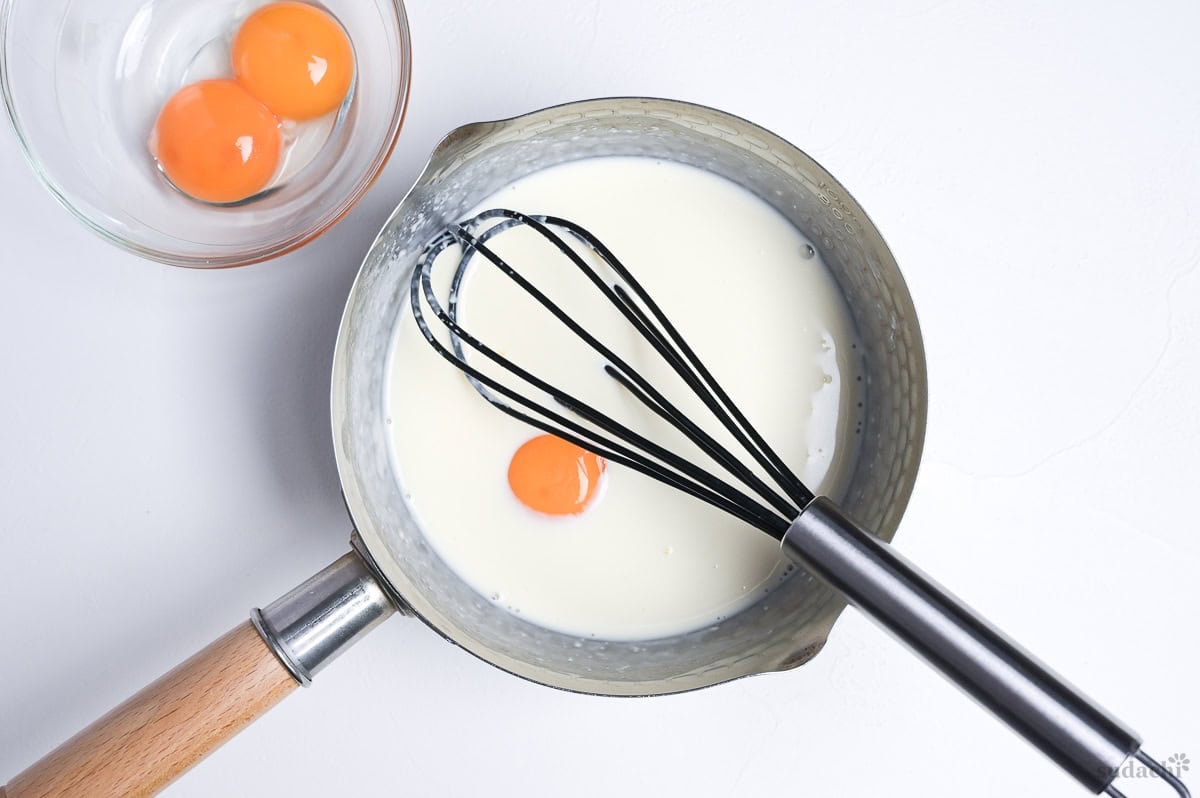
- Once the cream cheese mixture is cool enough to touch, add the egg yolks one by one, whisking gently each time until evenly incorporated.
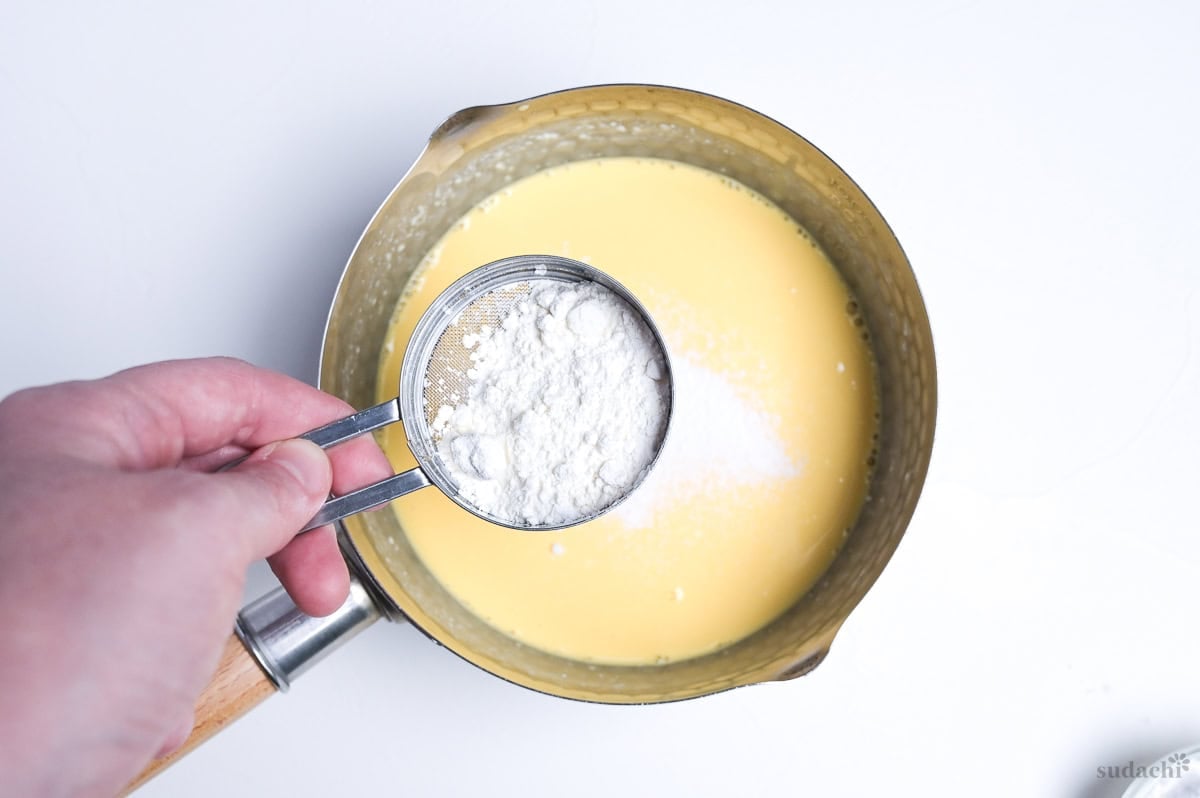
- Mix 20 g unbleached cake flour and 10 g potato starch (katakuriko) together in a small bowl, then sift it into the cream cheese mixture.
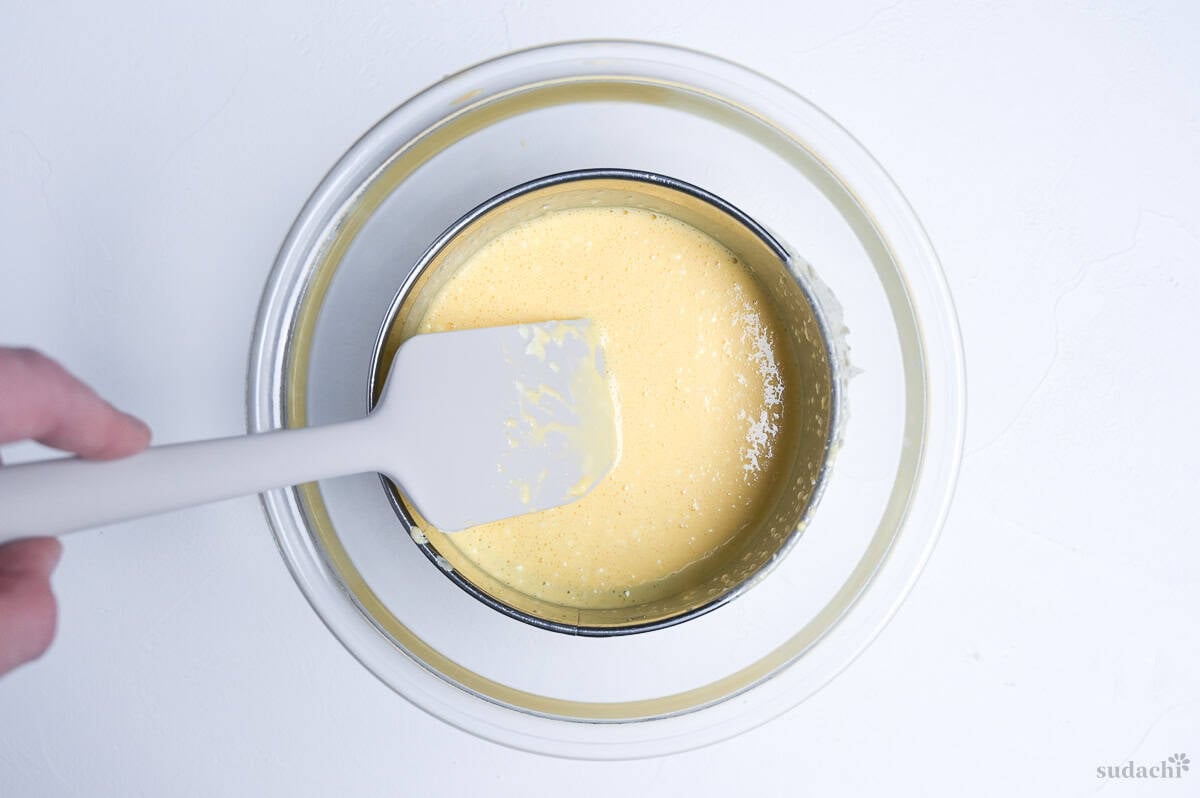
- Strain the mixture into a large mixing bowl using a fine mesh sieve, use a spatula to work through any stubborn lumps of cream cheese.
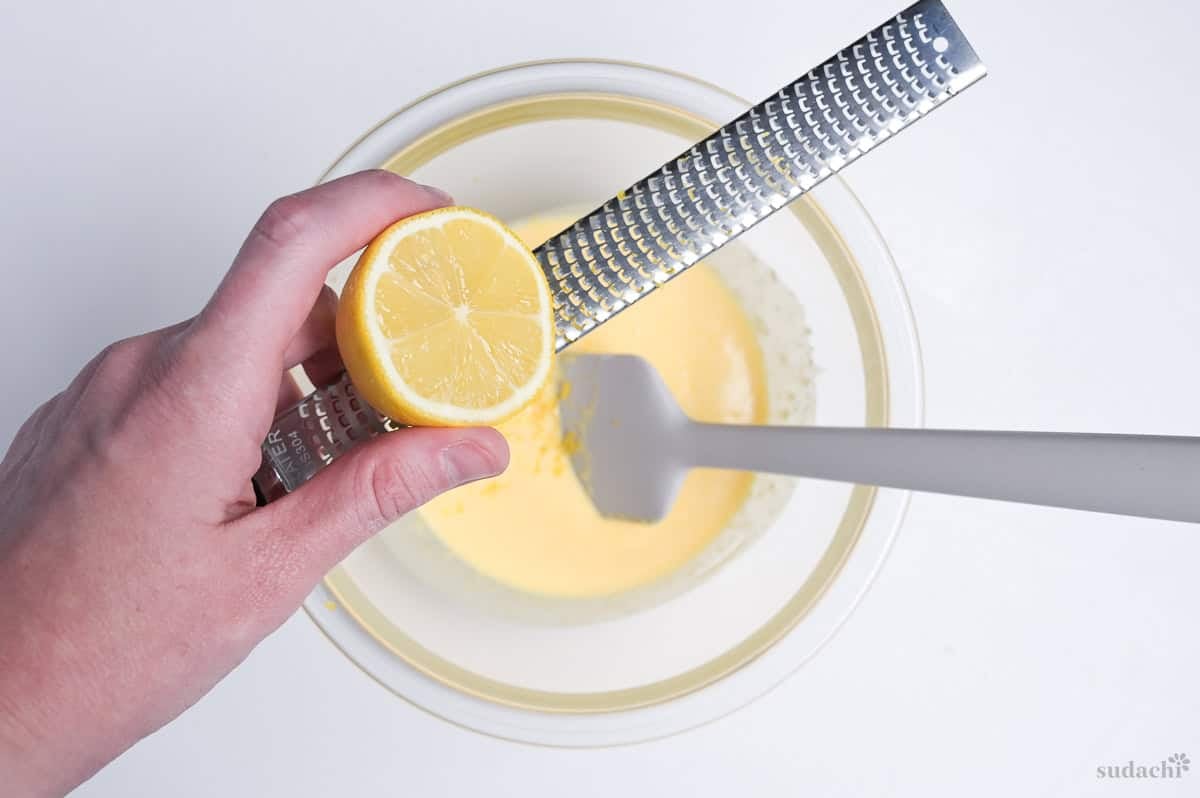
- Mix in 1 pinch salt, ½ tsp vanilla essence, and ½ lemon zest. Set aside for later.
Meringue
- Using a medium speed, whip the egg whites until foamy and doubled in size. Add ½ tsp lemon juice and whip for 10 seconds.
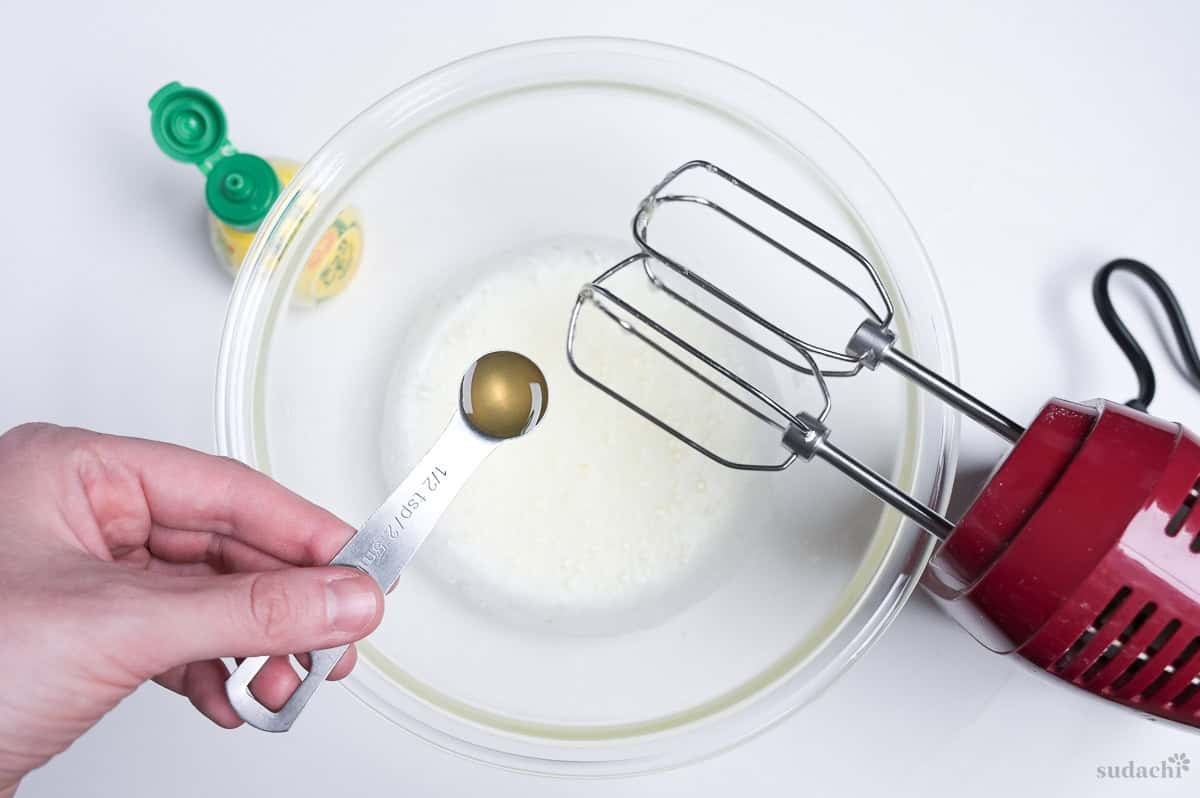
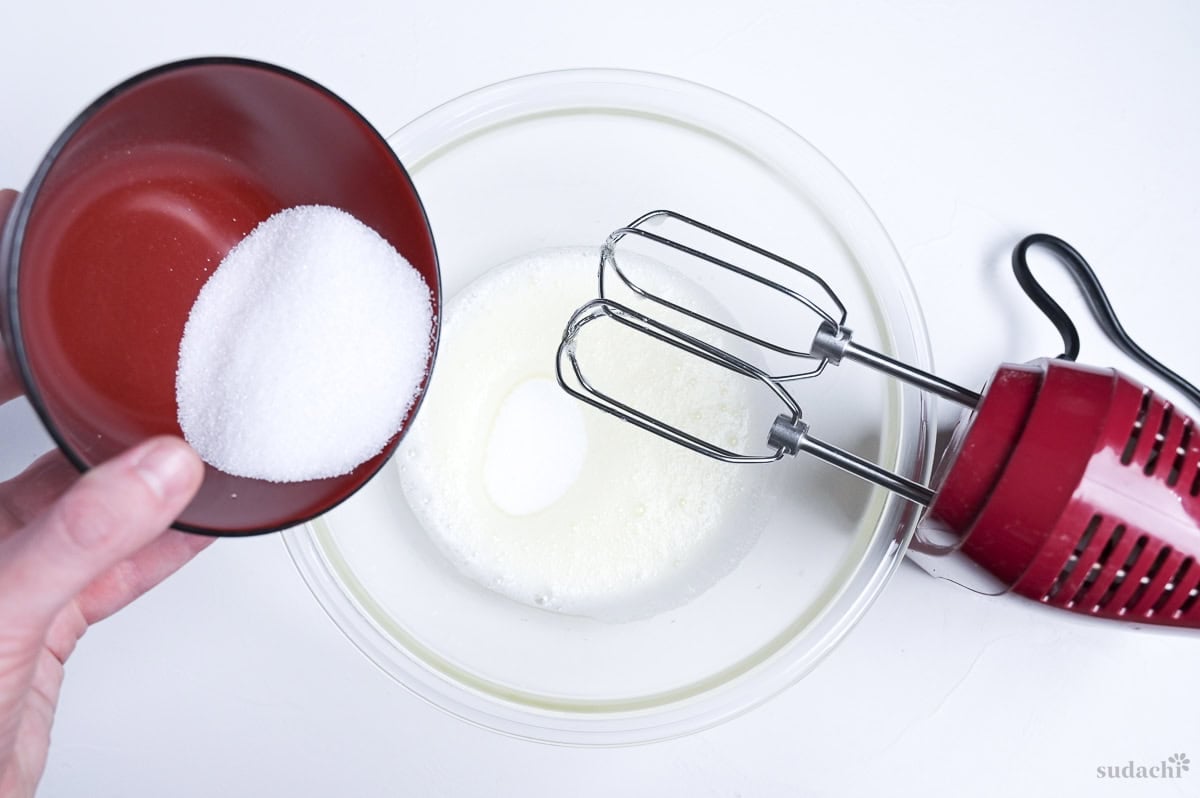
- Measure out 70 g granulated sugar and add half of it to the egg whites. Whip on medium-low speed until smooth and slightly glossy.
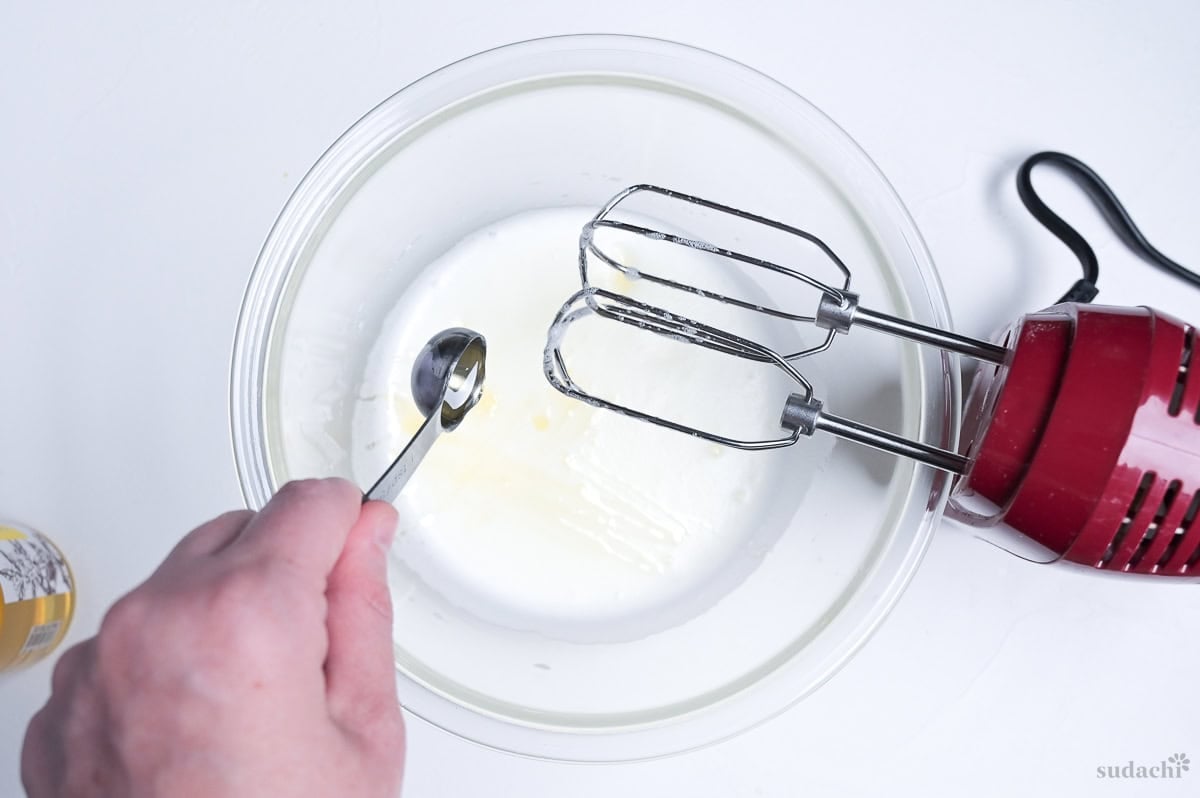
- Drizzle in 2 tsp honey while whipping continuously.
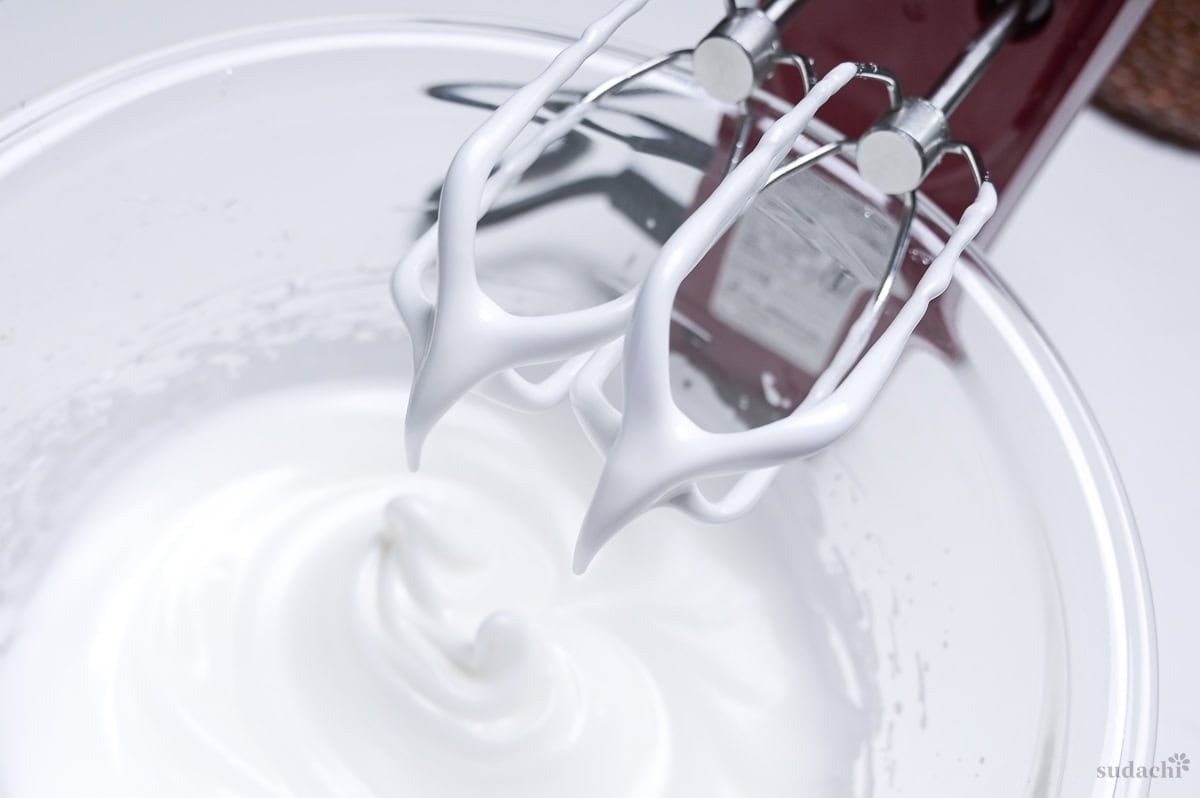
- Once incorporated, add the rest of the sugar and continue to whip on medium low until it reaches very soft peaks that fold over.
- Start heating the water for the water bath to about 50 °C (122 °F). While you wait, add one-third of the meringue to the cream cheese base and mix gently, but thoroughly.
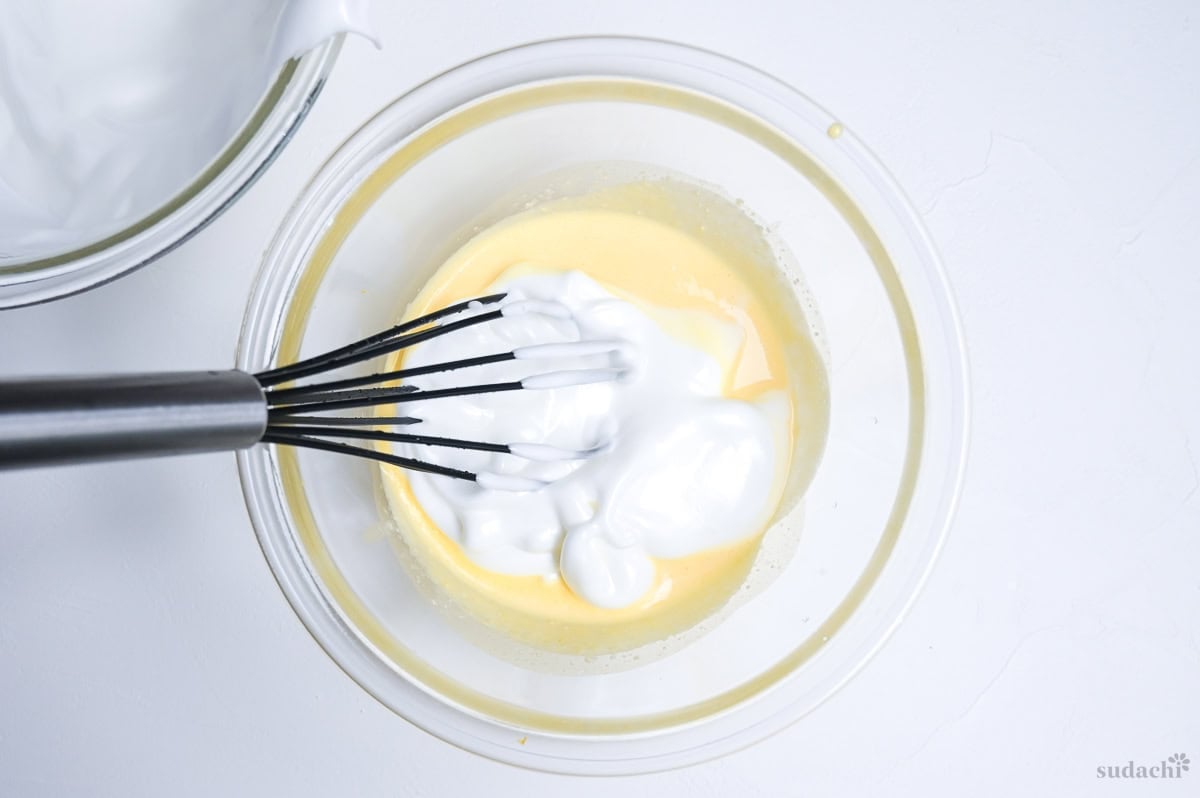
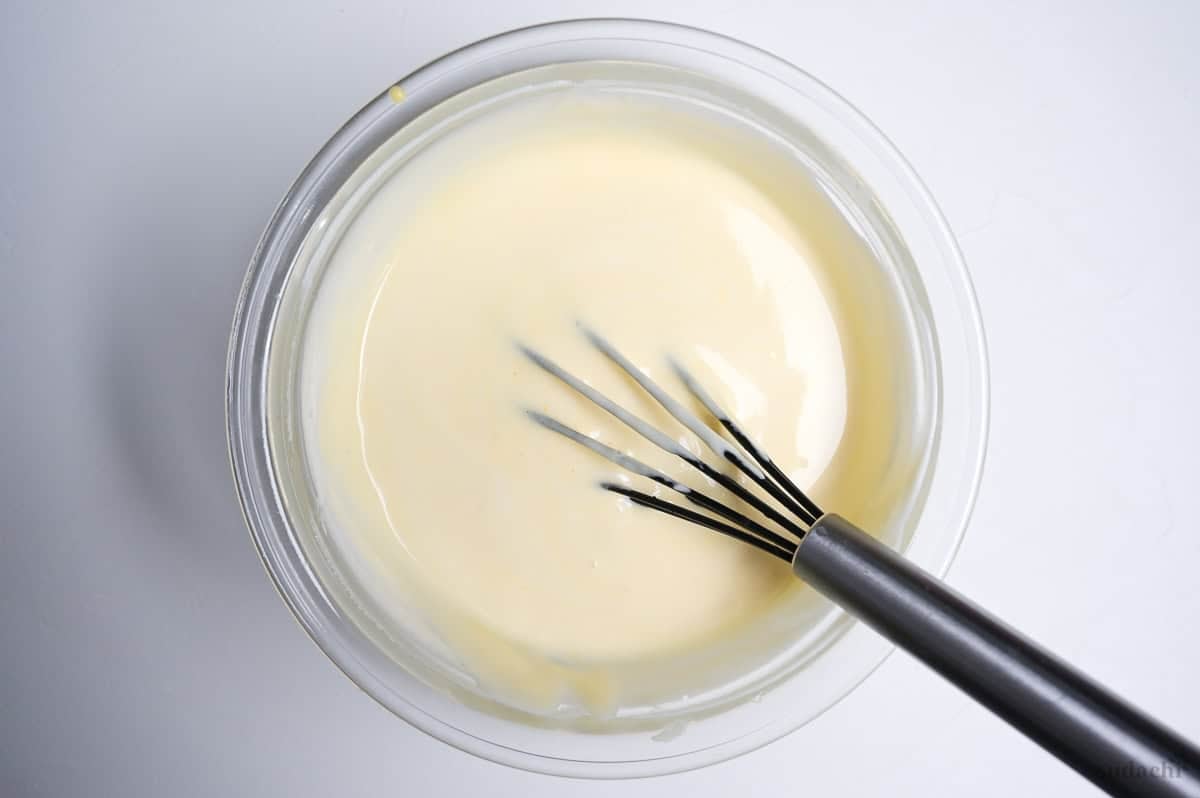
- Continue to add the meringue one-third at a time, folding gently with the whisk while turning the bowl until no white streaks remain.
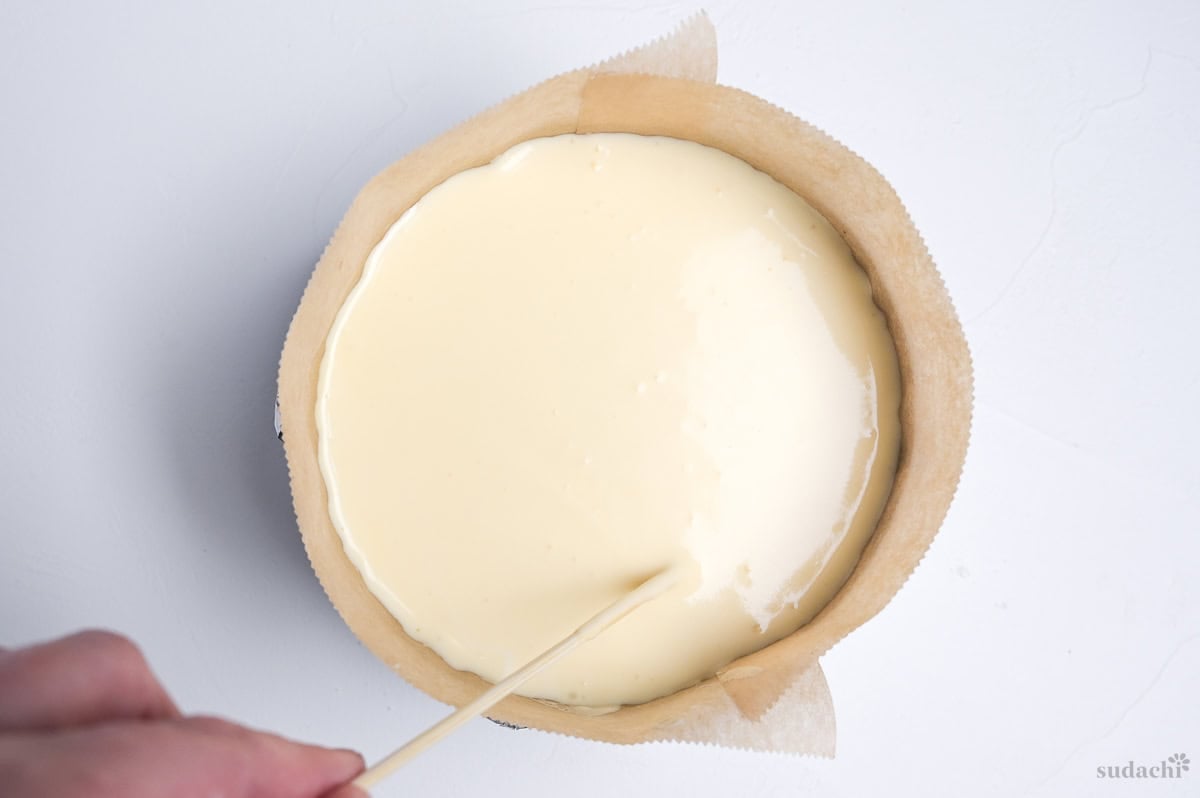
- Pour the mixture into the lined cake pan, the push a spatula into the batter at a 45° angle and move it up and down to send air bubbles to the top. Draw through the mixture with a skewer to break any large air bubbles.
- Place the cake pan in the center of your roasting pan, then pour the heated water until it's 2cm deep (a little less than 1 inch).
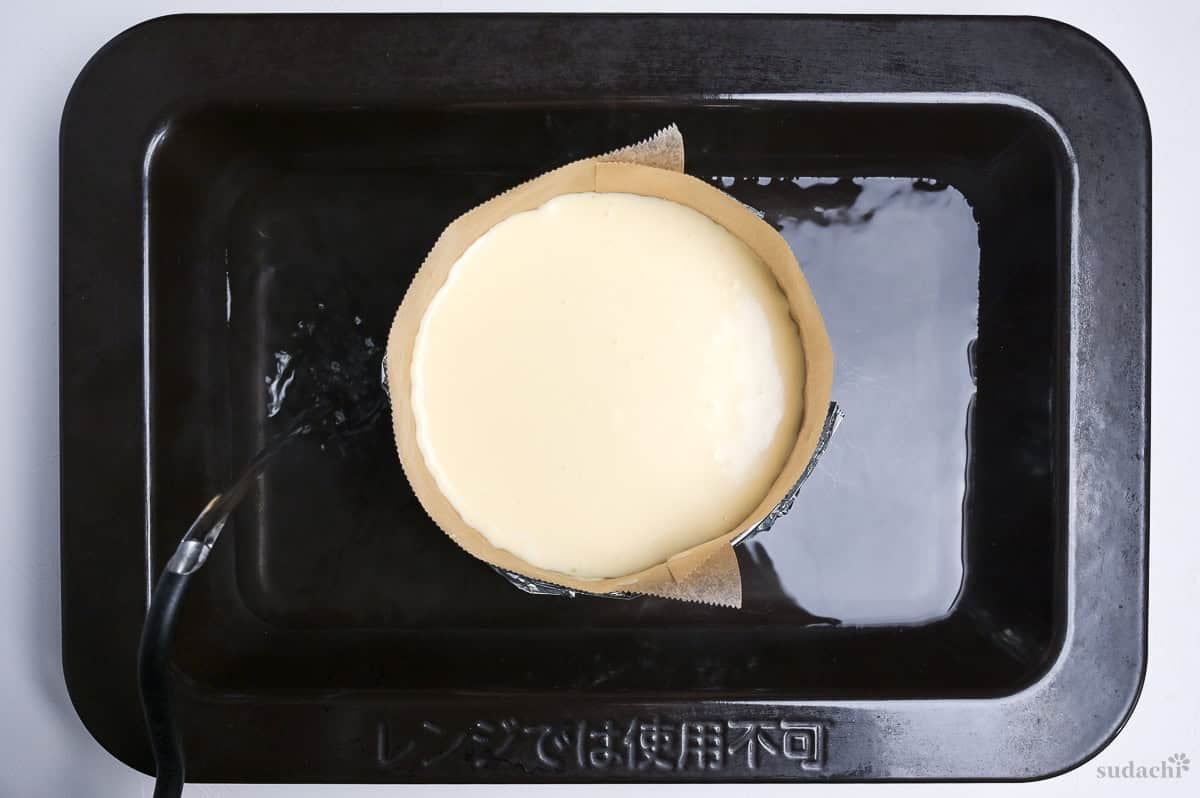
- Carefully push the pan onto the middle shelf of your oven and reduce the temperature to 140 °C (284 °F). If your oven is convection or fan assisted, place an empty baking sheet on the shelf above it. Bake for 50-60 minutes. Once lightly golden on top with the edges coming away from the pan, turn off the heat and crack the oven door open slightly, and wedge an oven mitt in the corner to keep it slightly open. Let it cool slowly inside the oven for 30 minutes.
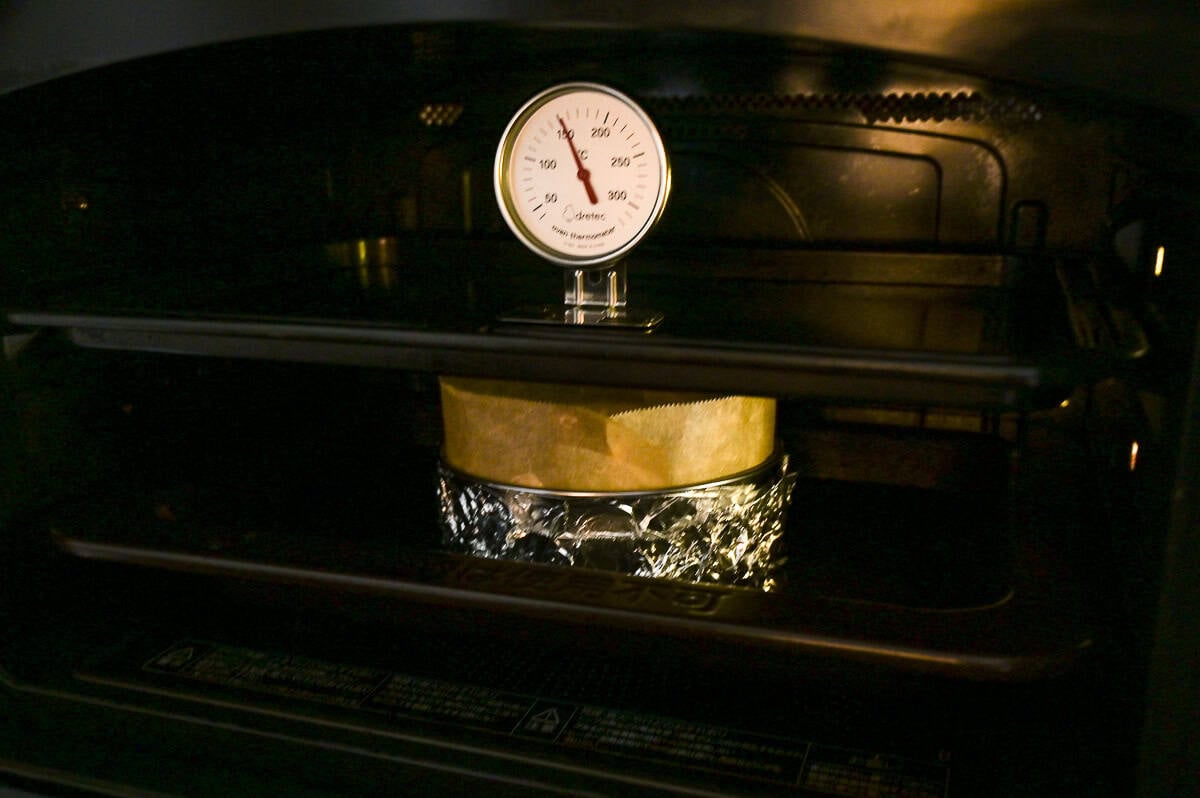
- Take the cheesecake out of the oven, and cool it on a wire rack.
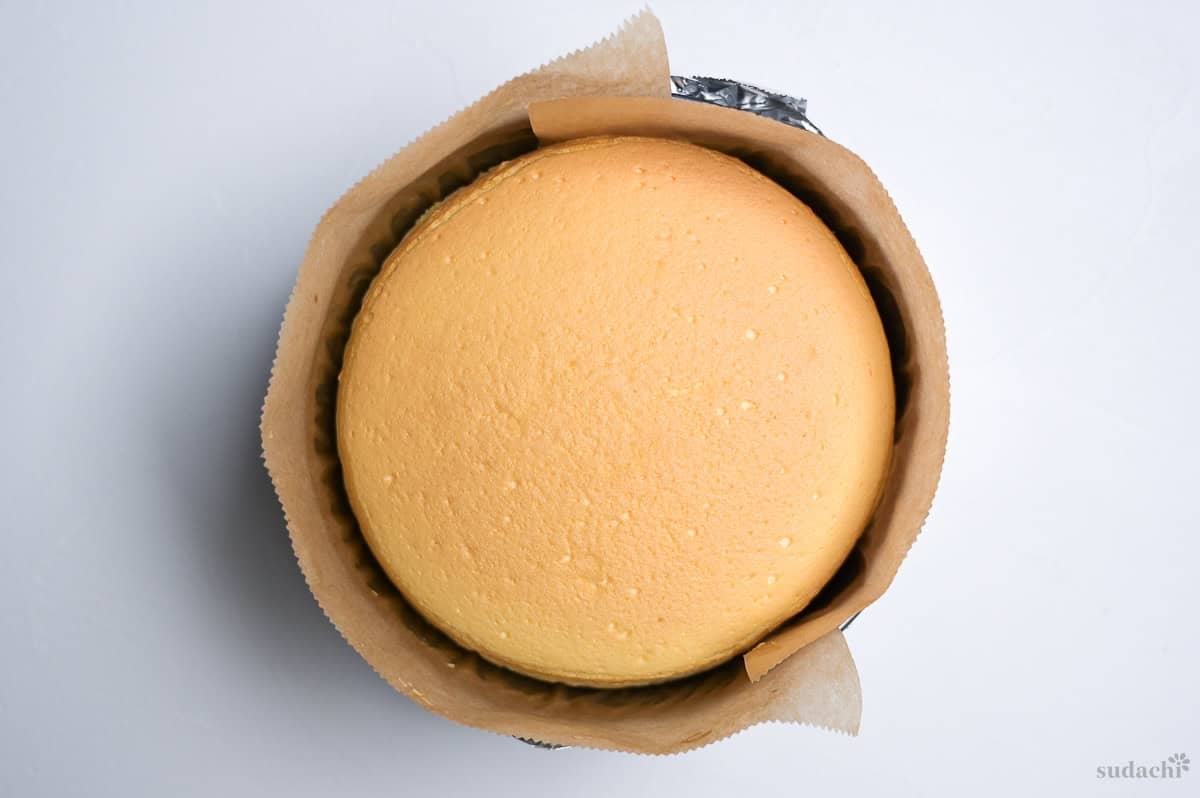
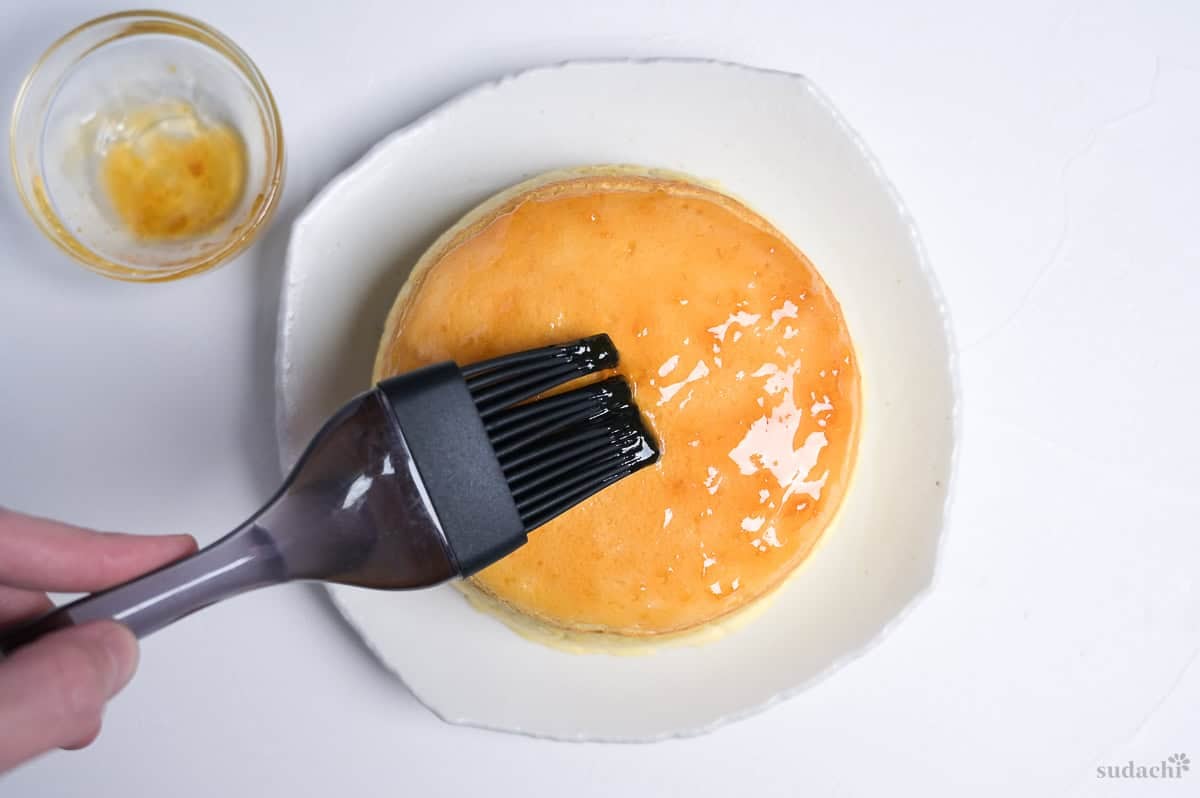
- Once cool enough to touch, remove it from the pan. Spoon 1 tbsp apricot jam into a small heatproof bowl, microwave for 10-15 seconds and brush it over the top of the cooled cheesecake.
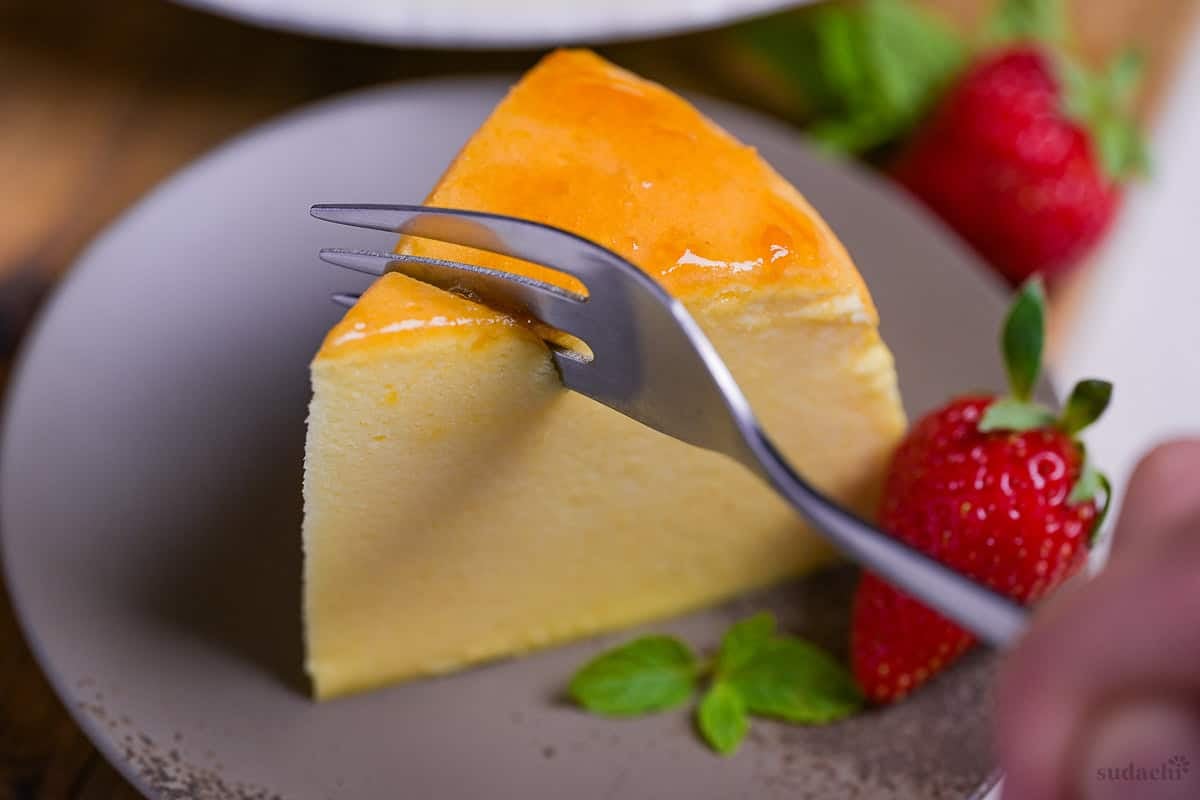
- You can serve it warm or room temperature, but I like to chill it in the fridge for a few hours before serving. Enjoy!
If using freshly squeezed lemon juice, strain to remove any pulp before adding it to the eggs.
Visual cues: The meringue should not run off the whisk when lifted, but it also shouldn't stand up straight. It should be barely set, with long stretchy peaks that droop over when held up.
Check on the condition occasionally. If it's rising too fast or looks close to cracking, reduce your oven temperature by 10 °C (50 °F) or 20 °C (68 °F).
Notes
- The base recipe uses 3 eggs, approximately 17g per yolk and 33g per white.
- Separate eggs while they're cold (the yolks are firmer and less likely to break), then let the whites come to room temperature before you start. Room temperature egg whites whip into a more stable meringue.
- Warm the milk and cream crease gently. Boiling can cause the mixture to split or form a skin, which can leave lumps in the finished cheesecake.
- Use a clean, dry glass bowl for the egg whites. Any trace of yolk, shell, oil, or water will stop the meringue from holding its structure.
- Whip the eggs on low or medium low speed to build small, stable bubbles. High speeds create large bubbles that collapse easily during baking.
- Whip the meringue to soft peaks that gently fold over, not stiff peaks. Over whipped meringue is a common cause of cracking in souffle cheesecake.
- In your pan has a removable base, wrap it tightly with several layers of foil to stop water seeping in during the hot water bath.
- Heat the water bath to around 50℃ (122℉) before pouring it into the roasting pan. Cold water will drop the oven temperature and slow the cakes rise, hot water will cook the base, make it rubbery and make the cheesecake rise too quickly.
- For fan assisted or top-heat ovens, place an empty baking tray on the rack above the cheesecake. It shields the top from the dry direct heat that dry out the surface and cause cracks.
- If you know your oven runs hot, or the cheesecake is showing signs of rising too quickly, lower the temperature by 10-20℃ (20-35℉) and check regularly. It might need less cooking time than the time stated in the recipe.
- When the cake is done, crack the oven door open and let it cool slowly inside for at least 30 minutes. A sudden change in temperature can cause it to collapse or shrink.
- Cool on a wire rack before trying to take it out of the pan.
- Store in the fridge in a sealed container for up to 1 week, or wrap and freeze for up to 1 month.
Full Recipe QR Code↑↑